Separatist Calls Grow Louder from Taiwan


Posted originally on Jun 27, 2024 By Martin Armstrong 
China v Taiwan 3

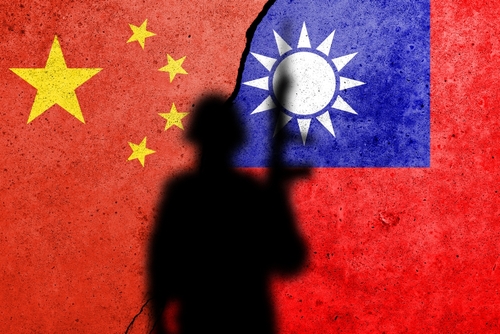
Taiwan President Lai Ching-te has been deemed a “dangerous separatist” by the Chinese Communist Party.  China has long-stated its desire for “peaceful unification” with Taiwan, which the CCP considers part of China. China issued new guidelines on lethal ramifications for separatist sentiments, leading to louder retaliation from Ching-te.

Xinhua news agency, operated by the CCP, ran a story last Friday to declare that China will not tolerate any calls for a separate nation. “Secessionist organizations” or direct people to “carry out activities that split the state” will be targeted as terrorists. China announced it would “severely punish Taiwan independence die-hards for splitting the country and inciting secession crimes in accordance with the law, and resolutely defend national sovereignty, unity and territorial integrity.” “Ringleaders,” including Taiwan’s president who the CCP does not acknowledge as having any authority, “cause particularly serious harm to the state and the people” and could face execution.

Taiwan President Lai Ching-te responded by saying China’s autocracy is “evil” and he will not stop calls to remove China’s stronghold on the nation. “I want to stress: democracy is not a crime; it’s autocracy that is the real evil. China has absolutely no right to sanction Taiwan’s people just because of the positions they hold. What’s more, China has no right to go after Taiwan people’s rights across borders,” he said. Ching-te wishes to hold discussions with Beijing but has been warned any move to declare independence would be seen as an act of war.

Taiwan can speak out against China now that it has powerful allies, such as the United States, which is eager to wage a new war. This particular issue has not been taken lightly by the CCP, which will undoubtedly wage war if its perceived territory is compromised. On the other hand, Neocons like Blinken have pledged unwavering support for Taiwan seemingly out of nowhere. It is a matter of time before one side, likely the West, uses a perceived act of war to fire the first shot.
India Angers China with Neutrality on Taiwan


Posted originally on Jun 12, 2024 By Martin Armstrong 

Modi

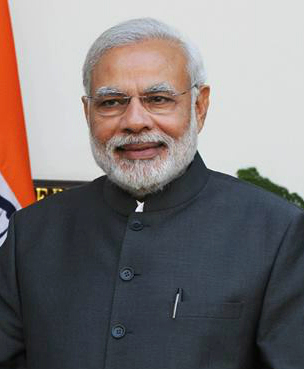
India has made an attempt to remain neutral throughout this massive world conflict. They are in BRICS, conduct business with the West, and abstained from voting for ceasefire between Israel and Palestine. Yet it is not possible to remain neutral amid such intense tensions between nations. India recently angered China by accepting a congratulatory message from Taiwan’s newly appointed president.

“I look forward to closer ties as we work towards mutually beneficial economic and technological partnership,” Indian Prime Minister Narendra Modi told Lai Ching-te after Taiwan’s new president congratulated him on his re-election. Lai Ching-te posted on social media that he looks forward to “enhancing the fast-growing Taiwan-India partnership.”

Taiwan is expected to hire up to 100,000 Indian workers, while India is posed to open trade with Taiwan. India does not officially have a stance on the One China policy but China views any neutrality as aggression. Chinese Foreign Ministry spokesperson Mao Ning released a statement after the short interaction between Modi and Lai Ching-te.

Taiwan ECM 2

First of all, there is no such thing as ‘president’ of the Taiwan region. As for your question, China opposes all forms of official interactions between the Taiwan authorities and countries having diplomatic relations with China. There is but one China in the world. Taiwan is an inalienable part of the territory of the People’s Republic of China,” Ning said when asked about the Modi-Lei exchange. “The one-China principle is a universally recognised norm in international relations and a prevailing consensus in the international community,” Mao said, adding, “India has made serious political commitments on this and is supposed to recognise, be alarmed about and resist the Taiwan authorities’ political calculations. China has protested to India about this.”

India has been on the rise. It is willing to conduct business with anyone, but that may come at a price if it angers the wrong trading partners. Taiwan and India signed the Bilateral Investment Agreement (2018), Air Services Agreement (2016), and Labor Cooperation Pact (2024). Trade between India and Taiwan reached $7.7 billion in 2021, and over 100 Taiwanese companies are now invested in India.

It remains to be seen how long India can remain neutral, not just in the Indo-Pacific but amid growing global tensions. Still, India is prioritizing domestic interests first and foremost and reaping the benefits.