Germany Caught in a Power Vacuum


Armstrong Economics Blog/Germany Re-Posted Nov 30, 2021 by Martin Armstrong

Spread the lovemore

Since the new government will not be officially sworn in until next week, Germany currently has no political leadership capable of taking action. Angela Merkel has already left the Bundestag but will remain in office as Chancellor until her successor, Olaf Scholz, is sworn in next week. This state of power vacuum further destabilizes the country’s political security. For several weeks, unvaccinated people have not been allowed to enter restaurants, museums, movie theaters, or retail stores, even if they present an actual negative covid test. Only grocery stores and pharmacies allow access to unvaccinated people. This has divided Germany’s society.On November 30, the Federal Constitutional Court will publish its first landmark decisions on constitutional complaints to the federal government’s emergency break earlier this year. The government had imposed drastic restrictions and completely put Germany in lockdown for almost six months. This is another reason why the new government is hesitant and must wait for the decisions of the Federal Constitutional Court to take further actions to reduce current COVID infections. The number of covid infections is increasing faster than last year, even though more than 70% of Germans are now fully vaccinated.

Was 2021 the Peak for Davos?


Armstrong Economics Blog/WEF Re-Posted Nov 30, 2021 by Martin Armstrong

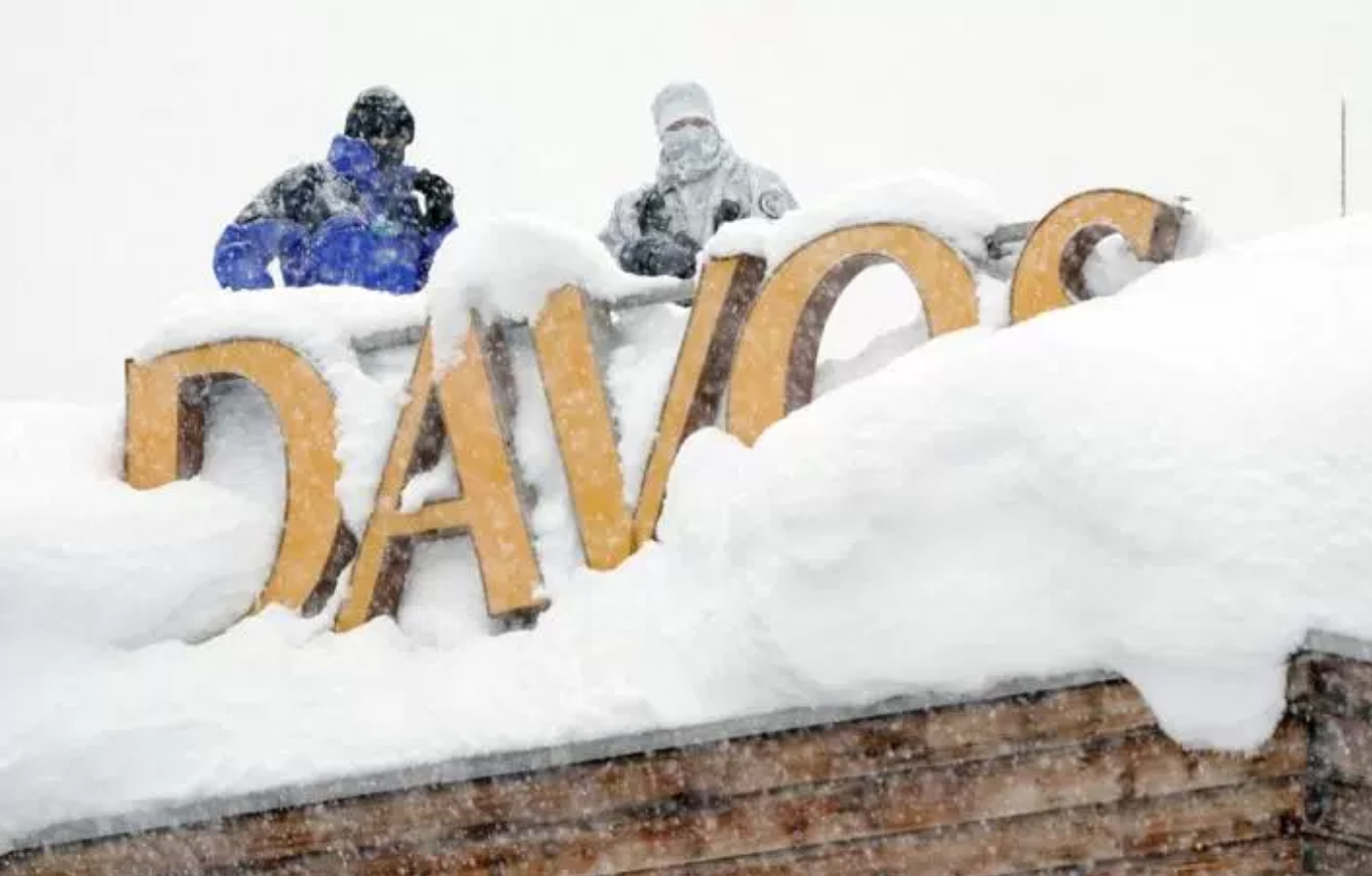
Reliable sources have confirmed that Klaus Schwab and even attendees have been getting such threats of violence and death that he has postponed Davos in January for the first time, claiming it is due to the pandemic, which is not true. Schwab is, at last, starting to realize that there is a price to his academic theories. There has been an avalanche in Switzerland but it is death threats rather than snow. This sweeping wave of anger is erupting worldwide, and there is no way that security measures can be enacted to protect world leaders. Even the Swiss news outlet Südostschweiz has also reported about the violent threats. Both employees, as well as attendees, have also been targeted personally.

Schwab is going to discover that there is a huge price to pay for his bizarre ideas that you can destroy the world economy in 2 to 3 years and build it all back better, GREEN, in the blink of an eye. Just looking at the USA, there are approximately 350 million people in the USA, and interestingly, according to the 2016 census, there are 3.14 (pi!) persons per family, on average. Consequently, that implies that the number of homes in the United States at most would be 100 million (give or take). According to the 2010 census, we find about 80% of the population lives in cities rather than the suburbs. We are probably looking at about 50% of that 80% living in apartments/condominiums, which would suggest that up to 40% of Americans live in multi-family type housing. If we then take the remainder of 60%, that would seem to be about the round maximum living in single-family structures. If we take the pi number for a family, that implies that there are about 70 million single-family homes. If we look at Statista, then record the number of owner-occupied housing units in the United States by the 2nd quarter 2021 has reached 82.51 million.

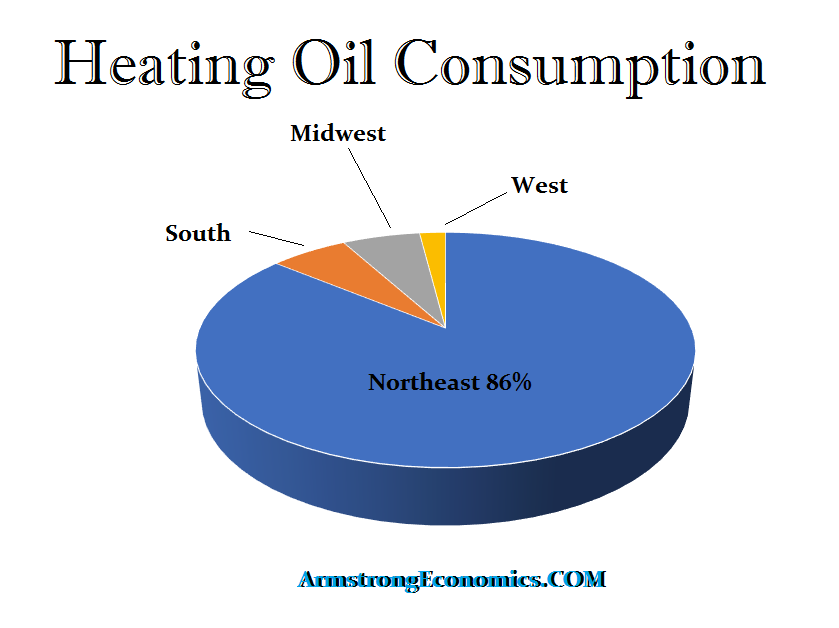
Ironically, the very states that voted Democrat will be the ones that are hit the most. The Northeast consumes 86% of all the heating oil market. California has banned all new buildings that use natural gas, forcing them to power by electricity when the grid will not support it. It is absolutely impossible to convert 82 million single-family homes to electricity. This is where their academic theories fall apart.

The rise in the price of not just gasoline, but heating oil will impact the Democratic states more than the Republican South. They were never informed that a vote for Biden would reduce their standard of living. Then about 83% of households with propane heating are located in rural areas are typically beyond the reach of the natural gas distribution infrastructure and electricity, which is not reliable. However, almost 85% of households in the United States heat with natural gas or electricity in some cities, but more than 10% rely on heating oil, and that is concentrated in the Northeast.

I seriously question a career at the World Economic Forum as being viable in the years ahead. Employees will have to live in a bunker underground and never leave. Working for Schwab may be a highly dangerous career post-2021. World leaders who will be a great risk even attending these events, and Schwab just may see that 2021 was 34 years since his first real Davos event. This may have been the peak in Davos as of 2021.

Joe Biden Declares Everything is Okay After Meeting With Retail Executives


Posted originally on the conservative tree house on November 29, 2021 | Sundance | 151 Comments

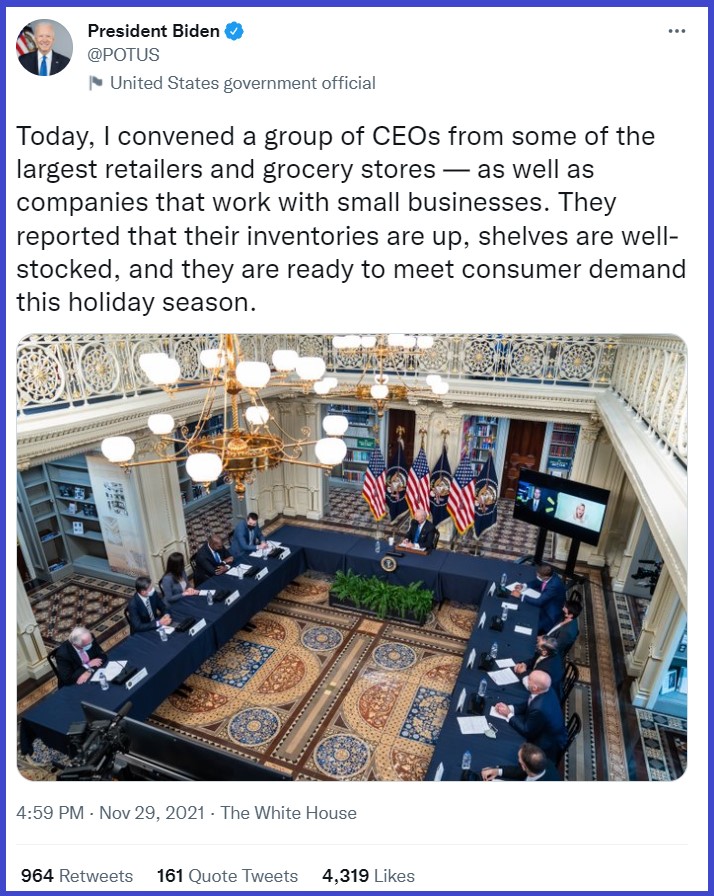
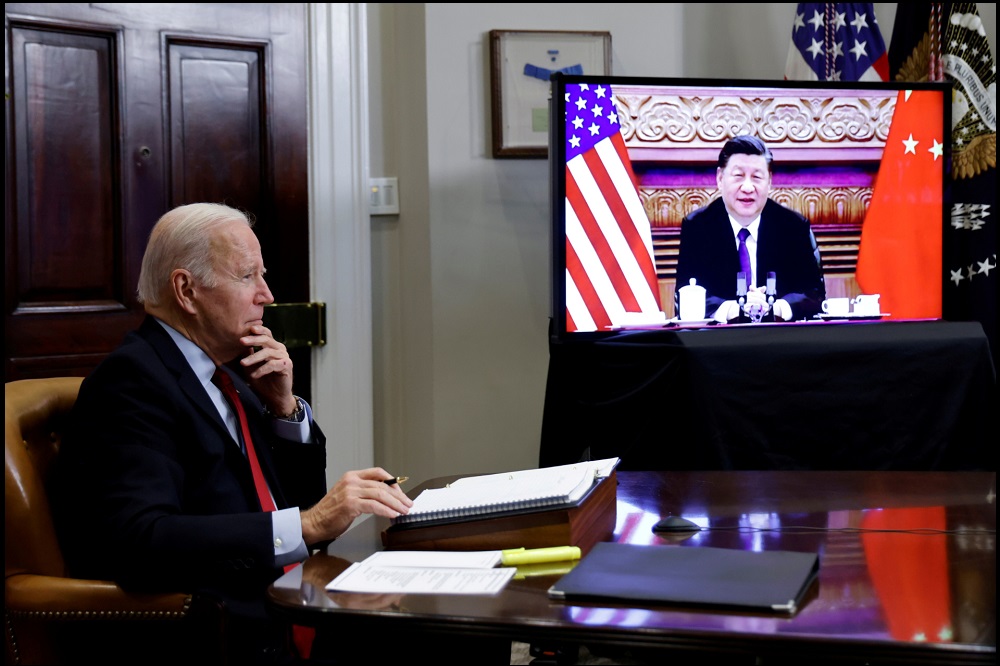
Earlier today, Joe Biden met with a roundtable group of retail executives and CEO’s.  The topics of the discussion were supply chain issues and current impacts to businesses that are causing rapid inflation.

At the conclusion of the meeting there was supposed to be a press conference where Biden was going to outline what his administration is doing to combat the ever-increasing problem of inflation.   However, moments before the public remarks were scheduled to begin, the White House cancelled them.  Instead, the people managing Joe Biden sent out the following tweet:

According to the White House messaging, everything is wonderful – there is no cause for concern, the supply chain crisis has been handled, shortages are no longer present, shelves are full, the clouds have parted and Santa is enjoying his time preparing for Christmas by watching unicorns play with the reindeer.  Baghdad Bob would be proud.

If the narrative is true, if there is so much good news to share, then why cancel the remarks and press conference about inflation?

One likely scenario is the retail CEO’s told the White House about: (1) upcoming additional price increases due to energy policy; and (2) the latest news from China where the shipment of goods is going to go from bad (slow) to much worse (a virtual halt):

(CNBC) – […] Helen Zhu, managing director at Hong Kong-based investment firm Nan Fung Trinity echoed similar sentiments about China’s response.

“If omicron turns out to be a major threat, I think China will certainly continue to lengthen the period of staying isolated,” she said on CNBC’s “Street Signs Asia” on Monday. […]  China’s ultra-strict zero-Covid strategy involves mass lockdowns — even if just one or a handful of cases are detected. It also includes extensive testing, heavily controlled or closed borders, as well as robust contact tracing systems and quarantine mandates.

The Asian giant has also implemented strict checks at its ports, including monitoring ships and cargo, to prevent cases from slipping into the country. (read more)

Beijing is cunning.  They know Biden is weak politically and personally.  Everything they can do to increase the impact of inflation weakens the U.S. economy, and China can do an awful lot on the supply side to create even more U.S. inflation.

Biden’s globalist policies in general make the U.S. Main Street economy very vulnerable; however, Biden’s energy policies specifically make that vulnerability exponentially worse.

Inspired by TJ Maxx, Jill Biden Decorates The White House For Christmas


Posted originally on the conservative tree house on November 29, 2021 | Sundance | 261 Comments

[SEE MORE HERE]

JoeBamaNomics, Oil and Energy Analysts Indicate $100 Barrel Crude Costs By End of This Year, The Biden Team Really Need Omicron


Posted originally on the conservative tree house on November 29, 2021 | Sundance | 190 Comments

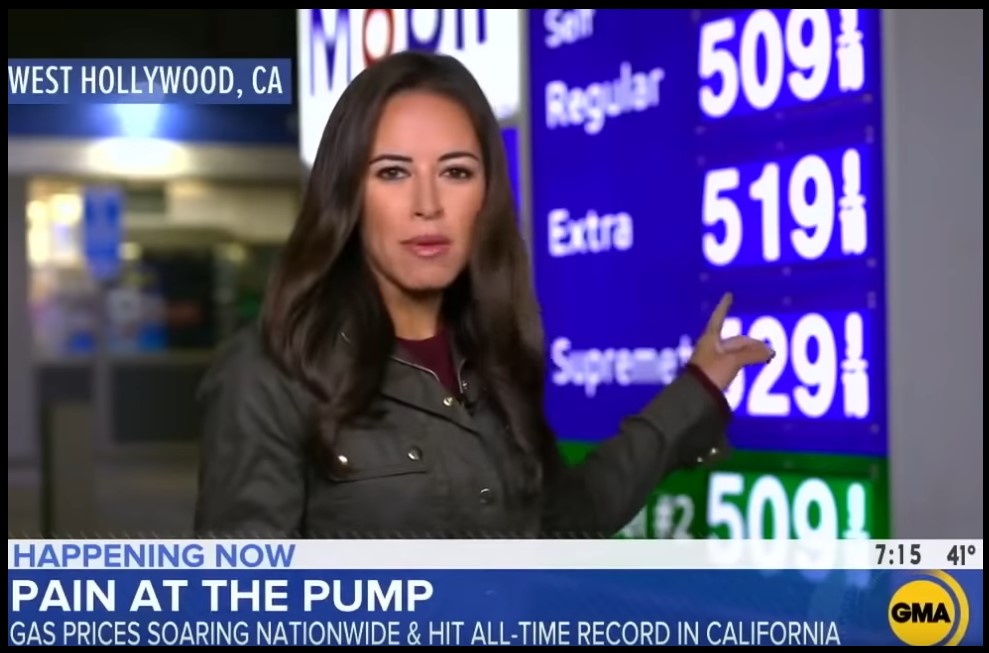
JP Morgan is emphasizing that U.S. energy policy is likely to end up with $150-$200 per barrel oil costs in next year ($10/gal gasoline).  [LINK] Whether that dire prediction comes true is anyone’s guess.  However, consensus review makes nearing $100/barrel costs by the end of this year just as unnerving. ($6/gal gasoline).  That outcome is the centerpiece for why Biden needs the Omicron variant to impact the demand side urgently.

New York – […] “We believe the evolution of coal prices might reflect supply, demand, cost of capital and energy transitioning issues for all fossil fuels, and it would certainly be possible that oil prices will follow the same pattern (inflation adjusted for oil, that would be in a $150-200/bbl range),” wrote a team of JPMorgan Chase & Co. strategists led by Marko Kolanovic. (read more)

This analysis essentially aligns with CTH outlooks and complements what Allianz Group chief economic advisor, Mohamed El-Erian, was saying yesterday [LINK]  The Biden energy policy is specifically to blame for the current price increases across the entire energy sector.

All of Biden energy policy, and all of Biden spending around the Build Back Better agenda, is designed to take us from where we are now into some distant place where fossil fuels are not the energy mechanism; that’s the Green New Deal component of this.  However, there is no policy for their transition – they stopped all current energy policy around oil and coal.

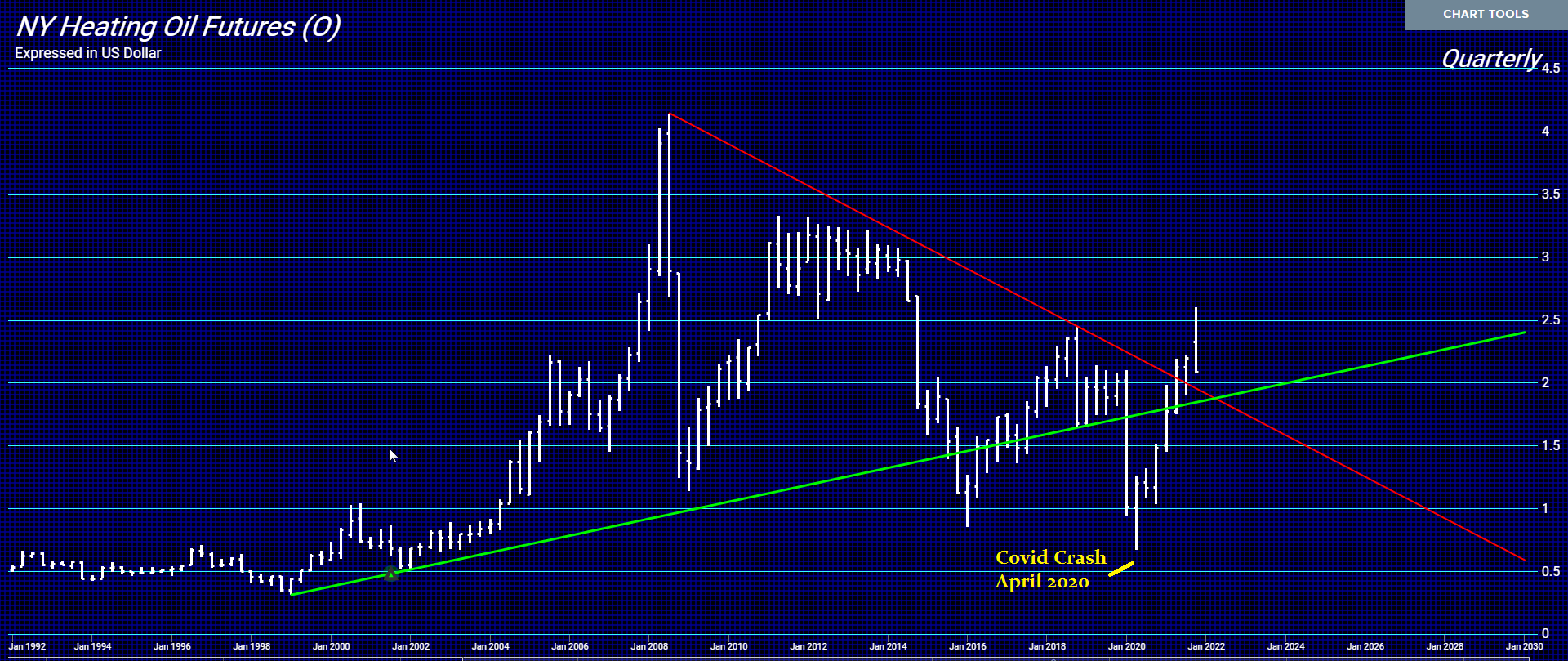
Biden halted pipelines, cancelled oil and gas leases, blocked expanded refinery capacity and regulated the entire U.S. oil industry into a place of diminished capacity.  That is why energy prices have, as Obama promised,  “necessarily skyrocketed.”  And, we ain’t seen nothing yet.  Depending on how cold it is this winter, you can expect natural gas and home heating oil to double in the next few months.

The near horizon looks pretty clear.  Gasoline will keep rising fast and will cost $6 to $7/gal before next spring.   There is no way under current Joe Biden policy to avoid this, unless he was to completely abandon his energy policy; that’s not likely.  The climate change ideologues, academics and far-left communists behind the Biden policy are not likely to see the catastrophic economic damage as a bad thing, instead they will likely say it’s the new normal.

With that level of supply side economic chaos seemingly unavoidable, the only way for Biden to try and mitigate political damage is an attempt to halt the demand side.  That’s why the administration needs Omicron.

It is more important for our government to use Omicron than all other governments because we are the spending and ideological center. That is why we are seeing a much bigger emphasis upon the fear of Omicron by our government; and that is why the descending levels of variant emphasis/fear fall in line depending on how closely other nations are aligned as allies.

Meanwhile… China, Iran and Russia (adversaries on an ideological level) know what is happening, and to the extent they can drive U.S. inflation even higher, they will.  Our adversaries know how to use Biden’s policy to make massive inflation hurt the U.S. disproportionately. This is why OPEC is giving Biden the middle finger on his ‘request’ to increase oil production, and this is why China is now triggering shipping quarantines. (more)

Again, as repeated previously, our window to prepare for a massive jump in inflation is slowly closing.  We are down to around 60 days, and then things will get really ugly.  The people behind Joe Biden know this.  Omicron is a tool they are attempting to use to moderate the speed of impact within the inflation window.

WASHINGTON – […] The main driver behind oil prices is supply and demand. And while the Omicron COVID-19 variant put a dent into oil prices on Friday, with investors fearing that potential country lockdowns would reduce travel and therefore lower demand for oil, JPMorgan viewed that price move as an overreaction.

“We believe the market may overestimate the impacts of the recent emergence of the Omicron variant of COVID-19 on oil prices during the US holiday period,” JPMorgan said in a Monday note, inferring that there will be little to no slowdown in holiday travels even as the Omicron variant spreads.

[…] With demand for oil likely to remain steady, supply will remain the key driver behind oil prices for years to come. And with OPEC+ “being firmly in the driver’s seat for oil prices,” JPMorgan thinks Brent will hit $120/bl in 2022, and could even overshoot to $150/bl in 2023, representing potential upside of as much as 100% from current levels. (read more)


Federalist v Ant-Federalist / Vaccinated v Anti-Vaccinated


Armstrong Economics Blog/America’s Economic History Re-Posted Nov 29, 2021 by Martin Armstrong

QUESTION: Hi Mr. Armstrong,

Thanks for all you do and all your hard work!

I have a question I was hoping you would comment on. I have been trying to wrap my head around the hows (not the whys) of the absurd consequences of this plandemic.  What it reminds me of is the fight between the Federalists and the Anti-Federalists during the ratification process of the Constitution. I was taught the Bill of Rights bridged the gap between the issues back then and obviously satisfied their differences since the ratification went through.

Today, it seems as if there is no Bill of Rights and no possible bridge to balance political differences. There are tyrannical federal policies (under the guise of public health/national security) and the lawsuits from state AGs, governors and private organizations to prevent these policies.  This is the obvious recourse.  But it seems this is not enough and more importantly this recourse will not prevent the same thing from happening again in the future.

So my question is what recourse did the Anti-Federalists have (after the Bill of Rights were added to the Constitution) to address their worst fears? Elections? Overthrowing the government?

Are the Bill of Rights being violated just during this cycle of history?  Or is there really no other recourse besides arming ourselves if the police decide not to support the people?

JC

ANSWER: The recourse of the anti-Federalists was separation which led to the American Civil War. What you are saying is only partly true. They voted on the Constitution without the Bill of Rights. They got it through only on a majority vote of 39 out of 70 attendants. To the surprise of most, the United States was wrongfully created and the Federalists won at first, but it was the opposite party of Jefferson that eventually took down the Federalist Party.

It was Alexander Hamilton who led the charge to ratify the Constitution. He solicited John Jay and James Madison, and together they would create a series of 85 articles, published in the New York newspapers between October 27, 1787, and August 16, 1788, which became known as the Federalist Papers. It was Hamilton who chose the title of The Federalist, which was at that moment a controversial act of political aggression since it was the anti-Constitutionalists were actually for federalism insofar as it was a union. By entitling this article series The Federalist, Hamilton would take the high ground by asserting that the Constitution represented a better version of federalism than the Articles of Confederation.

Whiskey-Rebellion

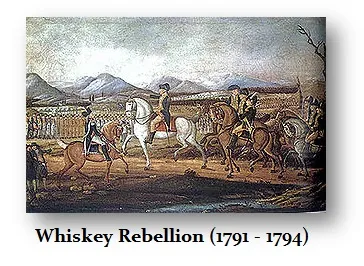
Once federalism took hold, it quickly became self-evident that the people overthrew a king for ruthless bureaucrats. The Whiskey Rebellion was a tax protest in the United States beginning in 1791, during the presidency of George Washington. Farmers who used their leftover grain and corn in the form of whiskey as a medium of exchange were forced to pay a new tax. Yes – it was a 1791 version of Bitcoin. Many participants were Revolutionary War veterans, who argued that they were fighting for the very same principles of the American Revolution – no taxation without local representation. Of course, the new Federal government maintained the taxes were the legal authority of the taxing powers of Congress that they put in the Constitution – not the people.

It was in July 1794 this first confrontation between those who really had not consented to this federalism erupted into violence with more than 500 armed men attacking the fortified home of tax inspector General John Neville. President Washington responded personally with men he then called “rebels” to justify their massacre. Once the state attaches the label “criminal” it then justifies violence against them regardless of the issue in question.

Washington gathered an army of 13,000 militia provided by the governors of Virginia, Maryland, New Jersey, and Pennsylvania, and set out to wage war against the American people, most of whom had fought for American Independence. Washington rode at the head of an army personally. The rebels were way outnumbered and it became clear, pay your taxes or you will be dead. The rebels went home before the arrival of the army, and there was no confrontation. Nonetheless, it was at that moment that the evil of the federalist was exposed once and for all.

The union from that moment on was NEVER 100%. As I said, the ratification was 39 out of 70 votes and if human nature is what it is, there were probably votes that were bought with gold. It was this union by force that led to the American Revolution. The slavery issue was simply that it was the labor force in those days. Today they are outlawing fossil fuels which is already altering the course of the economy. Putting the human question of slavery aside and looking at this from an economic perspective, the North was telling the South they had to lockdown their economy and effectively terminate its existence. Naturally, with time, many stayed and were paid wages instead of just free room and board as was the case of serfdom. A serf could not be sold except with the farm whereas a slave could be sold individually.

In modern terms, if you outlaw the means to earn a living over whatever issue, they will rise up against the source of that decree. Hence, history will repeat because human nature remains the same. Consequently, the ONLY solution will be separation for the tyranny of the majority will also result in civil war.

Four Months of Unanswered Protests in Guadeloupe


Armstrong Economivs Blog/Civil Unrest Re-Posted Nov 29, 2021 by Martin Armstrong

Citizens of the French Caribbean territory of Guadeloupe have been protesting COVID-19 restrictions for the past four months. In response, authorities have implemented a 6 PM curfew to prevent people from gathering. Reports of protestors shooting at the police, arson, and looting have resulted as anger grows.

The citizens of Guadeloupe have every reason to be hesitant. From 1973 to 1993, the insecticide chlordecone was used on banana plantations, resulting in mass exposure to dangerous toxins. The chemical was used for nearly two decades, and almost all adult residents have traces of the toxin in their bloodstream. The coastal waterways, rivers, and large areas of soil still contain the deadly toxin. Fishing in many areas is prohibited. Cancer, tremors, premature births, slurred speech, short-term memory loss, and a lowered sperm count are among the many dangers chlordecone possesses. Why did it take 20 years to ban chlordecone? Banana lobbyists. What is France doing to correct the problem? Nothing.

The people of Guadeloupe have already suffered at the hands of a corrupt government. The country had an unemployment rate well above 20% before COVID started, and a large part of its GDP is derived from tourism. Forcing vaccines on a population that is currently battling the effects of government incompetence and greed will lead to disaster.

Mass Psychosis and Totalitarianism


Armstrong Economics Blog/Behavioral Economics Re-Posted Nov 29, 2021 by Martin Armstrong

“Logic can be met with logic, while illogic cannot—it confuses those who think straight. The Big Lie and monotonously repeated nonsense have more emotional appeal in a cold war than logic and reason. While the enemy is still searching for a reasonable counter-argument to the first lie, the totalitarians can assault him with another.”

― Joost A.M. Meerloo, “The Rape of the Mind: The Psychology of Thought Control, Menticide, and Brainwashing”

moreCategories:Behavioral Economics

Three Special Reports that were Part of the WEC Are Now Available


Armstrong Economics Blog/Reports and DVDs Re-Posted Nov 28, 2021 by Martin Armstrong

Spread the lovemore

A Sober Review


Armstrong Economics Blog/History Re-Posted Nov 28, 2021 by Martin Armstrong