Were Traders Forged in the Pits of Old?


QUESTION: Mr Armstrong, love your blog, as with all your readers its opened my eyes to new ideas and ways of looking at the world.
I’m a recent computer science graduate who’s very interested in finance and trading so I read your blog every day and have a subscription to Socrates. I read a post where you said the soul of traders was forged in the pits, how does a new kid like me go about learning to trade really well in the age of tech? How does a computer science guy like me advance in the direction of finance and computer science like you have?
JB

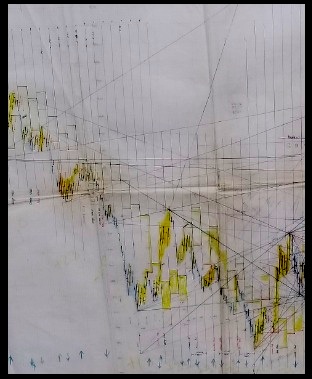
ANSWER: I was told I had the last TransLux ticker-tape in the country. They came to my office and said they were taking it out. They would no longer support that service. Yes, I used to do my charts by hand in the 1970s. When the screen appeared in the ’80s, I still kept my paper tape. I would learn to trade from the sound. If something would be happening, it would sound like a machine-gun constantly shooting. Quiet days it would tick, tick, pause, tick.

I believe it was the sound that helped me learn to trade. I would just get a “feeling” or sixth-sense so to speak. You could smell the blood on the floor by the tape.

Trading in the pits was like playing poker. You had to read the faces around you and get a sense if they were bluffing or real. That was the real trader environment. You had to know when to press and when to fold.

I have some ideas to help with getting that sixth-sense. It is on my bucket list of things to accomplish. I am trying to pass on what I have learned before it is my time to pray to beam up, please.

With pit trading closing and moving to electronic, we are losing a lot. I fear the next crisis for there will be even less liquidity with people only looking at screens. It will lack the “feeling” and the smell of blood on the floor to know when the trend will shift.
German Real Estate – the Peripheral Market Rally


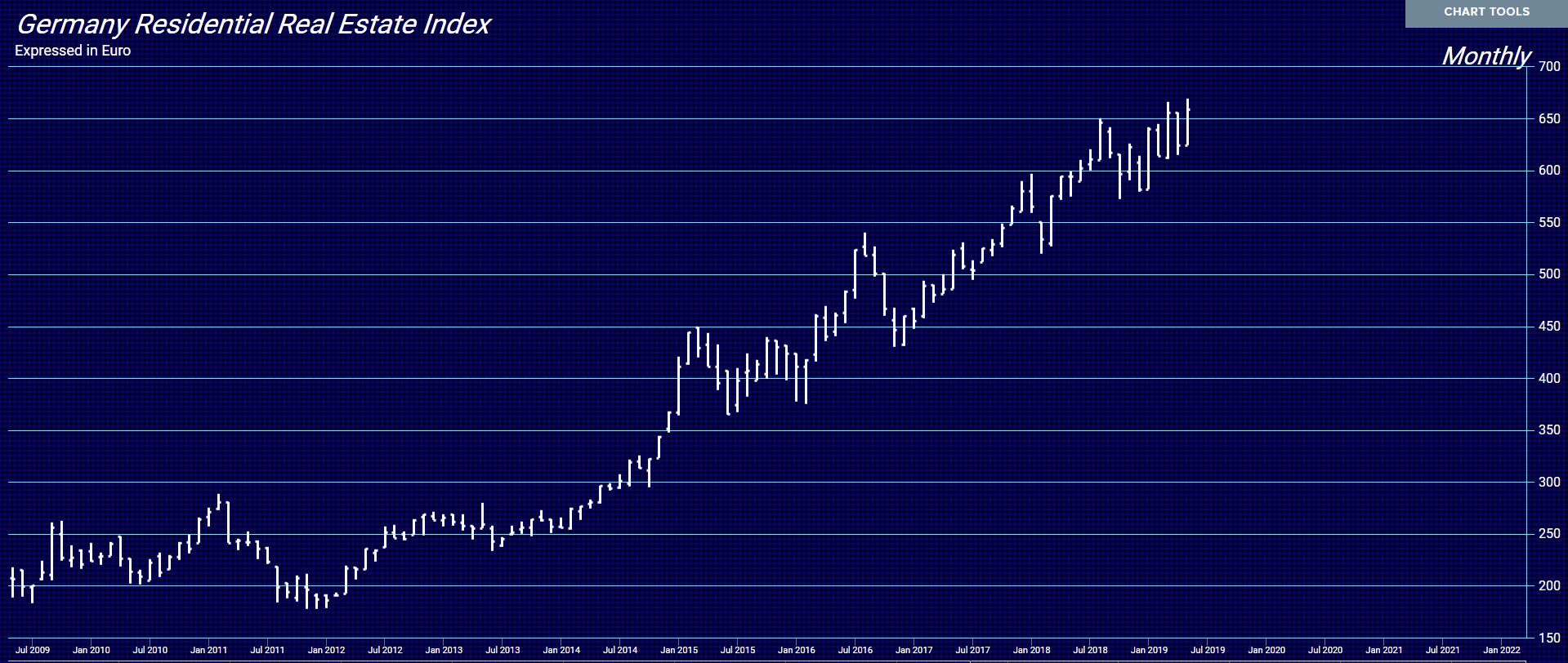
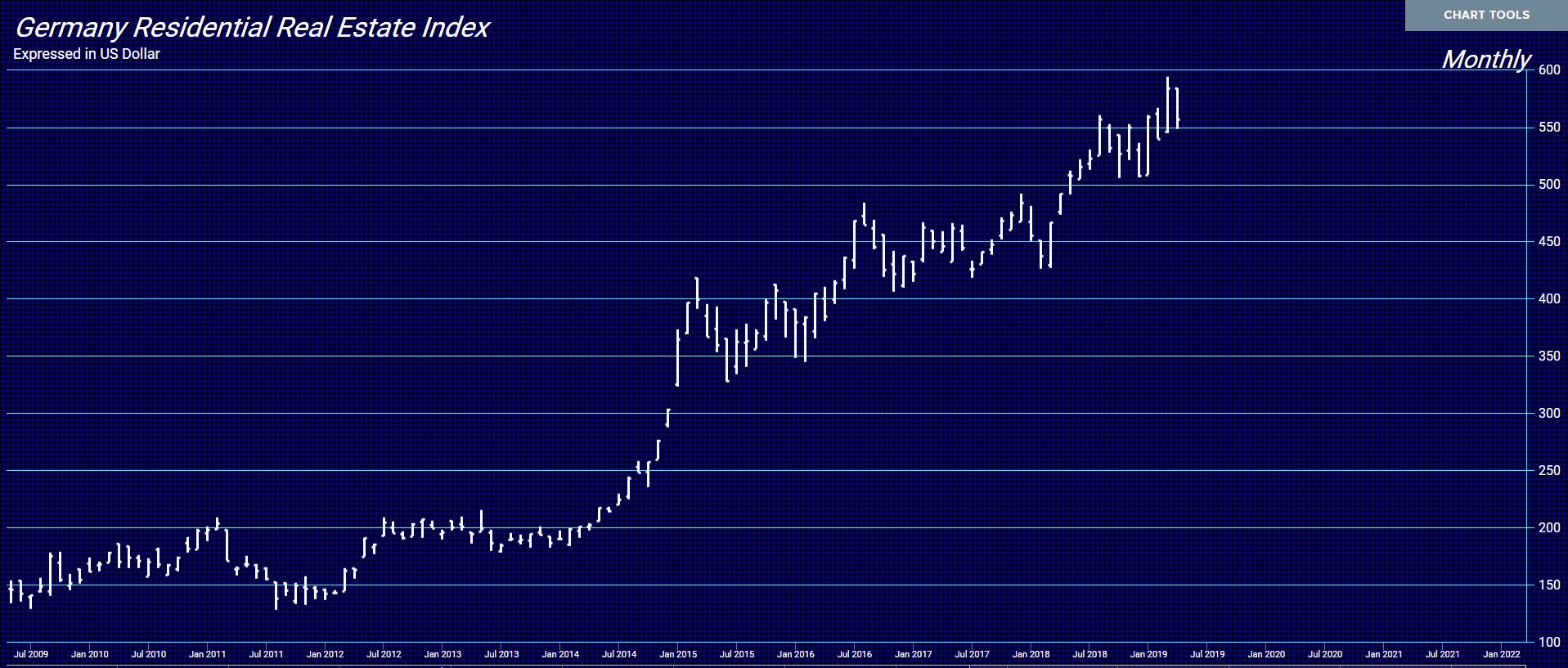
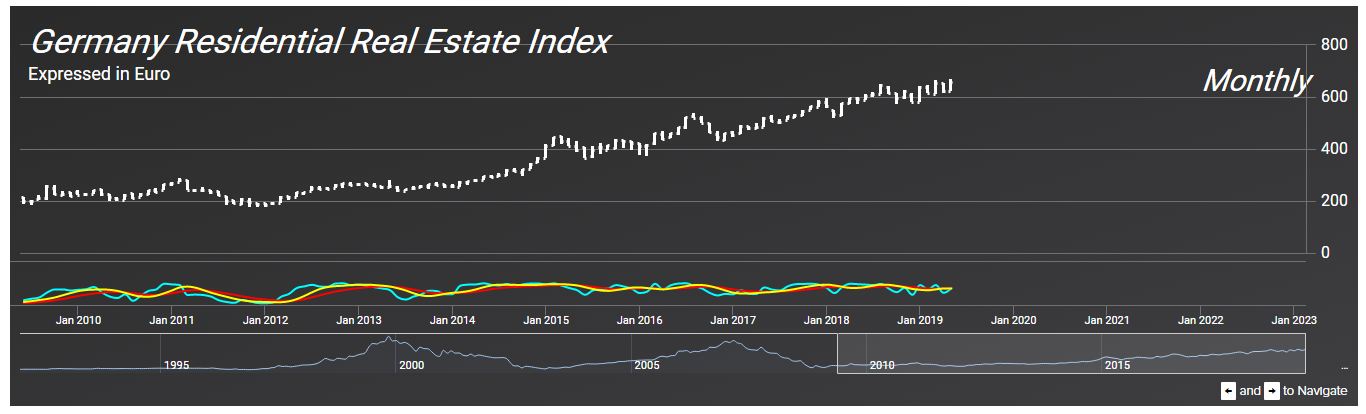
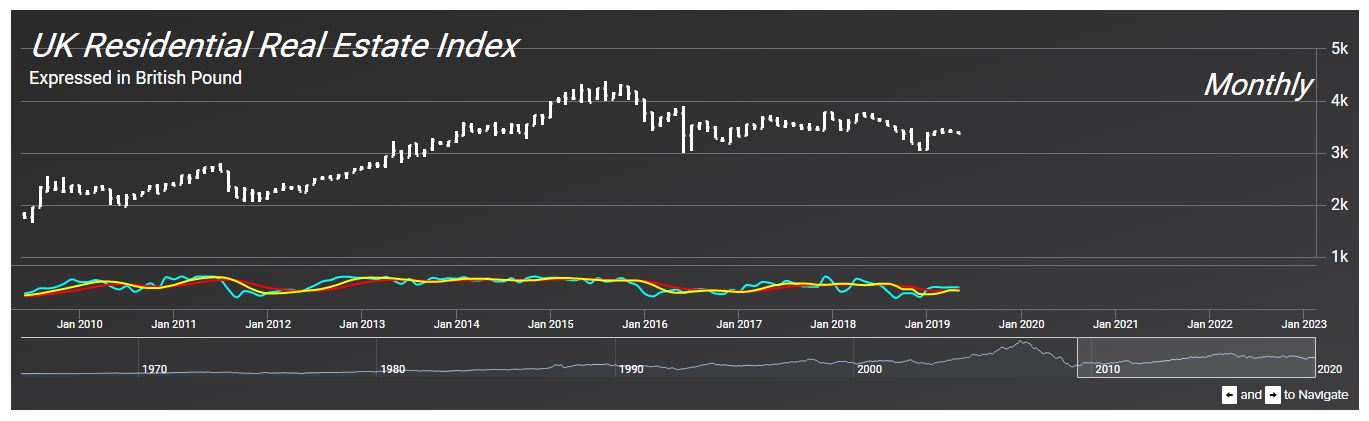
QUESTION: During the WEC I came to understand Real Estate will crash. Then when looking at Socrates, it shows real estate indices, however I do not recognise these trends. First I thought they were in $, I need to translate them to euro base to recognise the trend. But no, the real estate indices in Socrates are in terms of euro already and going down, while currently prices are again going thru the roof. Can you please explain what I am missing here?

M

ANSWER: It all depends upon which market you are looking at. The core markets where there was a lot of speculation like Britain saw a peak in 2015 and has been declining. London is far worse. The German market was not the object of massive foreign capital inflows. They were primarily internal shifts within the Eurozone. I was in Bavaria recently and looked at houses and I thought they were cheap in comparison to the United States.

Nevertheless, the rise in the German market has been about 50% since 2015. When we look at it in dollars, the gain is about 10% less. Insofar as German real estate, it has been a peripheral market to the speculation. That means it will rise after others decline.

Keep in mind that as the currency weakens, tangible assets become the haven.


Portugal’s Miracle?


The Portuguese economy was bailed out by the European Union eight years ago. It is now booming, also in part for its aggressive attraction of courting foreign investors. If you want to live in Portugal long-term or permanently, you will need to apply for Portuguese citizenship or Portuguese permanent residency. Portuguese permanent residency is available after five years of residence, while Portuguese citizenship is available after six years, or three years if claiming Portuguese citizenship by marriage. Both Portuguese citizenship and permanent residency allows you to remain in Portugal indefinitely and access similar benefits, although there are some differences between the two. While residents can stay in Portugal indefinitely by continually renewing their permanent residency, there are certain added Portuguese citizenship benefits to entice foreigners to take on the Portuguese citizenship application process.

This movement has been a major factor behind Portugal enjoying its highest economic growth in nearly two decades, with the major trend fueled by record tourism, an upswing in the housing market from foreign investors, a growing tech sector, and strong exports. Private investment has returned to 2009 levels, helped by foreign investors including Chinese companies who have focused on Portugal.

But for every glitzy new hotel and fancy restaurant in Lisbon, there is growing concern that the infrastructure is aging. This was illustrated by the locomotive that fell apart in late February, which was rented from Spain as a stopgap measure. There has been a lack of public investment which is beginning to become obvious. Its total debt is close to 120% GDP, which is one of Europe’s highest. The ruling socialists have limited room to finance their dreams under the EU rules and at the current artificially low interest rates maintained by the ECB. The budget deficit of the 2010 era of 11% of GDP has been reduced by attracting foreign capital and cutting spending on public infrastructure. The problem that Portugal faces is that its success of late has been constructed on the immediate results, not long-term.

How the World Economy Works without Government


Myths v Reality – Milton Friedman


Universal Basic Income


The idea of some Universal Basic Income has been around for a long time. Here is Milton Friedman on his proposal of a Negative Income Tax. There will always be welfare for there are people who cannot work for some disability and others who prefer not to work and game the system. Even programs where the state directly pays for the food rather than food stamps or restricts the food stamps to certain products, the ingenuity of some people cannot be underestimated. They will sell the products they get for cash. There are signs on the streets buying needles and strips from people who are diabetic and get them for free from the state. There are instances where a woman has a child and tells the state she has no idea who the father is yet a night he shows up and leaves when a case worker is due to arrive. These are abuses of the system that no matter what we try to do, there will be people who figure out how to work the system. So there will NEVER be 100% compliance no matter what system we devise.

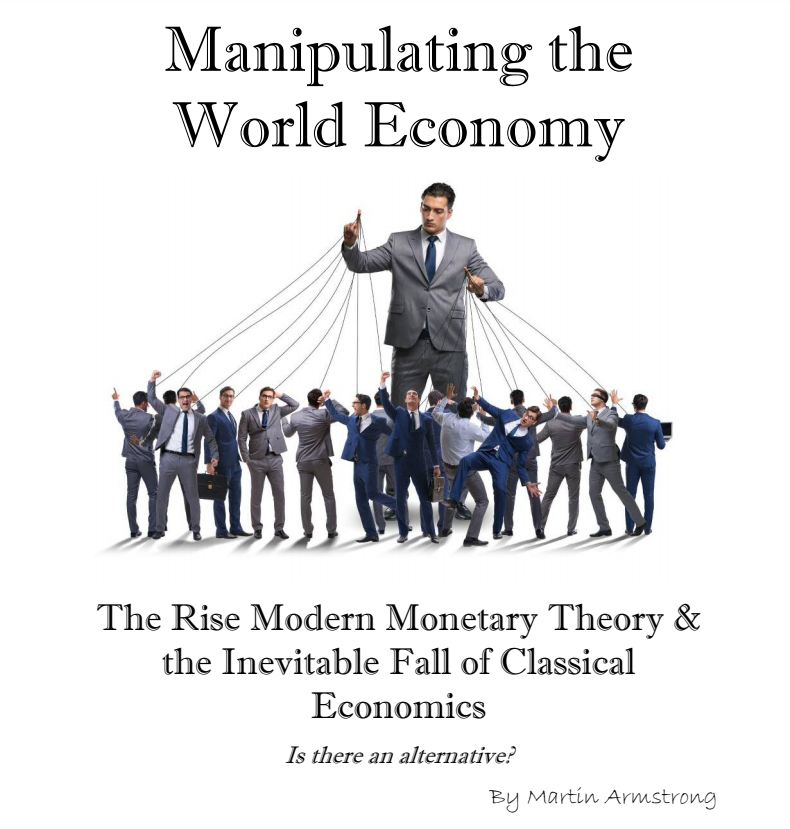
Manipulating the World Economy will be also available in Russian, German, and Chinese


We are looking at having it Translated into several languages. We hope this English version will be available by October in hardbound. I really hope this will help change the debate for what lies at stake is the future for us, but more so our posterity.

Russian

манипулируя мировой экономикой

German

Manipulation der Weltwirtschaft

Chinese

操縱世界經濟

Manipulating the World Economy


A lot of questions have been pouring in from how much to will there be a kindle version. I am not sure of the cost yet. That depends on the printer. It will be full color and extensively illustrated. It covers everything you wanted to know about what is going on with the central banks. There will be a documentary film next year on this subject matter.

The price will be for general circulation worldwide. As soon as it is available, we will let everyone know.

Is the Fed the Only Means of Creating Money?


QUESTION: I am confused. Is it true that only the Federal Reserve can create money and not the Treasury?

HB

ANSWER: It all depends upon your definition of money. If you are asking about paper currency, then the answer is yes. If you are speaking of “elastic money,” which really is just book-entries, then that is also truly confined to the Federal Reserve. If you are including in your definition of money all government borrowings, then that is the prerogative of the Treasury. Now, if you are talking about leveraged book-entries where a bank is lending out money so two accounts will show an entry for the same money or close to it, then that is private banking lending. The definition is fluid. It depends greatly upon what you are calling money.

Will Basel-III Changing Gold’s Status as a Reserve Asset for Banks Change the Future?


The Bank of International Settlements under Basel-III changed the status of gold as a reserve asset effectively on April 1, 2019. Gold used to be viewed by the banks as a risky asset and classified under “Tier-3”, which meant it was considered risky and could only be carried on the books at 50% of the market value for reserve purposes.  Naturally, gold has historically been classified as a Tier 3 asset because its value fluctuated. To the extent that the value was reduced for reserve status by 50% ensured that there was little incentive for banks to retain gold as a reserve asset regardless of their beliefs.

Since the BIS reclassified gold as a “Tier-1” asset, its value is now no longer reduced but is reflected as 100%. Now people assume banks will run out and buy gold. The problem is that it is not a fixed price on the balance sheet but it is regarded only as a 100% of market value.  While some claim that this makes Gold a “riskless” asset in the eyes of world banking authorities, they fail to note it is market value. Cash does not fluctuate $1 is still $1 regardless of what it buys.

Banks are NOT in a mad rush to buy gold and shift their reserve asses when they cannot employ gold in the banking business. True, there was once upon a time when banks cherish gold reserves but that was when gold was fixed on a standard. It will by no means increase confidence in any bank or the system as a whole. Gold remains illiquid insofar as a reserve asset is concerned.

While there is no incentive for banks to load up on gold even if it is a Tier-I asset from a banking and economic standpoint since we are not on a gold standard and its value will fluctuate unlike cash reserves, There is another reason why a small portion would make sense to retain in gold outside of the United States especially in Europe. The reserve status that is Tier-I in Europe would be bonds of all member states of the EU. There is obviously a risk in that respect.

These standards, collectively called Basel III, compare a bank’s assets with its capital to determine if the bank could stand the test of a crisis. Capital is required by banks to absorb unexpected losses that arise during the normal course of the bank’s operations. The Basel III framework tightens the capital requirements by limiting the type of capital that a bank may include in its different capital tiers and structures.

Because not all assets have the same risk, the assets of a bank are weighted based on the credit risk and market risk that each asset presents. For example, take a government bond may be characterized as a “no-risk asset” and given a zero percent risk weighting. On the other hand, a subprime mortgage may be classified as a high-risk asset and weighted 65%. So Basel III considering government debt as “no-risk” is a little foolish when we look into the years ahead.

Gold will offer a neutral bank with respect to government debt holdings, but it will still not provide a stable base of an asset since it will fluctuate rather than the immediate currency base. Gold will offer a hedge against sovereign debt among European banks more so than America.