
Armstrong Economics Blog/Economics
Posted Jul 27, 2019 by Martin Armstrong
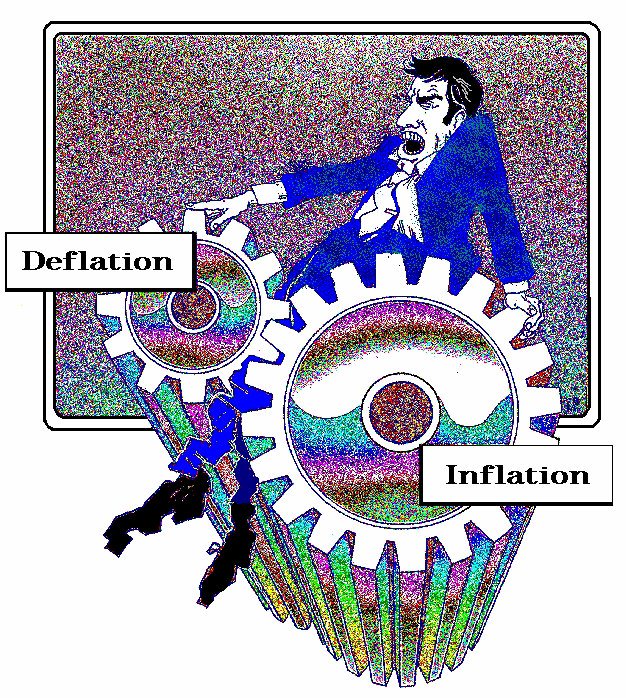
QUESTION: Mr. Armstrong is there any way we can not have inflation. If so how? If not what would you say 5% or more?
S
ANSWER: It all depends on your definition. The type of inflation coming is more STAGFLATIONwhere prices rise due to cost-push (shortages) but there is a declining economic growth. The more familiar inflation is a DEMAND lead event because the economy is booming. Because governments are desperate for money, they keep raising taxes and are increasing enforcement. This trend is DELATIONARY for it reduces disposable income. The INFLATIONARY pressure comes from the rising costs which are set in motion by raising taxes.
Then we add the impact of the climate chaos creating shortages in food and that furthers cost-push inflation. The end result will be the shift from PUBLIC to PRIVATE where people will run away from government debt on all levels and move to tangible assets to survive.
President Trump Remarks During Oval Office Swearing-In Ceremony – Defense Secretary Mark T. Esper…
July 23, 2019
This evening President Trump delivered remarks during the swearing-in ceremony for newly appointed Defense Secretary Mark T. Esper. [Video and Transcript] The Senate voted 90-to-8 easily confirming Secretary Esper.
.
[Transcript] – THE PRESIDENT: Well, thank you very much everybody. We have a very important moment in our country’s history, actually. And we had a lot of our great Republican senators in the White House, and I invited them over and many of them wanted to be here. And as you probably heard, the vote just took place, and it was 90 to 8. That’s a vote that we’re not accustomed to, Mark, I have to say that. So congratulations, that’s great.

But I’m honored to be here today for the swearing-in of our new Secretary of Defense, Mark T. Esper. I especially want to thank Justice Samuel Alito — highly respected and a great gentleman, a great man — for joining us to administer the Oath of Office. Thank you very much. Thank you, Sam.
We’re also delighted to welcome several of Secretary Esper’s family members and friends to the White House today, including his mother, Polly. Hi, Polly. (Laughter.) Boy, are you proud of him, Polly? You better believe it. Yeah. (Laughter.) His wife, Leah. Thank you, Leah, very much. And his three children — Luke, John, and Kathryn. Thank you very much. Congratulations, too, most importantly. Congratulations. That’s an incredible thing.
There is no one more qualified to lead the Department of Defense than Mark Esper. A West Point graduate — great student, actually — Secretary Esper served our military for 21 years, including in the Gulf War. He also advanced U.S. national security in government and in private sector, most recently as Secretary of the Army, where he played a critical role training and equipping our armed forces. That’s where I got to know Mark. And there was nobody that did a better job than Mark and there’s nobody that loves it more than Mark. And thank you very much.
He is a recipient of the Bronze Star and Combat Infantryman Badge. He holds a doctorate in public policy from George Washington University and a master of public administration degree from the John F. Kennedy School of Government at Harvard University.
I am confident that he will be an outstanding Secretary of Defense. I have absolutely no doubt about it. He is outstanding in every way. And we’re honored to have you aboard. And I would ask Justice Alito, please, to administer the Oath of Office. Thank you. Thank you, Judge.

(The oath is administered.) (Applause.)
THE PRESIDENT: Would you like to say something?
SECRETARY ESPER: Yes, sir, if I may.
THE PRESIDENT: Please.
SECRETARY ESPER: Well, thank you, Mr. President, for your kind words, for your confidence in me, and for this incredible opportunity. And thank you, Justice Alito, for administering the Oath of Office. I really appreciate you being here this afternoon.
I’d also like to Senate — to thank the Senate Armed Services Committee for its quick action on my nomination and for the strong bipartisan support that I received today from the entire United States Senate.
It is an honor of a lifetime to be appointed Secretary of Defense and to lead the greatest military in history. And I will do so with that same energy and commitment to duty, honor, and country that I have for nearly four decades since my early days at West Point.
Mr. President, it is a privilege for me and for my family to be here with you today. Thank you for your leadership and for your commitment to a strong national defense and to all of our service members. Our military has made tremendous gains in recent years thanks to your leadership and we stand ready today to take on any challenge.
And while our soldiers, sailors, airmen, and Marines stand guard each and every day, we will ensure their families are well taken care of.
On a personal note, I would like to thank my wife, Leah, who has been by my side now for 30 years as a military spouse herself; my children, Luke, John, and Kate; my mother, Polly; my in-laws, Tom and Von; and my sisters who join me here today. And everybody else who has been a steadfast supporter of me over the years.
Again, thank you, Mr. President, for allowing me to serve our great country once again, as Secretary of Defense. Thank you, sir. (Applause.)
THE PRESIDENT: Thank you, Mark. Congratulations.
SECRETARY ESPER: Thank you.
THE PRESIDENT: Fantastic. Proud of you. Come on over here.
SECRETARY ESPER: Okay. Leah?
(A certificate is presented.)
THE PRESIDENT: He’s going to be a great one. Thank you very much.

The Real Adam Smith: Ideas That Changed The World – Full Video

Published on Mar 28, 2016
Milton Friedman Speaks – Myths That Conceal Reality
Published on Jul 31, 2012
Why Hedge Funds Have Missed the Moves
Armstrong Economics Blog/Dow Jones
Re-Posted Jul 23, 2019 by Martin Armstrong
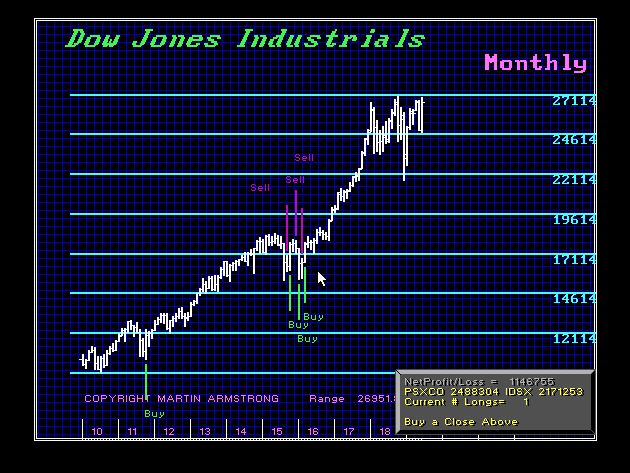
COMMENT: Well, Ray Dalio was short the market, missed the rally, and lost almost 5% for the first half of the year. Obviously, they don’t use Socrates – lol.
LB
 REPLY: I do not advise Bridgewater and I have no idea if they even subscribe to Socrates. But what you have to realize is that a lot of these hedge funds form their strategy based upon opinion for the broader view. When you have a portfolio of that size, you cannot simply trade it back and forth for each move. The question becomes critical as to where to draw the line to realize your broadview strategy is wrong.
I have stated many times that the trend does NOT begin to shift until you reach the Monthly Level. We saw that in Gold when it finally got through 1362.50 after nearly four years of bouncing off that number. In the case of the Dow Jones Industrials, our hedging models for institutions were long one month from the low and has remained in that position. This is just a hedging model which is either long or short. It at least tends to keep institutions on the right side of the trend for long periods of time.
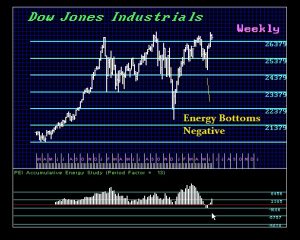
Aside from the Reversal System, the Energy Model is extremely helpful in identifying the position of the market and if there is a risk of a crash or a rally. The Energy Model turned negative, demonstrating that there was no possibility of a crash as most analysts were forecasting from a gut perspective. A crash would have been possible ONLY if the Energy Model was at a peak. When it is testing the lows or a negative, it is warning that the energy in the market has already dissipated.
We are simply headed into a Monetary Crisis Cycle where the majority of people will never be able to forecast what will unfold from a personal gut perspective. This is not a time for lucky calls. We need objective time-tested analysis that is not clouded by human bias. This is when we need the global approach to let Socrates simply correlate the world to enable us to see the real trends that are in motion. The worst thing you can do is ASSUME you have missed something, as that is typically the kiss of death for investors where they inevitably buy the high or sell the low.
Agricultural Loans Declining Right on Target
Armstrong Economics Blog/Agriculture
Re-Posted Jul 18, 2019 by Martin Armstrong

One of the most fascinating observations I have made over my career has been that the banks always lend at the top and contract lending at the bottom in every market. Going into 1980, banks were calling me to ask if I wanted to borrow money. Recently, I got a phone call from my bank asking, once again, if I would be interested in a loan. This to me is merely a confirmation that we are approaching a major turning point.
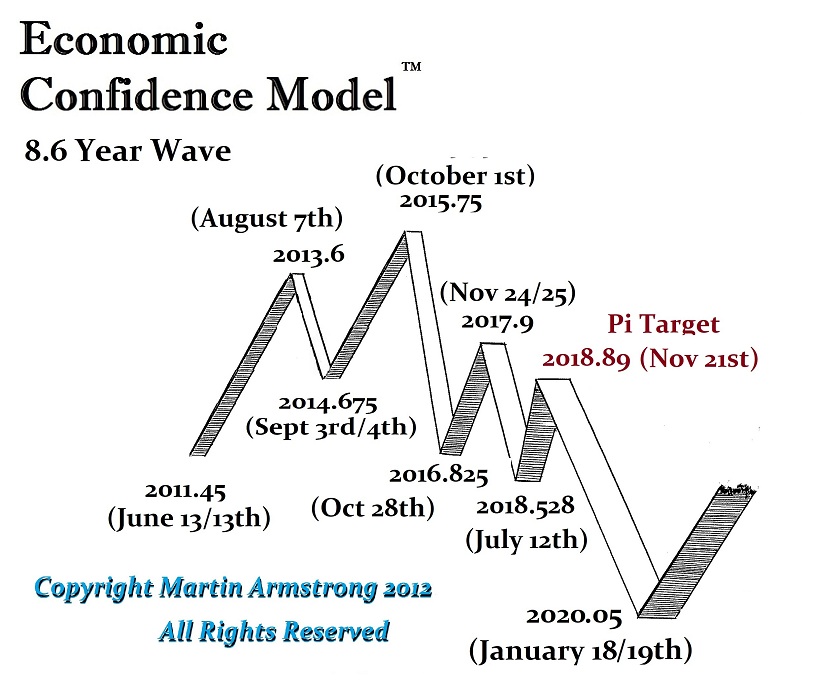
When I look at lending into the agricultural sector, the big Wall Street banks are once again perfectly in line with the cycle. They peaked in loans to farmers back in 2015, and have been declining ever since going into 2020. Bank lending to the agricultural sector peaked with the ECM and we will see it bottom in 2020. Our model will be correct in forecasting the next wave, which will be a cost-push inflationary wave. As the agricultural sectors come back to life, thanks to shortages, then the bankers will be willing to lend once again. The banks are the PERFECT indicator of how not to run a business. They make decisions emotionally and always get the economy dead wrong (i.e mortgage-backed securities peaked in 2007)
The US Treasury Does Have the Constitutional Right to Mint Coins
Armstrong Economics Blog/Regulation
Re-Posted Jul 16, 2019 by Martin Armstrong
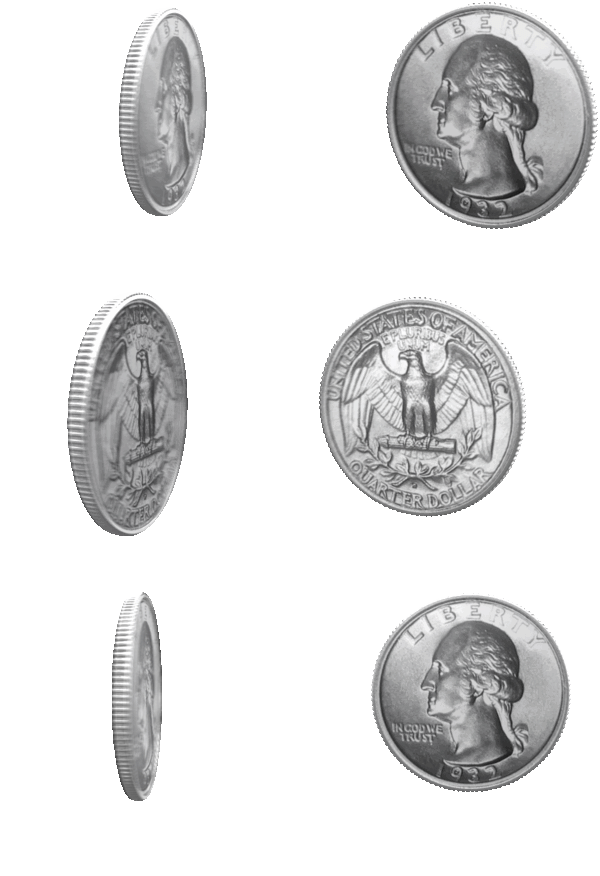
QUESTION: Marty, You are wrong. The US Treasury can create the money as the Constitution says it can. Article I, Section 8, Clause 5. The Congress shall have the Power to coin Money, regulate the Value thereof, and of foreign Coin, and fix the Standard of Weights and Measures.
To coin is used as a verb. At the time the Constitution was written, to coin money meant to create or to make money. Today’s Dictionary defines to coin as a verb meaning to make or to invent.
Why did you fail to mention this in your Blog today?
TD
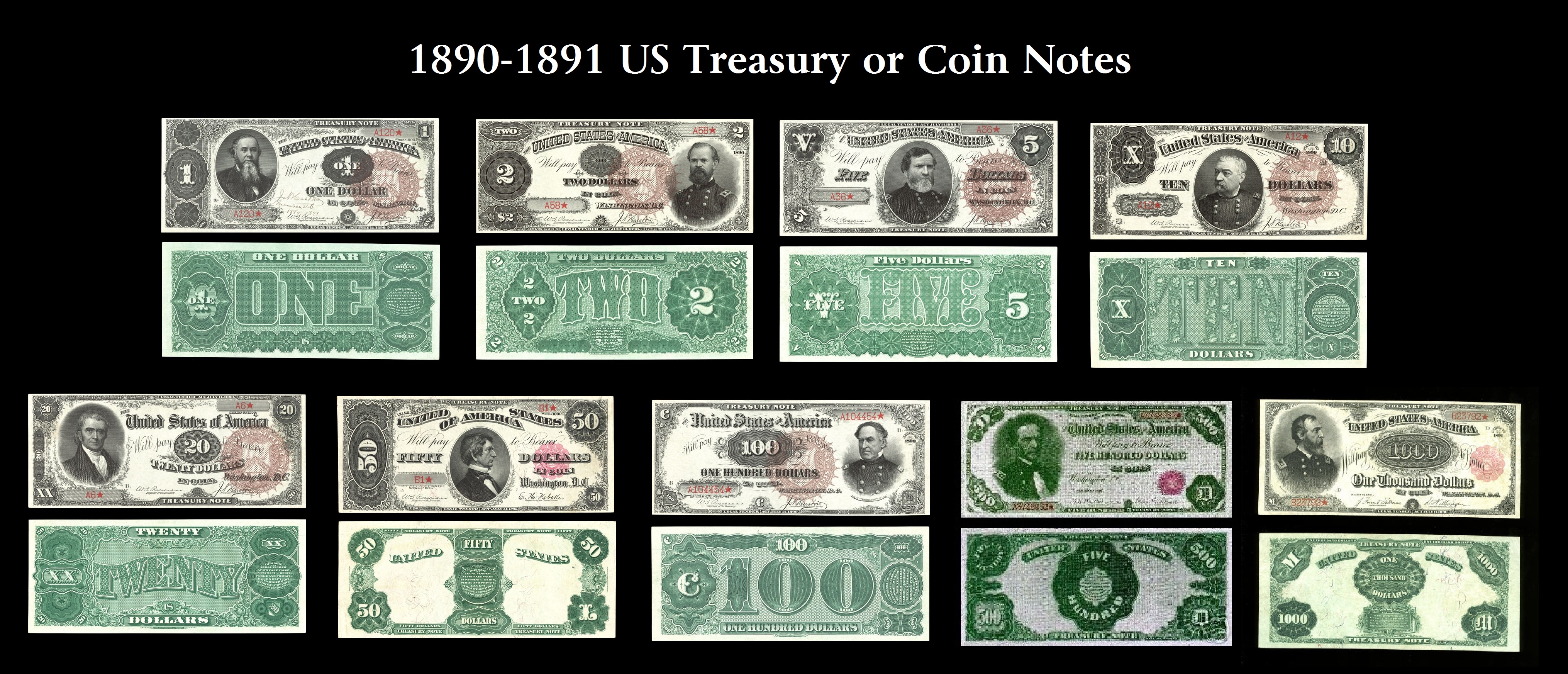
ANSWER: Yes, you are correct. I suppose I was referring to the 99.99% of the money supply rather than the coins put into circulation by the US Treasury. President Nixon only closed the gold window in 1971. He did not demonetize “gold” as money under the Constitution. Yes, technically the US Treasury can coin money, but it coins today’s coins. The Fed does not do that. The coinage it creates is minimal in comparison to the overall scheme of things. Since 1913, the printing of currency has been delegated to the Federal Reserve. Prior to 1913, the Treasury issued the paper currency which was backed by coins.
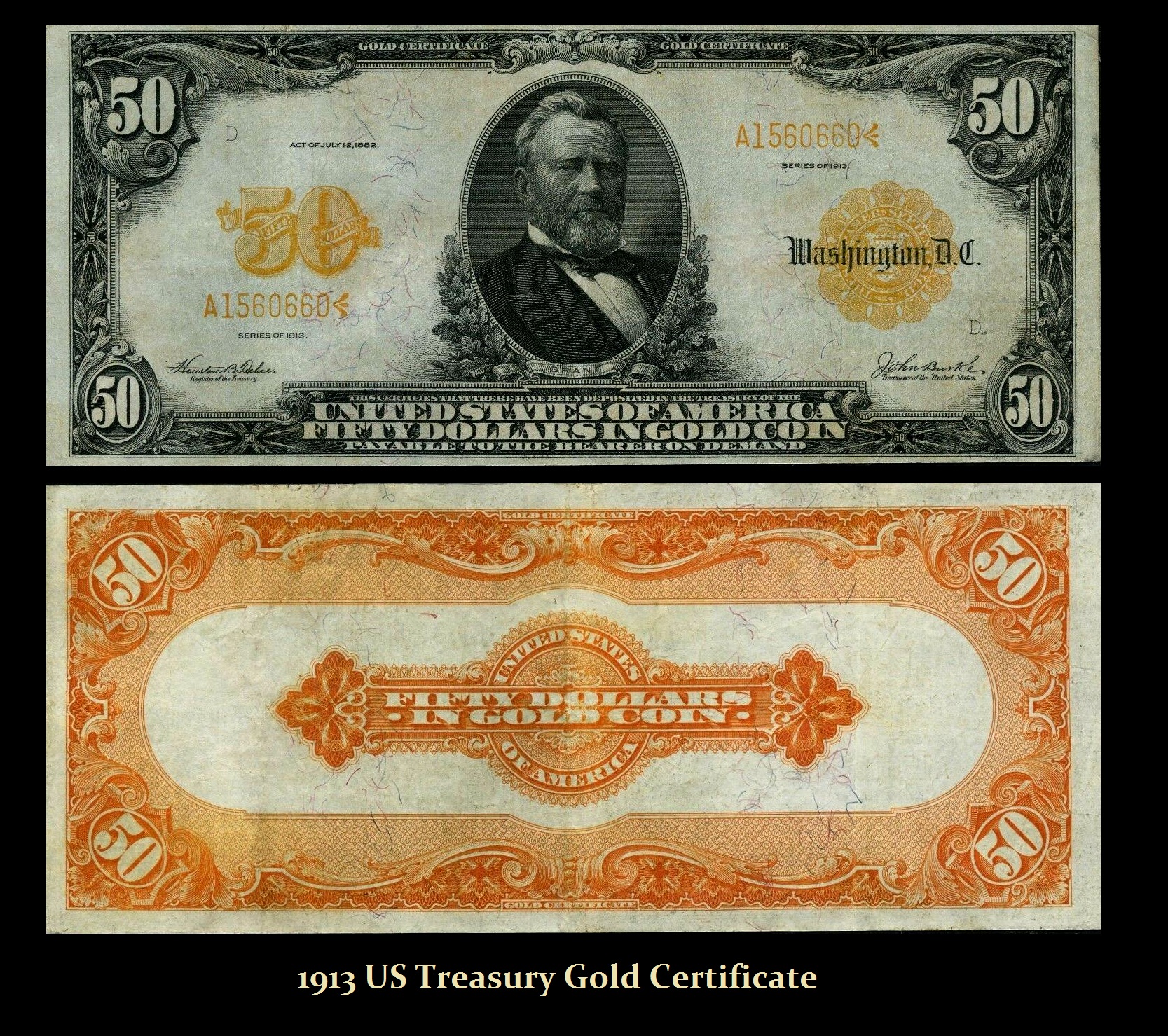
This was the last issue of paper currency issued by the United States Treasury in 1913, the year that the Federal Reserve Act was passed.
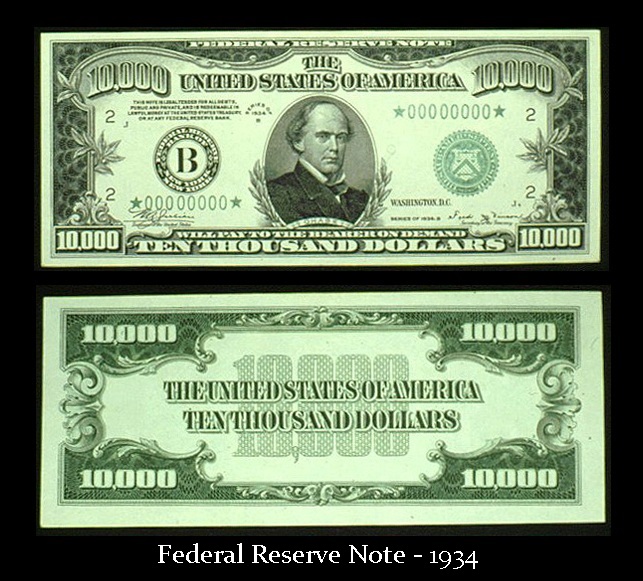
Note that in 1934, the Fed actually issued $10,000 bills
Thailand the New Safe Haven?
Armstrong Economics Blog/Southeast Asia
Re-Posted Jul 9, 2019 by Martin Armstrong

 The dollar decline against the Thai Baht is starting to impact both a trading perspective as well as economic. Thailand’s central bank is worried about the decline in the greenback against baht. They fear that the U.S. keeps a watchful eye out for signs of unfair currency policies. Indeed, the bureaucrats are clueless with respect to currency trends and prefer to chalk it up to the political manipulation rather than free market movement. Bank of Thailand officials intensified verbal intervention trying to create resistance in the baht as Senior Director Don Nakornthab announcing he was “worried” last week about the monetary authority and how they were thinking about how the dollar can be supported. He also came out and spoke of a possible interest-rate cut.
The baht has climbed 8.3% against the dollar in the past year and has been the best performer globally, It’s viewed as a safe haven given Thailand’s history of current-account surpluses and near-record foreign reserves. However, Thailand has also become a destination for many people seeking shelter from the West. Those seeking to retire have found a safe place to hide and the capital inflows have been rather strong. Thailand has also been regarded as a safe-haven from many within Asia as well, and that includes Japanese.
Trump’s Federal Reserve nominee Judy Shelton & Gold
Armstrong Economics Blog/Economics
Re-Posted Jul 8, 2019 by Martin Armstrong
QUESTION: Hello
Where do you guys see as the next World economic conference in 2020?. Will there be another one in Asia? or Europe?
Also, I wanted to try to give this question to Marty, although I never had the luck to get his response… more than once. “Trump just announced to nominate Judy Shelton as the next candidate for the Fed chairmanship. Judy has been promoting to peg the dollar to gold and going back to Gold standard once again, What do you think about this?. Is it possible for the Fed to go back to Gold standard?. I thought we’ve much more issues when we had Gold standard, why are they keep pushing for this agenda?.”
Thank you.
CK
ANSWER: We have not yet decided where to hold the next overseas WEC. Given the seriousness of things developing in Europe, we may hold it in Germany. This is still in question.
President Trump’s Federal Reserve nominee Judy Shelton has long been a proponent of free trade and once advocated for an open border with Mexico back in 2000. Shelton would not be the first free trader to get a top job from Trump. Larry Kudlow, the president’s top economic adviser, is a longtime friend of Shelton and has been a “free trader” who initially criticized Trump’s calls for tariffs. Trump explained to him that free trade will never exist without using tariffs as a negotiating strategy. Indeed, Trump offered to drop all tariffs with Europe if they would do the same — France refused. Trump’s prior Fed nominee, Stephen Moore, also fits this pattern of free trade. I have known Steve over the years and he backed out because of the onslaught of personal threats and attacks against him and his family by the left. Herman Cain also dropped out of consideration for similar reasons.
Last year, Shelton called for a “new Bretton Woods conference,” akin to the 1944 meeting that established the post-war economic order, perhaps to be held at Mar-a-Lago, where a return to the gold standard could be considered. “We make America great again by making America’s money great again,” she wrote in the journal of the Cato Institute. This nostalgia with a return to the gold standard is really insane. The very reason Bretton Woods collapsed was that you cannot fix or peg the dollar to gold while you continue to create dollars without restraint. You would think a third grader would figure that out, but those in power seem to understand less about reality for they spend too much time talking among themselves.
Yet the idea that every US dollar should be backed by a small amount of actual gold may seem to be a popular idea and enthusiasm for a return to the gold standard has become more prominent since Trump’s most recent nominees to fill the vacant Federal Reserve governorship have endorsed a return. The problem with this idea is that the entire socialistic agenda has to come to an end. You cannot run deficits perpetually and we can not continue to accumulate debt with no intention of ever paying anything off.
The only way to return to a gold standard is to abandon the entire political agenda currently. When the left is advocating the Modern Monetary Theory of endless creation of money, the gold standard represents the extreme in the opposite direction. We die by hyperinflation on the one side or deflation on the opposite. Both will lead to the destruction of Western Civilization as we know it.
I fully agree that we will be forced into a new Bretton Woods meeting probably 2021/2022. But make no mistake about it, a serious political reform will be required.
Inverted Yield Curve
Armstrong Economics Blog/Interest Rates
Re-Posted Jul 5, 2019 by Martin Armstrong
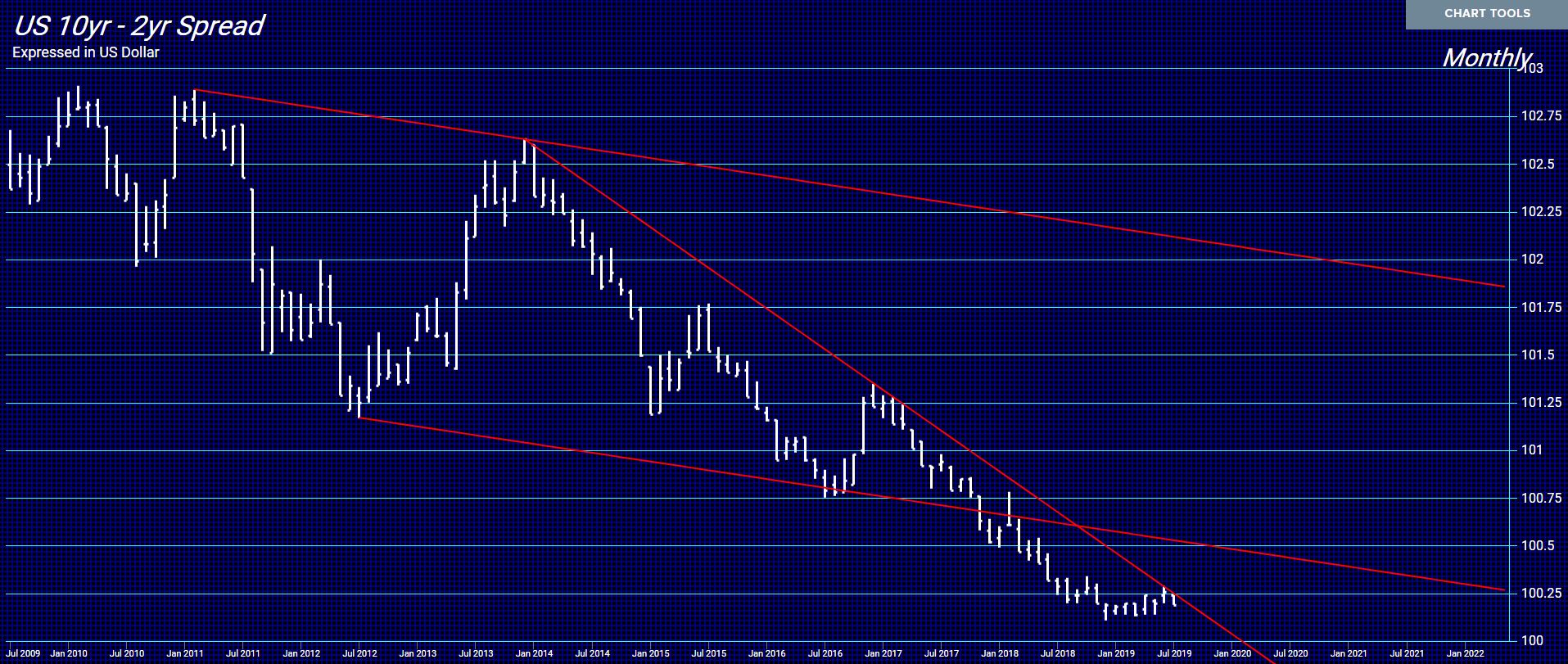
The yield curve has been inverted for the last month. An inverted yield curve occurs when long-term government debt yields fall below rates on short-term notes and bills. For stock market investors, an inverted yield curve is typically a sign that equities could peak before an economic recession will follow. It also can be a precursor to a bear market in stocks, where equities fall 20% or more from highs which is the typical forecast. Some have pointed to the escalating China trade war. Investors, the claim, are worried that the China trade war and U.S. tariffs will slow global economic growth.
The 10-year Treasury note yield fell to 2.24% in early trading on May 29. Yields on three-month Treasury bills rose to 2.35%, well above the 10-year rate. The 10-year Treasury note fell below 2% on June 25 following the release of weaker-than-expected consumer confidence data. The three-month note traded at 2.13.%. Ten-year rates stood at 2.69% at the start of 2019. On June 4, 10-year Treasury notes slipped to 2.1 in midday trading, its lowest level in 20 months.
But much the real trend driving the inverted yield curve is capital inflows seeking long-term yields. Much of the capital has moved in from Europe. In addition, the amount of money in fixed-income exchange-traded funds passed $1 trillion last month, an ascendance that has reshaped the market in which countries and companies raise money to pay their bills. This has also altered the yield-curve. These forces have changed the dynamics of the marketplace and the traditional inverted yield curve does not necessarily mean what it once did and more than central banks use to be in control of the economy or money supply.
 Centinel2012