Posted originally on Apr 15, 2025 by Martin Armstrong
The United States has about 330 million people, and one in every $3 spent in world trade is by American Consumers. Europe has 450 million people, but it still clings to Marxism, is highly regulated, and is very anti-entrepreneurial. Trump fails to grasp here that trade wars will NOT even the score. The global consumer market seems to be ignored. As I have explained, the Current Account, which people call the trade account, also includes all interest and dividends on stocks, bonds, and investments. In theory, if China bought 100% of the US national debt, then the perceived trade deficit from interest of $1 trillion would flow to China, and this has nothing to do with jobs or manufacturing anything.
Let’s clarify trade. The United States has the largest economy in the world, so it’s the top contributor to global consumer spending. China would be next, followed by countries like Japan, Germany, the UK, India, and so on. Note that China is already the #2 consumer-based economy. Europe is far too Marxist, and it still clings to the old theories of Mercantilism. The average German has less net wealth than an Italian, yet they are the biggest economy.
In recent years, the global GDP has been around $100 trillion. Depending on the economy, consumer spending typically makes up about 60-70% of a country’s GDP. So, if we take 65% of $100 trillion, that’s about $65 trillion in global consumer spending annually in theory. Now, breaking this down by country. The US GDP is around $25 trillion. If US consumer spending is about 68% of GDP, that would be roughly $17 trillion. Therefore, the US share would be 17/65, approximately 26%. That means we have a US consumption-driven economy.
China’s GDP is around $18 trillion. However, consumer spending as a percentage of GDP is lower, maybe around 40%, because their economy is more investment—and export-driven. So 40% of $18 trillion is $7.2 trillion. That would be about 11% of the global total ($7.2T / $65T).
Let’s compare this to Japan’s GDP, which is about $4.9 trillion. Consumer spending there is higher as a percentage, maybe around 55%, so $2.7 trillion. That’s roughly 4.15% globally.
Germany’s GDP is around $4.2 trillion. With consumer spending at around 50% of GDP, that’s $2.1 trillion, so 3.2% globally.
India’s GDP is approximately $3.4 trillion. Consumer spending accounts for a larger part, maybe 60%, so the total is $2.04 trillion, which is about 3.14% of the global total.
The UK’s GDP is about $3.1 trillion. Consumer spending at 60% would be $1.86 trillion, so around 2.86%.
France’s GDP is $2.9 trillion. Consumer spending at 55% gives $1.6 trillion, about 2.46%.
Brazil’s GDP is $2.0 trillion. If consumer spending is 60%, that’s $1.2 trillion, so 1.85%.
Italy’s GDP is $2.1 trillion. Consumer spending at 60% would be $1.26 trillion, around 1.94%.
Canada’s GDP is $2.0 trillion. Consumer spending at 57% gives $1.14 trillion, which is 1.75%.
South Korea’s GDP is $1.7 trillion. Consumer spending at 50% is $0.85 trillion, so 1.3%.
Russia’s GDP is around $1.8 trillion. If consumer spending is 50%, that’s $0.9 trillion, about 1.38%.
Australia’s GDP is $1.6 trillion. Consumer spending at 55% would be $0.88 trillion, 1.35%.
Consequently, the total for these top countries is around 59.65%, leaving about 40.35% for the rest of the world. This is all based on rough estimates. Then we also have nominal GDP vs. PPP (Purchasing Power Parity). However, consumer spending in nominal terms is usually what’s used for such global comparisons, further complicating our exercise.
Another consideration: The figures I used for consumer spending as a percentage of GDP might not be accurate for each country. For example, China’s consumer spending as a percentage of GDP has been increasing but was historically lower. According to the World Bank, in 2022, China’s household final consumption expenditure was about 38% of GDP. The US was around 68%, Japan about 55%, Germany 52%, India was around 59%, UK 63%, France 54%, Brazil 64%, Italy 61%, Canada 57%, South Korea 48%. So my initial estimates were somewhat close but may need adjustment.
US: 25T GDP * 68% = 17T
China: 18T * 38% = 6.84T
Japan: 4.9T * 55% = 2.695T
Germany: 4.2T * 52% = 2.184T
India: 3.4T * 59% = 2.006T
UK: 3.1T * 63% = 1.953T
France: 2.9T * 54% = 1.566T
Brazil: 2.0T * 64% = 1.28T
Italy: 2.1T * 61% = 1.281T
Canada: 2.0T * 57% = 1.14T
South Korea: 1.7T * 48% = 0.816T
Russia: 1.8T * 52% = 0.936T (assuming 52%)
Australia: 1.6T * 55% = 0.88T
Spain: 1.4T * 58% = 0.812T
So total consumer spending from these 14 countries is approximately $41.389 trillion out of about $65 trillion globally.
Now, converting each country’s consumer spending to a percentage of global:
US: 17 / 65 = 26.15%
China: 6.84 / 65 ≈ 10.52%
Japan: 2.695 / 65 ≈ 4.15%
Germany: 2.184 / 65 ≈ 3.36%
India: 2.006 / 65 ≈ 3.09%
UK: 1.953 / 65 ≈ 3.00%
France: 1.566 / 65 ≈ 2.41%
Brazil: 1.28 / 65 ≈ 1.97%
Italy: 1.281 / 65 ≈ 1.97%
Canada: 1.14 / 65 ≈ 1.75%
South Korea: 0.816 / 65 ≈ 1.26%
Russia: 0.936 / 65 ≈ 1.44%
Australia: 0.88 / 65 ≈ 1.35%
Spain: 0.812 / 65 ≈ 1.25%
Others: 36.3%
Please remember that these percentages are estimates of global consumer spending by country based on GDP and consumption patterns. The United States is the largest consumer-based economy in the world, and about 26% of total world spending involves the American consumer. China is only 10.5%, and Japan is at 4.1%. Europe comes in at around 12%.
In summary, China is actively trying to build a more consumer-based economy, with policies and trends supporting this shift. However, structural and demographic challenges might slow this transition into 2028. The progress is evident, but it’s a work in progress. After 2032, they hold the potential to surpass the United States as the financial capital of the world. The problem in the United States is that the Democrats keep trying to oppress the economy like Europe, imposing socialistic goals that are not economically efficient.
Key Evidence of China’s Transition:
Rising Consumption Share of GDP:
Household consumption contributed 53% of GDP in 2023, up from ~35% in 2010. While still lower than the U.S. (~68-70%), this marks significant growth.
Services and high-tech industries are expanding, reflecting demand for healthcare, education, and entertainment.
Policy Shifts:
“Dual Circulation” Strategy:
Emphasizes domestic consumption (internal circulation) alongside international trade, reducing reliance on exports.
Social Reforms:
Efforts to strengthen social safety nets (pensions, healthcare) aim to lower household savings rates, freeing income for spending.
Urbanization and Middle-Class Growth:
Over 60% of China’s population now lives in cities, fostering a consumer class with higher disposable income.
E-Commerce and Digital Economy:
China leads globally in e-commerce (e.g., Alibaba, JD.com) and digital payments, facilitating consumer spending. The digital economy accounts for ~40% of GDP.
Challenges to a Consumer-Driven Model:
Structural Imbalances:
Investment and exports still dominate (e.g., state-led infrastructure, real estate). Transition requires rebalancing toward the private sector and services.
Household debt
has risen to ~62% of GDP (2023), potentially constraining spending.
Demographic and Social Factors:
Aging Population: By 2035, 30% of citizens will be over 60, likely increasing savings and reducing consumption.
Income Inequality: Rural-urban gaps and uneven wealth distribution limit broad-based consumption growth.
Geopolitical and Economic Risks:
Trade tensions and global demand volatility (e.g., post-COVID, U.S.-China decoupling) pressure China to prioritize domestic demand.
Real estate sector
Slowdowns could dampen consumer confidence.
China is deliberately building a consumer-based economy through policy reforms, urbanization, and digital innovation, rejecting the European mercantilist economic philosophy. While progress is evident, structural hurdles, such as reliance on investment aging demographics, mean the transition will be gradual but ongoing. The government’s success in addressing these challenges will determine the pace and sustainability of this shift. China’s economy remains a hybrid model, blending consumption growth with traditional drivers like state investment.
The current account is a key component of a country’s balance of payments, recording international transactions in goods, services, income, and transfers. It consists of four main components:
Trade in Goods (Visible Trade):
Exports and imports of tangible products (e.g., machinery, vehicles, electronics).
The balance of trade in goods is often referred to as the “merchandise trade balance.”
Trade in Services (Invisible Trade):
Exports and imports of intangible services (e.g., tourism, financial services, education, consulting, transportation).
Combined with trade in goods, this forms the trade balance (goods and services).
Primary Income (Income Flows):
Cross-border income from investments and employment:
Investment income: Dividends, interest, profits from foreign investments (e.g., dividends from overseas stocks).
Compensation of employees: Wages, salaries, or benefits earned by workers in a foreign country (e.g., remittances from expatriates).
Secondary Income (Current Transfers):
One-way transfers where no goods, services, or assets are exchanged in return:
Remittances: Money sent by migrants to their home country.
Foreign aid/grants: Government transfers (e.g., disaster relief, development aid).
Pensions, gifts, or donations: Transfers between individuals or organizations.
A Trade War based on just the gross of the Current Account does NOT reflect our trade deficit or surplus.
Foreign investors overall own roughly 10-20% of Manhattan’s high-end residential properties (e.g., condos), with Europeans constituting a significant but minority share of this group. For example, if Europeans account for 30-40% of foreign-owned properties, their stake might be 3-8% of Manhattan’s luxury residential market. While exact figures are elusive, Europeans likely own 3-7% of Manhattan’s total real estate, with higher concentrations in luxury residential and prime commercial sectors. This is only an estimate and not definitive. Any income, such as rents, on that property will flow out through the current account and will appear as a trade deficit when it has NOTHING to do with trade.
As of 2023, approximately 23-24% of the total U.S. national debt is held by foreign entities. This calculation is based on foreign holdings of around $7.4 trillion out of $31.4 trillion at the time. Therefore, of about $1 trillion in interest expenditures. Thus, about $230+ billion is flowing out through the current account that has nothing to do with trade. The major holders of US national debt include Japan, China, and the United Kingdom.
Understanding these components is now CRITICAL in the middle of a trade war. The sale of US debt will go through the capital account, but it will reduce the interest paid to foreigners that go through the current account, creating the illusion of a trade deficit. I disagree with Trump’s formulas, and the risk of a permanent trade war with China is now assured unless he gets on a private phone call. You cannot make public demands against China for then they cannot back down based on their culture.
Posted originally on Apr 14, 2025 by Martin Armstrong
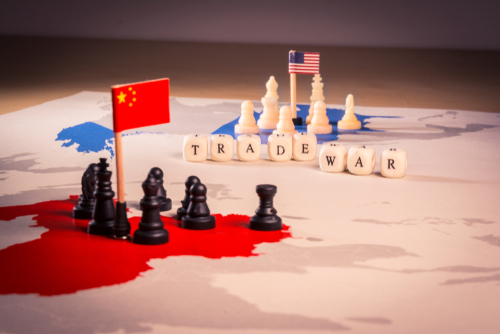
The U.S.-China trade war is an ongoing economic conflict that began in January 2018, characterized by the imposition of tariffs and trade barriers by both countries. Recently, tensions escalated as the U.S. raised tariffs on Chinese goods to 145%, prompting China to retaliate with tariffs of 125% on U.S. imports, affecting global supply chains and market stability.
Trump’s decision not to grant China the same reprieve as other nations explained: “China wants to make a deal, they just don’t know how quite to go about it.” I disagree. If I were China, I would do a full embargo, and the Achilles’ heel in this trade war is more than just the manufacture of values for municipalities – the big ones, steel and aluminum, but also medicines. Personally, I would put a full embargo on everything, and without the medicines, people would be screaming, and their lives would be put in danger. I have dealt with Asia for some 40 years. You do not do this sort of thing publicly. It is an insult and a loss of face that forces China not to yield.
The developing U.S.-China trade war keeps ratcheting up. China has suspended exports of rare earth minerals. Meanwhile, Commerce Secretary Lutnick said that the electronics the Trump administration exempted from reciprocal tariffs could be subject to different levies in the future. This is not good. You do not air your dirty laundry in public.
Beijing’s perspective is dramatically different. Xi Jinping has taken the view that his country would lose face if it simply capitulated to what it calls America’s “unilateral bullying.” The danger with this trade war is that publicly, it only supports fervent nationalism, and that feeds into what will become World War III. China has been quietly preparing for a trade war for quite some time. Trump’s actions may spark negotiation in Western circles, but in Asian circles, they create the image that the US doesn’t want to negotiate. My concern is that Xi is brilliant. This trade war is playing into his domestic approval of anti-Americanism. Like the Russian sanctions that boosted Putin’s approval rating calculation, sources say, China is also seeing a rise in popular support to strengthen its position by preparing not just to fight back. Trump’s trade war with China is definitely strengthening Xi’s own position.
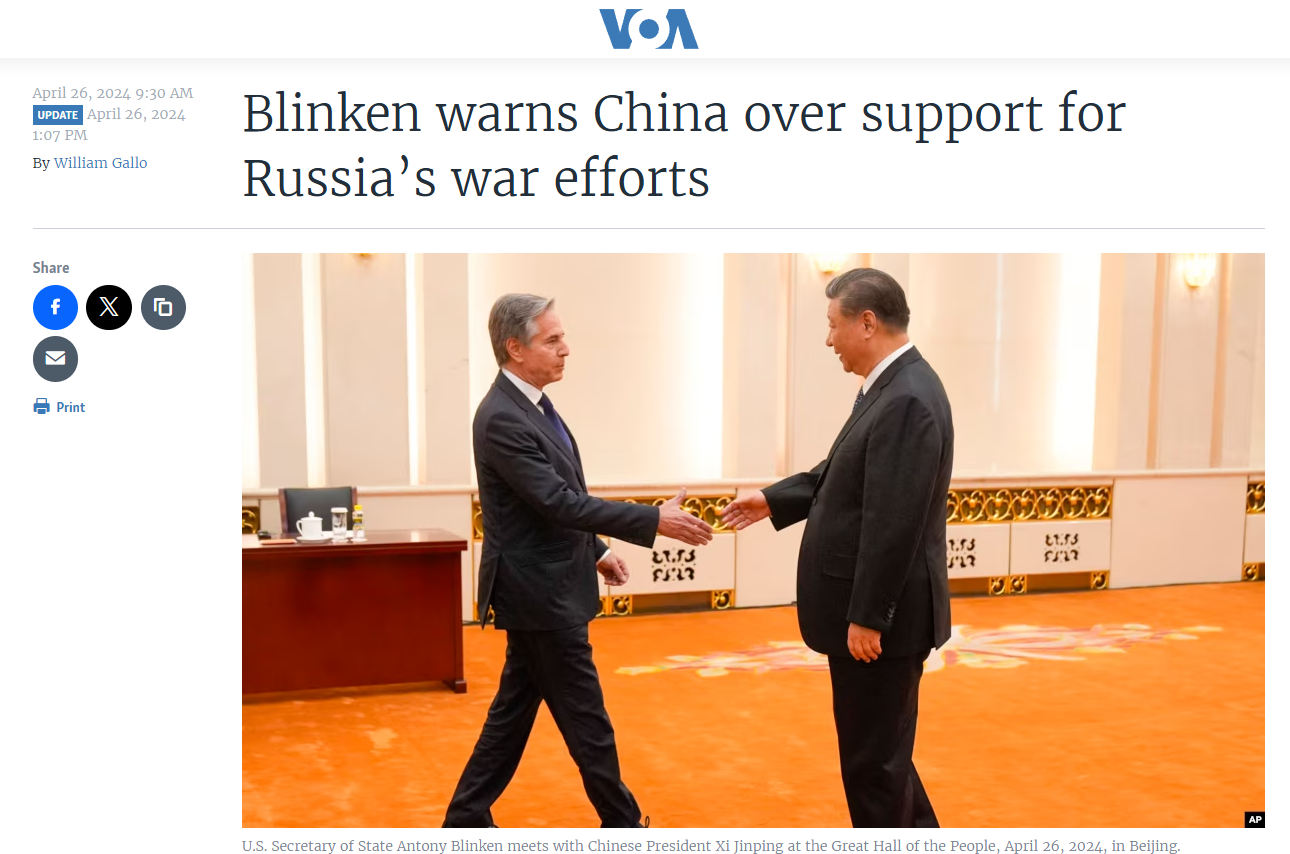
All of my sources have said that Xi fully understands that China has entered a period of protracted struggle in both trade and geopolitics with the United States and Europe. This became painfully obvious, and Europe and the Biden Administration confronted Russia. Xi has taken the position that China needs to prepare for these confrontations ever since the Biden Administration put sanctions on Russia and then threatened China if it dared to help Russia. The Neocon Antony Blinken expressed “serious concern” about China’s support for Russia’s defense industry. He went as far as to threaten Xi that he would impose sanctions if China helped Russia.
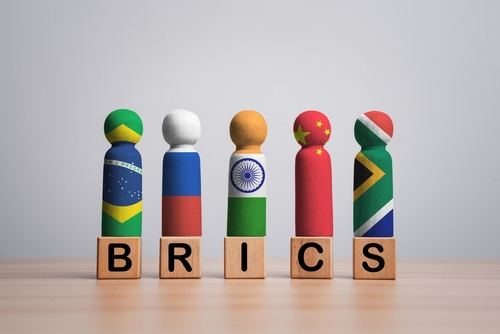
The Neocon Antony Blinken threw down the gauntlet and views the world only in his desire for imperial power. He never understood the economy, and this insanity of threatening China and removing Russia from Swift undermined the economy and split it in half, with the formation of BRICS for geopolitical security. I don’t believe Trump understands the damage that the Biden Administration inflicted upon the entire world. Now, go after China with a trade war to bring back manufacturing to America; this is pushing China over the edge.
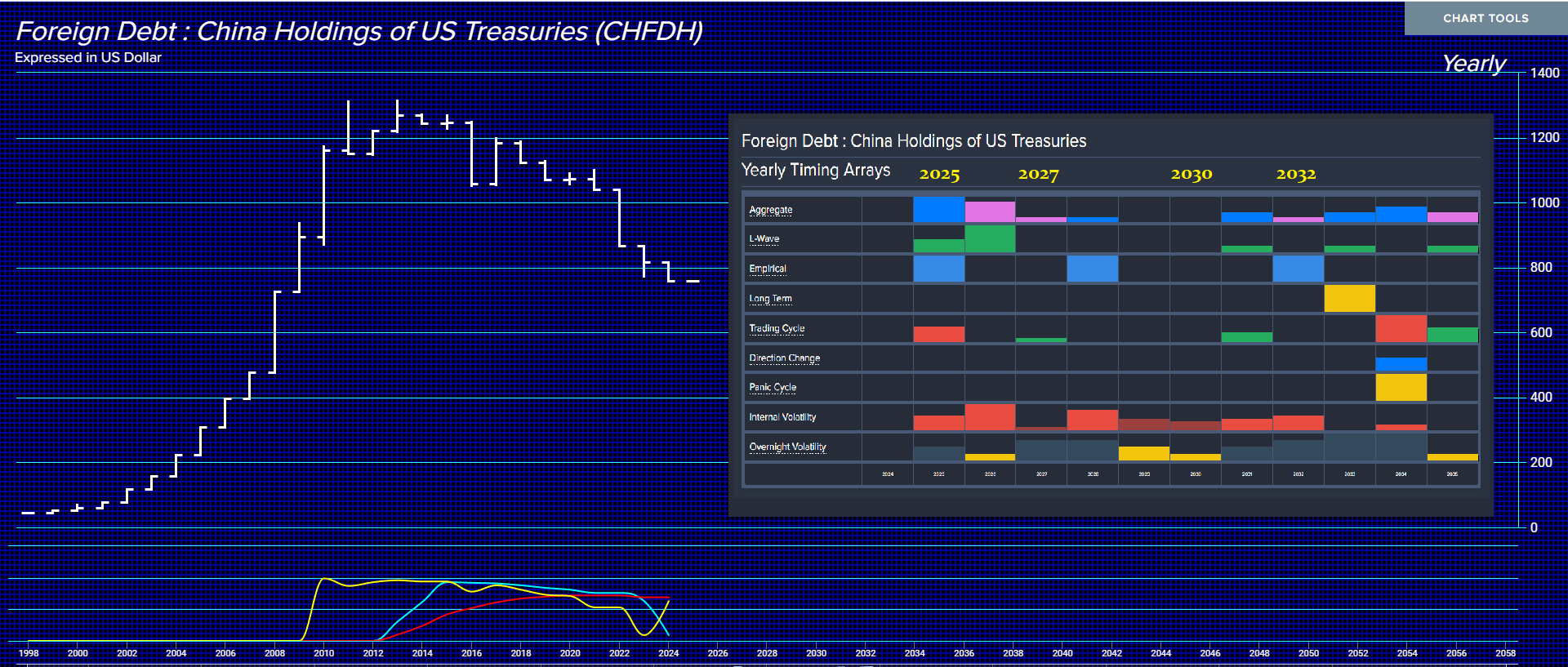
China previously owned 10% of the US national debt. This is what Trump has not considered. Before this trade war began, in January, foreigners sold a net $13.3 billion of U.S. notes and bonds that had more than one year to maturity. As we approach sovereign debt defaults, I have warned that it may start with Japan and be followed by Europe. We saw almost $50 billion was sold in December 2024 in anticipation of a Trump trade war. Last November saw almost $35 billion dumped following the election.
Canada was the largest net seller in January. The UK needed the cash and was the biggest seller last December. I know some have made the outrageous claim that Japan sold US debt, and that made Trump pause the tariffs for 90 days. These people have ZERO understanding of the markets and even less about Trump. The tariffs over 10% are political, and it is part of his art of the deal. Japan is in economic trouble with its own debt crisis, and selling US debt had nothing to do with the tariffs – this is about creating a real debt crisis.
That said, China has the capacity to dump US debt in a big way, and that would send US rates higher on the long-end. U.S. stocks rallied with Trump pausing the tariffs, yet this was cyclically on point, which our computer had forecast months in advance. People just try to come up with some fundamentals to explain each move in a market, whether true or false. Our computer is projecting that 2025 will be the low in Chinese interest rates both on the 2-year and 30-year.
While stocks rallied, Treasury yields rose so much that lower rates benefited stocks. China has been quietly selling U.S. debt, which began over a year ago. This was not something new out of the blue in response to new tariffs. Bond markets were flashing warning signs based on the hidden risks behind the entire dynamics of trade and geopolitics.
Behind the scenes, U.S. Treasury yields have been rising during the overnight sessions, indicating foreign market selling. Nevertheless, the prospects of war in Europe are reflected in our models, for they do not support a collapse in the bond markets, implying that war will bring still capital inflows.
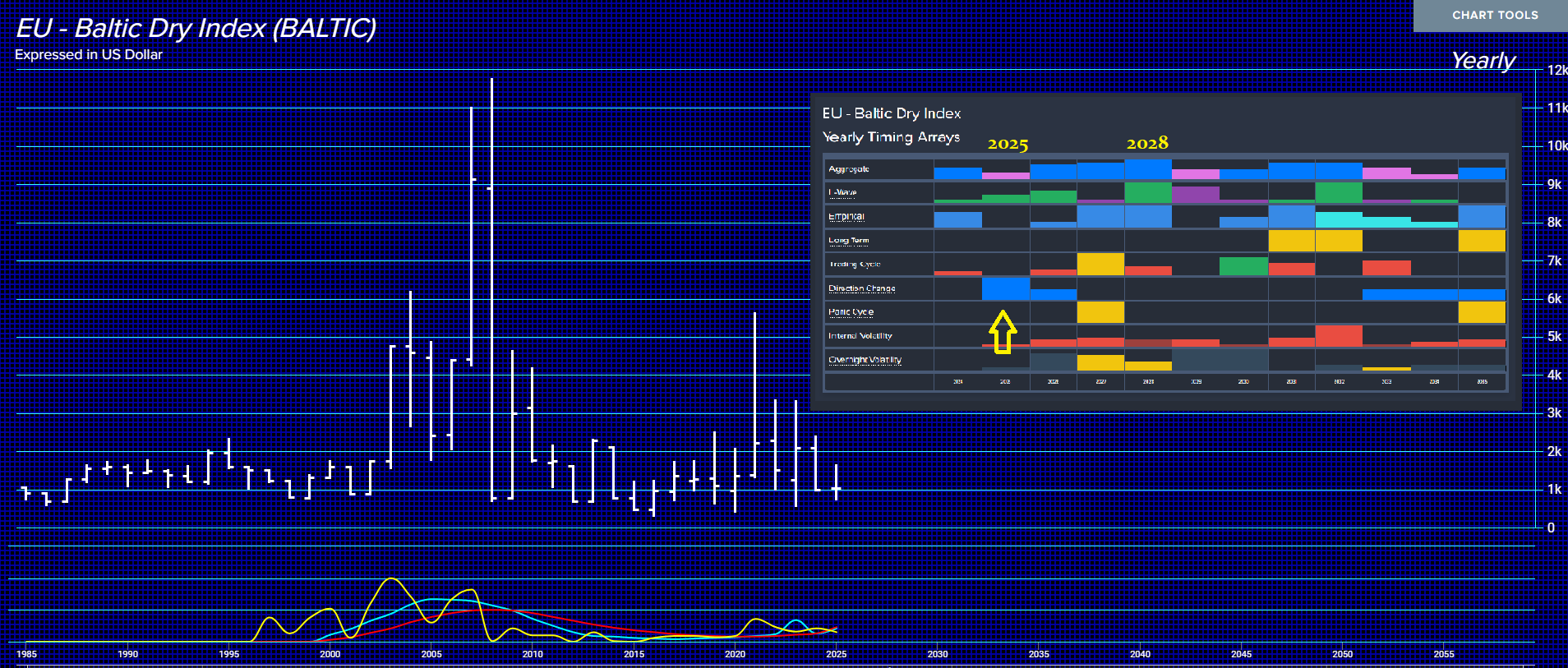
When we look at the Baltic Freight Index, 2025 was a Double Directional Change, indicating that we would have this trade war. We have a Directional Change in 2026 and a Panic Cycle in 2027, with the culmination of this war extending into 2028. This might also be influenced by the war starting in Europe.
I have created this site to help people have fun in the kitchen. I write about enjoying life both in and out of my kitchen. Life is short! Make the most of it and enjoy!
This is a library of News Events not reported by the Main Stream Media documenting & connecting the dots on How the Obama Marxist Liberal agenda is destroying America









 Centinel2012