QUESTION: Mr. Armstrong; You had once written the Christine Lagarde was only a lawyer and she was really put in the role of the IMF chief by Obama. What do you have to comment on this new Bulgarian selection? DO you know her?
HU
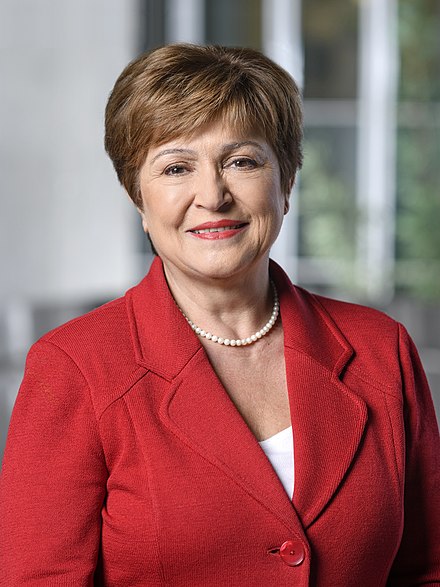
ANSWER: Kristalina Georgieva will probably take over the International Monetary Fund (IMF). At least this Bulgarian is an economist, and she has banking experience whereas Christine LaGarde did not. Georgieva is currently chief executive of the World Bank. I do not know her personally, although we probably shook hands yet nothing more.
Georgieva was considered back in 2016 for the post of the UN Secretary General, but was passed over for the Portuguese António Guterres. For the IMF, Georgieva was the candidate of France and of some Eastern European states. Germany and others were backing the former Dutch Finance Minister Jeroen Dijsselbloem. This time the French won.
If we look at Georgieva background, she does hold a doctorate in economics and research at the London School of Economics and at the Massachusetts Institute of Technology (MIT). From 1993 to 2010 she worked at the World Bank. She headed the Environmental Department of Washington Bank and, in the meantime, her representative office in Moscow. In 2010 she moved to Brussels becoming a Commissioner as Europe’s top development aid worker.
When Jean-Claude Juncker took over the Presidency of the Commission in 2014, he made Georgieva Vice-President in charge of the budget. Georgieva had been involved in a major restructuring at the World Bank turning it greener. We should keep in mind that Georgieva wrote her doctoral thesis on “Environmental Policy and Economic Growth in the US.”
QUESTION: This whirligig talk of whether the Fed cuts rates by 25 or 50 basis points is carnival-level absurdity. Does the Fed have the “pretense of knowledge,” as F.A. Hayek, said, that they can regulate the economy like turning up or down the thermostat? I know you don’t agree with this, Martin, but then, Wall St. trades on daily sentiment not ideology.
TM
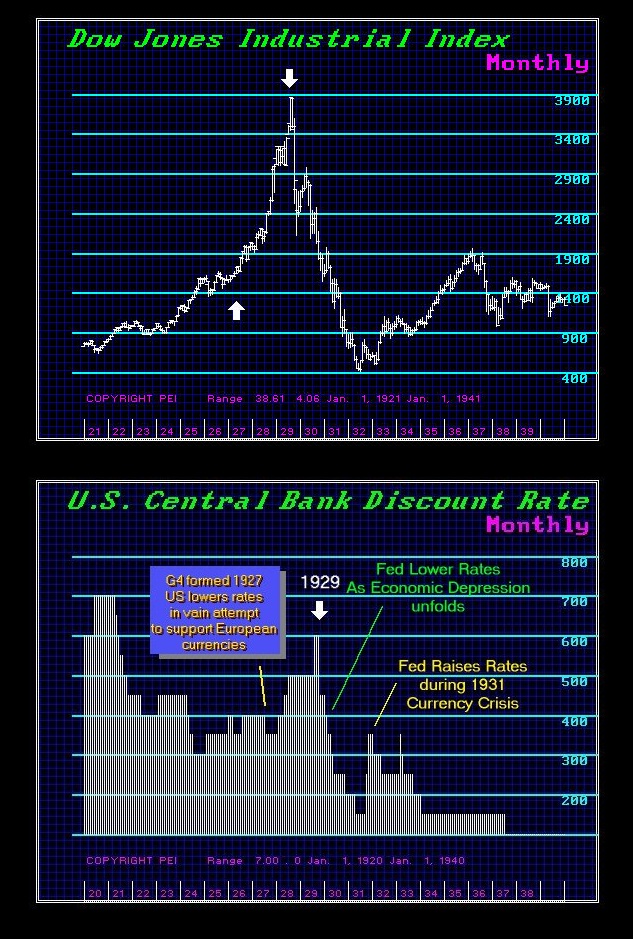
ANSWER: I understand the theory, but where it is seriously flawed is the idea that people will borrow simply because you lower rates. More than 10 years of Quantitative Easing, which has failed, answers that question. The way the Fed was originally designed allowed it to stimulate the economy by purchasing corporate paper directly, which placed it in a better management position. Buying only government paper from banks who in turn hoard the money fails. As Larry Summers admitted, they have NEVER been able to predict a recession even once.
The Fed lowered rates during every recession to no avail just as the ECB has moved to negative rates without success. The central banks are trapped and they are quietly asking for help from the politicians which will never happen.
Lawrence H. White is Professor of Economics at George Mason University. Ludwig von Mises (1881–1973) and Friedrich A. Hayek (1899–1992) were leading founders of the Austrian School of economics, and are counted among the twentieth century’s foremost champions of free markets and critics of socialism. This second CCA of the 2016-2017 academic year will consider the history and principles of the Austrian School, as well as Mises’ and Hayek’s major works and continuing influence.
QUESTION: Mr. Armstrong; I figured there is nobody more qualified to answer the question of where and when did markets first begin to trade? Did markets have anything to do with the rise of nations you write about?
KD
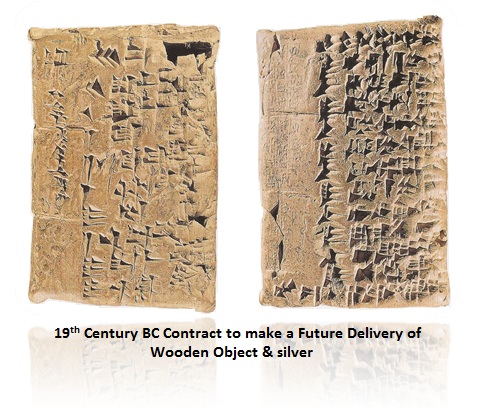
ANSWER: Only those societies that developed financial markets ever rose to greatness. Those who bash markets fail to understand that without them, most people would still be digging for potatoes. The evidence supports the first markets were futures markets which traded in Babylon, at least during the 19th century, since we have futures contracts from that period which have survived. All of the research I have conducted clearly demonstrates that economic growth is linked directly to the expansion of financial markets. Once there is a marketplace, then people will invest and economic growth will expand provided they know that if they needed to raise capital, they can sell their investments. Therefore, my research reveals that it takes CONFIDENCE in order to expand an economy and that translates into liquidity. Just look at this from your own perspective. You will buy a share in some company ONLY because you think you can make a profit. But how is that profit even attainable? The potential for a profit exists ONLY if there is a liquid market.
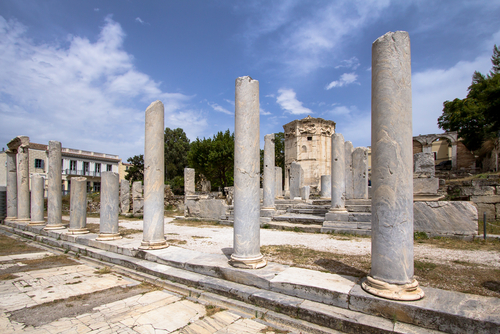
Agora, Athens
The Athenian economy had a financial marketplace in the Agora. There were bankers as well as insurance companies. Aristotle wrote about the people who made money from money. As the Athenian economy began to expand because of the introduction of financial markets, there was a transition of which Aristotle wrote about in his “Politics.” Aristotle believed that the Athenian economy was changing from what I call the Villa Model (Agricultural) of self-sufficient enclaves to an economy of market-driven incentives which encourage the production of excess for the purpose of trade giving rise to a Market Economy Model. Similarly, this was the same transition period emerging from feudalism. Once a financial marketplace emerges, then people will produce more if there is a marketplace where it can be sold.
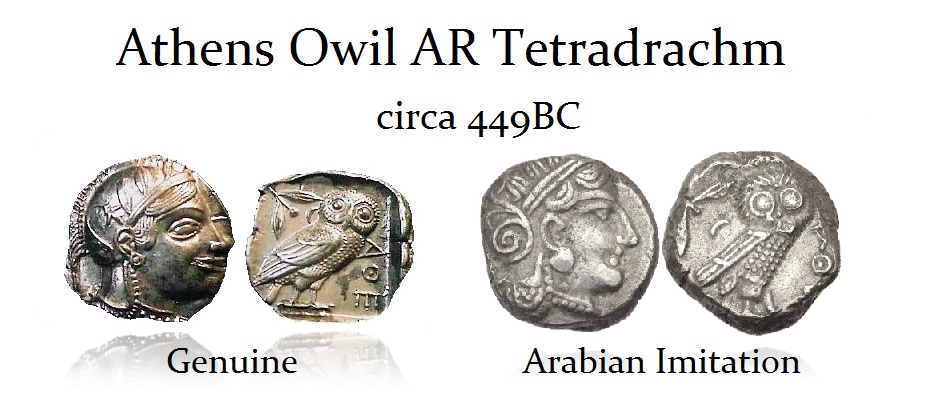
There are academics who have tried to breakdown the Athenian economy with such detail that they could not see the forest while focusing on the bark of just one tree. They read Aristotle’s “Politics” but missed the whole point of his concern — the transformation of Athens into the financial capital of the ancient world which even predated China. Some have argued that the ancient Greek word oikonomiais the root of our modern English word “economy,” but it is not synonymous with our definition of “economy” as we perceive it today. They argue that today “economy” refers to a distinct sphere of human interactions involving the production, distribution, and consumption of goods and services; oikonomia meant “household management” because it was guide written by Xenophon — how to manage your Villa Economy. They then mix in the political system of Greek Democracy and claim family activity was subsumed into traditional social and political institutions. They then go as far as to degrade the Greek monetary system, admitting that they produced and consumed goods, engaged in various forms of exchanges including long-distance trade among nations, and developed monetary systems employing coinage. This is all discounted by many academics arguing that they did not see such activities as being part of a distinct institution which we call the “economy.” I really see these arguments as gibberish where they have had way too much time to think and produce nothing. Instead, they get lost in their own thoughts. They lack a complete knowledge of the monetary history and fail to comprehend that Athens’ coinage was so dominant in the ancient world it was imitated in the north by the Celts, Slavic people, Asians, and even down in Arabia. That would never have taken place if it was so de minimis as they have tried to portray.
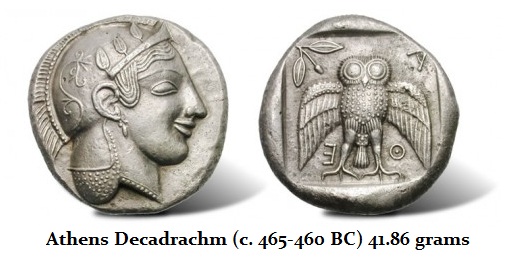
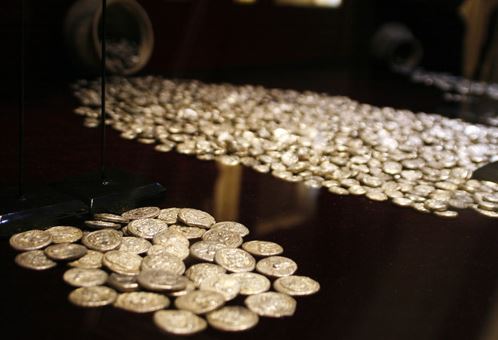
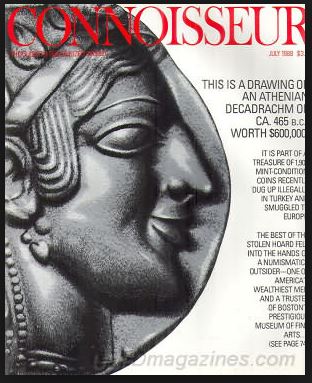
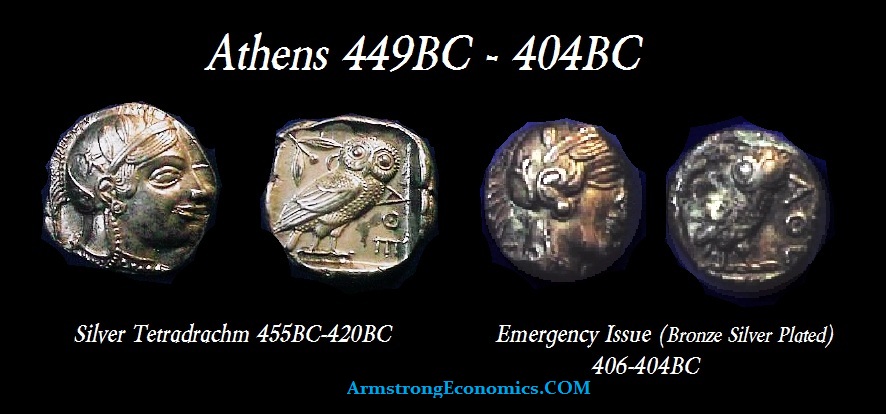
Athens produced the Decadrachm (10 drachmas) with a weight of nearly 42 grams. These coins would have been like 10,000 bills. They are very rare. Again, some academics tried to claim these were merely commemorative issues. They lack sufficient understanding of the world monetary system for these coins have rarely ever been discovered in Greece. Treasure hunters near the village of Elmali in southern Turkey unearthed a trove of ancient coins that included the rarest and most valuable Greek coins ever found. The coins, it said, were smuggled out of Turkey and sold to William I. Koch and two partners. It was the hoard of the century.
The Elmali Hoard was discovered around April 1984 containing nearly two thousand ancient Greek and Lycian silver coins. Turkish authorities contacted Interpol seeking international assistance to find and arrest the traffickers. In 1984, the consortium OKS Partners, which included Koch, purchased almost 1,700 of these coins for about $3.2 million. They began to sell the coins in 1987 and that is when the lawsuit was filed. The hoard was eventually returned to Turkey.
The significance of this hoard establishes that the Athenian Decadrachms were high denomination coins used in international trade. They are not found in Athens, but in ancient port cities around the Mediterranean coast. Some scholars claimed that the Athenian decadrachm is comparable to the more abundantly produced Syracusan decadrachm, which was minted around the same time. However, the Syracuse decadrachm was also minted for celebratory and practical purposes. The Syracuse minted their decadrachms in response to their defeat of the Carthaginians and they attempted to try to argue this was the same reason behind the Athenian decadrachms.
Numismatists have identified 24 separate reverse dies used for one issue of Syracusan decadrachms by created by the artist Euaenetus. This suggests that a minimum original circulation of just this issue would have been between 240,000 and 360,000 coins with a modern survival rate ranging between .08% and .25%. The Athenian decadrachm was used in international trade when they were attaining timber and metals from the Near East. The majority of Athens was composed of farmers who would never have a need for a decadrachm. The decadrachm became obsolete by the time of Pericles and Democracy for Athens was losing its supremacy and lost in war to Sparta. In fact, during the Peloponnesian War (431–404 BC), Athens lost its silver resources and began to issue its coins merely silver plated.
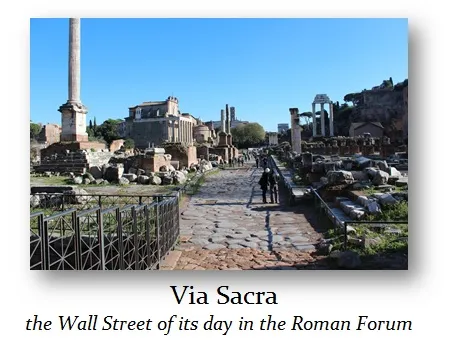
Therefore, both the Athenian and Roman economies began to expand into sophisticated agricultural-based economies only with financial markets. This is how the economies emerged from a Villa Model of self-sufficient enclaves as was also the case in feudal times into a integrated market economy which led to international trade and the birth of Mercantilism. Rome did not have a national debt nor did it possess a central bank. Consequently, there was a deep financial market which would also take place in the Roman forum along the Via Sacra — the Roman version of Wall Street.
Most people assume that the invention of corporations really began with the East India Company since it was the first share to begin trading in the 1500s. However, there were plenty of early examples of markets which were similar to stock markets. Even during the 1100s, France had a system where courretiers de change managed agricultural debts throughout the country on behalf of banks. This can be seen as the first major example of financial exchange because the men effectively traded debts — bonds. Later, the merchants of Venice were credited with trading government securities as early as the 13th century. Post-Dark Age, the first trading in any type of financial marketplace was confined to debt instruments rather than corporate shares.
What is typically overlooked is that the first public corporation concept is truly attributed to also the same man who gave us the word “economics” from the title of his book, “Oikonomikos” meaning actually how to regulate the household – Xenophon (431 – 350 BC). Xenophon was a student of Socrates. He became a mercenary and was the leader of the famous “Ten Thousand” (of recent movie epic). He was opposed to extreme democracy that sentenced Socrates to death. His last writing in 355 BC was his “Ways and Means” that advocated peace rather than war that destroyed the economy (yes, Congress’ committee is named after his work – Ways & Means Committee). Xenophon was not a philosophic intellectual, but rather a practical man of action who wrote from experience.
Xenophon proposed a public corporation for a bank that would be formed by shares subscribed to by all the Athenian people. Commerce was seen as more important than even agriculture. Xenophon proposed a public bank that would lend at interest to expand the economy. He proposed that the profits would be used to pay for public works. During the reign of Augustus (27 BC-14 AD) in Rome, there was such a public loan bank, but not subscribed to by individual members of society. This public bank provided loans to the poor without interest and it was funded by the confiscation of property from those alleged to be criminals, which would include political dissents as well. Collateral was required at twice the amount being borrowed. These types-of public banks aided the purchases of land.
The word “corporation” derives from corpus, the Latin word for body, or a “body of people.” By the time of Justinian (527–565 AD), Roman law recognized a range of corporate entities under the names universitas, corpus or collegium. These included the state itself (the Populus Romanus), municipalities, and such private associations as sponsors of a religious cult, burial clubs, political groups, and guilds of craftsmen or traders. Therefore, these bodies of people commonly had the right to own property and make contracts. They could also receive gifts and legacies, to sue and be sued. They could perform legal acts through representatives as well. Private associations were granted designated privileges and liberties by the emperor and these are the origins of corporations.
Roman knights of the republic did invest in small business and they would receive a share of the profits. These were contracts which could be resold to someone else, but they did not trade on an open exchange. Likewise, senators would also invest in land and gain a portion of the harvest as their return on investment. Trading in shares of corporations really materialized in the 1500s, but the Roman and Greek systems would be more like venture capital and private placements.
By Dinah Wisenberg Brin
The Associated Press Philadelphia
The political upheaval of 1994? They saw it coming two years ahead of time. The devastating Japanese earthquake? They’d been expecting it, albeit a year earlier….President Herbert Hoover … might be pleased with board Chairman Martin Armstrong’s prediction of the extinction of the Democratic Party after 2020.
In late 1992, Armstrong accurately predicted either “a sweeping Republican victory on Capitol Hill” or a victory for a independent party in 1994.
QUESTION: Mr. Armstrong, I found an article from February 21, 1995, in the Associated Press that you had also correctly forecast the elections back in 1994 which became known as the Republican Revolution and warned that the Democratic Party could ride off into the sunset. Your forecast on Trump and BREXIT also show your computer is on to something. Will you be doing the elections in 2020 at the Orlando WEC?
CM
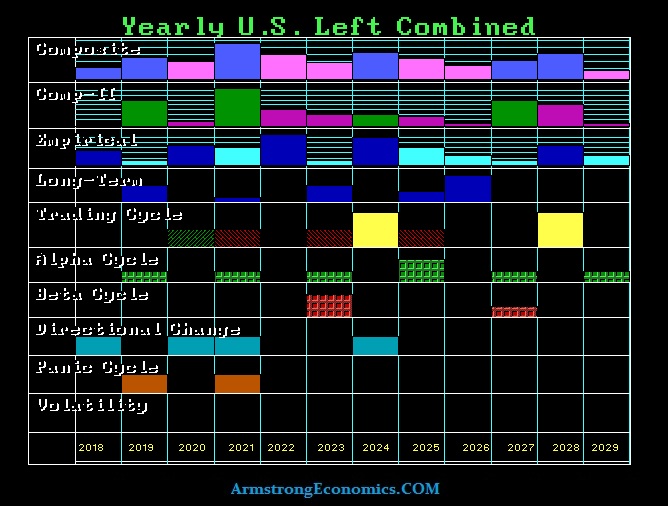
ANSWER: People do not understand that it is not the cycle by itself; it is a reflection of the trend of the whole. The crisis in the Democratic Party is reflected in the turmoil from the Squad of Four who are receiving all the press and painting the Democratic Party as the extreme left. Then you have Bernie Sanders and Elizabeth Warren. They are just not in the center, to say the least. This raises the potential for a major shift in the political system as we saw with Trump wiping out career politicians in the Republic Party. You can see the Array on the Democrats (Combined Senate/House) showed a Panic Cycle in 2019 which gave them the House, but the big turning point will be the 2020 elections with a Panic Cycle due there as the result in 2021.
Yes, we will be doing political forecasts at the WEC.
QUESTION: Mr. Armstrong is there any way we can not have inflation. If so how? If not what would you say 5% or more?
S
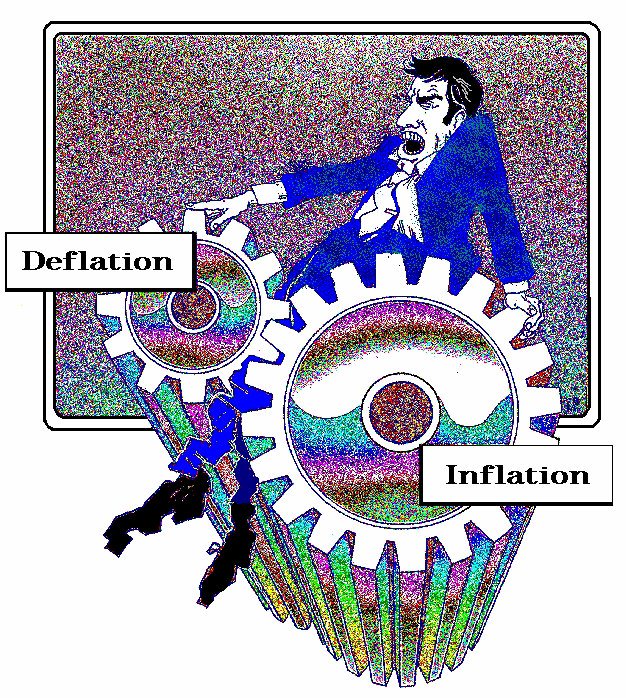
ANSWER: It all depends on your definition. The type of inflation coming is more STAGFLATIONwhere prices rise due to cost-push (shortages) but there is a declining economic growth. The more familiar inflation is a DEMAND lead event because the economy is booming. Because governments are desperate for money, they keep raising taxes and are increasing enforcement. This trend is DELATIONARY for it reduces disposable income. The INFLATIONARY pressure comes from the rising costs which are set in motion by raising taxes.
Then we add the impact of the climate chaos creating shortages in food and that furthers cost-push inflation. The end result will be the shift from PUBLIC to PRIVATE where people will run away from government debt on all levels and move to tangible assets to survive.
This evening President Trump delivered remarks during the swearing-in ceremony for newly appointed Defense Secretary Mark T. Esper. [Video and Transcript] The Senate voted 90-to-8 easily confirming Secretary Esper.
.
[Transcript] – THE PRESIDENT: Well, thank you very much everybody. We have a very important moment in our country’s history, actually. And we had a lot of our great Republican senators in the White House, and I invited them over and many of them wanted to be here. And as you probably heard, the vote just took place, and it was 90 to 8. That’s a vote that we’re not accustomed to, Mark, I have to say that. So congratulations, that’s great.
But I’m honored to be here today for the swearing-in of our new Secretary of Defense, Mark T. Esper. I especially want to thank Justice Samuel Alito — highly respected and a great gentleman, a great man — for joining us to administer the Oath of Office. Thank you very much. Thank you, Sam.
We’re also delighted to welcome several of Secretary Esper’s family members and friends to the White House today, including his mother, Polly. Hi, Polly. (Laughter.) Boy, are you proud of him, Polly? You better believe it. Yeah. (Laughter.) His wife, Leah. Thank you, Leah, very much. And his three children — Luke, John, and Kathryn. Thank you very much. Congratulations, too, most importantly. Congratulations. That’s an incredible thing.
There is no one more qualified to lead the Department of Defense than Mark Esper. A West Point graduate — great student, actually — Secretary Esper served our military for 21 years, including in the Gulf War. He also advanced U.S. national security in government and in private sector, most recently as Secretary of the Army, where he played a critical role training and equipping our armed forces. That’s where I got to know Mark. And there was nobody that did a better job than Mark and there’s nobody that loves it more than Mark. And thank you very much.
He is a recipient of the Bronze Star and Combat Infantryman Badge. He holds a doctorate in public policy from George Washington University and a master of public administration degree from the John F. Kennedy School of Government at Harvard University.
I am confident that he will be an outstanding Secretary of Defense. I have absolutely no doubt about it. He is outstanding in every way. And we’re honored to have you aboard. And I would ask Justice Alito, please, to administer the Oath of Office. Thank you. Thank you, Judge.
(The oath is administered.) (Applause.)
THE PRESIDENT: Would you like to say something?
SECRETARY ESPER: Yes, sir, if I may.
THE PRESIDENT: Please.
SECRETARY ESPER: Well, thank you, Mr. President, for your kind words, for your confidence in me, and for this incredible opportunity. And thank you, Justice Alito, for administering the Oath of Office. I really appreciate you being here this afternoon.
I’d also like to Senate — to thank the Senate Armed Services Committee for its quick action on my nomination and for the strong bipartisan support that I received today from the entire United States Senate.
It is an honor of a lifetime to be appointed Secretary of Defense and to lead the greatest military in history. And I will do so with that same energy and commitment to duty, honor, and country that I have for nearly four decades since my early days at West Point.
Mr. President, it is a privilege for me and for my family to be here with you today. Thank you for your leadership and for your commitment to a strong national defense and to all of our service members. Our military has made tremendous gains in recent years thanks to your leadership and we stand ready today to take on any challenge.
And while our soldiers, sailors, airmen, and Marines stand guard each and every day, we will ensure their families are well taken care of.
On a personal note, I would like to thank my wife, Leah, who has been by my side now for 30 years as a military spouse herself; my children, Luke, John, and Kate; my mother, Polly; my in-laws, Tom and Von; and my sisters who join me here today. And everybody else who has been a steadfast supporter of me over the years.
Again, thank you, Mr. President, for allowing me to serve our great country once again, as Secretary of Defense. Thank you, sir. (Applause.)
THE PRESIDENT: Thank you, Mark. Congratulations.
SECRETARY ESPER: Thank you.
THE PRESIDENT: Fantastic. Proud of you. Come on over here.
SECRETARY ESPER: Okay. Leah?
(A certificate is presented.)
THE PRESIDENT: He’s going to be a great one. Thank you very much.
The Real Adam Smith: A Personal Exploration by Johan Norberg, takes an intriguing, two-part look at Smith and the evolution and relevance of his ideas today, both economic and ethical. It’s difficult to imagine that a man who lived with horse drawn carriages and sailing ships would foresee our massive 21st century global market exchange, much less the relationship between markets and morality. But Adam Smith was no ordinary 18th century figure. Considered the “father of modern economics,” Smith was first and foremost a moral philosopher. The revolutionary ideas he penned in The Wealth of Nations and The Theory of Moral Sentiments, changed the world. Norberg explores Smith’s insights regarding free trade and the nature of wealth to the present, where they are thriving and driving the world’s economy. In the second hour, Ideas That Changed The World, Norberg traces Smith’s insights regarding the benefits of free trade and the nature of wealth to the present, where they are currently in operation. He talks with some of the most distinguished Adam Smith scholars, as well as leaders of some of the world’s most admired companies to discover how Smith’s ideas continue to be relevant and drive the global economy today.
Five myths cloud our perception of both the past and the present. (1) The “robber baron” myth, which holds that in late nineteenth-century America there were powerful men who became rich at the expense of the poor. The reality is that they became wealthy by being productive, and that there is no other period in history which saw such a rapid and widespread improvement in the well-being of the average individual; (2) The myth that the Great Depression was caused by a failure of business, when it was, in fact, produced by a failure of government and specifically by the Federal Reserve System; (3) The myth that government in the economy has expanded in response to public demand, when, actually, the public has had to be sold “hard” for politicians to enact every major social program; (4) The “free lunch” myth, which forces the individual to pay more, no matter how the government raises money – by taxing individuals, by taxing businesses, or by printing more money; and (5) The myth that government, like Robin Hood, transfers wealth from the rich to the poor, when the reality is that the government usually transfers wealth and income from both the very rich and the very poor to those in the middle. Check out our Facebook page here: https://www.facebook.com/FreeToChoose…
COMMENT: Well, Ray Dalio was short the market, missed the rally, and lost almost 5% for the first half of the year. Obviously, they don’t use Socrates – lol.
LB
REPLY: I do not advise Bridgewater and I have no idea if they even subscribe to Socrates. But what you have to realize is that a lot of these hedge funds form their strategy based upon opinion for the broader view. When you have a portfolio of that size, you cannot simply trade it back and forth for each move. The question becomes critical as to where to draw the line to realize your broadview strategy is wrong.
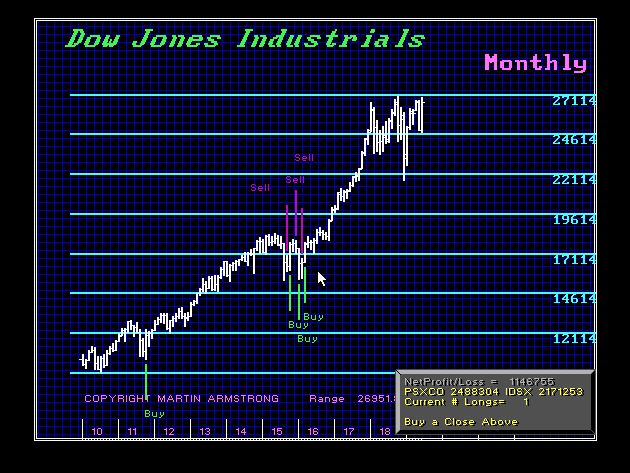
I have stated many times that the trend does NOT begin to shift until you reach the Monthly Level. We saw that in Gold when it finally got through 1362.50 after nearly four years of bouncing off that number. In the case of the Dow Jones Industrials, our hedging models for institutions were long one month from the low and has remained in that position. This is just a hedging model which is either long or short. It at least tends to keep institutions on the right side of the trend for long periods of time.
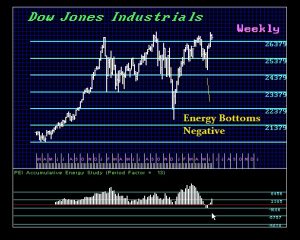
Aside from the Reversal System, the Energy Model is extremely helpful in identifying the position of the market and if there is a risk of a crash or a rally. The Energy Model turned negative, demonstrating that there was no possibility of a crash as most analysts were forecasting from a gut perspective. A crash would have been possible ONLY if the Energy Model was at a peak. When it is testing the lows or a negative, it is warning that the energy in the market has already dissipated.
We are simply headed into a Monetary Crisis Cycle where the majority of people will never be able to forecast what will unfold from a personal gut perspective. This is not a time for lucky calls. We need objective time-tested analysis that is not clouded by human bias. This is when we need the global approach to let Socrates simply correlate the world to enable us to see the real trends that are in motion. The worst thing you can do is ASSUME you have missed something, as that is typically the kiss of death for investors where they inevitably buy the high or sell the low.
I have created this site to help people have fun in the kitchen. I write about enjoying life both in and out of my kitchen. Life is short! Make the most of it and enjoy!
This is a library of News Events not reported by the Main Stream Media documenting & connecting the dots on How the Obama Marxist Liberal agenda is destroying America




 REPLY: I do not advise Bridgewater and I have no idea if they even subscribe to Socrates. But what you have to realize is that a lot of these hedge funds form their strategy based upon opinion for the broader view. When you have a portfolio of that size, you cannot simply trade it back and forth for each move. The question becomes critical as to where to draw the line to realize your broadview strategy is wrong.
 Centinel2012