Credit Card Delinquencies Spike Among the “Rich”


Posted originally on Jun 6, 2024 By Martin Armstrong 

CreditCardDelinquency_byClass

Inflation can be felt at every tax bracket. Federal Reserve Bank of Minneapolis President Neel Kashkari came out this week and said the public “viscerally hates high inflation,” and for good measure. Everyone is seeing the impacts of inflation on their quality of life. Those defined as rich, the demographic one side of the political spectrum believes must be taxed into oblivion, have not come out of this inflationary cycle unscathed, as indicated by a new report from the St. Louis Federal Reserve.

Credit card delinquencies (missing a payment by over 30 days) have been steadily rising across America. The poorest Americans experienced the hardship first, and now those in higher tax brackets are also falling behind on bills. Delinquencies have increased for the last eight to 11 quarters, as indicated by the Fed. Among the poorest zip codes in the US, delinquency rose from 11% in Q2 of 2021 to 17.4% in Q1 of 2024 or 58%. Every region in America has experienced an increase in delinquencies by AT LEAST 32.2% in relative terms.
CreditCardDebt.Chart_

“The richest 10% of ZIP codes have experienced the greatest proportional increase; their delinquency rate climbed from 4.8% in the second quarter of 2022 to 7.4% in the first quarter of 2024, or 54% in relative terms,” the Fed noted. “For the poorest 10% of ZIP codes, the delinquency rate increased from 14.9% in the third quarter of 2022 to 21% in the first quarter of 2024, or 41% in relative terms.”

Credit card delinquencies are now exceeding pre-pandemic levels, and the Fed believes this suggests “that a trend which began prior to the pandemic has accelerated.” Discontent will grow as people are forced to stretch their dollars and watch their quality of life decline. The discontentment is fueling this political upheaval and the people can not vote their way out of this current situation because it is becoming apparent that the elections are not fair. We the people have been discarded by our government.

These delinquencies will fall on the banks eventually. The government does not realize that reckless spending and raising taxes has an impact on absolutely everyone. The people who push for more taxes and social programs fail to realize the larger implications.
Cap on Credit Card Late Fees Hurt Financially Illiterate Americans


Posted originally on Mar 6, 2024 By Martin Armstrong 

CreditCardDebt.Chart_

The Biden Administration implemented a new rule that will cap credit card late fees at $8. The Consumer Financial Protection Bureau has praised the measure, estimating it will save Americans over $10 billion annually in late fees, or around $220 annually per person as 45 million Americans have experienced these fees within the last year, but this measure may be more harmful than helpful.

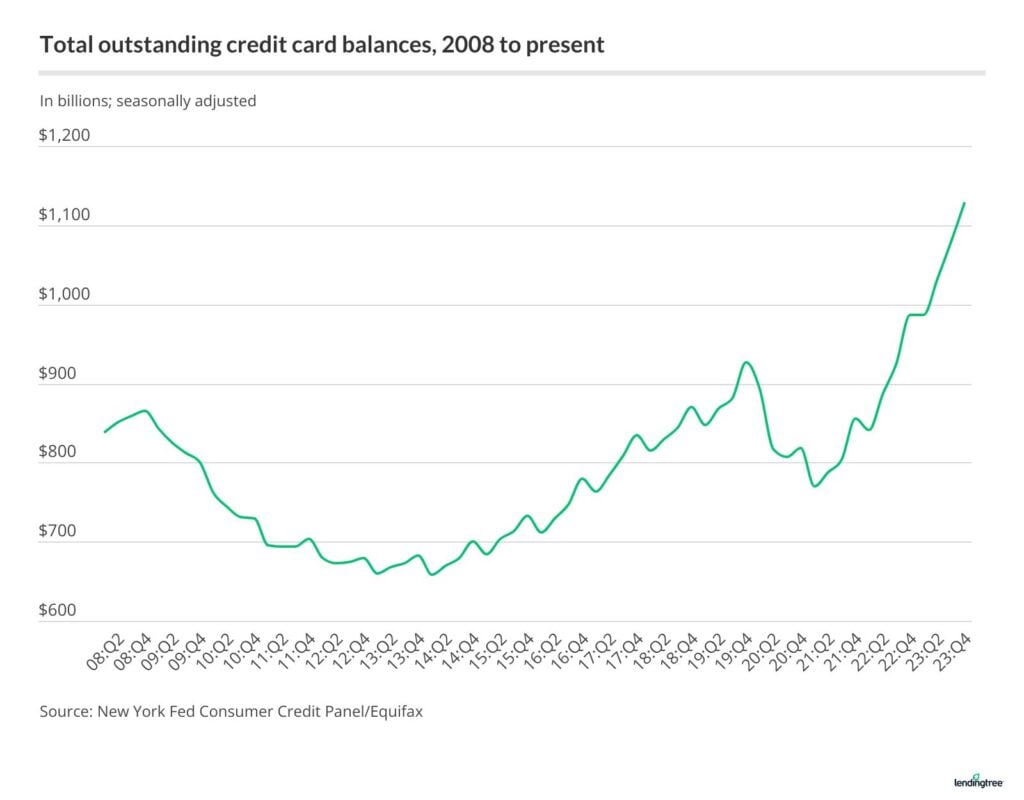
Credit card debt in America is at an all-time high of nearly $1.13 trillion and continues to rise as around 56 million Americans carry credit card debt. The typical late fee payment is around $32, but this is merely the fee for missing a payment and does not account for compounded interest. It seems like common sense, but one must realize that the average person is not financially literate. The concept of basic finance is not a mandatory requirement for the public education system, leading many people to live off debt, well beyond their means, with no chance of recuperating. America has the leading median level of credit card debt among all developed nations. There is a widespread belief that one can afford certain goods if they are approved for a line of credit, which only benefits the banks.

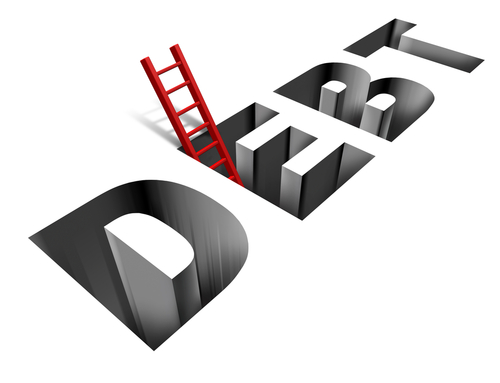
Debt Hole Cannor Climb Out

Now, the banks are certainly profiting on late fees, which account for about 15% of credit card profits based on the CFPB’s 2021 Consumer Credit Card Market Report. Do these fees deter reckless spending? A 2022 ABA-led survey found that 46% of respondents said they made it a priority to pay off their credit cards on time to avoid late fees. That particular study found that a fee of $10 was enough to redirect one’s attention to their financial obligations. Another study by the Harris Poll and NerdWallet found that Americans were more likely to make a payment of their cards if a $30 fee was implemented.

Again, one must understand that the average person cannot compute the cost of compounding interest. Borrowing money is not a legal right and should be done with the utmost caution. Simply forgetting or dismissing financial obligations has consequences.

The banks will find a way to profit off the people in other ways. It is the nature of banking. Rob Nichols, the president and CEO of the American Bankers Association, explained that other measures could be implemented that will hurt everyone. “The Bureau’s misguided decision to cap credit card late fees at a level far below banks’ actual costs will force card issuers to reduce credit lines, tighten standards for new accounts and raise APRs for all consumers – even those who pay on time,” Nichols said. This is yet another Biden Admin policy favoring the financially irresponsible at the expense of others.

So, what is the CFPB recommending as an alternative? CBDC. The agency is first suggesting digitizing banking so that consumers have instant access to their credit scores and spending habits. Again, these numbers are disregarded by a portion of the population. The agency is patronizing all Americans by stating we are not intelligent enough to know when to pay off our monthly debts without digital notifications and reminders.

Financial literacy is desperately needed in America. So, while the Biden Administration is breaking its arm patting itself on the back for this surface-level win for the everyday man, the ruling does nothing to combat the growing personal debt crisis.

Burger King Accepts Credit Cards (1993)


Armstrong Economics Blog/Humor Re-Posted Sep 24, 2023 by Martin Armstrong