Yellen: Most Americans Feel Good About Their Own Economic Situation


Armstrong Economic Blog/Inflation Re-Posted Aug 17, 2023 by Martin Armstrong
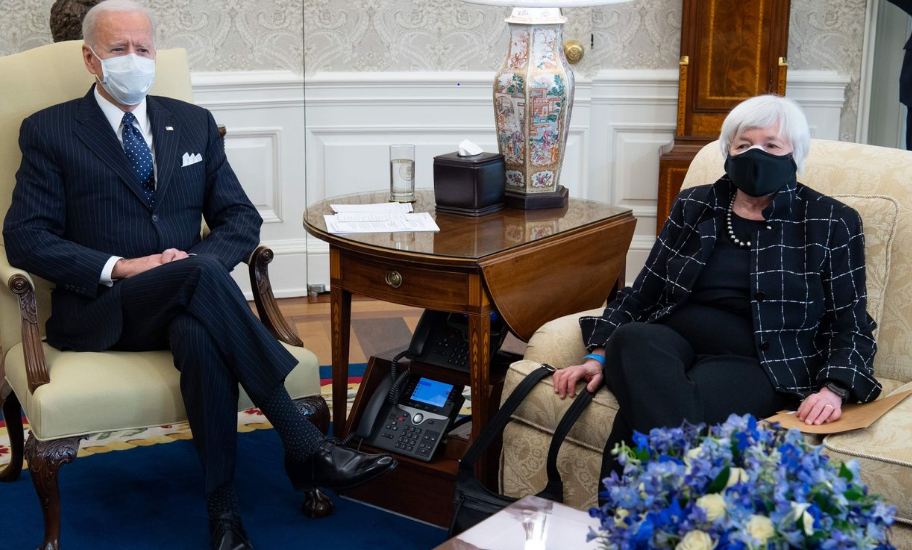
How does Janet Yellen still have a job? She is completely out of touch and merely a mouthpiece for the political elite. Treasury Secretary Janet Yellen had the audacity to claim that most Americans are happy with their financial situation despite every bit of data indicating otherwise. “So, they seem to perceive the economy as a whole as doing less well than they are personally. But most Americans feel good about their own economic situation.”

The CNN reporter questioning Yellen mentioned a poll in question showing that 75% of Americans realize that the economy is in poor condition. Another 63% said they disapprove of how President Biden is addressing the economic crisis. The reporter asked Yellen if she could assure the people that prices would go down, and she said no. Inflation allegedly is declining based on government data but people are still paying significantly more for absolutely everything.

Yellen is completely in bed with the WEF and the BUILD BACK BETTER global elite. She admitted that the true reason behind the Inflation Reduction Act was to propel the climate change agenda. “The Inflation Reduction Act is, at its core, about turning the climate crisis into an economic opportunity,” Yellen admitted. She is either mentally impaired or dismissive of the true struggles Americans face. Since Biden is incapable of campaigning, Yellen is traveling around the states and touting the imaginary success of Bidenomics.

The most inflationary driver is war. When questioned, Yellen said it was simply Russia’s fault that the US was involved in this proxy war, and only the Russian economy is suffering. There are now questions on whether the white powdery substance found in the White House belongs to Yellen. She recently called the US debt downgrade “arbitrary” and disagrees with the data. She does not speak as an authority on economics, but rather, she speaks as if she were a puppet of the WEF implanted in government to spread economic-related propaganda.

BREAKING – U.S. Treasury Steps In – All SVB Depositors Will Have Access to Their Money on Monday


Posted originally on the CTH on March 12, 2023 | Sundance 

BREAKING NEWS – The U.S. Treasury, Federal Reserve Board, FDIC and Joe Biden collectively announce that *all* depositors with Silicon Valley Bank (SVB) will have access to their funds – regardless of amount deposited.  Also, all senior bank management has been terminated.

This announced action appears to cover those under FDIC protection ($250k or less) and those above FDIC protection (deposits greater than $250k).  The only vulnerability is that SVB “shareholders and certain unsecured debtholders will not be protected.”

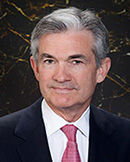
WASHINGTON DC – The following statement was released by Secretary of the Treasury Janet L. Yellen, Federal Reserve Board Chair Jerome H. Powell, and FDIC Chairman Martin J. Gruenberg:

Today we are taking decisive actions to protect the U.S. economy by strengthening public confidence in our banking system. This step will ensure that the U.S. banking system continues to perform its vital roles of protecting deposits and providing access to credit to households and businesses in a manner that promotes strong and sustainable economic growth.

After receiving a recommendation from the boards of the FDIC and the Federal Reserve, and consulting with the President, Secretary Yellen approved actions enabling the FDIC to complete its resolution of Silicon Valley Bank, Santa Clara, California, in a manner that fully protects all depositors. Depositors will have access to all of their money starting Monday, March 13. No losses associated with the resolution of Silicon Valley Bank will be borne by the taxpayer.

We are also announcing a similar systemic risk exception for Signature Bank, New York, New York, which was closed today by its state chartering authority. All depositors of this institution will be made whole. As with the resolution of Silicon Valley Bank, no losses will be borne by the taxpayer.

Shareholders and certain unsecured debtholders will not be protected. Senior management has also been removed. Any losses to the Deposit Insurance Fund to support uninsured depositors will be recovered by a special assessment on banks, as required by law.

Finally, the Federal Reserve Board on Sunday announced it will make available additional funding to eligible depository institutions to help assure banks have the ability to meet the needs of all their depositors.

The U.S. banking system remains resilient and on a solid foundation, in large part due to reforms that were made after the financial crisis that ensured better safeguards for the banking industry. Those reforms combined with today’s actions demonstrate our commitment to take the necessary steps to ensure that depositors’ savings remain safe. (LINK)

Will this action help stop any contagion related to California’s largest bank?

…The odds are, yes.

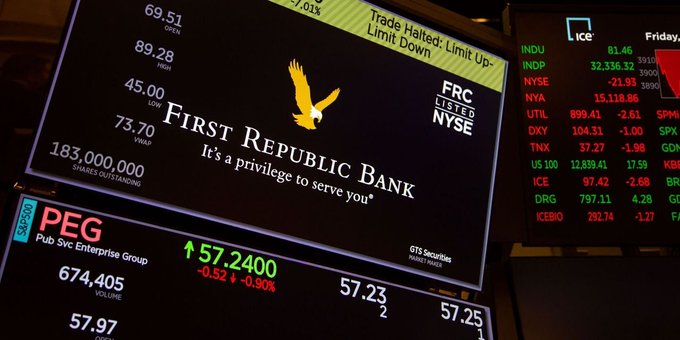
Despite Friday’s action to stop trading of FRB, with this action, I doubt First Republic Bank (FRB) is now at risk.

Powell – The Fed – Interest Rates


Armstrong Economics Blog/Central Banks Re-Posted Feb 8, 2023 by Martin Armstrong

COMMENT: Marty, Powell spoke onstage here at the Economic Club of Washington. As always, nobody seems to know central banks like you. Powell point-blank said that the Fed may have to continue to raise rates more than what the marketplace has already priced in if the jobs market stays unexpectedly strong. I know you hate our town, but perhaps you should consider speaking here at the club.

Thank you for the global education. You are indeed a legend in your own time as they call you.

P

REPLY: Thanks for the invite. Not sure I want to fly to the real Tinseltown. We have to come to the cold hard fact that there are no alternatives to the Keynesian theory. It’s not just the Fed. When I do interviews, I tend to be controversial because everyone, including the Goldbugs and countless analysts, all rely on the very same set of theories.

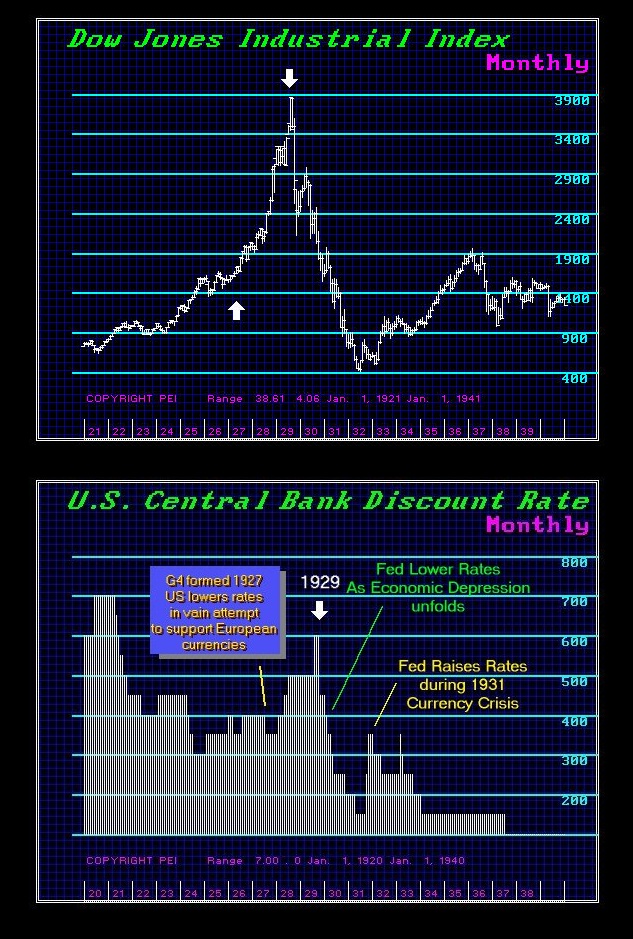
The premise remains to increase the supply of money and it MUST be inflationary. The Fed raises rates to reduce consumption and lower rates to stimulate consumption. It’s a very nice theory, but when actually tested, it utterly fails. Lower rates will NEVER cause people to invest UNTIL they believe that there is an opportunity to invest.

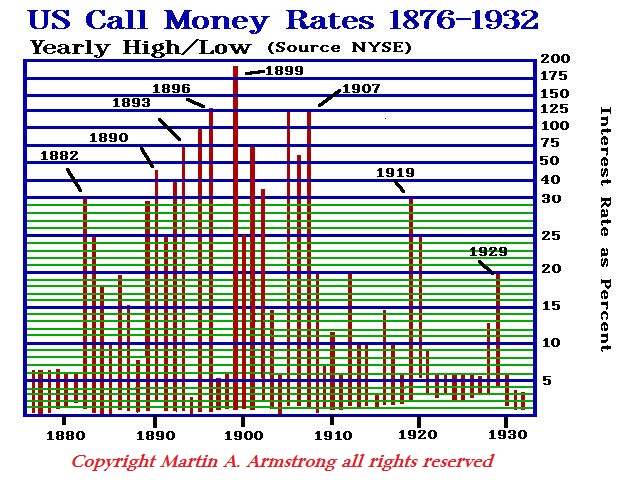
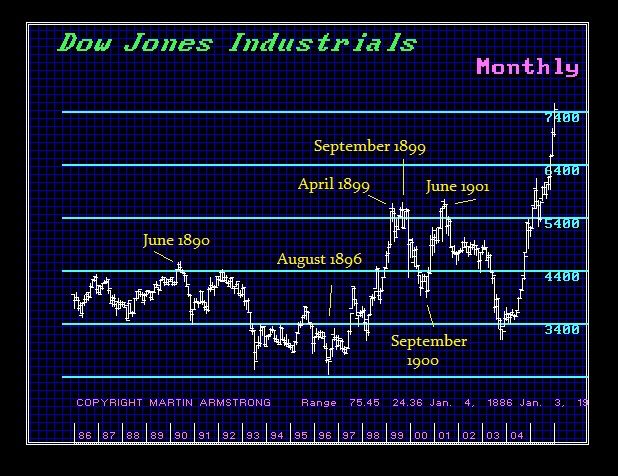
The peak in interest rates took place in 1899 at virtually 200%. Yet, 1929 was the real bubble top and it peaked with 20% interest rates in call money on the NYSE. In theory, the biggest boom should have been met with the highest interest rate. In truth, the “real interest rate” as I have defined it is when the interest rates exceed expectations. If you think the stock market will double, you will pay 25% interest.

As you can see, while interest rates hit nearly 200% in 1899, the share market did NOT crash percentage-wise anything as it did following 1929. Look, there is a lot more to this than meets the eye. Everything must be addressed on a global scale for it all depends also on the direction of capital flows. There is just a lot more to this than simply the money supply and interest rates.

Fed Chair Jerome Powell States Ongoing Rate Increases Are Appropriate Given Strength of Labor Market


Posted originally on the conservative tree house on February 7, 2023 | Sundance

This guy is really a piece of work.  Fed Chairman Jerome Powell delivers remarks to the pontificating pustules at the DC Economic Club.  Within his remarks, notice how Powell used the word “disinflation” to describe how prices are starting to drop in the “goods sector.”

Of course, durable goods are dropping in price, fewer consumers have any money to buy them.  Yes, excess manufactured goods created by the disappearance of buyers will naturally lead to lowered prices by those who need to sell them.  Our economic problem is not, and was not, ever an outcome of excessive demand for durable goods.

Our economic problem is the scale of energy price increases that are chewing through paychecks and driving up the costs of high-turn consumables like food.

Massive price increases for food, fuel, energy, electricity, home heating and natural gas eating up paychecks.  There is no room for discussion about the next phone, refrigerator, or new car that might be needed.  Simultaneous to ignoring this issue, Chairman Powell is giddy that wages are not rising.  WATCH:

.

The process of bringing inflation down to the Fed’s goal of 2% over time “is likely to take quite a bit of time. It’s not going to be, we don’t think, smooth. It’s probably going to be bumpy,” Mr. Powell said Tuesday. “So we think we’re going to have to do further [rate] increases, and we think we’ll have to hold policy at a restrictive level for some time.” (WSJ Article)

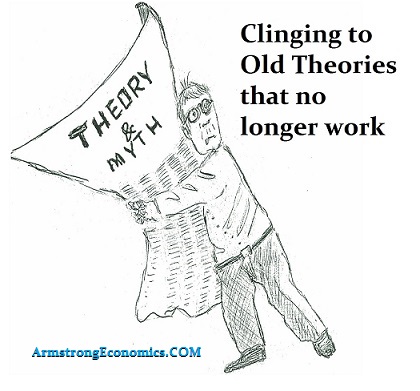
Never has this cartoon been more apropos.