Seasonal Hires Reach 16-Year Low


Posted originally on Sep 29, 2025 by Martin Armstrong |  

Online Shopping

Seasonal retail hiring may plummet to the lowest level since 2009. Job placement firm Challenger, Gray & Christmas expects retailers to add under 500,000 temporary positions in the final three months of the year, an 8% annual decline, and the smallest gain in 16 years. Retail depends on holiday Q4 sales for a bulk of annual revenue and the hiring trend is a glaring sign of a declining economy.

Certain retailers, like Target, stated that they plan to offer overtime hours to existing employees. Yet another sign of the times as people are eager for additional income and companies are not keen to take on additional employees.

A PwC survey from September 2025 indicates that the average person plans to spend 5% less this holiday season, down from $1,638 in 2024 to $1,552 per person. The survey has not indicated a drop in holiday sales since 2020. PwC’s figure translates to ~$413B–$460B total if scaled to ~266M adult consumers. Gen Z notably plans to spend 23% less this year as the cost of living has caused most young adults to live paycheck to paycheck, whereas boomers with sufficient savings plan to spend 5% more.

The National Retail Federation (NRF), however, predicts US retail sales will rise between 2.7% and 3.7% over 2024, reaching between $5.42 trillion and $5.48 trillion for the year. As for holiday spending, the NRF predicts a rise between 2.5% and 3.5% reaching a total between $979.5 billion and $989 billion.

Hiring trends in retail indicate that companies are less than optimistic about overall foot traffic this holiday season. Americans are spending more on less. Discretionary spending has been on the decline as inflation never meaningly waned.

Gold – Dow & People Pretending to be Me.


Posted originally on Sep 25, 2025 by Martin Armstrong |  

Gold and IBM Share Certificate

COMMENT: Mr. Armstrong, I just wanted to thank you for your ground-breaking analysis. I was a gold-only bug, and you opened my eyes to capital flows, explaining that gold rises not due to inflation, but geopolitical tensions. You have been forewarned that when Europe is flirting with war, the capital will flee, and it will be on every boat to the USA. We have gold making new highs, and the Dow is also reaching new highs. Something the gold crowd always said the opposite. You said gold could test the $5,000 level due to war as soon as 2026, I believe. At the same time, others continue to claim that the stock market will crash and revise their forecasts with every new high.

I just wanted to say you are honestly making a difference. I know people steal your work and claim it as their own. I discovered some people created channels and pretend to be you on Telegram and elsewhere. I do not understand their game. You do not solicit money. I’m not sure if they are trying to ruin your reputation. I reported what I encountered to your staff.

I know you have more money than God because you don’t raise your prices, you don’t solicit money, and you don’t sell advertising.

Please do not get discouraged.

Cheers

FDS

REPLY: Thank you for bringing that to our attention. I am not sure what is going on with people pretending to be me. I DO NOT RECOMMEND ANY STOCK INDIVIDUALLY, AND I DO NOT MANAGE MONEY. If you want to know about an individual share that is on Socrates. Some funds trade based on Socrates, but sorry, – been there, done that. I am far too busy to manage money. I am honestly working seven days a week, from 7 AM to midnight, and I still can’t get ahead of the workload. Anyone pretending to be me, telling you to buy a specific stock or promising to manage your money, is a fraud. Let our staff know.

As far as the market is concerned, I will do a Private Post this week. There can be a brief correction in the share market after this week. But it still does not appear to be a major long-term bear market or crash. As far as gold is concerned, the key resistance is really $4500 for next year. Gold has to pass that, and then it would test the $5,000 level. Exceeding that level, the expectations will then jump to $10,000. It gets dicey after $5,000.

If I had more money than God, I suppose that means people wouldn’t contribute to any church.

When Monetary and Fiscal Policies Blur


Posted originally on Sep 24, 2025 by Martin Armstrong |  

fiscal_cliff_10937_h264_19201 ezgif.com video to gif converter

The Federal Reserve should operate independently of Washington. It does not. Stephan Miran was appointed to the Federal Reserve Board of Governors by Donald Trump. Miran, who served as a top economic adviser to Trump and served as the chairman of the White House Council of Economic Advisers, switched from controlling fiscal to monetary policy and now the lines between Washington and the Fed are completely blurred.

Miran believes interest rates should eventually be cut in half. He mistakenly believes the old Keynesian theories that lower rates will result in higher employment. “The Federal Reserve has been entrusted with the important goal of promoting price stability for the good of all American households and businesses, and I am committed to bringing inflation sustainably back to 2 percent,” he said. “However, leaving policy restrictive by such a large degree brings significant risks for the Fed’s employment mandate.”

“The upshot is that monetary policy is well into restrictive territory,” he said. “Leaving short-term interest rates roughly 2 percentage points too tight risks unnecessary layoffs and higher unemployment.”

I’ve explained numerous times why this line of thinking is flawed. Businesses are not eager to take on additional debt, albeit at a lower rate, if they do not see a decent ROI in the future. Not a single client has suggested that they were waiting for rates to drop to expand their business. Look what happened in Japan when they artificially lowered rates to zero for decades. The economy stagnated because confidence was lost.

The reason politicians love low rates is not to help the people but to help government. With the US national debt now spiraling out of control, every uptick in rates increases the cost of debt service. Trump knows this. Biden knew it too. Every administration eventually leans on the Fed to keep rates down because the alternative is insolvency.

Trump appointed Miran for a reason. Powell was unwilling to play into politics, but Miran, a voting member of the FOMC, is an installed loyalist who will ensure the government’s ability to borrow continues.

Newborn Vaccine Requirement Under Investigation


Posted originally on Sep 22, 2025 by Martin Armstrong |  

Vaccinate Baby

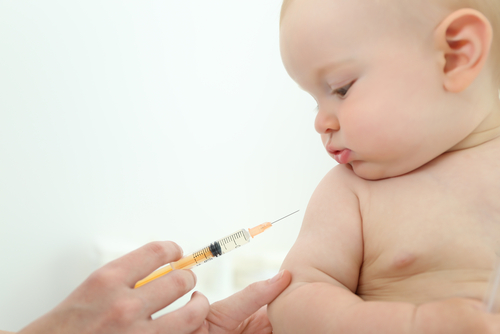
Hepatitis B is transmitted through infected blood and bodily fluids, often through sexual intercourse. Why does the US health system insist that newborns receive a vaccination against an STD at birth? Health and Human Services Secretary Robert F. Kennedy Jr.’s vaccine panel plans to re-evaluate the mandate.

The current recommendation states that newborns should be vaccinated against hepatitis B within the first 24 hours of birth. The Advisory Committee on Immunization Practices, or ACIP, has delayed voting on updated guidelines due to the controversy.

The vaccine panel voted to recommend testing for hepatitis B in pregnant women as the disease can be transferred from mother to baby. Pharmaceutical company Merck, who recently moved a multi-million dollar facility from the UK to the US, insists the vaccine is safe and effective at birth. Yet, there are no concrete studies to show whether or not the risks outweigh the benefits.

This disease is not airborne nor can be passed through coughing, sneezing, or close contact. There must be an exchange of bodily fluid, and the primary infector here would be the mother (vertical transmission). If the disease cannot be spread through anything other than bodily fluid, why is the medical community insistent on a mandate? Parents should have the ability to chose the best course of action for their baby’s health.

Health complications from the vaccine are rare, but never zero. “Six studies reported serious adverse events (SAEs) such as the requirement for escalation of respiratory support. However, these occurred predominantly in high-risk infant populations and were rare (~1%),” a study published by the National Library of Medicine detailed. The study also notes a decreased risk of adverse side effects among newborns vaccinated after one week of birth. Yet, the study also explains the importance of catching the disease early. “Infection in the newborn or during early childhood leads to chronic hepatitis in 95% of infections, whereas infection acquired during adulthood is less likely to lead to chronic disease, with less than 5% of patients in this category.”

“I believe that this vaccine is absolutely critical for babies that are treated,” said member Retsef Levi, who has been vocal about his opposition to RNA vaccines. “But this notion that we sit here with very lousy evidence and argue there is no problem whatsoever [with administering the shot at birth] is not building trust, and it’s not scientific and it’s not what the public here should expect from us.”

The panel is considering updating the recommendation to infants at one month of age. “As people have asked, why would we pick one month? Why two? There’s no evidence that it’s safer at a later time,” Meissner said. “It’s an extremely safe vaccine, a very pure vaccine. So I think we will be creating new doubts in the minds of the public that are not justified.”

Others believe there is insufficient evidence. “I believe that there’s enough ambiguity here and enough remaining discussion about safety, effectiveness, and timing that I believe that a vote today would be premature,” Dr. Robert Malone said.

The bottom line is that we have a string of vaccines pushed upon the population from birth until death that have not been properly tested. Those who fund the studies also profit from the vaccinations, which is precisely the problem. Before Kennedy, no one questioned whether or not the guidelines coming from health agencies were backed by actual science. There were very few vaccination mandates for newborns a few decades ago, and now, babies in America receive FIFTEEN doses of vaccinations during their first year of life—and “the science” cannot clearly show whether these concoctions are “safe and effective.”


Dave Brat: They’re Talking About Censorship And Shutting Down Free Speech. During Covid They Shut Down The Entire Country


Posted originally on Rumble on By Bannon’s War Room on: September, 20, 2025

Interview: Europe’s Economic Turmoil, Political Uprisings, & Global Tensions


Posted originally on Sep 21, 2025 by Martin Armstrong |  

Interview: Gold, Stocks, Geopolitical & Dollar Surge


Posted originally on Sep 20, 2025 by Martin Armstrong |  

RFK Holds Panel on vaccine and Immunization Practices


Posted originally on Rumble on By Bannon’s War Room on: September, 18, 2025

CDC’s vaccine advisory panel, with new members picked by RFK Jr., votes on measles shot


Posted originally on Rumble on By Bannon’s War Room on: September, 18, 2025

Coffee Prices on the Rise


Posted originally on Sep 19, 2025 by Martin Armstrong |  

Coffee

Coffee prices are the latest grocery item troubling American consumers. The United States is the world’s largest importer of coffee, but produces less than 0.1% of all coffee for domestic consumption, importing over $8.2 billion (1.6 metric tons) of coffee last year alone. The average retail price of coffee spiked 21% in the past year, marking the sharpest rise since the late 1990s.

Tariffs are certainly part of the problem. Brazil produces around 37% of the world’s coffee, but now faces a 50% tariff on coffee beans. The average price of Brazilian coffee now sits around $6 per pound. Brazil also experienced a depleted harvest in 2024-25 due to drought and unfavorable weather conditions. The harvest was 9% beneath traditional levels. Global production rose by 4.3 million bags, but was offset by lower stocks, and prices remained high. The US spent $1.41 billion last year on Brazilian coffee alone, and a 50% tariff in addition to increased prices is causing grocers and retailers to raise prices.

Brazil and Colombia primarily focus on Arabica beans, with Colombia being America’s second-highest importer. In far contrast to Brazil, Colombia’s tariff sits at 10%. Still, the US purchased $1.4 billion in coffee beans from Colombia last year and any levy will be felt by consumers. Colombia’s 2024-25 coffee harvest was extremely robust at 13.2 million bags, a 23% increase from the previous year. Farmers believe production will fall by 5.3% in the coming harvest due to weakening La Nina conditions and heavy rain.

Vietnam supplies 17% of the world’s coffee, but the US mainly relies on South America for imports. Vietnam’s tariff sits at 20% and many roasters have complained that this is affecting their bottom line. Same with Indonesia, which has a 19-32% levy.

Brazilian coffee exports to the US have fallen by nearly 46% since tariffs were imposed. While the US consumed 15% of Brazilian coffee exports, Germany was close behind at 14% and has surpassed the US to become the top buyer. It is undeniable that tariffs on Brazil have caused a spike in US coffee prices, which has been exacerbated by a weak harvest.