During an impromptu moment at the VFW Convention, President Trump invites 94-year-old veteran Mr. Alan Jones on to the stage during his speech; what follows is yet another example of President Trump’s innate gift for creating remarkable moments:

.


During an impromptu moment at the VFW Convention, President Trump invites 94-year-old veteran Mr. Alan Jones on to the stage during his speech; what follows is yet another example of President Trump’s innate gift for creating remarkable moments:
.
There’s a lot of news this week reflecting a great deal of oppositional alignment against the presidency of Donald Trump. CTH can get down in the weeds of each specific issue to discuss the motives and intents (we will, and do), but the big picture MUST remain at the forefront of understanding. If we lose track of the big picture, the weeds are overwhelming.
…“It must be remembered that there is nothing more difficult to plan, more doubtful of success, nor more dangerous to manage than a new system. For the initiator has the enmity of all who would profit by the preservation of the old institution and merely lukewarm defenders in those who gain by the new ones.”
~ Niccolò Machiavelli
♦POTUS Trump is disrupting the global order of things in order to protect and preserve the shrinking interests of the U.S. He is fighting, almost single-handed, at the threshold of the abyss. Our interests, our position, is zero-sum. Our opposition seeks to repel and retain the status-quo. They were on the cusp of full economic victory over the U.S.
Summary of Action: President Trump structuring a plan to break up multinational BIG-AG, and their “controlled markets.” STOP In the interim, to return to supply-side principles, POTUS Trump proposes a bridge-subsidy approach to wean farmers off exploitative, globalist, multinational “contract farming”. STOP In this endeavor President Trump and Mexican President Lopez Obrador will be brothers-in-arms. FULLSTOP
President Trump is disrupting decades of multinational financial interests who use the U.S. as a host for their ideological endeavors. President Trump is confronting multinational corporations and the global constructs of economic systems that were put in place to the detriment of the host (USA) ie. YOU; or in this example the U.S. farmer. There are trillions at stake; it is all about the economics; all else is chaff and countermeasures.

Familiar faces, perhaps faces you previously thought were decent, are now revealing their alignment with larger entities that are our abusers. In an effort to awaken the victim to the cycle of self-destructive codependent behavior, allow me to cue a recent audio visual example from U.S. Senator John Thune. WATCH:
.
What South Dakota Senator John Thune is showcasing here is his full alignment with big multinational corporate agriculture (BIG AG). Big AG is not supporting local farmers. Big AG does not support “free and fair markets.” Big AG supports the interests of multinational corporations and multinational financial interests.
For those interests the U.S. is the host; from our perspective they are the parasite.
It is critical to think of BIG AG in the same way we already are familiar with multinational manufacturing of durable goods.
We are already familiar how China, Mexico and ASEAN nations export our raw materials (ore, coking coal, rare earth minerals etc.). The raw materials are used to manufacture goods overseas, the cheap durable goods are then shipped back into the U.S. for purchase.
It is within this decades-long process where we lost the manufacturing base, and the multinational economic planners (World Trade Organization) put us on a path to being a “service driven” economy.
The road to a “service-driven economy” is paved with a great disparity between financial classes. The wealth gap is directly related to the inability of the middle-class to thrive.
Elite financial interests, including those within Washington DC, gain wealth and power, the U.S. workforce is reduced to servitude, “service”, of their affluent needs.
The destruction of the U.S. industrial and manufacturing base is EXACTLY WHY the wealth gap has exploded in the past 30 years.
With that familiarity, did you think the multinationals would stop with only “DURABLE GOODS”?
They don’t.
They didn’t.

The exact same exfiltration and exploitation has been happening, with increased speed, over the past 15-20 years with “CONSUMABLE GOODS“, ie food.
Raw material foodstuff is exported to China, ASEAN nations and Mexico, processed and shipped back into the U.S. as a finished product.
Recent example: Salmonella Ritz Bits (whey); Nabisco shuts New Jersey manufacturing plant, moves food production to Mexico… the result: Salmonella crackers. This is the same design-flow with food as previously exploited by other economic sectors, including auto manufacturing.
Archer Daniels Midland (ADM), Monsanto, Nestlé, PepsiCo, Bunge, Potash Corp, Cargill or Wilmar, stay out of the public eye by design. Most megafood conglomerates have roots going back a century or more, but ever-increasing consolidation means that their current corporate owners may have been established only a few years ago. Welcome to the complex world of Big Ag:
Start with the so-called Big Six [PDF]. Monsanto, Syngenta, Dow AgroSciences, DuPont, Bayer, and BASF produce roughly three-quarters of the pesticides used in the world. The first five also sell more than half the name-brand seeds that farmers plant, including varieties modified for resistance to the very pesticides they also sell. Meanwhile, if farmers want fertilizer, a list of 10 other companies, starting with PotashCorp, account for about two-thirds of the world market.
Once the plowing, planting, nurturing, and harvesting are done, around 80 percent of major crops pass through the hands of four traders: ADM, Bunge, Cargill, and Louis Dreyfus. These companies aren’t just financiers, of course—Cargill, for example, produces animal feed and many other products, and it supplies more than a fifth of all meat sold in the United States.
And if you ever had any ideas about going vegetarian to avoid the conglomerates, forget about it: ADM processes about a third of all soybeans in the United States and a sixth of those grown around the globe. It also brews more than 5.6 billion liters of ethanol for gasoline and pours more than 2 million metric tons of high-fructose corn syrup every year. And it produces a sixth of the world’s chocolate. {Continue – and go Deep}
Multinational corporations, BIG AG, are now invested in controlling the outputs of U.S. agricultural industry and farmers. This process is why food prices have risen exponentially in the past decade.
The free market is not determining price; there is no “supply and demand” influence within this modern agricultural dynamic. Food commodities are now a controlled market just like durable goods. The raw material (harvests writ large) are exploited by the financial interests of massive multinational corporations. This is “contract farming”.
Again, if we were to pull out of NAFTA our food bill would drop 25% (or more) within the first year. Further, if U.S. supply and demand were part of the domestic market price for food, we would see the prices of aggregate food products drop by half almost immediately. Some perishable food products would predictably drop so dramatically in price it is unfathomable how far the prices would fall.
Behind this dynamic we find the international corporate and financial interests who are inherently at risk from President Trump’s “America-First” economic and trade platform. Believe it or not, President Trump is up against an entire world economic establishment.
When we understand how trade works in the modern era we understand why the agents within the system are so adamantly opposed to U.S. President Trump.
♦The biggest lie in modern economics, willingly spread and maintained by corporate media, is that a system of global markets still exists.
It doesn’t.

Every element of global economic trade is controlled and exploited by massive institutions, multinational banks and multinational corporations. Institutions like the World Trade Organization (WTO) and World Bank control trillions of dollars in economic activity. Underneath that economic activity there are people who hold the reigns of power over the outcomes. These individuals and groups are the stakeholders in direct opposition to principles of America-First national economics.
The modern financial constructs of these entities have been established over the course of the past three decades. When you understand how they manipulate the economic system of individual nations you begin to understand understand why they are so fundamentally opposed to President Trump.
In the Western World, separate from communist control perspectives (ie. China), “Global markets” are a modern myth; nothing more than a talking point meant to keep people satiated with sound bites they might find familiar. Global markets have been destroyed over the past three decades by multinational corporations who control the products formerly contained within global markets.
The same is true for “Commodities Markets”. The multinational trade and economic system, run by corporations and multinational banks, now controls the product outputs of independent nations. The free market economic system has been usurped by entities who create what is best described as ‘controlled markets’.
U.S. President Trump smartly understands what has taken place. Additionally he uses economic leverage as part of a broader national security policy; and to understand who opposes President Trump specifically because of the economic leverage he creates, it becomes important to understand the objectives of the global and financial elite who run and operate the institutions. The Big Club.
Understanding how trillions of trade dollars influence geopolitical policy we begin to understand the three-decade global financial construct they seek to protect.
That is, global financial exploitation of national markets.
FOUR BASIC ELEMENTS:
♦Multinational corporations purchase controlling interests in various national outputs (harvests an raw materials), and ancillary industries, of developed industrial western nations. {example}
♦The Multinational Corporations making the purchases are underwritten by massive global financial institutions, multinational banks. (*note* in China it is the communist government underwriting the purchase)
♦The Multinational Banks and the Multinational Corporations then utilize lobbying interests to manipulate the internal political policy of the targeted nation state(s).
♦With control over the targeted national industry or interest, the multinationals then leverage export of the national asset (exfiltration) through trade agreements structured to the benefit of lesser developed nation states – where they have previously established a proactive financial footprint.
Against the backdrop of President Trump confronting China; and against the backdrop of NAFTA being renegotiated, likely to exit; and against the necessary need to support the key U.S. steel industry; revisiting the economic influences within the modern import/export dynamic will help conceptualize the issues at the heart of the matter.
There are a myriad of interests within each trade sector that make specific explanation very challenging; however, here’s the basic outline.
For three decades economic “globalism” has advanced, quickly. Everyone accepts this statement, yet few actually stop to ask who and what are behind this – and why?

Influential people with vested financial interests in the process have sold a narrative that global manufacturing, global sourcing, and global production was the inherent way of the future. The same voices claimed the American economy was consigned to become a “service-driven economy.”
What was always missed in these discussions is that advocates selling this global-economy message have a vested financial and ideological interest in convincing the information consumer it is all just a natural outcome of economic progress.
It’s not.
It’s not natural at all. It is a process that is entirely controlled, promoted and utilized by large conglomerates, lobbyists, purchased politicians and massive financial corporations.
Again, I’ll try to retain the larger altitude perspective without falling into the traps of the esoteric weeds. I freely admit this is tough to explain and I may not be successful.
Bulletpoint #1: ♦ Multinational corporations purchase controlling interests in various national elements of developed industrial western nations.
This is perhaps the most challenging to understand. In essence, thanks specifically to the way the World Trade Organization (WTO) was established in 1995, national companies expanded their influence into multiple nations, across a myriad of industries and economic sectors (energy, agriculture, raw earth minerals, etc.). This is the basic underpinning of national companies becoming multinational corporations.
Think of these multinational corporations as global entities now powerful enough to reach into multiple nations -simultaneously- and purchase controlling interests in a single economic commodity.
A historic reference point might be the original multinational enterprise, energy via oil production. (Exxon, Mobil, BP, etc.)
However, in the modern global world, it’s not just oil; the resource and product procurement extends to virtually every possible commodity and industry. From the very visible (wheat/corn) to the obscure (small minerals, and even flowers).
Bulletpoint #2 ♦ The Multinational Corporations making the purchases are underwritten by massive global financial institutions, multinational banks.
During the past several decades national companies merged. The largest lemon producer company in Brazil, merges with the largest lemon company in Mexico, merges with the largest lemon company in Argentina, merges with the largest lemon company in the U.S., etc. etc. National companies, formerly of one nation, become “continental” companies with control over an entire continent of nations.
…. or it could be over several continents or even the entire world market of Lemon/Widget production. These are now multinational corporations. They hold interests in specific segments (this example lemons) across a broad variety of individual nations.
National laws on Monopoly building are not the same in all nations. Most are not as structured as the U.S.A or other more developed nations (with more laws). During the acquisition phase, when encountering a highly developed nation with monopoly laws, the process of an umbrella corporation might be needed to purchase the targeted interests within a specific nation. The example of Monsanto applies here.
 Bulletpoint #3 ♦The Multinational Banks and the Multinational Corporations then utilize lobbying interests to manipulate the internal political policy of the targeted nation state(s).
With control of the majority of actual lemons the multinational corporation now holds a different set of financial values than a local farmer or national market. This is why commodities exchanges are essentially dead. In the aggregate the mercantile exchange is no longer a free or supply-based market; it is now a controlled market exploited by mega-sized multinational corporations.
Instead of the traditional ‘supply/demand’ equation determining prices, the corporations look to see what nations can afford what prices. The supply of the controlled product is then distributed to the country according to their ability to afford the price. This is essentially the bastardized and politicized function of the World Trade Organization (WTO). This is also how the corporations controlling WTO policy maximize profits.
Back to the lemons. A corporation might hold the rights to the majority of the lemon production in Brazil, Argentina and California/Florida. The price the U.S. consumer pays for the lemons is directed by the amount of inventory (distribution) the controlling corporation allows in the U.S.
If the U.S. lemon harvest is abundant, the controlling interests will export the product to keep the U.S. consumer spending at peak or optimal price. A U.S. customer might pay $2 for a lemon, a Mexican customer might pay .50¢, and a Canadian $1.25.
The bottom line issue is the national supply (in this example ‘harvest/yield’) is not driving the national price because the supply is now controlled by massive multinational corporations.
The mistake people often make is calling this a “global commodity” process. In the modern era this “global commodity” phrase is particularly nonsense.
A true global commodity is a process of individual nations harvesting/creating a similar product and bringing that product to a global market. Individual nations each independently engaged in creating a similar product.
Under modern globalism this process no longer takes place. It’s a complete fraud. Massive multinational corporations control the majority of production inside each nation and therefore control the global product market and price. It is a controlled system.
EXAMPLE: Part of the lobbying in the food industry is to advocate for the expansion of U.S. taxpayer benefits to underwrite the costs of the domestic food products they control. By lobbying DC these multinational corporations get congress and policy-makers to expand the basis of who can use EBT and SNAP benefits (state reimbursement rates).
Expanding the federal subsidy for food purchases is part of the corporate profit dynamic.
With increased taxpayer subsidies, the food price controllers can charge more domestically and export more of the product internationally. Taxes, via subsidies, go into their profit margins. The corporations then use a portion of those enhanced profits in contributions to the politicians. It’s a circle of money.
In highly developed nations this multinational corporate process requires the corporation to purchase the domestic political process (as above) with individual nations allowing the exploitation in varying degrees. As such, the corporate lobbyists pay hundreds of millions to politicians for changes in policies and regulations; one sector, one product, or one industry at a time. These are specialized lobbyists.

EXAMPLE: The Committee on Foreign Investment in the United States (CFIUS)
CFIUS is an inter-agency committee authorized to review transactions that could result in control of a U.S. business by a foreign person (“covered transactions”), in order to determine the effect of such transactions on the national security of the United States.
CFIUS operates pursuant to section 721 of the Defense Production Act of 1950, as amended by the Foreign Investment and National Security Act of 2007 (FINSA) (section 721) and as implemented by Executive Order 11858, as amended, and regulations at 31 C.F.R. Part 800.
The CFIUS process has been the subject of significant reforms over the past several years. These include numerous improvements in internal CFIUS procedures, enactment of FINSA in July 2007, amendment of Executive Order 11858 in January 2008, revision of the CFIUS regulations in November 2008, and publication of guidance on CFIUS’s national security considerations in December 2008 (more)
Bulletpoint #4 ♦ With control over the targeted national industry or interest, the multinationals then leverage export of the national asset (exfiltration) through trade agreements structured to the benefit of lesser developed nation states – where they have previously established a proactive financial footprint.
The process of charging the U.S. consumer more for a product, that under normal national market conditions would cost less, is a process called exfiltration of wealth. This is the basic premise, the cornerstone, behind the catch-phrase ‘globalism’.
It is never discussed.
To control the market price some contracted product may even be secured and shipped with the intent to allow it to sit idle (or rot). It’s all about controlling the price and maximizing the profit equation. To gain the same $1 profit a widget multinational might have to sell 20 widgets in El-Salvador (.25¢ each), or two widgets in the U.S. ($2.50/each).
Think of the process like the historic reference of OPEC (Oil Producing Economic Countries). Only in the modern era massive corporations are playing the role of OPEC and it’s not oil being controlled, thanks to the WTO it’s almost everything.
Again, this is highlighted in the example of taxpayers subsidizing the food sector (EBT, SNAP etc.), the corporations can charge U.S. consumers more. Ex. more beef is exported, red meat prices remain high at the grocery store, but subsidized U.S. consumers can better afford the high prices.
Of course, if you are not receiving food payment assistance (middle-class) you can’t eat the steaks because you can’t afford them. (Not accidentally, it’s the same scheme in the ObamaCare healthcare system)
 Agriculturally, multinational corporate Monsanto says: ‘all your harvests are belong to us‘. Contract with us, or you lose because we can control the market price of your end product. Downside is that once you sign that contract, you agree to terms that are entirely created by the financial interests of the larger corporation; not your farm.
The multinational agriculture lobby is massive. We willingly feed the world as part of the system; but you as a grocery customer pay more per unit at the grocery store because domestic supply no longer determines domestic price.
Within the agriculture community the (feed-the-world) production export factor also drives the need for labor. Labor is a cost. The multinational corps have a vested interest in low labor costs. Ergo, open border policies. (ie. willingly purchased republicans not supporting border wall etc.).
This corrupt economic manipulation/exploitation applies over multiple sectors, and even in the sub-sector of an industry like steel. China/India purchases the raw material, coking coal, then sells the finished good (rolled steel) back to the global market at a discount. Or it could be rubber, or concrete, or plastic, or frozen chicken parts etc.
The ‘America First’ Trump-Trade Doctrine upsets the entire construct of this multinational export/control dynamic. Team Trump focus exclusively on bilateral trade deals, with specific trade agreements targeted toward individual nations (not national corporations).
‘America-First’ is also specific policy at a granular product level looking out for the national interests of the United States, U.S. workers, U.S. companies and U.S. consumers.
Under President Trump’s Trade positions, balanced and fair trade with strong regulatory control over national assets, exfiltration of U.S. national wealth is essentially stopped.
This puts many current multinational corporations, globalists who previously took a stake-hold in the U.S. economy with intention to export the wealth, in a position of holding contracted interest of an asset they can no longer exploit.
Perhaps now we understand better how massive multi-billion multinational corporations and institutions are aligned against President Trump.

.
♦The Modern Third Dimension in American Economics – HERE
♦The “Fed” Can’t Figure out the New Economics – HERE
♦Proof “America-First” has disconnected Main Street from Wall Street – HERE
♦Treasury Secretary Mnuchin begins creating a Parallel Banking System – HERE
♦How Trump Economic Policy is Interacting With The Stock Market – HERE
♦How Multinationals have Exported U.S. Wealth – HERE
President Donald Trump delivers delivers remarks to the 119th VFW National Convention in Kansas City, Missouri.
WH Livestream Link – Fox News Livestream Link – Alternate Livestream Link

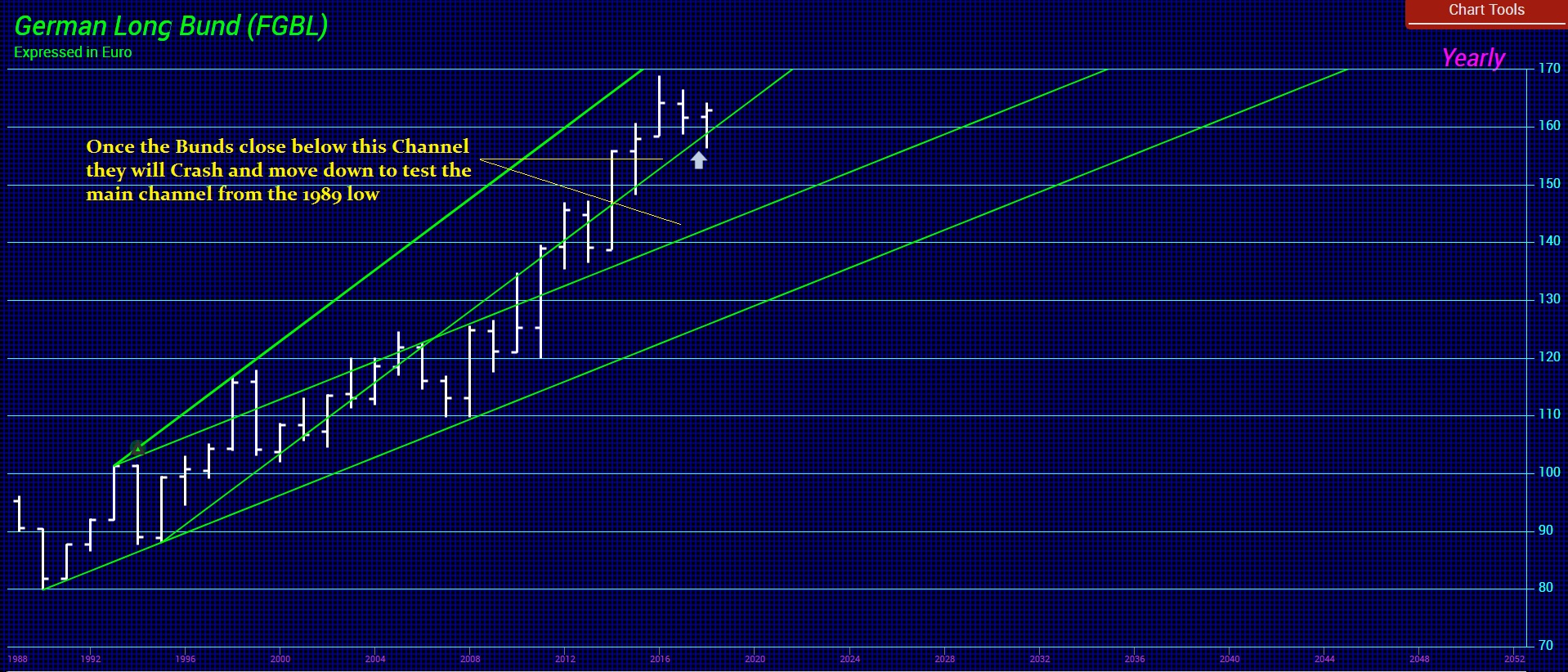
QUESTION: Mr. Armstrong; It appears that Putin also follows your model. He has been selling all debt significantly for it seems he is listening to you forecast that interest rates will rise sharply so get out of government bonds. Do you see his selling because of rate or politics as some are trying to say?
Thank you
KE
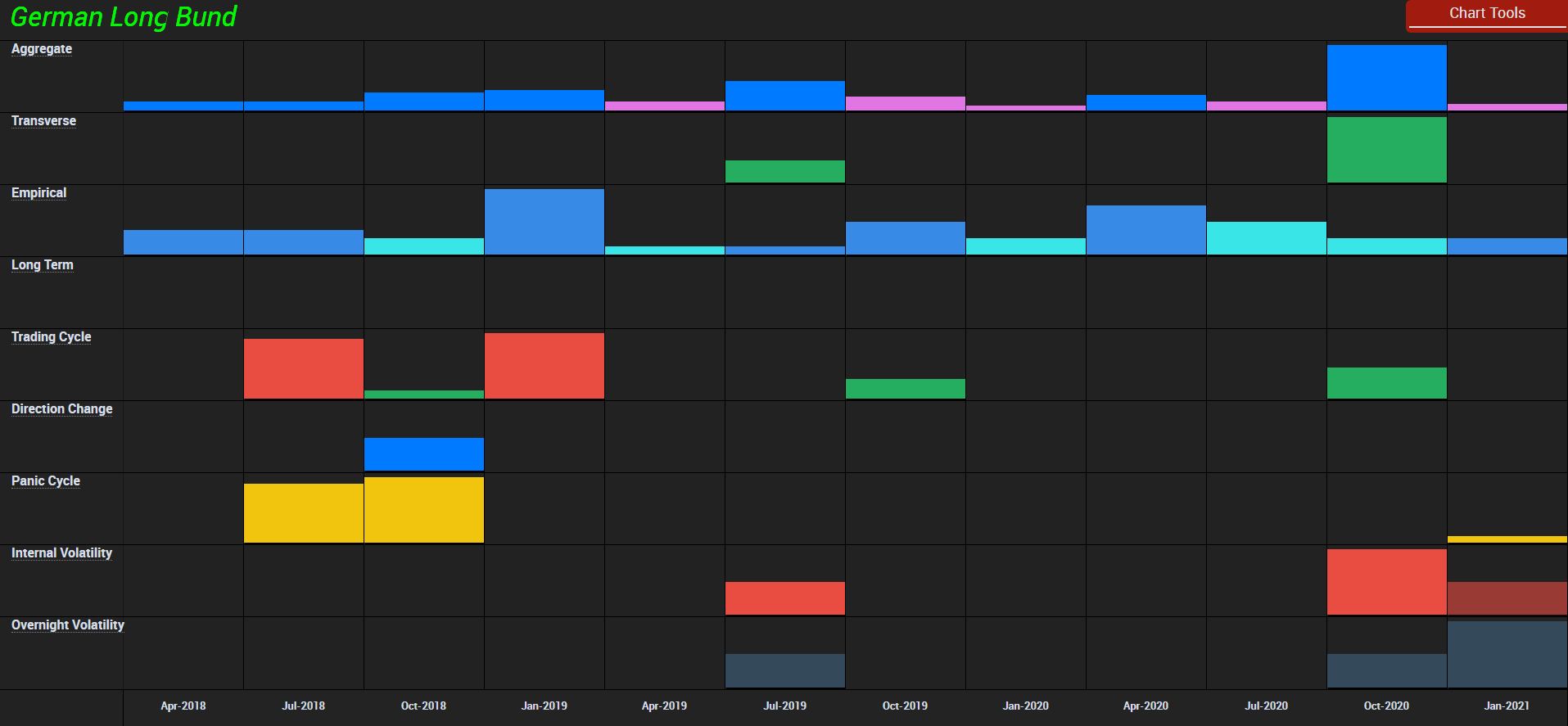
ANSWER: Putin is selling off debt very rapidly because of interest rates. The political bashing of Russia has been going on since the 2016 presidential election. It has contributed somewhat to the decision to sell, but honestly, if it were only political, then they would have sold their holdings by the end of 2016. The spin will be political, but the trend toward higher rates is the real driving force. Many countries/corporate/institutions that our clients, we have been advising to shorten maturity.
The crisis is building in debt rapidly. Even the ECB came out and said it would stop its bond-buying program and only a fool would expect rates to stay the same. I seriously doubt, based on my sources, that the ECB can stop buying bonds without a major global crisis. Draghi will keep buying until he is out the door come October 2019. I seriously question if Draghi will be able to hold it together beyond the First Quarter 2019.
Russia sold nearly all of its US Treasury holdings in May. It was an impressive sale reducing their holdings to almost zero in just two months. According to our sources, the Russian government reduced its US bond holdings from $ 96 billion to $ 48.7 billion during April and then down to $14.9 billion by the end of May. At the end of 2017, Russian holding of US debt stood at about $102.2 billion. That was not actually huge. They were in the top 33 countries holding US debt. They are certainly no longer in that list at all. The Russian sales pushed the yield slightly higher to 3.11%.

QUESTION: Hi Marty,
I continue to read your blog and if I understand correctly, interest rates are going up.
My question is, can one profit from higher interest rates such as buying CD or bank stocks like Wells Fargo?
ANSWER: The one thing you do not want to do is buy CD with maturity. As rates go higher, you will be locked in and unable to take advantage of the rising rates. Bank stocks will not benefit from higher rates in general. So that is not a valid reason to buy bank stocks. The safest thing would be to buy US TBills or agency paper no more out than 90 days and keep the cash rolling in that area until we reach a point when the rates are peaking. Toward the end, the yield curve will invert so that means the short-term rates will exceed long-term when confidence is shaken.
In an upward cycle for interest rates, never lock & load – always stay nimble.
QUESTION: Mr. Armstrong; Do you have any comment on the latest excuse for the decline in gold is because Trump is forcing it down so he can buy it up and move to gold-backed bonds like Nevada? This is the latest coming from the fringe which just seems so unrealistic any more. I am not sure why these people ignore the past.
Thank you;
PF
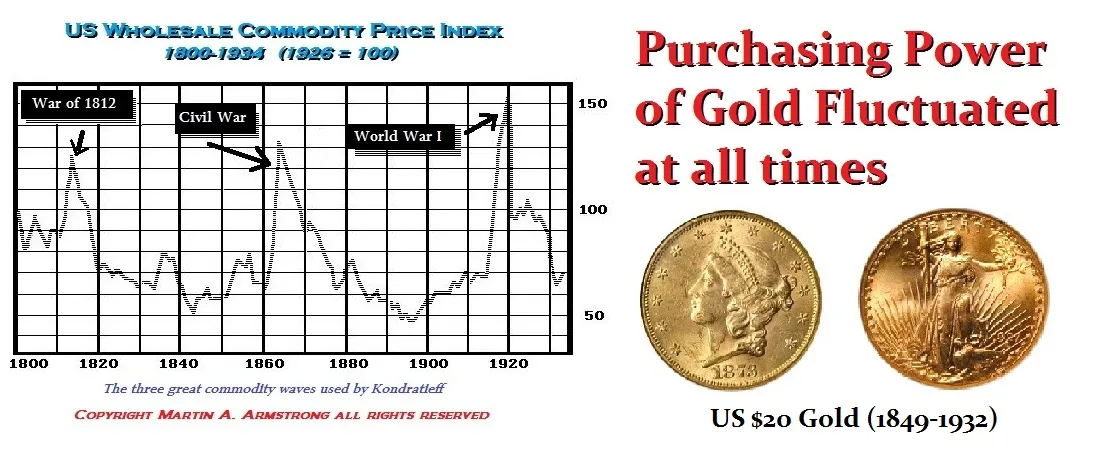
ANSWER: The entire issue at its core is this endless desire to eliminate the business cycle. They pitch that ONLY gold is money and if we return to a gold standard that every evil will be cured. They believe that money must be “tangible” and as such, they fail completely to comprehend the true nature of the economy. If ONLY gold was money, then how did Germany, Japan, and China rise to the economic giants without gold and Russia has floundered ever since 1991 when they had the gold, oil, and diamonds?
Kondratieff’s long-wave study observed that the rise and fall of the business cycle existed during the 19th & 20th centuries when the world was on a gold standard. The existence of a gold standard FAILED to eliminate the business cycle and it proved that a “tangible” based monetary system did not make money more valuable than a paper money system. Ironically, ever since 1776, we are still arguing over what is money? Should it be any commodity, paper, some fixed-exchange rate, or is the real wealth of a nation its people and their total capacity to produce? Is this why skilled labor forces and education raise the standard of living of a country than merely farming to grow food to sustain yourself?
Julius Caesar said: Divide and Conquer. If the people come together and form interconnected economic bonds, the economy expands because the synergy of everyone collectively is greater than the individual sum of the parts. Changing the monetary system to one back by gold has NEVER eliminated the business cycle. So this idea that a gold-backed bond will somehow retain its value constantly is like believing in Santa Claus of the promises made by every politician when running for office.
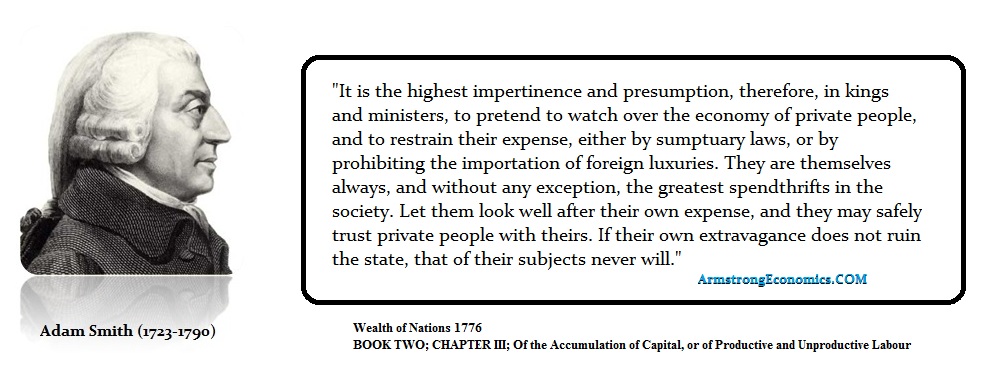
The true Wealth of a Nation was observed and expressed by Adam Smith in 1776 and nobody has been able to demonstrate anything to the contrary. “Money” is by no means some tangible object or a commodity regardless if it has been gold, paper, cattle, slaves, or seashells. The true WEALTH OF A NATION is its people! China, Germany, and Japan lacked the natural resources but their people were its wealth and they produced manufactured goods which they sold to the world and were paid for in return. Russia had the natural resources but it moved from communism to an oligarchy. You cannot open a restaurant in Moscow and compete for you will be dead. A country can have tremendous natural resources like Russia, but unless its people are free to develop the economy in their own self-interest, they will never rise to the top ten list of nations. All the gold, oil, and diamonds of Russia did not propell it to the number one economy. There are plenty of third world nations with natural resources that are being mined yet they remain as third world nations because their people are not educated and their is no domestic economic synergy among the people.
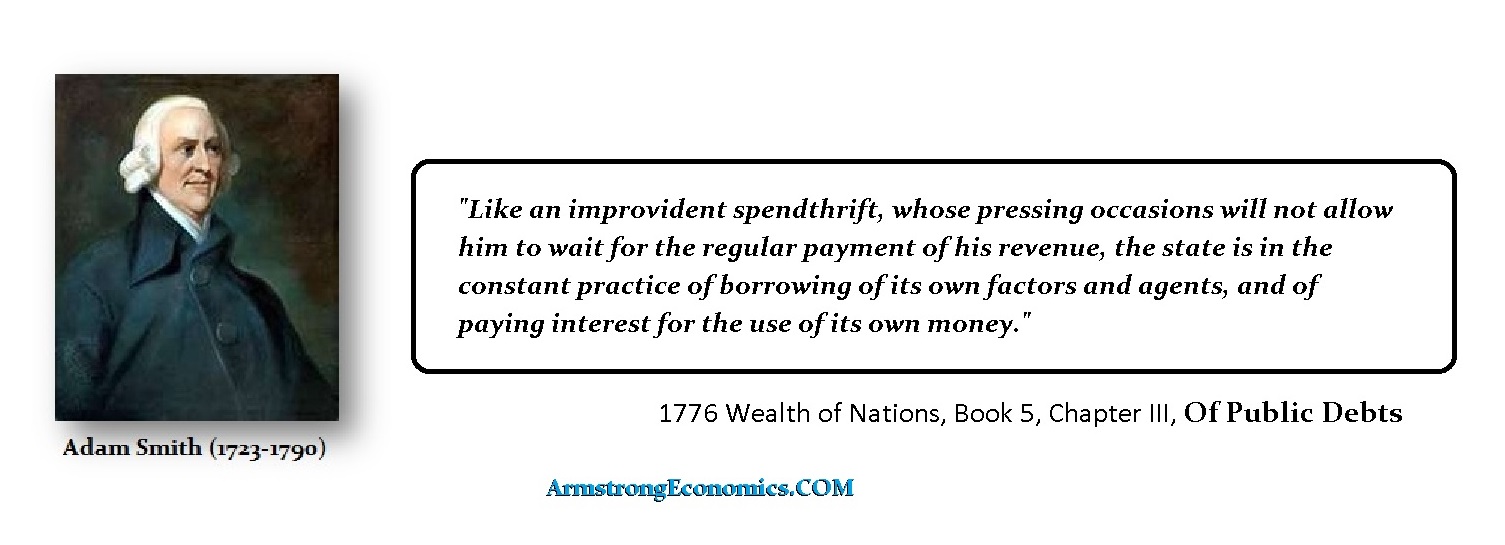
Spain was the classic example. They discovered all this gold and silver in South America. They exploited it, brought it back to Europe, but NEVER developed their own economy. They spend the money lavishly. Unloading the ships was a job for important labor because it was beneath them. The gold joke was that as Spain got rich, everyone else got richer. They used Frenchmen to unload the ships overall.
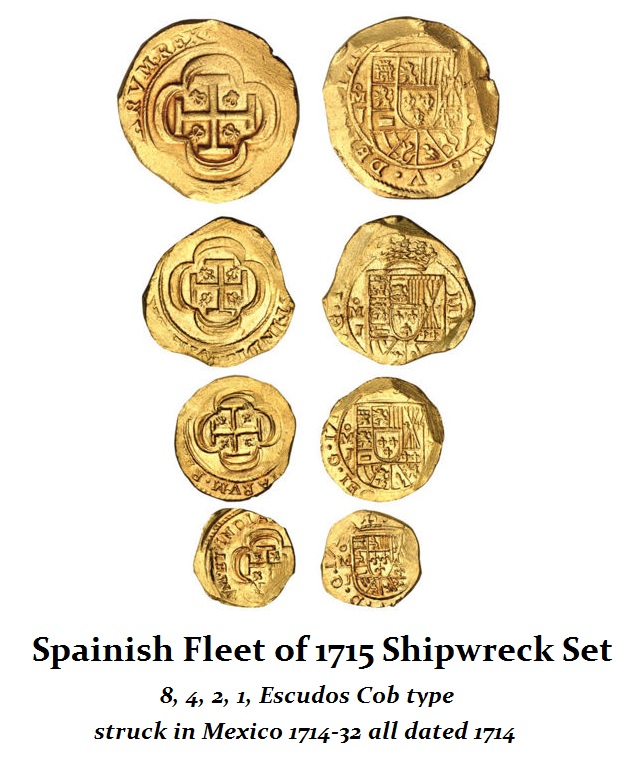
Spain could not wait to spend its money coming in on the next fleet. When fleets sank in hurricanes, they could not pay their debts. Spain became a serial defaulter moving from the richest nation in Europe to a 3rd world status. They defaulted in 1557, 1570, 1575, 1596, 1607, and 1647.
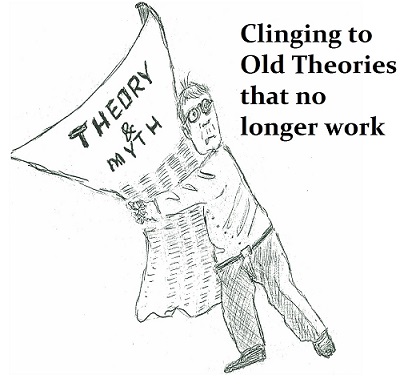
So this latest excuse is just absurd. They are unwilling to look at their old theories so they spin wild tales to justify being wrong. Trump is by no means forcing metals to decline so the US government can buy it and issue gold-backed bonds like Nevada. Assemblyman Jim Marchant announced the Nevada Gold and Silver Enabling Act on July 2, 2018. He claimed that gold-backed bonds would avert financial armageddon, retire debt, ensure all creditors are paid in full in nominal terms and begin the process of gold circulation. Here is the argument they use:
“The Federal Reserve has a policy of two percent per annum debasement of the US dollar. Other central banks around the world have similar targets, for example, both the Bank of England and the European Central Bank set their targets at two percent. Creditors should prefer gold assets over dollar-, pound, and euro-denominated assets because gold is not subject to this debasement. The 10-year Treasury yields 2.9% as I write this. Assuming that the Fed hits its target without overshooting it, then the central bank is robbing the investor of most of their return.”
The entire argument assumes that somehow a gold-backed bond will eliminate inflation. Even if we assumed that was correct, you can see what this type of policy would create by creating a money supply that was fixed – it is called deflation. This is what has driven unemployment among the youth in Southern Europe to 60%. Germany has been focused on eliminating inflation because of their experience during the 1920s. This policy of austerity cripples economic growth and will only lead to revolution and civil unrest.
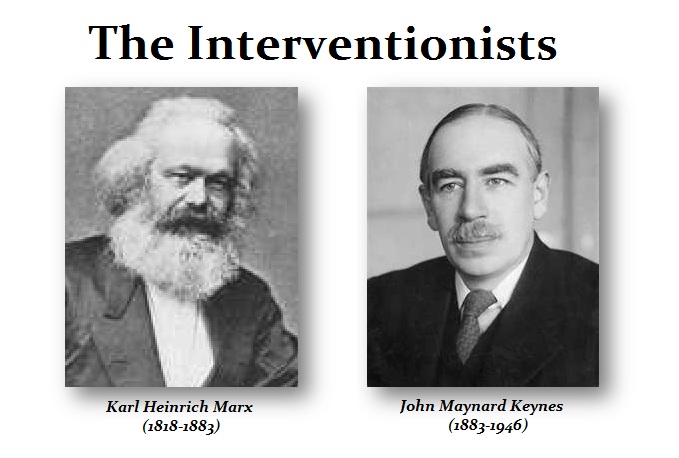
Gold-backed debt has existed for hundreds of years. There was still the business cycle, periods of inflation and deflation, as well as revolutions. This theory that someone a gold-backed bond will eliminate the business cycle is actually the same goal of Karl Marx and John Maynard Keynes. Marx proposed Communism and the elimination of all private tangible wealth would produce the perfect world. That failed. Keynes argued that the government could manage the economy by focusing on demand and raise or lower interest rates to also eliminate the business cycle. That failed and even Paul Volcker came out and called it the Rediscovery of the Business Cycle back in 1978.
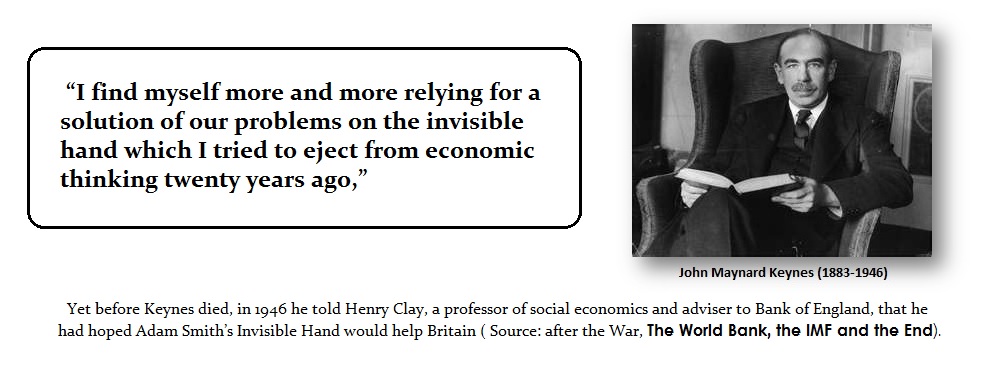
Even Keynes was honest enough to comment before he died that he had been wrong. Smith’s observation of how the economy works remains the only answer. What all of these theories have in common is the assumption that to create money with a tangible value and eliminate the business cycle, the answer lies in manipulating DEMAND side economics rather than the SUPPLY side. In other words, we eliminate all tangible assets or we manipulate interest rates and the supply of money in hopes of influencing the DEMAND of the people.
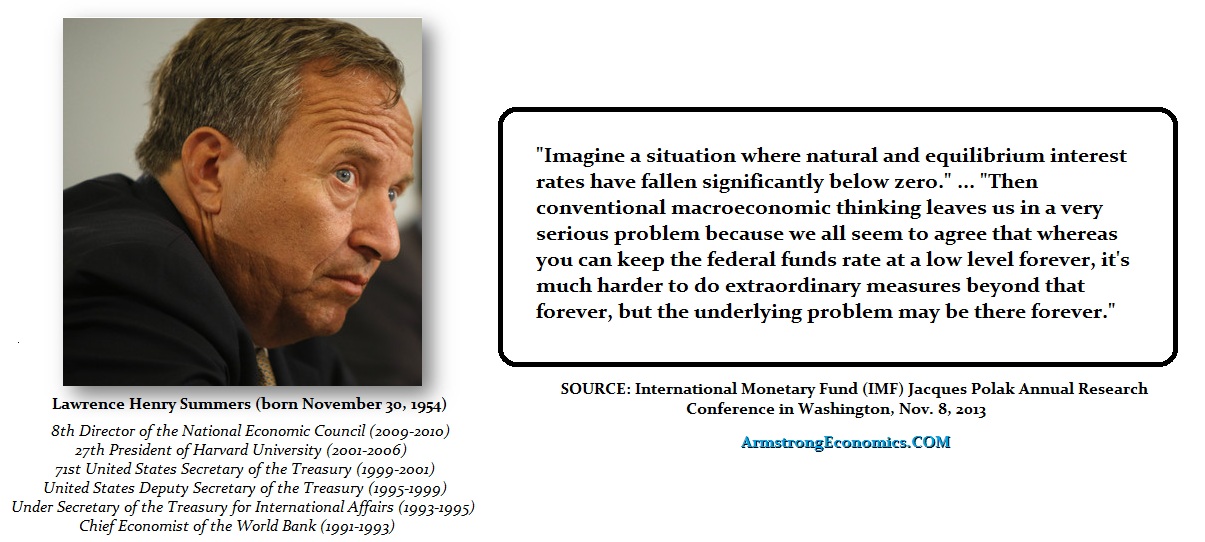
Gold-backed bonds will no more eliminate the business cycle than any other attempt to date. Not even Larry Summer’s NEGATIVE INTEREST rate policy has been successful in stimulating the economy by compelling people to spend rather than save. His theory has merely created the next crisis as pension funds, who needed 8% interest to remain solvent, cannot function with historically low rates of interest and will default bringing socialism into crisis.
You must always ask: What is the end goal? It is always the same – ELIMINATE THE BUSINESS CYCLE.
Earlier today Senator Rand Paul met with President Trump to request consideration for the removal of security clearances from former intelligence officials engaged in corrupt and partisan behavior. Senator Paul discusses the issues and concerns during a follow-up interview:


President Trump is emphasizing “Made in America” products at a White House event to celebrate products manufactured in the U.S.A. Approximately 344,000 manufacturing jobs have been created since the President took office:


 Against the backdrop of U.S. withdrawing from the ill-fated Iran nuclear deal (JCPOA); and against the backdrop of looming U.S. sanctions therein; there has been an ongoing geopolitical simmering/positioning between allies and adversaries surrounding the current and future disposition of Iran.
Recently China, likely responding to economic trade leverage from the U.S., made a deal with Saudi Arabia for petroleum purchases weakening their alliance with Iran. At the same time Turkey, a tenuous NATO ally, began positioning in advance of U.S. sanctions and removing Iran oil purchases. Collectively, and with President Trump putting pressure on Russian President Vladimir Putin via Syria and Iranian influence, this has led to Iran feeling an economic squeeze similar to the previous Trump Doctrine leverage as witnessed in N-Korea.
Iranian President Hassan Rouhani is feeling the heat. On Sunday he said “war with Iran is the mother of all wars.” That led to the tweet reply from President Donald Trump:

This follows on the immediate heels of a speech given by Secretary of State Mike Pompeo yesterday at the Ronald Reagan Presidential Foundation and Library in Simi Valley, CA.
There is a clearly coordinated and unified message:
.
[Transcript] SECRETARY POMPEO: Thank you all. Thank you. (Applause.) Thank you very much. Well, thank you, Fred, for that kind introduction. It reminded me when I was going through my confirmation process they were chasing down all the people I’d known my whole life, and they found one of the young men who played basketball with me at Los Amigos, and his quote was – they asked how good I was. And he said, “Well, he made the most of what he had.” (Laughter.)
Thanks for the kind introduction and thanks for hosting me here at the Ronald Reagan Presidential Foundation and Library. It’s a very special place and an honor for me to be here.
I also want to thank my friend Tom for joining me here tonight. He and I have been on multiple missions together, and I am confident we will continue to do so in the days and weeks and years ahead.
And it’s great to see Governor Wilson here. I voted for you a couple times a long time ago. (Laughter.)
And I know we have many members of the Iranian American community with us this evening. This is just a fraction of the quarter million Iranian Americans in Southern California alone. We have many Iranian American guests from all across the United States here as well. Thank you. I look forward to hearing from you this evening, learning more about the situation in Iran as you see it, and understanding what your loved ones and friends are going through living in that place.
And I recognize the Iranian diaspora is diverse. There are many faith backgrounds and many different walks of life, and that’s a good thing, and not all Iranian Americans see things the same way. But I think everyone can agree that the regime in Iran has been a nightmare for the Iranian people, and it is important that your unity on that point is not diminished by differences elsewhere.
To our Iranian American and – to our Iranian American friends, tonight I want to tell you that the Trump administration dreams the same dreams for the people of Iran as you do, and through our labors and God’s providence that day will come true. (Applause.)
Next year will mark the 40th anniversary of the Islamic Revolution in Iran. As I’ll spell out more in a moment, the 40 years of fruit from the revolution has been bitter. Forty years of kleptocracy. Forty years of the people’s wealth squandered on supporting terrorism. Forty years of ordinary Iranians thrown in jail for peaceful expression of their rights. Why has the regime conducted itself in such an abhorrent way over the past 40 years and subjected its people to these conditions? It’s an important question.
The answer is at root in the revolutionary nature of the regime itself. (Applause.)
The ideologues who forcibly came to power in 1979 and remain in power today are driven by a desire to conform all of Iranian society to the tenets of the Islamic Revolution. The regime is also committed to spreading the revolution to other countries, by force if necessary. The total fulfillment of the revolution at home and abroad is the regime’s ultimate goal. It drives their behavior. Thus, the regime has spent four decades mobilizing all elements of the Iranian economy, foreign policy, and political life in service of that objective. To the regime, prosperity, security, and freedom for the Iranian people are acceptable casualties in the march to fulfill the revolution.
Economically, we see how the regime’s decision to prioritize an ideological agenda over the welfare of the Iranian people has put Iran into a long-term economic tailspin. During the time of the nuclear deal, Iran’s increased oil revenues could have gone to improving the lives of the Iranian people. Instead they went to terrorists, dictators, and proxy militias. Today, thanks to regime subsidies, the average Hizballah combatant makes two to three times what an Iranian firefighter makes on the streets of Iran. Regime mismanagement has led to the rial plummeting in value. A third of Iranian youth are unemployed, and a third of Iranians now live below the poverty line.
The bitter irony of the economic situation in Iran is that the regime uses this same time to line its own pockets while its people cry out for jobs and reform and for opportunity. The Iranian economy is going great – but only if you’re a politically-connected member of the elite. Two years ago, Iranians rightfully erupted in anger when leaked paystubs showed massive amounts of money inexplicably flowing into the bank accounts of senior government officials.
And there are many more examples of the widespread corruption.
Take Sadeq Larijani, the head of Iran’s judiciary. He is worth at least $300 million dollars. He got this money from embezzling public funds into his own bank account. The Trump administration sanctioned Larijani in January for human rights abuses, because we aren’t afraid to tackle the regime at its highest level. (Applause.) Call me crazy – you won’t be the first – but I’m a little skeptical that a thieving thug under international sanctions is the right man to be Iran’s highest-ranking judicial official. (Laughter and applause.)
Former IRGC officer and Minister of Interior Sadeq Mahsouli is nicknamed “the Billionaire General.” He went from being a poor IRGC officer at the end of the Iran-Iraq war to being worth billions of dollars. How’d that happen? He somehow had a knack for winning lucrative construction and oil trading contracts from businesses associated with the IRGC. Being an old college buddy of Mahmoud Ahmadinejad just might have had something to do with it as well. (Laughter.)
The ayatollahs are in on the act, too. Judging by their vast wealth, they seem more concerned with riches than religion. These hypocritical holy men have devised all kinds of crooked schemes to become some of the wealthiest men on Earth while their people suffer.
Grand Ayatollah Makaram Shirazi is known as the “Sultan of Sugar” for his illicit trading of sugar, which has generated over $100 million for him. He has pressured the Iranian Government to lower subsidies to domestic sugar producers while he floods the market with his own more expensive imported sugar. This type of activity puts ordinary Iranians out of work.
Another ayatollah, one of Tehran’s Friday prayer leaders for the last 30 years, had the government transfer several lucrative mines to his foundation. He too is now worth millions of dollars.
And not many people know this, but the Ayatollah Khamenei has his own personal, off-the-books hedge fund called the Setad, worth $95 billion, with a B. That wealth is untaxed, it is ill-gotten, and it is used as a slush fund for the IRGC. The ayatollah fills his coffers by devouring whatever he wants. In 2013 the Setad’s agents banished an 82-year-old Baha’i woman from her apartment and confiscated the property after a long campaign of harassment. Seizing land from religious minorities and political rivals is just another day at the office for this juggernaut that has interests in everything from real estate to telecoms to ostrich farming. All of it is done with the blessing of Ayatollah Khamenei.
This list goes on, but we’ve got places to go tonight. The level of corruption and wealth among Iranian leaders shows that Iran is run by something that resembles the mafia more than a government.
On foreign policy, the regime’s mission of exporting the revolution has produced a decades-long campaign of ideologically-motivated violence and destabilization abroad. Assad, Lebanese Hizballah, Hamas, Shia militant groups in Iraq, and the Houthis in Yemen feed on billions of regime cash while the Iranian people shout slogans like “Leave Syria, think about us.”
Our partners in the Middle East are plagued by Iranian cyberattacks and threatening behavior in the waters of the Persian Gulf. The regime and its allies in terror have left a trail of dissident blood across Europe and the Middle East.
Indeed, our European allies are not immune to the threat of regime-backed terrorism.
Just earlier this month, an Iranian “diplomat” based in Vienna was arrested and charged with supplying explosives for a terrorist bomb scheduled to bomb a political rally in France. This tells you everything you need to know about the regime: At the same time they’re trying to convince Europe to stay in the nuclear deal, they’re covertly plotting terrorist attacks in the heart of Europe.
And because fighting the United States and destroying Israel is at the core of the regime’s ideology, it has committed and supported many acts of violence and terrorism against both countries and our citizens. As just one example, well over a thousand American service members have been killed and wounded in Iraq from Iranian-made IEDs.
Today, multiple Americans are detained and missing inside of Iran. Baquer Namazi, Siamak Namazi, Xiyue Wang are unjustly held by the regime to this day, and Bob Levinson has been missing in Iran for over 11 years. There are others, too. And we in the Trump administration are working diligently to bring each of those Americans home from having been wrongfully detained for far too long. (Applause.)
AUDIENCE MEMBER: (Shouting.) President Trump imprisons children. The Trump-Pence regime is kidnapping children. Trump and Pence —
AUDIENCE: (Booing.)
SECRETARY POMPEO: Despite – despite the regime’s –
AUDIENCE MEMBER: (Shouting off-mike.)
AUDIENCE: (Booing.)
AUDIENCE MEMBER: (Shouting off-mike.)
AUDIENCE: USA, USA, USA, USA, USA, USA, USA, USA, USA, USA.
SECRETARY POMPEO: Thank you.
AUDIENCE MEMBER: (Shouting off-mike.)
SECRETARY POMPEO: If there were – if there were only so much freedom of expression in Iran. (Cheers and applause.)
You know, despite the regime’s clear record of aggression, America and other countries have spent years straining to identify a political moderate. It’s like an Iranian unicorn. (Laughter.) The regime’s revolutionary goals and willingness to commit violent acts haven’t produced anyone to lead Iran that can be remotely called a moderate or a statesman.
Some believe that President Rouhani and Foreign Minister Zarif fit that bill. The truth is they are merely polished front men for the ayatollahs’ international con artistry. Their nuclear deal didn’t make them moderates; it made them wolves in sheep’s clothing. Governments around the world worry that confronting the Islamic Republic harms the cause of moderates, but these so-called moderates within the regime are still violent Islamic revolutionaries with an anti-America, anti-West agenda. You only have to take their own words for it. And for that matter, the evidence reveals that their agenda is a anti-Iran agenda as well.
The regime’s absolute adherence to the Islamic Revolution mean it cannot endure any ideas in the Iranian society that would contradict or undermine it – unlike we just did here this evening. It’s why the regime has for decades heartlessly repressed its own people’s human rights, dignity, and fundamental freedoms.
It’s why the Iranian police detained a teenage Iranian gymnast for posting an Instagram video of herself dancing.
It’s why the regime arrests hundreds of Ahwazis, members of Iran’s minority Arab community, when they speak out to demand respect for their language and for their basic beliefs. The government’s morality police beat women in the streets and arrest those who do not wish to wear the hijab.
On “White Wednesday” activist recently – one activist was recently sentenced to 20 years in prison for protesting compulsory hijab wearing.
The desire to uphold the Islamic Revolution has especially resulted in gross suppression of the freedom of religion in Iran, often to barbaric ends.
Last month, a simple man, a bus driver, a father of two children, and a member of the Iranian Gonabadi Sufi Dervish Community, was convicted and sentenced to death. His sentence came on questionable grounds following violent clashes between security forces and the Dervishes. He was reportedly denied access to a lawyer before, during – before and during his grossly unfair trial. This man, Mr. Salas – and his supporters – maintains his innocence throughout, reportedly stating he had been tortured into a forced confession. Sadly, on June 18th, the regime hanged Mr. Salas in prison.
His death was part of a larger crackdown that began in February, when at least 300 Sufis demanding the release of their fellow faith members were unjustly arrested. Right now, hundreds of Sufi Muslims in Iran remain imprisoned on account of their religious beliefs, with reports of several having died at the hands of the regime’s brutal security forces.
Among those imprisoned is the 91-year-old leader, Dr. Noor Ali Tabandeh, who has been under house arrest for at least the last part of four months – the greatest part of four months. He is in need of immediate medical care.
The religious intolerance of the regime in Iran does not only extend to Sufi Muslims. The same goes for Christians and Jews and Sunnis and Baha’is and Zoroastrians and members of many other groups inside Iran who live with the fear that their next prayer may be indeed their last.
What grieves us so badly about the treatment of religious minorities in Iran is that their presence far pre-dates the regime. They are a historic part of the rich fabric of an ancient and vibrant Iranian civilization. That fabric has been torn by intolerant, black-robed enforcers. When other faiths are suppressed, the image of Iran becomes a self-portrait of the ayatollahs and of the IRGC.
In response to myriad government failures, corruption, and disrespect of rights, since December Iranians have been taking to the streets in the most enduring and forceful protests since 1979. Some shout the slogan, “The people are paupers while the mullahs live like gods.” Others choose to shut down the Grand Bazaar in Tehran. The specific grievances do differ, but all those voicing dissatisfaction share one thing: They have been ill-treated by a revolutionary regime. Iranians want to be governed with dignity, accountability, and respect. (Applause.)
The regime – this is important. The regime’s brutal response to these peaceful protests reflects the intolerance that its revolutionary worldview has produced. Last January, the regime welcomed in the new year with the arrests of up to 5,000 of its own people. They were peacefully calling for a better life. Hundreds reportedly remain behind bars, and several are dead at the hands of their own government. The leaders cynically call it suicide.
Overall, it is clear the regime’s ideology has led many Iranians to be angry they cannot call their homeland a “normal” country.
They know that a constitution that enshrines the export of Islamic revolution and the destruction of its neighbors and the restriction of citizenship is not normal.
Ordinary Iranians know that their government’s torture of its own people is not normal.
Earning multiple rounds of sanctions by the UN Security Council is not normal.
Inciting chants of “Death to America” and “Death to Israel” is not normal.
Being the number one state sponsor of terror is similarly abnormal.
Sometimes it seems the world has become desensitized to the regime’s authoritarianism at home and its campaigns of violence abroad, but the proud Iranian people are not staying silent about their government’s many abuses.
And the United States under President Trump will not stay silent either. (Applause.)
In light of these protests and 40 years of regime tyranny, I have a message for the people of Iran: The United States hears you; the United States supports you; the United States is with you.
When the United States sees the shoots of liberty pushing up through rocky soil we pledge our solidarity, because we too took a hard first step towards becoming a free country a few years back.
Right now, the United States is undertaking a diplomatic and financial pressure campaign to cut off the funds that the regime uses to enrich itself and support death and destruction. (Applause.) We have an obligation to put maximum pressure on the regime’s ability to generate and move money, and we will do so.
At the center of this campaign is the re-imposition of sanctions on Iran’s banking and energy sectors.
As we have explained over the last few weeks, our focus is to work with countries importing Iranian crude oil to get imports as close to zero as possible by November 4th. Zero.
Recently – (applause). Recently, as part of this campaign, we designated the Bahraini Shia militia terrorist organization Saraya al-Ashtar, and with the UAE we have jointly disrupted a currency exchange network that was transferring millions of dollars to the IRGC.
And there’s more to come. Regime leaders – especially those at the top of the IRGC and the Quds Force like Qasem Soleimani – must be made to feel painful consequences of their bad decision making. (Applause.) We are asking every nation, every nation who is sick and tired of the Islamic Republic’s destructive behavior, to join our pressure campaign. This especially goes for our allies in the Middle East and Europe, people who have themselves been terrorized by violent regime’s activity for decades.
And you should know that the United States is not afraid to spread our message on the airwaves and online inside of Iran either. (Applause.) For 40 years the Iranian people have heard from their leaders that America is the “Great Satan.” We do not believe they are interested in hearing the fake news any longer. (Laughter and applause.)
Today, one in four Iranians – 14 million people – watches or listens to U.S. Government broadcasts each week. And it’s more important than ever now to refute the regime’s lies and repeat our deep desire for friendship with the Iranian people. Right now, our U.S. Board – Broadcasting Board of Governors is taking new steps to help Iranians get around internet censorship as well. The BBG is also launching a new 24/7 Farsi-language TV channel. It will span not only television, but radio, digital, and social media format, so that the ordinary Iranians inside of Iran and around the globe can know that America stands with them. (Applause.)
And finally – and finally, America is unafraid to expose human rights violations and support those who are being silenced.
We continue to raise our concerns over the Islamic Republic’s dire record of human rights abuses each time we speak at the UN and with our partners who maintain diplomatic relations with that country. We make it clear that the world is watching, and as the regime continues to make its own people the longest-suffering victims, we will not stand silent. (Applause.)
And now we call on everyone here in the audience and our international partners to help us shine a spotlight on the regime’s abuses and to support the Iranian people.
The goal of our efforts is to one day see Iranians in Iran enjoying the same quality of life that Iranians in America enjoy. (Cheers and applause.)
Iranians in America enjoy all the freedoms secured by their government, not trampled by it. They are free to pursue economic opportunities they believe are best for them and their families, and they can be proud of their country and practice their faiths in the way they desire.
There are a few individuals with us I want to highlight tonight who embody what we hope for the Iranian people.
Goli Ameri came to the United States as a freshman at Stanford and has founded successful companies and has served at the State Department and at the UN.
Susan Azizzadeh was forced to leave everything behind and come here in 1979. Today she is the leader of the Iranian American Jewish Federation. (Cheers and applause.)
Makan Delrahim – I think I saw him – came to America with his family when he was just 10 years old. (Applause.) He is now the Assistant Attorney General at the Department of Justice – quite amazing. (Applause.)
We hope that the successes of Goli and Susan and Makan and the many others American – Iranian Americans among the diaspora in the United States remind all Iranians of what is possible under a government that respects its people and governs with accountability. Iranians should not have to flee their homeland to find a better life. (Applause.)
While it is ultimately up to the Iranian people to determine the direction of their country, the United States, in the spirit of our own freedoms, will support the long-ignored voice of the Iranian people. Our hope is that ultimately the regime will make meaningful changes in its behavior both inside of Iran and globally. As President Trump has said, we’re willing to talk with the regime in Iran, but relief from American pressure will come only when we see tangible, demonstrated, and sustained shifts in Tehran’s policies.
I thought I’d close tonight in a perfectly appropriate way by invoking the words of a man who routinely made the case for freedom and respect far more eloquently than I ever could, President Ronald Reagan. In 1982 – (applause).
In 1982, President Reagan gave a speech to the British Parliament that became known as the Westminster address. He urged other Western governments to support those around the world trying to break free of tyranny and injustice. His reason why was simple and powerful. He said, “Freedom is not the sole prerogative of a lucky few, but the inalienable right and universal right of every human being.”
This is why we also call on all governments to end their flirtations with a revolutionary regime and come quickly to the aid of the Iranian people. (Applause.) On that same day in those same remarks, President Reagan said, “Let us ask ourselves: ‘What kind of people do we think we are?’ And let us answer, ‘Free people, worthy of freedom, and determined not only to remain so, but to help others gain their freedom as well.’”
Today, the United States condemns oppression levied on the Iranian people by those who rule unjustly, and we proudly amplify the voices of those in Iran longing to have those inalienable and universal human rights cease to be ignored and instead to be honored. We do so knowing that many in the streets and marketplaces speak for those who the regime has permanently silenced over the years – who may even have been loved ones who are in the audience tonight.
It’s America’s hope that the next 40 years of Iran’s history will not be marked by repression and fear – but with freedom and fulfillment – for the Iranian people.
Thank you. (Applause.)
GOVERNOR WILSON: Well, you’ve answered all the questions.
SECRETARY POMPEO: We’ll take another swing. Thank you.
GOVERNOR WILSON: Well, Mr. Secretary, I had some questions for you, but you actually answered almost all of them quite eloquently.
SECRETARY POMPEO: We’ll see if I can give the same answer when I’m not – got remarks in front of me. (Laughter.)
GOVERNOR WILSON: Well, let me just start with this one. Is it realistic to think that the Iranian people will ever regain control of their country in what we would term the foreseeable future?
SECRETARY POMPEO: Of course. (Applause.) Well, of course. Of course. I always remind those who think it’s not possible or think the time horizon will be measured in centuries not hours, I always remind them that things change. There are disjunctive moments. There are times when things happen that are unexpected, unanticipated. Our revolution would be one of them. I could go on. You all could name them, too.
We don’t know the right moment. We don’t know the day that the behavior of the Iranian regime will change. But we do know the things that the world is obligated to do so that when the right time comes, when the right moment comes, that opportunity is even more likely to find its fulfillment.
GOVERNOR WILSON: Would you synthesize your excellent speech and really in a few words say what you think the best way to effect that change within the Iranian Government is and how the Trump administration is helping the Iranian people in their struggle to become freed from this current tyrannical administration there?
SECRETARY POMPEO: So President Trump has been absolutely unequivocal on this not only in the message but in the fact that this is a real priority for the administration as well. I think that’s important. One could have a objective, but if one doesn’t rank it sufficiently high attention spans are short and resources limited. The President has put this as something he considers to be incredibly important.
The mission set for our team is clear. It’s to deny the Iranian leadership the resources, the wealth, the funds, the capacity to continue to foment terrorism around the world and to deny the people inside of Iran the freedoms that they so richly deserve. How’s that in 30 seconds? (Laughter.)
GOVERNOR WILSON: That’s pretty good. (Applause.) There is a perception among some that Iranians, including students and including legitimate visitors, can’t obtain U.S. visas because of a travel ban. Would you clarify what U.S. policy is regarding what we will call Iranian civil society visitors?
SECRETARY POMPEO: Sure, I’d be happy to do that. So President Trump has made clear with respect to a number of countries that weren’t providing us with sufficient information that we had risks of American security that we were going to do our best to work with those countries to develop the information that we needed. Iran continues to deny us the basic data-sharing systems that hundreds of countries – or, excuse me, dozens and dozens of countries have already provided us. We would like Iran to do that.
We still allow students to come in. There are many students. I’m sure there are students here tonight who are Iranians who are here studying. We welcome that. But this administration does have as one of its primary policies to make sure that we appropriately vet all those who come to the nation so that we can keep our country safe. That’s the plan. That’s the policy. (Applause.)
GOVERNOR WILSON: Well, on perhaps an unduly optimistic note, what could be a basis for reconciliation between the United States and Iran?
SECRETARY POMPEO: So it’s always possible. (Laughter.) And the President has made clear the fact that – I shouldn’t have joked. The President has made clear he would love that, he would welcome that. I’ve now made three trips to Pyongyang, a regime that has treated its citizens in way that also denies them their freedoms.
The President has said if we can get this change, if we can get the leadership to make a strategic decision about how to ensure its well-being and the well-being of its peoples, that we’re prepared to have a conversation and to discuss how that might proceed. The President has stated at least once, perhaps more than once, that he is prepared to do that with the leadership in Iran, but not until such time as there are demonstrable, tangible, irreversible changes in the Iranian regime that I don’t see happening today. But I live in hope. (Applause.)
GOVERNOR WILSON: And what would be your advice for students – hopefully many in the audience today – who will be interested in being part of that effort and seek a career at the State Department? How can they best prepare and what challenges should they anticipate?
SECRETARY POMPEO: So we welcome all hardworking, talented patriotic folks to come be part of a great diplomatic team in the United States. It’s an incredible honor. I’m now 12 weeks, almost to the day, as the Secretary of State. The team is fantastic. My wisdom for them is no different than the same wisdom I gave my son. If he was here he’d be rolling his eyes about now. (Laughter.)
Work hard, study, tell the truth every place you go. We have lots of folks who speak different languages who have spent time in other countries who have been able to learn about other cultures. It’s critically important that we get that skill set at the State Department. Those are the kinds of things that young people who want a wonderful, exciting, rewarding, important career working as an American diplomat ought to think about doing as they move their way through college and beyond and we welcome. Go to state.gov. It’s easy to find. We’ve got lots of great places for talented young Americans to come be part of our great team. (Applause.)
GOVERNOR WILSON: Well, Mr. Secretary, you have been quite clear, and it’s, I think, clear to all of us who are privileged to be in this audience and in this house dedicated to the preservation and the enhancement of the Ronald Reagan legacy that you understand it better than perhaps anybody I’ve come across in a long time. (Applause.)
We, I think, both remember that at a critical time in the history of this country he said, with a smile, “Trust, but verify.” (Laughter.) And it seems to me that’s your message very clearly, and we thank you for the distinguished service that you have given from the moment that you left the Point, number one in your class. I find that quite impressive. (Applause.) And whoever that opponent was against whom you were playing basketball at Los Amigos, I think he would have to say when he said, “Well, he made the most of what he could,” you made the most of a very generous helping from the good Lord of brains and courage and directness. We are lucky to have you.
SECRETARY POMPEO: Thank you, Pete. That’s very kind. (Applause.) Thank you, thank you. That’s very kind.
GOVERNOR WILSON: Well, it’s sincere.
SECRETARY POMPEO: That’s very, very kind. Thank you, sir. (Applause.) [link]
This was all very predictable:
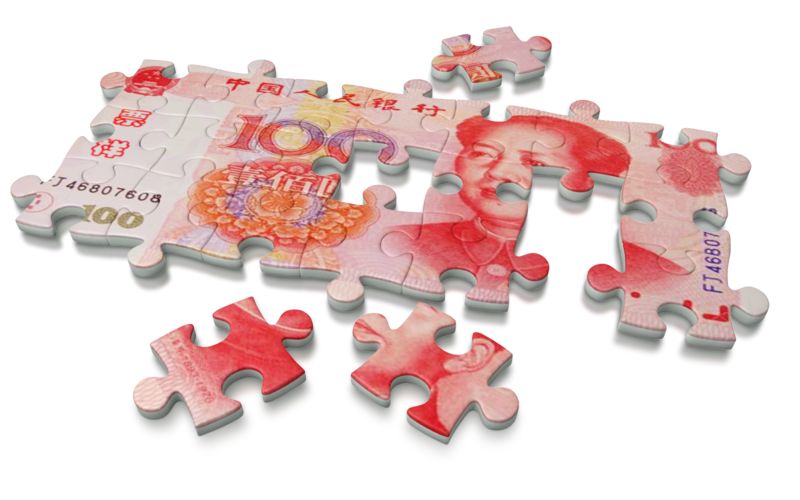
The the first debt bankruptcy of a major corporation in China has now taken place here on schedule in 2018. This first bankruptcy of a major corporation was due to over-indebtedness which occurred in the current year. The South China Morning Post reported that coal company Wintime Energy has been forced to cease operations after failing to repay a central government bond. The company had recently accumulated a debt of 72.2 billion yuan (about US$10.8 billion). The company’s debt had quadrupled over the past five years.
This failure is attributed to difficulties at Wintime Energy with respect to a change in corporate governance strategy that was announced by the central government in Beijing back in 2016. Since then, the authorities have been trying to prevent excessive borrowing by the corporations fearing a debt crisis was building. As a direct result, the previous excessing lending in the shadow banking market came to a virtual standstill. Previously, the government had actively encouraged companies to raise fresh capital by issuing corporate bonds. The Chinese bond market doubled in size within a few years going into 2016. Today, there is about $12 trillion US dollars outstanding, which makes Chinese corporate debt the third largest bond market in the world. This certainly casts a cloud over all the forecasts that have claimed the death of the dollar and the rise of the yuan.
With the encouragement of the government to sure-up capital, a massive borrowing process became increasingly out of control without the management skills necessary to understand that there is such a thing as a business cycle. Additionally, the buyers of corporate debt lacked information and experience with debt. There was precious little credit analysis experience in China, which is still maturing, and local rating agencies also did not have the competence to understand debt and currency fluctuations particularly when debt is issued in dollars. Consequently, many fear that there was virtually no due diligence until the government allowed bankruptcy for the first time in 2014 and many see this as a parallel for the crisis in bad debts held by Italian banks that also lacked proper analysis of their books.
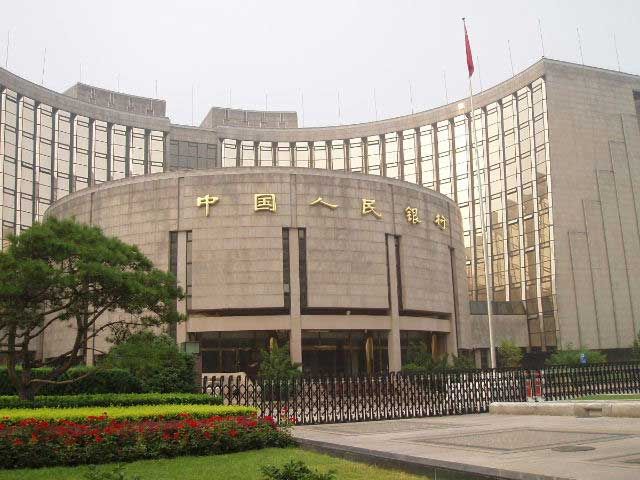
China’s economic growth has been exploding led by corporate expansion and debt accumulation. This is the concern over the next two years and how the economic engine of China can experience its first real recession moving into the bottom of the Economic Confidence Model in 2020. The Central Bank has been injecting liquidity into the markets on a large scale. The government is thereby injecting cash, but this will still need to be repaid in one year at about 3.3% interest rate. The Central Bank is dealing with the issue directly unlike that central banks in the West who indirectly attempted the stimulus through banks just hoping they would lend out the funds, which they did not. Medium-term notes were first offered directly by the Central Bank to the country’s companies and commercial banks back in 2014. The collateral used is securities pledged by the borrowers. I have pointed out that this is the PROPER way to manage a central bank. The Federal Reserve was originally set up to “stimulate” through buying corporate paper DIRECTLY. That structure was altered by Congress whereby the Fed was directed to buy US government debt exclusively. Therefore, the Fed bought US government bonds hoping the money would find its way into the economy. That effort failed. The Central Bank of China is actually managing the crisis in the proper manner and this will not prevent the downturn, but it will moderate the damage
I have created this site to help people have fun in the kitchen. I write about enjoying life both in and out of my kitchen. Life is short! Make the most of it and enjoy!
De Oppresso Liber
A group of Americans united by our commitment to Freedom, Constitutional Governance, and Civic Duty.
Share the truth at whatever cost.
De Oppresso Liber
Uncensored updates on world events, economics, the environment and medicine
De Oppresso Liber
This is a library of News Events not reported by the Main Stream Media documenting & connecting the dots on How the Obama Marxist Liberal agenda is destroying America
Australia's Front Line | Since 2011
See what War is like and how it affects our Warriors
Nwo News, End Time, Deep State, World News, No Fake News
De Oppresso Liber
Politics | Talk | Opinion - Contact Info: stellasplace@wowway.com
Exposition and Encouragement
The Physician Wellness Movement and Illegitimate Authority: The Need for Revolt and Reconstruction
Real Estate Lending

 Centinel2012