Conflict between Fiscal & Monetary Policy


We are moving into a crisis of monumental proportions. There has been a serious fundamental problem infecting economic policy on a global scale. This conflict has been between monetary and fiscal policy. While central banks engaged in Quantitative Easing, governments have done nothing but reap the benefits of low-interest rates. This is the problem we have with career politicians who people vote for because they are a woman, black, or smile nicely. There is never any emphasis upon qualification. Every other job in life you must be qualified to get it. Would you put someone in charge of a hospital with life and death decisions because they smile nicely?
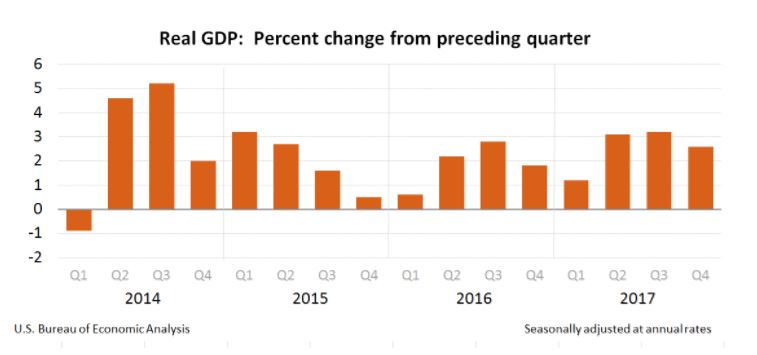
Economic growth has been declining year-over-year and we are in the middle of a situation involving low-productivity expansion with high and rapidly rising budget deficits that benefit nobody but government employees.  Once upon a time, 8% growth was average, then 6%, and 4% before 2015.75. Now 3% is considered to be fantastic. Private debt at least must be backed by something whereas escalating public debt is completely unsecured. The ECB wanted to increase the criteria for bad loans, yet if those same criteria were applied to government, nobody would lend them a dime.

Monetary policy, after too long a phase of low-interest rates and quantitative easing, has created governments addicted to low-interest rates. They have expanded their spending and deficits for the central banks were simply keeping the government on life-support – not actually stimulating the private sector. Governments have pursued higher taxes and more efficient tax collection. They have attacked the global economy assuming anyone doing business offshore was just an excuse to hide taxes.

The combination of fiscal policy and monetary policy around the world has produced historically the most irresponsible economic mismanagement in history. This assumption that government can manipulate the economy is extremely dangerous for we remain clueless about how the global economy even functions. This entire Marxist/Keynesian proposition that governments are capable of managing the economy has implemented various miserably conceived theories that will lead to a budget crash and a debt crisis for every reasonably rational contemporary society. Historically, there were debt jubilees mentioned in the Bible.

You shall then sound a ram’s horn abroad on the tenth day of the seventh month; on the day of atonement, you shall sound a horn all through your land. You shall thus consecrate the fiftieth year and proclaim a release through the land to all its inhabitants. It shall be a jubilee for you (Leviticus 25:1-4, 8-10, NASB).

Religion aside, was a debt forgiveness a way to prevent monument collapses of society? The Romans never even had a national debt. Today, we have government hawking 100-year bonds. We have pension funds that required 8% returns and then governments ordered that the bulk of such funds if not 100% should be “conservative” and invest in only government bonds. We are reaching a crisis point in longer-dated yields because investors are unwilling to lend money at low rates long-term. Smart money is beginning to wake up to the perpetual mismanagement of the long-term trend by the government. The central banks have been backing off of continually buying government debt and the Fed in the USA has announced it will not reinvest when its holdings of government debt mature.

This is the Sovereign Debt Crisis and Monetary Crises we face in the years ahead.

President Trump Hosts White House Infrastructure Initiative With State and Local Leaders…


Earlier today President Trump hosted a White House discussion meeting to outline an infrastructure initiative with state and local leaders.  The initiative is part of a $1.5 trillion proposal to join with federal, state, local and private investment toward rebuilding American critical infrastructure, roads and bridges.

[Via White House] BUILDING AMERICA’S INFRASTRUCTURE: Today, President Donald J. Trump released his legislative goals to rebuild our Nation’s crumbling infrastructure. The six principles include:

  • $200 billion in Federal funds to spur at least $1.5 trillion in infrastructure investments with partners at the State, local, Tribal, and private level.
  • New investments will be made in rural America, which has been left behind for too long.
  • Decision making authority will be returned to State and local governments.
  • Regulatory barriers that needlessly get in the way of infrastructure projects will be removed.
  • Permitting for infrastructure projects will be streamlined and shortened.
  • America’s workforce will be supported and strengthened.

STIMULATE INFRASTRUCTURE INVESTMENT: President Trump’s plan will lead to at least $1.5 trillion in investments to rebuild our failing infrastructure and develop innovative projects.

  • $200 billion in Federal funds will spur at least $1.5 trillion in new infrastructure investments.
    • Federal infrastructure spending will promote State, local, and private investments and maximize the value of every taxpayer dollar.
  • Of the $200 billion, $100 billion will create an Incentives Program to spur additional dedicated funds from States, localities, and the private sector.
    • Applications for the Incentives Program will be evaluated on objective criteria, with creating additional infrastructure investment being the largest factor.
    • The Incentives Program will promote accountability, making Federal funding conditional on projects meeting agreed upon milestones.
  • $20 billion will be dedicated to the Transformative Projects Program.
    • This program will provide Federal aid for bold and innovative projects that have the potential to dramatically improve America’s infrastructure.
    • The program will focus on projects that could have a significant positive impact on States, cities, and localities but may not attract private sector investment because of the project’s unique characteristics.
  • $20 billion will be allocated to expanding infrastructure financing programs.
    • Of the $20 billion, $14 billion will go to expanding a number of existing credit programs: TIFIA, WIFIA, RRIF, and rural utility lending.
    • $6 billion will go to expanding Private Activity Bonds.
  • $10 billion will go to a new Federal Capital Revolving Fund, which will reduce inefficient leasing of Federal real property which would be more cost-effective to purchase.
  • A new fund will allow some incremental revenues from energy development on public lands to pay for the capital and maintenance needs of public lands infrastructure.

INVEST IN RURAL AMERICA: Rural America’s infrastructure has been left behind for too long, and President Trump’s plan will make sure it is supported and modernized.

  • $50 billion of the $200 billion in direct Federal funding will be devoted to a new Rural Infrastructure Program to rebuild and modernize infrastructure in rural America.
    • The bulk of the dollars in the Rural Infrastructure Program will be allocated to State governors, giving States the flexibility to prioritize their communities’ needs.
    • The remaining funds will be distributed through rural performance grants to encourage the best use of taxpayer dollars.

INCREASE STATE AND LOCAL AUTHORITY: President Trump’s proposal will return decision-making authority to State and local governments, which know the needs of their communities. 

  • Funds awarded to State and local authorities, such as through the Incentives Program and the Rural Infrastructure Program, will be allocated to infrastructure projects they prioritize.
    • This empowers States and localities to make more infrastructure investment decisions and prioritize projects based on the needs of their communities
  • The plan will expand processes that allow environmental review and permitting decisions to be delegated to States.
  • The plan will also allow Federal agencies to divest assets that can be better managed by State or local governments or the private sector.

ELIMINATE REGULATORY BARRIERS: The President’s plan would eliminate barriers that prevent virtually all infrastructure projects from being efficiently developed and managed.

  • The President’s plan will:
    • Provide more flexibility to transportation projects that have minimal Federal funding but are currently required to seek Federal review and approval.
    • Incentivize the efficient development and management of water infrastructure, in part, by providing more flexibility to the U.S. Army Corps of Engineers and its partners.
    • Give the Department of Veterans Affairs the flexibility to use its existing assets to acquire new facilities by allowing it to retain property sale proceeds and exchange existing facilities for construction of new facilities.
    • Expand funding eligibility for land revitalization projects through the Superfund program and establish tools to help manage their legal and financial matters.

STREAMLINE PERMITTING: President Trump’s infrastructure proposal will shorten and simplify the approval process for infrastructure projects.

  • Working with Congress, we will:
    • Establish a “one agency, one decision” structure for environmental reviews.
    • Shorten the lengthy environmental review process to two years while still protecting the environment.
    • Eliminate certain redundant and inefficient provisions in environmental laws.
    • Create two new pilot programs to test new ways to improve the environmental review process.

INVEST IN OUR COUNTRY’S MOST IMPORTANT ASSET – ITS PEOPLE: The President is proposing reforms so Americans secure good-paying jobs and meet the needs of our industries. 

  • The President’s plan would reform Federal education and workforce development programs to better prepare Americans to perform the in-demand jobs of today and the future.  This includes:
    • Making high-quality, short-term programs that provide students with a certification or credential in an in-demand field eligible for Pell Grants.
    • Reforming the Perkins Career and Technical Education Program to ensure more students have access to high-quality technical education to develop the skills required in today’s economy.
    • Better targeting Federal Work-Study funds to help more students obtain important workplace experience, including through apprenticeships.

(White House Link)

China’s One Belt and One Road


QUESTION: What is your view of China’s One Belt and One Road policy?

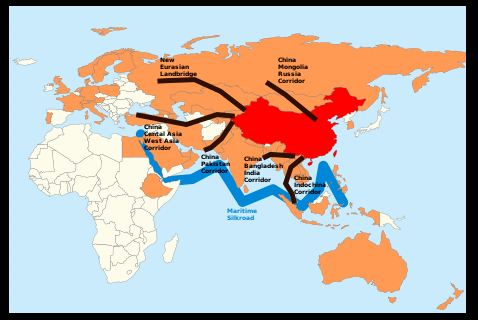
ANSWER: The Silk Road Economic Belt and the 21st-century Maritime Silk Road, also known as the One Belt and One Road Initiative, (OBOR),  is a development strategy proposed by Chinese Government that focuses on connectivity and cooperation between Eurasian countries, primarily the People’s Republic of China (PRC), the land-based Silk Road Economic Belt (SREB) and the ocean-going Maritime Silk Road (MSR). It was unveiled by Xi Jinping in September and October 2013. This is really nothing new. Trade between China and the Roman Empire existed. There are even records of Marcus Aurelius (161-180AD) sending a diplomat to China. Even the color purple was the royal color of an emperor who only he was allowed to wear. That was a dye which came from the East as was the case with spices and silk.

This strategy underlines history and China’s push to take a larger role in global affairs with a China-centered trading network is the very aspect that will make China the Financial Capital of the World once again. This project was initially called One Belt and One Road, but in mid-2016 the official English name was changed to the Belt and Road Initiative. China has been focusing on infrastructure investment, construction materials, railway and highway, automobile, real estate, power grid, and iron and steel. This is the largest infrastructure project in history, covering more than 68 countries, equivalent to 65% of the world’s population and 40% of the global GDP as of 2017. China never issued historically gold or silver coins. What has survived are private ingots known as Sycee that is a testament to the level of trade China enjoyed in the past.

All our models are bullish LONG-TERM on China – Post 2032. We have opened offices in China and have been granted our business license in China which took three years to be approved

The Supreme Court Could Destroy the Economy in One Decision


In a 1992 case, the Supreme Court refused to require that mail-order retailers collect sales taxes from buyers in other states. For a quarter-century, that has given the online retailers a competitive advantage over brick-and-mortar stores. The States are broke and they are pushing to compel everyone online to collect sales taxes for them. We are looking at a complete nightmare. There are sites where people make arts and crafts and sell them. Suddenly, everyone would be legally required to file tax forms every month in all 50 states even notifying them they sold nothing to one of their citizens.

Legally, this will absolutely destroy the internet in one swift decision. Some states are particularly onerous and quite frankly even I would have to consider that people in certain States would have to be blocked from purchasing anything from us.

The only solution for us would be to simply close up shop in the USA and move everything offshore. There would then be no way for individual states to demand we collect their taxes from a foreign country.

When we moved to Florida, there was a mistake made in shifting our taxes on employees. The amount we failed to pay was $74. The penalty was $125 and then there was a late fee of $33. The tax owed with penalties and interest came to $236 on $74. Can you imagine simple mistakes by retailers can wipe them out! If the Supreme Court rules in favor of the States, all they care about is money. To hell with the economy. This is how the governments will destroy Western Civilization. There is never any consideration of reform. It is always scheming new ways to get more. They never solve the problem, so they constantly hunt for new ways to rob the people to pay their own salaries and pensions.

Counter Party Risk – The Truth


Counter-Party Risk

Last week (2nd of February, 2018) ESMA (European Securities and Markets Authority) published the results of its second EU wide stress test for CCP’s (Central “Clearing” Counterparties). These tests are conducted under EMIR (European Markets Infrastructure Regulations) and were first published back in April 2016. There are sixteen CCP’s currently under this structure with around 900 clearing members, which includes multiple entries belonging to one group.

The result of this second test, under greater regulatory risk measures, found that using the test samples at different stages throughout 2017, two of the 16 would have problems under the credit stress test. Market volatility always acts as a platform for this kind of scenario so if they failed in 2017, what will they do in 2018! The volatility we forecast for this year should already be making you nervous.

Having years of actual trading experience, it is the fear that just one counterparty is experiencing problems occurs way before the clearing houses are even aware is what will drive volatility! The overnight repo market, collateral management triparty flow, and individual share price action are the early indicators of risk. Once these start to move you can forget about the end of day obligations to clearing counterparties, the money has already gone. There are always going to be problems when the derivative market sizes become multiples of the underlying.

This is how the credit risk is just pushed up the food chain. Initially, a brokerage is pushed up to the bank/exchange members, the exchange to other clearers and the bank pushed up to the central bank, the central bank is the currency. A collection of central banks (possibly the EU and the ECB) and exchanges results in global demand for the reserve currency. What could possibly go wrong!

The First Step is Admitting a Mistake


QUESTION:  Marty, Friends and Princeton Economics Staff,
I’ve certainly had a Hate and Love relationship with you over the past few years.!
I’ve travelled a path that has been financially stunting and painful on the markets for the last 10 years.
I’ve felt like that guy that just keeps donating to the markets and not ever understanding why things go down, when I think UP?!
You guys are doing the world a great service. Please continue, so people like me can change things for the better!

My Question is…
do you ever think about the people that lose on the other side of your trades?
The ones that are talked into rubbish investments by the banks and institutions?
I was one of them and I’m sure most of your readers have to admit some of the same at some point!? (its been quite the ride!)

Thank You for your service Marty .

Please. never get disheartened by the nay Sayers.
Please don’t bow to the institutions and RICH MEN/Women that want you for themselves!
You said a few things in Question Time at the Hong Kong Seminar that solidify your humanity and service to this world and I appreciate that.
Take Care and I hope to attend another seminar and shake your hand this time (You are a Bit of a rockstar at the cocktail party) I am a stand to the side kinda guy.
Yourself, Your Family and then the and then the world. That is my promise Marty.
Better the world…
Alex…

ANSWER: We have all been on the losing side of a trade. The critical point is understanding why you were wrong and NOT blaming other people. As long as you blame the bankers or some manipulative cabal, you are not admitting that you were wrong. The only way to advance is to accept your mistakes and then learn from them.

You are making that first step by admitting you were wrong. That is really the first step on the road to successful trading. The old saying, you can lead a horse to the water, but you cannot make him drink. The world is speaking to us. We just have to learn to listen. The gold promoters, bankers, brokers, and government, all pitch a scenario that benefits them. No different from the used car salesman who tells you every one was driven by a little old lady only once a week.

We are looking at hopefully Singapore

The Transitional Flight to Quality


QUESTION: Hey Martin, … My question is: is there an influence of the Dow at this moment on the cryptocurrency market and the precious metal market? As you say, gold is not ready yet… Will the possible correction of the Dow play the confidence game and scare a lot of markets off?

ANSWER: Yes. With Dow declining, we are failing to see a rally in cryptocurrency or gold and the long-touted flight to quality is not unfolding as most have expected.

When Equities typically decline, people run to the government bonds, and this we call the Flight to Quality. Others have touted that gold would soar when the stock market crashes. That too has not unfolded. Others have forecast that the dollar will collapse when the stock market crashes. Hm, even the Euro has declined.

What nobody seems to be talking about is what happens when the crisis is confined to government? Is that when gold rises? But then what about stocks? When CONFIDENCE collapses in government, the Flight to Quality becomes the opposite of tradition sell equities and buy bonds. Even when gold was rising moving up into 1980, bonds were declining.

So what is going on this time? We are in the midst of the Transition from the confidence in government to the private sector but nobody seems to understand what is unfolding. This is why we are getting mixed signals and strange relationships.

People will invest in the private sector and sell government bonds, smelling a default in the wind.We are more than likely going to get the first kneejerk reaction, where equities will DECLINE and people will rush into government bonds, even with negative yields. This should create the final bubble top in debt, and then it will reverse in a Flash Crash type move. Traditional people will buy bonds and lose a fortune. Others will sell their stocks at the lows and jump on short positions. This will set the stage for a crazy period that comes around every so often, measured in hundreds of years

Gleeful U.S. Media Sell Joys of DPRK Communism At Winter Olympics…


This won’t come as a surprise to most, because if you scratch almost any mainstream U.S. journalist you’ll discover a DNA-level love for totalitarianism at the heart of their world-view.

However, for the non-indoctrinated it is still disconcerting to see U.S. media cheerfully spread propaganda for communist dictators and their regime. [Perhaps Anderson Cooper will take pictures atop North Korean anti-aircraft guns.]

Meanwhile, REALITY:

Right Angle: Moment of Truth in Afghanistan


The US has been fighting in Afghanistan for nearly 20 years. Is President Trump the one to finally finish this drawn-out war?

Indulgences & Protestant Reformation v Banking


QUESTION:

Hi Martin–

The Christian Reformation of 1517 was the springboard for the development of western civilization. Most scholars focus on the theological aspects of the Protestants vs. the Catholics. But all have missed this key point: the economic impact of indulgences. I theorize that when indulgences ended, the masses had vast amounts of disposable income and could now focus on their deplorable living conditions. They starting saving capital with the intent of buying their own fields, then the Jewish banking cartel stepped in to offer leverage needed to facilitate the purchase of real estate for farming. Then the cash flow started and other businesses began to open, creating an economic explosion the likes of which actually ended the Middle Ages and launched Western Civilization.
Am I correct…?
Thanks–Jack
ANSWER: Interesting theory, but the indulgences were never that major level with the economic system. What the Protestant Reformation did was the beginning a Capitalism for previously only the Jews were bankers and they tended to be restrained overall and were not lending down to individual consumers. The Protestant Reformation was funded by rich merchants who wanted to be bankers, but the Catholic practiced the Sin of Usury just as did the Muslims. The Protestant Reformation opened the door to Christian banking and then credit became widespread. This leveraged the economy and thus here is where the line is drawn for the rebirth of Capitalism.