It’s a Recession Not a Depression


Posted originally on Jul 26, 2024 By Martin Armstrong 
Recession Global

The government insists that the economy is fine, thriving perhaps, and has asked the public to pay no mind to their current financial situation. No one, aside from those living off government assistance, are better off now than they were four years ago. Americans cannot be gas lit into believing the economy is sound when every social-economic group is suffering.

Americans have already lost confidence in the economy and, therefore, in the government.

A recent poll by Affirm found that 3 in 5 Americans believe the US is in a recession, and most believe that recession began in March 2023. Another poll from Guardian/Harris found that 56% of Americans feel that the recession has already arrived. Seven in 10 Americans have reported that they are unable to save for the future. About 68% of respondents from the Affirm poll believe inflation has caused the recession, but few realize what causes inflation.

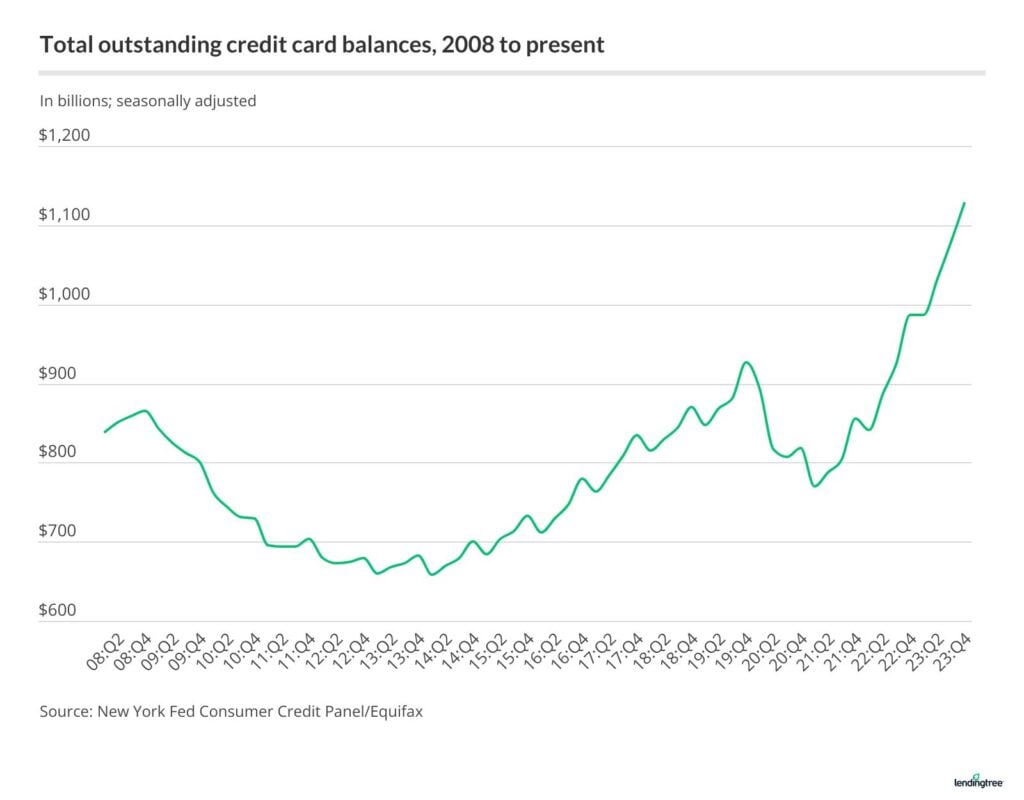
Credit card debt has reached an all-time high, with 8.9% of balances falling into delinquency as of May 2024. Bankruptcies are on the rise both personal and corporate. A CNN poll discovered that 39% of Americans worry that they may no longer be able to pay their bills. The poll saw similar sentiments during the Great Recession when 37% of Americans feared the next round of bills. Moody’s Analytics believes that household spending has risen $925 per month compared to three years due to inflation. Sixty-five percent of respondents said that the cost of living crisis is the most significant issue our nation faces. Politicians would be wise to focus on domestic issues as the people are on the brink.

Americans are spending more on less as economic conditions have begun to impact the average person’s quality of life. CNN also reported that 35% of adults are taking on second jobs to combat the price of living. Sixty-nine percent are spending less on entertainment, a correlation we have seen with corporate bankruptcies primarily rising in non-essential sectors. Another 41% say they cut down on driving to save on energy costs. Sixty-eight percent of American families have had to cut back on grocery spending, despite US Treasury Secretary Janet Yellen denying food inflation entirely.

Bidenomics failed. We are in a recession but not a depression. People hoard when they fear for the future, and that is happening not only as a result of economic conditions but geopolitical tensions and war will cause people to spend less. Then, to fund these wars and other spending packages, the government raises taxes, which is always recessionary. The computer had long warned that the American economy would turn down in May 2024 and not resurface until 2028.
June Home Sales Drop in Line with ECM


Posted Jul 25, 2024 By Martin Armstrong 

RealEstate

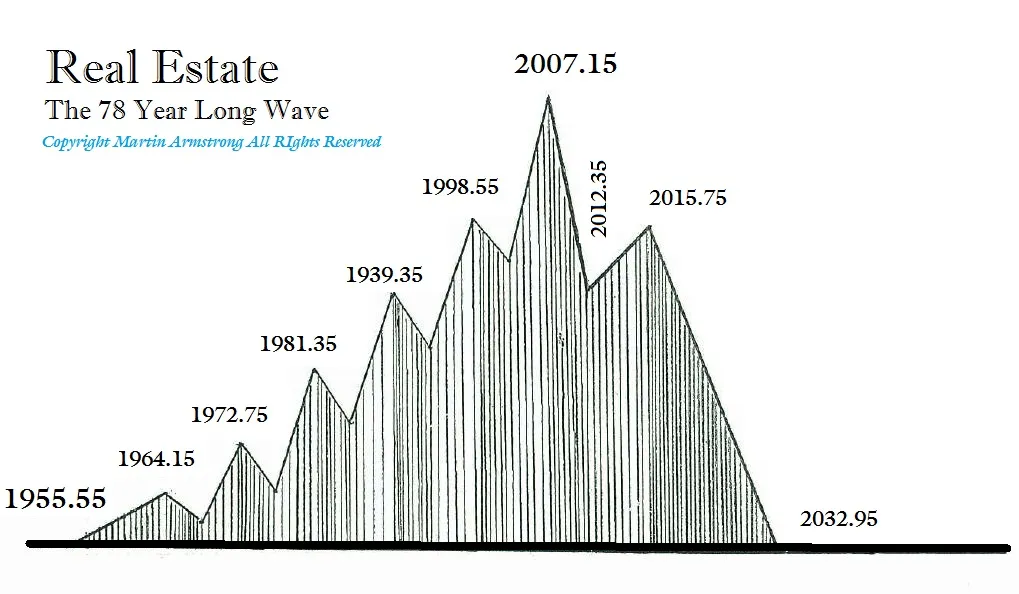
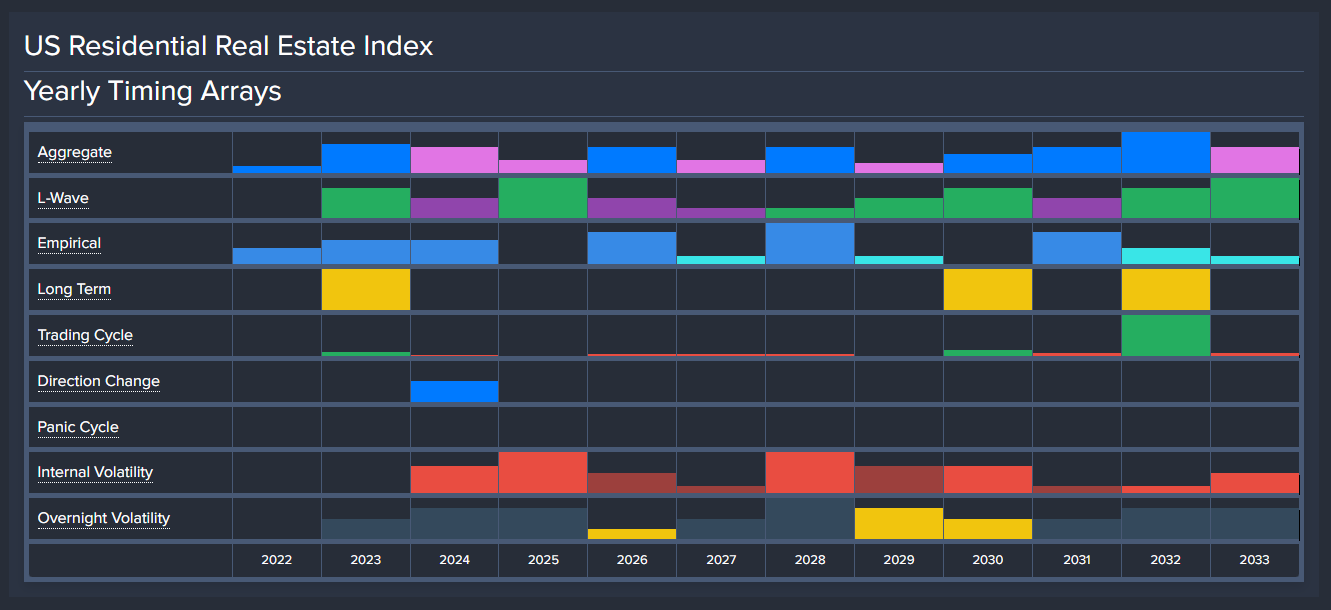
I noted that real estate in the United States would turn into a buyer’s market in May 2024 going into August 2028 in a reversal from the buyer’s market we’ve experienced since 2020. The 2007 high on the Shiller Index was the precise day of the Economic Confidence Model. So far, all the indicators have confirmed that we should have a recessionary trend into 2028 with this turn in the model on this wave.

The National Association of Realtors finally agreed that we are now amid a buyer’s market after June posted the lowest number of sales for 2024 despite a notable rise in inventory. Home sales fell 5.4% in June from May, when the market flipped, to 3.89 million units. This figure is also 5.4% lower than home sales in June 2023.

Gone are the days where buyers would forego inspections and entering bidding wars where the listing price was by no means the final sale price. Inventory from June 2023 to June 2024 has risen 23.4% to 1.32 million available units. Inventory is still a challenge, as are housing prices. The median home cost $426,900 last month, marking a new record-high as well as a 4.1% annual increase.

US_Residential_Real_Estate_Index_Analysis 12 13 23

Homes on the lower end of the spectrum have been keeping averages down. Single-family units between $200K and $350K rose 50% in the past year, according to Realtor.com. There are more homes available now than there have been since May 2020, when sellers reigned supreme. Mortgage rates are far higher than during the 2020 era, and Americans are seeing their available funds dwindling. It is harder for potential buyers to enter the market.

Smart money views mortgages as an alternative to unsecured government debt. Cash remains king with 28% of buyers who have the means opting to forego mortgages entirely, and often can decline high insurance premiums as well. We are also witnessing a mass migration from blue states into red states and should expect prices to decline where there is a dampened demand. It is difficult to view real estate from a national perspective in the United States as demand is up in red states as people continue to leave increasingly oppressive policies regarding taxation, crime, education, and business. If you were thinking of buying a new house right now, lock in the interest rate, for with war on the horizon, long-term rates will rise.

Tax Code Change for Emergency Retirement Withdrawals


Posted Jul 22, 2024 By Martin Armstrong 

401K

Low-income Americans are in such dire straits due to the elevated cost of living that lawmakers are making changes to the tax code. No, naturally, the politicians are not voting to decrease taxes for those who can barely get by. Instead, they’re permitting Americans to pull a mere $1,000 out of their retirement accounts without penalty.

Those withdrawing emergency funds from a 401K will need to explain their hardship to their employer, but employers do not need to approve the withdrawal. The government will tax the $1,000 if it is not paid back within three years and no additional emergency withdrawals may be taken out until the money is paid back in full.

The economy is shifting into a world of haves and have-nots as the middle class diminishes. A January 2024 survey found that 60% of Americans had less than $500 in liquidity, with only 12% possessing over 12%. The debt vortex is unforgiving and all too many Americans have become trapped in a cycle of perpetually servicing new debt, similar to our Federal Reserve.

CreditCardDebt.Chart_

A Vanguard study found that 3.6% of the 5 million retirement accounts on record made an emergency withdrawal in 2023, moving upward from 2.8% the year prior. Bank of America and Fidelity reported similar findings last year on a quarterly basis. These people may be subjected to a 10% tax due to the early distribution because chances are they will be unlikely to pay back the funds. Credit card debt has reached a historic high in the US among every income level, so this last resort option has become unavoidable for many.

This program is an insult to the American people who contribute to our system with nothing in return. These same people who do not have a mere $1,000 for an emergency are paying into the giant Ponzi scheme that is Social Security with each paycheck. They must pay for Medicare and Medicare even if they will never use the services. They’re likely subject to an income tax depending on their state regardless of income level.  If accounting for a population of 335 million, the average American has paid about $522 in taxes toward Ukraine alone. The US is paying about $1,700 per month per illegal migrant welcomed in by the open border policy.

Then Uncle Sam comes around every April and gives the lowest paid Americans a tax refund check, failing to acknowledge that they preventing those Americans from earning interest on that money that they desperately needed. It is a grand lie that the socialist-leaning politicians care about the working man when their social programs and handouts guarantee tax increases on everyone. It is a shame that those attempting to do right by society and not leaning entirely on government assistance are punished by our tax code.

Tucker: Adjusted For Inflation, We’ve Lost 13% Of Our Real GDP Over The Last 3 Years


Posted originally on Rumble By Bannons War Room on: July 05, 2024 at 08:00 pm EST

Yellen Denies Food Inflation


flation

Posted Jul 2, 2024 By Martin Armstrong 

Biden Yellen

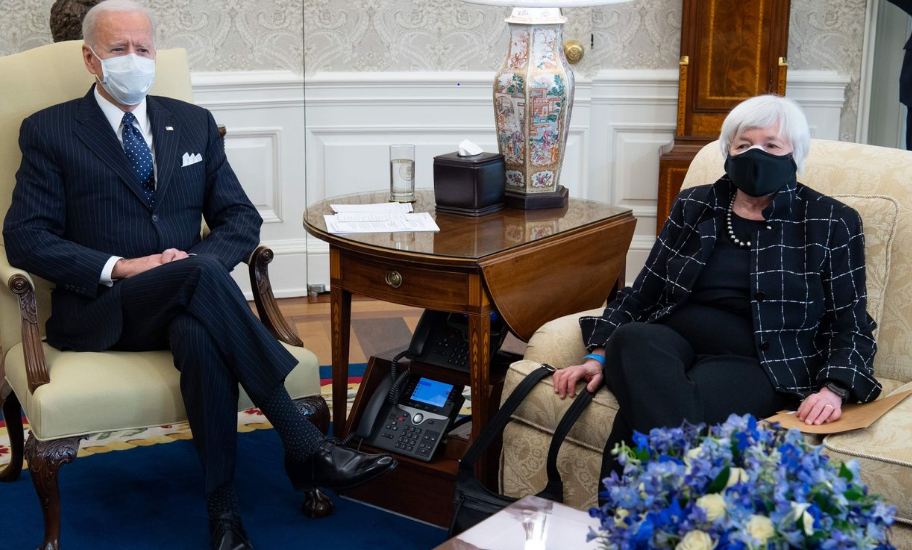
Treasury Secretary Janet Yellen once again is once again gas lighting the public to believe that the Biden Administration has inflation under control. When questioned about the rising prices at grocery stores, Yellen denied that prices have soared astronomically.

“I think largely it reflects cost increases, including labor cost increases that grocery firms have experienced, although there may be some increases in margins,” Yellen, who has a net worth of $20 million, stated.  She later touted that she met with several grocery store CEOs who said they were cutting costs. After all, Biden has continually blamed “greedy corporations” for rising food prices. “I think that’s to be applauded, I think that kind of thing is helpful, but I would be reluctant to agree that we should be centralizing agriculture,” Yellen added.

She also stated, once again, that the Fed will reach the arbitrary 2% target by next year. Treasury Secretary Janet Yellen is proof that the establishment is completely clueless when it comes to the lives of the average citizen. This is the same Treasury Secretary who touted, “People are better off than they were pre-pandemic.” She is all-in on the globalist agenda to sacrifice the economy of the United States on behalf of foreign interests.

Yellen has said that the US has not done enough for Ukraine, despite sending more money than Zelensky has time to spend or circulate back into the military-industrial complex. When questioned about America’s immediate involvement in Israel after the Hamas attack, the Treasury Secretary proclaimed America could “certainly” afford two wars, or rather, the government would “certainly” be willing to tax the public to afford the cost of two wars and send your sons and daughters to die fighting them.

https://www.tiktok.com/embed/v2/7384568413810691371?lang=en-US&referrer=https%3A%2F%2Fwww.armstrongeconomics.com%2Farmstrongeconomics101%2Finflation%2Fyellen-denies-food-inflation%2F&embedFrom=oembed

A popular video is circulating the internet of a man who was shocked to discover that the exact same groceries he purchased in 2022 for $126.67 now cost an alarming $414.39. He was shopping at Walmart, arguably one of the most affordable grocery chains. Yet they alter the numbers to claim that food inflation has come down since last year. They say food inflation in America eased to 2.1% in May, making similar claims of declining costs throughout the West. Food inflation has run rampant, and the figures projected by governments are a LIE.

We once had Treasury Secretaries who actually attempted to align national interests with policies. That is no longer the case within Biden’s cabinet for absolutely everyone has sold out to the globalist cabal. It was Yellen who admitted America’s largest spending package, the Inflation Reduction Act, was merely a scheme to push forward the climate change agenda.  “The Inflation Reduction Act is, at its core, about turning the climate crisis into an economic opportunity,” Yellen admitted earlier in the year.  She has never been concerned about inflation or the average American citizen who has been forced to reduce their quality of life.

Japan – China – US Debt


Posted Jun 26, 2024 By Martin Armstrong 

Japan remains the largest holder of the US as of May 2024, holding $1.186 trillion in Treasury securities and 14.7% of all foreign-owned US debt. China has been selling off its holdings in an urgent effort to distance itself from the US, but is currently the second-largest holder of US debt, carrying about $767.4 billion as of March 2024. I largely speak about China’s debt holdings because they were the top buyer of US debt before the political landscape changed.

Within a mere four years, China sold off 30% of its holdings or over $250 billion in US debt. This assisted the yuan in general as China was able to use the exchange rate to buy yuan when the currency depreciated. China seemed to be assisting Trump years ago in lowering the dollar to ease trade frictions. That is no longer the case here as the United States enacted economic warfare against Russia, pushing it off SWIFT, confiscating private assets, and implementing countless sanctions. The United States did all of this to Russia without officially being at war. Who is to say the same would not happen to China under the excuse of Taiwan?

Negative interest rates were a huge mistake for Japan. Unlike China, Japan aims to strengthen ties with the US. The nation drastically increased its holdings of US debt in 2023. US bonds seem safter than the low-yield returns provided domestically in Japan. Funds are moving out of Japan and into the US. They see US debt as relatively safe as they have a strong alliance with the US and the yield are simply higher.

The advice I used to provide to Japan to help reduce the trade friction was to buy gold in New York and sell it in London. The trade numbers could care less about the product actually being exported. It will reduce the trade deficit and make US exports appear to rise. It is just an accounting ploy. Likewise, the booming exports of China were being manipulated by Chinese companies borrowing dollars in Hong Kong and then bringing that money into China and collecting three times that cost in interest. Headlines are always made on the numbers without understanding the accounting.

I received the question of why I speak about China’s purchases and not Japan’s. Again, I speak primarily of China’s offloading of US debt because that is a larger issue. China has not slowed its pace of offloading US Treasuries and this becomes a problem as the debt crisis will come to a head when there is simply no one willing or able to buy US government debt. The Fed desperately needed China’s participation as its plan was to roll over its debts perpetually. They simply cannot pay off $34+ trillion and counting. Japan and the UK cannot compensate for the loss of Chinese purchases.

Fed Holds Rates – What Tools Are Left?


Posted originally on Jun 13, 2024 By Martin Armstrong

Federal Reserve Eagle

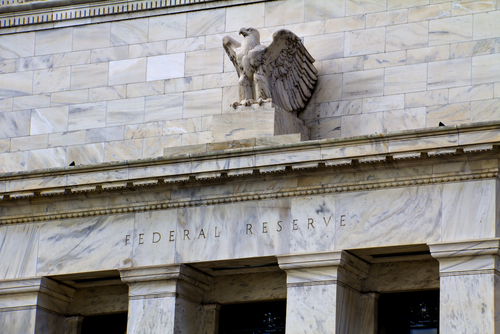
The Federal Open Market Committee unsurprisingly voted to maintain rates at 5.25% to 5.5%. The numerous cuts others were anticipating are completely off the table, as the central bank said there might be one reduction for the year compared with their optimistic tone forecast made in March of three rate reductions in 2024.

“In recent months, there has been modest further progress toward the Committee’s 2 percent inflation objective,” the voting members of the Fed said in their statement. They changed their forecast on inflation from “a lack of” to “modest” progress toward the 2% inflation objective.

Four voting members do not believe the central bank should raise rates at all this year. The central bank continues to exclude food and energy, two of the primary drivers of inflation when creating their summaries and dot plots. They certainly would never include taxation in those figures. The Fed claims there will be multiple rate cuts come next year, but they would never cut rates in the face of war which is completely inflationary and produces nothing.

Raising interest rates can have no impact on demand, as the government will simply borrow more, and the central banks simply have no say. Fed Chair Powell has repeatedly said that government spending is completely unsustainable and the Biden Administration is borrowing against future generations.

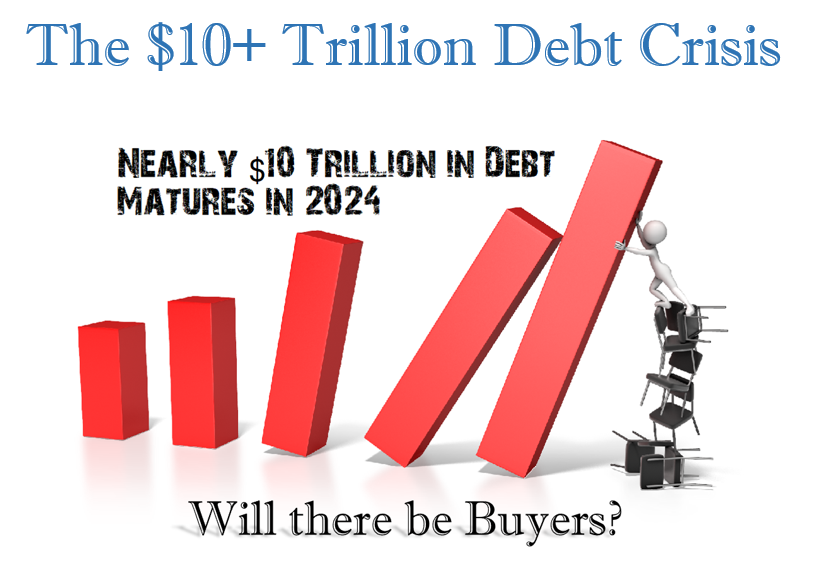
I explained in an earlier post why Keynesian Economics is collapsing. That theory was created when the US had a balanced budget and the government was actually expected to repay what they borrow. They still mistakenly believe that the business cycle can be manipulated. There is not much that the Federal Reserve can do at this point in time besides hope and pray for a miracle before that $10 trillion in debt is due to expire this year.

USA Watchdog Interview 6-8-24


Posted originally on Jun 9, 2024 By Martin Armstrong 

2024_06_09_11_28_01_It_s_Trump_vs_WWIII_Martin_Armstrong_Greg_Hunter_s_USAWatchdog

Credit Card Delinquencies Spike Among the “Rich”


Posted originally on Jun 6, 2024 By Martin Armstrong 

CreditCardDelinquency_byClass

Inflation can be felt at every tax bracket. Federal Reserve Bank of Minneapolis President Neel Kashkari came out this week and said the public “viscerally hates high inflation,” and for good measure. Everyone is seeing the impacts of inflation on their quality of life. Those defined as rich, the demographic one side of the political spectrum believes must be taxed into oblivion, have not come out of this inflationary cycle unscathed, as indicated by a new report from the St. Louis Federal Reserve.

Credit card delinquencies (missing a payment by over 30 days) have been steadily rising across America. The poorest Americans experienced the hardship first, and now those in higher tax brackets are also falling behind on bills. Delinquencies have increased for the last eight to 11 quarters, as indicated by the Fed. Among the poorest zip codes in the US, delinquency rose from 11% in Q2 of 2021 to 17.4% in Q1 of 2024 or 58%. Every region in America has experienced an increase in delinquencies by AT LEAST 32.2% in relative terms.

CreditCardDebt.Chart_

“The richest 10% of ZIP codes have experienced the greatest proportional increase; their delinquency rate climbed from 4.8% in the second quarter of 2022 to 7.4% in the first quarter of 2024, or 54% in relative terms,” the Fed noted. “For the poorest 10% of ZIP codes, the delinquency rate increased from 14.9% in the third quarter of 2022 to 21% in the first quarter of 2024, or 41% in relative terms.”

Credit card delinquencies are now exceeding pre-pandemic levels, and the Fed believes this suggests “that a trend which began prior to the pandemic has accelerated.” Discontent will grow as people are forced to stretch their dollars and watch their quality of life decline. The discontentment is fueling this political upheaval and the people can not vote their way out of this current situation because it is becoming apparent that the elections are not fair. We the people have been discarded by our government.

These delinquencies will fall on the banks eventually. The government does not realize that reckless spending and raising taxes has an impact on absolutely everyone. The people who push for more taxes and social programs fail to realize the larger implications.

Interest on US National Debt Hits New Record


Posted Jun 6, 2024 By Martin Armstrong

NationalDebtNYCVBillboard

Government spending has consequences. The US national debt has surpassed $34.6 trillion at the time of this writing and continues to grow every minute. America has never been in a deeper deficit. The Committee for a Responsible Federal Budget (CRFB) has reported that America was forced to pay $514 billion in the first seven months of FY2024 on interest costs alone.

This means that America paid more in servicing its debt than on any other program besides Social Security ($837 billion), which is a separate problem entirely. To put it into perspective, the US shelled out $498 billion on national defense, funding 2.5 wars, during this time. Around $465 billion was spent on Medicare, with an additional $355 billion spend on Medicaid, and neither surpassed the amount paid on simply holding onto debt.

US debt to China Buy Bullets
10 trillion Debt Crisis Default

What can be done when the government refuses to curtail spending? Biden audaciously labeled one of the largest spending packages in the nation’s history the “Inflation Reduction Act,” and expects the people to believe that it has not greatly contributed to the rising costs of goods and services. Every week, Biden signs a new check to Ukraine or a climate change agenda, but no one can stop him from draining the Treasury. Even the Federal Reserve is utterly helpless and can do nothing besides sit back and watch as America spirals down.

Imploding this situation is China’s rightful refusal to purchase US debt. Other central banks see how careless US politicians have become with their spending and question if they ever intend to pay off their growing debt. How could they at this point? No one in Washington has a clue on what to do. Instead, they will continue spending with no concern for the long-term consequences that are inevitable.