QUESTION: Do you think that this entire scam with cryptocurrencies that the government will be able to track, do they realize that in war you take down the power grid and all digital currency fails? If the backup system is destroyed, all your digital currency will vanish. Are they this stupid? Is this why they have shills saying you are wrong?
HK
ANSWER: Yes. I have spoken to people involved in creating this insanity. First, they do not think there will ever be a nuclear war. Second, they really do think that they will create regime change in Russia at the expense of probably every Ukrainian alive today who are fools being led to the slaughter. When I have brought up the subject – WHAT IF YOU ARE WRONG! They dismiss it and do not even entertain plan B. The whole digital currency is all about tracking every dime. I have said many times, this is all about the new world order which is Schwab’s Great Rest and he knows that is our 2032 forecast. They all believe that forecast and are preparing to redesign the world this time to achieve their totalitarian dreams.
When I asked – Did you authorize Bitcoin? They just do not reply. Silence is golden. The launch of Bitcoin was just too damn convenient. That was standard operational political tactics – you float a balloon and see how the people accept it.
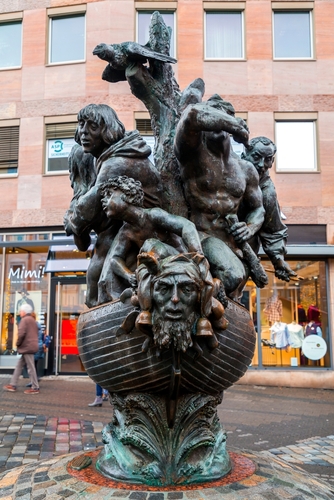
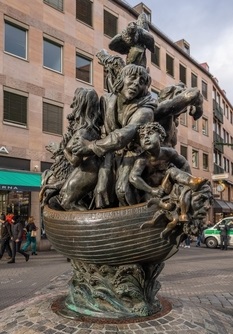
If you have ever been to Nuremberg, Germany, they have a bronze statue there – the Ship of Fools. The sculpture named Ship of Fools by Jurgen Weber is based on the satirical allegory by Sebastian Brant. This is now a reality.
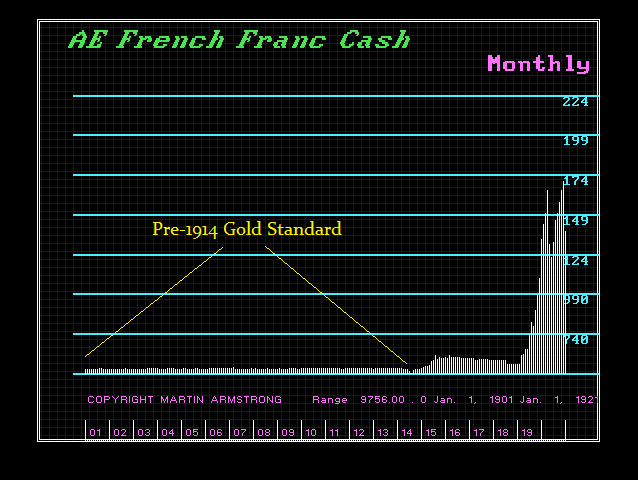
The financial markets had become integrated globally prior to World War I. It was the globalization and openness of world financial markets that became the problem and are important to understand for we will face the same problem today. The capital was free to flow from one country to another before World War I. All the major countries of the world were on the Gold Standard at that point in time so exchange rates were not as volatile.
We can easily see that the currency market was very stable pre-1914 looking at the French Franc. Keep in mind that this was also a period of fiscal responsibility – pre-Socialism and Marx. Therefore, governments practiced balance budgets to retain confidence in their currencies. That enabled the gold standard to function. Furthermore, any differences in exchange rates were arbitraged. That is how the United States went into crisis in 1896 because the Democrats were inflating the system by overvaluing silver at 16:1 compared to 15:1 in Europe. That resulted in gold fleeing the United States and silver pouring in from international arbitrage.
There was also a viable arbitrage that took place trading the spreads between international bonds listed on the various world stock exchanges. Many countries would issue bonds in British pounds just as they do in dollars today to sell more to the investors in the financial capital of the world, which was London at that point in time.
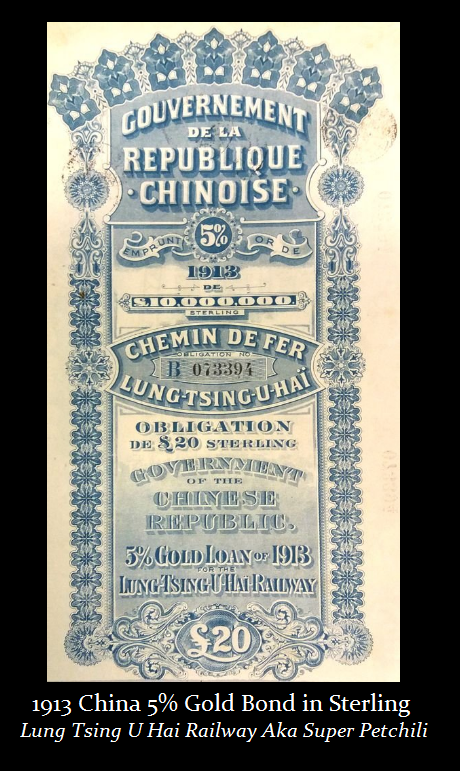
A country such as China or Russia would issue a bond that was listed on the stock exchanges in London, New York, Paris, Berlin, Amsterdam as well as St. Petersburg in Russia. Here is a Chinese bond issued in British pounds in 1913 paying 5%. The differences in exchange rates, which would still fluctuate marginally, would be arbitraged by buying and selling bonds in different markets.
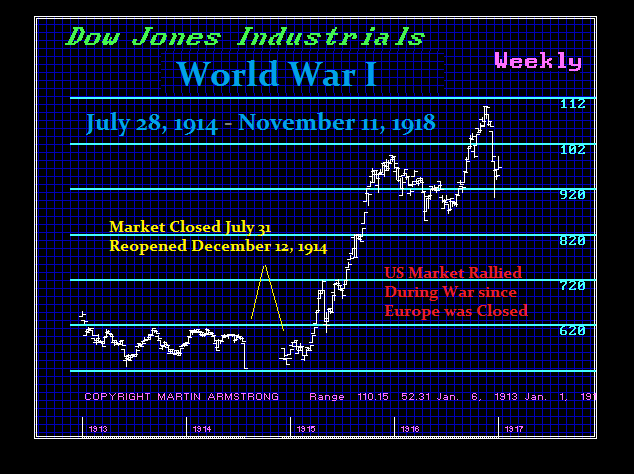
Consequently, during World War I, there was a global marketplace. In effect, this integration of markets presented a problem when the war hit. Capital could flee from one country to the next and thus the method to deal with the capital flows was to close the stock markets. The United States also closed the market in sympathy with Europe.
We will be taking a closer look at the various global markets. What you can count on is clearly CAPITAL CONTROLS. It would be best for those in Asia and Europe to have some capital tucked away in the United States. Once bullets start shooting, it will most likely be too late to move money.
Keep an eye on our Capital Flow tracking. This may become very critical in the months ahead.
COMMENT: Mr. Armstrong, Now with Switzerland outlawing a cashless society, I understand your point that cryptocurrency is really a dead end. Without power, it cannot exist and as you said in times of war, you take down the power grid and they can do that with an EPM pulse. These Bitcoin zealots are clueless about history and humanity. It’s just another way to separate a fool from his money.
Thank you for the education
BH
REPLY: The whole blockchain was the perfect creation of a totalitarian state. They can trace everything. How would you bribe politicians? It would all have to revert to barter. Do this and I will give you that – off the grid. This is why people are still buying real estate, precious metals, ancient coins, art, collectibles, and various things that are tangible and are thus off the grid.
Having funds in any cryptocurrency is still on the grid. When I was one of the three top market-makers in gold back in the ’70s, the IRS walked in and said they declared me to be a bank. Thus, I was supposed to report every transaction of $10,000 or more. They acknowledged I did not realize I was a bank, so they waived the fines. They seized all my records and went off to audit over 3,000 clients. They claimed that gold was not DEMONETIZED as money, just suspended for a while. I retired because I was supposed to report customers but not everyone else in the field. My lawyers said I could fight it. It would take years. My model warned that gold would decline for 19 years anyway so I choose to retire. The clients still wanted the research and thus Princeton Economics was spun off separately.
They can declare every person running an exchange in crypto is now a bank and must report every transaction. They can be put them out of business in the blink of an eye. These people have no idea who they are messing with. You will not win. All this is because of their twisted view of fiat money. They no more understand money and assets any more than Karl Marx.
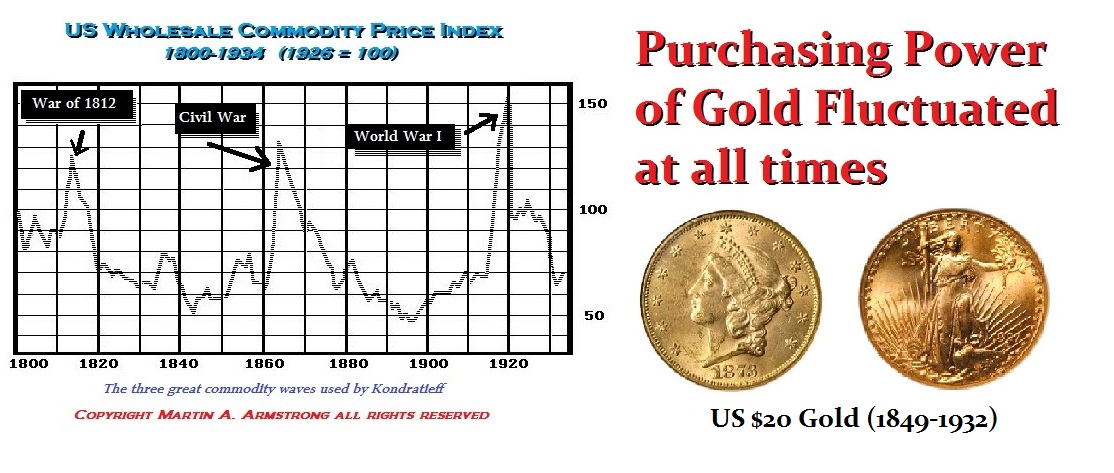
During inflation, assets rise in value, and money declines. That took place during the 19th century when a gold coin was money. MONEY has NEVER been of a constant value – NEVER! These people yelling fiat simply do not comprehend that for thousands of years, there has always been a business cycle and that means money rises and calls in purchasing power REGARDLESS of whatever it has been. The fiscal irresponsibility of governments is well documented throughout history long before paper money.
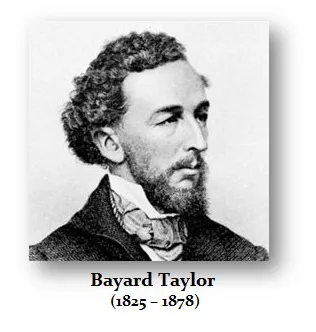
Even under a gold standard, there were periods of inflation and deflation. Read the history of the California Gold Rush. During the 1849 Gold Rush in California, the journalist for the New York Tribune, Bayard Taylor (1825-1878), arrived in San Francisco by ship during the summer of 1849. He was shocked at what he encountered and did not think that anyone would even believe what he was going to write. His dispatches about the gold rush economy in California stunned many and helped to create the 1849 Gold Rush.
The average wage for a laborer in New York was about one or two dollars a day. In California, individual hotel rooms were rented to professional gamblers for upwards of $10,000 a month, which is the equivalent of about $300,000 today. The degree of inflation in terms of gold was astounding and lacks comparison in modern times. There was so much gold, that the value of goods rose even though they did not in New York. The inflation phenomenon was local.
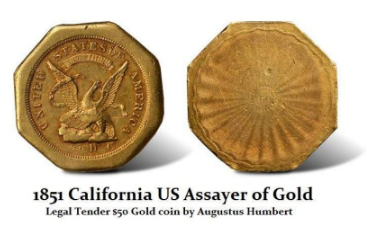
Gold became so common; they were even striking $50 gold coins in California when $20 was the highest denomination elsewhere and $1-dollar coins down to 25 cents all in gold. Eventually, there were $1 gold coins minted in the United States for general circulation throughout the USA. Indeed, Taylor wrote:
“[One] citizen of San Francisco died insolvent to the amount of forty-one thousand dollars the previous autumn. His administrators were delayed in settling his affairs and his real estate advanced so rapidly in value meantime that after his debts were paid, his heirs had a yearly income of $40,000 [$1.2 million today].
“These facts were indubitably attested; everyone believed them, yet hearing them talked of daily, as matters of course, one at first could not help feeling as if he had been eating ‘of the insane root.’”
It does NOT matter what is money. It will always rise and fall as measured against tangible assets as it has done since Babylonian times. In fact, the very first attempt to control inflation, as the central banks are doing right now, were the wage and price controls put in place by the legal codes of the Assyrians and Babylonians.
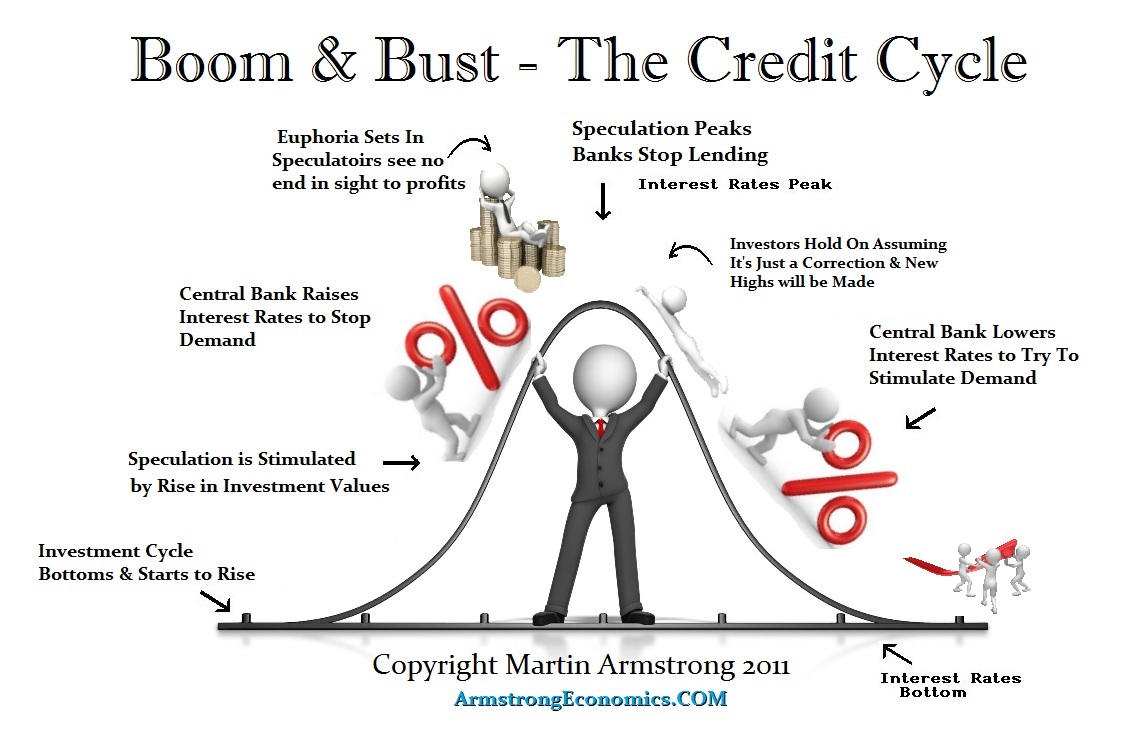
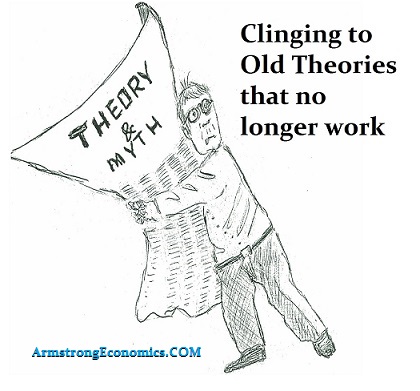
So – stop the BS. Understand that there are times when CASH will be king regardless of what money is at that moment in time, and then it will fall in value when everyone wants tangible assets. There is a business cycle – learn to live with it and we will be better off. The hard-nosed cryptocurrency zealots will never admit they are wrong. They are like politicians and will cling to their theories no matter what evidence you show them.
I asked one once, to name a single period in history where money was constant and never declined in value. He could not!
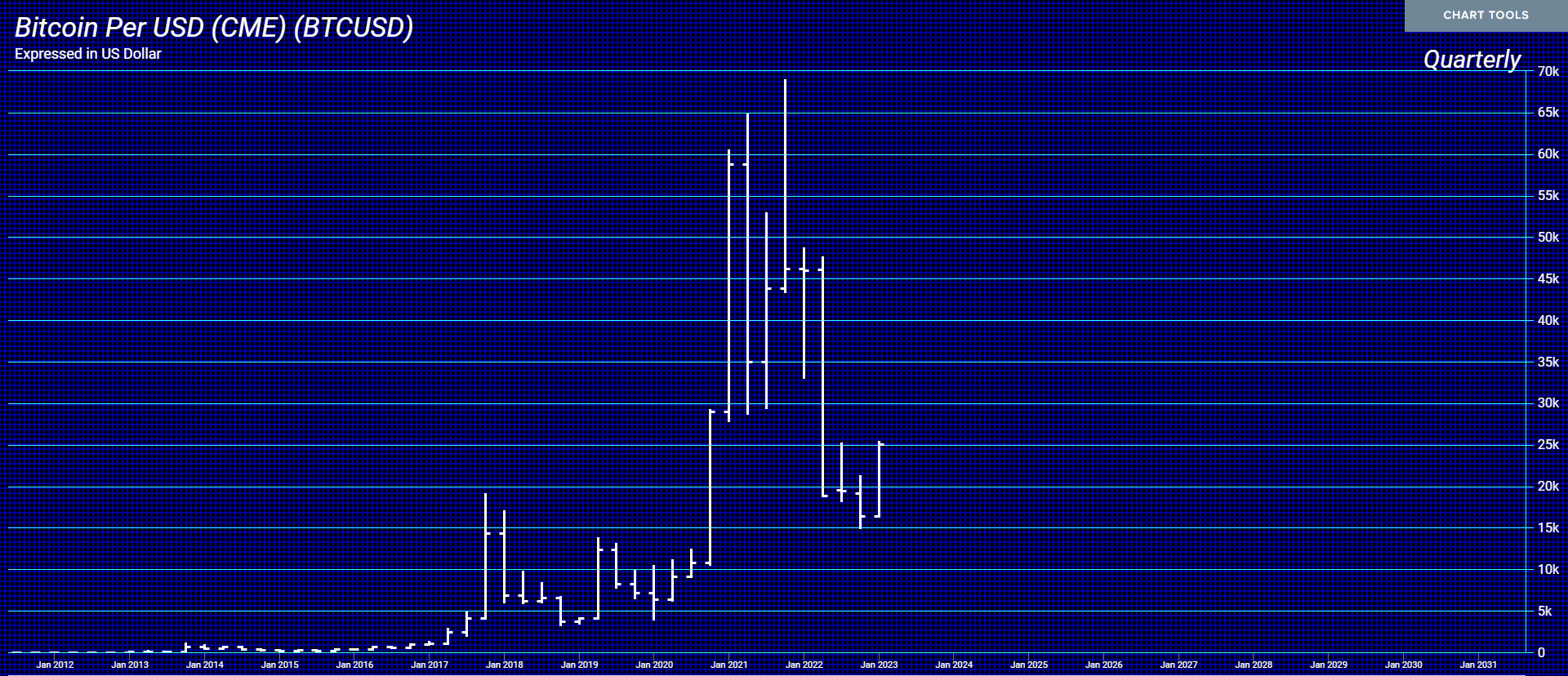
Bitcoin is an instrument for trading. This very chart CONFIRMS it is by no means a store of wealth. It rises and falls like ant commodity of stock. It is still influenced as part of the business cycle. Sorry – there is NOTHING that is a perfect store of wealth. Everything fluctuates. Trade Bitcoin, that is fine. But do not make a religion out of it for you will lose not just your shirt, but your pants as well.
COMMENT: Martin, After several years of reading your blog, I have concluded that Socrates’ prognostications appear to be spot on. I also share your assertion that a study of history supplies an insight into future events due to the constancy of “human nature.” Where we appear to part ways is in the definition of “money.”
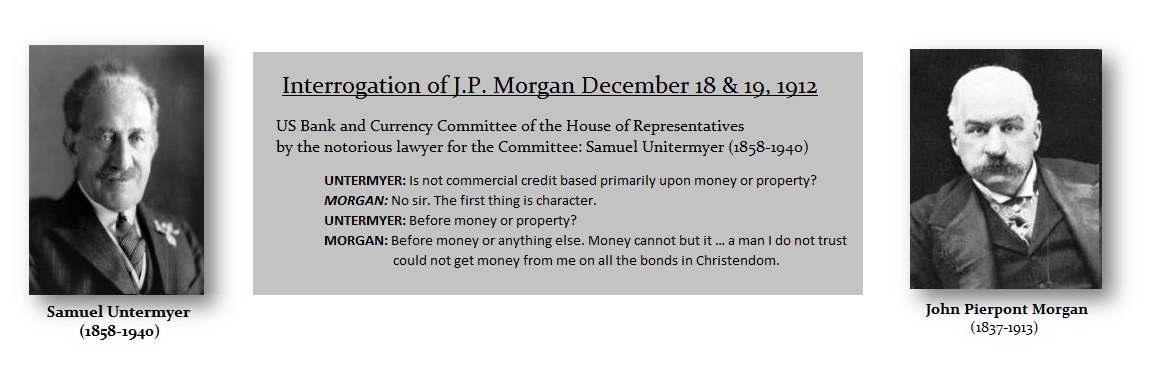
In the early 20th century J. P. Morgan said: “Gold is money; everything else [used as currency] is credit.” Hence, paper money, (and digital entries in an electronic ledger) when issued by a monopolist i.e. government, inevitably descends to its intrinsic value: zero.
AN
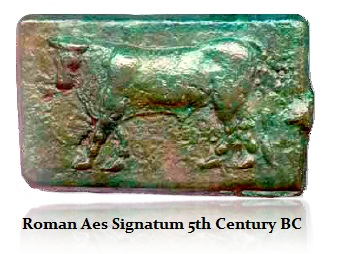
ANSWER: Human society has recorded our monetary history and you should not confuse irresponsible government with what is really money. I have a great deal of Respect for J.P. Morgan. If you asked the question of what is money in a Babylonian, it would be a silver shekel. Even the Bible spoke of weighing the silver and how Judas sold out Christ for a handful of silver coins. To a Greek from Anatolya (Turkey), he would have said it is a stater. To an Athenian, he would say a drachma. A Roman would have replied a denarius. But when Rome was first forming, money had been cattle which became thereafter bronze. Indeed, if you had asked before all of them, a Minoan, would have it was bronze. Money has been many things including sea shells, and cattle.
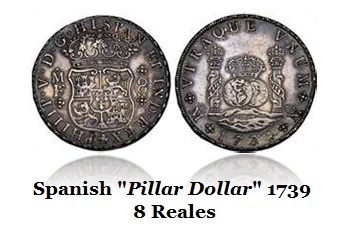
A Spanish during the 15th century would have said it was a one-ounce silver reale. The German would have said no – it’s the silver thaler. The British would disagree and said it was the pound sterling (.925 silver). The Americans, not wanting to be subservient to England, adopted the dollar, which was a version of the German thaler. In Asia, it was the cash, then the yen.
Saint Patrick in the 5th Century AD upon his arrival in Ireland, found that MONEY was expressed in human slave girls. He wrote in his Confession,“I think that I have given away to them no less than the price of fifteen humans.” This passage shows something very important. First, MONEY is not defined as the Medium of Exchange exclusively. It also serves the purpose of a Unit of Account. In fact, this becomes the true function of MONEY even more so than what it is. MONEY is a language of value.
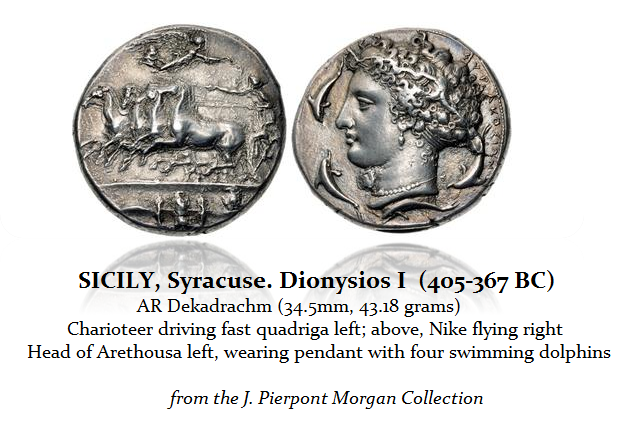
Many of the major bankers, kings, and heads of companies were ancient coin collectors including President Teddy Roosevelt. JP Morgan understood banking and credit – but not money. This was a Syracuse Dekadrachm of Dionysios I (405-367BC) was one of the coins from his collection that was eventually sold by the coin firm Stacks of New York in September 1983. You can download that catalog. People like Josiah K. Lilly Jr. and Paul A. Straub donated their collections to the Smithsonian.
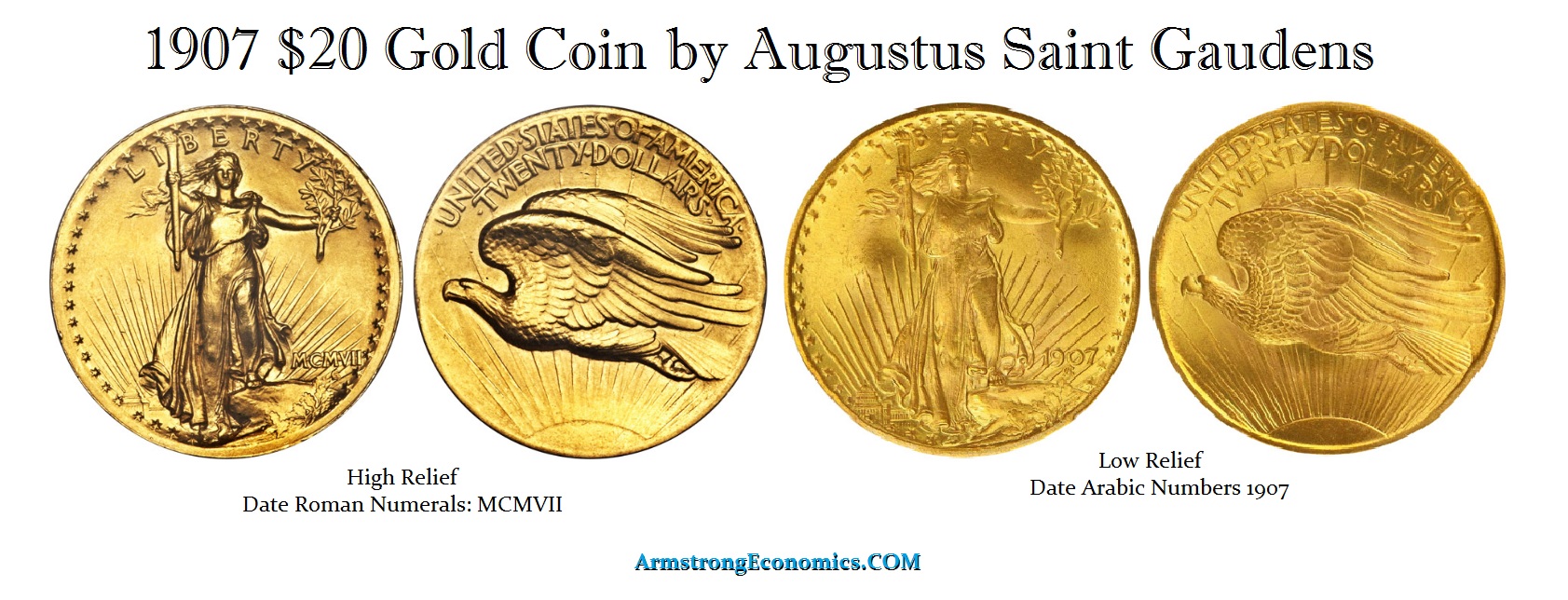
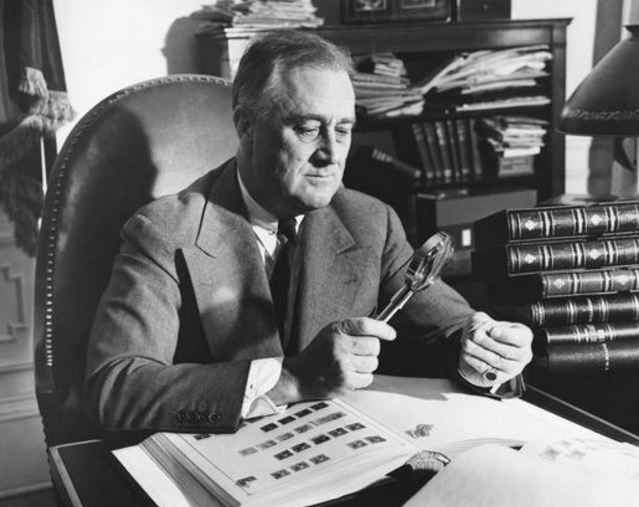
Teddy Roosevelt (1858-1919) loved the high relief of ancient Greek coins. When Teddy Roosevelt became president on September 14, 1901 – March 4, 1909, he commissioned the artist Augustus Saint-Gaudens (1848 –1907) to redesign the $20 gold coin and made it high relief as the ancient coins had been struck. The machines could not handle the high relief for the dies would break and they lacked the power of an individual stamping out coins. Thus, the new $20 gold coins had to be reduced in their relief. Nevertheless, we have ancient coins to thank for the limitation on the confiscation of gold in 1934. It was that very reason that his cousin FDR exempted ancient gold coins from confiscation when FDR was himself a stamp collector instead.
I would say the problem here is the definition of money and what predates coinage was the development of a weight standard to enable trade. That invention of weighing technology appears to emerge around 3100 to 3000 BC. This was the most significant turning point in monetary history for it marked the beginning of economic history itself.
It was private merchants during the Bronze Age that created the weight systems. Trade took place through informal networks, but it was clearly Mesopotamian merchants who established a standardized system of weights that later spread across the Western region and into Europe. This innovation enabled international trade across the continent. By the second millennium BC, merchants could potentially trade anywhere in Western Eurasia simply by knowing the conversion factors of a multitude of local weight units. What was emerging was the formation of weight systems that was the foundation for the booming commercial interaction of the Bronze Age world.
From the very beginning, MONEY has been a commodity – nothing more. It simply began a barter. I will give you these carrots for potatoes. When the Lydian King Kroisos (561-546BC) created the first bimetal monetary system, a gold stater was about 10.71 grams and the silver-gold ratio was 13.33:1 because gold was common in the Turkey. The inflation caused by war led to a gold weight reduction to 8.71 grams. Fiscal mismanagement existed from the very beginning. This would have been no different than FDR revaluing gold in 1934 from $20.67 to $35 per ounce.
There were competing standards from the very beginning. The Lydian/ Milesian standard began with an electrum stater at 14.2 grams. The stater as minted under the Euboic Standard was 17.2 grams of electrum. There was the Phokaic Standard placing the electrum stater at 16.1 grams. Obviously, foreign exchange dealers became necessary for international trade among the city states.
I can find no evidence of a single standard that dominates the nations at this time. By 530BC, the invention of coins spreads to Greece and now the first city state begins to strike a silver stater at 12.6 grams – the Isle of Aigina. In Greece, silver was common and gold was rare.
In Athens they established the Attic Standard based on a silver didrachm (2 drachms) of 8.6 grams, but as inflation emerged, the standard coin became the tetradrachms (4 drachms) at 17.2 grams. So you can see there may have been gold and silver used as MONEY, but by no means was there a unified standard agreement as to weight. In Corinth, they set their stater at 8.5 grams and divided it into three drachms. Standardization comes only with conquest as was the case with Napoleon. Athens dominated many city states and in 449BC issued its famous enigmatic “Coinage Decree” promulgated by Perikles that restricted other city states from striking coins making their coins a single currency. Perhaps it was just a power play. On the other hand, it was most likely just the profit earned over the raw metal cost known as seigniorage. In other words, the coins once minted purchased more in goods than the raw metal.
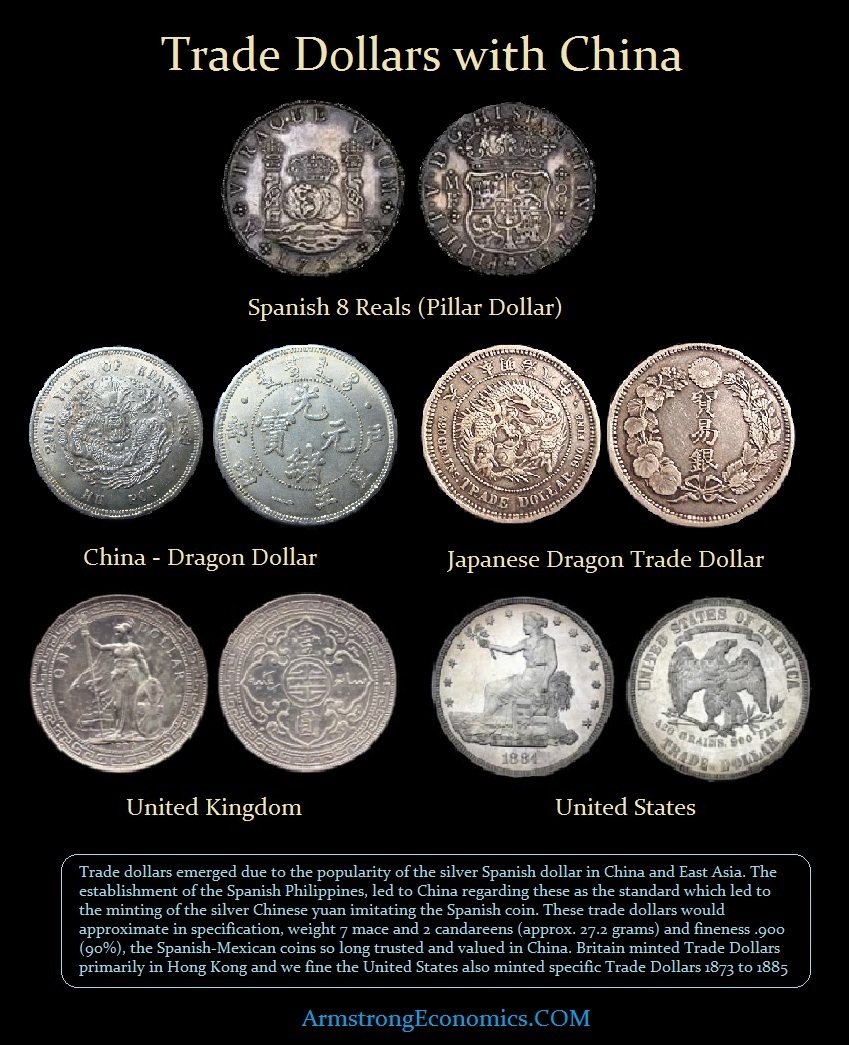
China did not use gold. They had a silver standard. The West had to create silver trade dollars set to their weight standard, which was heavier than the standard United States silver dollar. There have been different monetary systems throughout world history. They have not all been based on precious metals. What it always boils down to is the capacity of the people to produce. There are plenty of places with natural resources and the countries are barely even 3rd world. China, German, and Japan rose from the ashes without gold. Their people produced and they rose to the top of the list of economies despite others having gold.
The bottom line has always been that the wealth of a nation is nothing more than they total productivity of its people.
I know we have a lot of people expressing their opinion that the dollar will crash because when the government converts it to digital, it will be like spy wear tracking everything we do. Now you have people running around preaching the dollar will crash any day citing Biden’s Executive Order 14067. However, read it carefully and you will see what I have been saying that they will NEVER allow cryptocurrencies to compete with the sovereign currency.
“(ii) My Administration sees merit in showcasing United States leadership and participation in international fora related to CBDCs and in multi country conversations and pilot projects involving CBDCs.”
I have reported back in 2021 that the Bank of England proposed that digital currency should be programmable. A mother should be able to block her child from spending money on candy. If mom can do that, then big brother can do it on a grand scale.
The monopoly of the government to create money goes back to ancient times. They will not surrender that power. They have allowed cryptocurrencies to exist ONLY to get the people to embrace them letting the private sector sell the idea and then they will confiscate them all.
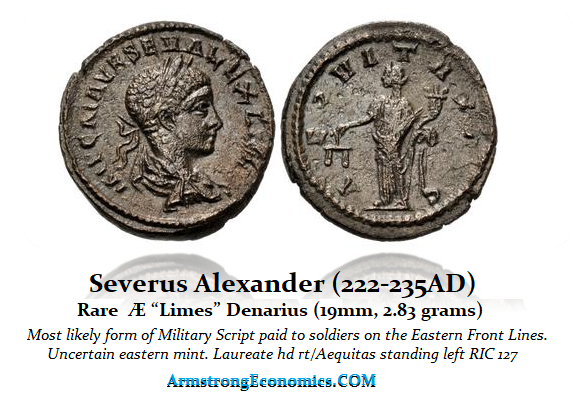
Limes denarius (Lim-ace) or coins of the borders, may be another example of coins of necessity issued because of a shortage of silver in the border regions. It has also been suggested that they may also be officially sanctioned issues for use in regions where political unrest made it hazardous to ship large amounts of silver. Others have suggested that they were used to pay barbarians on the fringes of the empire for local work.
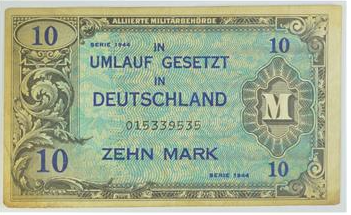
The most likely reason for their issue is based upon history repeats because human nature and its decision process will lead to the same conclusion no matter what the century. Therefore, it also remains possible that these were military scripts paid to soldiers on the front lines just as they did during World Wars I and II to pay locals. They would have reduced the need for vast amounts of precious metals on the front line. These bronze issues of denarii could have served troops on the front and been redeemable for good coinage when they returned to the stable regions. Whatever the reason, many of these coins exist. They have been often viewed as possibly “coins of necessity” issued during periods of a lack of silver. Some examples may still bear traces of a very thin silver wash.
A “Limes Denarius” were struck from official dies. Thus, these AE denarii official issues use the same dies as those intended for the silver denarii. However, there are also some that appear to be cast from typical clay forgers’ dies and sometimes may have been cast in molds. There are no written accounts of this practice within the official monetary system. However, if troops are paid with real money and they lose a battle, the opponent will then seize whatever money they had and use it to further fund their operations. If the soldiers only have a military script, then there is no financial benefit to the opponent if they should defeat your troops.
I have created this site to help people have fun in the kitchen. I write about enjoying life both in and out of my kitchen. Life is short! Make the most of it and enjoy!
This is a library of News Events not reported by the Main Stream Media documenting & connecting the dots on How the Obama Marxist Liberal agenda is destroying America





 Centinel2012