QUESTION: Governments create their own sovereign fiat currency, to facilitate trade, among other reasons. So counterfeit is punishable, in some countries, by death, & at minimum, incarceration. Currency is supposed to be sacrosanct, created under the most exacting conditions. So what to do when your own gov’t engages in what is essentially officially endorsed counterfeit? I mean, the “money” has become almost meaningless, unless you’re on the receiving end. For non-insiders like me…buy PM.
HS
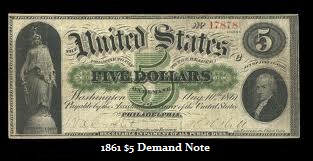
ANSWER: I have trouble with this misinformation always about the only money is gold and paper dollars are worthless fiats, which have rebuilt the world many times over since 1861 and the introduction of the paper dollar.
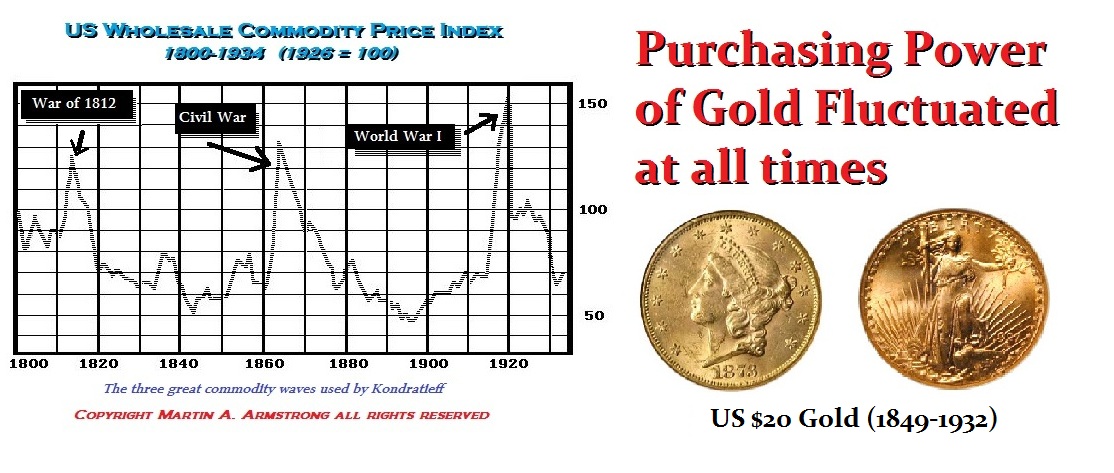
The propaganda of the goldbugs which has led so many to lose so much has been this nonsense that gold is the hedge against inflation. When the gold coin was money during the 19th century, it rose and fell in purchasing power no different than any paper currency. These people sell fiction like a used car salesman just to sell their product. It honestly does not matter what money is. It always is just a derivative of barter. I give you this for that. You will accept paper money because you know that others will accept it from you. A woman tried to spend a $20 gold coin at Walmart and they refused to accept it because they did not know what it was. She then took them to the back and exchanged them for $20 bills.
Try going to Starbucks and spending a $20 gold coin and asking for change. Unless the salesperson knows what it is, they will refuse.MONEY has always been nothing more than a belief system. That’s all!
FIAT simply means by arbitrary decree. Just because a currency is gold or even silver, does NOT make its value intrinsic. Governments have debased their coinage and reduced the weight declaring its value shall be whatever they say. I have written about how Japan did that and eventually, the people refused to accept Japanese coins and they stopped minting them for 600 years.
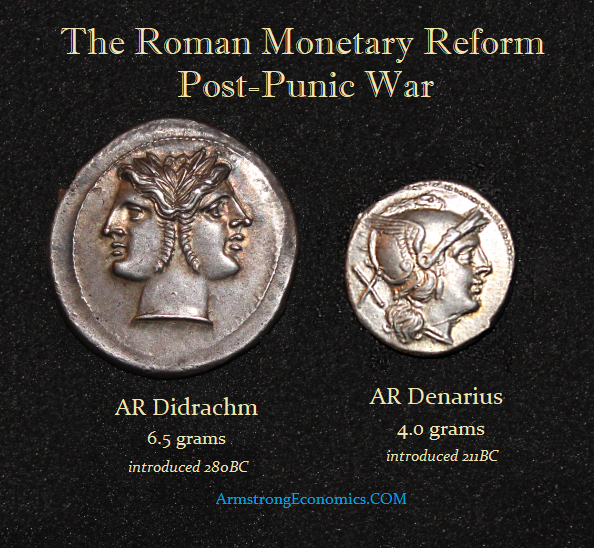
The Romans reduced the weight of their silver coinage from 6.5 grams to 4 grams and only because they defeated the Greeks, the Roman monetary system became standard.
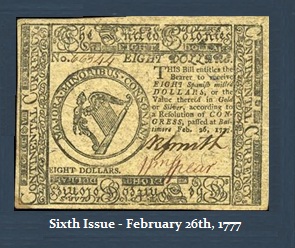
During the American Revolution, people accepted the Continental Currency. Money has always simply been predicated upon what people will accept.
Gold has no value whatsoever unless the other person also believes it has value. Gold or silver has no value intrinsically any more than a paper dollar or a bag of rice unless there is an unspoken agreement among people that it is a valuable medium of exchange.
This is the truth. All else is propaganda. Money has been many things throughout thousands of years from seashells to cattle and even slave girls.
Saint Patrick in the 5th Century AD upon his arrival in Ireland, found that MONEY was expressed in human slave girls. He wrote in his Confession,“I think that I have given away to them no less than the price of fifteen humans.” This passage shows something very important. First, MONEY is not defined as the Medium of Exchange exclusively. It also serves the purpose of a Unit of Account. This becomes the true function of MONEY even more so than what it is. MONEY is a language of value.
FIAT is when the government dictates what something is and that will be Digital Central Bank Currency. But if everyone accepts it, then it becomes the medium of exchange.
COMMENT: Martin, After several years of reading your blog, I have concluded that Socrates’ prognostications appear to be spot on. I also share your assertion that a study of history supplies an insight into future events due to the constancy of “human nature.” Where we appear to part ways is in the definition of “money.”
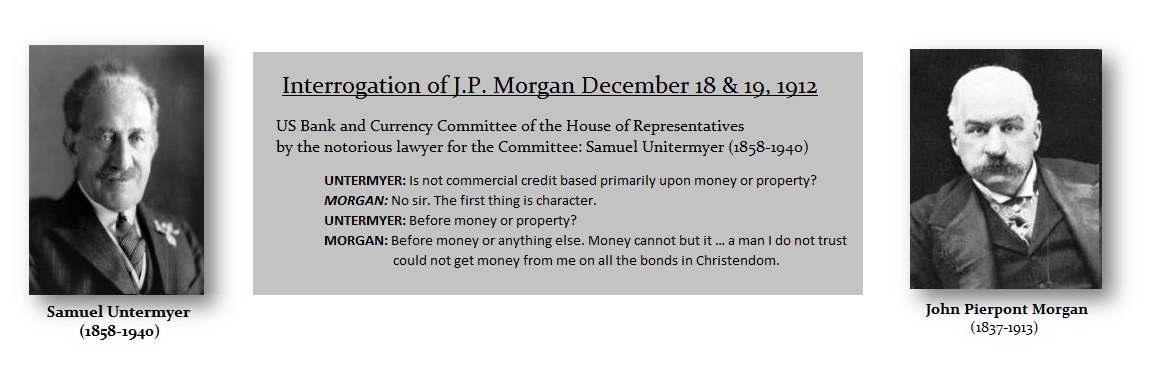
In the early 20th century J. P. Morgan said: “Gold is money; everything else [used as currency] is credit.” Hence, paper money, (and digital entries in an electronic ledger) when issued by a monopolist i.e. government, inevitably descends to its intrinsic value: zero.
AN
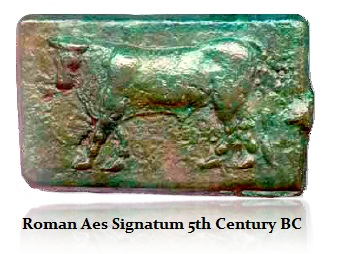
ANSWER: Human society has recorded our monetary history and you should not confuse irresponsible government with what is really money. I have a great deal of Respect for J.P. Morgan. If you asked the question of what is money in a Babylonian, it would be a silver shekel. Even the Bible spoke of weighing the silver and how Judas sold out Christ for a handful of silver coins. To a Greek from Anatolya (Turkey), he would have said it is a stater. To an Athenian, he would say a drachma. A Roman would have replied a denarius. But when Rome was first forming, money had been cattle which became thereafter bronze. Indeed, if you had asked before all of them, a Minoan, would have it was bronze. Money has been many things including sea shells, and cattle.
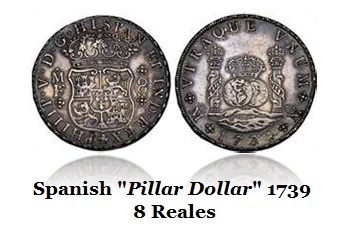
A Spanish during the 15th century would have said it was a one-ounce silver reale. The German would have said no – it’s the silver thaler. The British would disagree and said it was the pound sterling (.925 silver). The Americans, not wanting to be subservient to England, adopted the dollar, which was a version of the German thaler. In Asia, it was the cash, then the yen.
Saint Patrick in the 5th Century AD upon his arrival in Ireland, found that MONEY was expressed in human slave girls. He wrote in his Confession,“I think that I have given away to them no less than the price of fifteen humans.” This passage shows something very important. First, MONEY is not defined as the Medium of Exchange exclusively. It also serves the purpose of a Unit of Account. In fact, this becomes the true function of MONEY even more so than what it is. MONEY is a language of value.
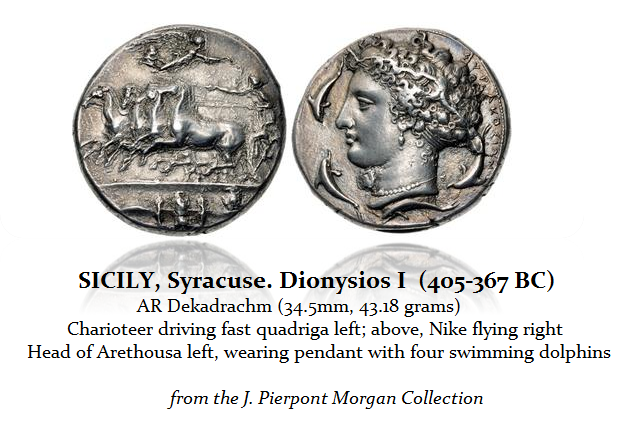
Many of the major bankers, kings, and heads of companies were ancient coin collectors including President Teddy Roosevelt. JP Morgan understood banking and credit – but not money. This was a Syracuse Dekadrachm of Dionysios I (405-367BC) was one of the coins from his collection that was eventually sold by the coin firm Stacks of New York in September 1983. You can download that catalog. People like Josiah K. Lilly Jr. and Paul A. Straub donated their collections to the Smithsonian.
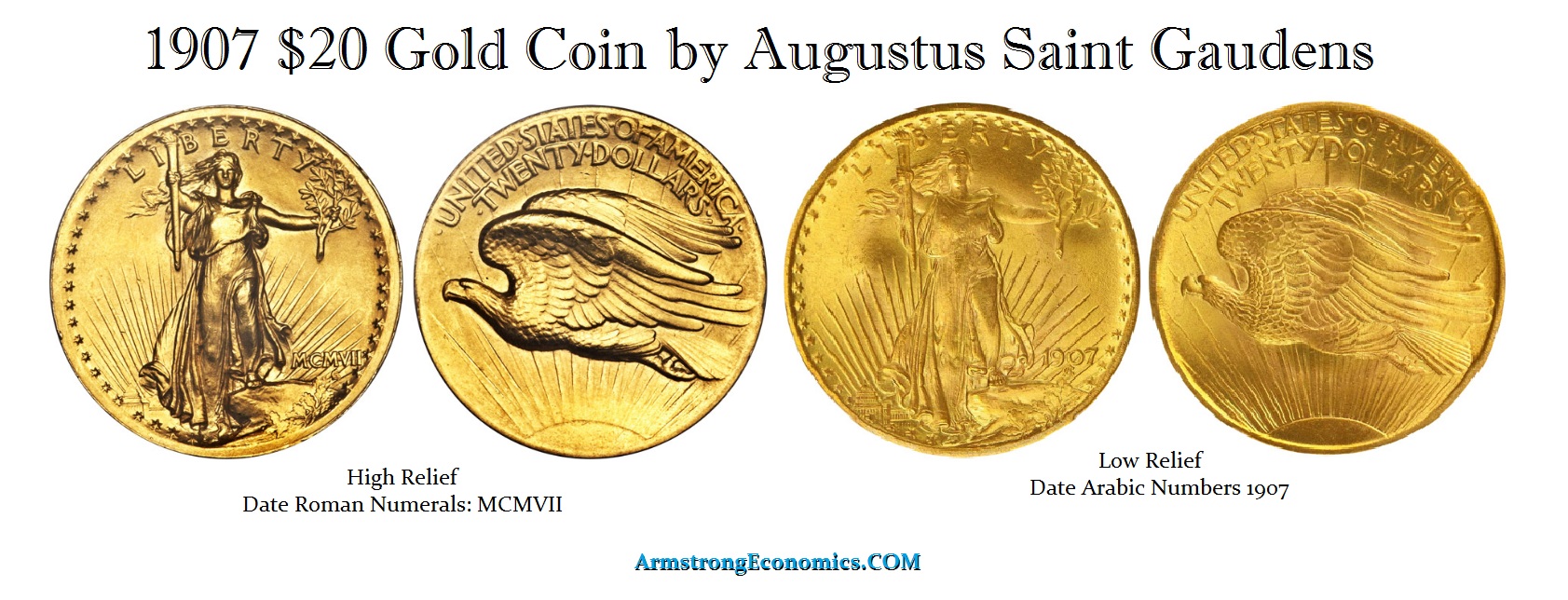
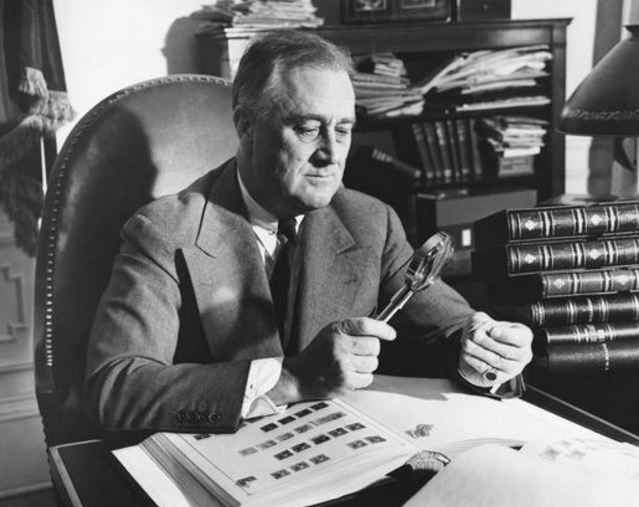
Teddy Roosevelt (1858-1919) loved the high relief of ancient Greek coins. When Teddy Roosevelt became president on September 14, 1901 – March 4, 1909, he commissioned the artist Augustus Saint-Gaudens (1848 –1907) to redesign the $20 gold coin and made it high relief as the ancient coins had been struck. The machines could not handle the high relief for the dies would break and they lacked the power of an individual stamping out coins. Thus, the new $20 gold coins had to be reduced in their relief. Nevertheless, we have ancient coins to thank for the limitation on the confiscation of gold in 1934. It was that very reason that his cousin FDR exempted ancient gold coins from confiscation when FDR was himself a stamp collector instead.
I would say the problem here is the definition of money and what predates coinage was the development of a weight standard to enable trade. That invention of weighing technology appears to emerge around 3100 to 3000 BC. This was the most significant turning point in monetary history for it marked the beginning of economic history itself.
It was private merchants during the Bronze Age that created the weight systems. Trade took place through informal networks, but it was clearly Mesopotamian merchants who established a standardized system of weights that later spread across the Western region and into Europe. This innovation enabled international trade across the continent. By the second millennium BC, merchants could potentially trade anywhere in Western Eurasia simply by knowing the conversion factors of a multitude of local weight units. What was emerging was the formation of weight systems that was the foundation for the booming commercial interaction of the Bronze Age world.
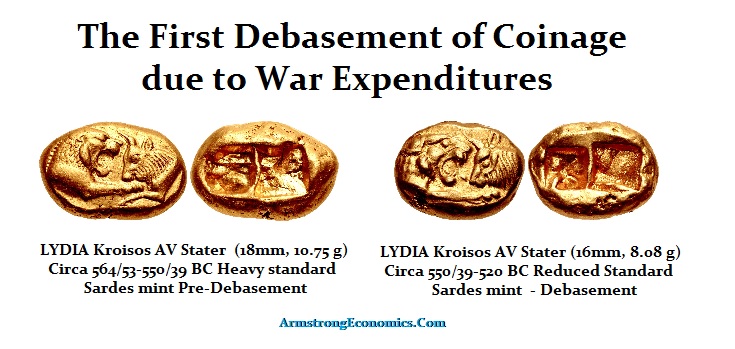
From the very beginning, MONEY has been a commodity – nothing more. It simply began a barter. I will give you these carrots for potatoes. When the Lydian King Kroisos (561-546BC) created the first bimetal monetary system, a gold stater was about 10.71 grams and the silver-gold ratio was 13.33:1 because gold was common in the Turkey. The inflation caused by war led to a gold weight reduction to 8.71 grams. Fiscal mismanagement existed from the very beginning. This would have been no different than FDR revaluing gold in 1934 from $20.67 to $35 per ounce.
There were competing standards from the very beginning. The Lydian/ Milesian standard began with an electrum stater at 14.2 grams. The stater as minted under the Euboic Standard was 17.2 grams of electrum. There was the Phokaic Standard placing the electrum stater at 16.1 grams. Obviously, foreign exchange dealers became necessary for international trade among the city states.
I can find no evidence of a single standard that dominates the nations at this time. By 530BC, the invention of coins spreads to Greece and now the first city state begins to strike a silver stater at 12.6 grams – the Isle of Aigina. In Greece, silver was common and gold was rare.
In Athens they established the Attic Standard based on a silver didrachm (2 drachms) of 8.6 grams, but as inflation emerged, the standard coin became the tetradrachms (4 drachms) at 17.2 grams. So you can see there may have been gold and silver used as MONEY, but by no means was there a unified standard agreement as to weight. In Corinth, they set their stater at 8.5 grams and divided it into three drachms. Standardization comes only with conquest as was the case with Napoleon. Athens dominated many city states and in 449BC issued its famous enigmatic “Coinage Decree” promulgated by Perikles that restricted other city states from striking coins making their coins a single currency. Perhaps it was just a power play. On the other hand, it was most likely just the profit earned over the raw metal cost known as seigniorage. In other words, the coins once minted purchased more in goods than the raw metal.
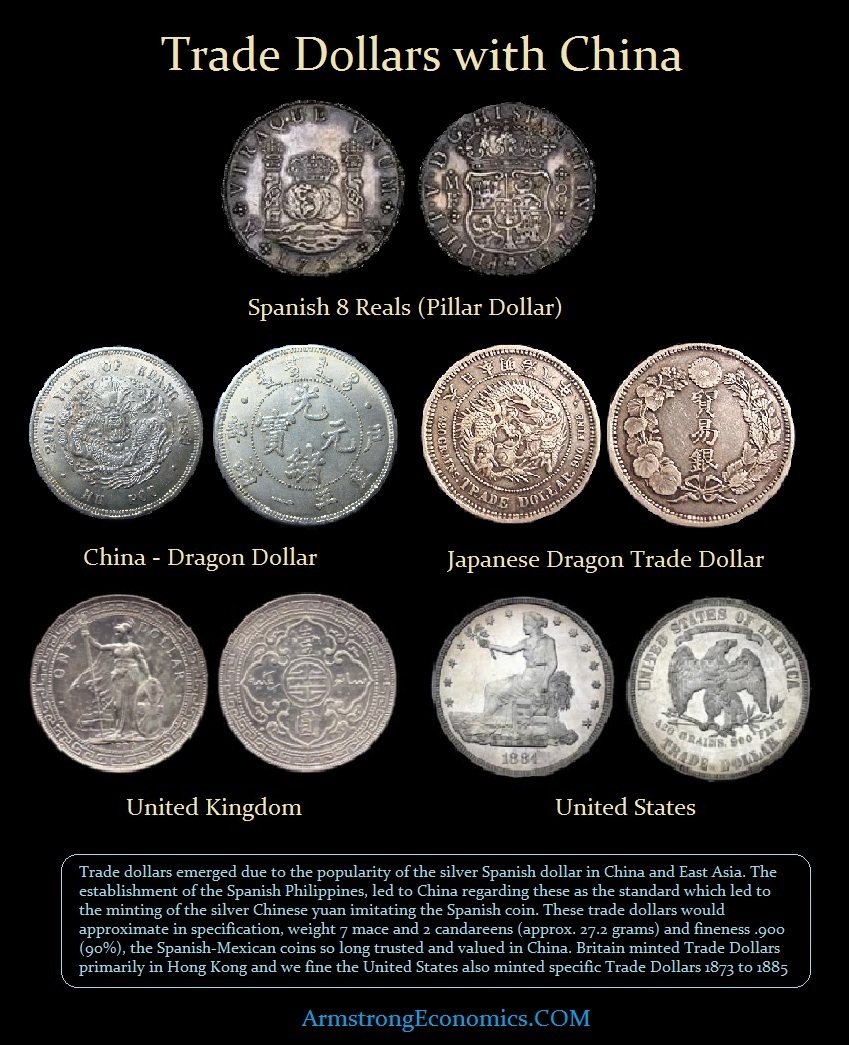
China did not use gold. They had a silver standard. The West had to create silver trade dollars set to their weight standard, which was heavier than the standard United States silver dollar. There have been different monetary systems throughout world history. They have not all been based on precious metals. What it always boils down to is the capacity of the people to produce. There are plenty of places with natural resources and the countries are barely even 3rd world. China, German, and Japan rose from the ashes without gold. Their people produced and they rose to the top of the list of economies despite others having gold.
The bottom line has always been that the wealth of a nation is nothing more than they total productivity of its people.
I have created this site to help people have fun in the kitchen. I write about enjoying life both in and out of my kitchen. Life is short! Make the most of it and enjoy!
This is a library of News Events not reported by the Main Stream Media documenting & connecting the dots on How the Obama Marxist Liberal agenda is destroying America


 Centinel2012