Methane is saturated


Methane: Much Ado About Nothing

David Archibald

Thanks to Modtran, an online program maintained by the University of Chicago, we know that carbon dioxide’s heating effect is logarithmic.  The first 20 ppm of carbon dioxide heats the atmosphere by 1.5°C. At the current concentration of 412 ppm each extra 100 ppm is only good for 0.1°C. Carbon dioxide is tuckered out as a greenhouse gas.

But what of methane which is the excuse du jour for wrecking livelihoods, towns, industries and whole economies? Methane, with a half life of nine years in the atmopshere, is carbon dioxide’s little brother in the pantheon of the satanic gasses.

Witness this headline about antics in New Zealand:

We return to Modtran to see what that oracle will tell us about methane’s heating effect. This is the model output converted to degrees C:

While not as pronounced as carbon dioxide’s drop off in heating effect with concentration, the effect is still there such that at the current concentration of 1.9 ppm, each extra 0.1 ppm heats the atmosphere by 0.05°C. With the methane concentration currently rising by 0.1 ppm every 20 years, the atmosphere will get an extra 0.2°C of heating by 2100. The reader can decide whether or not he/she/it need be worried by this projection.

But methane has only been going up at that rate for a few years. The atmospheric concentration of carbon dioxide has measured since 1958. Methane measurements only started in the mid-1980s and this is what the data looks like:

There is a steep rise at the beginning but then from the early 1990s to 2010 the concentration went sideways for nigh on 20 years. The Cape Grim concentration is particularly flat. NASA has helpfully provided a graph of rate-of-change:

There are three years – 2000, 2001 and 2004 – in which the methane level went down. Let’s disregard the noise and look at the bigger picture evident. And that is the rate of increase declined for 20 years and then went up for 20 years. A few more decades of observations might show whether or not this is cyclic.

But farms that have been going for generations might be wiped out by unnecessary concern about methane while we are waiting for that data.  So we will make a stab at the underlying science. Two factors are likely involved.

Firstly plant productivity has been going up with the increase in the atmospheric carbon dioxide concentration. Parts of the West Australian desert now have 30% more plant matter than a scant 30 years ago. The same is true of the vast stretch of forest and tundra across northern Russia. Unless this vegetation is consumed by fire, its fate is to be the source of methane via termites or rotting. So the hand of Man is not necessarily involved in a rising methane level.

Secondly, the Sun was more active in the second half of the 20th century than it had been in the previous eleven thousand years. That stopped in 2006 with the end of the Modern Warm Period. The Sun has become less active as shown by this graph of solar extreme ultra violet produced by the University of Bremen:

Our current solar cycle, 25, is tracking lower than any of the previous four. The natural enemy of methane is ozone, the most reactive gas in nature. Ozone is produced in the upper atmosphere by radiation with wavelengths less than or equal to 242 nano metres acting on oxygen. So less ozone has been produced since 2006 and this is when the atmospheric methane level stopped falling and started rising again.

Case closed. Nothing to see here. Move along. Only idiots would get hung up on such a minuscule effect that we can’t change anyway. There are real problems coming at humanity that will take all our attention. Destroying the production base in the interim will only make our situation worse.

David Archibald is the author of The Anticancer Garden in Australia

Atmospheric physics Nitrous Oxide and Climate Atmospheric physics


From the CO2 Coalition

Download the entire PDF Nitrous Oxide

Gregory R. Wrightstone

Nitrous oxide (N20) has now joined carbon dioxide (CO2) and methane (CH4) in the climate alarm proponents’ pantheon of anthropogenic “demon” gases. In their view, increasing concentrations of these molecules are leading to unusual and unprecedented warming and will, in turn, lead to catastrophic consequences for both our ecosystems and humanity.

Countries around the world are in the process of greatly reducing or eliminating the use of nitrogen fertilizers based on heretofore poorly understood properties of nitrous oxide. Reductions of N2O emissions are being proposed in Canada by 40 to 45 percent and in the Netherlands by up to 50 percent. Sri Lanka’s complete ban on fertilizer in 2021 led to the total collapse of their primarily agricultural economy.

To provide critically needed information on N2O, the CO2 Coalition has published an important and timely paper evaluating the warming effect of the gas and its role in the nitrogen cycle. Armed with this vital information, policymakers can now proceed to make informed decisions about the costs and benefits of mandated reductions of this beneficial molecule.

This new paper joins previous CO2 Coalition reports on other greenhouse gases, carbon dioxide and methane.

Key takeaways from the paper:

  • At current rates, a doubling of N2O would occur in more than 400 years.
  • Atmospheric warming by N2O is estimated to be 0.064oC per century.
  • Increasing crop production requires continued application of synthetic nitrogen fertilizer in order to feed a growing population.

N2O and its warming potential

The first portion of the paper is highly technical and reviews the greenhouse warming potential of N2O. Like CO2, nitrous oxide is a linear, chemically inert molecule that absorbs infrared radiation. However, N2O has a longer lifetime in the atmosphere than CH4 because it is more resistant to chemical or physical breakdown. Increasing atmospheric concentrations of N2O likely contribute some amount of warming to the Earth’s atmosphere. To assess how much is likely, the authors consider well-validated radiation transfer theory and available experimental evidence rather than very complex general circulation climate models, which have proven unreliable.

The current N2O concentration at sea level is 0.34 parts per million (ppm) and increasing at a rate of about 0.00085 ppm/year. This rate of increase has been steady since 1985 with no indication of acceleration. A comparison with CO2, at a present concentration of approximately 420 ppm, is in order. For current concentrations of greenhouse gases, the radiative forcing per added N2O molecule, is about 230 times larger than the forcing per added CO2 molecule. This sounds bad, but what are the facts?

The rate of increase of CO2 molecules is approximately 2.5 ppm/year, or about 3,000 times larger than the rate of increase of N2O molecules. So, the contribution of nitrous oxide to the annual increase in forcing is 230/3,000 or about 1/13 that of CO2. If the main greenhouse gases CO2, CH4 and N2O have contributed about 0.1 C/decade of the warming of the Earth observed over the past few decades, this would correspond to about 0.00064 degrees Celsius per year or 0.064oC per century of warming from N2O, an amount that is barely observable. At the present rate of increase, a doubling of the N2O concentration would take more than four centuries and, according to Figure 5 of the paper, the increase in warming would be imperceptibly small.

The nitrogen cycle

Along with water and carbon, nitrogen is of key importance to plant life and the right proportion of it is critical for optimal growth. Carbon is available to plants from CO2 in the atmosphere; nitrogen must be made available in the soil. To this end various microorganisms and plant species, with the aid of symbiotic microorganisms, fix diatomic nitrogen (N2) from the atmosphere into the soil, where it enters complicated cycles of nitrogen-containing compounds that can move more or less freely in soil and serve many plants. Through the activity of microorganisms (recent work shows that archaea are of comparable importance to bacteria) the nitrogen cycle ends by releasing N2, and to a much lesser extent N2O, back into the atmosphere. Because of losses to the atmosphere and leaching to waterways, soil nitrogen needs to be replenished continuously to optimize plant growth.

Agricultural and natural vegetative growth contribute comparable amounts to the nitrogen cycle. Optimum crop growth requires large amounts of nitrogen. Some nitrogen is provided by animal manure and decaying plants. However, these sources of nitrogen are insufficient for the needs of agriculture to feed a growing world population.

Figure 14 from the paper compares the relationship between the increasing use of artificial nitrogen fertilizer and the increasing yields of various crops in the U.S. from 1866 onward. The strong correlation between nitrogen fertilization and crop yields is striking. Figure 13 shows a similar correspondence worldwide between the use of nitrogen fertilizer and the yield of cereal crops. Of course, changes in complicated processes cannot be ascribed to a single cause. Also of considerable importance in crop production are other mineral fertilizers like phosphorus and potassium, better plant varieties like hybrid corn and increasing concentrations of atmospheric CO2. However, the crucial role of nitrogen fertilizers in tremendously increasing crop yields is unmistakable.

Figure 14 – Crop yields for corn, wheat, barley, grass hay, oats and rye in the United States.

Figure 13 – Annual world production of nitrogen fertilizer used in agriculture (blue, in Tg)
and world production of all cereal crops (orange, in Gigatonnes) from 1961 to 2019

Feeding a world population that is growing at a rate of 1.1 percent per year is no trivial matter. Devastating famines from the past have been kept at bay during the last century by the fundamental scientific developments noted above. At the moment many governments, under the influence of ‘’green’’ pressure groups, exhibit a dangerous inclination to limit the use of nitrogen fertilizers to move farmers ‘’back to nature’’ in order to save the world from “climate disaster.” In the Netherlands, the government is considering forcing large numbers of farmers out of business to supposedly prevent catastrophic warming from N2O emissions. As this new paper shows, N2O emissions will have a trivial effect on temperature increases. Farmers themselves, not government bureaucrats, should determine the optimum amounts of nitrogen fertilizer to maximize crop yields.

Agriculture free of artificial fertilizers, despite it being highly labor-intensive and producing very low yields, may be feasible for a small niche of the world population willing and able to pay for it. However, it is inconceivable that the growing masses , or even the current world population, can be fed without the intelligent, science-based use of nitrogen and other fertilizers.

‘’Green’’ illusions cannot feed billions of people.

Wheat with and without nitrogen fertilizer – Deli Chen – University of Melbourne

Ukraine, a Ponzi Scheme, and a Top Democrat Donor Raise Serious Questions


Repost

https://redstate.com/bonchie/2022/11/13/ukraine-a-ponzi-scheme-and-a-top-democrat-donor-raise-serious-questions-n658409

Ukraine, a Ponzi Scheme, and a Top Democrat Donor Raise Serious Questions

By Bonchie | 4:00 PM on November 13, 2022

AP Photo/J. Scott Applewhite, Pool

As RedState reported, crypto-exchange FTX collapsed after its much-lauded founder, Sam Bankman-Fried, appeared to make improper transfers of customer money. Somewhere between $1-2 billion of that amount has now gone missing and Bankman-Fried also has disappeared.

What makes this so interesting, though, isn’t just that a lot of really wealthy people got scammed. It’s that Bankman-Fried also happens to be one of the top donors to the Democratic Party. In fact, outside of George Soros, no one has done more to bankroll Democrat efforts since the 2020 election. Joe Biden alone received a whopping $5.2 million.

But here’s where things get even weirder. Apparently, while the United States was bankrolling Ukraine and its war effort, that country’s leaders were investing money into FTX.

It was also revealed that FTX had partnered with Ukraine to process donations to their war efforts within days of Joe Biden pledging billions of American taxpayer dollars to the country. Ukraine invested into FTX as the Biden administration funneled funds to the invaded nation, and FTX then made massive donations to Democrats in the US.

There are so many questions that arise from this. For example, why is Ukraine, which we are all assured is broke and needs US taxpayer money, playing around with a Democrat-linked crypto company? This wasn’t just about accepting donations through the portal. The report specifically says that Ukraine actively invested money in FTX.

While that was happening, FTX’s founder was handing out tens of millions of dollars, from the Bahamas, to help elect Democrats back in the United States. That is one of the shadiest things I’ve ever witnessed in politics.

Yes, the chain of custody regarding the funds involved is tough to know. When and where money was sent is something only an investigation of FTX’s internal operation can ascertain. Still, the appearances here are just horrific. Were Democrats funneling taxpayer money to Ukraine, only for some of it to be sent to FTX so it could be funneled back to Democrat campaigns? That’s a question that must be answered, and any attempt to gloss over it will raise major red flags.

I don’t think I’m going out on a limb by suggesting that if another company had been scamming people while bankrolling the Republican Party, it would be major news. There would be calls for investigations as far as the eye could see to figure out whether Republican politicians were using that company as a passthrough to avoid campaign finance laws. Never mind that simply receiving funds from a Ponzi scheme, even without ill intent, is really bad on its own.

This entire situation stinks to high heaven. It appears that Republicans will end up taking the House of Representatives. When that becomes official, GOP members need to dive headfirst into this and figure out what in the world happened. Because having a Democrat mega-donor get exposed like this while also having Ukraine tied up in the mix is too much to ignore.

Front-page contributor for RedState. Visit my archives for more of my latest articles and help out by following me on Twitter @bonchieredstate.


Copyright ©2022 RedState.com/Salem Media. All Rights Reserved.

The Dirty Secrets inside the Black Box Climate Models


By Greg Chapman
“The world has less than a decade to change course to avoid irreversible ecological catastrophe, the UN warned today.” The Guardian Nov 28 2007
“It’s tough to make predictions, especially about the future.” Yogi Berra
Introduction
Global extinction due to global warming has been predicted more times than climate activist, Leo DiCaprio, has traveled by private jet.  But where do these predictions come from? If you thought it was just calculated from the simple, well known relationship between CO2 and solar energy spectrum absorption, you would only expect to see about 0.5o C increase from pre-industrial temperatures as a result of CO2 doubling, due to the logarithmic nature of the relationship.
Figure 1: Incremental warming effect of CO2 alone [1]
The runaway 3-6o C and higher temperature increase model predictions depend on coupled feedbacks from many other factors, including water vapour (the most important greenhouse gas), albedo (the proportion of energy reflected from the surface – e.g. more/less ice or clouds, more/less reflection) and aerosols, just to mention a few, which theoretically may amplify the small incremental CO2 heating effect. Because of the complexity of these interrelationships, the only way to make predictions is with climate models because they can’t be directly calculated.
The purpose of this article is to explain to the non-expert, how climate models work, rather than a focus on the issues underlying the actual climate science, since the models are the primary ‘evidence’ used by those claiming a climate crisis. The first problem, of course, is no model forecast is evidence of anything. It’s just a forecast, so it’s important to understand how the forecasts are made, the assumptions behind them and their reliability.
How do Climate Models Work?
In order to represent the earth in a computer model, a grid of cells is constructed from the bottom of the ocean to the top of the atmosphere. Within each cell, the component properties, such as temperature, pressure, solids, liquids and vapour, are uniform.
The size of the cells varies between models and within models. Ideally, they should be as small as possible as properties vary continuously in the real world, but the resolution is constrained by computing power. Typically, the cell area is around 100×100 km2 even though there is considerable atmospheric variation over such distances, requiring each of the physical properties within the cell to be averaged to a single value. This introduces an unavoidable error into the models even before they start to run.
The number of cells in a model varies, but the typical order of magnitude is around 2 million.
Figure 2: Typical grid used in climate models [2]

Once the grid has been constructed, the component properties of each these cells must be determined. There aren’t, of course, 2 million data stations in the atmosphere and ocean. The current number of data points is around 10,000 (ground weather stations, balloons and ocean buoys), plus we have satellite data since 1978, but historically the coverage is poor. As a result, when initialising a climate model starting 150 years ago, there is almost no data available for most of the land surface, poles and oceans, and nothing above the surface or in the ocean depths. This should be understood to be a major concern.
Figure 3: Global weather stations circa 1885 [3]

Once initialised, the model goes through a series of timesteps. At each step, for each cell, the properties of the adjacent cells are compared. If one such cell is at a higher pressure, fluid will flow from that cell to the next. If it is at higher temperature, it warms the next cell (whilst cooling itself). This might cause ice to melt or water to evaporate, but evaporation has a cooling effect. If polar ice melts, there is less energy reflected that causes further heating. Aerosols in the cell can result in heating or cooling and an increase or decrease in precipitation, depending on the type.
Increased precipitation can increase plant growth as does increased CO2. This will change the albedo of the surface as well as the humidity. Higher temperatures cause greater evaporation from oceans which cools the oceans and increases cloud cover. Climate models can’t model clouds due to the low resolution of the grid, and whether clouds increase surface temperature or reduce it, depends on the type of cloud.
It’s complicated! Of course, this all happens in 3 dimensions and to every cell resulting in considerable feedback to be calculated at each timestep.
The timesteps can be as short as half an hour. Remember, the terminator, the point at which day turns into night, travels across the earth’s surface at about 1700 km/hr at the equator, so even half hourly timesteps introduce further error into the calculation, but again, computing power is a constraint.
While the changes in temperatures and pressures between cells are calculated according to the laws of thermodynamics and fluid mechanics, many other changes aren’t calculated. They rely on parameterisation. For example, the albedo forcing varies from icecaps to Amazon jungle to Sahara desert to oceans to cloud cover and all the reflectivity types in between. These properties are just assigned and their impacts on other properties are determined from lookup tables, not calculated. Parameterisation is also used for cloud and aerosol impacts on temperature and precipitation. Any important factor that occurs on a subgrid scale, such as storms and ocean eddy currents must also be parameterised with an averaged impact used for the whole grid cell. Whilst the effects of these factors are based on observations, the parameterisation is far more a qualitative rather than a quantitative process, and often described by modelers themselves as an art, that introduces further error. Direct measurement of these effects and how they are coupled to other factors is extremely difficult and poorly understood.
Within the atmosphere in particular, there can be sharp boundary layers that cause the models to crash. These sharp variations have to be smoothed.
Energy transfers between atmosphere and ocean are also problematic. The most energetic heat transfers occur at subgrid scales that must be averaged over much larger areas.
Cloud formation depends on processes at the millimeter level and are just impossible to model. Clouds can both warm as well as cool. Any warming increases evaporation (that cools the surface) resulting in an increase in cloud particulates. Aerosols also affect cloud formation at a micro level.  All these effects must be averaged in the models.
When the grid approximations are combined with every timestep, further errors are introduced and with half hour timesteps over 150 years, that’s over 2.6 million timesteps! Unfortunately, these errors aren’t self-correcting. Instead this numerical dispersion accumulates over the model run, but there is a technique that climate modelers use to overcome this, which I describe shortly.
Figure 4: How grid cells interact with adjacent cells [4]

Model Initialisation
After the construction of any type of computer model, there is an initalisation process whereby the model is checked to see whether the starting values in each of the cells are physically consistent with one another. For example, if you are modelling a bridge to see whether the design will withstand high winds and earthquakes, you make sure that before you impose any external forces onto the model structure other than gravity, that it meets all the expected stresses and strains of a static structure. Afterall, if the initial conditions of your model are incorrect, how can you rely on it to predict what will happen when external forces are imposed in the model?
Fortunately, for most computer models, the properties of the components are quite well known and the initial condition is static, the only external force being gravity. If your bridge doesn’t stay up on initialisation, there is something seriously wrong with either your model or design!
With climate models, we have two problems with initialisation. Firstly, as previously mentioned, we have very little data for time zero, whenever we chose that to be. Secondly, at time zero, the model is not in a static steady state as is the case for pretty much every other computer model that has been developed. At time zero, there could be a blizzard in Siberia, a typhoon in Japan, monsoons in Mumbai and a heatwave in southern Australia, not to mention the odd volcanic explosion, which could all be gone in a day or so.
There is never a steady state point in time for the climate, so it’s impossible to validate climate models on initialisation.
The best climate modelers can hope for is that their bright shiny new model doesn’t crash in the first few timesteps.
The climate system is chaotic which essentially means any model will be a poor predictor of the future – you can’t even make a model of a lottery ball machine (which is a comparatively a much simpler and smaller interacting system) and use it to predict the outcome of the next draw.
So, if climate models are populated with little more than educated guesses instead of actual observational data at time zero, and errors accumulate with every timestep, how do climate modelers address this problem?
History matching
If the system that’s being computer modelled has been in operation for some time, you can use that data to tune the model and then start the forecast before that period finishes to see how well it matches before making predictions. Unlike other computer modelers, climate modelers call this ‘hindcasting’ because it doesn’t sound like they are manipulating the model parameters to fit the data.
The theory is, that even though climate model construction has many flaws, such as large grid sizes, patchy data of dubious quality in the early years, and poorly understood physical phenomena driving the climate that has been parameterised, that you can tune the model during hindcasting within parameter uncertainties to overcome all these deficiencies.
While it’s true that you can tune the model to get a reasonable match with at least some components of history, the match isn’t unique.
When computer models were first being used last century, the famous mathematician, John Von Neumann, said:
“with four parameters I can fit an elephant, with five I can make him wiggle his trunk”
In climate models there are hundreds of parameters that can be tuned to match history. What this means is there is an almost infinite number of ways to achieve a match. Yes, many of these are non-physical and are discarded, but there is no unique solution as the uncertainty on many of the parameters is large and as long as you tune within the uncertainty limits, innumerable matches can still be found.
An additional flaw in the history matching process is the length of some of the natural cycles. For example, ocean circulation takes place over hundreds of years, and we don’t even have 100 years of data with which to match it.
In addition, it’s difficult to history match to all climate variables. While global average surface temperature is the primary objective of the history matching process, other data, such a tropospheric temperatures, regional temperatures and precipitation, diurnal minimums and maximums are poorly matched.
Even so, can the history matching of the primary variable, average global surface temperature, constrain the accumulating errors that inevitably occur with each model timestep?
Forecasting
Consider a shotgun. When the trigger is pulled, the pellets from the cartridge travel down the barrel, but there is also lateral movement of the pellets. The purpose of the shotgun barrel is to dampen the lateral movements and to narrow the spread when the pellets leave the barrel. It’s well known that shotguns have limited accuracy over long distances and there will be a shot pattern that grows with distance.  The history match period for a climate model is like the barrel of the shotgun. So what happens when the model moves from matching to forecasting mode?
Figure 5: IPCC models in forecast mode for the Mid-Troposphere vs Balloon and Satellite observations [5]
Like the shotgun pellets leaving the barrel, numerical dispersion takes over in the forecasting phase. Each of the 73 models in Figure 5 has been history matched, but outside the constraints of the matching period, they quickly diverge.
Now at most only one of these models can be correct, but more likely, none of them are. If this was a real scientific process, the hottest two thirds of the models would be rejected by the International Panel for Climate Change (IPCC), and further study focused on the models closest to the observations. But they don’t do that for a number of reasons.
Firstly, if they reject most of the models, there would be outrage amongst the climate scientist community, especially from the rejected teams due to their subsequent loss of funding. More importantly, the so called 97% consensus would instantly evaporate.
Secondly, once the hottest models were rejected, the forecast for 2100 would be about 1.5o C increase (due predominately to natural warming) and there would be no panic, and the gravy train would end.
So how should the IPPC reconcile this wide range of forecasts?
Imagine you wanted to know the value of bitcoin 10 years from now so you can make an investment decision today. You could consult an economist, but we all know how useless their predictions are. So instead, you consult an astrologer, but you worry whether you should bet all your money on a single prediction. Just to be safe, you consult 100 astrologers, but they give you a very wide range of predictions. Well, what should you do now? You could do what the IPCC does, and just average all the predictions.
You can’t improve the accuracy of garbage by averaging it.
An Alternative Approach
Climate modelers claim that a history match isn’t possible without including CO2 forcing. This is may be true using the approach described here with its many approximations, and only tuning the model to a single benchmark (surface temperature) and ignoring deviations from others (such as tropospheric temperature), but analytic (as opposed to numeric) models have achieved matches without CO2 forcing. These are models, based purely on historic climate cycles that identify the harmonics using a mathematical technique of signal analysis, which deconstructs long and short term natural cycles of different periods and amplitudes without considering changes in CO2 concentration.
In Figure 6, a comparison is made between the IPCC predictions and a prediction from just one analytic harmonic model that doesn’t depend on CO2 warming. A match to history can be achieved through harmonic analysis and provides a much more conservative prediction that correctly forecasts the current pause in temperature increase, unlike the IPCC models. The purpose of this example isn’t to claim that this model is more accurate, it’s just another model, but to dispel the myth that there is no way history can be explained without anthropogenic CO2 forcing and to show that it’s possible to explain the changes in temperature with natural variation as the predominant driver.
Figure 6: Comparison of the IPCC model predictions with those from a harmonic analytical model [6]



In summary:
Climate models can’t be validated on initiatialisation due to lack of data and a chaotic initial state.
Model resolutions are too low to represent many climate factors.
Many of the forcing factors are parameterised as they can’t be calculated by the models.
Uncertainties in the parameterisation process mean that there is no unique solution to the history matching.
Numerical dispersion beyond the history matching phase results in a large divergence in the models.
The IPCC refuses to discard models that don’t match the observed data in the prediction phase – which is almost all of them.
The question now is, do you have the confidence to invest trillions of dollars and reduce standards of living for billions of people, to stop climate model predicted global warming or should we just adapt to the natural changes as we always have?
Greg Chapman  is a former (non-climate) computer modeler.
Footnotes
[1] https://www.adividedworld.com/scientific-issues/thermodynamic-effects-of-atmospheric-carbon-dioxide-revisited/
[2] https://serc.carleton.edu/eet/envisioningclimatechange/part_2.html
[3] https://climateaudit.org/2008/02/10/historical-station-distribution/
[4]            http://www.atmo.arizona.edu/students/courselinks/fall16/atmo336/lectures/sec6/weather_forecast.html
[5] https://www.drroyspencer.com/2013/06/still-epic-fail-73-climate-models-vs-measurements-running-5-year-means/
Whilst climate models are tuned to surface temperatures, they predict a tropospheric hotspot that doesn’t exist. This on its own should invalidate the models.
[6] https://wattsupwiththat.com/2012/01/09/scaffeta-on-his-latest-paper-harmonic-climate-model-versus-the-ipcc-general-circulation-climate-models/

The Pathetic Democratic Pantheon


https://www.zerohedge.com/political/victor-davis-hanson-pathetic-democratic-pantheon

Victor Davis Hanson: The Pathetic Democratic Pantheon

Tyler Durden's Photo

by Tyler Durden

Monday, Nov 07, 2022 – 11:45 PM

Authored by Victor Davis Hanson via AmGreatness.com,

Joe Biden, Hillary Clinton, Barack Obama, and Nancy Pelosi are of no use to the Left in the midterms because it is their radical ideology that was finally enacted and wrecked the country…

Over the last few months the four icons of the Democratic Party—Joe Biden, Hillary Clinton, Barack Obama, and Nancy Pelosi—have hit the campaign trail. 

They’ve weighed in on everything from “right-wing violence” and “election denialists” to the now tired “un-American” semi-fascist MAGA voter—and had nothing much to say about inflation, the border, crime, energy, or the Afghanistan debacle. In this, they remind us just how impoverished and calcified is this left-wing pantheon. 

So why should we take anything they say seriously, given their own records—and especially given their mastery of projecting their own shortcomings upon others as some sort of private exculpation or preemptive political strategy?

Still Hopin’ and Changin’? 

Barack Obama this past week has assumed the role of surrogate president. He is storming the country, while Joe Biden mopes at home or visits shrinking blue enclaves so he can claim post facto, “At least I was out there stumping.” 

Over the last six years, we have become accustomed to Obama’s periodic getaways from one of his three estates. It is always the same. From time to time, he reenters politics to remind us that he did not just cash in on his presidency to become a multi-millionaire. Instead, he is still the Chicago “community activist” of his youth. And so, Obama will not be overshadowed by the Biden crew that is enacting all the crazy things he as president had warned were a bit much even for him. 

At the funeral of the late John Lewis, Obama turned his eulogy into a political rant. He weighed in on the “racist” filibuster, the “Jim Crow relic” that he desperately sought in vain to use to stop the appointment of Justice Samuel Alito. 

At campaign stops, he deplores “divisions” that he, more than any modern figure, helped create. The entire left-wing vocabulary of disparagement for the white lower-working classes (e.g., deplorables, dregs, chumps, irredeemables, etc.) got its start with Obama’s putdown of Pennsylvania voters who rejected him in the 2008 primaries as “clingers.” 

In interviews, Obama suddenly now blasts harsh rhetoric—this from the wannabe tough guy who stole the “The Untouchables” line about bringing a knife to a gun fight. Well before crazy Maxine Waters’ calls to arms, Obama advised his supporters “get in their faces.”

Still, on the campaign trail, Obama appears not so much animated as stale. It is as if he has been suddenly stirred from a long coma that commenced in 2008. It’s the same old, same old—sleeves rolled up. He still resorts to the scripted outbursts of mock anger. And the nerdy prep school graduate still amateurishly modulates his patois—now policy wonk, now breaking into the Southern African-American pastor accent when an audience needs more preachy authenticity. 

He still tries to rev up his crowds with the familiar attacks: Republican demons will cut Social Security, the MAGA semi-fascists are captives of Donald Trump (as if the Democrats have not ceded their souls to woke hysterics), the Republican fanatics will all but kill women by denying abortions, and extremists unlike himself are dividing the country. 

On and on, Obama shouts about social justice. And then he wraps up and must decide to which of his mansions he will fly home (via private jet)—Kalorama, Martha’s Vineyard, Hyde Park, or soon the Waimanalo estate.

Obama offers no solutions much less hints at his own culpability in his sermons. There is nothing about the open border he helped birth. Nothing about Biden’s failed energy policies now bankrupting the middle class that were simply a reification of his energy secretary Steven Chu’s perverse wishes for European-priced gas (“Somehow we have to figure out how to boost the price of gasoline to the levels in Europe.”). 

There is nothing about Obama’s old boasts about shutting down coal plants and skyrocketing electricity (“Under my plan . . . electricity rates would necessarily skyrocket.”). 

Nothing is said about the Skip Gates psychodrama and his blanket stereotyped attack on police, the tossing of his own grandmother under the racial bus, the Trayvon Martin racial editorialization, the Ferguson mythologies, and all his efforts to create a binary nation of oppressors and oppressed, as Obama himself determined who is the victim, who the victimizer.

Drew Angerer/Getty Images

The Role Model Pelosi

After the terrible attack on her husband, House Speaker Nancy Pelosi’s colleagues are rightly calling for an end to extremist rhetoric. If we are to follow the Democratic clarion call, what might Pelosi herself do to help us to lower the temperature?

Here are a few modest suggestions. 

Contrary to press reports, conservatives deplored the attack on Paul Pelosi. They want his attacker behind bars with no bail until his trial date. And if convicted they wish him to serve a long sentence before parole is even considered. Let us dish out a proper punishment to David DePape; one that can serve as a model to all such thugs who do his kind of devilish work daily against the innocent and weak—but unlike him, are usually exempt from punishment.

Recall that DePape should never have been in the United States. He is an illegal alien who violated his visa and should have had a warrant out for deportation, especially given his prior history of lawlessness. Would that the illegal alien who murdered innocent San Franciscan Kate Steinle had been subject to the likely punishment that now is awaiting DePape.

So yes, we all must lower the temperature. As speaker of the House, Pelosi can do her part in quieting passions, given half the country are her fellow Americans who do not live in the darkness of lies. She might ask Joe Biden to quit calling them semi-fascists and un-American. 

Pelosi herself should never again tear up her copy of the state of the union address on national television. In that congressional forum she was attacking the presidency, not just Donald Trump. Half the voters feel as strongly about Joe Biden as she does about Donald Trump. If, as House speaker, Kevin McCarthy (R-Calif.) were to follow Pelosi’s precedent and rip up the next Biden State of the Union, would Pelosi find that continuation of her precedent conducive to healing the nation’s wounds?

Pelosi herself should not use any more violent imagery in expressing her anger at a president of the opposite party, much less threaten to use physical violence. 

When she was asked to clarify what she meant in screaming about Trump (“I hope he comes. I want to punch him out. . . . I’ve been waiting for this . . . I’m going to punch him out, and I’m going to go to jail, and I’m going to be happy.”), she scoffed that she could not follow up on her threat only because Trump would never come to Congress to give her the opportunity. 

Whatever one thinks of Trump, Pelosi only lowers the bar when she boasts about feloniously striking a president of the United States. 

That Joe Biden had boasted twice about taking Trump behind the gym to beat him up, and others such as actor Robert DeNiro have echoed such threats (“I’d like to punch him in the face”) was no excuse for her reckless talk. After 2016 it was hard to calibrate all the ways the leftists had shouted ways of slaying Donald Trump—by stabbingshootingincineration, or decapitation.

Pelosi should never again delay legislation aimed at protecting Supreme Court justices from the sort of violence that occurred when Justice Brett Kavanaugh was run out of a restaurant, or anti-abortion protesters swarmed his home, or a would-be assassin showed up at his house. 

Why was Pelosi so fearful about expediting such added security? Would prompt action have empowered the factual narrative that the chief threat to Supreme Court justices now arises from radical abortion protestors?

Pelosi might have reminded Democrats to tone down their rhetoric after the near-fatal shooting of Rep. Steve Scalise (R-La.). After all, the shooter was a highly political, left-wing activist and former Bernie Sanders’ volunteer. But she did no such thing.

She could have privately reprimanded her own daughter that it was not a funny thing to cheer on the violent attack against Senator Rand Paul (R-Ky.), who suffered broken ribs, a collapsed lung, pneumonia, and had to undergo pulmonary surgery. 

When the younger Pelosi used her family name to gain traction by tweeting “Rand Paul’s neighbor was right,” (if she had used her married last name would anyone have read it?), it sent the message that there was a sort of happiness on the Left that a political opponent had been a target of violence. The Left is furious at Donald Trump, Jr. for crudely mocking the Pelosi assault, but he unfortunately followed a precedent long set by others.

Kyle Mazza/Anadolu Agency via Getty Images

She’s Back!

Hillary Clinton is occasionally asked to weigh in on the midterm campaigns, but never in a swing state or hotly contested race. Her presence, like that of Joe Biden’s, would immediately lose the endorser a critical 1-2 points. 

Clinton recently warned that the 2024 election likely will be illegitimate due to Republican instigated “voter fraud.” 

Her outburst can be translated into something like, “The midterm left-wing wipeout may be just a preliminary to a 2024 Democratic disaster.” Hillary preempted Biden who, in his third and latest McCarthyite speech, warned that the “Mega Maga” people are planning devilry years in advance and so, like Hillary, he can now cast doubt on the legitimacy of future elections the Democrats will lose. 

In truth, no one has done more in the last century to impugn the integrity of U.S. elections than Hillary Clinton. She has questioned the 2016, 2020, and 2024 elections, on the theory that any election Democrats might lose is an “attack on democracy.” 

Her sins go way beyond feloniously destroying subpoenaed emails and devices or leveraging her New York senatorial run by Bill Clinton’s presidential pardons or using her office to enrich her family’s foundation as in the case of Uranium One. 

When we return to sane times, historians will assess her 2016 efforts to destroy her opponent, his transition, and his presidency as the greatest election scandal in modern memory. She used three paywalls to hide her efforts to hire foreign national Christopher Steele (who was simultaneously working with the FBI). 

On spec, she used her own contacts such as Charles Dolan to fabricate a phony hit dossier against her opponent and then to seed it within the media and the Obama bureaucracy to smear Trump.

Not content with that failed and likely illegal effort, she then declared the duly elected president illegitimate and the 2016 election all but stolen. 

Her Hollywood friends cut videos begging electors to renounce their constitutional duties, ignore their state tallies, and vote instead for Hillary. Had they gotten their way, the entire federal election system as we know it would have been destroyed.

Then her surrogate, Green Party candidate Jill Stein, sued to overturn the election. Clinton bragged of joining #TheResistance in mock-heroic terms. As an arch-denialist, she urged Joe Biden under no circumstances to concede to Trump if he lost the 2020 vote. 

And now she warns us of others who might emulate her own denialism? 

What does Hillary fear in 2024? That a Trump or DeSantis will hire a Steele-like fraud to fabricate Democrat-Chinese collusion and smear a Democrat nominee? That the loser will not concede as she once urged, or the winner is illegitimate as she once insisted?

Good Old Joe Is Just Old Joe

Instead of a list of supposed communists, Joe Biden apparently has a roster of “election denialists” who he says are running for Senate and Congress and whom he fears will win next Tuesday. And he sets the example for others like House Majority Whip James Clyburn (D-S.C.)—himself a 2004-05 election denialist—who now smears his opponents as Nazis who, he fears, by democratically voting Democrats out of office nationwide will “destroy democracy.” 

What will Biden not lie about? The death of his son, the circumstances in which his first wife died in a car wreck, the fantasy congressional vote on his student-loan forgiveness scheme? The number of states (Joe says, 54, Obama used to swear there are 57)? The very century we are now in? Where he went to college? 

Joe, our own Walter Mitty, has variously been a semi-truck driver, an arrested South-African street protestor against apartheid, a surrogate Puerto-Rican child, a black college enrollee, a Ciceronian populist orator, a coal miner’s scion, an honors student, a blue-chip collegiate athlete, a defender against inner-city Corn Poppers, and absolutely ignorant about the Biden family syndicate.

Recall that a non compos mentis Biden was nominated solely as the thin veneer to a hard Left agenda whose avatars were unelectable. Biden was to feign being the colorless, stand-in “moderate” who would “unify” the fractured country, tone down the Trump rhetoric, and let the Trump record sort of proceed on autopilot. 

Then when he played out that part and won, the leftist minders in this Faustian bargain took over to push through, on a one-vote senatorial margin, the most radical left-wing agenda in U.S. history. 

Biden, however, took his role too seriously. He reverted to the mean-spirited, pre-senile blowhard Joe—the obnoxious messenger thus now making the noxious message even more toxic. 

A retiring, silenced, good old Joe from Scranton was the script, not a doddering, incoherent, ”get off my lawn” old man shouting for the need of socialist policies that were the exact opposite of his previously supposed convictions. 

The Left got their Biden. And yes, he turned over the reins of government to them. And yes, they got their neo-socialism for two years. And yes, they are destroying America as we knew it. But in doing this, the people had the rare occasion to see fully and experience the nihilist Left. And they are now about to express their loathing for what the Left has wrought. 

The problem with the ossified Democratic Pantheon is that they are of no use to the Left in the midterms because it is their own radical ideology over the past two years that was finally enacted and wrecked the country. And all the shrieks about abortion, semi-fascists, and democracy dying cannot put back together what they shattered.

Study finds CO2 lags Temperature


Browse:Home/2022/November/07/New Paradigm-Shifting Study Finds Annual CO2 Flux Is Driven By Temperature-Dependent Sea Ice Flux

New Paradigm-Shifting Study Finds Annual CO2 Flux Is Driven By Temperature-Dependent Sea Ice Flux

By Kenneth Richard on 7. November 2022

Share this…

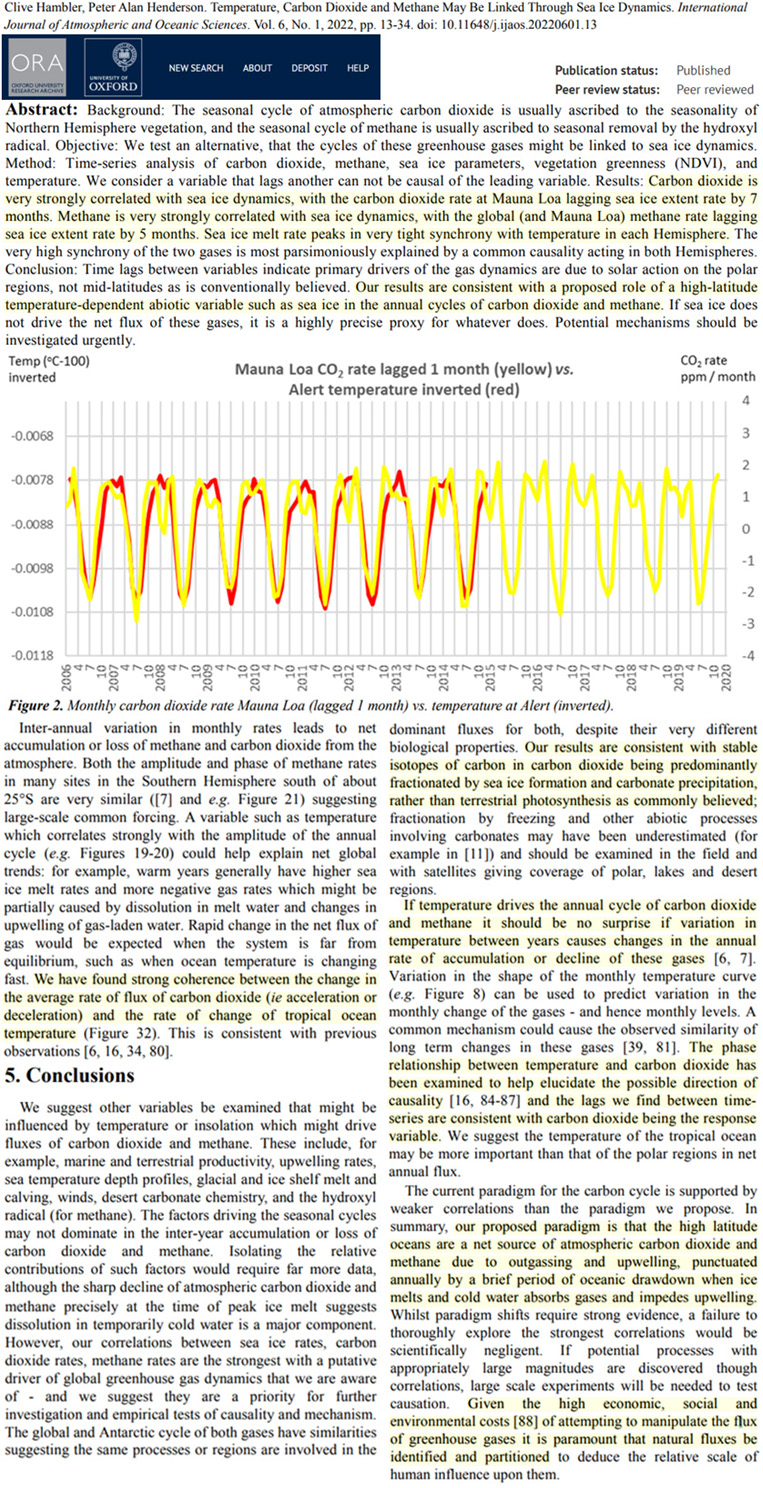
Annual carbon dioxide (CO2) and methane (CH4) change rates lag behind changes in sea ice extent by 7 months and 5 months, respectively. This robust correlation is consistent with the conclusion that CO2 (and CH4) changes are responsive to temperature, not the other way around.

It is commonly believed that the annual “squiggle” of the Mauna Loa CO2 cycle variations are driven by hemispheric seasonal contrasts in terrestrial photosynthesis.

But scientists (Hambler and Henderson, 2022) instead find it is variation high latitude temperatures affecting sea ice extent changes that dominate as drivers of the CO2 (and methane) annual fluxes, not photosynthesis.

They affirm temperature (T) changes lead CO2 change rates by about 7-10 months, suggesting the causality direction is T→CO2, and not CO2→T.

Temperature also drives sea ice peak melt vs. accumulation rates. This cause-effect directionality can also be clearly seen in analyses of sea ice flux vs. annual CO2 rate changes.

“The phase relationship between temperature and carbon dioxide has been examined to help elucidate the possible direction of causality and the lags we find between timeseries are consistent with carbon dioxide being the response variable.”
“Carbon dioxide is very strongly correlated with sea ice dynamics, with the carbon dioxide rate at Mauna Loa lagging sea ice extent rate by 7 months. Methane is very strongly correlated with sea ice dynamics, with the global (and Mauna Loa) methane rate lagging sea ice extent rate by 5 months. Sea ice melt rate peaks in very tight synchrony with temperature in each Hemisphere.”
Image Source: Hambler and Henderson, 2022

A Surprising Threat To The US Power Grid Could Plunge The Country Into Darkness


print-icon
print-icon

Tyler Durden's Photo

by Tyler Durden

Tuesday, Nov 01, 2022 – 10:45 PM

Authored by John Mac Ghlionn via The Epoch Times,

The importance of a strong power grid cannot be emphasized enough. Often, when a grid fails, the results are terrifying. Of all the major power grids in the world, the United States’ is one of the more vulnerable to attack.

State-sponsored hackers from the likes of Iran, Russia, and, unsurprisingly, China pose a real threat to the United States’ electrical transmission lines. However, there’s another (far less obvious) threat to the grid: electric vehicles (EVs).

Yes, you read that right.

The Biden administration is desperate to consign the internal combustion engine to the dustbin of history. In this radical shift to embrace a new, zero-emission world, Americans are being told to embrace EVs. Such an embrace, however, requires a stellar power grid, the very thing the United States lacks.

Just to be clear, the U.S. power grid (or electric grid) involves a huge network of transmission lines, power plants, and distribution centers. The United States has three major grids: the Eastern Grid, the Western Grid, and the ERCOT Grid, otherwise known as the Texas Grid. Of the three, the Eastern Grid is the largest.

Although the three grids can operate independently, they’re also connected. A failed grid means no power for tens of millions of citizens and prolonged periods of darkness. Imagine a power grid failure in the likes of Los Angeles or New York. The two cities are already riddled with crime; grid failures would make things many times worse.

Attacks Since 2016

In 2018, the Department of Homeland Security announced that Russian hackers had hijacked the control rooms of various electric utilities. This allowed the hackers to disrupt power flows and cause blackouts.

Rather alarmingly, the DHS conceded that the attacks had been occurring since 2016, the same year the Russians started attacking Ukraine’s grid. Although the Russians have strenuously denied the attack, such denials appear to conflict with reality.

As tensions between Russia and the United States escalate, and tensions between China, another hacker-friendly country, intensify, expect more disruptions to the grid.

A photo illustration shows a background of electric power infrastructure with an Apple iPhone showing an Emergency Alert notification from CalOES urging the public to conserve energy to protect health and safety as the electricity grid is strained during a heat wave in Los Angeles, Calif., on Sept. 6, 2022. (Patrick T. Fallon/AFP via Getty Images)

However, as mentioned, Americans must concern themselves with more “benign” threats. A recent paper, published in Applied Energy, discussed the threat of electric cars to the grid. Currently, there are 2.5 million electric vehicles in the United States; four in five owners opt to charge their cars overnight. This decision, according to the researchers, is putting a considerable strain on power grids.

By 2025, the United States will have more than 20 million EVs on its roads. By 2030, according to Bloomberg, more than half of car sales will be electric. The strain is increasing, and power grids are ill-equipped to shoulder the load.

If Bloomberg’s projection proves to be correct, then, as the researchers note, it will take 5.4 gigawatts of energy storage to charge EVs. To put 5.4 gigawatts into perspective, one nuclear power plant produces 1 gigawatt of energy. The United States currently has 55 power plants. To facilitate the new EV revolution, the United States requires many more. Considering California, the largest state in the country, has moved to ban the sale of gas-powered cars, and other states are considering introducing similar measures, the United States needs to get a move on. Time is very much of the essence.

What would happen if, say, the power grid was to fail in EV-crazed California? To answer that question, we need only rewind a few months. This past summer, plagued by scorching hot temperatures, the Golden State’s power grid came incredibly close to collapsing.

It survived, but only just.

The grid will be tested again. With California’s desire to push the sales of EVs, the next test could prove to be an unmitigated disaster. Energy is a finite resource, a fact that seems to be lost on so many EV enthusiasts.

A charging port is seen on a Mercedes Benz EQC 400 4Matic electric vehicle at the Canadian International AutoShow in Toronto on Feb. 13, 2019. (Mark Blinch/Reuters)

In truth, the nation’s power grid is already on its last legs. It has been for years. In a sobering piece for Smithsonian Magazine, Dr. Massoud Amin, a professor of Electrical and Computer Engineering (ECE) at the University of Minnesota, explained the many ways in which the country’s power grid, “the most complex” one ever assembled, could fail. The grid, he wrote, “underpins our economy, our quality of life, our society.” Without it, society will be brought to a screeching halt. Crime will rise. Lives will be lost. Chaos will reign supreme.

By 2025, according to the American Society for Civil Engineers, the inability of the United States to maintain its many power lines will cost the country dearly—$130 billion, to be exact. EVs, so often hailed as the best thing since sliced bread, come with a whole host of sizable problems.

Across the United States, as the author Ben Guess recently noted, there are currently 21 EVs per public charging port. By 2030, to keep up with EV purchasing trends, the United States must install almost 500 charging ports every day for the next 8 years.

Does this sound realistic to you?

Even if the United States does somehow manage to install enough ports, the grid simply isn’t strong enough to support the battery-related demands. This is a point that needs to be emphasized, repeatedly and unapologetically. Yes, state-sponsored hackers are a threat, but state-sponsored EV initiatives aren’t exactly harmless. In the blind embrace of all things green, we must not lose sight of the bigger picture, the objective realities that stare us straight in the face98,389267

Endocrinologist Forecasts More Hormone-Related Diseases as Spike Proteins Found to Deplete Endocrine ‘Reserves’


Endocrinologist Forecasts More Hormone-Related Diseases as Spike Proteins Found to Deplete Endocrine ‘Reserves’

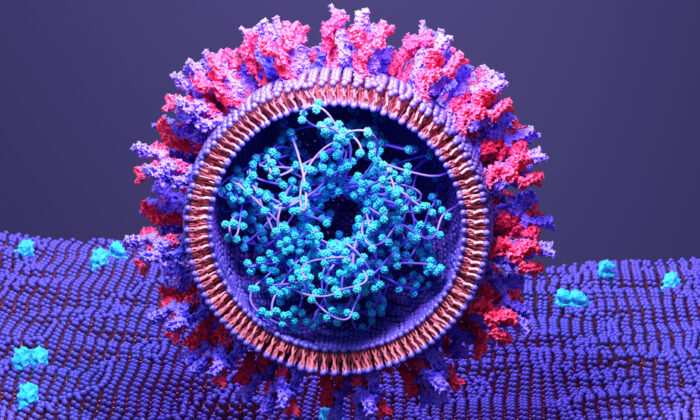
Rendering of SARS-CoV-2 spike proteins binding
                    to ACE2 receptors. (Shutterstock)

Dr. Flavio Cadegiani, a Brazilian endocrinologist, suspects that the worst has yet to come for spike protein-induced diseases in the endocrine system.

The endocrine system, colloquially known as the hormone system, is critical for our health. It regulates growth and development, mood, metabolism, reproduction, immunity, and functions of other organs through the secretion of hormones.

Hormones are one of the three biggest messengers in the body. Compared to the two other messengers—neurotransmitters and cytokines—hormones are slower in responding, and have systemic functions across the body rather than localized actions.

While cells can usually respond to neurotransmitters in milliseconds and cytokines in minutes to hours, cells that respond to hormones can take hours or even weeks.

Since hormones can have slow and systemic actions, a dysfunctional or damaged endocrine system will generally be slow in its symptom onset and recovery.

Studies have shown that spike proteins from COVID-19 infection and the vaccines can damage endocrine glands, including pituitary, thyroid, and adrenal glands, as well as reproductive organs, and many more.

Cadegiani raised a concern that the slower onset of endocrine pathologies may pose difficulties in diagnosis and treatment.

Depletion of Hormonal Reserves

Endocrine pathologies can take longer to become apparent because endocrine glands have “reserves,” according to Cadegiani.

“What we’re going to see in the future [for endocrine diseases] is a little bit different from the other fields, because glands have reserves and the decrease of the reserve will not be clinically seen right now, but it may be in the future,” said Cadegiani at a Front Line COVID-19 Critical Care Alliance (FLCCC) conference in Kissimmee, Florida.

Therefore, affected individuals may show no symptoms until their reserves have been depleted.

Cadegiani said that most of his concerns for the future are speculative and based his own clinical observations. But since the pandemic and the administration of COVID-19 vaccines began, there have been increasing reports that implicate endocrine pathologies.<img class=”size-medium wp-image-4577038″ src=”https://img.theepochtimes.com/assets/uploads/2022/07/05/endocrine–600×531.jpeg” alt=”Endocrine,Glands,Of,Human,Body,For,Male,And,Female,Including” width=”600″ height=”531″ /> (udaix/Shutterstock)

Hormonal Axis and Systemic Dysfunction

Hormones regulate the entire body, so once the reserved are depleted and underlying endocrine pathologies are unmasked, there may be cases of systemic dysregulations.

Endocrine glands control the function of many organs across the body, and each endocrine organ is also connected through a feedback loop, also known as a hormonal axis.

At the top of this chain is the hypothalamus, which is a diamond structure in the brain and acts as a master switchboard. It sends messages to the pituitary glands, a small, oval structure tucked behind the nose.

The pituitary gland is colloquially known as the master gland; it regulates other endocrine organs, together with the hypothalamus forming hormonal axes.

The pituitary gland is part of the hypothalamic-pituitary-gonadal (HPG) axis which regulates the reproductive organs including the ovaries and the testes. In females, it is responsible for regulating the release of ovarian hormones as part of the menstrual cycle, and in males the axis regulates spermatogenesis.

The hypothalamic-pituitary-adrenal (HPA) axis is a neuroendocrine axis that mediates the adrenal glands, an organ that produce hormones that trigger the fight or flight response. The fight or flight process is a stress response that occurs in response to harmful threats, and can reduce metabolism, suppress immune, as well as activate the sympathetic nervous system.

Another major axis is the hypothalamic-pituitary-thyroid (HPT) axis. This regulates the thyroids and the hormones it secretes. Thyroid hormones are essential for biological functions of growth, regulation of the cardiovascular system, bone replacement, liver function, and metabolism.

How Spike Proteins Target the Endocrine System

The spike protein is the most toxic part of the SARS-CoV-2 virus. Studies on people with long COVID and post-vaccine symptoms often detected spike protein presence months or even a year after the exposure.

Spike protein particularly favors tissues and organs that express ACE2 and CD147 receptors. Many endocrine glands display ACE2 receptors, including the pancreas, thyroid, testes, ovaries, adrenal glands, and the pituitary gland, making the endocrine system particularly vulnerable to SARS-CoV-2. 

The key driver behind spike protein-induced disease is inflammation.

Upon entering cells, spike protein can activate pro-inflammatory pathways by inducing DNA damage, inhibiting DNA repair, causing stress to the cell’s mitochondria, which is critical for cell energy production, and many more. All of this lead to cellular stress, injury, and possible cell death.

When many cells are affected, it can cause problems in tissues and organs, affecting individual endocrine glands and the system.

Spike proteins also inhibit autophagy, the cellular “recycling system,” thereby preventing the cells from clearing the toxic protein out, leading to prolonged damage.

Spike proteins may also contribute to autoimmunity. Since it shares many similarities with common human tissues and proteins—known as “molecular mimicry”—it has the potential to cause immune cells to mount an attack against its own cells and organs, leading to endocrine damage.

Several studies have reported on endocrine pathologies following COVID-19, though data on the exact damage is still emerging.<img class=”size-medium wp-image-1386171″ src=”https://img.theepochtimes.com/assets/uploads/2015/06/09/HiRes1-600×634.jpg” alt=”Epoch Times Photo” width=”600″ height=”634″ /> (ttsz/iStock)

Pituitary Glands

As the master gland of the endocrine system, the pituitary gland secretes many hormones, including ones that regulate other endocrine glands:

  • Adrenocorticotrophic hormone (ACTH) targets the adrenal glands and is responsible for producing cortisol, which stimulates the stress response
  • Thyroid-stimulating hormone (TSH) regulates the thyroid
  • Growth hormone (GH) is responsible for growth and metabolism
  • Melanocyte-stimulating hormone (MSH) boosts the production of melanin when exposed to UV rays and increases appetite
  • Anti-diuretic hormone (ADH) is responsible for retaining water and producing less urine
  • Luteinizing hormone (LH) follicle-stimulating hormone (FSH), prolactin (PRL) are important for reproduction
  • Oxytocin plays a role in childbirth, metabolism, and happiness

Studies in cell culture have shown that the spike protein is able to suppress the production of LH and FSH in pituitary cells, with unknown long term consequences in humans.

ACTH deficiencies have been observed following mRNA vaccination in Japan, with the person affected found to have a shrunken pituitary gland.

Cadegiani said that pathologies in the pituitary are difficult to diagnose; they are often masked by other conditions, therefore there is little literature on pituitary pathology presentation after COVID-19 vaccinations.<img class=”size-medium wp-image-2178578″ src=”https://img.theepochtimes.com/assets/uploads/2016/01/28/HiRes-600×473.jpg” alt=”Epoch Times Photo” width=”600″ height=”473″ /> The adrenals are a pair of glands shaped like Napoleon’s hat that lie just above the kidneys. (ttsz /iStock)

Adrenal Glands

There is published literature with data that may be used as evidence to suggest spike protein injury at the adrenal glands.

The adrenal glands, located above the kidneys, produce hormones responsible for the stress response. This includes adrenaline, cortisol, and aldosterone. The release of these three hormones are critical for maintaining energy and other needs during stressful situations.

Studies on COVID-19 have shown that the adrenal glands are major sites of SARS-CoV-2 mRNA accumulation and spike protein production.

The glands are also likely to be involved in post-vaccine myocarditis events that are often seen in young males. Cadegiani reasons that this type of myocarditis may be a sign of adrenal dysfunction.

Cadegiani authored a peer-reviewed study on post-vaccine myocarditis and concluded catecholamines are a main trigger for these events. Catecholamines are a group of neurohormones and includes dopamine, noradrenaline, and adrenaline.

While dopamine mostly acts within the nervous system, both adrenaline and noradrenaline play important roles in stress responses.

Adrenaline activates the fight or flight stress response and the noradrenaline supports the response by increasing heart rate, breaking down fats, and increasing blood sugar levels.

Intense and prolonged exercise trigger the fight or flight response, which is why catecholamines are usually elevated in athletes.  Males in particular tend to have higher levels of catecholamine. Testosterone is also suspected to play a role in the higher incidence of myocarditis following vaccination.

Stress responses increase blood pressure, stronger heart contraction, and when chronic, can increase the risk of cardiac events. 

Cadegiani linked catecholamines with myocarditis by analyzing autopsy reports in two teenage boys who died three to four days after mRNA vaccination from myocarditis events. Their heart damage was different from normal myocarditis pathology, with clear similarities with stress-induced cardiomyopathy; Cadegiani observed clear characteristics of catecholamine-induced myocarditis.

He hypothesized that vaccines triggered a hyper-catecholaminergic state by elevating levels of adrenaline, causing hyperactivation of adrenaline.

Studies on mRNA vaccinated athletes also found that after exercise, those who were vaccinated had higher heart rates and noradrenaline levels than those who were not vaccinated.

Dysfunctions in the adrenal glands are likely to lead to adrenal insufficiency.

Cadegiani hypothesized adrenal insufficiency–a condition that the adrenal glands become unable to produce enough hormones–to be a possible consequence of spike protein injury.

There is already a report of adrenal insufficiency following infection; in the case of long COVID where there are spike protein remnants, it is likely that the damage will be prolonged, possibly leading to chronic damage.

In the case of vaccines, a report evaluating spike protein production after COVID-19 mRNA vaccination found that the adrenal glands were one of the highest spike protein-producing tissues, and the spike protein production in these glands increased with time.

Current research has also shown that complications from thrombocytopenia as a post-vaccine symptom have led to adrenal hemorrhage and adrenal insufficiency.<img class=”size-medium wp-image-607252″ src=”https://img.theepochtimes.com/assets/uploads/2014/04/shutterstock_85250770thyroidWEB-ONLY-e1396903176772-600×401.jpg” alt=”Epoch Times Photo” width=”600″ height=”401″ /> The thyroid is a butterfly-shaped gland located in the the neck just above the collarbone. It secretes hormones that regulate many body functions including metabolism and cell growth. (Shutterstock)

Thyroid

The thyroid is a butterfly-shaped gland located over the throat. It has a lot of functions, primarily regulating growth and metabolism.

It makes two hormones, thyroxine and triiodothyronine. Deficiencies in triiodothyronine results in hypothyroidism, characterized by a large thyroid; over secretion of it can cause hyperthyroidism.

The thyroid also plays roles in regulating the immune system. COVID-19 infection is often a sign of underlying thyroid problems, and damage from infection can exacerbate thyroid problems, creating a negative cycle.

An autopsy study on 15 people deceased from COVID-19 found that 13 of them had viral RNA and proteins in their thyroid tissues. ACE2 receptors, previously thought to be not presented on the thyroid, were also detected, indicating a possible route for SARS-CoV-2 infection.

Though the research shows that thyroids can be implicated in infection, thyroiditis, which is inflammation of the thyroids, have currently only been reported in relation with the COVID-19 vaccine.

A study from Turkey stated that the COVID-19 vaccine can induce thyroiditis. The study evaluated 15 patients who developed thyroiditis following vaccination.

Four of the patients also developed Grave’s disease, which is an autoimmune disease and a complication of hyperthyroidism. Hashimoto’s disease, another thyroid autoimmune condition, has also been reported following vaccinations.

It is possible that spike proteins produced from vaccinations may attack the thyroid cells by binding to ACE2 receptors. However, looking at the high reports of autoimmune diseases, Cadegiani suspects that the pathogenesis of thyroid dysfunction is likely autoimmune. The spike protein has also demonstrated its autoimmune capacity due to high incidences of “molecular mimicry.”

Pancreas

The pancreas produces glucagon and insulin, two important hormones that regulate our blood sugar levels. Dysregulation of blood sugar levels are an indication of pancreatic dysfunction and may lead to complications such as diabetes.

Spike protein both from the vaccine and the virus have shown a potential to disturb glucose metabolism.

There have been reports of a sudden onset of type 1 diabetes, which is a form of autoimmune disease where the body attacks its own pancreatic beta cells.

A study evaluating EudraVigilance safety surveillance reports have also found reports of dysregulation of blood glucose with transient worsening of hyperglycemia reported after vaccinations.

Chronic hyperglycemia, meaning high blood sugar, is usually a sign of dysfunction in the pancreatic beta cells.

Therefore Cadegiani proposed that there could be a loss or malfunction of pancreatic beta cells as studies have shown that the spike protein is able to directly affect and damage these beta cells, likely resulting in their death.<img class=”size-medium wp-image-4754516″ src=”https://img.theepochtimes.com/assets/uploads/2022/09/26/AdobeStock_49502027-600×450.jpeg” alt=”Epoch Times Photo” width=”600″ height=”450″ /> Health of sperm relates to overall body health, Australian research has found. ( koya979/Adobe Stock)

Reproductive Organs

The harms of COVID-19 on male reproductive organs are well established.

A study from Thailand showed that in 153 sexually active men, around 64.7 percent experienced erectile dysfunction during COVID-19 infection, with 50 percent persisting in these symptoms three months after recovery.

Erectile dysfunction has been established in research to be due to dysfunctions of the endothelial cells, and the spike protein impairs endothelial cells.

Studies linking COVID-19 and erectile dysfunction have largely blamed it on the virus’s interaction with ACE2 receptors displayed on the surface of endothelial cells. Endothelial cells are abundant in ACE2 receptors, making it one of the most targeted in COVID-19 infections.

A study evaluating adenovirus DNA vaccines showed that cells exposed to the vaccines also produced spike proteins that could interact and bind with ACE2 receptors, suggestive of equal endothelial damage.

Since the vaccine rolled out in 2021, the CDC data reported 193 cases of erectile dysfunction following COVID-19 vaccination.

An Israeli study on sperm donations have also noticed a reduction by 15 percent in sperm concentration and 22 percent in motile sperm count following COVID-19 mRNA vaccination.

The authors confirmed in a later response (pdf) that the people tested had no underlying health conditions, and therefore the reduction could not be due to any underlying health conditions that were existent prior to the vaccination.

Though sperm count gradually made a recovery after 145 days, sperm concentration and motility did not return to pre-vaccination levels, with unknown long-term effects.

Concerns of reproductive problems have also been reported in women, most particularly after vaccinations rather than after infection.

Studies showed that men are generally at a higher risk of severe outcomes and deaths from COVID-19 infections; however, women seem to be at a higher risk of vaccine injury. 

VAERS data showed that over 60 percent of adverse event reports came from women, indicating that women are more vulnerable to post-vaccine symptoms.

Dr. Paul Marik, critical care expert, also observed that women were at a greater risk of presenting with post-vaccines symptoms in the clinic.

During the pandemic, many women reported menstrual abnormalities following vaccination. A study on Middle Eastern women found almost 70 percent of them reporting menstrual irregularities after vaccination.

A study funded by the National Institute of Health found a “temporary increase in menstrual cycle length” linked to the COVID-19 vaccination.

A study published on the website titled My Cycle Story reported over 290 women who have experienced decidual cast shedding after the COVID vaccines rolled out, even though less than 40 such cases have been documented over the past 109 years. This also indicated that many of the reproductive symptoms women were suffering from may be vaccine related, rather than related to COVID infections.

Cadegiani predicted greater adverse events in pregnancies for the coming future.

He cited a study that concluded “no association” between COVID-19 vaccines and fertility. The data however showed that unvaccinated women had a higher rate of pregnancy than the vaccinated, both for clinical and biochemical pregnancy.

The authors of the paper reviewed 10 studies and found that unvaccinated women have a clinical and biochemical pregnancy rate of 47 and 60 percent respectively, while the COVID vaccinated had a rate of 45 and 51 percent.

Cadegiani predicts more cases of endocrinopathologies as a result of spike injuries in the future.

“Endocrine diseases progress slowly and then only clinically appears in the severe states,” said Cadegiani. “So it’s not possible to tell this [anytime] beforehand.”

Marina Zhang

Marina Zhang is based in New York and covers health and science. Contact her at marina.zhang@epochtimes.com.