QUESTION: Mr. Armstrong, I really appreciate you are a student of law. I believe you should also write a book on the evolution of law for your understanding from the role of King Solomon on to our modern system deserves recognition. You seem to trace the fall of the rule of law and government is linked to the concentration of power into a centralized state. You have attributed the collapse of communism to that inability of a central power to adapt to the demanding conditions of the economic evolution of society. Would you care to comment on this development of centralized power and its critical role in the collapse of western society by 2032?
Thank you for your very enlightening research.
DH
ANSWER: The evolution of the rule of law is fascinating. The biblical account of King Solomon presiding over two women in dispute over a child goes over the heads of most people. Solomon’s duty as king was the center of that account. The king’s role was to stand as impartial ruler between disputes. If you killed someone in ancient Greece, the family was to be the prosecutor — not the state. The only crimes that warranted a state trial were those against the gods or directly against the state as the victim. Hence, Socrates offended the state by corrupting the youth and stating his position that there was really just one god.
Many have disagreed with Benjamin Jowett (1817 – 1893), who was a professor at the University of Oxford who translated the complete works of Plato into English. They argue that Jowett was a prominent theologian and he translated the Greek words θεός (theós), meaning “a god” or “a deity,” and δαίμων (daímōn), meaning “divine being,” as “God” with a capital G whenever possible. The criticism of Jowett’s translation making Plato and Socrates into Proto-Christians is itself based upon prejudice.
The Greek gods were NEVER represented as pagan gods insofar as they were the creators of humankind or the universe. To the Greeks, in the beginning, there was only chaos. Then out of the void appeared Erebus, the unknowable place where death dwells, and Night. All else was empty, silent, endless, darkness. Then somehow Love was born and brought a start of order. From Love came Light and Day. Once there was Light and Day, Gaea, the earth appeared. Clearly, the criticism that Jowett interpreted the Greek in view of Christianity is not correct.
Socrates did not believe in the Greek gods as creators of anything because he believed in “the Good” nature of humans. Some argue that you can believe in “the Good” while still believing in the gods. This centers on the misinterpretation of the very role of the Greek gods. They were viewed more as super-beings which we could call saints insofar as each had a specific role. Poseidon was god of the sea, earthquakes, storms, and horses and is considered one of the worst tempered, moody, and greedy Olympian gods. He was known to be vengeful when insulted.
Socrates was accused at his trial of teaching people not to worship the gods of the state. That was considered a crime against the gods, which made it a state offense. In the Apology of Socrates, Plato relays that Socrates said in the opening remarks of his speech to the jury that his accusers “… have scarcely spoken a word of truth at all.” The rest of the Apology and all Plato’s other dialogues seem to support this statement. They were against Socrates for the Oracle of Delphi had said he was the smartest man in all of Greece and made many appear to be fools. By the end of Socrates’s speech in the Apology, Plato makes it very clear that Socrates is, in fact, a very pious man who honors the gods of the state, holds the god Apollo in high esteem, and who trusts the word of the Delphic Oracle. The charges were clearly made up to be against the gods for there were no other means to go against Socrates.
We only arrive at the corruption of the law with Magna Carts in England. The king was fining people as a revenue source and here we find the demand for a trial by jury rather than by the king. In order to keep the revenue stream flowing, this is where we see the development of the violation of “disturbing the peace” of the king. Suddenly, two people get into an argument and fight. The king interjects himself as a victim for these two people disturbed his peace. From there on, the rule of law becomes perverted as a means of raising revenue for the king. If you kill someone, it is no longer the family who is the victim, it becomes the king. The penalty becomes death and that conveniently means all your assets are forfeited to the king and your family is thrown out onto the streets.
One of the most notorious English judges of all time was Lord Chief Justice George Jeffreys, 1st Baron Jeffreys of Wem, (1645–1689), who was the man that inspired the English Bill of Rights in 1689 and the insertion of the Cruel and Unusual Punishment Clause that became the Eighth Amendment in the United States. He is best known for the “Bloody Assizes.” Jeffreys created judicial murder routinely and took pleasure in doing so. He issued harsh sentences to nearly all defendants and in a protest against taxation and abuse of government, he ordered about 300 to be executed, and between 800 and 900 he ordered to be transported to the West Indies as convict laborers. On September 18-19th, 1685, Jeffreys alone sentenced 144 people to death earning him the notorious nickname “the hanging judge.”
Charles Hibbert in his work, the Roots of Evil, quotes from one of the court transcripts, on Christmas Day no less, when Jeffreys ordered:
“Hangman, I charge you to pay particular attention to this lady. Scourge her soundly, man; scourge her till her blood runs down! It is Christmas, a cold time for madam to strip. See that you warm her shoulders thoroughly.”
Roots of Evil. 1963 Ed p29
The British legal system was so corrupt that the slightest offense, even stealing an apple, resulted in the arrest and being sold into indentured servitude, all to profit the government. As Hibbert reported the sentence imposed read:
“Because you have committed this offence, the sentence of the court is that you shall no longer be burdened with the support of your wife and family. You shall be immediately removed from a very bad climate and a country overburdened with people to one of the finest regions of the earth where demand for human labour is every hour increasing and where it is highly probable you may ultimately regain your character and improve your future.” (Roots of Evil, p145)
Ever since the rule of law has been so perverted that it has devolved into simply legal and political persecution. Whenever you allow the political state to move into a centralized power, that is when justice merely becomes the will of the government, regardless of the form of government. Socrates believed in “the Good” of the people and he paid with his life for that mistake. Plato recorded a debate between Socrates and Thrasymachus. It was Thrasymachus who argued correctly that it did not matter the form of government. Once you allow a government to become centralized and thus powerful, justice ceases to exist.
Edward Gibbon in his Decline and Fall of the Roman Empire wrote of the Roman Emperor Commodus and the collapse in the rule of law:
“Each distinction of every kind soon became criminal. The possession of wealth stimulated the diligence of the informers; rigid virtue implied a tacit censure of the irregularities of Commodus; important services implied a dangerous superiority of merit; and the friendship of the father always insured the aversion of the son. Suspicion was equivalent to proof; trial to condemnation. The execution of a considerable senator was attended with the death of all who might lament or revenge his fate; and when Commodus had once tasted human blood, he became incapable of pity or remorse”
(Book 1, Chapter 4).
Hence the saying: “Absolute power corrupts absolutely!”
The rule of law has collapsed in Western society. They say God created the 10 Commandments, which we have translated into a billion laws. The greater the regulation, the greater the injustice. The very purpose of civilization ceases to exist because it merely becomes a contest between two philosophies with the left always seeking to suppress the right who simply wants to be free. This is ultimately why all governments are buried in a common grave dug by history.
Earlier today President Trump hosted a business luncheon with U.S. governors to discuss economic expansion and administration policy efforts to assist the states.
[Video and Transcript Below]
.
[Transcript] – THE PRESIDENT: Wow. Thank you. Thank you. (Applause.) Thank you very much. Thank you very much. Thank you. Thank you. It’s a great honor to have you at the White House, a very special place. Beautiful and so meaningful in so many ways. And our country has never done better. You’re all doing really well. Every state is doing well. I can say most every state in the room today is setting records. And we’d like to think that the federal government has been helping you a lot.
But it is wonderful being with you. And we had a great evening last night. And the talent of those musicians — they could be anywhere in the world. Many of them could work in the great opera houses, but they love the military.
When you heard the violins and the talent, the great talent — I don’t know if anybody has an ear for music. Believe it or not, a long time ago, I was told I have a great ear for music by somebody. (Laughter.) I took a test. They said, “He has a wonderful aptitude for music.” I said, “I do?” (Laughter.)
But when you listen to that, it’s really incredible, the talent. They’re great people. They want to be in the military; they don’t want to be anywhere else. So it’s really — really something.
As I said in my State of the Union last week, we’re in the midst of a great American comeback. With the help of many of the people in this room — and you’ve done, really, a fantastic job — I think I can say that just about everybody — I’ll say “just about,” just in case. Someday, somebody is going to run or do something that I won’t like, and I can have a little bit of an out when I say “just about.” (Laughter.) I said, “No, he was included in the ‘just about.’” But we’re creating the most prosperous economy and the most inclusive society ever to exist, actually.
Since my election, America has gained 7 million new jobs. We added 225,000 jobs in January alone, crushing expectations. The unemployment rate reached the lowest level in 50 years. And a statistic that’s incredible to me is: The average unemployment that we’ve had during this three-year period is the lowest in the history of our country. Compared to any other administration, the lowest in the history of our country. The unemployment rate for African American, Hispanic American, and Asian Americans have reached the lowest level ever recorded.
Low-income workers have seen a 16 percent pay increase since my election — something that’s so great to see. When I campaigned, they hadn’t had rate increases, pay increases for 20 years, 21 years. They were working three jobs and two jobs, and making less money than they made 20 years ago.
Median household income, as you all know very well, is the highest ever recorded, by far. Since 2016, 28 states have reached or matched their lowest unemployment rate on record. So we have 28 and you — I think, soon, we’re going to have just about everybody. And at the end of last year, a record 39 states had unemployment below 4 percent. Again, another record.
Just as I promised during my campaign, we’re fighting every day to expand opportunity for African American communities all across our country. African American youth — we have such great news on African American youth — unemployment has reached its lowest level ever recorded. It’s a great statistic. African American poverty rates have plummeted to their lowest rate ever in history. And wages for African American workers have increased $2,400 a year. That’s also a record.
At the center of our economic agenda are Opportunity Zones. I hope you’re embracing them. I think many of you are. My administration has worked with the governors in this room to create nearly 9,000 Opportunity Zones in our most vulnerable communities. Jobs and money are pouring into these areas that have never seen investment. I mean, they haven’t seen them in decades and decades and decades. And hundreds of millions of dollars are pouring into certain communities — individual communities. Hundreds of millions of dollars. And there’s never been anything like it: Opportunity Zones. Tim Scott did a great job on that. Senator Tim Scott.
I urge all governors to create a state-level version of our White House Opportunity and Revitalization Council to coordinate the efforts of state government to provide maximum support for the Opportunity Zones. And we’re there to help you. If you have a problem, call me. Literally, call me and we’ll work it out. But the Opportunity Zones — and that’s Democrat or Republican, by the way. Opportunities have been fantastic.
We must not stop until we have delivered equal and abundant opportunity for every community in our land. And that’s what’s happening.
To give former prisoners a second chance — this has worked better than any program ever — I was proud to sign the landmark criminal justice reform into law. And since that time, 10 states have passed legislation following our lead. And there were numerous states. I know Texas was there, Governor, with criminal justice reform. Amazing. And Kentucky and a few others that were thought of as being very strict states and yet they had criminal justice reform. We looked at a lot of what Texas did and some of the other states where it worked so well.
And Alice Johnson, as an example, she was in for 22 years and she had another 20 years to serve on something that — everything is bad, but to be in jail for 40 and 50 years for what Alice did on a telephone was crazy.
Thanks to our roaring economy, former inmates are now finding jobs. And the employers are so happy. Now, the economy is really helping, but it’s the first time ever where prisoners coming out of jail are finding jobs, loving it. And the employers — the feedback we’re getting from so many people, so many employers are: These are among the best people they have. And they were, in a way, forced by the economy, the good economy, because it’s hard to get people. Down to 3.5 [percent] and actually, it went to 3.6 [percent] because we’re opening up the valve. They’re hiring more and more people. That was a positive. Two hundred and twenty-five thousand, as I said.
But the prisoners are now working and they’re doing a phenomenal job, for the most part.
Our booming prosperity is being fueled by our historic regulatory reduction campaign. In my first month in office, I imposed a “two-for-one” rule, requiring for every one new regulation, two old ones must be eliminated.
Well, that turned out to be — we went to four, we went to six, we went to eight. We had a period where we were at 22 to 1. Twenty-two to one. And we’re eliminating, on average, $3,100 in regulation costs per family a year. Nobody has ever even heard of such a thing.
And we’re getting housing built too. We have rules and regulations — made it impossible. I hope California gets their act together because the cost of regulation is almost the cost of a house. And they need housing, and they can’t — they can’t build it. They don’t know what they’re doing.
The Governors’ Initiative on Regulatory Innovation is designed to continue our unprecedented progress through straight — state-level deregulation.
Governor Doug Ducey has achieved 3 for 1 on cuts. Where’s Doug? Good job, Doug. (Laughter.) Well, you only won by about 17 percent, so, you know. He should be — in fact, at 17 percent, you should be at 4 to 1, I think. Right? (Laughter.) That was a big win. A big win. That was a great win.
And Governor Kevin Stitt of Oklahoma has reached 2 for 1 and going to 3 for 1. Where’s Kevin? Hi, Kevin. Good job. Great.
We’re also working together — and many of you in the room have done much better than 1 for 1. Some of you, you’re up to four.
We’re also working together to reform occupational licensing. Just this year, at least 12 governors have taken action to reduce burdensome occupational licensing requirements. That means licensing, where either it’s unnecessary or where you actually can do it very quickly. There are some licensing requirements that takes years to get approved, and it could take a matter of days. Could take a matter of days.
Governors understand the need to get infrastructure projects quickly approved. To speed up permitting and reduce traffic conjection — congestion, last month, we issued a proposed new rule to reduce permitting and the permitting time for new infrastructure by more than 70 percent. Highways that were taking 12 years to get approved, 14, 15, 17, 21 years, we’re trying to get it down to one year. That means you may get rejected if you have an environmental problem or a safety problem. In many cases, these highways became much more unsafe and they took a long time because they’d try and get away from certain problems, including nesting. But they’d try and get away, and instead of having a straight run, they’d create curves in the highway, which obviously make it much more dangerous. And they had problems with some of those highways. And they’re much more expensive to build — not only the time — the design but the time. I mean, by the time they get it approved.
So we have highways that would take 21 years. We have roads that took 10 years, 11 years, 12 years to get approved. And Elaine Chao has been fantastic. Elaine, thank you very much. The job you’re doing at transportation, we appreciate it very much.
And, Jeff, you were over there for a long while, I will tell you, so I have to give you at least partial credit. Right now you’re at a different location. (Laughter.)
But you really did — you did a great job on that. And — so we have it down to two years now, but we — I think we’re going to get it down to one. And very good chance you’ll be rejected if it doesn’t meet environmental standards and tests.
And we are rescuing students from failing government schools by introducing the Education Freedom Scholarships and Opportunity Act, which will replicate the great success of tax-credit scholarships available in 18 states. We believe very strongly, or at least many of the people in this room — not all of them — but believe very strongly in school choice.
We’re also working closely with the states to improve public safety. This includes the incredible work being done by our nation’s heroic ICE officers. We’ve moved thousands of MS-13 out of the country, back to where they came from — whether it’s Guatemala, Honduras, El Salvador, Mexico.
And, as you know, we reached agreements with those countries so that we can do that. And the past administration, they wouldn’t accept them. They’d come from one of the countries, tough countries, and we would send them back and they wouldn’t take them. Not me. They take them now. Now they say, “Thank you so much for sending them back. We were looking for this killer. Thank you very much. We appreciate it.” But they all take them now. They take them very quickly.
Before, they used to say, “Don’t ever even think about landing that airplane. We don’t want those people.” So they take them back rapidly. Someday they’ll tell the real story as to why, but that’s the way it has to be. We have thousands and thousands of killers and gang members that we’re bringing back to countries that now accept them. They were not taking them back.
Last year alone, ICE officers arrested 120,000 criminal aliens charged with nearly 10,000 burglaries, 5,000 sexual assaults, 45,000 violent assaults, and 2,000 murders. You know, some of them we keep here when they — it’s very egregious. We don’t necessarily trust other people to take care of justice, so we keep them here. But, you know, we don’t like having people in our prisons for 50 years, 60 years. And we have to pay for it. And so, for the most part, we bring them back to their countries and give them a very bad recommendation.
State and local cooperation is the backbone of this effort. We have a tremendous relationship with many of the states and governments, cities. It’s essential that all of our states and cities honor ICE detainer requests to ensure that safe transfer of criminal aliens into federal custody takes place.
Jurisdictions that adopt sanctuary policies that instead release these criminals put all of Americans in harm’s way. A very, very, serious problem. I mean, we’re all here for the same thing. I know we have different policies, different feelings, different everything, but sanctuary cities are causing us a tremendous problem in this country.
We have stone-cold killers that they don’t want to hand over to us, and then they escape into communities and they cause, in some cases, tremendous havoc.
Another vital element of federal and state cooperation is the relentless fight against opioids and the drug epidemic. We’ve had great progress. We’re down 18, 19, 20 percent in some of the communities. The First Lady has been very much involved in that. Kellyanne has been very much involved in that. A lot of the people in this room — almost everybody in this room has been involved in it.
So — and I want to thank you for that. We’re making progress. Very tough. All over the world — this is a problem all over the world. This is a big problem here, but it’s a big problem almost everywhere.
For the first time in three decades, we’ve achieved a decline in drug overdose deaths, including, as an example, Ohio. Mike is around here someplace. Mike? Mike? Mike?
AIDE: He left, sir.
THE PRESIDENT: Twenty-three percent in Ohio. Nineteen percent in Pennsylvania. Ten percent in Wisconsin. And we’re averaging probably about 16, 17 percent. So it’s been — it’s not enough, but we’re making a lot of progress. And if we had more help in Congress, we could get it even lower.
My administration is truly grateful for the leadership, cooperation, partnership, and friendship of the governors in this room. No matter our party, we must work together and really do the job. And I think that’s what’s happening. Our country is now receiving thousands and thousands of companies that are coming into the United States. Some had left and some had never been here before, but they all want to be where the action is.
We lost 60,000 plants and factories over the years. Sixty thousand. It’s hard to even conceive. And we’ve got many of them back, and many are coming back. And they’re moving to a lot of your states. I know a lot of them are coming into Texas and Florida and a lot of different locations — South Carolina, North Carolina, Pennsylvania. It’s incredible what’s happening. Ohio is a big beneficiary. Michigan is a tremendous beneficiary, with the car companies. Tremendous. Somebody was saying they’re so happy in Michigan.
And I meet with Prime Minister Abe of Japan. I say, “You have to — Shinzo, you have to get more car companies here. We have a deficit with you. You have to get them in.” And they are — they’re sending a lot of companies. We hadn’t built a plant in years and years and decades, frankly. And now we have car plants being built all over the United States. And we have expansions — a lot of expansions of existing plants.
So it’s been, really, an incredible thing. We’re doing incredible work. And we’re the number-one country in the world right now, in terms of the economy.
When I was running, and long before I was running, I’d always heard that China — I have great respect for President Xi and great respect for China, frankly — but that China was going to be the number-one economy in the world during 2019. Actually, it was 2018, 2019. You all heard it, that we were going to go to number two.
And I will tell you, we had our battle. And we took in hundreds of billions of dollars in tariffs and other things. And you saw the — it was just announced the trade deficit was the lowest it’s been in years with China. It just happened two days ago. They just announced.
But we are now so far ahead of China, in terms of the size of our economy, that if somebody is smart that’s at this position for times into the future — hopefully, after five years — I won’t joke by saying “nine, thirteen, fifteen.” (Laughter.) It drives them crazy — for the governors. It drives them crazy. (Laughter.) Even when I joke, it drives them crazy, so I won’t say that. But if somebody smart is in this position, it’ll never happen where China overtakes us. It’ll never happen.
So we, right now, have — we’re so far ahead of them. They’re not catching us for a long time. If the wrong person stands here or sits in the White House — that beautiful chair in the White House, in the Oval Office — sure, they’re going to — you know, they’re going to catch. They have 1.5 billion people; we have 350 million people. But we have a very special place and a very special country, and nobody is going to catch us if we have great leadership. And you have been great leaders for your states, and we appreciate very much that you’re at the White House. Thank you very much.
So what we’re going to do is — I thought maybe we could take a few questions. If you want, we could leave the press there. The press would love that, I’m sure. Or we could have them leave and we could talk in a different fashion. You won’t have to showboat. (Laughter.)
So would anybody prefer — we’ll leave them here for a little while, and then we’ll go a different route perhaps. Any questions, please? Please.
GOVERNOR PARSON: Mr. President, (inaudible) do you feel like your infrastructure? You’ve got a budget coming out, I think, today. Where are you going to be on infrastructure?
THE PRESIDENT: We’re doing a big infrastructure potential deal. We need — obviously, we need help from — we need the votes of Democrats. They’ve been so focused on something else and wasting a lot of people’s time, although my poll numbers have been driven way the hell up, so that’s one way to do it, I guess.
But they have been so focused on the impeachment hoax that they haven’t had time to do anything else. But we’re ready to go with a big infrastructure bill if they’re ready to approve it. We’re also ready to lower drug prices very substantially. We did — last year was the first time in 51 years that drug prices — prescription drug prices — went down. First time in 51 years.
But to get them really down, we have to do exactly what we’re doing. We’re — we have — we need the votes of the Democrats, and they just didn’t have the time to do anything. So maybe they will now have the time.
But we’re all ready to go on infrastructure, on reducing drug prices very substantially. We can reduce drug prices unbelievably easily and substantially, but we have to get Democrat votes. Okay?
Thank you. Thank you, Governor. Please.
GOVERNOR RICKETTS: Mr. President, you’ve had a lot of successes on trade — USMCA, China, and Japan. What’s next on your agenda for trade?
THE PRESIDENT: So, Europe has been treating us very badly. European Union. It was really formed so they could treat us badly. So they’ve done their job. That was one of the primary reasons. But they treat us badly there and they treat us badly, frankly, on NATO. But NATO, I’ve gotten, as you know, $130 billion more they will pay.
Because NATO was going down like a rocket ship. Our past leaders would go over, make a speech, and leave. I went over, made a speech, and said, “You got to pay more.” Because the United States was paying everything. Essentially, they were paying close to 100 percent. And I let them know: “You have no choice.” And they are paying more. They paid $130 billion.
I think my biggest fan in the whole world is Secretary General Stoltenberg, head of NATO. And he said he can’t believe it, because for 20 years it went down. It’s like a roller coaster dip. No — none of this; just down. They paid less and less and less. And it got more expensive and more expensive with time.
But I raised $130 billion my first meeting, and I raised $400 billion the second meeting. So now it’s in good shape. But, you know, we were taken advantage of by a lot of countries — a lot of allies, frankly. Sometimes allies do a better job on you than the enemy, because the enemies you watch out for, right?
So, Pete, I think that the next thing could be Europe where we talk to them very seriously and they have to do it because they’ve — there’s been a — over the last 10, 12 years, there’s been a tremendous deficit with Europe. They have barriers that are incredible. I didn’t do — I didn’t want to do them while we were doing China, Japan, South Korea. You know, I didn’t want to do the whole world at one time. Does that make sense? (Laughter.) People have learned that doesn’t work out too well, even on trade.
So we’re going to be starting that. They know that. They know that. They’re ready for it. You know, we made a good deal with Japan. We’re going to do a bigger, much more comprehensive deal. But we’re taking in $40 billion from Japan, which they didn’t expect. Nobody expected. We’ve done great on the trade. It’s going to have a tremendous impact.
Now, the virus that we’re talking about having to do — you know, a lot of people think that goes away in April with the heat — as the heat comes in. Typically, that will go away in April. We’re in great shape though. We have 12 cases — 11 cases, and many of them are in good shape now. So — but a very good question.
Yes, please. Colorado.
GOVERNOR POLIS: Yeah. You mentioned deporting criminal aliens. What about also — what are your ideas for fixing it for the — for the, kind of, for the DREAMers and the folks who are here that are hardworking? And, you know, it’s really tough out there, and they work on our farms, and the kids who grew up here. And how do we do that, and at the same time you’re also, kind of, enforcing the other side for those who violate our laws?
THE PRESIDENT: Well, we almost had a deal on that with the Democrats, as you know. It was done. And then we lost the decision, and the Democrats said, “Trump? Who’s that? Trump? Who’s that?” But we were very close to having a deal on the DREAMers with the House and with the Senate. It would’ve been a very good deal for everybody.
So we’re looking at that, but now we’re before the Supreme Court. I think we’re going to win, because if we don’t win, that gives the President of the United States unbelievable powers.
You know, President Obama signed that bill. It was an executive order. And when he signed it, he said — essentially, he said, “I don’t have the right to do this, but I’m going to do it anyway.” And he was upheld by a judge. And anyway, it will be before the Supreme Court pretty soon. And at some point, I think we’ll probably make a deal on that. I do feel that way. Okay? Good question.
A question? Yes, please, Gary.
How’s Mitt Romney?
GOVERNOR HERBERT: I haven’t talked to him.
THE PRESIDENT: You keep him. (Laughter.) We don’t want him. Go ahead.
GOVERNOR HERBERT: States are used to —
THE PRESIDENT: Doing a great job in Utah, by the way. Go ahead, Gary.
GOVERNOR HERBERT: States are used to balancing the budget. So I think, by and large, we don’t spend more than we take in. And I know you’ve unveiled your budget today, and I know there’s — a concern for you is the growing debt.
THE PRESIDENT: Yeah.
GOVERNOR HERBERT: I know we’ve had nonpartisan economists talk to us as governors saying this is going to come back to bite us in the future if we don’t do something about it.
THE PRESIDENT: Yeah, I agree.
GOVERNOR HERBERT: What are we doing, and how can we get to a more balanced budget — certainly reduce the debt as opposed to continuing to grow the debt?
THE PRESIDENT: So we’re putting out a plan today that, over a period of — not that long a period of time, brings our budget and our deficit down to what it should be, which is close to zero. And I think people are going to be very impressed by it.
We’re not touching Medicare. We want to keep Medicare. We’re not touching Social Security. We’re making our country stronger again. We’re not decreasing Medicaid. But we’re doing a lot of things that are very good, including waste and fraud — tremendous waste and tremendous fraud.
So we’re doing that, in terms of certain programs. And we’re taking good care of our military. We’re increasing spending on our nuclear program because we have no choice — because of what China is doing, what Russia is doing in particular. And so we have a very big number in for that.
Now, at the same time, Russia and China both want to negotiate with us to stop this craziness of spending billions and billions of dollars on nuclear weapons. But the only way, until we have that agreement — the only thing I can do is create, by far, the strongest nuclear force anywhere in the world, which, as you know, over the last three years, we very much upgraded our nuclear.
But we’re buying new. We have the super-fast missiles — tremendous number of the super-fast. We call them “super-fast,” where they’re four, five, six, and even seven times faster than an ordinary missile. We need that because, again, Russia has some. I won’t tell you how they got it. They got it, supposedly, from plans from the Obama administration when we weren’t doing it. And that’s too bad. That’s not good. But that’s how it happened. And China, as you know, is doing it.
So we have a tremendous $740 billion for military. But again, it’s also jobs in the United States. So it’s — you know, everything is made in the United States, proudly. And we have the best in the world. We have the best equipment in the world. The best missiles, planes, rockets. Everybody wants our equipment. We have to be very selective, obviously.
But we’re — we’re going to have a very good budget with a very powerful military budget because we have no choice — okay? — about that.
Ron, do you have something about, for instance, your plan of buying and cutting prescription drugs? You want to tell them what we’re doing?
GOVERNOR DESANTIS: Well, so we had a panel about the — your administration’s approval under an old 2003 law that prior administrations did not utilize to allow safe and affordable drugs to be imported from Canada. So that’s going through the regulatory process.
We, in Florida, are working our own parallel track. As soon as your rules are done and in place, you know, we’re looking to buy. And, you know, we can save a lot of money just for things like our prison system —
THE PRESIDENT: Right.
GOVERNOR DESANTIS: — because the drugs are a lot cheaper.
So we think there’ll be good savings here. But I think it opens up a larger conversation, which I know you want to have, about: Why are we funding the drugs for everyone in the world?
THE PRESIDENT: Right.
GOVERNOR DESANTIS: You know, Americans want relief and I know you’ve fought hard for that. But thanks for approving the Florida program.
THE PRESIDENT: You can go — and Colorado is doing that also — you can go to certain countries, and the exact same pill, made in the exact same plant, factory — wherever it may be — from one of the big companies will sell for 50, 60, 70 percent less than the United States is paying, because it’s broken; it’s a broken system.
And so one of the things I’ve authorized is that certain states have requested — probably after this, everybody in this room will go back — (laughter) — but if we buy from Canada, you’ll save 50 percent at this moment.
Now, that may go up or everything may come down. One thing is going to happen or another. Either the drug companies are going to raise it and not make it possible to buy. They’re going to raise it in Canada, meaning so you won’t be able to do it, or everyone is going to go down. Because you have a middleman in the middle that are making a fortune. Nobody knows who these people are, but they’re getting rich. Because we had a broken system and it’s about time it gets fixed. So a lot of — a lot of shakeup is going to take place.
But if we had Democrats helping us, we could solve this problem in one day, but they don’t want to vote again. They don’t have any time to vote. They don’t have any time to do anything other than what they do. So they seem to be freed up a lot now. They’re freed up a lot, actually, I hear.
How about a couple of more and then we’ll let the press go and relax and take it easy? (Laughter.)
Please, Governor.
GOVERNOR ABBOTT: Your administration has done a — your administration has done a great job with regard to addressing the opioid crisis.
THE PRESIDENT: Thank you.
GOVERNOR ABBOTT: An aspect about that is the growing problem of fentanyl, especially fentanyl coming across the southern border.
THE PRESIDENT: Right.
GOVERNOR ABBOTT: And it is my understanding that there’s some information about a lot of that coming from China.
THE PRESIDENT: Yes.
GOVERNOR ABBOTT: What I’m curious about is what the status is with regard to the reduction of fentanyl coming from China and our ability to corral that and to reduce that.
THE PRESIDENT: So, as you know, it’s gone down. I met with President Xi on the trade deal. And I said, “You have to stop fentanyl coming into our country. You have to do me a favor and stop it. You have to get it stopped.” It has to end — because it’s a favor for our country. And we’re losing thousands and thousands of people to fentanyl. I mean, the size of a pinhead can kill a lot of people. It’s unbelievably bad. And they send it direct and they send it through Mexico and through the border. And we would catch a lot of it, but even if a little bit got through, it’s a very deadly drug.
And they have cut it way back. And they’ve also criminalized — it wasn’t a criminal. They considered a corporate kind of a thing. It was a drug of a different nature. And now, they’ve put it into their criminal statutes. And criminal, in China, for drugs, by the way, means that’s serious; they’re getting a maximum penalty. And you know what the maximum penalty is in China for that. And it goes very quickly.
It’s interesting: Where you have Singapore, they have very little drug problem; where you have China, they have very little drug problem. States with a very powerful death penalty on drug dealers don’t have a drug problem. I don’t know that our country is ready for that. But if you look throughout the world, the countries with a powerful death penalty — death penalty — with a fair but quick trial, they have very little, if any, drug problem. That includes China.
But they’ve put fentanyl now into their — he’s working on that, and we’ve — it’s gone down a lot, as you know. They’ve put it into their penalty system, and people will be getting the death penalty in China now for fentanyl. That was a big thing. It’s not — it’s not part of the trade agreement, but it is part of the trade agreement. And they have acted on it.
Now, of course, they’re working on something else. And I think they’re doing a good job on that, on the virus. I had a long talk with President Xi — for the people in this room — two nights ago, and he feels very confident. He feels very confident. And he feels that, again, as I mentioned, by April or during the month of April, the heat, generally speaking, kills this kind of virus. So that would be a good thing.
But we’re in great shape in our country. We have 11, and the 11 are getting better. Okay?
It’s a great question. I think that fentanyl is a huge problem. It’s almost, at this moment, 100 percent made in China. And they are starting to enforce it on our behalf. We have a good relationship with China now. Probably the best we’ve ever had. Okay.
Okay, so I think what we’ll do — any other questions from the governors? Yes, please.
GOVERNOR HUTCHINSON: Mr. President, I want to thank you for giving the states more flexibility in healthcare, particularly. Last week, your Health and Human Services announced the Medicaid block grant —
THE PRESIDENT: Right.
GOVERNOR HUTCHINSON: — waiver authority for the states. Arkansas will be pursuing that. But I wanted to thank you for that and also ask you: In terms of your State of the Union Address, you talked about healthcare. Is there anything that we can expect this year in Congress, with an election year — is there anything that we can get done that you’re going to be a priority in Congress this year?
THE PRESIDENT: So we did a big thing on healthcare. We got rid of the individual mandate on Obamacare, which basically made Obamacare not Obamacare anymore. It was the most unpopular thing in Obamacare, and basically, you paid a lot of money for the privilege of not paying to have bad healthcare. And nobody wanted that. And we got rid of it. Big, big move.
And I had a choice: I can make — so it really isn’t Obamacare anymore, but I can — and we do — as you know, we left preexisting conditions and everything. We left it. Because preexisting will always have — and I think I can speak for Democrats too. But we are all going to have preexisting conditions. We are always going to make sure that that’s taken care of, the preexisting condition situation.
I think I can speak — I know I can speak for Republicans. I think I can speak for Democrats. It’s a — it’s a part of our society right now, and nobody is going to change it. If a law is overturned, that’s okay because the new law is going to have it in. The new law would replace the old law that was overturned. It would have preexisting conditions. So I think that’s important to say.
But one thing that we will be doing is, at least from a Republican standpoint — you have 180 million people out there that have great health insurance. They love it. Private health insurance. And we’re going to save it. Other people are thinking about terminating it, which is brutal for unions and others. So I don’t know how they’re going to get around that, but we’re going to be saving that.
But when I took over, I had a choice. We got rid of the most unpopular thing in Obamacare, almost got rid of Obamacare, but essentially we did. But now I said: Do we run it really well, or do we run it really poorly? Do we make everybody unhappy and blame the Democrats, or do we make people relatively happy with a bad law? It’s a bad law. Bad — it’s a bad policy. But do we make people relatively happy? And I chose — I felt I had an obligation to do the latter.
So it’s been working out pretty well, and it goes along, and we’ve done block grants. We’ve done a lot of different things with different states. And we’re tailor-made — really, it’s tailor-made for different states. We are doing thing for states. Some people want block grants, some people want something else. And we’re working with individual states, and I think governors are really happy and really surprised that we’re doing that.
I could’ve just cold-lined it and just said, “We’re not doing anything,” and everybody would be happy, everybody would be complaining. But I think the best thing for our country to do is the way we’re doing it, until we get a replacement for Obamacare, a full replacement, that’s going to be great.
And I would say this: If we change the House — if we get the House, the Republicans get the House back, we will have that; otherwise, we’ll just have to negotiate with the Democrats. And I think at some point they will come around and start negotiating these things, because they really are good.
So, media, thank you very much. We appreciate it and we’ll have a little more discussion. Thank you very much. (Applause.)
Thomas Jefferson was the primary author of the Declaration of Independence and the third president of the United States. Until recently, he was also one of the most widely revered people in U.S. history. Now, he is often spurned and reviled for racism, but the charges against him are highly misleading.
Abruptly Changing Views of Jefferson
For more than two centuries, the Democratic Party proudly traced its roots to Jefferson. In 2008, Wesley Clark, a former Democratic candidate for President of the United States, wrote: “Every year in most states, Democrats flock to their annual Jefferson-Jackson dinners. The emphasis is on Thomas Jefferson, of course, considered the founding father of the Democratic Party.”
From their very beginnings, Republicans also laid claim to Jefferson. The Republican Party, which was formed for the purpose of opposing slavery, was so-named because its founders considered their principles to be aligned with that of Jefferson and the party he formed, which was called the “Republicans.” and later the “Democratic Republicans.” The first Republican platform called for “restoring the action of the Federal Government to the principles of Washington and Jefferson….”
“All honor to Jefferson,” wrote Abraham Lincoln, for having “the coolness, forecast, and capacity, to introduce into” the Declaration of Independence the “truth” that “all men are created equal, that they are endowed by their Creator with certain unalienable Rights, that among these are Life, Liberty and the pursuit of Happiness.”
The 2007 World Book Encyclopedia contains an article by Ph.D. historian Noble E. Cunningham that states: “Jefferson molded the American spirit and mind. Every later generation has turned to him for inspiration.”
A mere decade later, longstanding and widespread admiration for Jefferson has turned to rejection and scorn in some major segments of society. Jefferson is now under blistering attack from professors, students, and others who say he was a racist. In April, some of these people even vandalized a statue of Jefferson at the University of Virginia, the school that he founded.
As recently as 2007, the history page of the Democratic Party touted Jefferson as “the first Democratic President.” This page has since been scrubbed of any reference to Jefferson. Now, the earliest president it mentions is Woodrow Wilson, a staunch segregationist and supporter of the Ku Klux Klan.
In 2017, the Democratic Party of Louisiana renamed its largest annual fundraiser from the “Jefferson-Jackson Dinner” to the “True Blue Gala” to “reflect the progress of the party and the changing times.” Likewise, the Democratic Parties of Connecticut, Arkansas, Iowa, Virginia, Missouri, and Colorado have all struck the names of Jefferson and Jackson from their major fundraising events since 2015.
In 2016, hundreds of professors and students at the University of Virginia condemned the university’s president, Teresa Sullivan, for quoting Jefferson while calling for “cooperation and civility” after the election of Donald Trump. This group of scholars and pupils wrote that they were “deeply offended” and “incredibly disappointed” that Sullivan used Jefferson “as a moral compass,” because he “owned hundreds of slaves” and said that blacks are “as incapable as children of taking care of themselves” and are “inferior to the whites in the endowments of body and mind.”
Those snippets from Jefferson reveal far more about the people who quoted them than they do about Jefferson, because they grossly misrepresent him.
“Incapable as Children”
Regarding the claim that Jefferson said black people are “as incapable as children of taking care of themselves,” his actual words, written in an 1814 letter, say something very different in context:
For men probably of any color, but of this color we know, brought from their infancy without necessity for thought or forecast, are by their habits rendered as incapable as children of taking care of themselves, and are extinguished promptly wherever industry is necessary for raising young.
In a nutshell, Jefferson wrote that people of all races would likely be reduced to dependency by being raised in slavery. In a 1789 letter, Jefferson detailed why he thought this:
“A man’s moral sense must be unusually strong, if slavery does not make him a thief. He who is permitted by law to have no property of his own, can with difficulty conceive that property is founded in any thing but force.”
“Many Quakers in Virginia seated their slaves on their lands as tenants. … These slaves chose to steal from their neighbors rather than work. They became public nuisances, and in most instances were reduced to slavery again.”
Jefferson emphasized that his understanding of these events was “imperfect,” because they occurred at a distance from him. Thus, he said he would be making a trip to investigate the situation in person.
In the same letter, Jefferson stated he had “no doubt” that black people “brought up, as others are, in habits of property and foresight” would be “good citizens.” This directly refutes the accusation that Jefferson viewed black people as incapable. In fact, he was commenting upon the harmful effects of slavery.
“Inferior to Whites”
Regarding the claim that Jefferson said blacks are “inferior to the whites in the endowments of body and mind,” he actually said this was his “suspicion only.” In the same work, Jefferson did write degrading things about the “superior beauty” of whites, the “very strong and disagreeable odor” of blacks, and the “improvement of the blacks” when they mate with whites. However, he expressed skepticism about many of his conclusions and later wrote that he wished to see a “complete refutation” of them and find that black and white people are “on a par.” He then added:
My doubts were the result of personal observation on the limited sphere of my own State, where the opportunities for the development of their genius were not favorable, and those of exercising it still less so. I expressed them therefore with great hesitation; but whatever be their degree of talent it is no measure of their rights. Because Sir Isaac Newton was superior to others in understanding, he was not therefore lord of the person or property of others.
Looking at these and other writings by Jefferson about race, it is clear that he struggled to make sense of the limited science and observations available to him. Furthermore, he was keenly aware that his knowledge was restricted, and hence, he largely avoided firm conclusions. As he wrote in a 1791 letter to the Secretary of the French Academy of Sciences:
I am happy to be able to inform you that we have now in the United States a negro, the son of a black man born in Africa, and of a black woman born in the United States, who is a very respectable Mathematician. … I have seen very elegant solutions of Geometrical problems by him. Add to this that he is a very worthy and respectable member of society. He is a free man. I shall be delighted to see these instances of moral eminence so multiplied as to prove that the want of talents observed in them is merely the effect of their degraded condition, and not proceeding from any difference in the structure of the parts on which intellect depends.
Slavery
Some people are willing to look past Jefferson’s ownership of slaves, because he was a product of his time. This, however, does not tell the full story, because Jefferson was ahead of his time in this respect. In the world in which he lived, Jefferson and other founders of the U.S. were unique in that they opposed slavery, despite the fact that it was widely practiced throughout history and across cultures.
Barack Obama and many others say that slavery is America’s “original sin,” but there was nothing original about it. Per the Encyclopædia Britannica:
“Slavery is known to have existed as early as the Shang dynasty (18th–12th century [BC]) in China. … Slavery continued to be a feature of Chinese society down to the 20th century.”
“Slaves have been owned in black Africa throughout recorded history. In many areas there were large-scale slave societies, while in others there were slave-owning societies. Slavery was practiced everywhere even before the rise of Islam, and black slaves exported from Africa were widely traded throughout the Islamic world.”
“Slaves were owned in all Islamic societies, both sedentary and nomadic, ranging from Arabia in the center to North Africa in the west and to what is now Pakistan and Indonesia in the east.”
“Slavery existed in ancient India, where it is recorded in the Sanskrit Laws of Manu of the 1st century [BC]. The institution was little documented until the British colonials in the 19th century made it an object of study because of their desire to abolish it.”
“Slavery was widely practiced in other areas of Asia as well. A quarter to a third of the population of some areas of Thailand and Burma (Myanmar) were slaves in the 17th through the 19th centuries and in the late 19th and early 20th centuries, respectively.”
“Slaves were also prominent in Scandinavia during the Viking era, 800–1050 [AD], when slaves for use at home and for sale in the international slave markets were a major object of raids. Slaves also were present in significant numbers in Scandinavia both before and after the Viking era.”
“Slavery was much in evidence in the Middle East from the beginning of recorded history. It was treated as a prominent institution in the Babylonian Code of Hammurabi of about 750 [BC].”
As John Jay, president of the Continental Congress, wrote, “Prior to the great revolution, the great majority or rather the great body of our people had been so long accustomed to the practice and convenience of having slaves, that very few among them even doubted the propriety and rectitude of it.”
In stark contrast to most of the world, Jefferson and other founding fathers saw slavery as evil and began a process of eradicating it.
In his original draft of the Declaration of Independence, Jefferson called the slave trade “a cruel war against human nature itself” that violated its “most sacred rights of life & liberty.” He accused the king of England of “suppressing every legislative attempt to prohibit or to restrain this execrable commerce.” However, the Continental Congress removed Jefferson’s anti-slavery language to preserve enough unity among the northern and southern colonies to survive a war against Great Britain.
In the early 1780s, Jefferson supported a plan to end slavery in Virginia, even though he felt that the peaceful coexistence of blacks and whites was not practical there because of “deep rooted prejudices entertained by the whites,” and “ten thousand recollections, by the blacks, of the injuries they have sustained.” Thus, he proposed to:
“emancipate all slaves born after passing the act.”
keep them “with their parents to a certain age, then be brought up, at the public expense, to tillage, arts or sciences, according to their geniuses.”
equip them “with arms, implements of household and of the handicraft arts, feeds, pairs of the useful domestic animals, etc.”
settle them in “such place as the circumstances of the time should render most proper.”
“extend to them our alliance and protection.”
In 1784, Jefferson drafted a law to prohibit slavery in all of the western states. It lost by one vote, and Jefferson wrote, “The voice of a single individual would have prevented this abominable crime from spreading itself over the new country.”
What a stupendous, what an incomprehensible machine is man! Who can endure toil, famine, stripes, imprisonment, & death itself in vindication of his own liberty, and the next moment be deaf to all those motives whose power supported him through his trial, and inflict on his fellow men a bondage, one hour of which is fraught with more misery than ages of that which he rose in rebellion to oppose.
As president in 1807, Jefferson signed into law an act “to prohibit the importation of slaves into any port or place within the jurisdiction of the United States.” The law also prohibited any U.S. citizen from building, fitting, equipping, loading, or otherwise preparing a slave ship.
Why, then, did Jefferson own slaves? He was born into a slaveholding family and inherited about 40 slaves when he was only 14 years old, because his father died. He later inherited slaves from his father-in-law and bought about 20 slaves in order to reunite families and fulfill labor needs. Jefferson owned about 600 slaves, freed two of them during his lifetime, freed five more in his will, and effectively freed three others by letting them escape.
Scholars have speculated as to why Jefferson did not free all of his slaves, but given what he heard about the ill fate of other freed slaves and his view that slavery robbed people of the self-reliance needed to survive in that era, it may have been that Jefferson felt trapped between his disdain for slavery and the hard realities of life at the time. To that effect, in 1820 he wrote:
I can say with conscious truth that there is not a man on earth who would sacrifice more than I would, to relieve us from this heavy reproach, in any practicable way.
Later Developments
A year before he died, Jefferson wrote that slavery was one of the “greatest anxieties” of his lifetime, but “the march of events has not been such” to end it “within the limits of time allotted to me.” Hence, he left this task to “the work of another generation.”
Four decades later, Jefferson’s vision became a reality when the U.S. Constitution was amended to prohibit slavery. The amendment, which banned “slavery” and “involuntary servitude, except as a punishment for crime whereof the party shall have been duly convicted,” echoed the words that Jefferson drafted to ban slavery in the west:
That after the year 1800, there shall be neither slavery or involuntary servitude in any of the said states, otherwise than in punishment of a crime, whereof the party shall have been convicted to have been personally guilty.
Many years later, Jefferson’s desire to see a “complete refutation” of the view that there are fundamental biological differences between human races came to pass due to the advances of modern science:
The science of physiology proved that all races have the same coloring pigment in their skin (melanin), and differences in skin color stem merely from the quantity of it.
The science of genetics showed that there is more genetic variation among the people of any race than there is between one race and another.
Medical experience demonstrated that the “transplantation of organs across racial groups can be performed without fear of an additional problem occurring as a result of some inherent difference between the donor and recipient races.”
Nationally representative tests on the mental capacities of children found “only minor racial differences” that “disappear with the inclusion of a limited set of controls.”
Standardized tests revealed that people of all races excel intellectually when they have competent schooling.
Jefferson didn’t have this scientific data, but his words and deeds still moved the causes of universal freedom and racial equality forward. Ironically, the same factions of society that slander Jefferson revere others who came after him and set these causes backwards. A prime example is Charles Darwin and his early supporters, who routinely declared that blacks were evolutionarily inferior to whites. For example, in an 1871 book entitled The Descent of Man, Darwin wrote:
At some future period, not very distant as measured by centuries, the civilized races of man will almost certainly exterminate, and replace, the savage races throughout the world. At the same time the anthropomorphous [human-like] apes … will no doubt be exterminated. The break between man and his nearest allies will then be wider, for it will intervene between man in a more civilized state, as we may hope, even than the Caucasian, and some ape as low as a baboon, instead of as now between the negro or Australian and the gorilla.
Biological arguments for racism may have been common before 1859 [when Darwin’s Origin of Species was published], but they increased by orders of magnitude following the acceptance of evolutionary theory.
This continues to the current day. A 2015 serial work about academic theories on Africa describes “a significant body of modern scientific literature” from “comparative and evolutionary psychology” claiming that “sub-Saharan African populations have, on average, very low intelligence….” This book also:
states that it is “by no means outside the mainstream in some fields of scientific research to claim that Africans are cognitively and/or culturally inferior specimens of humanity not fully evolved from earlier forms or left behind in the course of recent and rapid biological and cultural evolution.”
cites six sources to document that the “evidentiary basis” of such conclusions are “extremely poor….”
Yet, the University of Virginia celebrates a “Darwin Day,” and the first 100 Google results for Darwin Day University of Virginia show no criticism of this event. This, in conjunction with professors’ and students’ deceitful attacks on Jefferson, beg the question of the real basis of these attacks.
Given the leftist and anti-U.S. attitudes that prevail on many college campuses and in other segments of the public, and given the facts that Jefferson “molded the American spirit and mind,” wrote that people’s rights don’t come from government but from “their Creator,” statedthat government should “not take from the mouth of labor the bread it has earned,” and declared that the U.S. Constitution does not allow the federal government to create social welfare programs, it is understandable how Jefferson would become the object of their hatred and slander.
Addendum (6/22/18): In addition to Jefferson’s anti-slavery actions listed above, in 1783, he drafted a constitution for the state of Virginia that would have immediately stopped “the introduction of any more slaves to reside in this state” and outlawed the enslavement of anyone born after December 31, 1800.
On January 6 Christians celebrate the Feast of the Epiphany of our Lord. The word epiphany comes from the Greek word epiphainen and means “to manifest” or “to reveal.”
In the Catholic Church in the United States we observe Epiphany this year today, Sunday January 5th, rather than the actual date. So, some confusion for me as to which day to post this, so I am putting it up today, to be here for all to enjoy, whether you choose to observe today or tomorrow.
According to the Catechism of the Catholic Church:
The Epiphany is the manifestation of Jesus as Messiah of Israel, Son of God and Saviour of the world. the great feast of Epiphany celebrates the adoration of Jesus by the wise men (magi) from the East, together with his baptism in the Jordan and the wedding feast at Cana in Galilee.
In the magi, representatives of the neighbouring pagan religions, the Gospel sees the first-fruits of the nations, who welcome the good news of salvation through the Incarnation.
The magi’s coming to Jerusalem in order to pay homage to the king of the Jews shows that they seek in Israel, in the messianic light of the star of David, the one who will be king of the nations.
Their coming means that pagans can discover Jesus and worship him as Son of God and Saviour of the world only by turning towards the Jews and receiving from them the messianic promise as contained in the Old Testament.
The Epiphany shows that “the full number of the nations” now takes its “place in the family of the patriarchs”, and acquires Israelitica dignitas (is made “worthy of the heritage of Israel”) [CCC 528]. Taken from a post on NCR here.
The magi, also known as the Wise Men and the Three Kings, although the number was never specified in the Bible, came seeking the King because of a widespread belief that a universal king would come from the nation of Israel.
When Jesus was born in Bethlehem of Judea,
in the days of King Herod,
behold, magi from the east arrived in Jerusalem, saying,
“Where is the newborn king of the Jews?
We saw his star at its rising
and have come to do him homage.”
When King Herod heard this,
he was greatly troubled,
and all Jerusalem with him.
Assembling all the chief priests and the scribes of the people,
He inquired of them where the Christ was to be born.
They said to him, “In Bethlehem of Judea,
for thus it has been written through the prophet: And you, Bethlehem, land of Judah,
are by no means least among the rulers of Judah;
since from you shall come a ruler,
who is to shepherd my people Israel.”
Then Herod called the magi secretly
and ascertained from them the time of the star’s appearance.
He sent them to Bethlehem and said,
“Go and search diligently for the child.
When you have found him, bring me word,
that I too may go and do him homage.”
After their audience with the king they set out.
And behold, the star that they had seen at its rising preceded them,
until it came and stopped over the place where the child was.
They were overjoyed at seeing the star,
and on entering the house
they saw the child with Mary his mother.
They prostrated themselves and did him homage.
Then they opened their treasures
and offered him gifts of gold, frankincense, and myrrh.
And having been warned in a dream not to return to Herod,
they departed for their country by another way.
Re Posted from Armstrong Economics Jan 1, 2020 by Martin Armstrong
According to Chinese Zodiac, the Jade Emperor said the order of the zodiac would be decided by the order in which they arrived to his party. The Ox was about to be the first to arrive, but Rat tricked Ox into giving him a ride. Then, just as they arrived, Rat jumped down and landed ahead of Ox. Thus, Ox became the second animal in the zodiac and the Rat the first.
From all the crew here at the The Conservative Treehouse, we wish you the best new year ever. Over the years you have laughed and cried, celebrated and prayed with us, not only for our country, our President, and many events that have brought this rag tab bunch together in mutual interest, but for each other and our families.
We wish you the very best today and every day to follow, and appreciate the fact that you are here with us.
Some of us believe in New Year’s Resolutions and some don’t. In the past I have devoted a lot of time to coming up with too many things to put on my list. These past years I have greatly pared it down to a few things.
After that I looked underneath the one or two things most important to me, to see if I could think about specific things to bring about the end result I wanted, and work on basics.
This year I have yet another approach, but it is really hard to put into words and share. A few weeks ago our priest suggested (and of course I am paraphrasing his idea here, but trying very hard to stick to his meaning) that we limit God with our idea of who He is, what He is capable of, what His plans ought to be.
Because we are small, timid, afraid spiritually, and most of all perhaps, afraid to really trust Him enough, we stick to really little things, we approach the perimeters of His greatness, glory, mercy, and wonderful design, for us, for all humanity, for all of history, unfolding now and forever.
Despite constant evidence that great things are accomplished by people just exactly like you and me, despite the two thousand year history of Christianity, despite the ages old history of God’s faithfulness to His people, we cower and rarely venture out in faith, in hope, in charity, fully clothed in the power that is ours to call on.
This year I am going to work on changing my vision. Can’t say that today or any other day it will be a done deal, but I am going to try to remember to ask God not only for what might be no trouble for Him, some little thing that is likely to come my way anyhow. And nope, it won’t be asking to win the lottery or something along those lines.
I am going to try to open my heart, give God my fears and insecurities and let Him help me grow into whatever He might intend. That isn’t really easy for me, because first of all, I am a control freak. Second, I naturally try to boss people around, and I think I am pretty good at logistics and getting things done. I like to plan things.
Most of all though, I read a lot, and observe things. Giving God control is not an easy thing, and there actually is a lot that can be scary about it. He has a habit of taking a lot of people where they don’t want to go.
John chapter 21, v 18 says:
* Amen, amen, I say to you,j when you were younger, you used to dress yourself and go where you wanted; but when you grow old, you will stretch out your hands, and someone else will dress you and lead you where you do not want to go.”
Now, I do not expect to be martyred as St. Peter was, and every other apostle except St. John, but I do think that God expects me to sacrifice myself to His work and plans, and I absolutely have no agreement or basis of understanding for the prosperity gospel folks.
As I read the Bible, I am told that Jesus expects me, tells me himself, to take up my cross and follow him. And I should do it joyfully because he promises to help make that burden light.
So, this year I hope to work to trust that promise, and learn that way. I really suck at that. I’ve pretty much failed every attempt, with a few exceptions, exceptions that were in fact gifts of pure grace from God, not my doing at all, just rare moments of me not getting in His way.
So, this year, I figure my best bet is to start everyday with the truth. Jesus, Father God, Holy Spirit, I am afraid, I can’t do this, but I believe you can. Help me, lead me, carry me today, for I have nothing to give, so please, please, help me empty myself and let you do the work. I am not sure I even have the ability to crack the door open God, so please, would you just come in and get started on me today?
You see, I might never be courageous, faith filled, or even able to say yes and do it, even in little ways. But I finally believe that I can just tell Him that and hopefully hang on for the ride.
I hope you will pray for me, as I will for you guys. Happy New Year. Ask.Big.Things.
I have long felt that life is like a series of links in a chain. You might be driving down the road and you hear a song on the radio, or see a picture, and you feel a memory…. Something that reminds you of a different time and place than where you are right now.
You reflect.
The memories you consider remind you of a totally different time in your life. Perhaps you lived in a different place. Perhaps you were surrounded by different people. Perhaps a different job or completely different friends.
You recognize those memories were constructed like frozen moments in time. They become individual links in the chain in your life.
We never actually realize, in the immediate moment, when one link closes, and another link begins. But when we look back, we can clearly see distinct points where things changed, the link closed, and a new link began. The links are only clearly visible in reflection.
As we reflect we find parts of the chain in our life where each link closes and connects with the other. A beginning, and an end.
At the point where the links are joined we carry parts of the previous link forward to the next.
For many people those connections are bonded by family, or very strong life long relationships. Connections which continue beyond our geographic moments, jobs, or temporary acquaintances.
But for everyone, the primary bonding agent brought forward from one link to the next is ourselves, our center, our values and core principles. Our beliefs.
The strength of the steel which comprises the links of our life is determined by forging in the fire of adversity, weakness, challenge, pain, loss, and painful growth. The steel is then cooled with the tears of triumph, hurdles overcome, and resolve.
The forging makes the steel stronger and able to withstand the pressures that accompany the additional length. Slowly the chain becomes wiser as it lengthens. Able to reach further, form more significant benefits, and become more useful.
Hope replaces fear. Love replaces loneliness. Success replaces adversity. These are successful links began and finished while contributing to the whole.
At times we may manipulate the links with avoidance. We hide from or choose to avoid an issue in our effort to begin a new link before the old one was naturally, and spiritually, prepared to be closed. Eventually as life continues, and the chain lengthens, the weak link can fracture and we are forced to revisit/repair what we originally chose to avoid.
You see, in life we cannot control the universal laws that guide us. So if we manipulate circumstances to avoid confronting our own weakness, we cannot fully strengthen our life of links. Eventually, the weakness of our past will impact our future.
So what principles do we carry from link to link? What core values and beliefs stay with us throughout the journey of our lives? The answers to these questions are what makes us human spiritual beings.
We possess freewill able to make choices about what we do, and how we define our individual humanity; but can we then define ’right’ and ‘wrong’ according to our individual principles? Or are there principles that exceed our influence and definition? Are there natural laws of right and wrong, good and bad, that cannot be subjected to the determination of man? These are the bigger questions, perhaps the more important questions, and yet perhaps the ones we reflect upon the least.
Consider the example of the ‘Law of the farm’ vs. the ‘Law of the School’. Natural principles vs. those made by man.
A student can skip class, take few notes, pay only half attention, then stay up all night cramming for a test and manage a decent grade. It depends on the students goal: grades or learning.
The student can choose to manipulate the education, by avoiding the learning and capturing the grade. This is possible in the ‘Law of the School’. However, a farmer cannot take short cuts. A farmer cannot avoid tending to the soil, preparing the seed, fertilizing and nurturing the crop, and still gain benefit of an abundant harvest. The farmer must necessarily do all of the appropriate work in order to benefit from it. Such is the ‘Law of the Farm’, the natural law.
When one considers the weakness remaining within a poorly constructed, and manipulated link, perhaps established by selfish choices and driven by avoidance and fear, one can be faithfully be assured those who have dealt dishonestly with us will have to visit the issues of their association again. No amount of manipulation or avoidance is going to improve the frailty of any link without first resolving the lack of character which created the weakness.
So we have choices in our lives. Decisions we each make regarding how we interact, and participate in the lives and links of others; As well as how we choose to construct the links that compromise our own lives. Do we base our sense of purpose around natural principles? Principles based on natural laws of right and wrong, good and bad, truth and lies.
Do we forge strong links based on following our heart, our values? If we can interact with others absent of a prideful self-driven agenda, or manipulative intent, we can then apply such principles and strength to our endeavors.
If we protect the integrity of the soil upon which we build the foundation of our lives, we can live without regret. If we fertilize and cherish our crop, and the crop of our neighbor with honesty and sincere appreciation for the souls we meet along our chosen path, we will live a life of abundance. If we tend carefully to the consideration of everyone, yet holding true to our values and principles, we can strengthen ourselves amid the face of adversity and disenchantment.
If we do not hide from, nor ignore, our individual and collective faults, we can build the chain of our life with strength, humility, and purpose.
I wish for each of you a long chain of bold, strong, beautiful links, polished with the reflective brilliance of Love…….. The very happiest of blessings for a brand New Year.
Because giving at Christmas is always better than receiving, isn’t it?
He woke suddenly and completely. It was four o’clock, the hour at which his father had always called him to get up and help with the milking. Strange how the habits of his youth clung to him still! Fifty years ago, and his father had been dead for thirty years, and yet he waked at four o’clock in the morning. He had trained himself to turn over and go to sleep, but this morning it was Christmas, he did not try to sleep.
Why did he feel so awake tonight? He slipped back in time, as he did so easily nowadays. He was fifteen years old and still on his father’s farm. He loved his father. He had not known it until one day a few days before Christmas, when he had overheard what his father was saying to his mother.
“Mary, I hate to call Rob in the mornings. He’s growing so fast and he needs his sleep. If you could see how he sleeps when I go in to wake him up! I wish I could manage alone.”
“Well, you can’t, Adam.” His mother’s voice was brisk. “Besides, he isn’t a child anymore. It’s time he took his turn.”
“Yes,” his father said slowly. “But I sure do hate to wake him.”
When he heard these words, something in him spoke: his father loved him! He had never thought of that before, taking for granted the tie of their blood. Neither his father nor his mother talked about loving their children–they had no time for such things. There was always so much to do on the farm.
Now that he knew his father loved him, there would be no loitering in the mornings and having to be called again. He got up after that, stumbling blindly in his sleep, and pulled on his clothes, his eyes shut, but he got up.
And then on the night before Christmas, that year when he was fifteen, he lay for a few minutes thinking about the next day. They were poor, and most of the excitement was in the turkey they had raised themselves and mince pies his mother made. His sisters sewed presents and his mother and father always bought him something he needed, not only a warm jacket, maybe, but something more, such as a book. And he saved and bought them each something, too.
He wished, that Christmas when he was fifteen, he had a better present for his father. As usual he had gone to the ten-cent store and bought a tie. It had seemed nice enough until he lay thinking the night before Christmas. He looked out of his attic window, the stars were bright.
“Dad,” he had once asked when he was a little boy, “What is a stable?”
“It’s just a barn,” his father had replied, “like ours.”
Then Jesus had been born in a barn, and to a barn the shepherds had come…
The thought struck him like a silver dagger. Why should he not give his father a special gift too, out there in the barn? He could get up early, earlier than four o’clock, and he could creep into the barn and get all the milking done. He’d do it alone, milk and clean up, and then when his father went in to start the milking he’d see it all done. And he would know who had done it. He laughed to himself as he gazed at the stars. It was what he would do, and he musn’t sleep too sound.
He must have waked twenty times, scratching a match each time to look at his old watch — midnight, and half past one, and then two o’clock.
At a quarter to three he got up and put on his clothes. He crept downstairs, careful of the creaky boards, and let himself out. The cows looked at him, sleepy and surprised. It was early for them, too.
He had never milked all alone before, but it seemed almost easy. He kept thinking about his father’s surprise. His father would come in and get him, saying that he would get things started while Rob was getting dressed. He’d go to the barn, open the door, and then he’d go get the two big empty milk cans. But they wouldn’t be waiting or empty, they’d be standing in the milk-house, filled.
“What the–,” he could hear his father exclaiming.
He smiled and milked steadily, two strong streams rushing into the pail, frothing and fragrant.
The task went more easily than he had ever known it to go before. Milking for once was not a chore. It was something else, a gift to his father who loved him. He finished, the two milk cans were full, and he covered them and closed the milk-house door carefully, making sure of the latch.
Back in his room he had only a minute to pull off his clothes in the darkness and jump into bed, for he heard his father up. He put the covers over his head to silence his quick breathing. The door opened.
“Rob!” His father called. “We have to get up, son, even if it is Christmas.”
“Aw-right,” he said sleepily.
The door closed and he lay still, laughing to himself. In just a few minutes his father would know. His dancing heart was ready to jump from his body.
The minutes were endless — ten, fifteen, he did not know how many — and he heard his father’s footsteps again. The door opened and he lay still.
“Rob!”
“Yes, Dad–”
His father was laughing, a queer sobbing sort of laugh.
“Thought you’d fool me, did you?” His father was standing by his bed, feeling for him, pulling away the cover.
“It’s for Christmas, Dad!”
He found his father and clutched him in a great hug. He felt his father’s arms go around him. It was dark and they could not see each other’s faces.
“Son, I thank you. Nobody ever did a nicer thing–”
“Oh, Dad, I want you to know — I do want to be good!” The words broke from him of their own will. He did not know what to say. His heart was bursting with love.
He got up and pulled on his clothes again and they went down to the Christmas tree. Oh what a Christmas, and how his heart had nearly burst again with shyness and pride as his father told his mother and made the younger children listen about how he, Rob, had got up all by himself.
“The best Christmas gift I ever had, and I’ll remember it, son every year on Christmas morning, so long as I live.”
They had both remembered it, and now that his father was dead, he remembered it alone: that blessed Christmas dawn when, alone with the cows in the barn, he had made his first gift of true love.
This Christmas he wanted to write a card to his wife and tell her how much he loved her, it had been a long time since he had really told her, although he loved her in a very special way, much more than he ever had when they were young. He had been fortunate that she had loved him. Ah, that was the true joy of life, the ability to love. Love was still alive in him, it still was.
It occurred to him suddenly that it was alive because long ago it had been born in him when he knew his father loved him. That was it: Love alone could awaken love. And he could give the gift again and again.This morning, this blessed Christmas morning, he would give it to his beloved wife. He could write it down in a letter for her to read and keep forever. He went to his desk and began his love letter to his wife: My dearest love…
The soaring arches of a cathedral and the high, pure voices of an English Christmas choir inspire Bill Whittle, Scott Ott and Stephen Green, to reflect on our inheritance in a western civilization that finds its fountain in immutable, enduring, divine principle. From the secular joys of Santa Claus, to the birth of the Christ, our treasure has endured, and they must not destroy it. See this show produced live aboard a Royal Caribbean cruise ship in May 2020, and meet a lot of people like you. Find out more, and reserve your cabin now at https://BillWhittleCruise.com Right Angle is a production of our Members: https://BillWhittle.com/register/ Listen to audio versions of this show: https://Bit.ly/BWN-Podcasts
I have created this site to help people have fun in the kitchen. I write about enjoying life both in and out of my kitchen. Life is short! Make the most of it and enjoy!
This is a library of News Events not reported by the Main Stream Media documenting & connecting the dots on How the Obama Marxist Liberal agenda is destroying America

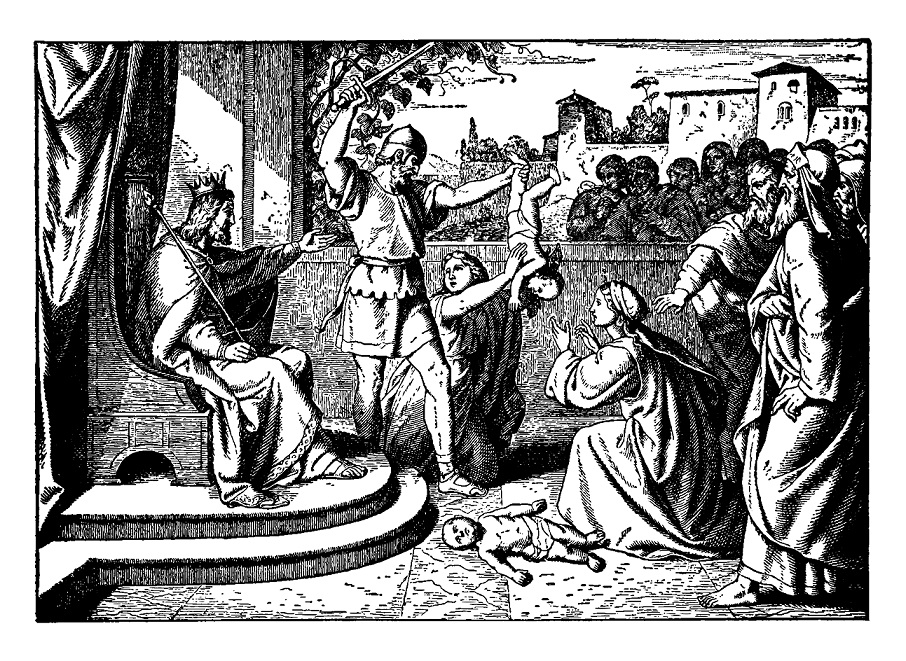
 Socrates did not believe in the Greek gods as creators of anything because he believed in “the Good” nature of humans. Some argue that you can believe in “the Good” while still believing in the gods. This centers on the misinterpretation of the very role of the Greek gods. They were viewed more as super-beings which we could call saints insofar as each had a specific role. Poseidon was god of the sea, earthquakes, storms, and horses and is considered one of the worst tempered, moody, and greedy Olympian gods. He was known to be vengeful when insulted.
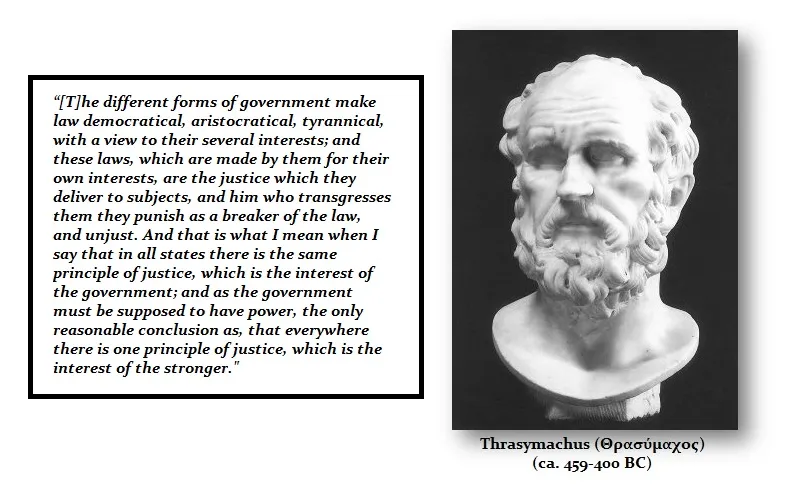
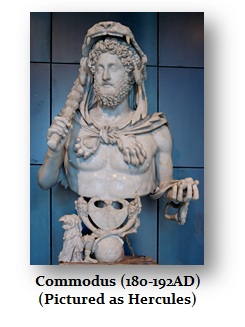






 Centinel2012