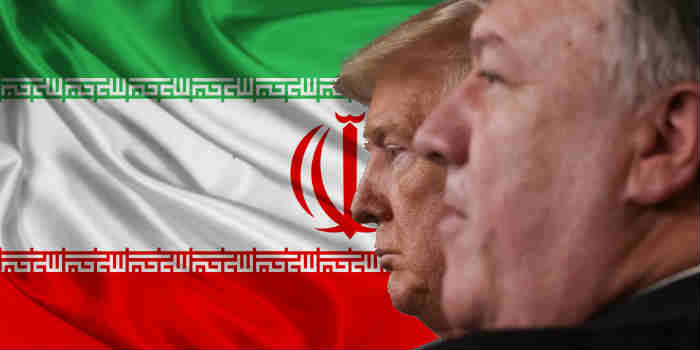
U.S. Tightens The Noose By Initiating Snapback of UN Sanctions Against Iran


“When the U.S. sanctions were violated, we enforced them. When UN sanctions are violated, we’re going to do everything we can to enforce them as well”

Joseph A. Klein, CFP United Nations Columnist image

Re-Posted from the Canada Free Press By  —— Bio and ArchivesAugust 25, 2020

U.S. Tightens The Noose By Initiating Snapback of UN Sanctions Against Iran

The United Nations Security Council disgracefully rejected the U.S. initiative to extend the UN arms embargo against the Iranian regime beyond its current expiration this October. As the U.S. Ambassador to the UN Kelly Craft said at the time on August 14th, “the United States stands sickened – but not surprised – as the clear majority of Council members gave the green light to Iran to buy and sell all manner of conventional weapons. History will easily trace the path of leadership in this era, and unfortunately it will not go through the UN Security Council.”

Iranian Defense Minister General Amir Hatami made the Iranian regime’s malevolent intentions crystal clear. “We have made it known that we are ready to provide high-quality and appropriately-priced weapons and equipment to countries that need this,” he said on August 18th.

Iran: World’s leading sponsor of terrorism

Ambassador Craft promised that the United States would not give up trying to prevent the world’s leading sponsor of terrorism from gaining unfettered access to the global arms market.

UN Security Council Resolution 2231, which endorsed the disastrous nuclear deal with Iran known as the Joint Comprehensive Plan of Action (JCPOA), lifted various nuclear-related UN sanctions against Iran that had been imposed in previous Security Council resolutions. The Security Council took this major UN sanctions relief step upfront in contemplation of the Iranian regime’s continuing compliance with its commitments under the JCPOA. Resolution 2231 provided a mechanism for those previous resolutions, with their accompanying prohibitions imposed on Iran, to “snap back” in the event of Iran’s breach of the JCPOA.

Iran has committed multiple material breaches of its JCPOA commitments relating not only to arms transfers and missile tests, but also to its core nuclear-related commitments regarding nuclear enrichment levels and access for international inspections. As one of the original participants in the process leading up to the full implementation of the JCPOA in reliance on Iran’s commitments, the United States has every right to initiate snapback of the provisions of previous Security Council resolutions that had been in place prior to January 2016, regardless of whether the U.S. has the support of other countries that are parties to the JCPOA or otherwise.

On August 20th, Secretary of State Mike Pompeo personally delivered letters to both UN Secretary General Guterres and to the president of the Security Council initiating the snapback process, leading to the restoration of virtually all UN sanctions on Iran lifted under UN Security Council Resolution 2231. “America will not appease,” Secretary Pompeo told reporters at UN headquarters in New York. “America will lead.”

U.S. has not violated any legally binding obligations imposed by Resolution 2231

The snapback is supposed to take effect in 30 days from notification of an issue involving “significant non-performance of commitments under the JCPOA,” according to the process outlined in Resolution 2231, unless a Security Council member or the President of the Security Council introduces a draft resolution beforehand that is passed to extend the sanctions relief on Iran. Such a draft resolution would not pass, however, as long as President Trump remains in office. The United States would be able to veto such a draft resolution, allowing the snapback to proceed into effect automatically.

Opposition to the U.S. initiative from China and Russia is to be expected. It is disappointing to say the least, however, that the Western European permanent members of the Security Council, France and the United Kingdom, have also come out publicly against the U.S. on invoking the snapback process. Then again, Western European countries are not known for their moral courage when potentially lucrative commercial deals are at stake.

The critics of the U.S. snapback initiative claim that the U.S. has no authority to invoke it after withdrawing from the JCPOA. The critics are wrong. The JCPOA itself is a non-binding political document that was not even signed. Security Council Resolution 2231’s endorsement of the JCPOA does not convert a non-binding political document into a legally binding agreement. If the U.S. decided, as it did for national security reasons, to reimpose its own unilateral sanctions, the U.S. has not violated any legally binding obligations imposed by Resolution 2231. However, what Resolution 2231 did do is to legally condition the lifting of United Nations sanctions that the Security Council had previously imposed on Iran upon Iran’s meeting of its JCPOA commitments.

The United States is identified in Resolution 2231 as one of the “JCPOA Participants.” The U.S.’s “participant” status under Resolution 2231 derives solely from its original active participation in the negotiation, finalization and implementation of the JCPOA. Resolution 2231 sets no other qualifications or conditions on the original or continuing eligibility of such specifically identified JCPOA Participants to initiate a snapback.

Attempt by China, other UN Security Council members to change the explicit text of Resolution 2231 with hollow declarations is meritless

The U.S. could have vetoed Resolution 2231 because of the provisions lifting the previous UN sanctions but did not do so in reliance upon Iran’s commitments to abide by the terms of the JCPOA. Absent an amendment to the resolution to delete the United States as a JCPOA participant state after President Trump withdrew the U.S. from the nuclear deal in May 2018, which the Security Council never adopted, the U.S. maintains its original standing to initiate a snapback.

In short, the snapback provisions of Resolution 2231 are keyed to Iran’s JCPOA non-performance, not to the performance or non-performance of any other JCPOA Participant.

“[T]he United States” and any other “JCPOA participant State” may initiate snapback. Operative paragraph 11 of Resolution 2231 sets out the requirements for initiating snapback. Those requirements are that (i) a “JCPOA participant State” (ii) notify the UN Security Council (iii) of an issue it believes constitutes “significant non-performance” of commitments under the JCPOA. That has been done, and the snapback clock is ticking.

The attempt by China and other UN Security Council members to change the explicit text of Resolution 2231 with hollow declarations is meritless. China and Russia also attempted to enlist the current president of the Security Council in essentially ignoring the U.S. notification, as if somehow that would make the notification disappear or render it null and void. Indonesia’s UN Ambassador Dian Triansyah Djani, Security Council president for August, went along with the scheme. In his capacity as Security Council president, he said that he was “not in the position to take further action” on the U.S. snapback notification. Ambassador Djani said that there was no consensus in the Council supporting the U.S.’s move. Ambassador Djani should go back and read Resolution 2231 in detail. While a consensus may be desirable, no consensus is required for the snapback to take effect.

Simply ignoring the U.S. notification as if it did not happen will have no legal effect in stopping the snapback from taking effect

Dmitry Polyanskiy, Russia’s First Deputy Permanent Representative to the UN, tweeted what he viewed to be the result of the Security Council president’s decision to take no action: “It means, there is NO SNAPBACK.”

Wrong! The president of the Security Council does not have authority under Resolution 2231 to decide on whether the United States’ snapback notification is valid or not. He is authorized to introduce a draft resolution for a vote by the Security Council to keep the sanctions relief provisions of Resolution 2231 in place, which the United States can then veto. Simply ignoring the U.S. notification as if it did not happen will have no legal effect in stopping the snapback from taking effect.

When asked by reporters at the UN about sanctions enforcement, Secretary Pompeo would not get ahead of President Trump’s decision. “But you just need look no further than the history of the last two and a half years,” Pompeo said. “When the U.S. sanctions were violated, we enforced them. When UN sanctions are violated, we’re going to do everything we can to enforce them as well.”

Premier Liu He and USTR Lighthizer Discuss Renewed Phase-1 Deliverables…


United States Trade Representative Robert Lighthizer, U.S. Treasury Secretary Steven Mnuchin and China’s Vice-Premier Liu He release a joint statement showing renewed emphasis on phase-1 purchases.

Washington, DC – Ambassador Lighthizer and Secretary Mnuchin participated in a regularly scheduled call this evening with China’s Vice Premier Liu He to discuss implementation of the historic Phase One Agreement between the United States and China. The parties addressed steps that China has taken to effectuate structural changes called for by the Agreement that will ensure greater protection for intellectual property rights, remove impediments to American companies in the areas of financial services and agriculture, and eliminate forced technology transfer.


The parties also discussed the significant increases in purchases of U.S. products by China as well as future actions needed to implement the agreement. Both sides see progress and are committed to taking the steps necessary to ensure the success of the agreement. (link)

This is interesting timing. In the foreground President Trump has openly stated he was/is not seeking further trade discussions with China. However, in the background if China does not meet the $75 billion phase-1 purchases, then a set of automatically triggering tariffs kick-in…. so it is in China’s interest to engage.

This trade leverage, combined with President Trump’s willingness to completely decouple from China…. combined with tariffs against China being favored by President Trump… explains the position of the administration.  Do nothing and tariffs kick back in.

According to Reuters analytics China has only purchased $7.3 billion in agricultural products through the first half of the year. The phase-1 agreement (tariff avoidance) requires $36.5 billion in purchases for 2020.

Additionally, in the energy sector: “China bought only 5% of the targeted $25.3 billion in energy products from the United States in the first half of 2020. Chinese state-owned oil firms have booked tankers to carry at least 20 million barrels of U.S. crude for August and September.” [Reuters Link] Again, if China doesn’t meet the agreement threshold the suspended tariffs return in full force.

It looks like Vice-Premier Liu He is attempting to head-off the re-institution of tariffs due to phase-1 purchases falling below the agreement; thus Beijing is trying to avoid the built-in tariff penalty aspect.

…If you plant your trees in another man’s orchard, don’t be surprised when you have to pay for your own apples…

Republican National Convention – RNC Live Coverage


Day 1 Land of Promise

Right Side Broadcasting image

Re-Posted for the Canada Free Press By  —— Bio and ArchivesAugust 24, 2020

Land of Promise, Speakers include former U.N. Ambassador Nikki Haley, RNC Chair Ronna McDaniel, Donald Trump Jr., and Sen. Tim Scott, R-S.C.

Kellyanne Conway Announces Departure from White House…


Citing a need to renew focus on her children, White House advisor Kellyanne Conway has announced her departure from the administration:

STATEMENT: The past four years have allowed me blessings beyond compare as a part of history on Election Night 2016 and as Senior Counselor to the President. It’s been heady. It’s been humbling.

I am deeply grateful to the President for this honor, and to the First Lady, the Vice President and Mrs. Pence, my colleagues in the White House and the Administration, and the countless people who supported me and my work. As many convention speakers will demonstrate this week, President Trump’s leadership has had a measurable, positive impact on the peace and prosperity of the nation, and on millions of Americans who feel forgotten no more. (read more)

Manipulation – Confusion – Election Jitters


QUESTION: Greetings Martin

I hope family is doing well. Your latest PB mentions the organized effort by gates and world economic forum to manipulate the entire world.

All of your past teachings have always said that No one can manipulate the World markets as “even Buffett couldn’t corner silver.” Even when they asked you to go in with them in Russia and they had the world bank on their side. Still failed.

So if they are manipulating this extremely organized effort do we think It will succeed? And if It does or doesn’t do you have suggestions for your subscribers as to where the hell we should go?

Like all of your readers I am MUCH!! Less concerned about Covid and Much more concerned about civil unrest and taxation etc

I work and live in NYC🙈🙈🙈

Everything you’ve written has occurred. I awake at night in panic about what to do. Just sell my practice and move to another state/country is a frequent conversation of my wife and I.

Leaving a buisness behind is one hard thing – leaving my other family members behind another. But we are willing to do whatever is best.

You had mentioned that you are going to release an update on places etc

Do you know when this may occur?

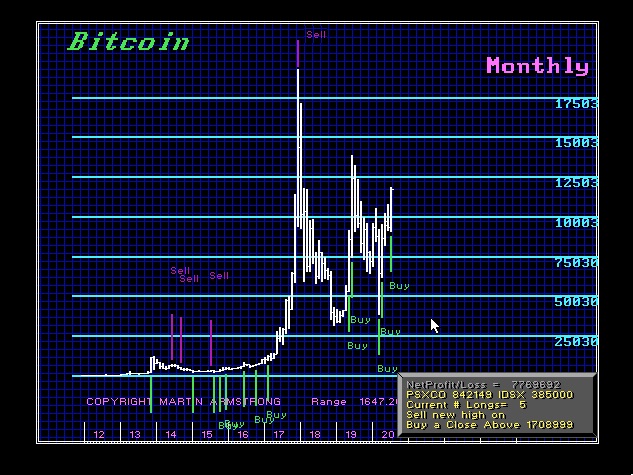
Normally I am concerned with equity markets but Socrates has done a great job of keeping us in the market to the long side even when all looked hopeless. Now with all of the “day traders” thinking its 1999 is It time to get a bit defensive as we head into the election cycle?

Much thanks as always!! You may know how much you help all of us, BUT I want you to hear It again. We All Thank you!!

Regards,

JCL

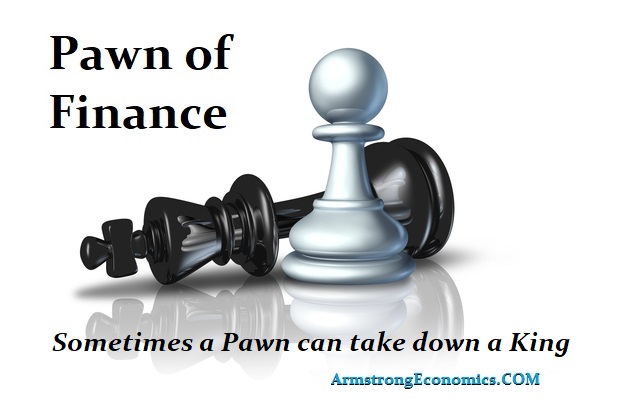
ANSWER: I do not see this attempted manipulation of the world economy as being successful. They are truly out of their minds, but they are a bunch of academics and billionaires who have never walked out of the street and dared to speak to one of the great unwashed. To them, we are all just pawns of finance too stupid to understand what their super-human minds are capable of seeing the future. However, sometimes a pawn can take down a king.

Leaving the cities like New York is ultimately the smart thing to do. However, it all depends on the election. If Trump wins there will probably be more violence from the usual characters. The Democrats have promised to bail out the states if they keep people locked down and unable to vote when possible other than mail. If Trump wins, those states will be hard-pressed for destroying their economies on a wish and a prayer.

The problem you have is that property values will decline in the cities. They are rising even in North New Jersey with people coming in and bidding over asking price. You can at least hedge your bets by trying to sell and rent until you see what happens. At least then you will be in a better position to leave faster.

This is certainly dividing families. Some refuse to think it can get worse. They want to be optimistic. My old professor said two people were standing on the top of the World Trade Center and a gust of wind blew them both off. The pessimist immediately started praying to be forgiven for his since. The optimist, as he was passing the fourth floor, said: Well so far so good!

Just try to be nimble. It is hard to leave – I know. Elizabeth Warren lays it out. They are playing to change America into a socialist country that has failed whenever it has been attempted.


 ‌ ‌ ‌ ‌ ‌ ‌ ‌ ‌ ‌ ‌ ‌ ‌ ‌  ‌ ‌ ‌ ‌ ‌ ‌ ‌ ‌ ‌ ‌ ‌ ‌ ‌  ‌ ‌ ‌ ‌ ‌ ‌ ‌ ‌ ‌ ‌ ‌ ‌ ‌  ‌ ‌ ‌ ‌ ‌ ‌ ‌ ‌ ‌ ‌ ‌ ‌ ‌  ‌ ‌ ‌ ‌ ‌ ‌ ‌ ‌ ‌ ‌ ‌ ‌ ‌  ‌ ‌ ‌ ‌ ‌ ‌ ‌ ‌ ‌ ‌ ‌ ‌ ‌  ‌ ‌ ‌ ‌ ‌ ‌ ‌ ‌ ‌ ‌ ‌ ‌ ‌  ‌ ‌ ‌ ‌ ‌ ‌ ‌ ‌ ‌ ‌ ‌ ‌ ‌  ‌ ‌ ‌ ‌ ‌ ‌ ‌ ‌ ‌ ‌ ‌ ‌ ‌  ‌ ‌ ‌ ‌ ‌ ‌ ‌ ‌ ‌ ‌ ‌ ‌ ‌  ‌ ‌ ‌ ‌ ‌ ‌ ‌ ‌ ‌ ‌ ‌ ‌ ‌  ‌ ‌ ‌ ‌ ‌ ‌ ‌ ‌ ‌ ‌ ‌ ‌ ‌  ‌ ‌ ‌ ‌ ‌ ‌ ‌ ‌ ‌ ‌ ‌ ‌ ‌  ‌ ‌ ‌ ‌ ‌ ‌ ‌ ‌ ‌ ‌ ‌ ‌ ‌  ‌ ‌ ‌ ‌ ‌ ‌ ‌ ‌ ‌ ‌ ‌ ‌ ‌  ‌ ‌ ‌ ‌ ‌ ‌ ‌ ‌ ‌ ‌ ‌ ‌ ‌  ‌ ‌ ‌ ‌ ‌ ‌ ‌ ‌ ‌ ‌ ‌ ‌ ‌  ‌ ‌ ‌ ‌ ‌ ‌ ‌ ‌ ‌ ‌ ‌ ‌ ‌  ‌ ‌ ‌ ‌ ‌ ‌ ‌ ‌ ‌ ‌ ‌ ‌ ‌  ‌ ‌ ‌ ‌ ‌ ‌ ‌ ‌ ‌ ‌ ‌ ‌ ‌


Elizabeth Warren


Friends —

This is our moment. Our moment to decide who we are as a country. Our moment to dream big and fight hard. And yes, our moment to win this battle for the soul of our nation.

But understand this: to make real progress towards social, racial, and economic justice, we have to win big in November. And we can only do that if we work — and persist — together.

As far as the markets go, the indexes are being propelled by a very select few stocks. The broader market is better reflected by the Russel 2000. There is always the risk that summer rallies end up in October panics.

Defending The “Defender In Chief”: John Yoo On Trump’s Fight For Presidential Power


An Interview with John Yoo

Monday, August 3, 2020

On the occasion of his new book, Defender in Chief: Donald Trump’s Fight for Presidential Power, Hoover visiting fellow and Berkeley Law School professor John Yoo joins the show to make a spirited case against the criticisms of Donald Trump for his supposed disruption of constitutional rules and norms. The conventional wisdom is that Donald Trump is a threat to the rule of law and the US Constitution. Mainstream media outlets have reported fresh examples of alleged executive overreach or authoritarian White House decisions nearly every day of his presidency. In the 2020 primaries, the candidates have rushed to accuse Trump of destroying our democracy and jeopardizing our nation’s very existence. In his book and on this show, John Yoo argues the opposite: that the Founders would have seen Trump as returning to their vision of presidential power, even at his most controversial and outrageous. It’s a fascinating and often humorous discussion that could not be more timely.

Recorded on July 29, 2020