Author of “The Coming Collapse of China”, Gordon Chang, discusses the effect of President Trump’s tariffs on China and the epic battle ahead. Last night China announced their feeble retaliatory actions – SEE HERE. A professionally nervous Maria Bartiromo, frames a series of questions from the perspective of Wall Street.
Fortunately Gordon Chang understands the Red Dragon, and more importantly understands Chinese Chairman Xi Jinping’s geopolitical goals through economic conquest. Mr. Chang is one of the few people who appear regularly in media and know the truth behind the Panda Mask.
.
People often talk about the ‘strength’ of China’s economic model; and indeed within a specific part of their economy -manufacturing- they do have economic strength.
However, the underlying critical architecture of the Chinese economic model is structurally flawed and President Trump with his current economic team understand the weakness better than all international adversaries.
China is a central planning economy. Meaning it never was an outcropping of natural economic conditions. China was/is controlled as a communist style central-planning government; As such, it is important to reference the basic structural reality that China’s economy was created from the top down.
This construct of government creation is a key big picture distinction that sets the backdrop to understand how weak the economy really is.
Any nations’ economic model is only as stable (or strong) as the underlying architecture or infrastructure of the actual country.
Think about economic strength and stability this way: If a nation was economically walled off from all other nations, can it survive? …can it sustain itself?
In the big picture – economic strength is an outcome of the ability of a nation, any nation, to support itself first and foremost. If a nations’ economy is dependent on other nations’ for it to inherently survive it is less strong than a nation whose economy is more independent.
You might not realize it, but China is an extremely dependent nation.
When the central planning for the 21st century Chinese Economy was constructed, there were several critical cultural flaws, dynamics exclusive to China, that needed to be overcome in order to build their economic model. It took China several decades to map out a way to economic growth that could overcome the inherent critical flaws.
Critical Flaws To Exploit:
♦Because of the oppressive nature of the Chinese compliant culture, the citizens within China do not innovate or create. The “Compliance Mindset” is part of the intellectual DNA strain of a Chinese citizen.
Broadly speaking, the modern era Chinese are not able to think outside the box per se’ because the reference of all civil activity has been a history of box control by government, and compliance to stay (think) only within the approved box. The lack of intellectual thought mapping needed for innovation is why China relies on intellectual theft of innovation created by others.
American culture specifically is based around freedom of thought and severe disdain of government telling us what to do; THAT freedom is necessary for innovation. That freedom actually creates innovation.
Again, broadly speaking Chinese are better students in American schools and universities because the Chinese are culturally compliant. They work well with academics and established formulas, and within established systems, but they cannot create the formula or system themselves.
♦ The Chinese Planning Authority skipped the economic cornerstone. When China planned out their economic entry, they did so from a top-down perspective. They immediately wanted to be manufacturers of stuff. They saw their worker population as a strategic advantage, but they never put the source origination infrastructure into place in order to supply their manufacturing needs. China has no infrastructure for raw material extraction or exploitation.
China relies on: importing raw material, applying their economic skillset (manufacturing), and then exporting finished goods. This is the basic economic structure of the Chinese economy.
See the flaw?
Cut off the raw material, and the China economy slows, contracts, and if nations react severely enough with export material boycotts the entire Chinese economy implodes.
Insert big flashy sign for: “One-Belt / One-Road”HERE
Again, we reference the earlier point: Economic strength is the ability of a nation to sustain itself. [Think about an economy during conflict or war] China cannot independently sustain itself, therefore China is necessarily vulnerable. China cannot even feed itself.
China is dependent on Imports (raw materials) AND Exports (finished goods).
♦The 800lb Panda in the room is that China is arguably the least balanced economy in the modern world. Hence, China has to take extraordinary measures to secure their supply chain. This economic dependency is also why China has recently spent so much on military expansion etc., they must protect their vulnerable interests.
Everything important to the Chinese Economy surrounds their critical need to secure a strong global supply chain of raw material to import, and leveraged trade agreements for export. China’s economy is deep (manufacturing), but China’s economy is also narrow.
China could have spent the time to create a broad-based economy, but the lack of early 1900’s foresight, in conjunction with their communist top-down totalitarian system and a massive population, led to central government decisions to subvert the bottom-up building-out and take short-cuts. Their population controls only worsened their long term ability to ever broaden their economic model.
It takes a population of young avg-skilled workers to do the hard work of building a raw material infrastructure. Mine workers, dredge builders, roads and railways, bridges and tunnels etc. All of these require young strong bodies. The Chinese cultural/population decisions amid the economic builders precluded this proactive outlook; now they have an aging population and are incapable of doing it.
This is why China is now dependent on their position as an economic trade bully. They must retain their supply chain: import raw materials – export finished goods, at all costs.
This inherent economic structure is a weakness China must continually address through policies toward other nations. Hence, “One-Belt / One-Road” is essentially a ‘bully plan’ to ensure their supply chain and long-term economic viability.
This economic structure, and the reality of China’s dependency, also puts China at risk from the effects of global economic contraction.
♦U.S. President Donald Trump and the U.S. economic team understand this dynamic and fully understand the inherent needs of China. When you are economically dependent, the ‘bully plan’ only works until you encounter a ‘stronger opponent’. A stronger opponent is an economic opponent with a more broad-based stable economy, that’s us.
President Trump, Commerce Secretary Ross, Treasury Secretary Mnuchin and U.S. Trade Representative Lighthizer, represent the first broad-based national team of economic negotiators who know how to leverage the inherent Chinese economic vulnerability.
National Trade Council Director Peter Navarro appears on Fox Business News to discuss the “reciprocity” proposals and the ongoing confrontation with China. Despite the honest examples provided, it is transparent from the delivery Navarro is attempting to calms the nerves of Wall Street. “EC” Economically Correct, presentation – Watch:
Without apology CTH continues to state all opposition to President Trump finds the epicenter of motive behind the economic policy. There are trillions at stake.
Yes, there are ideological differences, but do not doubt for a moment the existential threat is the core principle behind America-First economics.
Multinational corporations and global financial interests have more than a generation of effort invested within the modern trade and economic constructs that President Trump is challenging head-on.
Politicians do not construct legislation, K-Street lobbyists do. Hundreds of millions have been spent purchasing politicians as a sales force to protect those financial interests. Challenge their financial trade schemes and you are threatening the livelihood and financial systems that generate massive wealth for very powerful people. Additionally, the downstream effect threatens the affluence of the professional political class.
That said, there are American interests who will benefit, it’s just not popular within the cocktail party circuit to admit it:
(Bloomberg) China’s plan to counter U.S. import tariffs may throw global aluminum and steel traders into a tizzy, but the net result could be a boon for American primary-metal producers.
The retaliatory plan to slap tariffs on U.S. aluminum scrap and some steel products may boost American supplies, lowering raw-material prices, says Zaner Group LLC’s Peter Thomas. That could coax some metal producers to restart unused capacity in Rust Belt states if infrastructure spending picks up.
“In Indiana they’re going to be making a huge push to get things fired up,” Thomas, a Zaner senior vice president, said Friday by phone.
One aluminum scrap trader agrees with the premise, but he says the other side of the coin is that suppliers could be the biggest losers. Marvin Polikov, a vice president at aluminum scrap trader Metal Exchange in St. Louis, also says companies need a lot of time before they can, and probably would, restart unused refineries. (read more)
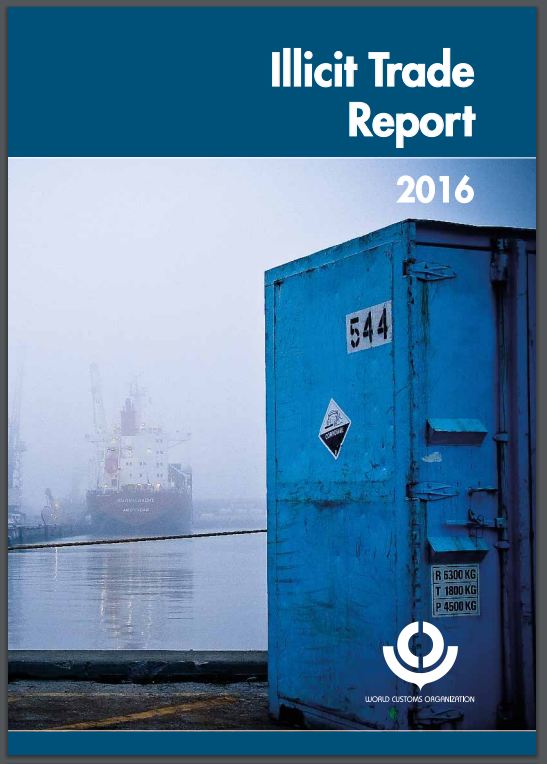
That has been the proposition that antiquities were being looted to fund terrorists. There really has been no direct evidence of any such terrorist market in antiquities. A long-awaited report by the World Customs Organisation (WCO) (WCO itr-2016-en) has finally emerged which focuses on the trafficking of cultural property for the first time. The claims have proven to be completely unsubstantiated that trafficking of cultural property comes third after trafficking of drugs and weapons raising big money and it is a source to fund terrorism.
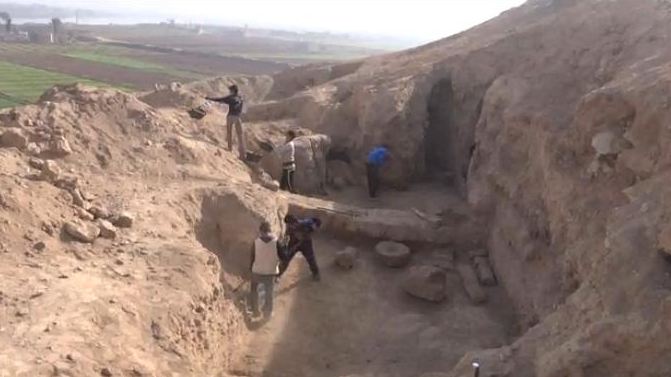
There have been videos circulating around claiming that ISIL has been engaged in archaeological digs that are carried out professionally. These reports circulated around back in 2015 and got everyone up in arms. There has been no evidence to surface that demonstrates the allegations have any validity. When these videos were even taken and exactly where has not been proven. The allegations assert they are on the border in Syria. They could be anywhere.
The WCO figures show the following quantities seized for each category in 2016 and the number of seizures:
Drugs: 1 million kilos of cannabis, 180,773 kilos of cocaine, 99,000 kilos of khat, approx. 200,000 kilos of opiates, psychotropic, and other substances. Total c.1.5 million kilos. A number of seizures: 45,000.
Weapons & Ammunition: number of pieces seized 2.5 million. Number of seizures: 4500.
Cultural property: 8343 objects seized, of which antiquities were 6,600 (about 70% coins) Number of seizures: 146 (of which antiquities – mostly coins, seals, and jewels – were only 70).
In other words, the number of seizures clear demonstrates that drugs accounted for 90.6% of seizures. Weapons and ammunition accounted for 9.1%, while the cultural property was only 0.3% (of which antiquities accounted for 0.14%).
As the WCO report also clearly illustrates that trafficking in cigarettes to avoid taxes was 4768 seizures with a value of 3.5 billion. Counterfeit goods accounted for 35,000 seizures with a value of $200 million, and exotic animals and plant parts came in at 2,225 seizures with 750,000 items. The entire theory that terrorists were funding their operations by looting antiquities has been proven to be non-existent.
In my own study of cycles, I have observed that cycle inversions occur more often than not at a time when the trend in that time frame is starting to change.
Have you observed the same?
I look forward to your trader service.
Best Regards
HH
ANSWER: Correct. Cycle Inversions unfold routinely when trends are shifting. The fact that we are getting these cycle inversion now is definitely a precursor of what is coming between 2018 moving into 2021. When the same cycle has been producing alternate events and suddenly it begins to produce just highs, look out – for it is warning that the foundations are changing. This is what we are witnessing currently. We can taste it. With interest rates at historic lows, and you have the Japanese central bank buying 75% of the government bond market and the ECB owning 40%+ of all government debt, an uptick in interest rates is going to make the world economy simply go completely nuts
Secretary of Commerce Wilbur Ross appears on Lou Dobbs show to discuss the ongoing trade initiatives against China and the issues of intellectual property theft.
.
Additionally, CNBC is reporting on possible retaliatory trade action by China in response:
CNBC – China’s commerce ministry proposed a list of 128 U.S. products as potential retaliation targets, according to a statement on its website posted Friday morning.
The U.S. goods, which had an import value of $3 billion in 2017, include wine, fresh fruit, dried fruit and nuts, steel pipes, modified ethanol, and ginseng, the ministry said. Those products could see a 15 percent duty, while a 25 percent tariff could be imposed on U.S. pork and recycled aluminum goods, according to the statement.
The statement did not go into greater detail. U.S. agricultural products, particularly soybeans, have been flagged as the biggest area of potential retaliation by Chinese President Xi Jinping’s administration. (read more)
Wait, China bought out Smithfield Foods, the U.S. #1 pork producer, back in 2013. So big panda is going to tax themselves…. priceless.
And, as we have mentioned, China purchases a tremendous amount of our steel and aluminum products for recycling into their own finished products. A 25% tariff on U.S. aluminum recycles would mean increased aluminum remains available within the U.S. for our own manufacturing – at a lower price. Another win.
QUESTION: Mr. Armstrong; I read your article of the whole issue of prostitution. The entire problem is that some western women assume that all prostitutes engage in the profession unwillingly. That is just so biased. What about the women who marry not for love but for money. They are not forced. When the Iron Curtain fell, many Western European men married Eastern Europeans. They were shocked to realize that Eastern women saw life in a different culture. They looked for men who could support them and they saw this as a tradition they stayed home and raised the children. Their attitudes were pre-sixties. You are correct, culture is different around the world. It is stupid to judge everything by only your own standards. Indian and Thai food is spicier than European, American, and certainly Italian. Even food differs greatly around the world as do attitudes and culture. To a West European or American woman, staying at home is subservient. They have not been to the Middle East. I just read that Saudi Arabia is allowing women to drive for the first time.
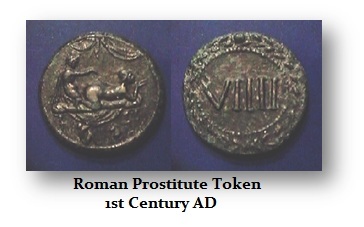
I recall you even showing a Roman prostitute token used to circumvent laws back then. Have you ever investigated a cycle in attitudes in the battle of the sexes? It appears we seem to have emerged from the sixties with hippies, free love, and some women who just hate men blaming them for everything. I am not even sure where the whole virgin thing came from but assume that is probably in there as well. That was so obvious with Hillary thinking all women should vote for her just because she was a woman. That really offended the younger girls in our office. If there is a cycle in everything, then is there one in this battle as well?
UT
ANSWER: Yes there is a cycle to everything. Yes, the Emperor Tiberius (14-37AD) attempted to ban prostitution by making it illegal to pay a prostitute with a coin that had the emperor’s portrait of which they all did. The solution was to issue tokens (pictured above) you bought and paid the prostitute and she would redeem them later. These were widespread throughout the empire – not just Rome. One was recently found in the Thames River in London back in 2012. Here is a picture of the brothel in Pompeii. There were various prices that depended upon the sex act, but then there was also a two-tier price level over privacy. If you wanted a private room, that was the most expensive. If you wanted to save money, then you could have the room at street level where people could watch.
The Roman post-Civil War promiscuous period is very reminiscent of the 1960s with the whole free love and the women’s liberation movement. This trend in attitudes also appears throughout history on a cyclical basis. It is linked to the business cycle and as the economy booms, this trend will emerge coinciding with a decline in the birth rate. Perhaps the most famous period was the economic boom during the reign of Augustus (27BC-14AD) following the civil war that ended in 30BC with the deaths of Marc Antony and Cleopatra.
It was Augustus who passed his famous family laws that were designed to (1) ban intermarriages with none Latins, (2) compel men to be married. Augustus banished of Ovid (43 BC–17/18 AD) because he believed that his writings were creating an age of immorality. Augustus had his own daughter, Julia, banished for adultery. While her husband Tiberius was often away, Julia searched for love and sexual gratification outside her marriage and sex parties. Augustus heard of her infidelities, and he threatened her with death. Instead, he sent her to an island prison from which she was never to return, and he spoke of her as a disease of his flesh.
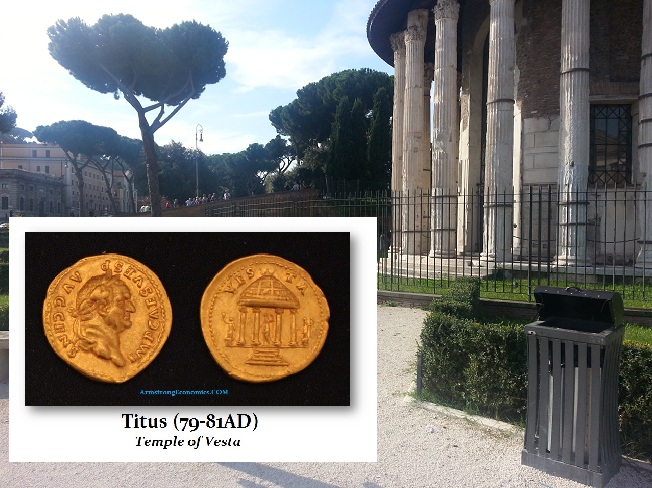
As far as the subject of virgins, in Western culture, this too can be traced to Rome. In ancient Rome, the Vestals or Vestal Virgins were priestesses of Vesta, goddess of the hearth. The historians Livy, Plutarch, and Aulus Gellius, all attribute the creation of the Vestals as a state-supported priestesshood to the beginning of the Roman Republic. The Vestals were regarded as fundamental to the continuance and security of Rome. They maintained the sacred fire that was not allowed to go out. This tradition to this day can be seen as the eternal flame at the grave of John F. Kenney. The Vestals were to take a vow of chastity in order to devote themselves to the study and correct observance of state rituals that were off-limits to the male colleges of priests. When Christianity began, the role of women serving God was taken from this Roman religious position and they too were to take a vow of chastity but were married to God.
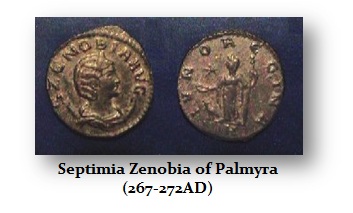
The Romans were shocked by the roles of women outside their culture. When they were fighting the British, their leader was a woman named Boudica. In the East, women were also rulers not just in Egypt. Septimia Zenobia (240–274AD) was Queen of Palmyria who rebelled and split the Roman Empire.
Romans definately held their women in high regard. The various Roman Emperors would routinely show their wives on coinage and some would even show their fathers, sons, daughters, as well as family portraits as did Septimius Severus.
The family seems to be sacred to the Romans. This idea of virgins in the West clearly shows the link back to ancient Roman. Where exactly it traces to in Asia culture I have not investigated. Nonetheless, there are distinct cycles in social attitude throughout time. Promiscuity rises with economic booms and declines with economic hard times. It seems to be linked in that manner to when you have no economic concerns about the future, then anything goes. When economic hard times take place, then the family unit returns and the birth rates rise because children are your retirement. When you think the state will take care of you, you need fewer children.
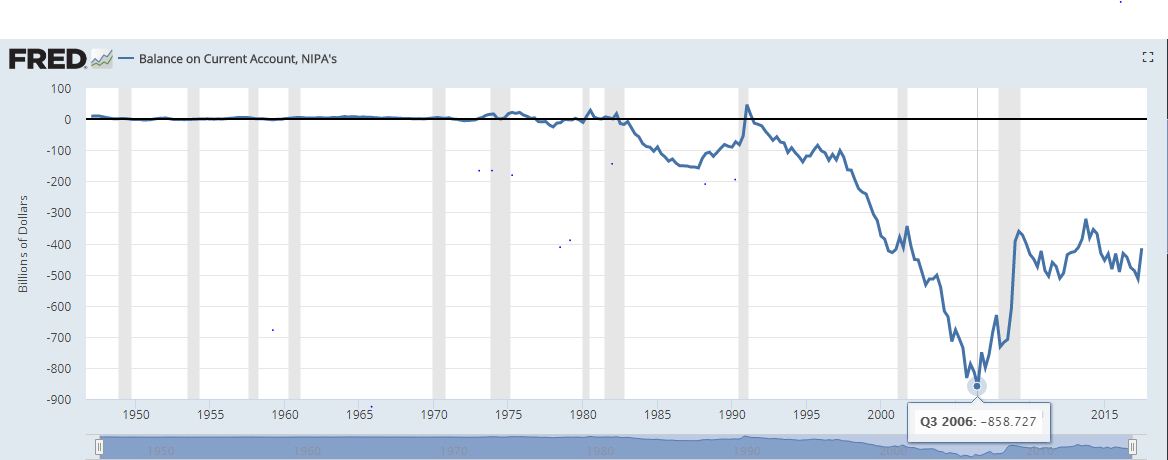
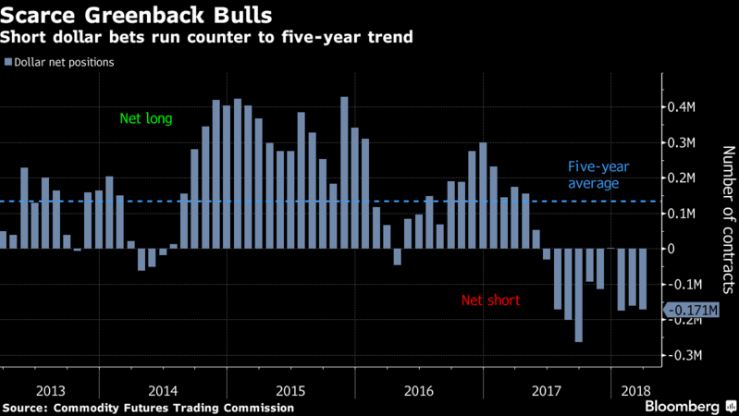
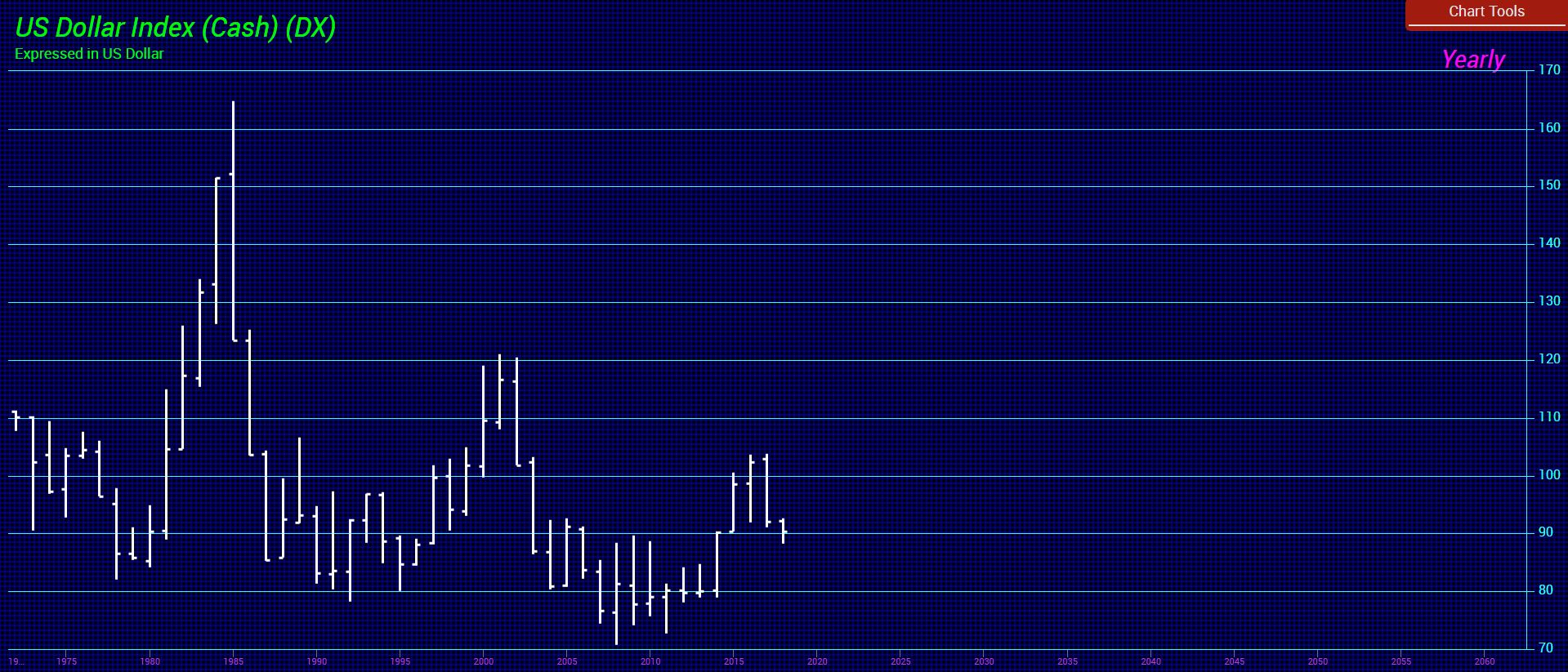
Bloomberg has reported that dollar bulls are nearly extinct down to just 2.3 %. The majority, which is always wrong, are all focused on the nonsense of the budget and the current account deficits. The record high for the dollar was 1985 when even the British pound fell to $1.03. So the balance of payments went negative from 1980 to 1986 and the dollar rose. OMG! How was that possible? When you actually correlate the Balance of Payments with the dollar, something amazing emerged. The dollar rises with the balance of payments going negative. Gee whiz! That is against all perpetual bear’s reasoning.
Perhaps this magical logic is just sophistry because they use their theory and don’t bother to check if it holds up over the course of time. I have been warning countless times that the Balance of Payments is by no means simply TRADE. It includes all flows of capital outward. That includes interest. The biggest trade deficit of the USA is not with Europe, but China, who just so happens to be the LARGEST investor in US government bonds. That means they collect the lion share of interest expenditures. The days of buying just pick umbrella for your cocktail are long gone.
The Balance of Payments bottomed in 2006 and began to rise from that 3rd quarter low. When did the dollar bottom? In 2008 as the Balance of Payments was improving. Strange! Guess that logic does not hold up.
Most people look at the Dollar Index for a guide as to being bullish or bearish. What they do not realize is how it is constructed is not really relevant. Currently, the index is calculated by taking the exchange rates of six major world currencies the Euro, Japanese yen, Canadian dollar, British pound, Swedish krona and Swiss franc. Then they apply a weight which is arbitrary. The Euro, for example, has a weight factor of 58%. The Japanese yen has a weight of about 14%. From a trade flow and capital flow perspective China is at the top of the list. The trade deficit with China (with includes interest expenditures that flow to China) stands at 123,676 billion compared to 343,078 billion for the entire European Union with Germany coming in at 49,363 billion. Japan now is still more in capital flows than Germany coming in at 67,117 billion. The weights that make up the Dollar Index are not truly reflected in either trade or capital flows. Furthermore, the index was created only in 1973. It shows the high in 1985 and the low in 2008, which really does reflect Europe rather than trade or even capital investment flows.
I have created this site to help people have fun in the kitchen. I write about enjoying life both in and out of my kitchen. Life is short! Make the most of it and enjoy!
This is a library of News Events not reported by the Main Stream Media documenting & connecting the dots on How the Obama Marxist Liberal agenda is destroying America








 Centinel2012