Interbank Rates Starting to Rise – Monetary Crisis is Beginning


Extremely reliable sources from Behind the Curtain in Europe are becoming deeply concerned that Draghi at the ECB has created a monumental economic disaster he is just praying to holding off until he leaves next year. Interest rates are already starting to rise significantly in several important money and interbank markets. Both banks and debtors are facing a rapid rise in interest expenditures that will shock the world. This is going to blow-out budgets around the globe and both private and public debtors face higher costs of funds.

The Libor (London Interbank Offered Rate), the most important reference rate for the global interbank market, is currently at its highest level since 2008. We elected a Yearly Bullish Reversal on the close of 2016. Once we see the rate close above 213 on a monthly basis, LIBOR rates will be poised to jump to 510. When the Libor price rises, the short-term borrowing for banks becomes more expensive, and for borrowers in the financial market, such as sellers of bonds or buyers of mortgages, debt service becomes more difficult. The demand for debt is exceptionally high. We are looking at LIBOR rates rising sharply. The dollar-lending rate for dollar loans has been rising steadily in all maturities since about the end of 2014. The dollar-Libor for three-month loans in March 2017 were trading at around 1.1%. Currently, this dollar-Libor rate stands at around 2%.

This year’s WEC will be focused on the next major crisis and how all the markets will interact. This is the beginning of the Monetary Crisis Cycle. Our Yearly Models on LIBOR are already in a bullish posture on both short-term indicators. A closing on an annual basis above 208 will signal rates will rapidly more than DOUBLE into 2020. A closing above 510 on an annual basis will warn of a MAJOR financial crisis hitting just about every economy.

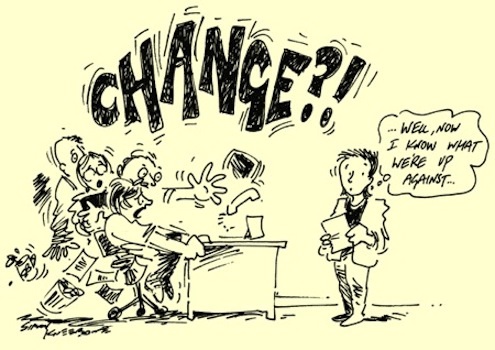
The Resistance to Change is Why We have Panics


COMMENT: I have been following your blogs for the past two years and have attended the past two WECs. I read with interest your continued comments on CALPERS and its pension mismanagement. I’m an attorney advisor and a client disclosed a few months ago that they had purchased $1m in municipal debt on the recommendation of their broker. They were complaining about undisclosed fees. I asked them why they would purchase muni bonds in a rising interest rate environment, they said it was to balance their portfolio with bonds. They also expressed some amusement that I purchased a house in Florida. They didn’t sell right away and were deaf to any discussion about the status of fiscal irresponsibility in CA, particularly the Democratic control of all levels of government. So I kept harping on the rise in interest rates, and they finally liquidated their entire muni bond position after rates did start to creep up. Trying to explain any historical info that you provide was a non-starter since to sell their real estate would be a big inconvenience and they don’t like the idea of changing their lives that much. It reinforces that people are unwilling to change until the crisis hits and no doubt they’ll rush out with everyone else at the same time. Hard to move that mentality unless people have a cycle-oriented view.

RDE

REPLY: Of this is exactly the problem. I have often spoken how I go to high level meets in various governments. They know what we are forecasting, but to claim I am a “governmental advisor” is in my view a misrepresentation. True, I am called in many times before a crisis. Despite the fact I have warned them in advance, nobody seems to do actually anything UNTIL the crisis hits. So I view myself more as a canary in the coal mine. They seem to consult me ONLY to see if I have changed my mind and/or our forecast. Only one country has ever done anything I told them in advance and they are in Asia. Not a single country has ever done ANYTHING I have advised in advance, They have listened to me ONLY in a state of PANIC.

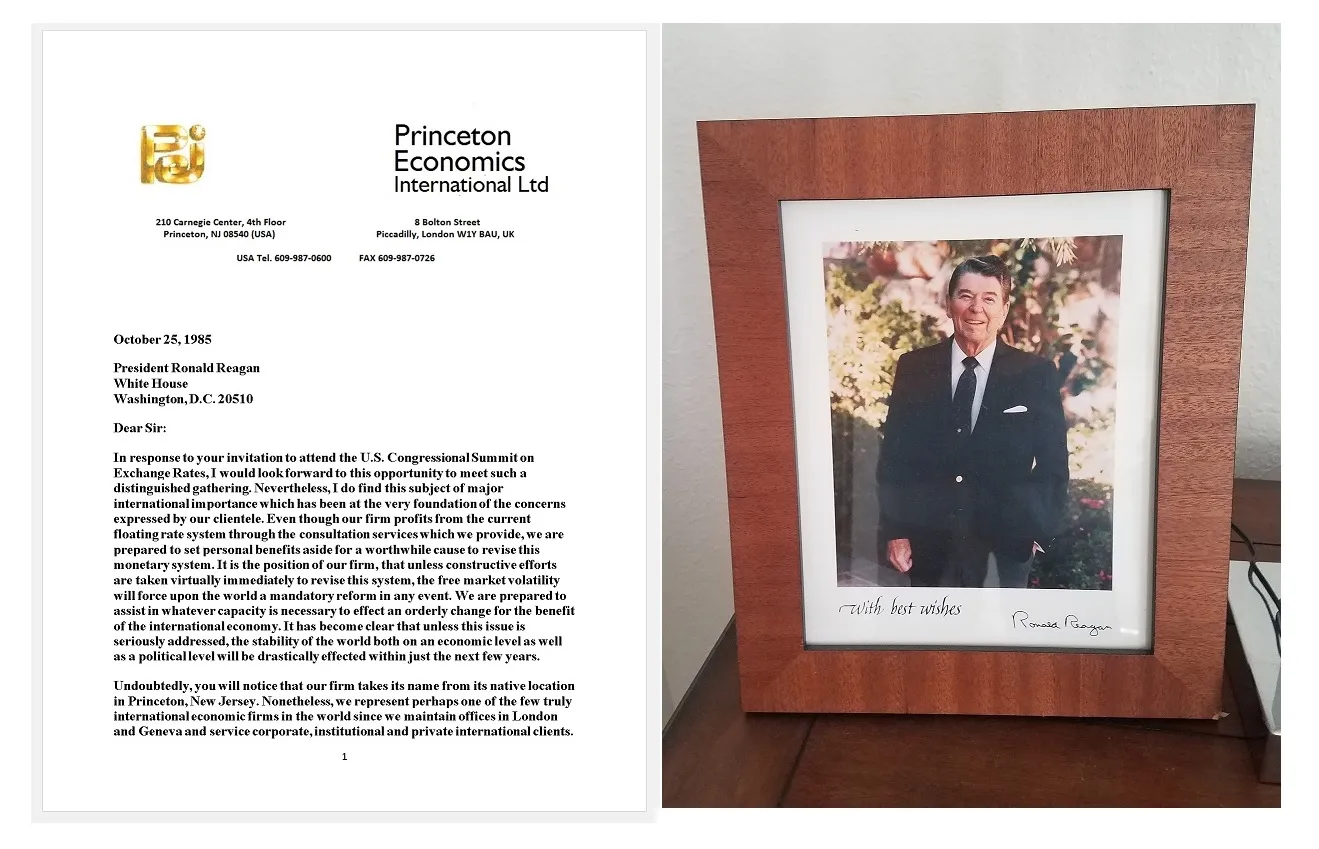
Anyone who portrays themselves as some advisor to government is misrepresenting the facts. Governments will NEVER listen to avoid a crisis. They ONLY act because of a crisis. For example, I was called in back in 1985 when they were using people to pretend that experts agreed with forming G5. Nobody that I heard agreed and that is when I wrote to President Reagan (see:Martin Armstrong to President Reagan October 25, 1985 ).

The response from the White House said thanks, but no thanks.

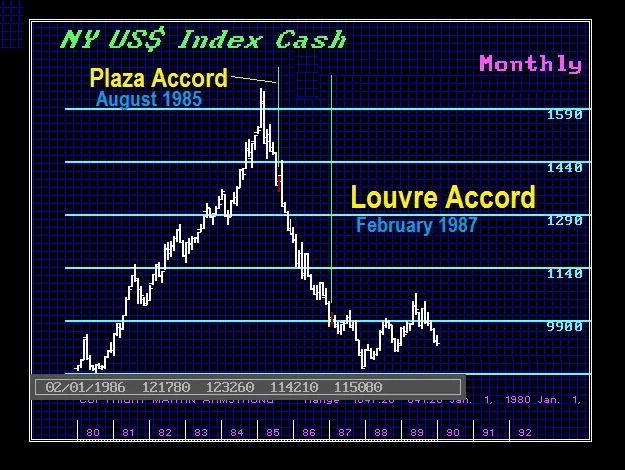
After the Plaza Accord in 1985, then they pulled the Louvre Accord to try to stop the volatility. They were stunned when the markets kept going despite the fact that the governments tried to stop the decline of the dollar.

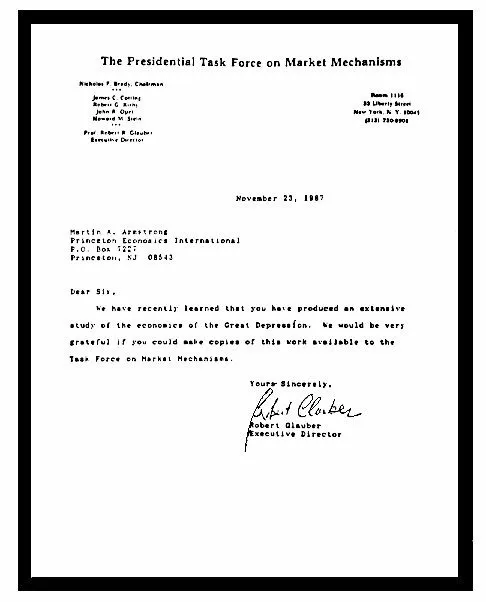
Then when the Crash of 1987 came. suddenly they wanted the research and amazingly conceded that the number one problem was the rise in volatility I had originally warned they would create. So nobody EVER listens until the CRISIS hits. This seems to be human nature. This is why I do what I do. Walking from meeting to a meeting among governments is fruitless. They will NEVER prevent the Crash & Burn. It is just not in their nature nor human nature.

This is what the old saying means: You can lead a horse to water, but you cannot force him to drink. It just seems to be part of humanity. There is just no changing it this seems.

Repetitive Patterns in the Money Supply – Will Coins Become Extinct?


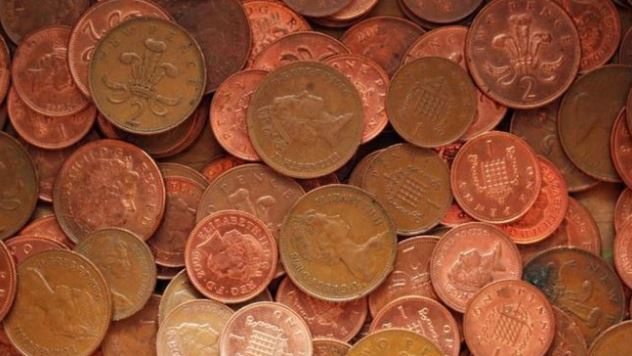
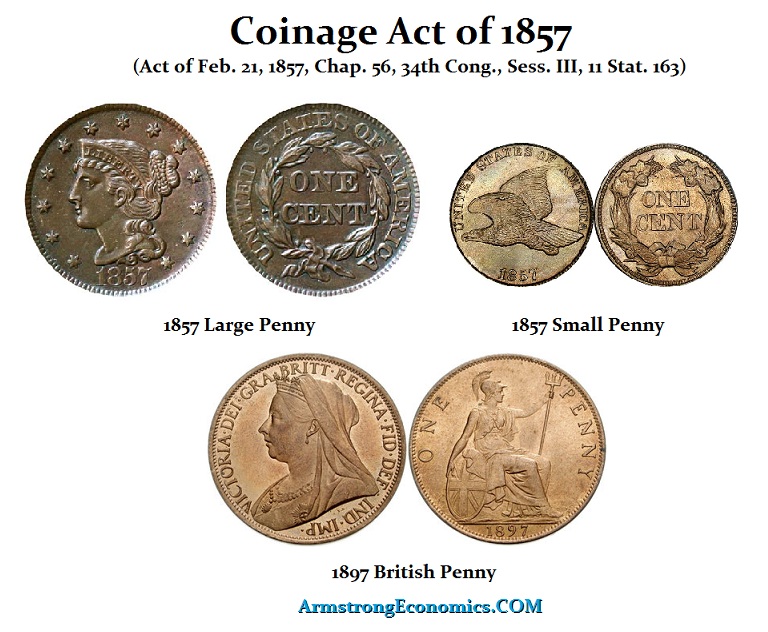
Inflation over time raises the cost of raw metal and we see that such coins vanish from the money supply. Britain is the latest in line to eliminate the 1 & 2 pence coins. They are costing more to produce than they are worth. I have written about the monetary reform Act of 1857 when the penny was drastically reduced in size. Canada eliminated the penny as well.

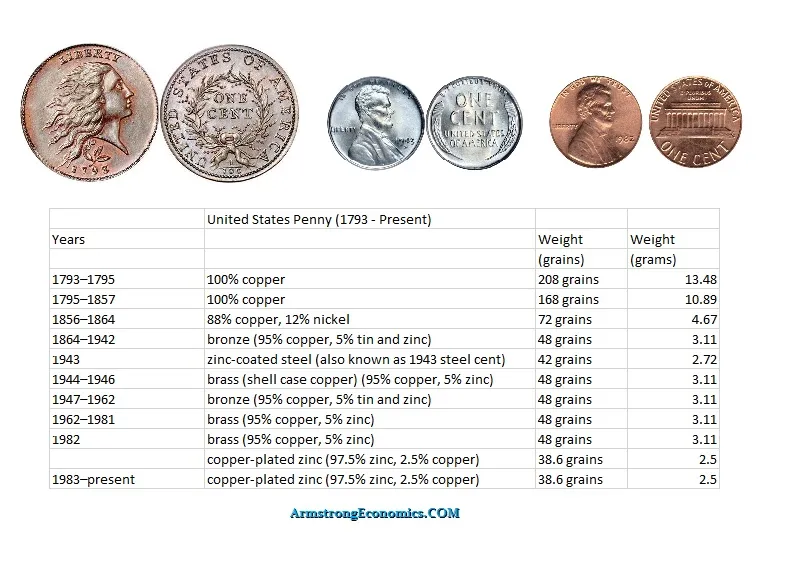
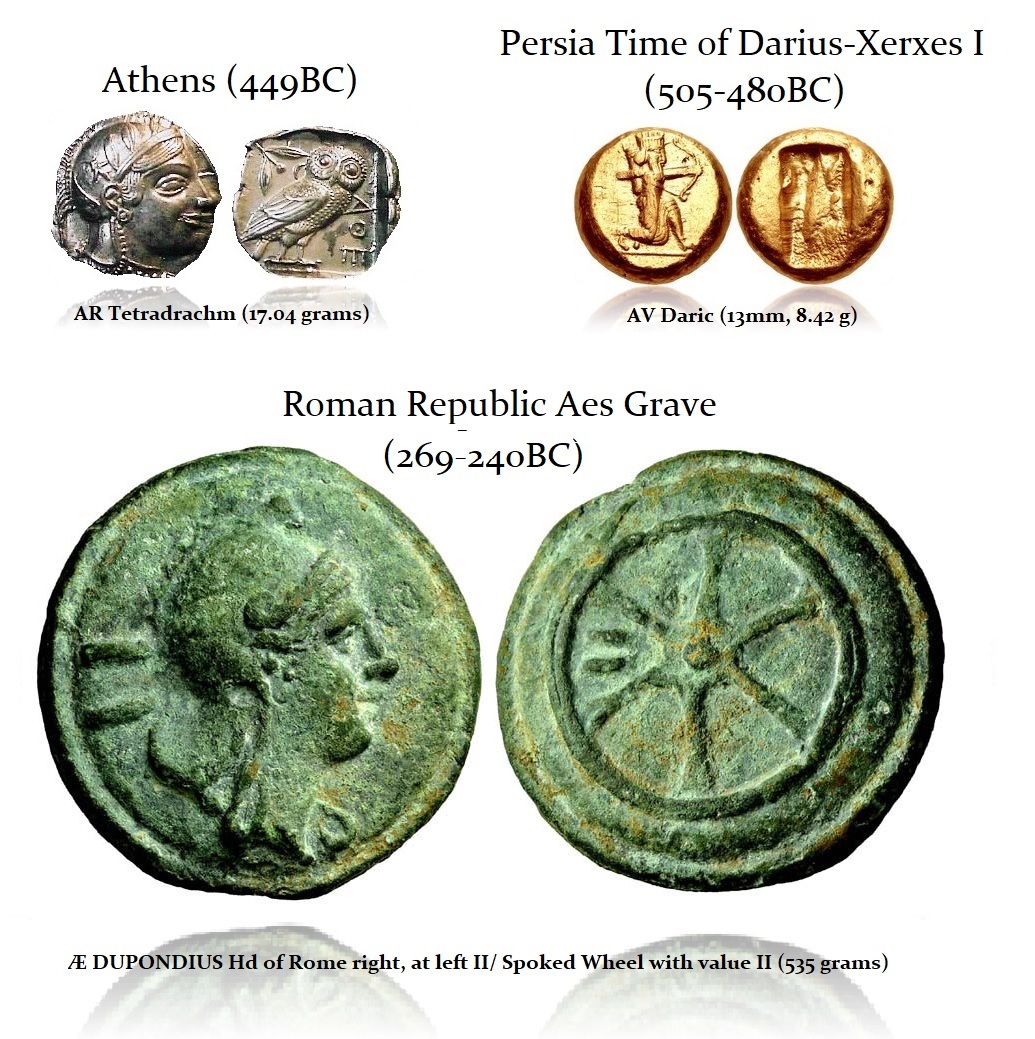
The United States dropped copper from the penny in 1982. Today, the penny is made of 97.5% zinc. It is copper-plated to give the appearance that it is still really copper. Throughout history, the supply of copper, gold, and silver, have all risen and fallen at different times based on their own cycle. Where the Persians had excess gold, the Greeks only had silver mines. The Romans had neither silver nor gold and began their monetary system with bronze.

We can see how the three empires began with gold, then silver, and finally bronze and modern society turned to paper starting with the Chinese during the 13th century. The main coin of the Persians was known as the gold Daric, whereas the dominant coinage among the Greeks was the silver Athens tetradrachm known as the Owl. The Romans were the last to depart from the Bronze Age. Their coinage remained bronze until silver was introduced and struck in Greek denominations beginning in 280BC, which was just one 51.6-year wave from Alexander the Great (336-323BC).

As-Decline (1)


We can see the same process of the rising cost of copper that prevailed during the early Roman Republic. The Roman As drops from 280BC with a weight of 341 grams to 10.6 grams by the time of Augustus (27BC-14AD). The drastic decline was been 280BC and 115BC, which was about 19 waves of 8.6-years.

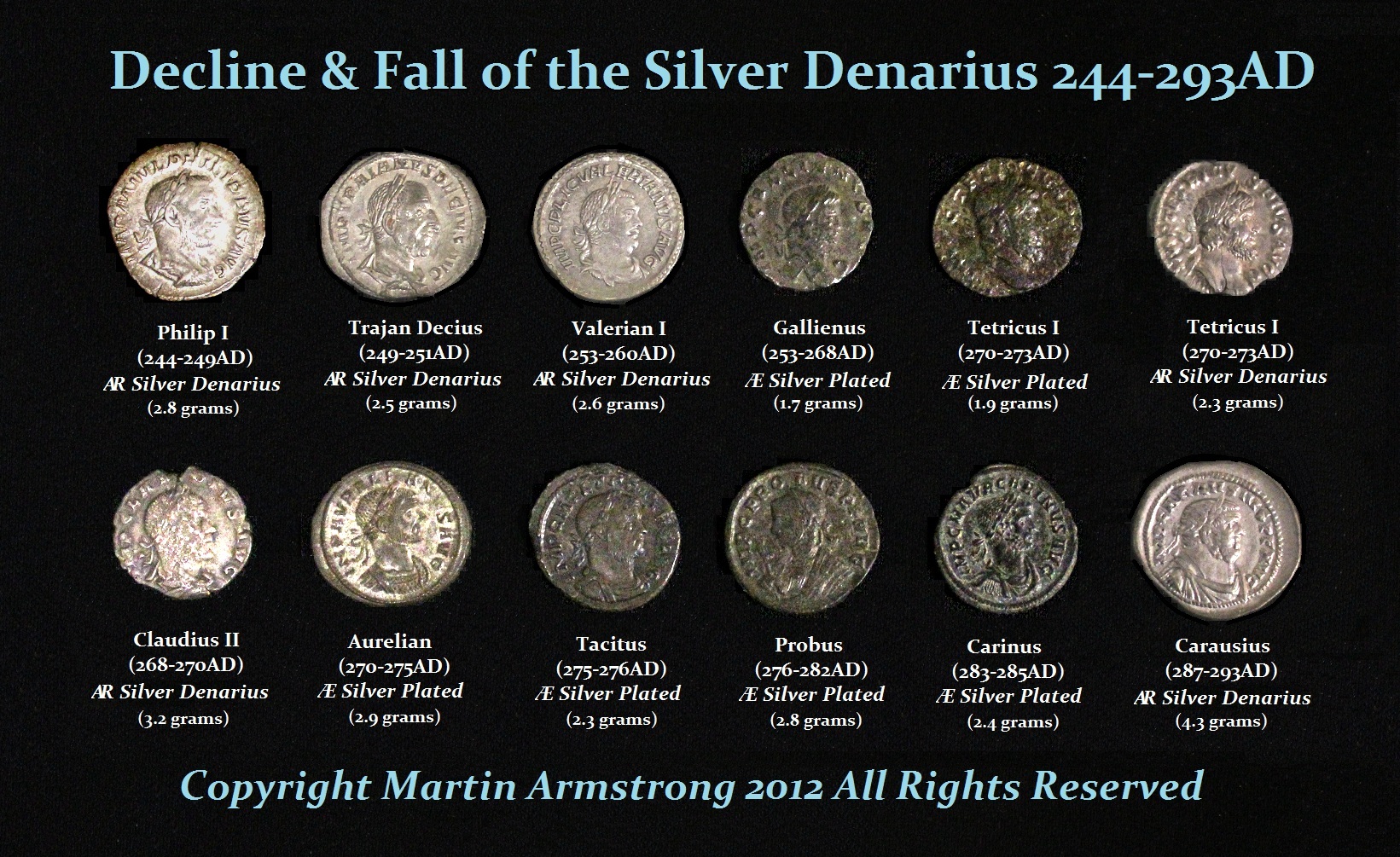
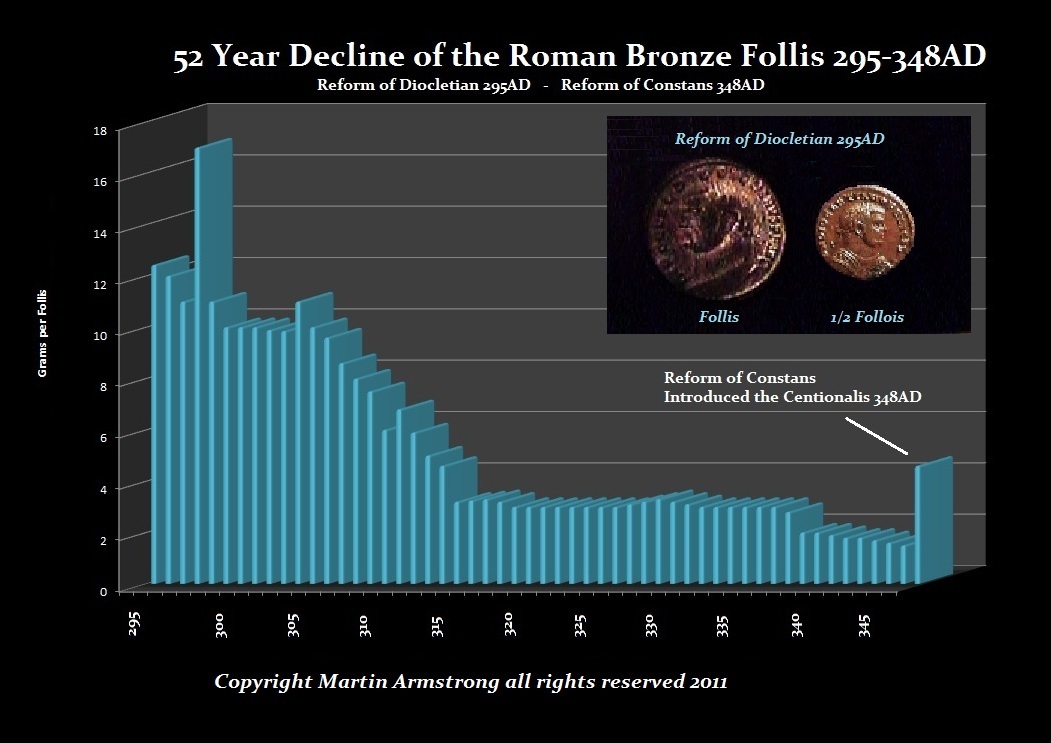
While we see the same process of a decline in Roman silver denarius into the 3rd century, what emerges is always the effort to reform. The Roman Emperor Diocletian (284-305AD) reintroduced silver coinage as well as bronze. Once again, we see the gradual reduction in the bronze coinage while the silver and gold were not affected.

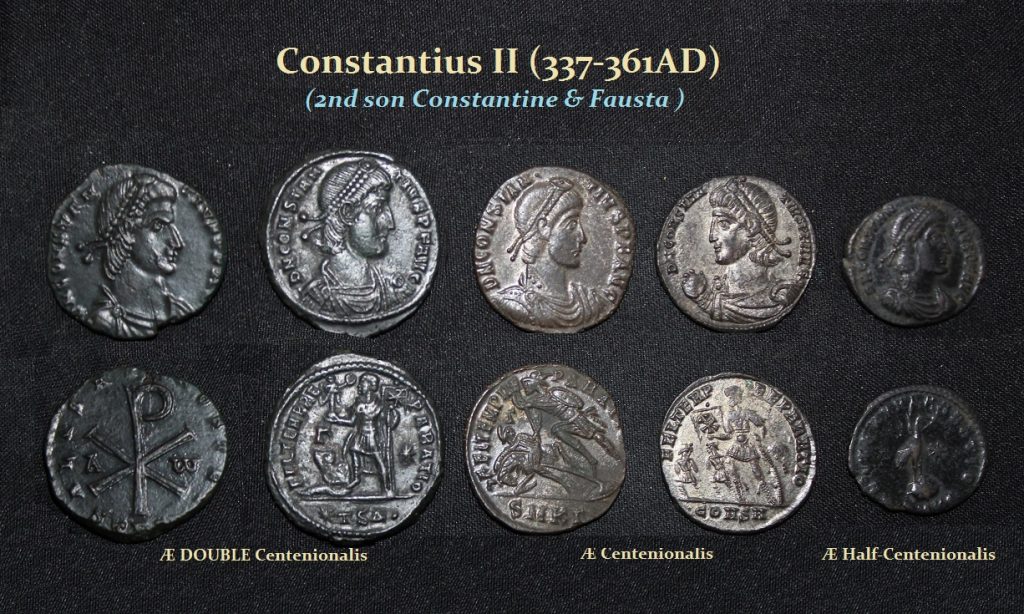
The bronze coinage simply keeps reducing as we see what is going on today. In 348 AD, a new bronze denomination was also introduced known as the “centenionalis” in a monetary reform carried out by Constantius II (337-361AD) with an initial weight of 6.6 grams. The weight almost immediately began to decline rapidly to 4.3 grams. He also introduced the half-centenionalis, which seems to continue to be produced and eventually becomes the standard until about 360AD. Despite the noble effort, the inflationary trend continued and the value of bronze kept rising forcing the discontinuation of this denomination 354 AD after just 6 years (one volatility cycle). This was then replaced by the reduced bronze denomination of about half the weight known today simply as the AE3 or half-centenionalis.

During the reign of Julian II (360-363AD), he attempts yet another monetary reform trying to restore the original Folles of Diocletian known as a Double Centenionalis or a Majorina. This new denomination bronze denomination was 28mm in diameter with a weight of 8 grams. This monetary reform lasted unmolested until about the reign of Arcadius (383-408AD). For about 19 years, the Double Centenionalis remained fairly true to its weight. When we see once again usurpers begin to rise in the West such as Magnus Maximus (383-388AD) in Britain and the usurper in Rome itself of Eugenius (392-394AD) where the bronze coinage is reduced to a tiny token with a weight of 0.94 grams.

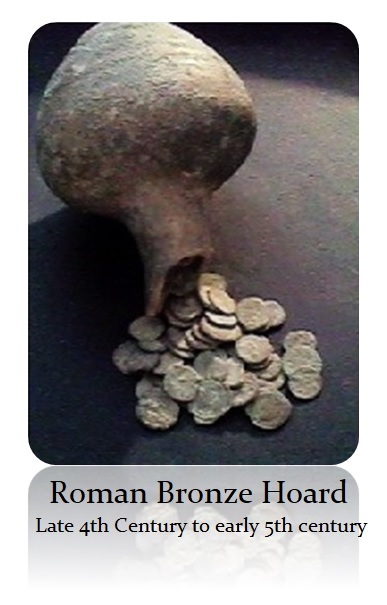
From about 400AD until the final collapse of Rome in the West during 476AD, bronze coinage is poorly struck and typically only tiny 1 gram coins. Many emperors did not even strike bronze coinage. When the Vandals from North Africa invade and sack Rome3 during 455AD, the word today is still used “vandalize” which refers to the events at that time. Copper was scarce so the Vandals stripped the roofs of Roman buildings which had been adorn in copper to shine brightly as if it were gold.

Therefore, throughout history, the cycles between the three metals are significantly different and thus we see periods during which bronze if rarer than gold or silver and at times each metal comes into excess supply and shortages. This is one primary reason any attempt to establish fixed ratios has always failed without exception. We are following the same path. Soon, all metal will be worth too much to use for coins.

Corruption & the Rule of Law


QUESTION: Today’s opinion section of the WSJ features an article on government’s intervention in AIG. The troublesome point concerns the possibility of a new precedent w.r.t. property rights in the USA, viz.:

“…the government may unlawfully deprive shareholders of their ownership and control of a company as long as it does not formally seize their shares”.

Well, I thought the rights that share ownership conferred were exactly those: an ownership stake in the company and a voice in its voting.

SC

ANSWER: The government plays with legal technicalities. They cannot seize a corporation and nationalize it without compensating the shareholders. However, it can seize a corporation and run it without formally taking the property. It is in a gray area like zoning regulations. The government can tell you what to do with your property short of taking it. However, in Youngstown Sheet & Tube Co. v. Sawyer, 343 U.S. 579 (1952), it was held that there was no authority to seize the steel mills because of a national strike. The court held: The Executive Order was not authorized by the Constitution or laws of the United States, and it cannot stand. The court wrote in the Syllabus:

To avert a nationwide strike of steel workers in April 1952, which he believed would jeopardize national defense, the President issued an Executive Order directing the Secretary of Commerce to seize and operate most of the steel mills. The Order was not based upon any specific statutory authority, but was based generally upon all powers vested in the President by the Constitution and laws of the United States and as President of the United States and Commander in Chief of the Armed Forces. The Secretary issued an order seizing the steel mills and directing their presidents to operate them as operating managers for the United States in accordance with his regulations and directions. The President promptly reported these events to Congress; but Congress took no action. It had provided other methods of dealing with such situations, and had refused to authorize governmental seizures of property to settle labor disputes. The steel companies sued the Secretary in a Federal District Court, praying for a declaratory judgment and injunctive relief. The District Court issued a preliminary injunction, which the Court of Appeals stayed.

The effective seizure of AIG was also illegal. Paulson let both Lehman Brothers and Bear Sterns fail but then rescues AIG without authority to save Goldman Sachs (see Timeline 2007-2009 Crash). The problem we have with is the government can do whatever it desires. The burden then falls on the citizen to go to court and spend hundreds of thousands of dollars or more to say his rights were violated. The Constitution is a complete FAILURE, for the courts have turned it upside down and they can do whatever they want and the burden is on you. The French system is much better. The government passes a law and then the high court rules if it is constitutional BEFORE it is enacted.

The damage our system inflicts upon citizens is off the charts. The government filed charges against Arthur Anderson and put the firm out of business. The case finally made it to the Supreme Court and they unanimously overruled what the government had done. Nonetheless, the firm was destroyed in the process. And guess what? The two prosecutors who charged Arthur Anderson with obstruction of justice and destroyed the firm illegally, are the left and right hand of Robert Mueller going after Trump – Andrew Weissmann and Michael Dreeben. In government, incompetence is rewarded. Dreeben argued that it was an aggressive case, but warranted. The Supreme Court unanimously overruled that position but it was too late to save the firm.


Supreme Court wrote:

Even “persuad[ing]” a person “with intent to … cause” that person to “withhold” testimony or documents from the Government is not inherently malign. Under ordinary circumstances, it is not wrongful for a manager to instruct his employees to comply with a valid document retention policy, even though the policy, in part, is created to keep certain information from others, including the Government.

What is the Difference between Institutional & Speculation?


QUESTION: Mr. Armstrong; I was talking to a friend who works in one of the banks you probably classify as the club. He knew you right off the bat. He said you have been probably the largest institutional advisor in the world. He said clients question the bank’s research and openly contrast it with yours. My question is simply this. What makes your institutional advice so dominant? Is it different from what you put out on your blog?

Just curious

HD

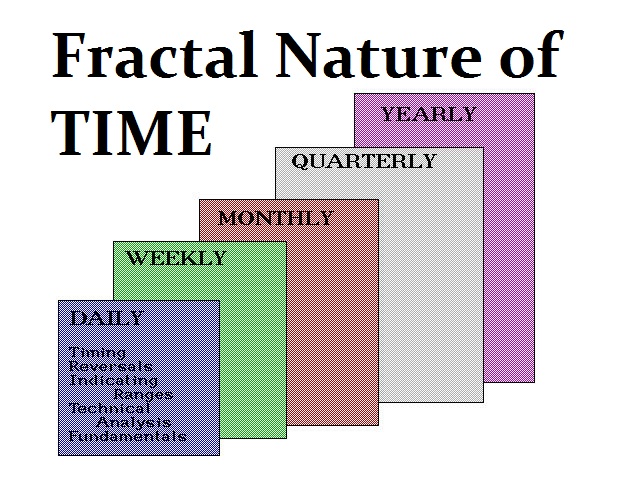
ANSWER: Interesting question. Institutions CANNOT be flipping their portfolios back and forth. They are not interested in what will the Fed do next week. They cannot react to such short-term swings. Our models are fractal and dynamic. We have the largest database ever assembled and that is what it takes to do accurate long-range forecasting. What you also must understand is how can a guy write a book and describe the feeling it is to give birth. Sure, he can interview women and write down the overview of what they say. But he cannot possibly really know what it feels like.

Look, 99% of all these self-proclaimed analysts have NEVER traded size. The look at the market from a short-term trader perspective and do not even understand how to do strategically position a portfolio. Oh sure, they can advocate the standard 60% equities and 40% bonds. Yet what happens when government bonds default? What happens when 10-year rates are 3% or less and you need to make 8% to cover your liabilities moving forward? They are clueless when it comes to actually the problems in size and how you even place orders.


The questions from institutions are strikingly different. They need to know when major trends change and how to adjust their portfolio and when. They are not concerned about when is the high Tuesday or Wednesday. Therefore, our institutional services are strategically different. You are either long or short. There is no pension fund that can buy even a 10-year government bond paying 3% for they are locking in a 50% loss. If you have not played in the big leagues, don’t bother. How you hedge is strikingly different from speculative trading.

We are able to differentiate between short-term changes in trend and long-term. That is the key. Plus, even if someone comes up with a new model and tries to get a meeting with a major institution if they can get 15 minutes that will be a miracle. Why? Nobody is going to take an unproven model for if it fails, that person loses their job. We have a track record and reputation going back into the 1980s. There is no risk with us because of that and they already know we have more institutional clients than anyone for decades.

Reality of Being a Chief Economic Advisor


QUESTION: I thank God that your are here in my lifetime. The information you freely impart is priceless and I can’t wait to read your daily Posts. I believe that it would be incredibly wise if President Trump were to invite you to replace Gary Cohen as his Chief Economic Advisor. My question is regarding the end of the Private Cycle that you are forecasting will occur in 2032. Will the change result as a demise of the US economy or the rise of the eastern economies? Do you see President Trump as a facilitator to that end or will his policies server to mitigate the process.

Thank you

Sir.

ANSWER: Well thank you very much. But you should understand what goes on behind the curtain and why I prefer this side. I was offered that job back in 1999 to be Bush Jr’s Chief Economic Advisor. I laughed and turned it down. Why? People like Gary Cohn take these jobs because they get to sell all their stock TAX-FREE. Since this would be a conflict of interest to own Goldman Sachs stock, he must sell it to take that job. Since it is something he MUST do, taxes are exempt. Plus all the politicians do not want to get Goldman Sachs angry since they donate to both sides. Therefore, Cohn gets an easy pass by the Senate.

First, we are private, not public, and I have no interest in selling the company to get a tax-free deal. Second, they would NEVER give me a pass in the Senate. I have advised the major car companies outside the USA in Japan and Germany. The Democrats would paint me as a traitor who helped foreign companies beat General Motors. The list can go on and on. So there is no way I would ever be interested in a such a job. Someone like Cohn now gets all the benefits and all he had to do is work one single day and then resign.

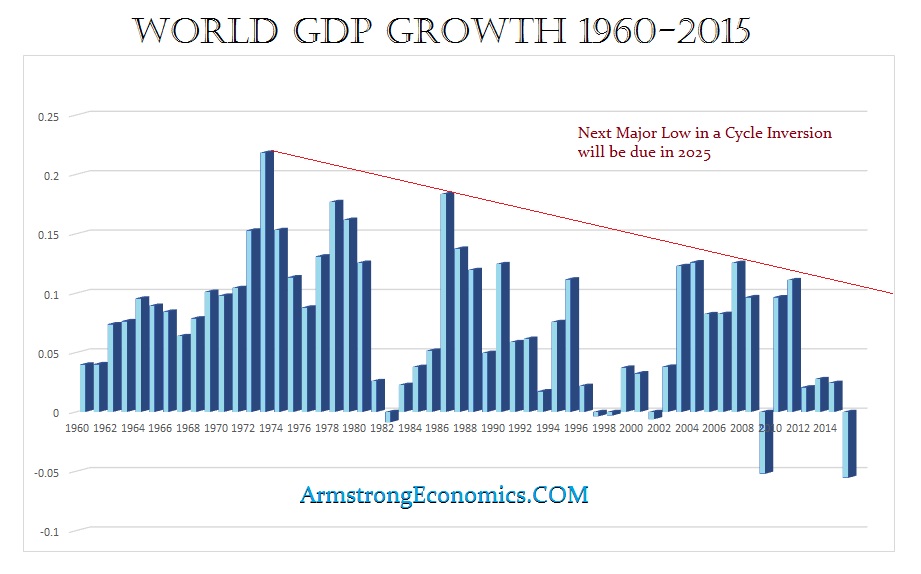
Trump is the counter-trend reaction. Reagan was the same reaction to hard economic times. You can see here that world GDP peaked in 1973. I remember the recession into 1976 very clearly. People were openly talking about another Great Depression. You get these counter-trend reactions which slow the decline down. Even Diocletian (284-305AD) instituted monetary reforms, wage, and price controls, and revised the political system creating the Tetrarchy whereby he was the first Emperor to actually retire and pass on the reigns of power. Trump will not reverse the trend. He will at best mitigate the fall during his term.

The Monetary Reform of 1857 Ends Legal Tender Foreign Coins


QUESTION: Mr. Armstrong, I found in my grandmother’s belongings a penny from 1855 and one from 1857 which was much smaller and silver in appearance. Was there also a monetary reform that changed the coinage during the 1850s?

PK

ANSWER: Oh yes. But it is far more interesting than meets the eye. Foreign coins were actually legal tender in the United States until 1857. You could pay taxes with Spanish or English coins. Everything was legal tender under the Coinage Act of 1857.

The government first proposed the penny in the Coinage Act of 1792. Pennies and half-pennies went into production for the first time in 1793 with a composition of 100% copper which weighed 13.48 grams (0.475 ounces). From 1795 to 1857, the government reduced the copper penny in size with a new weight of 10.89 grams (0.384 ounces). It was the Coinage Act of 1857 (Act of Feb. 21, 1857, Chap. 56, 34th Cong., Sess. III, 11 Stat. 163) that the coinage was radically reduced with the composition of the penny being  88% copper and included 12% nickel, which produced a silver-like appearance. The weight was reduced to 4.67 grams (0.164 ounces). By changing the metal content, they justified that this was intrinsically worth more by adding nickel to pure copper.
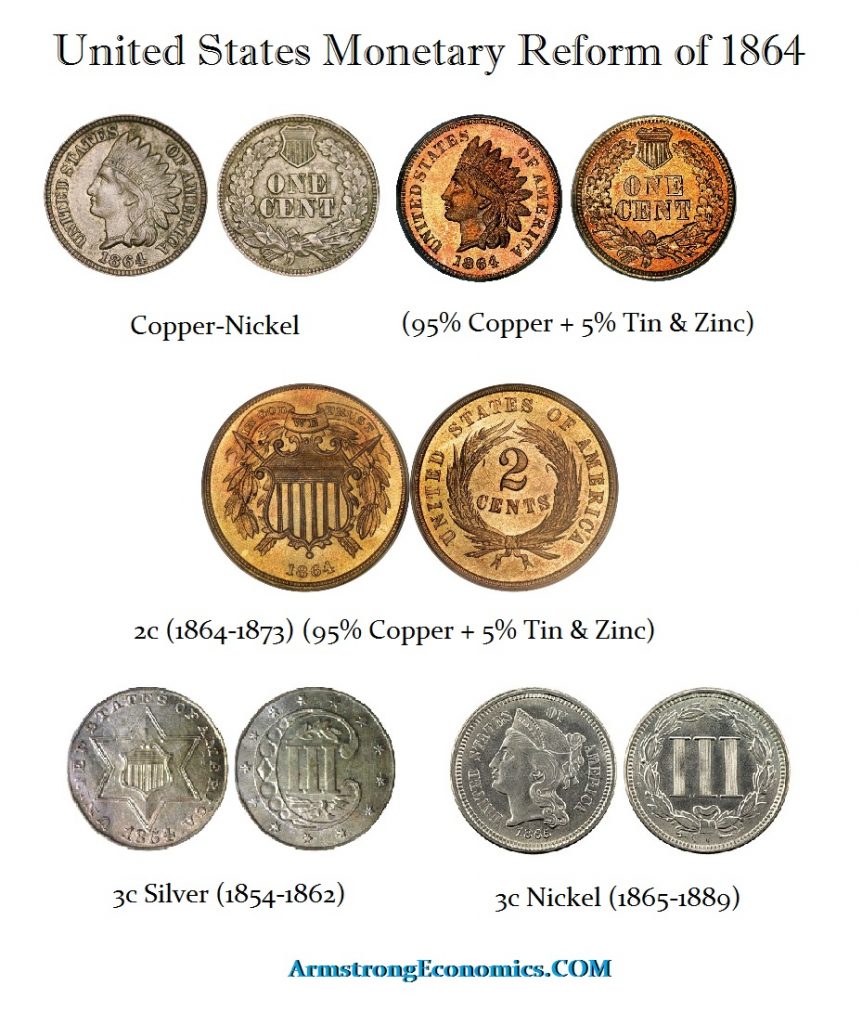
In 1864, there was another Monetary Reform following the war as inflation set in and drove the value of metals higher. The silver was really removed from the 3 cent coins were now being produced in nickel starting in 1865 and most silver coins were being melted down given the silver was worth more than the face value. It was 1864 that they introduced the two-cent coinage as well reflecting inflation. The design of the penny was the Indian Head until 1909 when they change to the portrait of Abraham Lincoln. From 1864 to 1942, the penny was redesigned penny and it now weighed 3.11 grams (0.109 ounces) and nickel was removed leaving the composition primarily of bronze (95% copper, 5% zinc and tin). In 1943, due to the war, copper rose in value so then struck pennies composed of steel zinc-coated for just one year. The steel penny weighed 2.72 grams (0.095 ounces). From 1944 to 1981, the penny was composed primarily of copper (95%) and zinc (5%), with a weight of 3.11 grams (0.109 ounces). After 1982, copper was eliminated from the penny. The composition was changed because the value of the copper in the coin was greater than one cent. From 1982, the penny became 97.5% zinc composition, which was copper plated. With the commodity boom into 2011, the cost to mint a penny became 2.41 cents. The crash in commodities reduced the cost to 1.83 cents by 2013.
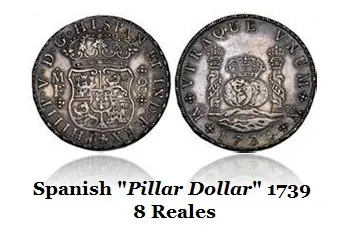
The Coinage Act of 1857 was an act of the United States Congress which ended the status of foreign coins as legal tender, repealing all acts “authorizing the currency of foreign gold or silver coins”. Specific coins would be exchanged at the Treasury and re-coined. Up until 1857, foreign coins circulated as legal tender. The Spanish 8 reals were known as a Pillar Dollar. This was the primary money supply during the Colonial period rather than British coins. In fact, the Spanish dollar was officially declared legal tender (accepted for taxes) by the Act of April 10, 1806.
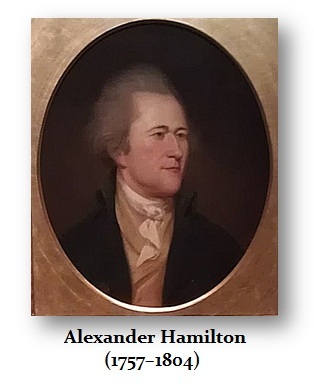
The United States following the Revolutionary War had no gold reserves. Therefore, in 1792 when the establishment of the US mint came into play, the sole medium of exchange in terms of specie was the foreign coin. Alexander Hamilton proposed that foreign coin should be allowed to circulate freely for a period of three years until the new mint in Philadelphia was running at full capacity. This clause allowing the foreign coin to circulate was renewed several times before it was formally authorized by the Act of April 10, 1806. By 1830, about 25% of all circulating coins were of Spanish origin.

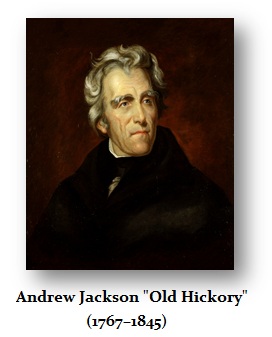
President Andrew Jackson supported foreign coin as legal tender in his famous war with the Bank of the United States in the Gold Bill. Jackson set in motion a major financial crisis as every bank began to issue their own currency. Jackson’s support of foreign coin ended up making it difficult for the US to retain its overvalued worn Spanish silver in the 1840s as they vanished from circulation and private issues appeared known as Hard Times Tokens. It was not until the early 1850s that the US mint had finally been able to match demand for the foreign coin with the production of American issues.
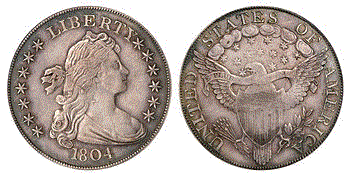
The Act of April 10, 1806, was passed because of the fact that there were no silver dollars minted by the United States at all between 1805 and 1840. In 1792, Congress adopted a bimetallic standard and the 15 to 1 ratio of silver to gold. The precious metal content of a US dollar was fixed at 371¼ grains of silver or 24¾ grains of gold. By 1795, the 15:1 ratio was under pressure because of the revolution in Paris as Gold rose against silver pushing the ratio to 15½ ounces of silver to one ounce of gold. By 1799, the ratio continued to expand reaching 15¾ ounces. This presented a huge arbitrage opportunity, so bullion dealers bought United States gold coins using Spanish silver coins and they shipped them to Europe to be melted and re-sold profiting almost 1oz of silver. The net gold capital outflow was huge and American coin was vanishing rapidly. Finally, in 1804, when Napoléon Bonaparte became emperor,  President Thomas Jefferson was forced to order the suspension of minting gold $10 eagles and silver coins. All we see are copper coins being produced at this point in time. This was the backdrop to the Act of 1806 which made all foreign coins legal tender.
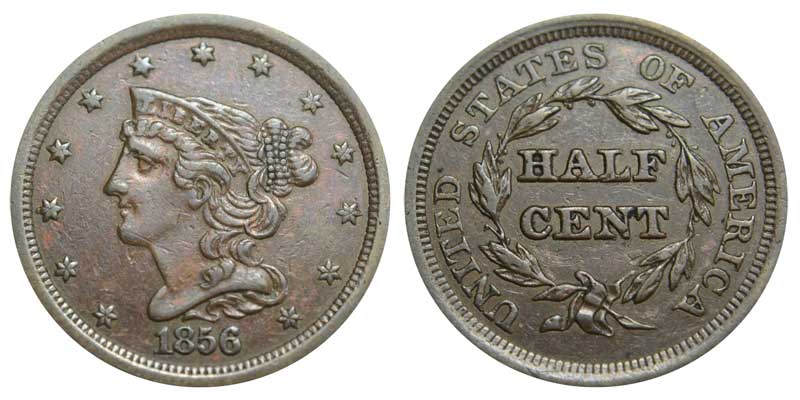
In addition to demonetizing foreign coins, the Coinage Act of 1857 also discontinued the half cent. Furthermore, the penny was reduced in size. The large cent was discontinued and regular coinage of the Flying Eagle cent began. The Act fixed the weight and measure of US one-cent pieces at 4.655 grams, which was composed of 88% copper and 12% nickel. It also mandated that this new copper/nickel alloy be received as payment for the worn gold and silver coins turned in at the mint. The effective aim was to limit the domestic money supply by crushing European competition. This was the first major step towards the government essentially having a monopoly over the money supply.

The Coinage Act of 1857 significantly altered the way American business was conducted. Since the beginning of the Colonies, businesses accepted any form of payment as long as it was made of specie. Following this Act of 1857, American business no longer accepted foreign coins and only US coins were accepted. Throughout this period, there was fierce competition among foreign exchange dealers in the United States. The ability of the US Mint to finally produce enough coinage made much of the foreign silver coinage obsolete.


The Economic Confidence Model & Why there are 6 waves


QUESTION: Dear Mr. Armstrong,

Firstly – sorry to hear about the passing of your mother.
Secondly – thank you very much for reading and answering questions.
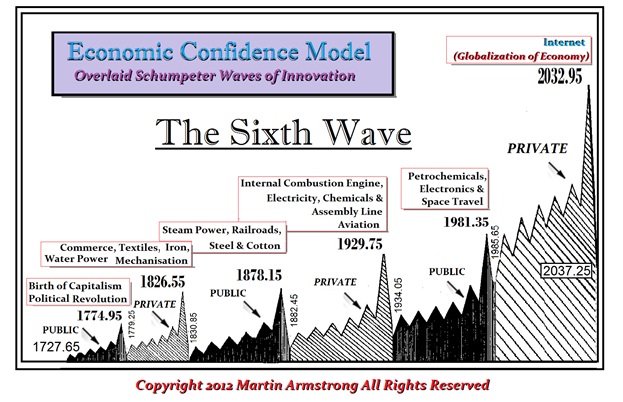
My question – what is the significance of the six repetitions in the ECM? Six 8.6 years make a cycle and six of these make a larger cycle and then six of these make a super-cycle. Why six? Why not five or seven? Can you explain the significance?
Thank you
g
ANSWER: The Economic Confidence Model is actually a three-dimensional wave structure. The volatility is a different frequency and that is what determines the number of 8.6-year waves for this is building in intensity. What you get at the end of these 51.6-year waves is very profound. After the 1774.95 peak, we end up with a revolution against the monarchy. The next wave peak in 1826.55 Russo-Persian War, 1826-1828, Greek War of Independence, Battle of Monte Santiago between Brazil and Argentina, Mexican Constitution is formed, the Maryland Democratic Party begins creating the confrontation between the Democrats and Republicans (South v North), and even Thomas Jefferson and John Adams both died on the 4th of July 1826 (1826.50) whereas the peak of the wave was July 19th. The next wave 1878 saw the Long Depression which was called the “Great Depression” until 1929-1932. Then the next wave was 1981.35 which marked the peak in interest rates even to the day. The next one will be 2032 and this will be followed by the shift from the West to the East in economic power.

The Creature from Jekyll Island – Unprofessional Propaganda Book


The_Creature_from_Jekyll_Island-2

QUESTION: Martin. Have you read the book Creature of Jekyll Island by Edward Griffin it is about the Feds and how they control? Many years ago I thought it was fiction but after reading it again it is true. My Question what can we do money will be what they want it to be the control?

ST

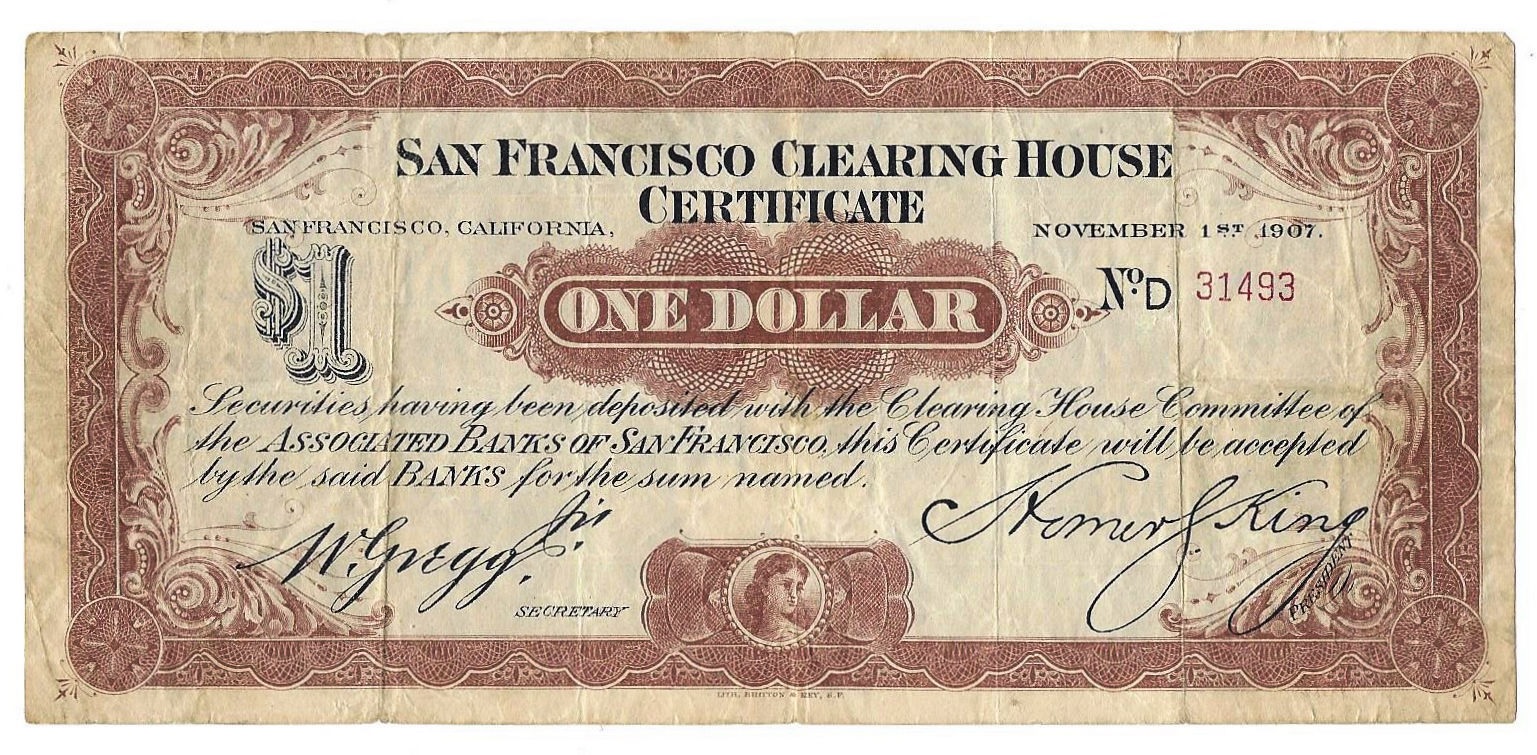
ANSWER: The book you refer to is propaganda. There are quotes in there that he simply made up about the Rothschilds. Go ahead and try and find the source. I have written about this before. That book is highly dangerous for it completely misrepresents and fails to understand that elastic money began in the 1850s and was created privately by clearing houses. It worked perfectly fine and it was not economically disastrous but BENEFICIAL!

The ability to create money by the Federal Reserve is essential. However, that design was directly beneficial for it would buy ONLY short-term corporate paper in a crisis when banks could not lend. Buying in corporate paper saved jobs. The key was a simple fact it was corporate and NOT the government. Corporates have to pay back – the government does not.

It was not that the Fed was evil, it was that the Fed was usurped by Congress during World War I and directed to buy only the paper of the government. It was that aspect that has altered the role of the central bank and is demonstrated who the ECB in Europe now own 40% of all government debt and they cannot stop without creating a crisis.

The Creature of Jekyll Island advocates what Jackson did, and that will lead to a massive Sovereign Debt Crisis among the States and undermined the entire economy both domestically as well as internationally. That is by no means the answer. The answer lies in the curtailment of politicians. The banks owned the Fed BECAUSE it was a bailout system that they paid into. It was never intended that taxpayer money would be used to bail out banks. Once the banks became the seller of government debt, they then had a grip on government and with the Fed only buying government debt, the entire system is nothing like the intended design.