Earlier today President Trump delivered brief remarks to the White House press corps while departing for CPAC. The president fielded multiple questions about the Parkland Florida shooting and the latest revelations about school officer Scot Peterson who did not enter the building.
Yes – Canadahas also adopted the BAIL-IN abandoning the socialist BAILOUT so banks can take depositors money legally. This is how we move from Capitalism to Socialism to Tyranny,
From January 31st, 2018, the UK authorities have a new power. They can now use new and expansive investigative authority to require both individuals and corporate bodies to provide information as to how they acquired property. Known as Unexplained Wealth Orders (“UWOs”), which is another step toward tyranny all because governments are totally incapable of managing their own finances. They line their own pockets with promises of pensions for government workers and when they need to be paid their attitude is simply that the people are like an apple orchard – just go pick some more apples when you get hungry.
The new UWO imposes obligations to disclose information with respect to property anywhere in the world and can even be served on persons living outside the UK. Britain is taking a step closer toward imposing worldwide taxation for it is now requiring even non-resident to divulge information that historically was not taxable. The legal framework behind UWOs, and their interaction with other criminal and civil statutes, as well as the implications for individuals, institutions, and trustees are serious issues.
What has taken place is rather stark and we can expect that other countries will file Britain’s lead. This new law has turned the entire legal system on its head. We have always believed that we were supposed to be innocent until proven guilty. That has been completely eradicated from the law. The UWOs now presume guilty and it becomes your burden to prove you are innocent.
The Legal background
Sections 1 to 9 of the Criminal Finances Act 2017 (“CFA”) have now amended section 362 of the Proceeds of Crime Act 2002 (“POCA”), This has created a whole new regime of UWOs. As of January 31st, 2018, several of the UK authorities have new powers including the National Crime Agency, Serious Fraud Office, Financial Conduct Authority and HM Revenue & Customs. All of these agencies are now able to require both individuals and corporate bodies to explain how they obtained an interest in a specified property.
The Court may now also engage in a UWO requirement where the following four conditions are satisfied:
Condition 1: There are reasonable grounds to believe that the person holds the asset(s).
Condition 2: There are reasonable grounds to believe that the cumulative value of the asset(s) is greater than £50,000.
Condition 3: There are reasonable grounds for suspecting that the known source of the person’s lawfully obtained income would have been insufficient for the purposes of obtaining the property – for these purposes, the Court will consider any mortgage or other security that it is reasonable to assume was or may have been available and assume that the person obtained the property for market value.
Condition 4: The person falls into one of the following categories –
· The person is a “Politically Exposed Person” (“PEP”) i.e. someone entrusted with prominent public functions by an international organisation or any country other than the United Kingdom or another EEA state; · The person is a family member, a close associate or a connected person of a PEP; · There are reasonable grounds for suspecting that the person is, or has been, involved in serious crime (either in the UK or elsewhere) (“a suspected criminal”) – serious crime will include fraud, money laundering, tax evasion, sanctions offences, and bribery and corruption; or · The person is connected with a suspected criminal.
UWOs must be served in accordance with the usual Civil Procedure Rules. So in other words, we are looking at a whole new type of power. You are now GUILTY and you must prove your INNOCENCE. I have explained that I was held in prison for “Civil Contempt” not CRIMINAL. The difference is one I was being “coerced” and the other is you are being “punished” so only then are you entitled to a real trial by jury.
Here we have the same pretense. The burden and standard of proof regarding UWOs fall under the civil investigative tools and as such they do not form part of the UK’s criminal law regime. Therefore, as long as it is civil, you can be stripped of all rights and any imprisonment is “coercive” so you are not being punished. Consequently, the UK authorities can engage in full-blown tyranny applying for a UWO they will only need to show “reasonable grounds” for their suspicions. This is a much lighter legal standard than the “realistic prospect of conviction” standard required in order to bring criminal prosecutions what is call in America “probable cause”.
The real danger her is there is no practical limitation on the scope. That means the UK is applying the scope to worldwide turning its citizens and corporations as well as trusts into tax slaves. Laws are normally limited to TERRITORIAL JURISDICTION meaning if you killed someone in Paris, you stand trial in Paris not in Hong Kong or wherever you are a citizen. Hence, here the scope of UWOs can be made in respect of any property, regardless of where in the world it is located converting everyone to a tax slave. This applies to any individual or corporate, whatever their place of residence, business or incorporation (there is no requirement to demonstrate a nexus to the UK). This is really tyranny for the way the code is written, they could bring thistoanyone even if not British.UWOs can be made in respect of any property, including property acquired before January 31st, 2018, as well as property held by more than one person meaning partnerships and trusts. Laws have traditionally been regarded as tyranny if they are applied retroactively, known as Ex Post Facto. Here, because this is “civil” in pretense, they are circumventing all the historic safeguards against legal persecutions by writing a law after the fact to make something criminal.
The penalties of a failure to respond to the UWO within the prescribed time without reasonable excuse will give rise to a presumption that the property specified in the UWO is recoverable for the purposes of a civil recovery order (“CRO”) which means the property will be presumed to be ill-gotten gains and seized by the government. You then will have the burden to prove you are innocent and you are presumed to be guilty. If you refuse to answer, they can throw you in prison until you die as they did with me using the contempt of court powers. If you lie in any statement in response to a UWO, now this becomes criminal and punishable by a prison sentence of up to two years and/or a fine.
You will be deemed guilty unless you have “reasonable excuse” to have failed to comply with the terms of the UWO, yet what constitutes a “reasonable excuse” is not actually defined. In the States, a mother was required to pay her son’s student loan even though he had been killed and the court held that was not a “reasonable excuse” so this becomes a pure tyranny.
The UWO also allows in the legislative changes a new Interim Freezing Order (“IFO”). So, the government can freeze your assets until you comply. The High Court may grant a IFO to prohibit a respondent to a UWO (and any other person with an interest in the property) from dealing with the property specified in the UWO. If the court issues an IFO, the agency bringing the action must determine whether or not to instigate proceedings within 60 days. If it fails to do so, the IFO will expire, however, the relevant authority is still free to determine what proceedings it may take against the respondent “at any time” in the future without any statute of limitations – another tyranny under the law.
The DANGER in this legislation is simple. It is pure and unadulterated tyranny for it removes ALL protections of law and shreds the English Bill of Rights no less the Magna Carta. Then King John also derived income from fines, court fees, and the sale of charters and other privileges. Fines were called “amercements” and at the time, it was said that there was hardly an Englishman of substance who had not been amerced at least once a year. Magna Carta introduced the right to trial by jury, where the people decide if someone is guilty and what the fine should be. This drastically curtailed the king’s abuse of the legal system at that time. King John was very unpopular, for he had intensified his efforts to maximize all possible sources of income to regain Normandy. Contemporary commentators describe him as “Avaricious, miserly, extortionate and money minded.”
The entire right to trial by jury was to stop the king and his corrupt courts from fining people to raise money. This law has shredded the Magna Carta and has restored all the former tyranny of the King once again to raise money. In 2015, that marked the 800th year following the signing of Magna Carta.
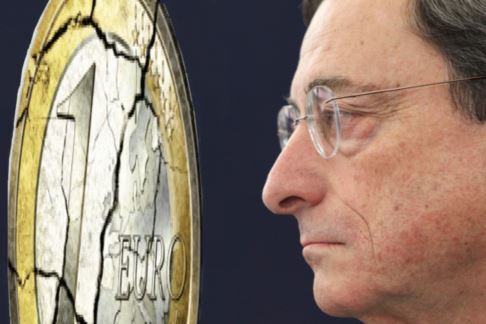
Behind the curtain, there is a growing concern about a serious banking crisis beginning once again in Europe. Many governments are talking about the crisis behind-the-curtain and we are now beginning to see steps that are being taken to end the TO-BIG-TO-FAIL policies that dominated the 2007-2009 Crash.
The United States is looking at a new radical bank rescue policy where the government is proposing to revise a central pillar of the idea of bailing out banks creating new financial regulation with a new Chapter 14 bankruptcy procedure. They are looking at eliminating the risk of taxpayers’ costs to bail out banks. They are investigating the means for an orderly resolution so that the taxpayers do not have to bail out the banks. This development is causing some concern among the high-flying Wall Street banks, for if that is the case, then another crisis as 2007-2009 will result in even Goldman Sachs closing. The proposal looks to shift the burden to the shareholders and creditors of that bank. This means depositors who are thus creditors.
In Australia, we see similar legislation being proposed. This is the Financial Sector Legislation Amendment (Crisis Resolution Powers and Other Measures) Bill 2017. This also authorizes bail-ins bringing an end to the bailout.
While the stock market crashed as the pundit looked in their bag to try to come up with an excuse, they blamed rising inflation and interest rates. Yet, nobody is really paying attention to the underlying trend. The cost of carrying debt has been rising gradually and there are noticeable measurable impacts that the pundits are of course oblivious to since they have to explain every day’s movements and not the real trend.
Already, the 10-year rate is piercing above the 2.6% area. There is an impact on the currency once people begin to comprehend the trend. The 10-year German bond rate is 0.70%, and this has been maintained by the ECB buying 40% of European government debt to no avail for nearly 10 years.
The real crisis comes when they realize that the ECB will not be there to buy government debt. The bidders will demand a higher yield so rates will rise very rapidly.
Meanwhile, the Fed will pursue higher interest rates as they need to be normalized to help pensions funds that are rapidly collapsing. This idea of a lower dollar will raise the price of imports and with tariffs, inflation in consumer products will rise.
Mueller is still not ending his investigation. Why should he? He would have to go get a real job in the private sector. Keep the investigation alive to pay the light bills. He shows no sign of embracing unemployment. His pretend indictment is dancing between raindrops, indicting people in Russia knowingly there will never be a trial. We cannot count him out yet as a factor that will undermine the economic confidence.
So we stand at the threshold of rising rates that will then feed into the market and create a bid for the dollar it appears after March.

I have warned continually that the Sovereign Debt Crisis will unfold not so much by people selling government debt, but by the lack of people buying new debt. The greatest peril is when there is NO BID for the new issues because all governments are operating a PONZI scheme. The sell new debt to pay off maturing debt. Currently, holders of Indian government debt have been dumping 4.7 billion rupees ($73 million) of government bonds on average every day this year, according to data from the Clearing Corp. of India. Last year, their net daily sales totaled 368 million rupees.
The Sovereign Debt Crisis emerges when the government is unable to raise enough cash to pay off the maturing debt. India has crossed that threshold so as we have warned, the Sovereign Debt Crisis will begin from outside the USA and spread to the core. This is how all Empires, nations, and city-states collapse.
Just ‘twitches’ – We explained yesterday how Moon Jae-in relates to the NAFTA exit (SEE HERE). We showed last year how President Trump uses specific emissaries, only the most trustworthy, for critical geopolitical messaging in advance of big action. Well…
WASHINGTON (Reuters) – President Donald Trump’s daughter Ivanka Trump, a senior White House adviser, will meet South Korean President Moon Jae-in on Friday as part of a weekend trip to lead the U.S. delegation to the closing ceremony of the Winter Olympics. (read more)
A senior administration official, speaking to reporters on condition of anonymity, said Ivanka Trump will dine with Moon at the Blue House in Seoul on Friday night. She has no plans to meet with North Korean officials, the official said.
[…] Justin from Canada recently signed up to the Trans-Pacific Partnership. With that decision the fatal flaw -from a U.S. perspective- just became the final straw to end the U.S. participation in NAFTA.
The U.S. cannot make any bilateral trade deals with TPP nations while those same TPP nations have an alternative access route to the U.S. market through Canada via NAFTA.
Therefore the only way for President Trump to finish a trade agreement with South Korea (current tense negotiations – see Samsung etc.) is to first remove their NAFTA alternative. Anticipating this reality S-Korea also filed a WTO trade challenge earlier today.
Understandably, South Korea is currently hosting the U.S. Olympics and it would have been extremely poor form, very impolite, and economically very destabilizing for Moon Jae-in if POTUS Trump had made the NAFTA announcement in the months/weeks leading up to their international spotlight event. (more)
[06:25 of Video] SECRETARY TILLERSON: Well, I’m delighted to be in Cairo, my first trip to Egypt as Secretary of State, and to really have very comprehensive discussions about this almost one-half-century relationship between the U.S. and Egypt and our commitment to strengthening this partnership in the years to come.
I’m also very pleased to be with Foreign Minister Shoukry, who has become a friend as we have engaged on a number of challenges in the region and to address those jointly and with a great deal of agreement between us as to how those issues need to be addressed. I look forward to my meeting with President al-Sisi and appreciate his receiving me as well.
We had a very productive discussion on our shared regional and security concerns. We spoke about opportunities as to how to strengthen our ties and, as the foreign minister indicated, mechanisms by which we can deepen those ties and further explore areas for mutual cooperation, first through the strategic dialogue which we’ve agreed we will have later this year, and then we’re going to explore also the possibility of a 2+2 dialogue to even allow us to further enhance these conversations both on a full range of issues of not just security concerns, but political and economic opportunities as well.
I did express to the foreign minister our condolences to the people of Egypt for the violence that they have been suffering from the terrorist attacks perpetrated by ISIS and other terrorist groups. Egypt’s been battling this level of extremism for many years, and we continue to be steadfast partners in their response to these attacks throughout this time.
We agreed that we would continue our close cooperation on counterterrorism measures, including our joint commitment to the defeat of ISIS, and Egypt has been a very important member of the Defeat-ISIS Coalition from the beginning. They – Egypt deals with the threats of ISIS themselves and are dealing with it certainly currently in the Sinai.
We also discussed the importance of the protection and promotion of human rights and the vital role of civil society in Egypt. With the presidential elections planned for the end of March, the United States, as it does in all countries, supports a transparent and credible electoral process, and all citizens being given the right and the opportunity to participate freely and fairly.
On Libya, the United States and Egypt support the UN’s Action Plan for Libya for credible and peaceful elections in their country. This will promote stability – much-needed stability for Libya and their economy to prosper. As the Security Council affirmed on December the 14th, the Libyan Political Agreement in our view must remain the framework for a political solution throughout Libya’s transitional period.
Foreign Minister Shoukry and I also discussed Syria and how we can work together to reinforce the UN-led Geneva political process, which is the only political framework through which this conflict can be resolved. And Egypt has played a very important role in supporting dialogue between opposition representatives and the central government in Damascus.
On the Middle East peace, I reiterated that the Trump administration remains committed to achieving a lasting peace agreement between the Israelis and the Palestinians.
Now, the foreign minister and I also discussed how we can intensify our countries’ economic engagement and support our private sectors to generate jobs and prosperity for both of our people, and I acknowledged and welcomed the very important – although we know difficult – steps towards reform that President Sisi has undertaken in order to create a very strong foundation for future prosperity and economic performance in Egypt, and those have been necessary, although difficult, to be fully – receive the full support of the IMF, and Egypt has met all of those requirements.
We’ll do what we can to continue to encourage the economic recovery and we hope that American companies are able to increase their investments in Egypt that will create jobs and opportunities here as well.
The United States, again, commits itself to standing with Egypt, standing shoulder to shoulder in these – in the fight against terrorism, but also standing together to create a more stable region for everyone as well, and I thank the foreign minister for our opportunity to meet and exchange on so many important issues. Thank you.
FOREIGN MINISTER SHOUKRY: Thank you very much.
MODERATOR: (In Arabic.)
QUESTION: (In Arabic.)
SECRETARY TILLERSON: Well, I think the commitment the U.S. has to Egypt’s security in the fight against terrorism should be evident, and both with the release of about a billion dollars of foreign military financing assistance to Egypt to continue to strengthen its capabilities, and also sharing of other approaches to countering terrorism, some of which we can talk about, some of which we can’t so easily talk about. But our joint commitment to defeat ISIS is steadfast and there has been no gap between Egypt and the United States in our joint efforts to confront terrorists and extremist – extremism in the region, but most specifically here in Egypt as well.
So I think the Egyptian people should be confident that the U.S. commitment to continuing to support Egypt in this fight against terrorism, in bringing security for the Egyptian people is steadfast, and that will continue, and we had a great deal of exchange today about how we can advance that. And we just mentioned the intent to have a strategic dialogue later this year. All of these are opportunities for us to identify other ways that we can strengthen and support Egypt’s fight against terrorism, but also, ultimately, to strengthen the economic development of Egypt as well.
MODERATOR: (In Arabic.) Carol, Washington Post.
QUESTION: Thank you. Mr. Secretary, given the concerns (inaudible) to run against the president (inaudible) election and who were arrested and disqualified, how (inaudible) do you believe those elections will be? And will the United States consider withholding more military aid from Egypt (inaudible)?
And Mr. Foreign Minister, sir, human rights groups have called this the most repressive era in modern Egyptian history. What did Secretary Tillerson tell you about democracy and civil liberty here in Egypt? And will anything change here in Egypt after your meeting today? Thank you.
SECRETARY TILLERSON: Well, I think as I indicated in my prepared remarks, and I would answer the same: We have always advocated for free and fair elections, transparent elections, not just for Egypt but in any country. And so the U.S. is always going to advocate for an electoral process that respects the rights of its citizens to make the choices the citizens want to make and the full participation of citizens in those elections. And nothing has changed about our advocacy for those types of elections.
FOREIGN MINISTER SHOUKRY: As relates to some of the comments that have been made by certain members of the human rights community and other activists, I would only recommend that you ascertain for yourself the nature and the current situation in Egypt as relates to human rights, and how the Egyptian people view this administration and its efforts to strengthen and protect human rights, and whether there is that sense of restriction that you alluded to. I think it is – it isn’t helpful that a certain group projects from a perspective of lack of information, lack of direct association to a society, but it is much, much more important the general conditions, the freedom of press that is available, the variety of television shows, the dialogue and the exchange. Development in the social and political field is an evolutionary process. I think over the last 11 years, the Egyptian people have shown their commitment and their determination and their ability to change their course and to indicate their dissatisfaction. If they deemed that they were dissatisfied, they have been able to change two governments in the last seven years, and they have undertaken legislative elections and know how to protect their rights and to advocate for those rights.
So it’s important that I think we recognize that it is the Egyptian people who should determine how they are applying their freedoms and their political activism, and I hope that you will have the opportunity while you’re here in Egypt to discuss this with the Egyptians on the street and ascertain from them directly whether they are satisfied with current conditions.
We had a discussion with the Secretary related to Egypt’s efforts to develop both politically, economically, and socially, and that we continue to do so out of our desire to see Egypt evolve into a place of – that can fulfill the aspirations of its people, and we will continue to rely on the support that we can depend on from the United States in this regard. These are commitments that this administration is confident it will fulfill, and it is responsible to the Egyptian people to continue to fulfill those commitments, as has been stipulated in our constitution.
MODERATOR: (In Arabic.)
QUESTION: (In Arabic.)
SECRETARY TILLERSON: Well, I think it’s important to note that in the announcement President Trump made regarding Jerusalem he also made two very important points as well, one of which was he was not advocating for any change to the status quo as to oversight of the holy sites, recognizing the proper role of existing authorities; and the second is that the final boundaries of Jerusalem are yet to be determined, and that those will be decided among the parties. And those – I think it’s oftentimes those two important points seem to have been overlooked in his announcement. And yes, the U.S. is still committed to the peace process and still believes we have an important role to play in bringing the parties together and seeing a resolution to this. And President Trump is committed to that.
FOREIGN MINISTER SHOUKRY: (In Arabic.)
MODERATOR: (In Arabic.) Wall Street Journal, Felicia.
QUESTION: Thank you. Secretary Tillerson, Vice President Pence, in an interview with The Washington Post, endorsed what you’ve described publicly as talks about talks with the North Koreans, and president – South Korea’s President Moon said he would go to Pyongyang. Is this the start of a diplomatic process in North Korea?
And then for Foreign Minister Shoukry, the U.S. has in the past raised concerns about Egypt’s ties with North Korea. What is Egypt doing to cut those ties?
SECRETARY TILLERSON: I’m not sure I could hear the last part of your question.
QUESTION: I was just asking if this – is this the start of a diplomatic process with North Korea?
SECRETARY TILLERSON: Well, as to – as to the Vice President’s comments about potentially having talks and whether it’s the start of a diplomatic process, I think it’s too early to judge. As we’ve said for some time, it’s really up to the North Koreans to decide when they’re ready to engage with us in a sincere way, a meaningful way. They know what has to be on the table for conversations. We’ve said for some time that I think it’s important that we have – we’re going to need to have some discussions that precede any form of negotiation to determine whether the parties are, in fact, ready to engage in something this meaningful, in order for us to then put together the construct of a negotiation. So we’ll just have to wait and see.
FOREIGN MINISTER SHOUKRY: We did discuss with Secretary Tillerson the issues related to North Korea, the Korean Peninsula, and the security of that region. Egypt has had normal diplomatic ties with North Korea, as does many Western and NATO members, and those ties are, in terms of the relationship, limited to representation, and there is almost no existing economic or other areas of cooperation. But we are concerned with the current status with the threats emanating from the proliferation of nuclear weapons, a situation which we deem as threatening to the global nonproliferation regime, one that has to be dealt within our maintaining global security, also the threats of ballistic missile systems to South Korea and to Japan, and we believe that all of these issues must be resolved for the security of the region and the Korean Peninsula. And we will continue to discuss these issues and to take the appropriate measures to deal with these challenges.
Consider this a kick-off to my official NAFTA watch. Readers will note my earlier spidey-sense prediction of NAFTA withdrawal announcement in/around the end of February through March. I cannot see a delay in an announcement extending beyond March 2018. Ergo, CTH is fine-tuning the radar to watch closely.
Thefatal flawwithin NAFTA has not been addressed. Neither Canada nor Mexico has even slightly indicated a willingness to engage talks over the fatal flaw.
Exactly the opposite happened earlier this month when Canada signed up to the TPP deal.
The agreement has yet to be ratified by Canadian Parliament, and many are nervous, but it will likely get done.
The NAFTA decision will be the biggest political and economic decision in the Trump administration so far, and the corporate GOPe response is anticipated to be beyond ugly. Additionally, it would be intellectually dishonest not to accept there are very specific interests watching these pages as part of their proactive strategy. (Hi, Tom)
That said, if you were Mexican President Enrique Peña Nieto and you noted the specificity of the current trade-policy planetary positions; and you were overlaying the preparatory action taken by Justin from Canada; and you understand there are factually hundreds of billions in play; you would be a fool not to go past past Economy Minister Ildefonso Guarjardo and directly engage the ultimate decision-maker, U.S. President Donald Trump, out of an urgent need to evaluate the survivability of your economic surroundings. It would be imprudent not to prepare yourself:
(White House) President Donald J. Trump spoke today with President Enrique Peña Nieto of Mexico to offer condolences to the families of the victims of the helicopter accident in Oaxaca. President Peña Nieto returned the sentiment and expressed Mexico’s solidarity with the United States following the high school shooting in Parkland, Florida. President Trump underscored his commitment to expanding cooperation between the United States and Mexico on security, trade, and immigration.
The basic issue is a simple one – for the United States NAFTA has a fatal flaw. Canada and Mexico are used by China, Europe and Asian nations as a way to work-around direct trade with the U.S. and those nations use NAFTA as a backdoor into the U.S. market. It works out great for Canada and Mexico, but terrible for the U.S.
It is a structural issue and no amount of negotiation is going to remove the fatal flaw unless Canada and Mexico agreed to terms that are directly against their prior financial interests. Absolutely ZERO action has been taken to address this issue through six rounds of prior NAFTA discussion. Round six ended with VERY terse words from U.S. Trade Representative Robert Lighthizer specifically over this issue.
Justin from Canada recently signed up to the Trans-Pacific Partnership. With that decision the fatal flaw -from a U.S. perspective- just became the final straw to end the U.S. participation in NAFTA.
The U.S. cannot make any bilateral trade deals with TPP nations while those same TPP nations have an alternative access route to the U.S. market through Canada via NAFTA.
Therefore the only way for President Trump to finish a trade agreement with South Korea (current tense negotiations – see Samsung etc.) is to first remove their NAFTA alternative. Anticipating this reality S-Korea also filed a WTO trade challenge earlier today.
Absent of massive last-minute economic concessions (I’m talking full-blown acquiescence) by Canada and Mexico there is no alternative other than for President Trump to withdraw.
Understandably, South Korea is currently hosting the U.S. Olympics and it would have been extremely poor form, very impolite, and economically very destabilizing for Moon Jae-in if POTUS Trump had made the NAFTA announcement in the months/weeks leading up to their international spotlight event. [It’s not only CTH who follow the global tentacles of multinational trade decisions.]
However, with the Olympics ending next week that diplomatic hurdle is removed… the countdown clock now officially begins.
While speaking during a White House ceremony earlier today President Trump announced he has directed Attorney General Jeff Sessions to develop regulations surrounding “bump fire stocks”, noting the intended regulation would be an actionable step to help prevent future mass shootings.
During his remarks President Trump noted: “We cannot merely take actions that make us feel like we are making a difference, we must actually make a difference.” The decision to eliminate ‘bump-fire stocks’ is smart policy and politically.
On the policy side the regulatory move is in line with already existing rules on firearms that ban auto-fire weapons. On the political side the memorandum stops opposition from saying the President is not taking action; the regulatory memorandum reflects action taken by President Trump that was not taken by President Obama.
(From the memorandum) After the deadly mass murder in Las Vegas, Nevada, on October 1, 2017, I asked my Administration to fully review how the Bureau of Alcohol, Tobacco, Firearms and Explosives regulates bump fire stocks and similar devices.
Although the Obama Administration repeatedly concluded that particular bump stock type devices were lawful to purchase and possess, I sought further clarification of the law restricting fully automatic machineguns.
Accordingly, following established legal protocols, the Department of Justice started the process of promulgating a Federal regulation interpreting the definition of “machinegun” under Federal law to clarify whether certain bump stock type devices should be illegal. The Advanced Notice of Proposed Rulemaking was published in the Federal Register on December 26, 2017. Public comment concluded on January 25, 2018, with the Department of Justice receiving over 100,000 comments.
Today, I am directing the Department of Justice to dedicate all available resources to complete the review of the comments received, and, as expeditiously as possible, to propose for notice and comment a rule banning all devices that turn legal weapons into machineguns.
Although I desire swift and decisive action, I remain committed to the rule of law and to the procedures the law prescribes. Doing this the right way will ensure that the resulting regulation is workable and effective and leaves no loopholes for criminals to exploit. I would ask that you keep me regularly apprised of your progress.
You are authorized and directed to publish this memorandum in the Federal Register. ~President Donald J Trump (White House Link)
I have created this site to help people have fun in the kitchen. I write about enjoying life both in and out of my kitchen. Life is short! Make the most of it and enjoy!
This is a library of News Events not reported by the Main Stream Media documenting & connecting the dots on How the Obama Marxist Liberal agenda is destroying America