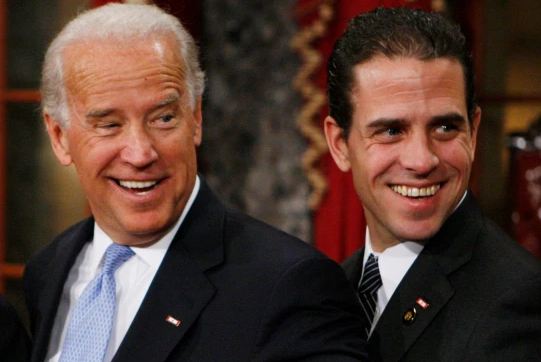
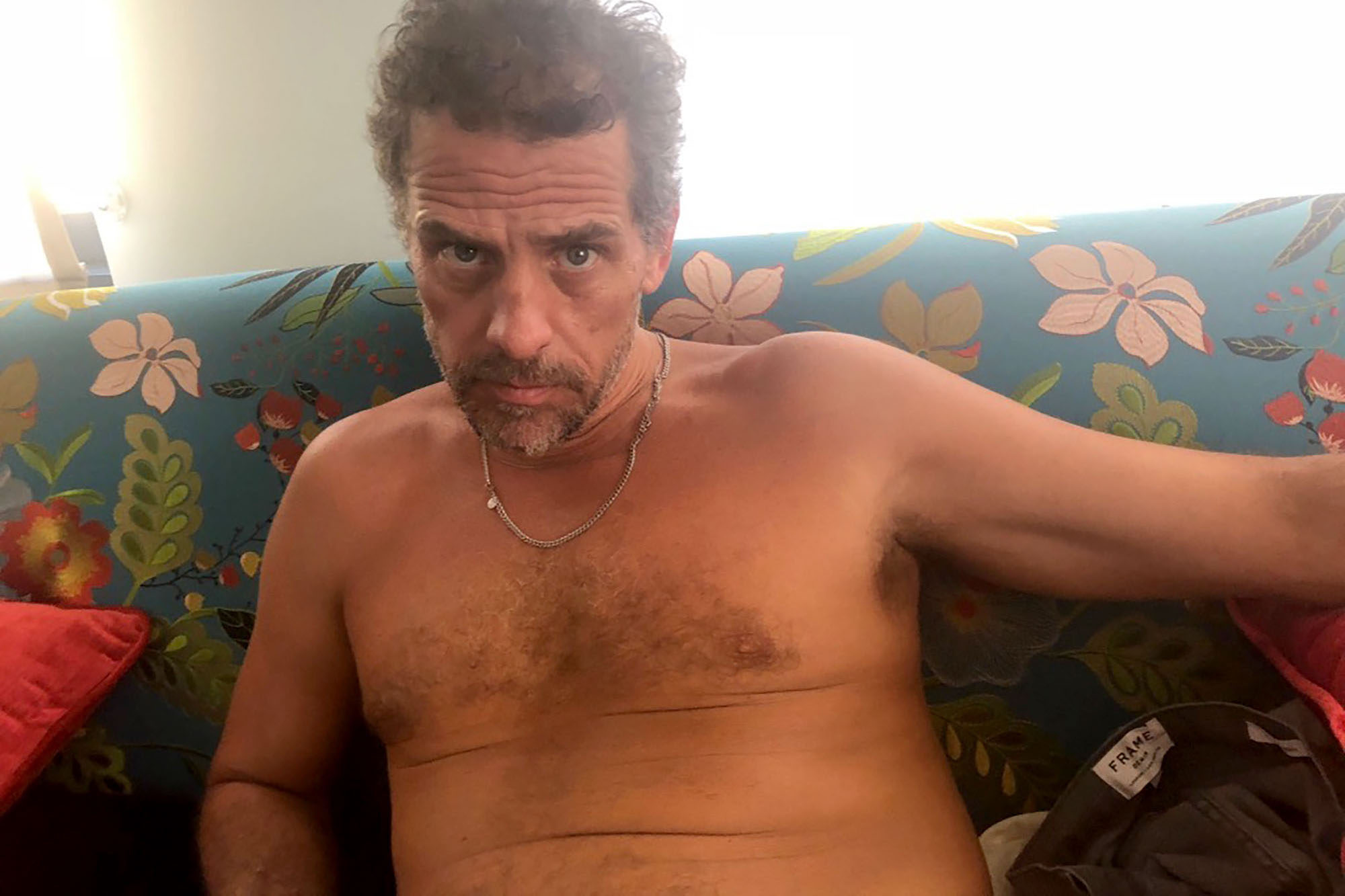
The Biden crime family’s activities are coming to light after a bank with ties to China handed over records to Republican lawmakers. Senator Ron Johnson of Wisconsin and Senator Charles Grassley of Iowa reached out to numerous banks for information without luck. “We are investigating the domestic and international business dealings of President Biden’s son, Hunter Biden, and other Biden associates and family members to determine whether these activities compromise U.S. national security and President Biden’s ability to lead with impartiality,” they stated in a joint letter. Cathay Bank was the only bank that was willing to aid in the investigation.
Cathay Bank revealed that Rob Walker, a Biden family associated, received a $3 million payment from a Chinese firm. Walker distributed these funds to the Bidens the following day. The alleged payments were made to Hunter Biden for $610,692; the president’s brother James Biden for $360,000; Hunter’s mistress and wife of deceased son Beau, Hallie Biden, for $25,000; last of all, $70,000 was paid to an unknown Biden. Twelve additional transactions are currently under investigation.
The corruption began while Biden was Obama’s vice president. As indicated in the joint letter:
“The convergence of the Biden family’s political and business lives began during the Obama-Biden Administration. Obama Administration White House visitor logs show Hunter Biden’s business partner visited the White House at least 27 times during President Biden’s vice presidency. Hunter Biden’s business partner—Eric Schwerin—was later nominated for a position in the Obama-Biden Administration and handled then-Vice President Biden’s tax returns while he was in office and Schwerin was president of Rosemont Seneca Partners— another Hunter Biden-affiliated company. Republicans must track the dollars to uncover whether the current President himself benefitted from these transactions and whether the payments were from nations opposed to U.S. interests.”
Now-defunct CEFC China Energy, with direct ties to the Chinese Communist Party (CCP), wired $1 million to one of Hunter’s business ventures called Hudson West III. Northern International Capital Holdings, a CEFC associate, sent $5 million to Hudson West III. Hudson West III used the money to send $4.8 million to Owasco P.C. and Owasco LLC, and Lion Hall Group, owned by the president’s brother James Biden. Owasco P.C. sent over 20 wire transfer to Lion Hall Group. Hunter received a $500,000 a month retainer from Hunter West III on top of a $100,000 per month fee. I am assuming that is a lot of crack. James Biden received $65,000 per month.
Senator Johnson believes the CCP may have more dirt on the Biden’s and called this release a warning shot. “They willingly gave us the documents that backed up the Treasury records. Is that a Communist Party’s shot across President Biden’s bow? Listen, this is some of the information we have. If you don’t toe the line and do things that please us, we will release even more information,” stated Johnson. The House Oversight Committee needs to take this matter seriously. America’s national security is at risk if the sitting president is compromised.
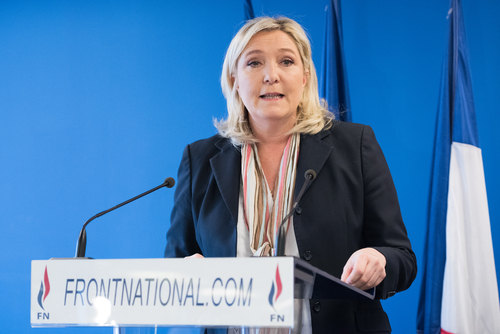
“I’m not Meloni’s twin sister, I remain faithful to Salvini,” French politician Marine Le Pen said in regard to the Italian PM. Le Pen condemned Italy’s Meloni for supporting NATO and the EU, and while she condemns Russia’s actions in Ukraine, she does not believe that the proxy war should continue. Le Pen said that European countries should remain “Eurosceptic” as there is clearly a larger agenda at play that does not consider individual nations.
She also said that she is convinced France should leave NATO immediately and cease all weapon exports to Ukraine. Why?
“I would do everything possible for France to promote a peaceful resolution of the conflict. For one simple reason: I don't see any other valid solutions.” “Or Russia – continues Le Pen – wins the war, and it would be catastrophic because all the countries that have a territorial conflict will think they can solve it with weapons. Either Ukraine wins, and this would mean that NATO has entered the conflict, and thus the beginning of the Third World War. It doesn't seem like a happy prospect to me. Or, we will continue to supply Ukraine with weapons and then we will find ourselves facing a new Hundred Years War which, given the human losses, would be a tragedy.”
This is the exact problem. No one is going to “win” this war and World War III is imminent as NATO continues to embed itself in the conflict. All NATO leaders are abandoning their domestic policies in favor of an international one that does not benefit their respective countries in any way. This entire proxy war the entire world is now fighting is merely a ploy to eliminate Russia and end fossil fuel production. I discuss these topics in depth in my book, “The Plot to Seize Russia,” which my publisher is currently working on completing. I will let everyone know once the book is available for purchase in the coming weeks.
Posted originally on the CTH on April 16, 2023 | Sundance
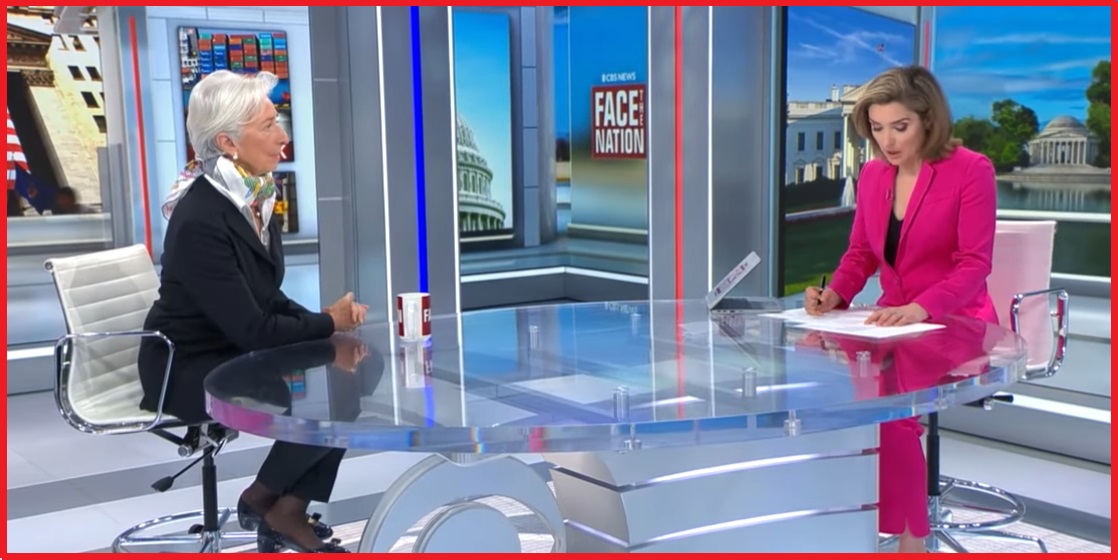
Christine Lagarde, president of the European Central Bank, appears on Face the Nation to describe the current status of EU success in shrinking the economy to achieve parity with the shrinking of energy development. Ms. Lagarde is very happy with their ‘management of the transition’ so far, and sees slow economic growth combined with a citizenry happily accepting the lower standard of living, the new normal.
As Lagarde outlines, the lowered economic activity is helping the central banks support the objectives of the government officials and corporations who are giving the instructions. Overall, she is optimistic the common man and woman will continue accepting less ability to achieve personal economic and financial success, as the bankers and politicians continue managing the western transition. Things are going swimmingly. WATCH:
MARGARET BRENNAN: We’re joined now by Christine Lagarde, former head of the IMF, now the president of the European Central Bank. Good morning.
PRESIDENT OF THE EUROPEAN CENTRAL BANK CHRISTINE LAGARDE: Good morning, Margaret. Lovely to be back.
MARGARET BRENNAN: Good to have you here, and your recovery is going all right?
MADAME LAGARDE: Yes, in a couple of days, I think I’ll be fine.
MARGARET BRENNAN: I’m glad to hear that. You have a long list of things ahead of you. And I want to ask you about the global recovery. You were speaking a few days ago and you said the recovery for the economy is fragile and uncertain in this country. The Fed thinks we’ll see a mild recession later this year. What is it that you predict?
MADAME LAGARDE: First of all, there is recovery. That’s, I think, a point that was not really firm only six months ago where we all assumed that there would be a recession, if only a technical one. If you look at all the forecasts at the moment, it’s all positive. It’s been slightly downgraded. But overall, we have a recovery and we are faced with high uncertainty because of multiple factors, you know, from all corners of the world. It’s the war in Ukraine. It’s the financial stability that clearly has been shaken up a bit by the US and Switzerland development. It’s inflation that we are fighting. It’s all that which really create a hollow of uncertainty around a recovery that we want to embed. That’s pretty much where we are.
MARGARET BRENNAN: So there were those recent bank failures here in the United States, also one in Switzerland. Given that, it sounds like you’re saying you don’t see a hard landing, you’re seeing a positive trajectory for the global economy?
MADAME LAGARDE: I think we have a narrow path to navigate, which requires that both the governments and the central banks around the world adopt the right policies.
MARGARET BRENNAN: OPEC just cut output.
MADAME LAGARDE: Hm?
MARGARET BRENNAN: OPEC just cut output, but you don’t see that as a disruption?
MADAME LAGARDE: I know. And- and we have to be very attentive. But in the meantime, if you look at- I’ll have to look at Europe at the moment. We have reduced our overall consumption of gas energy, for instance, by more than 15 percent. So it’s not as if we negotiated here or there. We just cut down our energy consumption, number one. Number two, we have renegotiated with multiple partners ranging from Norway to the United States of America, which is a big supplier of our energy. And I think that our dependency, which we learned the hard way about, has significantly declined. So I think that we moved from the illusion of plenty of energy, free money, to a time of resilience and building buffers. This is what has happened.
MARGARET BRENNAN: It’s interesting to hear that optimism. I mean, given the bank failures we just saw, you hear from bank CEOs in this country, this idea that they’re getting more cautious about lending money, largely that there’s some contraction in credit there. How concerned are you and how does that complicate your planning?
MADAME LAGARDE: It’s funny you should ask, complication because in a way it facilitates my planning and it complicates the future as far as growth.
MARGARET BRENNAN: Because it slows down business activity so you don’t have to raise rates as much or as frequently.
MADAME LAGARDE: We don’t have to reduce. We’ll see. Because we need to really measure what will come out of this- this financial events that took place recently. What impact will it have? How will banks react? How will they assess risk and how much credit will they lend? But if they don’t lend too much credit and if they manage their risk, it might reduce the work that we have to do to reduce inflation, okay? But if they reduce too much credit, then it will weigh on growth excessively. So it’s a fine balance to have between credit risk, good management on the one hand, and on the other hand, financing the economy as is expected by- by the business community. The business community wants to invest at the moment. Some of them have big buffers and they can use those buffers, others are going to need credit financing from the banking sector and the markets, both of them.
MARGARET BRENNAN: I want to ask you about the U.S.. And it’s not a political question, it’s an economic one. But there are predictions that the U.S. could default in its national debt as soon as June, some say September, and we have a political standoff in this country, virtually no negotiation happening on how to resolve this. Does that undermine your confidence in the United States? And what message does that send to the world?
MADAME LAGARDE: I have huge confidence in the United States. You know, ever since my year in this country, and this city in ’73, ’74, I have had confidence in this country and I just cannot believe that they would let such a major, major disaster happen of the United States defaulting on its debt. This is not possible. I cannot believe that it would happen. But if it did happen, it would have very, very negative impact, not just for this country where confidence would be challenged, but around the world. Let’s face it, this is the largest economy. It’s a major leader in economic growth around the world. It cannot let that happen. I understand the politics, I’ve been in politics myself. But there is a time when the higher interest of a nation has to prevail. I’m sorry.
MARGARET BRENNAN: And you think that will happen?
MADAME LAGARDE: I have huge trust in this country yet again.
MARGARET BRENNAN: You’re bringing a lot of optimism to a show where we don’t have a lot of optimism.
MADAME LAGARDE: Oh. I’m sorry (laughs)
MARGARET BRENNAN: No, I like it. It’s interesting. It’s a change. I want to ask you, though, about what you just said in terms of U.S. leadership. You look to the other side of the globe and Xi Jinping has said he wants China to be the world’s leading power by 2049. And Beijing is very interlinked into so many economies, particularly in Europe. Is the U.S. losing global influence?
MADAME LAGARDE: There is clearly a competition between these- these large economies. The U.S. is the first economy in the world. China is clearly competing, and is putting all forces in that competition. I think competition is healthy. It has to stimulate innovation. It has to stimulate productivity. But it’s inevitable that these two large economies are facing each other. What I hope very much is that they can have a dialogue because, you know, all these relationships, whether it’s trade, whether it’s politics, whether it’s economic development, whether it is financial stability, it’s a two-way street. We cannot ignore each other, and trade should not be confrontational. It has to be careful. It has to identify the areas that are strategic for one country or the other- or all the others. But it shouldn’t be confrontational. I’m on the same page as Henry Kissinger on that, or Kevin Rudd, the new Australian ambassador. Conflict is not unavoidable.
MARGARET BRENNAN: But there is, it seems, increased political pressure to choose between the United States and China in many ways in some of these political capitals. Is that even practical from an economic point of view?
MADAME LAGARDE: It would lead to economic downside, the amount of which is uncertain. Is the global economy going to be affected by one or X percent? There are multiple forecasts, all of them are negative. So the decoupling and the sort of bipolarization of the world would lead to less economic growth, less prosperity in the world, more poverty across the world. So I think that this is something that should be by all means avoided.
MARGARET BRENNAN: Madame Lagarde, it’s always wonderful to have you here. Thank you. We’ll be right back.
Martin Armstrong pops in to tell us his story, including how he developed his Socrates trading algorithm which predicted the Russian financial crisis of 1998 as well as the details behind the circumstances that found him in contempt of court and thus incarcerated for 11 years. The interview starts about halfway into the podcast.
Japanese Prime Minister Fumio Kishida escaped harm earlier today after a man holding what appeared to be two pipe bombs threw one near Kishida. Remarkable video from the event showed citizens and police apprehending the suspect after one of the devices was thrown. [Japan TV Story Here]
(Via Politico) – WAKAYAMA, Japan — Japanese Prime Minister Fumio Kishida was evacuated unharmed Saturday after someone threw an explosive device in his direction while he was campaigning at a fishing port in western Japan, officials said. Police wrestled a suspect to the ground as screaming bystanders scrambled to get away and smoke filled the air.
Although no one was hurt, and Kishida continued campaigning Saturday, the chaotic scene was reminiscent of the assassination nine months ago of former Prime Minister Shinzo Abe, which also came on a campaign tour and continues to reverberate in Japanese politics. Kishida was visiting Saikazaki port in Wakayama prefecture to support his ruling party’s candidate in a local election, and the explosion occurred just before he was to begin his speech.
A young man believed to be a suspect was arrested Saturday at the scene after he allegedly threw “the suspicious object,” Chief Cabinet Secretary Hirokazu Matsuno told reporters. Matsuno refused to comment on the suspect’s motive and background, saying police are still investigating.
TV footage shows Kishida standing with his back to the crowd. His security detail suddenly points to the ground near him, and the prime minister whips around, looking alarmed. The camera quickly turns to the crowd just as several people, including uniformed and plainclothes police officers, converge on a young man wearing a white surgical mask and holding what appears to be another device, a long silver tube.
As they collapse on top of the man, working to remove the tube from his hands, a large explosion is heard near where Kishida had been standing. The crowd scatters in panic as police roughly drag the man away. (read more)
The talking heads have been warning of a housing crash, but that is not what Socrates indicated. The 30-year fixed rate is around 6.89% at the time of this writing. Housing costs continue to rise, causing the costs of servicing mortgage debt to rise. Housing inventory is limited, and a recent report explains why we saw mass layoffs in the banking sector. The demand is still there and it is a sellers’ market. Cash is king when it comes to real estate for those who can afford it. Mortgage lenders are in trouble. In fact, only 32% of mortgage companies were profitable in 2022 compared to 98% in 2020.
The Mortgage Bankers Association (MBA) recently announced that independent mortgage banks and subsidiaries of chartered banks lost around $301 for every mortgage they financed in 2022. This marks a 113% decline from the prior year’s average and the first-time banks are seeing losses on mortgage products. This is not 2008 when banks handed out loans to anyone who asked.
“The rapid rise in mortgage rates over a relatively short period of time, combined with extremely low housing inventory and affordability challenges, meant that both purchase and refinance volume plummeted,” said Marina Walsh, CMB, MBA’s Vice President of Industry Analysis. “The stellar profits of the previous two years dissipated because of the confluence of declining volume, lower revenues, and higher costs per loan.” Production costs reached a high of $10,624 per loan last year. Productivity was 1.5 loans originations per production employee, down from 2.5 per employee the year prior, and an indicator of why we are seeing layoffs in the banking sector. No one is refinancing at these rates either and most chose a fixed rate, as we saw what happened in 2008 with adjustable costs.
First-time mortgages reached an all-time high of $323,780 last year, up from $298,324, the largest annual increase since the MBA began collecting data. The increased cost of loans increased the cost of serving mortgages. The MBA expects volume to decline further in 2023 before rallying in 2024 and 2025. The banking crisis may lead to banks and lenders selling off their mortgage debts once they cannot afford to service the debt. Again, the housing crisis today is not relative to the 2008 crash.
Posted originally on the CTH on April 13, 2023 | Sundance
Never letting a crisis go to waste is very useful tool, especially when the government creates the crisis. As CTH has said from the first discussion of the classified intelligence leaks, the “leak is the op.”
The intel leak is the operation created by the Intelligence Community to support new expanded powers for the Fourth Branch of Government. It should not be a surprise to discover the institution now leading the charge to give more power for U.S. intel agencies, is…. wait for it….. The Senate Select Committee on Intelligence.
The SSCI is the organizational institution that supports the Fourth Branch of Government, the intelligence branch. The SSCI previously created a bipartisan Restrict Act, to deal with dangerous information on the internet.
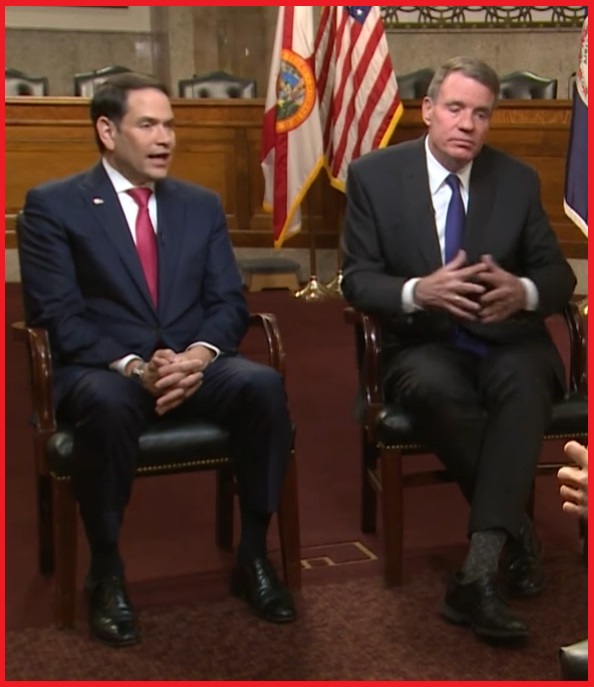
According to SSCI Chairman Mark Warner, ‘The Restrict Act’ will give more power and authorities to the Executive Branch to deal with internet danger. Now the SSCI sees the classified intel leaks as evidence for the importance of the Restrict Act.
Well, butter my buns and call me a biscuit, surprise-surprise! Funny how that happens.
(Via NBC) – The Biden administration is looking at expanding how it monitors social media sites and chatrooms after U.S. intelligence agencies failed to spot classified Pentagon documents circulating online for weeks, according to a senior administration official and a congressional official briefed on the matter.
The possible change in the intelligence-gathering process is just one potential shift as officials scramble to determine not only how the documents leaked but also how to prevent another damaging incident.
[…] The president and other officials were dismayed when they learned the documents had been online for at least a month. “Nobody is happy about this,” said the senior administration official.
The administration is now looking at expanding the universe of online sites that intelligence agencies and law enforcement authorities track, the official said.
[…] If the administration tries to check online chatrooms more closely, it will have to navigate legal safeguards designed to protect Americans’ privacy and freedom of expression, former intelligence officials said.
Watching a public chatroom is fair game, but law enforcement agencies don’t have the legal authority to monitor a private online chatroom without probable cause, the former officials said.
“We do not have nor do we want a system where the United States government monitors private internet chats,” said Glenn Gerstell, former general counsel of the National Security Agency from 2015 to 2020.
[…] Senate Intelligence Committee Chairman Mark Warner, D-Va., said the leak raised yet more questions about how the government manages its secrets, only months after revelations that successive administrations appeared to have mishandled classified documents. […] “I think it’s time that Congress plays a role here in setting some parameters,” Warner said. (read more)
Just a few “parameters“…
Swear.
Promise.
Uh huh….
The Restrict Act, also known as Senate Bill 686 [SB686 HERE], also known as the bipartisan bill to empower the executive branch to shut down TikTok. Also known as the ‘online Patriot Act’.
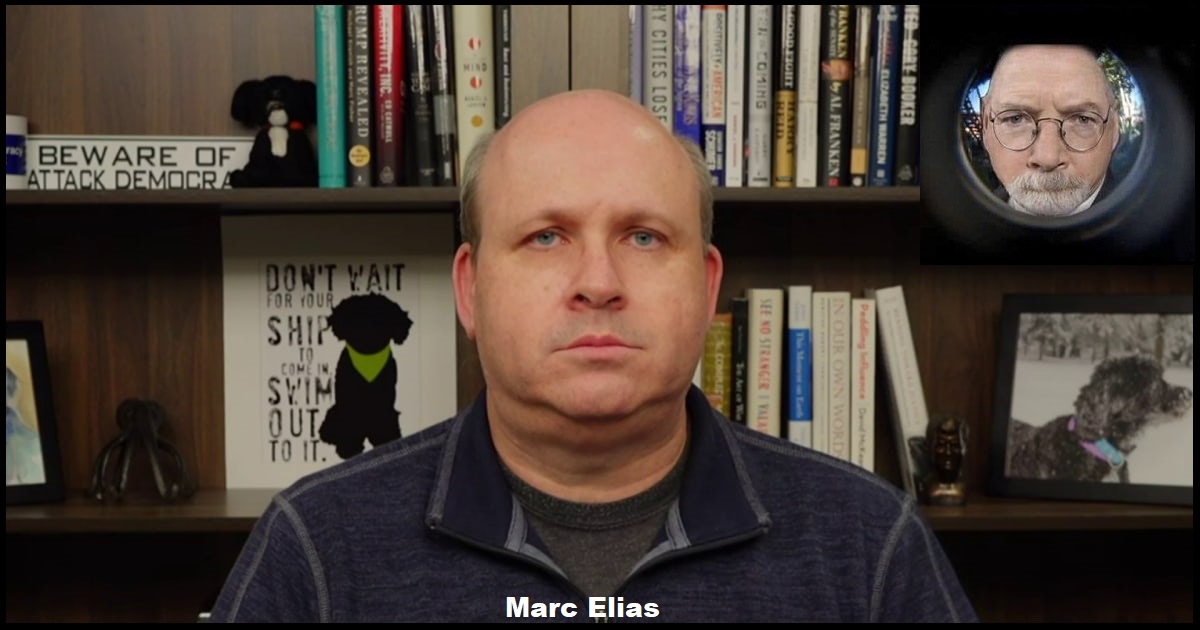
Several people have asked about a motive for the DNC to sever ties with long-time lead lawfare litigant Marc Elias. [Story Here]
Remember, Elias proactively departed from Perkins Coie to carry out independent contractor operations and draw distance during his defense from indictment by John Durham. Elias left Perkins Coie because the Elias’s relationship with the FBI was enmeshed within the Durham probe. Perkins Coie needed to retain the FBI relationship, while it was in their best interest for the FBI silo to distance from the Elias litigation.
Marc Elias then went on to continue being lead lawfare for the Clinton elements of the DNC, while former AG Eric Holder is lead lawfare for the Obama elements of the DNC. This internecine relationship inside the DNC club is important to remember. There are two factions in the DNC, the Clinton aligned subset, less power, and the Obama aligned subset, more power.
Outside the club the downstream community organizations are similarly aligned. We have the African Methodist Episcopal church (AME) and the similarly motivated Black Lives Matter network. Then there’s the organized labor network consisting of the SEIU, AFSCME, AFL-CIO and UFCW. Both networks provide foot soldiers and opportunity leadership for the DNC objectives. There is always crossover, but Team Clinton and Team Obama are separate groups.
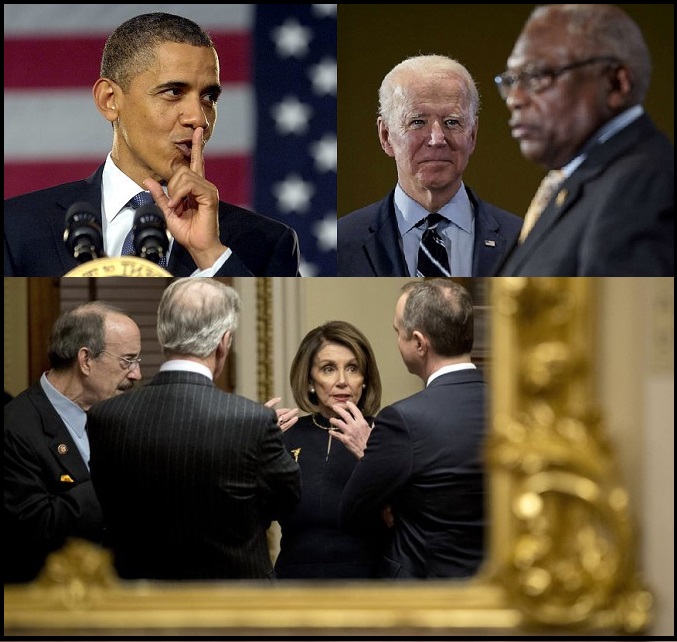
Barack Obama organized the merger between AME/BLM (James Clyburn) with Big Labor communists for 2020. That was the baseline for Obama/Clyburn picking Joe Biden to maintain Obama’s 3rd term interests and instruct all the other candidates to fall in line until they could get rid of Bernie Sanders.
From the construct of 2024… If the AME/BLM network was going to be the tip of the spear, the DNC convention would have been in Atlanta, Georgia (social justice theme). If the organized labor network was going to be the tip of the spear, the DNC convention would be in Chicago, Illinois (communist theme). The DNC picked Chicago ’24; that tells you who takes point on community organizing for 2024. The communists are in charge.
This is the background to review the exit of Marc Elias. With Big Labor taking point, and with team Obama in charge, go find where Obama has positioned Tom Perez and we will likely discover the opportunity for the DNC to depart with Marc Elias. Marc Elias is the lead social justice lawyer, and Tom Perez is the lead communist lawyer/activist.
Washington Free Beacon – The Democratic National Committee has cut ties with Marc Elias, the party’s scandal-plagued election lawyer who was behind the infamous Steele dossier that falsely accused Donald Trump’s campaign of colluding with Russia.
The DNC and Elias are parting ways over “strategic disagreements,” according to Punchbowl News. It is a surprising divorce for the DNC and Elias, considered one of the Democratic Party’s top elections lawyers. Elias has worked for the DNC since 2009 and made over $1.9 million from the DNC this cycle alone. (read more)
For 2024, the professional communists (Obama’s community activist and labor pals) will be in charge of the DNC operations. The social justice warriors are less valuable now. The communists are in charge.
From a strategic position, the DNC deemphasis on the social justice issues makes sense, as the RNC wing is ramping up operations against the current social justice positions via ‘wokeism’. The social justice crowd will still exist, but the communists will be taking point to set the narrative and tone for the “equity in economics” policy platform into 2024.
If you remember the Obama activated battles with SEIU purple orcs in ’07/’08, well, prepare for that type of conflict in ’24 on an exponentially larger scale.
I have created this site to help people have fun in the kitchen. I write about enjoying life both in and out of my kitchen. Life is short! Make the most of it and enjoy!
This is a library of News Events not reported by the Main Stream Media documenting & connecting the dots on How the Obama Marxist Liberal agenda is destroying America








 Centinel2012