Inflationary Gaslighting – Fed Chair Says Interest Rates “likely to be higher than previously expected”…


Posted originally on the conservative tree house on March 7, 2023 | Sundance 

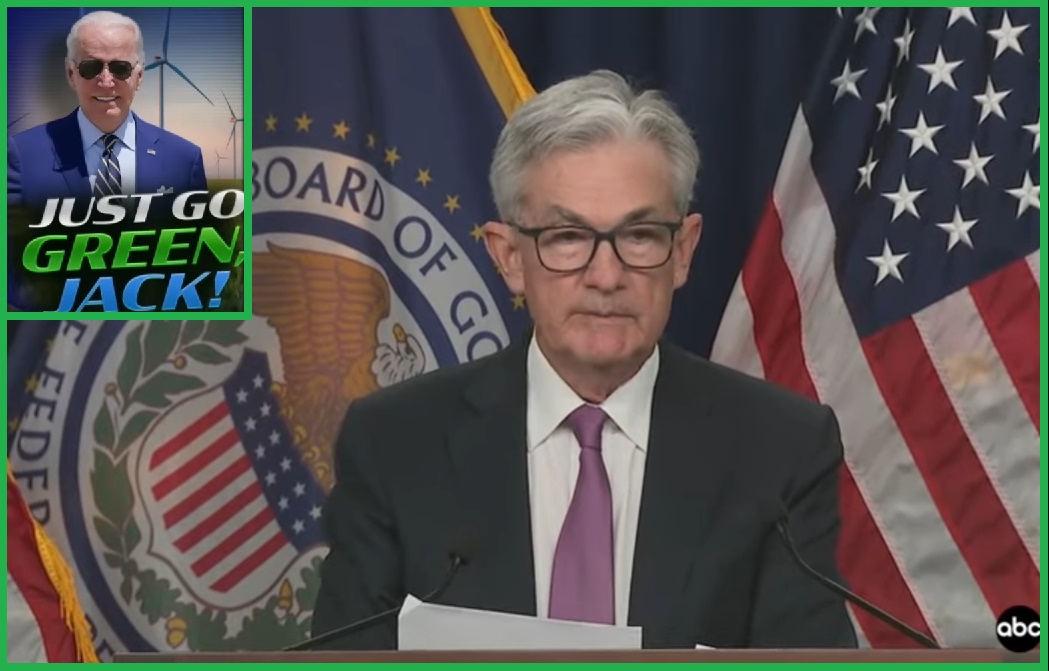
Federal Reserve Chairman Jerome Powell delivers testimony today before the Senate Banking and Finance Committee.  During his statements Powell says, “The latest economic data have come in stronger than expected, which suggests that the ultimate level of interest rates is likely to be higher than previously anticipated.” Powell continued, “If the totality of the data were to indicate that faster tightening is warranted, we would be prepared to increase the pace of rate hikes.“… “We will continue to make our decisions meeting by meeting.” …  “Although inflation has been moderating in recent months, the process of getting inflation back down to 2% has a long way to go and is likely to be bumpy.”

Everything about the testimony to the Senate, and almost everything within the questioning as presented, ignores the key and central component that inflation is being driven by energy policy.   The scale of the pretending around this issue is jaw dropping.
Western governments, including the U.S. through Joe Biden, have limited and curtailed the production and exploitation of Oil, Coal and Natural Gas.  At the core of the inflation within those same governments, this is the issue at hand.  Energy prices have skyrocketed, driving the cost of everything through the roof.  The central banks are raising interest rates in an attempt to shrink the economy to match the drop in energy production.   This is their monetary policy (interest rates) attempting to support economic policy (Green New Deal / Build Back Better).

There are no lines for consumers in the U.S and Europe of people buying durable goods, electronics or shopping for non-essential items.  Prices on the products within the durable goods economy are not being driven by excess consumer demand.  There are not 25% more people buying lemons and milk than this time last year.  The prices for goods in general, and for essential goods specifically, have risen as an outcome of the input costs around energy skyrocketing.
Everything is impacted by diminished energy production, and losses in infrastructure due to drops in investment, that contribute to the efficiency of energy distribution.  Oil prices have jumped, gasoline prices, diesel prices, natural gas prices and electricity prices have all skyrocketed.

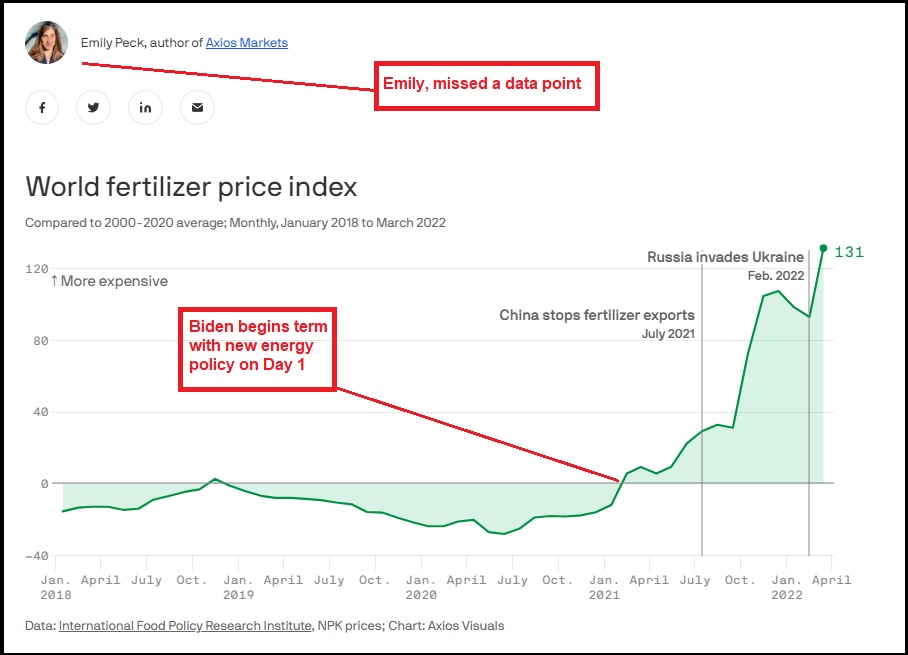
With those raw material production policies, farming costs, fertilizer costs, cooling and heating costs, electricity costs, home heating costs, transportation costs, packaging costs, storage and warehouse costs, refrigeration costs and everything impacted by major energy costs have increased.  This is the main driver of consumer inflation.

When Jerome Powell says they are raising interest rates to “cool the economy,” the raw truth behind the statement is the central banks are trying to reduce the western economies in order to meet the diminished energy production created by policy.   If they can make the economy smaller, less energy is needed….. and this should stem the rising costs from limiting the resource development.

Their problem is that baseline energy demand remains high.  This is keeping energy prices high…. this is keeping inflation high. Their approach to continue raising interest rates, will only work if they achieve an economic outcome similar to the pandemic lockdown period.

Yes, excessive money does create devalued money, which in turn does create inflation.  However, in the current inflationary dynamic it is not excessive money in the hands of working-class people that is driving high demand for goods.  All of the consumer and sales data show that cash carrying consumers are not chasing limited goods.  Consumers and workers are trying to afford essential goods and services that have increased in price as a result of energy policy.

Every economic analysis that does not take this majority factor into consideration is either: (a) making a mistake; (b) being intentionally obtuse and willfully blind; or (c) intentionally not discussing it because the motives of the analyst are to support the climate change agenda.

Once you accept that energy policy is the majority driving influence of current inflation (6.4%), then you can estimate how much economic damage will be needed in order to drop energy demand to a level that matches the diminished energy development, production and investment.
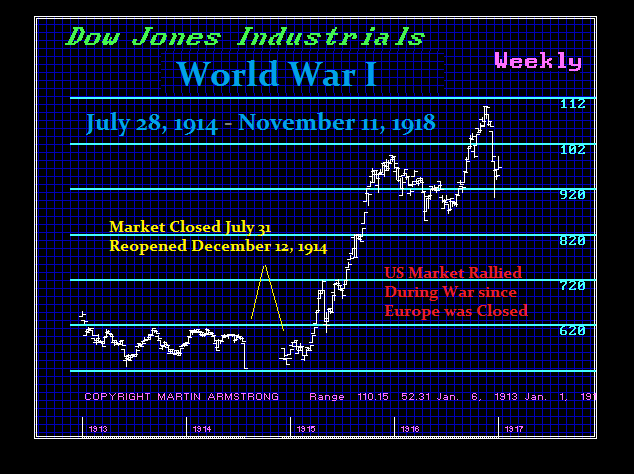
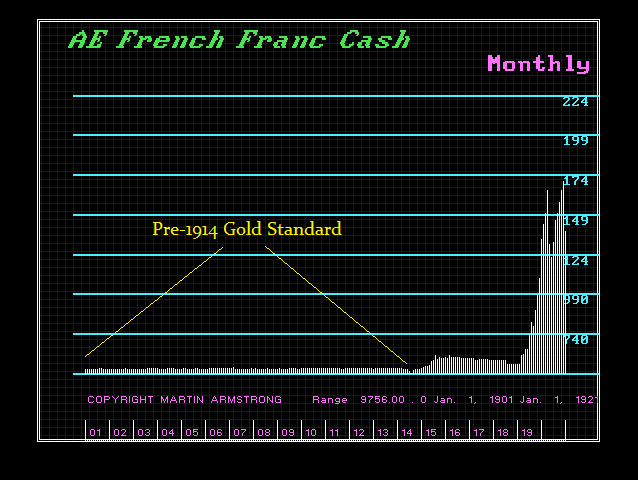
Markets & War


Armstrong Economics Blog/Capital Flow Re-Posted Feb 24, 2023 by Martin Armstrong

The financial markets had become integrated globally prior to World War I. It was the globalization and openness of world financial markets that became the problem and are important to understand for we will face the same problem today. The capital was free to flow from one country to another before World War I.  All the major countries of the world were on the Gold Standard at that point in time so exchange rates were not as volatile.

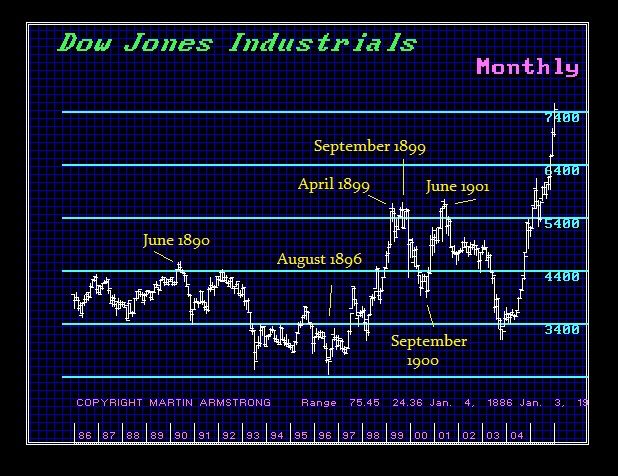
We can easily see that the currency market was very stable pre-1914 looking at the French Franc. Keep in mind that this was also a period of fiscal responsibility – pre-Socialism and Marx. Therefore, governments practiced balance budgets to retain confidence in their currencies. That enabled the gold standard to function. Furthermore, any differences in exchange rates were arbitraged. That is how the United States went into crisis in 1896 because the Democrats were inflating the system by overvaluing silver at 16:1 compared to 15:1 in Europe. That resulted in gold fleeing the United States and silver pouring in from international arbitrage.

There was also a viable arbitrage that took place trading the spreads between international bonds listed on the various world stock exchanges. Many countries would issue bonds in British pounds just as they do in dollars today to sell more to the investors in the financial capital of the world, which was London at that point in time.

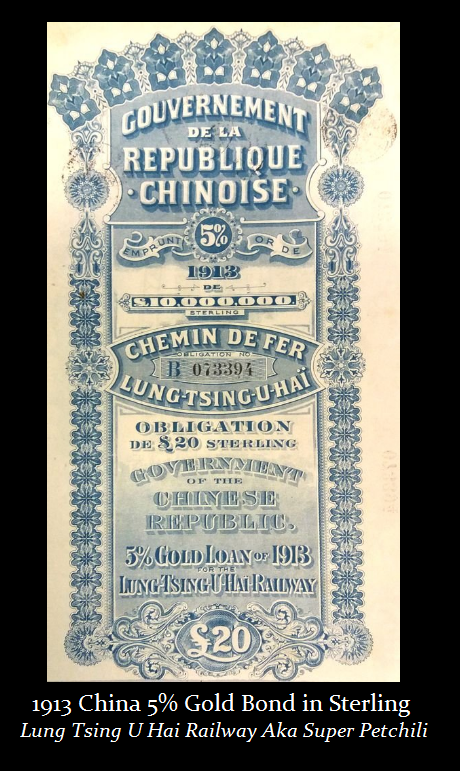
A country such as China or Russia would issue a bond that was listed on the stock exchanges in London, New York, Paris, Berlin, Amsterdam as well as St. Petersburg in Russia. Here is a Chinese bond issued in British pounds in 1913 paying 5%. The differences in exchange rates, which would still fluctuate marginally, would be arbitraged by buying and selling bonds in different markets.

Consequently, during World War I, there was a global marketplace. In effect, this integration of markets presented a problem when the war hit. Capital could flee from one country to the next and thus the method to deal with the capital flows was to close the stock markets. The United States also closed the market in sympathy with Europe.

We will be taking a closer look at the various global markets. What you can count on is clearly CAPITAL CONTROLS. It would be best for those in Asia and Europe to have some capital tucked away in the United States. Once bullets start shooting, it will most likely be too late to move money.

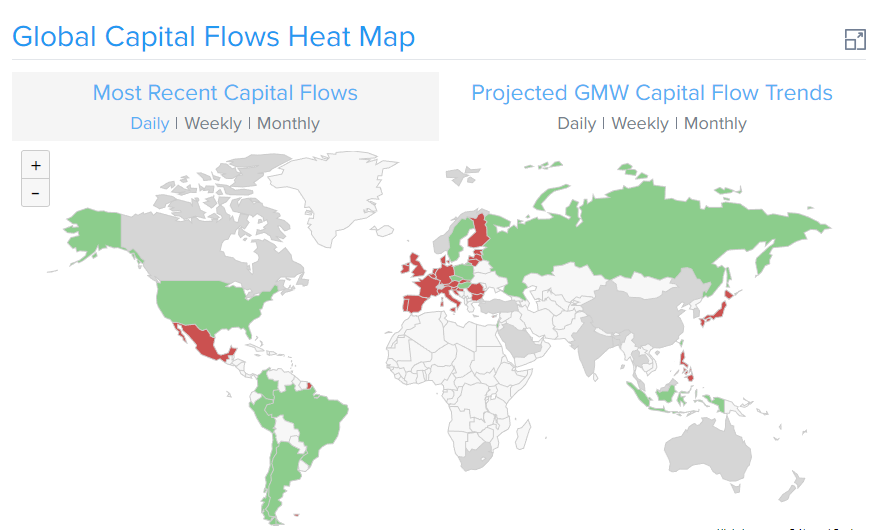
Keep an eye on our Capital Flow tracking. This may become very critical in the months ahead.

The Bitcoin Delusion


Armstrong Economics Blog/Cryptocurrency Re-Posted Feb 20, 2023 by Martin Armstrong

COMMENT: Mr. Armstrong, Now with Switzerland outlawing a cashless society, I understand your point that cryptocurrency is really a dead end. Without power, it cannot exist and as you said in times of war, you take down the power grid and they can do that with an EPM pulse. These Bitcoin zealots are clueless about history and humanity. It’s just another way to separate a fool from his money.

Thank you for the education

BH

REPLY: The whole blockchain was the perfect creation of a totalitarian state. They can trace everything. How would you bribe politicians? It would all have to revert to barter. Do this and I will give you that – off the grid. This is why people are still buying real estate, precious metals, ancient coins, art, collectibles, and various things that are tangible and are thus off the grid.

Having funds in any cryptocurrency is still on the grid. When I was one of the three top market-makers in gold back in the ’70s, the IRS walked in and said they declared me to be a bank. Thus, I was supposed to report every transaction of $10,000 or more. They acknowledged I did not realize I was a bank, so they waived the fines. They seized all my records and went off to audit over 3,000 clients. They claimed that gold was not DEMONETIZED as money, just suspended for a while. I retired because I was supposed to report customers but not everyone else in the field. My lawyers said I could fight it. It would take years. My model warned that gold would decline for 19 years anyway so I choose to retire. The clients still wanted the research and thus Princeton Economics was spun off separately.

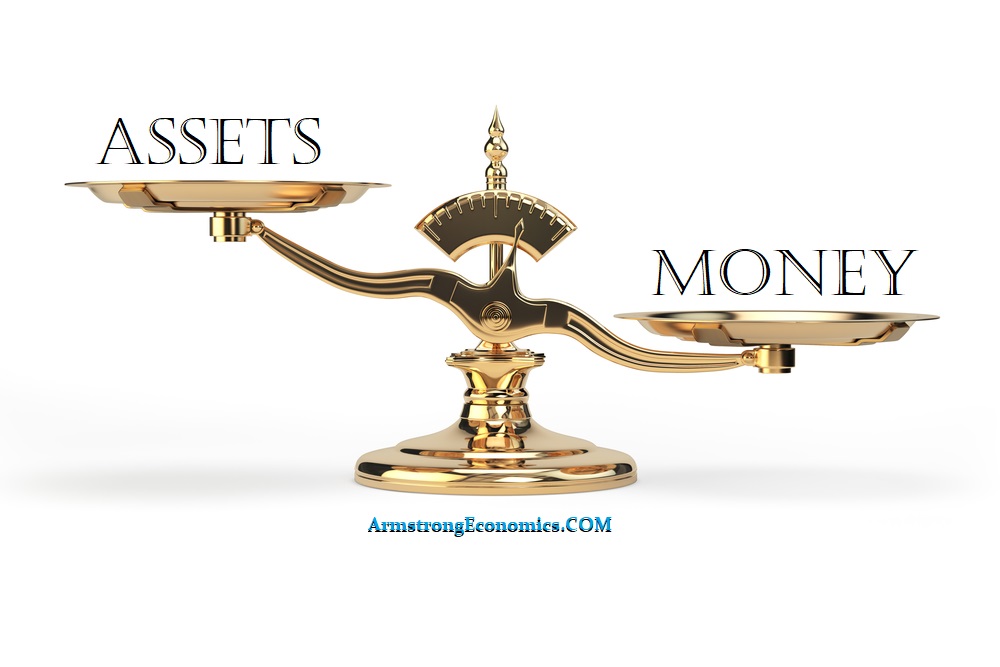
They can declare every person running an exchange in crypto is now a bank and must report every transaction. They can be put them out of business in the blink of an eye. These people have no idea who they are messing with. You will not win. All this is because of their twisted view of fiat money. They no more understand money and assets any more than Karl Marx.

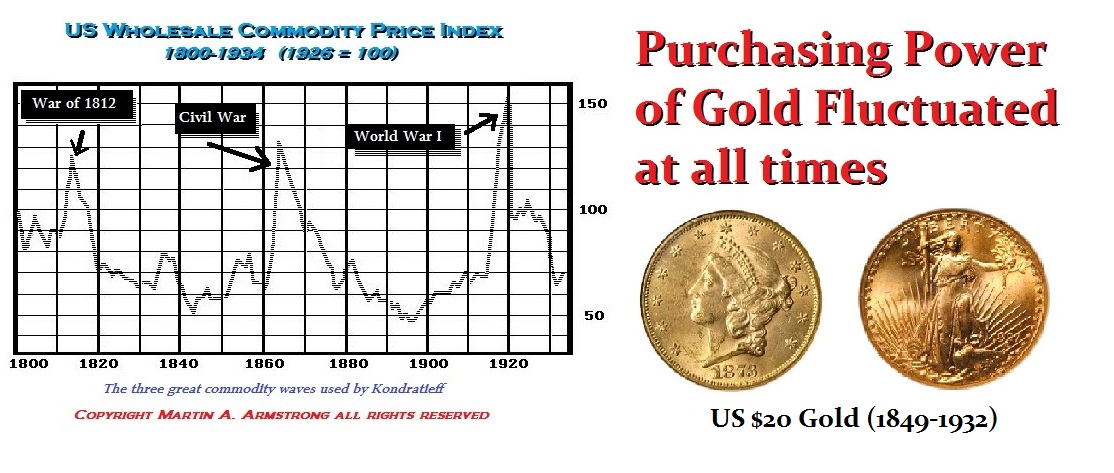
During inflation, assets rise in value, and money declines. That took place during the 19th century when a gold coin was money. MONEY has NEVER been of a constant value – NEVER! These people yelling fiat simply do not comprehend that for thousands of years, there has always been a business cycle and that means money rises and calls in purchasing power REGARDLESS of whatever it has been. The fiscal irresponsibility of governments is well documented throughout history long before paper money.

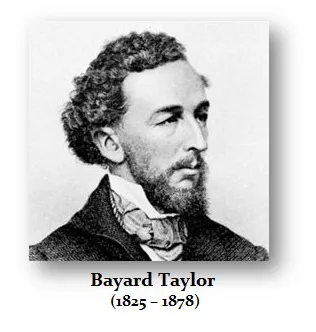
Even under a gold standard, there were periods of inflation and deflation. Read the history of the California Gold Rush. During the 1849 Gold Rush in California, the journalist for the New York Tribune, Bayard Taylor (1825-1878), arrived in San Francisco by ship during the summer of 1849. He was shocked at what he encountered and did not think that anyone would even believe what he was going to write. His dispatches about the gold rush economy in California stunned many and helped to create the 1849 Gold Rush.

The average wage for a laborer in New York was about one or two dollars a day. In California, individual hotel rooms were rented to professional gamblers for upwards of $10,000 a month, which is the equivalent of about $300,000 today. The degree of inflation in terms of gold was astounding and lacks comparison in modern times. There was so much gold, that the value of goods rose even though they did not in New York. The inflation phenomenon was local.

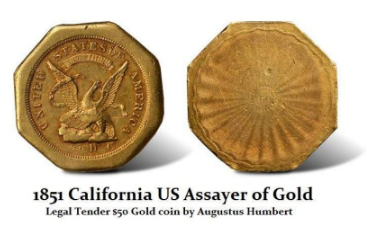
Gold became so common; they were even striking $50 gold coins in California when $20 was the highest denomination elsewhere and $1-dollar coins down to 25 cents all in gold. Eventually, there were $1 gold coins minted in the United States for general circulation throughout the USA. Indeed, Taylor wrote:

“[One] citizen of San Francisco died insolvent to the amount of forty-one thousand dollars the previous autumn. His administrators were delayed in settling his affairs and his real estate advanced so rapidly in value meantime that after his debts were paid, his heirs had a yearly income of $40,000 [$1.2 million today].

“These facts were indubitably attested; everyone believed them, yet hearing them talked of daily, as matters of course, one at first could not help feeling as if he had been eating ‘of the insane root.’”

It does NOT matter what is money. It will always rise and fall as measured against tangible assets as it has done since Babylonian times. In fact, the very first attempt to control inflation, as the central banks are doing right now, were the wage and price controls put in place by the legal codes of the Assyrians and Babylonians.

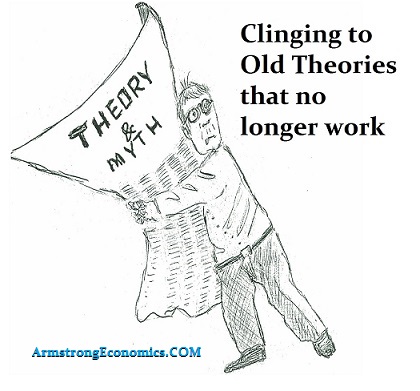
So – stop the BS. Understand that there are times when CASH will be king regardless of what money is at that moment in time, and then it will fall in value when everyone wants tangible assets. There is a business cycle – learn to live with it and we will be better off. The hard-nosed cryptocurrency zealots will never admit they are wrong. They are like politicians and will cling to their theories no matter what evidence you show them.

I asked one once, to name a single period in history where money was constant and never declined in value. He could not!

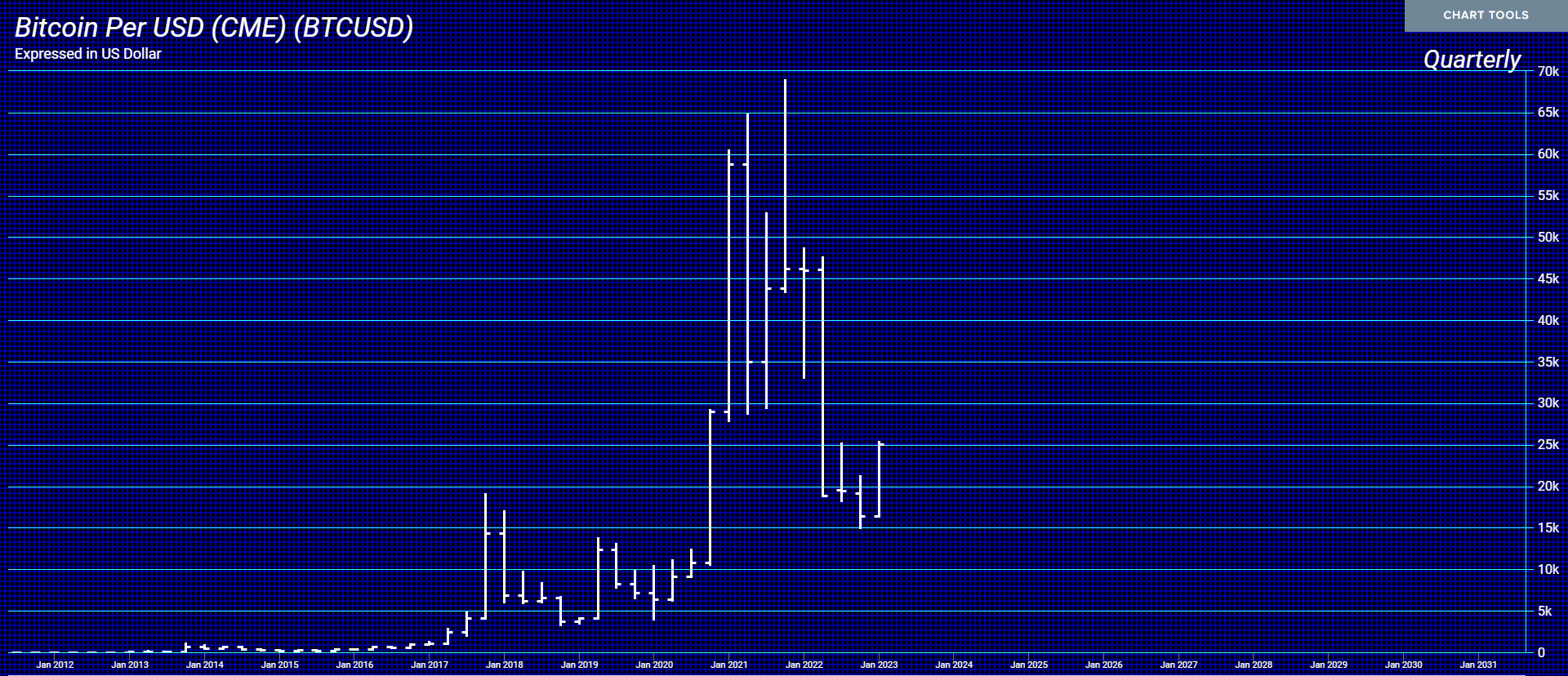
Bitcoin is an instrument for trading. This very chart CONFIRMS it is by no means a store of wealth. It rises and falls like ant commodity of stock. It is still influenced as part of the business cycle. Sorry – there is NOTHING that is a perfect store of wealth. Everything fluctuates. Trade Bitcoin, that is fine. But do not make a religion out of it for you will lose not just your shirt, but your pants as well.

Minneapolis Fed President Neel Kashkari Admits Goal is to Shrink Economy to Meet Decreased Energy Supplies


Posted originally on the conservative tree house on February 19, 2023 | Sundance

This video interview segment was sent to me today along with a “wow, you were right” message.  Apparently, the interview took place a few weeks ago (it’s new to me), but the admissions within it are quite remarkable.

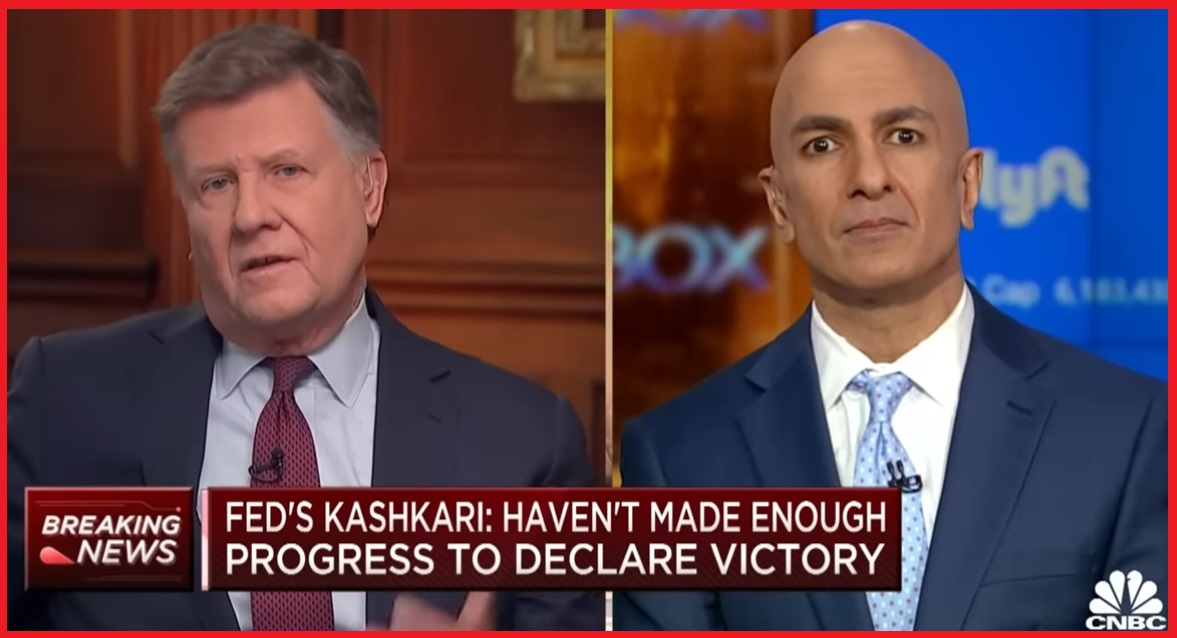
The CNBC discussion surrounds inflation and the federal reserve raising interest rates. Minneapolis Fed President Neel Kashkari is talking about the jobs report, inflation and the intention of the federal reserve to continue raising interest rates until they achieve 2% inflation, regardless of consequence.  Kashkari doesn’t hedge on the latter issue of consequence; he affirms with absolute guarantee the fed will keep raising rates until the economy shrinks enough such that 2% inflation is achieved.  However, watch what happens when Joe Kernan takes that outlook and overlays “supply side” energy policy.  WATCH (10:22 prompted):

The issue is quite simple, really.  When additional oil, coal and natural gas development is blocked as an outcome of policy, energy prices jump massively.  We are seeing 2022/2023 price increases in electricity, home heating, fuel, gasoline, natural gas and other total energy price outcomes in the 60%+ range.

As a direct outcome of energy policy, all of the downstream products and services have massive upward supply side price pressure.  When the input prices are driving upward of 60%, the downstream prices increase accordingly.  Farming costs, fertilizer, feeding, transportation costs, food at retail and wholesale, and just about every petroleum-based product, which is almost everything, increases in price accordingly.

If supply side energy price increases are pushing +60%, and the Fed will only accept a 2% inflation output result, the only method of achieving the desired result is to shrink energy demand.  This is the goal of the current Fed monetary policy.  In this interview Kashkari admits the dynamic for the first time in public.

Prior to this interview, the Fed was being too-cute-by-half as they talked about targeting the ‘demand side’ through increased rates.  The demand they were targeting is the energy demand, but people (mostly in the financial and business world) were not willing to accept that Federal Reserve monetary policy would intentionally try to shrink the economy.

When overall energy price increases are driving upward of 60%, it is going to take a major amount of economic contraction to drop energy demand to meet the diminished energy supply.  CTH has been warning about this ultimate objective for over two years.  It’s a simple economic situation.

+60% price on the supply side, with a goal of +2% on the downstream demand side, equals a major amount of activity needing to be removed. Essentially energy use needs to drop by half.

You can put everyone in an electric car and still not even come close to dropping energy demand 50%.  You cannot “energy efficient” your way to a 50% drop in demand; there just isn’t enough waste in the system, especially when people are already paying close attention to energy use because it costs so much.

This “transition to the new green economy” is a whole of society shift.

This “transition to the new green economy”, is a multi-generational shift.

The transition includes putting people in smaller houses, stopping their travel, stopping their purchasing of new goods, taking down entire industries and limiting human activity on a massive scale.

Something akin to the COVID-19 lockdown period would be needed, only this level of diminished economic activity would be permanent.

It makes you wonder if the COVID-19 lockdown was the test to see how much energy use would drop if everyone was stopped in place.  And yes, during the COVID lockdowns, human activity did stop, economic activity did stop, and energy use did drop by the nearly amount we are talking about.

When you accept what Minneapolis Fed President Neel Kashkari is openly admitting in that interview segment, particularly as he is asked about the massive supply side costs and how that overlays, then you realize how prescient the image is below.

This image is the exact future you see flowing from the “radical transformation,” or what is also called “managing the transition“…

At the end of the transition, you have two social societies.   One social system is a massive assembly of human activity all in close proximity. The alternative social system consists of those who do not wish to be jammed into Build Back Better cities yet forced to sustain themselves because the energy production and delivery resources in the larger geography have been stopped.

Now you know why I asked the question, “where would you live” over a decade ago.

Powell – The Fed – Interest Rates


Armstrong Economics Blog/Central Banks Re-Posted Feb 8, 2023 by Martin Armstrong

COMMENT: Marty, Powell spoke onstage here at the Economic Club of Washington. As always, nobody seems to know central banks like you. Powell point-blank said that the Fed may have to continue to raise rates more than what the marketplace has already priced in if the jobs market stays unexpectedly strong. I know you hate our town, but perhaps you should consider speaking here at the club.

Thank you for the global education. You are indeed a legend in your own time as they call you.

P

REPLY: Thanks for the invite. Not sure I want to fly to the real Tinseltown. We have to come to the cold hard fact that there are no alternatives to the Keynesian theory. It’s not just the Fed. When I do interviews, I tend to be controversial because everyone, including the Goldbugs and countless analysts, all rely on the very same set of theories.

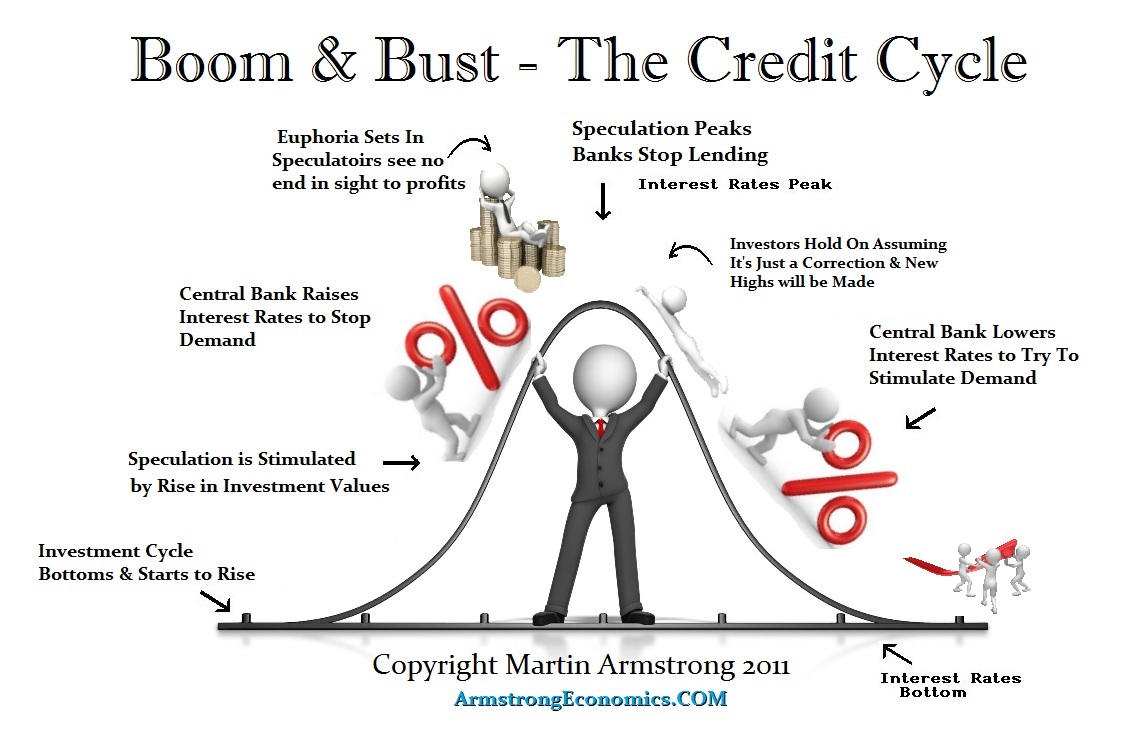
The premise remains to increase the supply of money and it MUST be inflationary. The Fed raises rates to reduce consumption and lower rates to stimulate consumption. It’s a very nice theory, but when actually tested, it utterly fails. Lower rates will NEVER cause people to invest UNTIL they believe that there is an opportunity to invest.

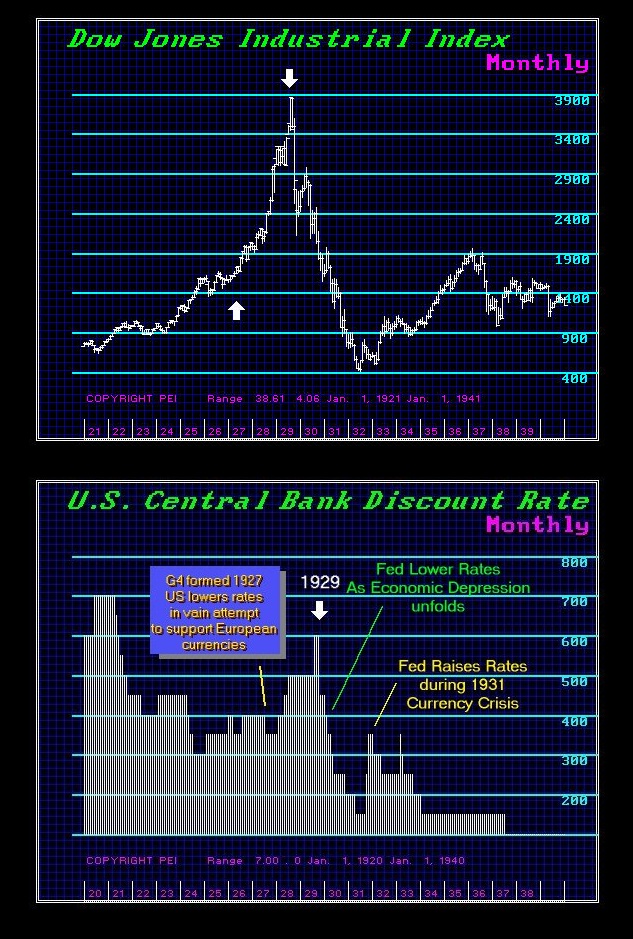
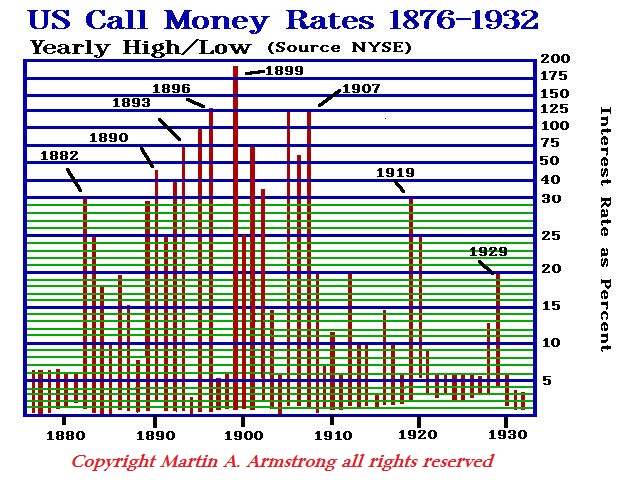
The peak in interest rates took place in 1899 at virtually 200%. Yet, 1929 was the real bubble top and it peaked with 20% interest rates in call money on the NYSE. In theory, the biggest boom should have been met with the highest interest rate. In truth, the “real interest rate” as I have defined it is when the interest rates exceed expectations. If you think the stock market will double, you will pay 25% interest.

As you can see, while interest rates hit nearly 200% in 1899, the share market did NOT crash percentage-wise anything as it did following 1929. Look, there is a lot more to this than meets the eye. Everything must be addressed on a global scale for it all depends also on the direction of capital flows. There is just a lot more to this than simply the money supply and interest rates.

Fed Chair Jerome Powell States Ongoing Rate Increases Are Appropriate Given Strength of Labor Market


Posted originally on the conservative tree house on February 7, 2023 | Sundance

This guy is really a piece of work.  Fed Chairman Jerome Powell delivers remarks to the pontificating pustules at the DC Economic Club.  Within his remarks, notice how Powell used the word “disinflation” to describe how prices are starting to drop in the “goods sector.”

Of course, durable goods are dropping in price, fewer consumers have any money to buy them.  Yes, excess manufactured goods created by the disappearance of buyers will naturally lead to lowered prices by those who need to sell them.  Our economic problem is not, and was not, ever an outcome of excessive demand for durable goods.

Our economic problem is the scale of energy price increases that are chewing through paychecks and driving up the costs of high-turn consumables like food.

Massive price increases for food, fuel, energy, electricity, home heating and natural gas eating up paychecks.  There is no room for discussion about the next phone, refrigerator, or new car that might be needed.  Simultaneous to ignoring this issue, Chairman Powell is giddy that wages are not rising.  WATCH:

.

The process of bringing inflation down to the Fed’s goal of 2% over time “is likely to take quite a bit of time. It’s not going to be, we don’t think, smooth. It’s probably going to be bumpy,” Mr. Powell said Tuesday. “So we think we’re going to have to do further [rate] increases, and we think we’ll have to hold policy at a restrictive level for some time.” (WSJ Article)

Never has this cartoon been more apropos.