GDP Release: 4th Quarter Growth 2.6%, 2018 Annualized 2.9%, 2018 Yearly Real GDP 3.1%…


The Bureau of Economic Analysis, BEA, finally released the fourth quarter growth rate estimate for 2018.  The 4th quarter growth result at 2.6% exceeded expectations, and shows the U.S. economy is growing stronger than almost all economic forecasts.

WASHINGTON DC – In the fourth-quarter, U.S. gross domestic product grew at an annualized rate of 2.6%, according to the latest data from the Bureau of Economic Analysis.

Thursday’s report beat expectations, with consensus economists polled by Bloomberg looking for growth to slow to 2.2% during the final three months of the year. The domestic economy grew at a pace of 3.4% in the third quarter and 4.2% in the second quarter.

Despite the softening in GDP in the fourth quarter, overall growth in 2018 was solid. Real GDP grew at a pace of 3.1% in 2018, measured from the fourth quarter of 2017 to the final quarter of 2018. This represented a stronger pace of annual growth than the 3% targeted by the Trump administration. (read more)

The professional political class and corporate financial media are once again trying to talk down the strength of the U.S. economy.  However, the Main Street economy is powering through despite their efforts.

There is a visible connection between the Wall Street multinationals and the financial media; both are riddled with anxiety over Trump’s economic policies that favor Main Street over Wall Street and it shows in the media coverage.  I digress.

“Consumer spending continued to grow solidly and, most encouragingly, business investment growth recovered sharply after a dip in the third quarter. Despite big external headwinds and financial market volatility in the fourth quarter, U.S. firms are not retrenching sharply on capex. Labor market strength and ongoing fiscal stimulus should see domestic demand expanding by enough to keep GDP growth above potential in 2019, despite a rising drag from net trade.”

— Brian Coulton, Fitch Ratings.

“Business investment was a big positive surprise, with nonresidential spending soaring 6.2% on the back of a 6.7% jump in equipment spending and a honking 13.1% increase in intellectual property products.”

— Sal Guatieri, BMO Capital Markets.

The rate of import goods, a deduction from GDP, slowed down between the third and fourth quarter and consumer spending was higher than anticipated.  That’s good news, but that’s not the whole story….. for Main Street it gets even better.

The current inflation rate (PCE index) was once again measured at 1.6%.  However incomes are rising faster than inflation.  This leads to more “disposable income”:

Disposable personal income increased $218.7 billion, or 5.7 percent, in the fourth quarter, compared with an increase of $160.9 billion, or 4.2 percent, in the third quarter. (TABLE 8)

(pdf – BEA source)

BEA: During 2018 (measured from the fourth quarter of 2017 to the fourth quarter of 2018), real GDP increased 3.1 percent, compared with an increase of 2.5 percent during 2017.

The Full Picture: Business investment into Main Street USA continues to increase.  Manufacturing jobs and durable good employment in Main Street continues to increase.  Wages continue to rise.  Inflation on most consumer goods remains low.  Disposable income is growing, which means more consumer spending.  More consumer spending means higher rates of economic growth and an expanding economy.

MAGAnomics is working.

TheLastRefuge@TheLastRefuge2

U.S. economy grew faster than expected in Q4 https://news.yahoo.com/4q18-gdp-first-and-second-estimate-130025490.html?soc_src=hl-viewer&soc_trk=tw  via @YahooNews

U.S. economy grew faster than expected in Q4

In the fourth-quarter, U.S. gross domestic product grew at an annualized rate of 2.6%, according to the latest data from the Bureau of Economic Analysis.

news.yahoo.com

67 people are talking about this

TheLastRefuge@TheLastRefuge2

GDP surprise chalked up to unexpected consumer spending during shutdown, R&D growth https://on.mktw.net/2TgXj0M 

Consumer spending during shutdown, R&D growth led to GDP surprise, economists say

Here’s what economists are saying about the 2.6% growth in gross domestic product during the fourth quarter, which was faster than consensus expectations.

marketwatch.com

49 people are talking about this

The Decline in Quality is Part of the Cycle


QUESTION: Hi Marty,

Wanted to ask you if you are noticing the same thing as me regarding the ‘quality’ of goods and services these days and if this is history repeating itself again, such as the fall of the Roman empire?

To explain, I am noticing that the quality of the goods and services I buy whether durables or consumables is terrible and only getting worse. Nothing is built to last (such as tools, electronics, even vehicles), and the quality of consumables such as food and services is b-grade at best and it is hard to find alternatives.

I live in Australia and just about everything is made overseas, such as China. I bought a simple axe from a hardware store and it lasted 3 weeks. Had it replaced and it lasted 3 more weeks. Went back to see if I could find one made in Australia and could not find any.

Rents are expensive but landlords treat you like your scum, not to mention insurance companies.

Car registration is expensive and yet the quality of our roads is terrible.

Economists often say competition is good but they don’t seem to recognize how the quality of our produced goods and services is suffering a result.

I delivered some building materials to a client one day and he proceeded to tell me how he had a fancy door made and shipped from China for less than $1700, but that to have the same door made locally, he was quoted $6400. I proceeded to then tell him, that is ok for you as you have saved money, but are you aware that every time we buy stuff from China, China’s mountain of Australian dollars gets bigger and bigger, and the only place they can spend those Australian dollars is back here in Australia, and so is it any wonder that Chinese investors are buying up our real estate? The mans’ face went WHITE!!!

Are you noticing the same thing and are you able to draw a parallel between now and other historical times?

DW

ANSWER: Both the quality of goods and services declined during the 2nd century (post-180 AD), and society began to decline overall even morally. An interesting view is that of an outsider looking in. The author of this interesting quote is the famous 10th-century Arab geographer and historian Abu al-Hasan al-Mas’udi (c. 896–956AD) of Baghdad. He reflected upon what unfolded in Europe, expressing the grim reality in the early Middle Ages through a foreigner’s eyes. In outlining the peoples of the world for his contemporaries, an Arab geographer of the day described Europeans as having “large bodies, gross natures, harsh manners, and dull intellects . . . those who live farthest north are particularly stupid, gross and brutish.” He described the fall of Rome, and in describing western civilization, he effectively used similar concepts that the classical historians like Herodotus and Tacitus had once used to describe the barbarian world outside of European civilization.

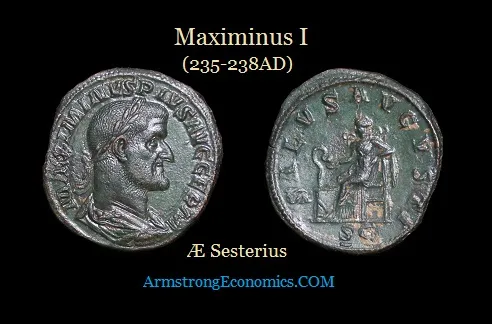
The sequence of events leading up to such drastic changes begins with high taxes and hunting the rich as we are witnessing today. Maximinus I declared all private wealth belonged to the States which was just one more step to the left from Bernie Sanders, Elizabeth Warren, and AOC. Once you do that, the result is the hoarding of wealth and that ends up contracting investment creating an economic death spiral. Education declines and regulation rises as the government seeks more power. The overall trend creates a precipitous drop in quality of life, and all the very reasons for the rise of civilization are then reversed and the trend moves from concentration to separation. This is the overall general scheme as to the reasons why Rome fell.

Keep in mind that the Dark Ages were about 600 years. So we need not worry about this complete collapse in our lifetime. Nevertheless, we are experiencing the early stages of the decline and fall of Western Civilization. The government pensions will create the same trend of fragmentation and turning government employees against the people. We will see the split of the European Union and the same in Canada as well as Australia. The United States will also split as some regions will reject the socialist regions and their attempts to subjugate their beliefs to their own.

If Rome’s sheer size made it difficult to govern because centralized government always fails. This contributed to the ineffective and inconsistent leadership which only served to magnify the problem as we are witnessing today as politics also has become highly polarized. Being the Roman emperor became a highly risky position during the 2nd and 3rd centuries. Civil war became commonplace as people made attempts to take power or to separate. This would thrust the empire into chaos, which we will begin to experience after 2020. The Praetorian Guard—the emperor’s personal bodyguards—assassinated and installed new sovereigns at will, and once even auctioned the spot off to the highest bidder who was Didius Julianus (193AD). There were two rival bidders but Julianus won paying 25,000 sestertii per man, which was the high bid and he was duly declared Emperor. However, the Praetorians were not loyal to him and he was beheaded on June 2nd after a reign of only 66 days.

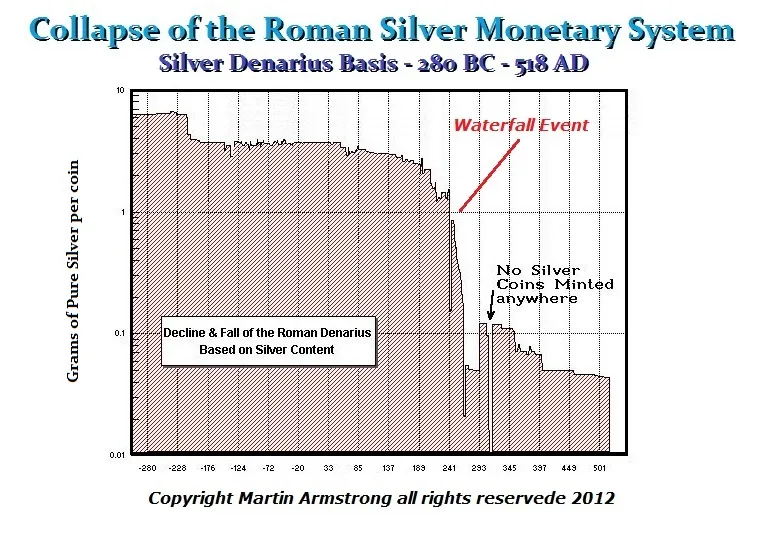
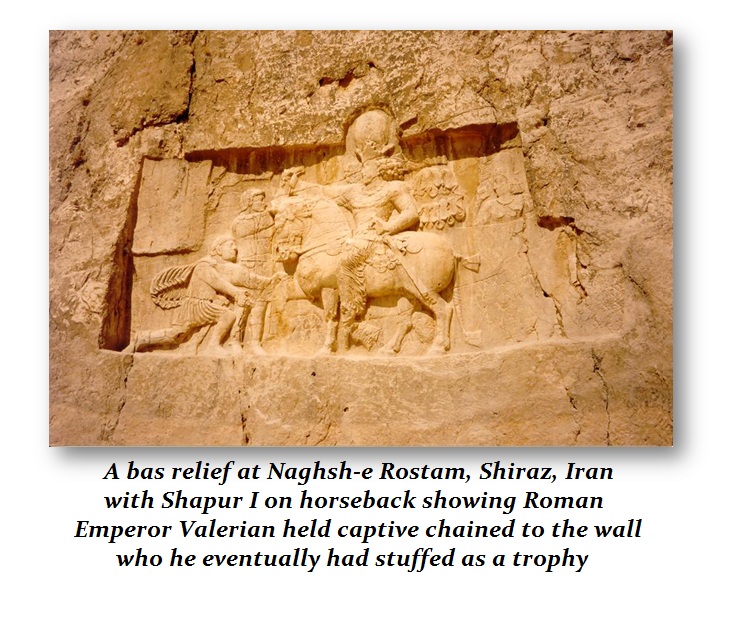
The Praetorian Guard became the same as we have today with the Deep State, illustrated in the FBI, CIA, and NSA all conspiring to overthrow Trump. This political chaos also extended to the Roman Senate as it has currently in modern times. The Senate became a cesspool of corruption that failed to temper the excesses of the emperors due to its own widespread corruption and incompetence (i.e. gridlock). As the situation worsened, civic pride waned and many Roman citizens lost trust in their leadership. Trajan Decius (249-251AD) was the first Roman Emperor to be killed in battle with the Barbarians. That had a great impact on the confidence of the people in government. They suddenly saw themselves as vulnerable. Then, in 260 AD, the Roman Emperor Valerian I (253-260AD) was captured and kept as a slave to the Persian king. That was the final straw, and we see the collapse of the Roman Monetary System within 8.6 years.

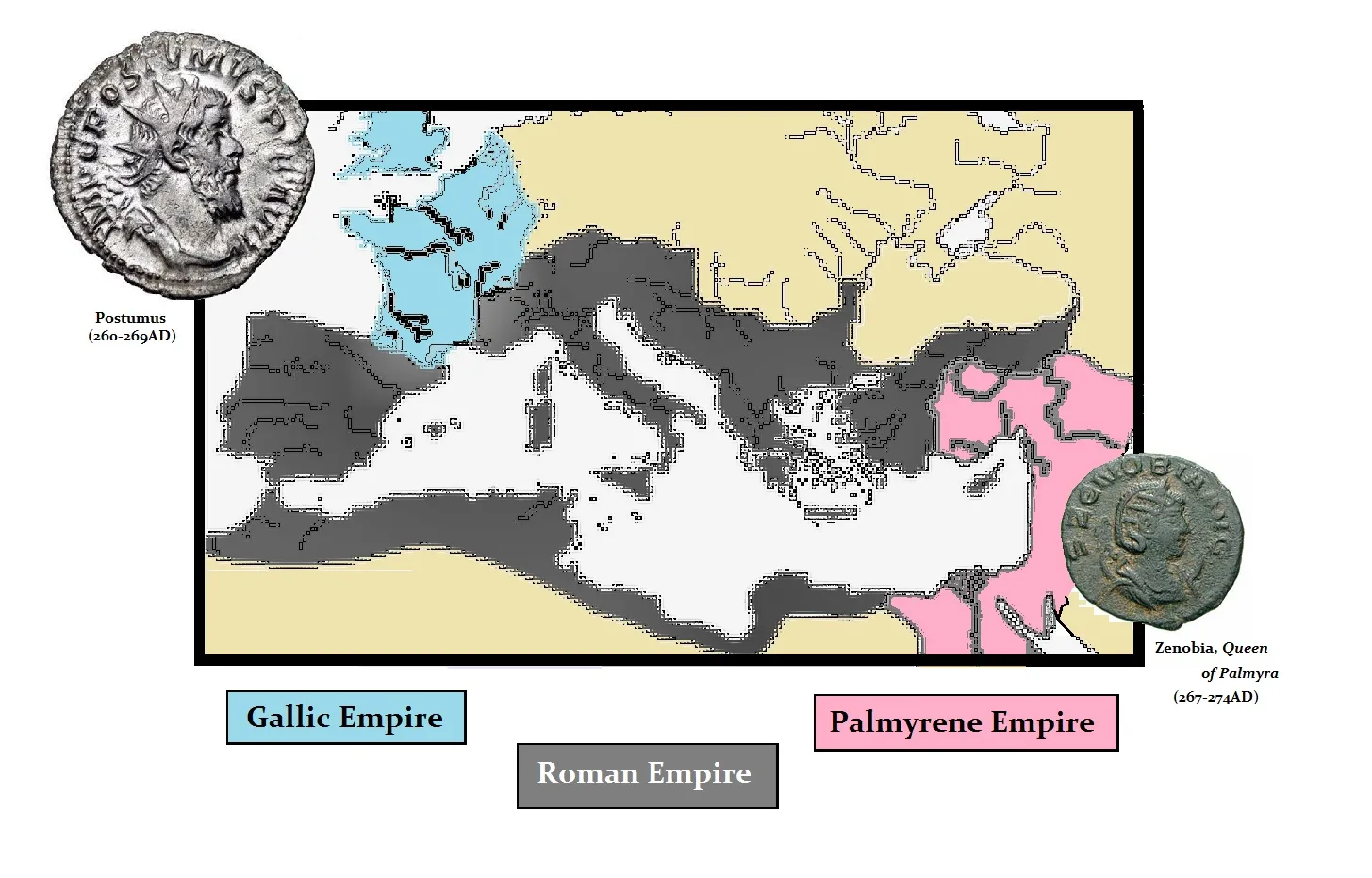
The Barbarian attacks on Rome partially stemmed from a mass migration caused by the Huns’ invasion of Europe in the late fourth century. As the Huns moved West, the barbarians were compelled to invade. Once they saw that Rome was vulnerable following the capture of Valerian, the invasions began in mass. This led to the Roman Empire dividing into three regions. Postumus (260-268 AD) led the rebellion creating the Gaulic Empire (Britain-France-Spain) and in the East Zenobia carved out her Empire based in Syria.

We are simply following the very same pattern in the same order. History repeats simply because human nature never changes. We would always like to think we are smarter and different. That has never proven to be anything more than a preferred delusion.

Warren Buffett Loses Billions


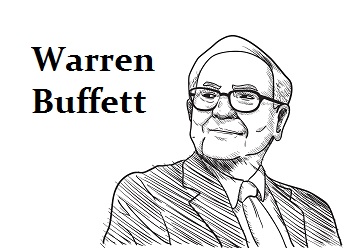
QUESTION: It is no secret that you went head to head against Warren Buffett in his silver manipulation. He is having a very bad year with his buy and hold value strategy. It looks like without making billions on the side manipulation of commodities, he is no better a fund manager than anyone else. Care to comment on his strategy?

WD

ANSWER: The Warren Buffett strategy of value investing and buy & hold is entirely dependent upon the direction of the market. The Warren Buffett strategy is a long-term value investing approach passed down from Benjamin Graham’s school of value. “Buffett is considered to be one of the greatest investors of all time. His investing strategy, value, and principles can be used to help investors make good investment decisions.” This is all the propaganda. It applies to an economy that is in a long-term inflationary trend that is really left over from the Great Depression days.


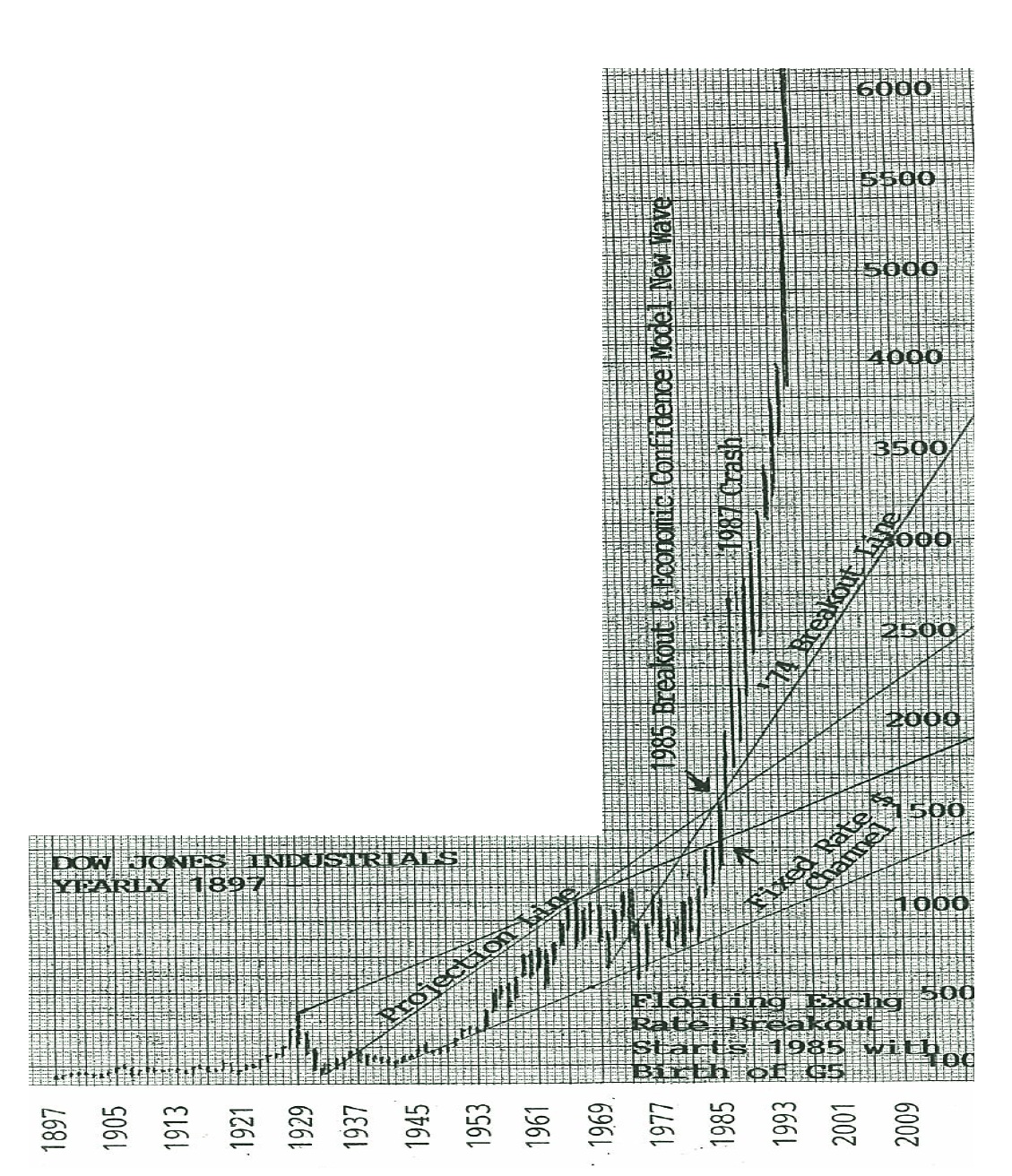
I was blamed for the takeover boom because I was advising a lot of the takeover players around the world. I simply showed clients the chart on the Dow in terms of book value and that the historic low that took place in 1977. I merely illustrated that you could buy a company, sell its assets, and double or triple your money because the market was so underpriced going into the end of a Public Wave. This Private Wave began in 1985 and that was the breakout of the market.

Anyone who simply bought stocks in 1985 made a fortune. Warren Buffett famously avoided investing in technology stocks. Nevertheless, he had bought Big Blue, then sold Apple and Oracle. He was so old school brick & mortar that he really missed the technology shift.

His buy & hold strategy fails because it ignores cycles. Anyone who bought stocks in 1985 and just held as the Dow rose from 1,000 to 21,000 beat even Warren Buffett. He takes positions in companies and cannot flip when the business cycle turns. He lost $4.3 billion in a single day. That is not a fund manager in my book.

Buffett did not believe the rally as most others going into 2018. For years, Buffett was building up its cash rather than investing. He began to invest during the third quarter, actually buying the high since the NASDAQ peaked in August, the S&P 500 in September, and then the Dow on October 3. He bought some banks like JPMorgan Chase and Oracle for the first time.

Obviously, his timing was not very good and his strategy of buy and hold does not fare very well in a decline.

Airbus FAIL: How USA Beats Socialism in Air and Space


Published on Feb 25, 2019

SUBSCRIBED 121K
Airbus cancels the gigantic A380 airliner, while Boeing 747 keeps going strong. SpaceX builds re-launchable rockets, while Arianespace makes them disposable to generate make-work jobs. The aerospace industry provides the perfect parable of how the the USA beats socialism every time.

New Antarctica Anomalies Documentary 2018 There is DEFINITELY Something Under the Ice


Published on Sep 5, 2018

SUBSCRIBE 371K
Is one of the worlds greatest secrets about to be uncovered? There is a huge magnetic anomaly in Antarctica, on the east coast of lake Vostok’s shoreline. This is what you would see if you found the ruins of an ancient, buried city! Such a discovery would be absolutely dazzling, sending ripples through our world. And there were even stranger stories suddenly coming from the “bottom of the world” in this same time frame, such as witnesses claiming a huge UFO has been discovered under the ice. There are of course the sudden and mysterious evacuations that no one has an explanation for. This is not a natural anomaly, but generated by some unknown technology deep under the icecap–it may reveal the physics of time and could potentially allow control of the past, and by implication the future.The mind boggles as to what is really going on. Watch thought provoking, extraordinary, educational, eye opening, awesome documentaries by subscribing and of course hit the bell button twice at the top tight of the screen. We will make each film expand the horizons of the viewers open to learning more about the world. We hope you will become aware of many facts you may have been previously unaware of in this Antarctica Documentary.

PSW 2384 The Doom of Space Time: Why It Must Dissolve Into More Fundamental Structures Arkani-Hamed


Published on Dec 4, 2017

SUBSCRIBE 2.4K
Lecture Starts at: 14:20 Friday, December 1, 2017 Space-time and Quantum Mechanics are the pillars of our modern understanding of fundamental physics. However, there are storm clouds on the horizon indicating that these principles are approximate and must be replaced with something deeper. The union of quantum mechanics and gravity strongly suggests that “space-time is doomed”. Abstract: http://www.philsoc.org/2017Fall/2384a…

Consciousness and the Foundations of Physics


Published on May 15, 2015

SUBSCRIBE 2.3K
Sir Roger Penrose – “Consciousness and the Foundations of Physics”, delivered at the Ian Ramsey Centre – Humane Philosophy Project 2014-2015 Seminar. Chaired by Ralph Weir, Alister McGrath and Mikolaj Slawkowski-Rode. The introduction of quantum mechanics in the early 20th Century led many physicists to question the “Newtonian” type of picture of an objective deterministic physical reality that had been previously regarded as an essential background to a fully scientific picture of the world. Quantum measurement, as described in standard theory however, requires a fundamental indeterminism, and issues such as Bell non-locality cause basic difficulties with a picture of objective reality that is consistent with the principles of relativity. Accordingly, many philosophers of science have felt driven to viewpoints according to which “reality” itself takes on subjective qualities, seemingly dependent upon the experiences of conscious beings. My own position is an essentially opposite one, and I argue that conscious experience itself arises from a particular objective feature of physical law. This, however, must go beyond our current understanding of the laws of quantum processes and their relation to macroscopic phenomena. I argue that this objective feature has to do with implications of Einstein’s general theory of relativity and, moreover, must lie beyond the scope of a fully computational universe. SIR ROGER PENROSE OM FRS is a renowned mathematical physicist, mathematician and philosopher of science. He is the Emeritus Rouse Ball Professor of Mathematics at the Mathematical Institute of the University of Oxford, as well as an Emeritus Fellow of Wadham College. He is known for his work in mathematical physics, especially his contributions to general relativity and cosmology. He has received numerous prizes and awards, including the 1988 Wolf Prize for physics, which he shared with Stephen Hawking for their contribution to our understanding of the Universe. In 1972 he was elected a Fellow of the Royal Society of London in 1972. He was knighted for services to science in 1994 and appointed to the Order of Merit in 2000. He also holds honorary doctorate degrees from many distinguished universities including Warsaw, Leuven, York and Bath.

World Financial Outlook for 2019


The 2019 Outlook Report covers the world. The Report will be priced at $1200 and will address the major markets. We will let everyone know as soon as it is available.

Armstrong Economics, Three PRIVATE BLOGS Explained


We have created three separate membership options for the Socrates Platform(www.Ask-Socrates.com) which are intended for three separate audiences. First, we have the BASIC Membership service at $15 per month which is intended for the average person who is interested in the broader term with respect to trends and not interested in short-term trading back and forth. Then we have the Plus Membership which provides short-term forecasting for the investor. The third level is the Pro Membership where reversals and arrays are available to access on over 1,000 markets worldwide (requires Premium Market Subscription or Snapshot Report). This is intended for active traders rather than investors who tend to be more position oriented (see comparison).


Then on top of all of this, we have our Institutional Level of service which includes hedging models among other information. While we try to target a version for everyone, it is difficult. The main goal has been to bring the ONLY FULLY FUNCTIONING Artificial Intelligence computer in the world focused on financial markets and global economy, proven over time, to the general public. This is free of personal bias. All of the market analysis (with exception of private blog post commentary) is written by the computer – not analysts. This inspires confidence for everyone knows there is no hidden agenda and there is no conflict of interest. The computer does not own property, mines, manufacture, and beside the fact that it cannot be bribed, it has not national patronage either.

I personally apologize for doing just one blog on Friday for the Pro Version. It is just that there are specific Reversals given so it is not designed to a general investor – we will create a broader view version over the weekend after closings. This is the difference between the three versions of the Socrates Platform, and corresponding private blog posts that are tailored to the three different groups of people we are servicing.

WE HAVE NOT YET COMPLETED THE NEW RELEASE OF SOCRATES

We are still working to finalize various aspects, including adding some additional features and forecasting modules over time. When we are finished with this initial rollout, we will make the formal announcement. Thank you.


Is Quantum Physics Necessary for the Account of Consciousness? The Lecture of Stuart Hameroff


Published on Oct 19, 2016

SUBSCRIBE 6.3K
This lecture was organized by support of Moscow Center for Consciousness Studies, Russian House and Polytech Museum of Moscow. The nature of consciousness, the mechanism by which it occurs in the brain and its place in the universe are unknown. In the mid 1990’s Sir Roger Penrose and I suggested that consciousness depends on biologically ‘orchestrated’ coherent quantum processes in collections of microtubules within brain neurons, that these quantum processes correlate with, and regulate, neuronal activity, and that the continuous Schrodinger evolution of each such process terminates in accordance with the specific Diosi-Penrose (‘DP’) scheme of objective reduction (‘OR’) of the quantum state. ‘Orchestrated’ OR activity (‘Orch OR’) is taken to result in moments of full conscious awareness and/or choice. The DP form of OR is related to the fundamentals of quantum mechanics and space-time geometry, so Orch OR suggests a connection between brain biomolecular processes and the basic structure of the universe. I will review Orch OR in light of criticisms, presenting experimental evidence for 1) hierarchical microtubule quantum resonances (terahertz, gigahertz, megahertz, kilohertz), and 2) anesthetics preventing consciousness through quantum actions on microtubules. Further novel Orch OR suggestions include 1) topological quantum bits (‘qubits’) intrinsic to microtubule geometry, 2) interference ‘beat frequencies’ of fast (e.g. megahertz) microtubule vibrations producing slower electro-encephalographic (EEG) correlates of consciousness, 3) mental state alterations caused by brain stimulation with megahertz mechanical vibrations (ultrasound), and 4) OR-based primitive feelings prompting life’s origin and evolution. Orch OR is rigorous, consistent with neuronal-level approaches and better supported experimentally than other theories of consciousness. Reference: Hameroff & Penrose (2014) Phys. Life Rev., 11(1):39-78 Визит Стюарта Хамероффа в Москву был организован нашим Центром. Лекция стала возможной благодаря поддержке политехнического музея в лице Ольги Вад и Russian House в лице Татьяны Гинзбург. Природа сознания, механизм посредством которого оно появляется в мозге и его место во Вселенной неизвестны. В середине 1990х годов сэр Роджер Пенроуз, и я выдвинули предположение, что сознание зависит от биологически «оркестирруемых» когерентных квантовых процессов в микротрубочках нейронов, что эти квантовые процессы коррелируют с нейронной активностью и регулируют ее, что непрерывное шредингеровское развитие каждого такого процесса завершается в соответствии со специальной схемой объективной редукции (ОР) квантового состояния Диози-Пенроуза (ДП). Считается, что «Оркестрируемая» ОР активность возникает в моменты полной сознательной осведомленности и/или выбора. ДП форма ОР связана с фундаментальными основами квантовой механики и пространственно-временной геометрии, поэтому «оркестрируемая» ОР предполагает связь между мозговыми биомолекулярными процессами и фундаментальной структурой Вселенной. Я представлю обзор «оркестрируемой» ОР в свете критики, представляя экспериментальные свидетельства в пользу 1) иерархических квантовых резонансов в микротрубочках (терагерц, гигагерц, мегагерц, килогерц) и 2) анестетиков, препятствующих появлению сознания посредством квантовых воздействий на микротрубочки. Дальнейший рассказ об «оркестрируемой» ОР включает 1) топологические квантовые биты («квабиты») присущие геометрии микротрубочек, 2) вмешательство «частоты биений» быстрых (например, мегагерц) колебаний микротрубочек, производящих замедленные электро-энцелографические корреляты (ЭЭГ) сознания, 3) изменения ментального состояния, вызванные стимуляцией мозга мегагерцовыми механическими колебаниями (ультразвуком) и 4) примитивные ощущения, фундированные ОР, побуждающие к появлению и эволюции жизни. «Оркестрируемая» ОР является полноценной теорией, совместимой с методами нейронного уровня и лучше поддерживается экспериментально, чем другие теории сознания.