EPA Administrator Scott Pruitt Discusses Plans, Objectives and Priorities…


Newly confirmed EPA head Scott Pruitt attended CPAC and after delivering his remarks he sat down for a one-on-one with Dr. Gina Loudon. The speech lasts for 7:30 of the video below, and the one-on-…

Source: EPA Administrator Scott Pruitt Discusses Plans, Objectives and Priorities…

trump-01

President Trump Weekly Address – February 25th, 2017


President Donald Trump weekly address.

Source: President Trump Weekly Address – February 25th, 2017

trump-04

DNC votes to roll back Obama ban against corporate lobby donations


Whey would the ban doing what gets them all to be multi-millionaires?

Trump cuts US debt by $12bn in his first month in office, accuses media of ‘not reporting’ it


No wonder no one Congress likes Trump they each get a small piece of the pie from the spending so trump is cutting their income, to bad for them!

Is Secession a Solution to Cultural War?


Letting California go might stop a civil war so it would be better than trying to fix their problems.

California, Nestle and Decentralization


Local control is the only way to keep free!

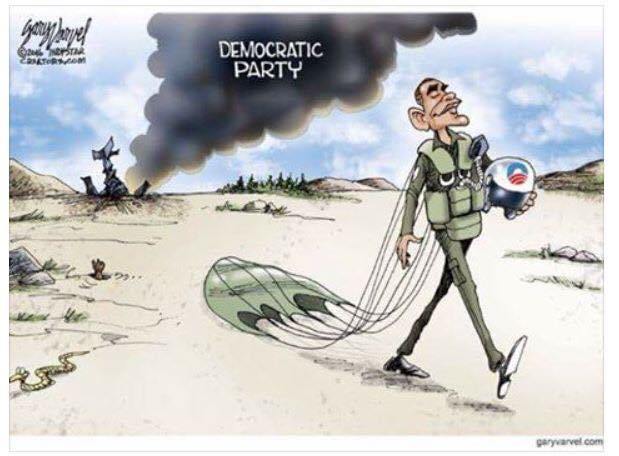
DNC Votes Today For Future of Democrat Party…


Today in Atlanta 447 members of the Democrat National Committee will meet to vote on the next Chairperson for the DNC.  The two top candidates are Representative Keith Ellison and former Labor Secr…

Source: DNC Votes Today For Future of Democrat Party…

democrat-party-01

Knee Jerk – Reaction – Temp Events


GC-GMW-Knee Jerk Low

QUESTION: Hello, could you explain the differences between “Knee Jerk v Spike v Temp v Reaction Events” ? They are all Timing indications I guess? regards.

Knee Jerk Low

ANSWER: When the computer is classifying something as a Knee Jerk high or low, it means it is a one-time-unit event. A Reaction High or Low has not penetrated the previous event and is at least a three-time-unit event. A Temp High or Low is normally a brief trend greater than three-time-units.

Here is the Global Market Watch on gold. You can see it correctly forecast two Knee Jerk lows, which proved to be correct. It is the GMW which eliminates personal opinion and is based solely upon pattern recognition. This is neither technical nor cyclical based. This is something altogether unique and represents true Machine Learning Intelligence.

Is it Safe to Store Gold in a Safe Deposit Box?


NYT- 1933 Bank Holiday

QUESTION:  Martin,
Love your blog, especially your historical perspective.
You recently responded to a viewer that we should take precious metals out of safety deposit boxes. Is there a reason for this? To my understanding the bail-in rules for banks in N.america put deposits and bonds at risk only?
Thanks.

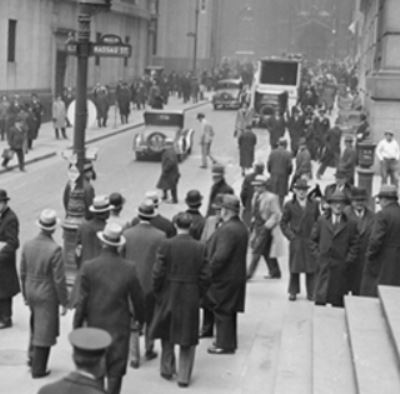
1933 Bank HolidayANSWER:  The contents of a safe deposit boxes are not covered by FDIC insurance. Never store a passport or any document you might need to get a hold of in emergency in a safe deposit box. The government can simply close all banks as they did in 1933 in a “Banking Holiday”. At 1:00 a.m. on Monday, March 6, President Roosevelt issued Proclamation 2039 ordering the suspension of all banking transactions, effective immediately. He had taken the oath of office only thirty-six hours earlier.

From March 6 to March 10, banking transactions were suspended across the nation except for making change. Roosevelt presented the new Congress with the EMERGENCY BANKING ACT at this time. The law empowered the President through the TREASURY DEPARTMENT to reopen banks that were solvent and assist those that were not. The House allowed only forty minutes of debate before passing the law unanimously, and the Senate soon followed with overwhelming support.

Banks were divided into four categories. Surprisingly, slightly over half the nation’s banks were deemed first category and fit to reopen. On the Sunday evening before the banks reopened, Roosevelt addressed the nation through one of his signature “FIRESIDE CHATS.” Roosevelt assured sixty million radio listeners that the crisis was over and the nation’s banks were secure. The bank run was over. On June 16, 1933, Roosevelt signed the GLASS-STEAGALL BANKING REFORM ACT, and also created the FEDERAL DEPOSIT INSURANCE CORPORATION.  Keep in mind the the government can close all banks for there is precedent. Whatever you have in a safe deposit box can also be seized and inspected.

safety-deposit-boxesThere is no precise law against storing metal or cash in a safe deposit box. But law is malleable in the hands of any judge. He can seize the money or gold under the pretense of money laundering hiding it from the government. Under Civil Asset Forfeiture, they can assume the money is guilty of a crime being even tax evasion. It then is your burden to fight in court to get it back if you can hire a lawyer.

On April 1st, 2015, Chase bank in the US advised clients who rent safe deposit boxes from them that there would be some changes in their policies. Of particular interest is the following condition:

“Contents of box: You agree not to store any cash or coins other than those found to have a collectible value.”

This is why I recommend buying $20 common date gold coins and not modern bullion. You need to be in a position to say these are collector coins – not bullion. Gold is a HEDGE AGAINST government in the midst of a crisis. Gold does NOT rise with inflation. The 1980 high adjusted for inflation is about $2300. So if gold is a HEDGE, it is during a crisis. The risk of being able to get to a safe deposit box in a crisis diminishes greatly.

Here’s What Happens When Trump Finds Culprit Behind Flynn Intel Leaks


Tyler Durden's picture

Submitted by Ronn Blitzer via LawNews.com,

Information leaks from within the federal government led to the revelation that now-former National Security Adviser Michael Flynn spoke to the Russian ambassador about U.S. sanctions against his country soon after President Obama announced them. Flynn’s communication has led to speculation that he may have broken the law by talking to a foreign government about a dispute without U.S. authority. He was asked to resign after word got out that he lied to Vice President Mike Pence when he insisted that he didn’t discuss the sanctions with the ambassador.

But to President Donald Trump, the big story is that we know the story. Flynn was caught by U.S. intelligence officials after they wiretapped his communications with the ambassador. They also made transcripts of the conversations, but it wasn’t until that information mysteriously found its way to the Washington Post that anyone knew about it. On Twitter and in public statements, Trump has railed against the leaks, which the Post has only attributed to “current and former U.S. officials,” and heads will roll if he learns who’s behind them. As it turns out, the law is on his side. However, these leaks are notoriously hard to prosecute and are rarely pursued. But, if there are, here’s what could happen to the culprits.

First, there’s the prohibition against disclosure of classified information. This is the obvious one, since any publication of classified material to an unauthorized party is illegal. Under the Espionage Act, 18 U.S.C. § 798, a person guilty of this can end up in prison for 10 years and face a fine. If the leaks involved classified information that was sent to members of the press, the source could end up behind bars if they’re caught. Opponents of Hillary Clinton argued that she violated this with her handling of emails on a private server, but the FBI determined they did not have a strong enough case to prosecute. As LawNewz.com contributor Philip Holloway wrote, the information regarding Flynn’s wiretapped phone calls is Signals Intelligence (SIGINT), which is highly classified, so if one of the “current and former U.S. officials” is identified, they could be in trouble.

The form of the leaks could also determine whether additional charges appropriate. If information was merely spoken to a reporter, that’s one thing, but if actual files or physical materials were transferred, then 18 U.S.C. § 641 could kick in. That law says that anyone who steals or provides for another person’s use “any record, voucher, money, or thing of value of the United States or of any department or agency” is guilty of a crime. If a source of a government leak turned over a physical record, they could face 10 years in prison and a fine for it.

In addition to laws against revealing certain information, if the President discovers a source behind a leak, they could face additional charges if they lie about it. Besides perjury, which applies to anyone who lies under oath, false statements or covering up material facts in a federal investigation, either by the Department of Justice of Congress, can lead to five years in prison.

However, one thing to keep in mind is how rare these type of prosecutions are.  Of all prior administrations, President Obama was the most aggressive when it came to prosecuting leakers. According to a report from the Committee to Protect Journalists, six government employees, plus two contracts including Edward Snowden, were the targets of felony criminal prosecutions for leaking information. Prior to Obama, there were only three such prosecutions in history! And the prosecutions themselves are no easy task. For example, Jeffrey Sterling, a former CIA employee, was charged under the Espionage Act and it took the feds five years to get a conviction. Sterling was sentenced to 3 1/2 years behind bars. The case involved a seven year legal fight over whether James Risen, a New York Times reporter, would be forced to identify his confidential sources and testify.

Of course, none of this matters if Trump doesn’t discover any of the sources behind the leaks. Lately, that seems to be the only information not getting out of the White House