Posted originally on Dec 16, 2024 by Martin Armstrong
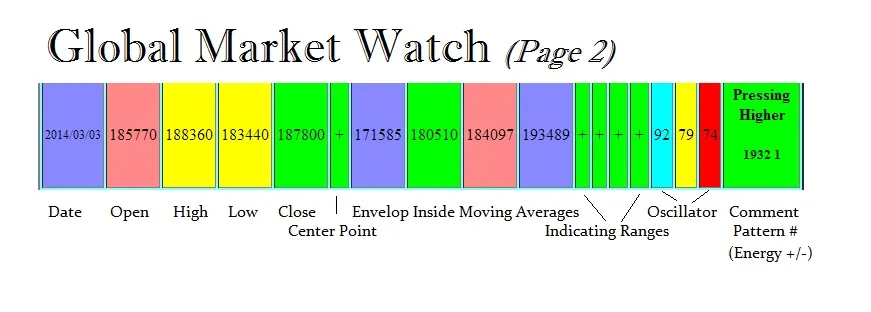
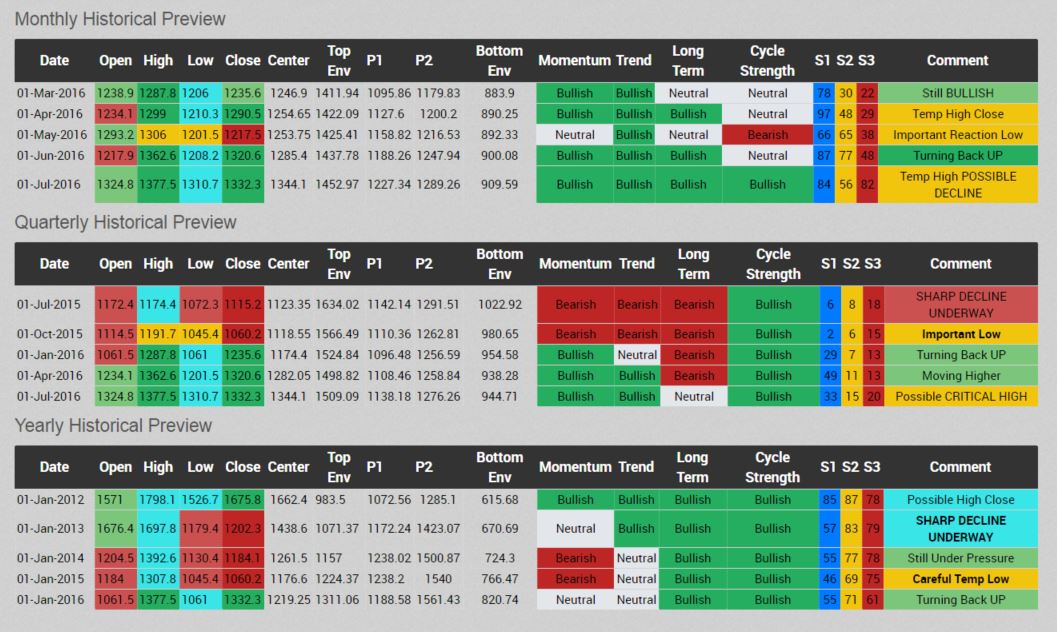
The Global Market Watch (GMW) was created for one of the top 10 banks in the world. It allowed them to look at their entire portfolio without reading a thousand reports. This allowed them to hone in on what might need their attention. As they commented, this is like having 1,000 trading assistants. We really are too busy advertising or engaging in marketing campaigns. You can die from having too much business. As is the case with offices worldwide, someone is always awake. This was designed for large institutions to save time and provide an important tool for investing.
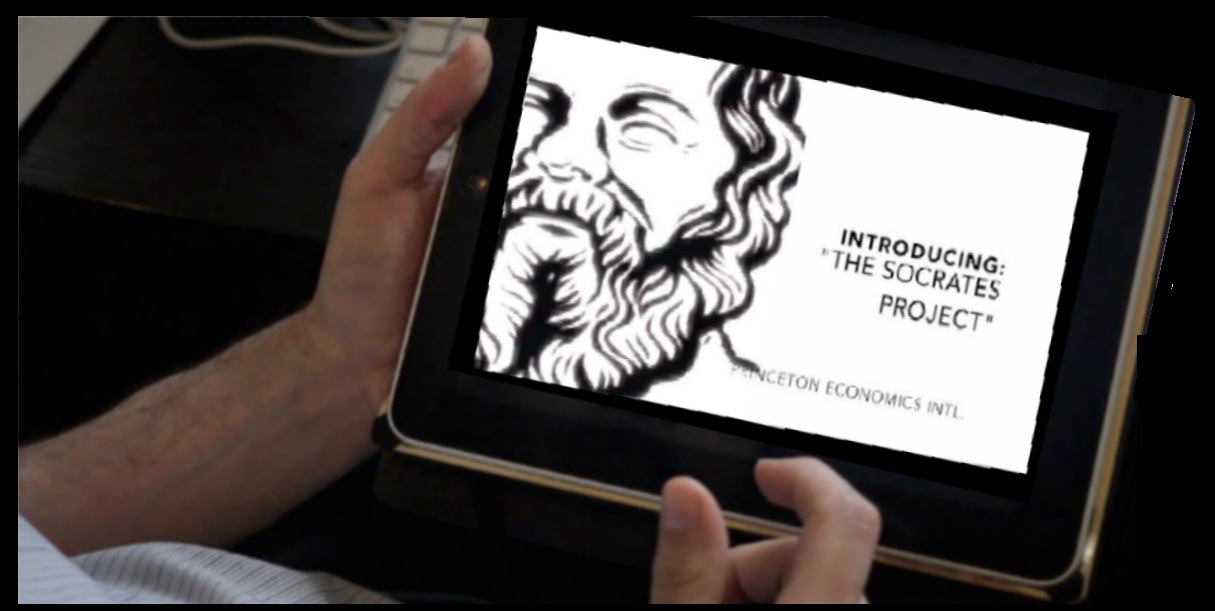
The comments are a work in progress since the model still identifies new patterns. Socrates is proving that all the theories from the nonsense of Random Walks, etc., are just excuses for people incapable of comprehending how the world functions. The GMW records a pattern REGARDLESS of the market and assigns a number you see under the comment. That same pattern shows up in every market because the instrument is irrelevant – it is how human nature interacts with that market.
We can create a GMW for your entire portfolio to give you a fast glance at your portfolio. We are currently working on providing the same tools that I have used so you can ask question and it will respond. We are considering creating a terminal so it will access our systems and provide you with an impressive assistant.
Posted originally on Dec 16, 2024 by Martin Armstrong
QUESTION #1: Mr. Armstrong, you used to provide your reports rebranded to an institution’s name in Tokyo. Would you consider that for other countries?
GL
ANSWER #1: Yes. We would articulate the turning points rather than include the arrays. That would make it too identifiable, tracing back to us. But certainly, we can do that and attack an institution’s name, such as a reputable bank or brokerage house. We can replace the majority of the cost of research. We have a database of virtually every stock in the world.
QUESTION #2: Can I request that a particular stock be added to Socrates?
Posted originally on Dec 10, 2024 by Martin Armstrong
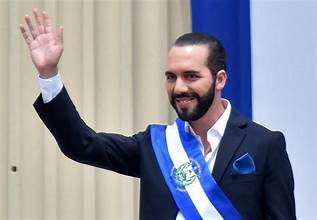
The International Monetary Fund is willing to provide El Salvador with a $1.3 billion loan, but the nation must meet two demands. First, El Salvador must commit to reducing its budget deficit to 3.5% of GDP over the next three years. The second requirement is for El Salvador to begin backing away from bitcoin.
El Salvador declared bitcoin legal tender in 2021. The nation holds a bitcoin Treasury worth over $600 million as of lately with bitcoin’s recent price spike and has been purchasing about 1 btc per day. President Nayib Bukele recently took to social media to declare the success of his bitcoin adaptation, claiming gains of over 127%. Yet, the public has not largely adopted the new currency. In fact, the Central American University conducted a study in January that revealed 88% of citizens have not used bitcoin in transactions over the previous year.
Under the new IMF requirement, El Salvador must prohibit the legal requirement that states businesses must accept bitcoin as payment. Under this premise, bitcoin could not truly be considered legal tender.
As I have said, global organizations will not permit crypto to operate freely outside their control. I must agree with the IMF that Bitcoin’s volatile pricing presents financial instability and exposes government revenue to greater foreign exchange rate risks. Bitcoin is merely a trading vehicle and not a proper currency. However, the IMF also states that it is concerned about anti-money laundering practices. which simply means they are concerned that they cannot tax it.
Taxation goes hand in hand with lowering the budget deficit, as the nation has been steadily increasing tax revenue. Tax revenues reached 17.64% of GDP in 2017, later advancing to 19.75% in 2022. The government has several measures in place for tax evasion and has improved its digital taxpayer registry to see who has underpaid. There is hope that the recent discovery of gold will offset the hunt for taxation, and the president does seem to be a reasonable man. Perhaps El Salvador will not require a loan if it has truly found trillions worth of gold. It appears that Nayib Bukele will not back away from his stance on bitcoin either way.
Posted originally on Nov 12, 2024 By Martin Armstrong
People continue to ask if Bitcoin will replace the dollar. They believe that the recent surge in Bitcoin indicates that it will topple the USD as the world’s reserve currency, but that is merely propaganda. You must understand that Bitcoin is simply a trading vehicle, not a currency. I cannot stress that point enough. My opinion has been unpopular, and clients have walked away due to my stance on crypto. That’s fine, as I am not in this for the money. I can only adequately inform my clients of the unbiased truth and hope that those willing to listen will heed the computer’s warnings.
To begin with, there is much speculation about the founder(s) — Satoshi Nakamoto – who created Bitcoin (BTC) on June 3, 2009. The mystery person or group (or government agency) has been MIA since 2011. Yet 1 million Bitcoins remain in their original account, untouched. His wallet is estimated to be worth over $81 billion at the time of this writing, and if this is indeed an individual, he or she is one of the top 15 richest people in the world. They have never moved a fraction of a BTC from their account. So, one wallet contains 5% of all mined bitcoin. Will this person or entity perpetually hold?
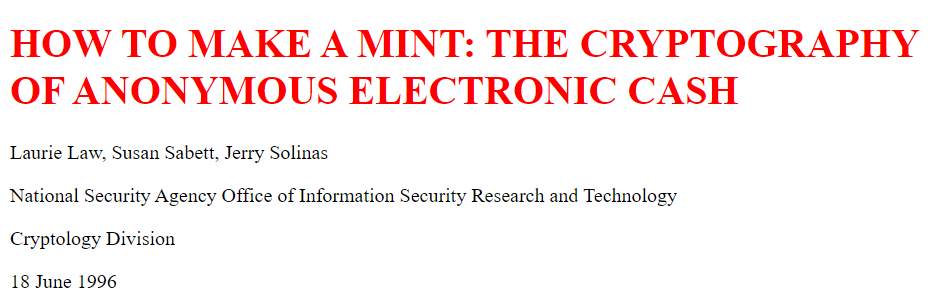
They expect us to believe some mysterious Japanese man created the blockchain technology and simply evaded all world governments. They claim Bitcoin is an anti-government vehicle, but it is a bureaucrat’s dream because it allows them to track where funds are coming from and going. In 1996, the US government released a white paper entitled, “How to make a mint: the cryptography of anonymous electronic cash.” Released by the National Security Agency Office of Information Security Research and Technology, this document explains how a government agency could create something like Bitcoin or another cryptocurrency. They had been attempting to create one for years and then magically Bitcoin came on the scene.
I encourage anyone interested in crypto to read my articleregarding this study. Blockchain was created with surveillance at the top of mind.
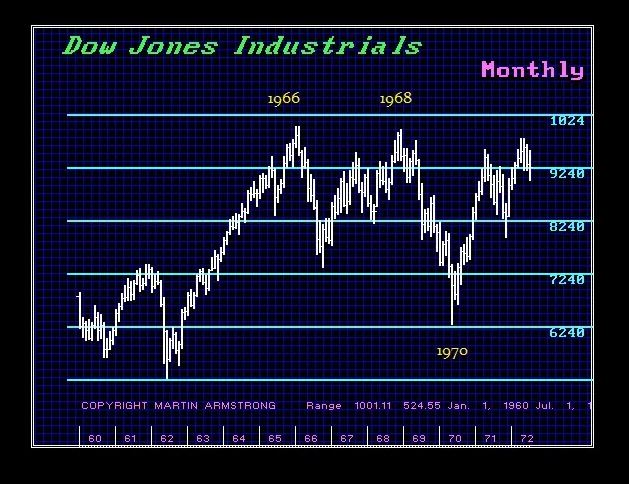
Bitcoin’s price is akin to the problem that existed when the bubble burst in 1966 with mutual funds because they were listed back then. The value can change at a volatility rate of 10x that of the dollar, making it a highly dangerous instrument as a store of wealth. It is solely a trading vehicle until they weigh it and the value is changed.
In 1966, investors bid the mutual funds up beyond net asset value, so during the crash, people lost everything when they thought it was a secure investment. The net underlying assets may have dropped 20%, but they paid 20% over the net asset value and then sold at 50% of the net asset value. Many mutual funds crashed 70-90%, whereas the Dow drop was 26.5%. Ever since mutual funds have no longer been allowed to be listed. You go in and out at net asset value. Bitcoin must change its structure, or it will never become a valid currency with a stable store of value, which is supposed to be the whole point. It is just an asset class of high volatility.
I have not been bullish on digital currency, as it’s a trading vehicle no different than any other commodity or stock. Sure, a profit could be made, and many have had great success. We do include Bitcoin in our models, and those subscribed to Socrates will see that our arrays are picking up on Bitcoin next year.
Bitcoin is a trading vehicle that is no different from wheat or cattle. It is NOT a store of wealth, as it fluctuates like everything else. It rises and falls no different than any other trading instrument. It is not a “store” of value maintaining some constant value to park your money. We need to get realistic here. The concept of Bitcoin replacing the dollar fails to comprehend what makes something the world’s reserve currency. I will write a piece explaining that aspect since it is crucial to understand.
Posted originally on the CTH on November 1, 2024 | Sundance
On January 17, 2017, just three days before President-Trump was sworn into office, outgoing President Obama had a secret conference call with progressive media allies.
Again, this is three days before Trump took office, when the Obama White House and Intelligence Community were intentionally pushing the Trump-Russia conspiracy story into the media in an effort to disrupt President Trump’s transition to power. President Obama is essentially asking his progressive allies to help defend his administration. Part of the 20-page transcript is below:
Barack Obama– […] “I think the Russia thing is a problem. And it’s of a piece with this broader lack of transparency. It is hard to know what conversations the President-elect may be having offline with business leaders in other countries who are also connected to leaders of other countries. And I’m not saying there’s anything I know for a fact or can prove, but it does mean that — here’s the one thing you guys have been able to know unequivocally during the last eight years, and that is that whether you disagree with me on policy or not, there was never a time in which my relationship with a foreign entity might shade how I viewed an issue. And that’s — I don’t know a precedent for that exactly.
Now, the good news there, I will say, is just that there’s a lot of career folks here who care about that stuff, and not just in the intelligence agencies. I think in our military, in our State Department. And I think that to the extent that things start getting weird, I think you will see surfacing objections, some through whistleblowers and some through others. And so I think there is some policing mechanism there, but that’s unprecedented.
And then the final thing that I’m most worried about is just preserving the democratic process so that in two years, four years, six years, if people are dissatisfied, that dissatisfaction expresses itself. So Jeff Sessions and the Justice Department and what’s happening with the voting rights division and the civil rights division, and — those basic process issues that allow for the democratic process to work. I’d include in that, by the way, press. I think you guys are all on top of how disconcerting — you guys complain about us — (laughter) — but let me just tell you, I think — we actually respected you guys and cared about trying to explain ourselves to you in a way that I think is just going to be different.
On balance, that leads to me to say I think that four years is okay. Take on some water, but we can kind of bail fast enough to be okay. Eight years would be a problem. I would be concerned about a sustained period in which some of these norms have broken down and started to corrode.
Q Could you talk a bit more about the Russia thing? Because it sounds like you, who knows more than we do from what you’ve seen, and is genuinely —
THE PRESIDENT: And can say less. (Laughter.) This is one area I’ve got to be careful about. But, look, I mean, I think based on what you guys have, I think it’s — and I’m not just talking about the most recent report or the hacking. I mean, there are longstanding business relationships there. They’re not classified. I think there’s been some good reporting on them, it’s just they never got much attention. He’s been doing business in Russia for a long time. Penthouse apartments in New York are sold to folks — let me put it this way. If there’s a Russian who can afford a $10-million, or a $15- or a $20- or a $30-million penthouse in Manhattan, or is a major investor in Florida, I think it’s fair to say Mr. Putin knows that person, because I don’t think they’re getting $10 million or $30 million or $50 million out of Russia without Mr. Putin saying that’s okay.
Q Could you talk about two things? One is, the damage he could do to our standing in the world through that. I mean, just this interview he gave the other day, and what you’re worried about there. And then the other side — and you sat down with him. I found the way in which he screamed at Jim Acosta just really chilling. If you just look at the face in a kind an authoritarian or autocratic, whatever word you want to use, personality — would you, on those two?
THE PRESIDENT: On the latter issue, EJ, you saw what I saw. I don’t think I need to elaborate on that.
Q But you sat down with him privately. I’m curious about —
THE PRESIDENT: Privately, that’s not — his interactions with me are very different than they are with the public, or, for that matter, interactions with Barack Obama, the distant figure. He’s very polite to me, and has not stopped being so. I think where he sees a vulnerability he goes after it and he takes advantage of it.
And the fact of the matter is, is that the media is not credible in the public eye right now. You have a bigger problem with a breakdown in institutional credibility that he exploits, at least for his base, and is sufficient for his purposes. Which means that — the one piece of advice I’d give this table is: Focus. I think if you’re jumping after every insult or terrible thing or bit of rudeness that he’s doing and just chasing that, I think there’s a little bit of a three-card Monte there that you have to be careful about. I think you have to focus on a couple of things that are really important and just stay on them and drive them home. And that’s hard to do in this news environment, and it’s hard to do with somebody who, I think, purposely generates outrage both to stir up his base but also to distract and to — so you just have to stay focused and unintimidated, because that’s how you confront, I think, a certain personality type.
But in terms of the world — look, rather than pick at one or two different things — number one, I don’t think he’s particularly isolationist — or I don’t think he’s particularly interventionist. I’m less worried than some that he initiates a war. I think that he could stumble into stuff just due to a lack of an infrastructure and sort of a coherent vision. But I think his basic view — his formative view of foreign policy is shaped by his interactions with Malaysian developers and Saudi princes, and I think his view is, I’m going to go around the world making deals and maybe suing people. (Laughter.) But it’s not, let me launch big wars that tie me up. And that’s not what his base is looking from him anyway. I mean, it is not true that he initially opposed the war in Iraq. It is true that during the campaign he was not projecting a hawkish foreign policy, other than bombing the heck out of terrorists. And we’ll see what that means, but I don’t think he’s looking to get into these big foreign adventures.
I think the bigger problem is nobody fully appreciates — and even I didn’t appreciate until I took this office — and when I say “nobody,” I mean the left as well as the right — the degree to which we really underwrite the world order. And I think sometimes from the left, that’s viewed as imperialism or sort of an extension of a global capitalism or what have you. The truth of the matter, though, is, if I’m at a G20 meeting, if we don’t initiate a conversation around human rights or women’s rights, or LGBT rights, or climate change, or open government, or anti-corruption initiatives, whatever cause you believe in, it doesn’t happen. Almost everything — every multilateral initiative function, norm, policy that is out there — it’s underwritten by us. We have some allies, primarily Europe, Canada, and some of our Asia allies.
But what I worry about most is, there is a war right now of ideas, more than any hot war, and it is between Putinism — which, by the way, is subscribed to, at some level, by Erdogan or Netanyahu or Duterte and Trump — and a vision of a liberal market-based democracy that has all kinds of flaws and is subject to all kinds of legitimate criticism, but on the other hand is sort of responsible for most of the human progress we’ve seen over the last 50, 75 years.
And if what you see in Europe — illiberalism winning out, the liberal order there being chipped away — and the United States is not there as a bulwark, which I think it will not be, then what you’re going to start seeing is, in a G20 or a G7, something like a human rights agenda is just not going to even be — it won’t be even on the docket, it won’t be talked about. And you’ll start seeing — what the Russians, what the Chinese do in those meetings is that they essentially look out for their own interests. They sit back, they wait to see what kind of consensus we’re building globally, they see if sometimes they can make sure their equities are protected, but they don’t initiate.
If we’re not there initiating ourselves, then everybody goes into their own sort of nationalist, mercantilist corners, and it will be a meaner, tougher world, and the prospects for conflict that arise will be greater. I think the weakening of Europe, if not the splintering of Europe, will have significant effects for us because, you may recall, but the last time Europe was not unified, it did not go well. So I’m worried about Europe.
There are a lot of bad impulses in Europe if — you know, Europe, even before the election, these guys will remember when we were, like, in Hanover and stuff, and you just got this sense of, you know, like the Yeats poem — the best lacked all conviction and the worst were full of passion and intensity, and everybody on their heels, and unable to articulate or defend the fact that the European Union has produced the wealthiest, most peaceful, most prosperous, highest living standards in the history of mankind, and prior to that, 60 million people ended up being killed around the world because they couldn’t get along.
So you’d think that we’d have the better argument here, but you didn’t get a sense of that. Everybody was defensive, and I worry about that. Seeing Merkel for the last time when I was in Berlin was haunting. She looked very alarmed.
Q What can you share with us about what foreign leaders, like Merkel and others, have expressed to you about what happened here in this election and what’s happening internationally generally since November 8th?
THE PRESIDENT: I think they share the concerns that I just described. But it’s hard for them to figure out how to mobilize without us. This is what I mean — I mean, I’ll be honest, I do get frustrated sometimes with like the Greenwalds of the world. There are legitimate arguments to be made about various things we do, but overall we have been a relatively benign influence and a ballast, and have tried to create spaces — sometimes there’s hypocrisy and I’m dealing with the Saudis while they’re doing all kinds of stuff, or we’re looking away when there’s a Chinese dissident in jail. All legitimate concerns. How we prosecute the war against terrorism, even under my watch. And you can challenge our drone policy, although I would argue that the arguments were much more salient in the first two years of my administration — much less salient today.
You can talk about surveillance, and I would argue once again that Snowden identified some problems that had to do with technology outpacing the legal architecture. Since that time, the modifications we’ve made overall I think have been fairly sensible.
But even if you don’t agree with those things, if we’re not there making the arguments — and even under Bush, those arguments were made. I mean, you know, they screwed up royally with Iraq, but they cared about stuff like freedom of religion or genital mutilation. I mean, there was a State Department that would express concern about these things, and push and prod and much less NATO, which you kind of would think, well, that’s sort of a basic, let’s keep that thing going, that’s worked okay.
So I think the fear is a combination of poor policy articulation or just silence on the part of the administration, a lack of observance ourselves of basic norms. So, I mean, we started this thing called the Open Government Partnership that’s gotten 75 countries around the world doing all kinds of things that we’ve been poking and prodding them to do for a long time. It’s been really successful making sure that people know what their budgets are and how they can hold their elected officials accountable, and we’re doing it in Africa, in Asia, et cetera. And now, if we get a President who doesn’t release his tax returns, who’s doing business with a bunch of folks, then everybody looks and says, well, what are you talking about? They don’t even have to, like, dismantle that program, it’s just — our example counts too.
Q Mr. President, can I ask you to go to kind of a dark place for a second in terms of —
THE PRESIDENT: I was feeling pretty dark. (Laughter.) I don’t know how much — where do you want me to go exactly?
Q I can bring us lower, trust me.
Q The John McCain line, everything is terrible before it goes completely black. (Laughter.)
Q I know that you feel that there’s a lot you can’t say on the Russia story, but just even speaking hypothetically, if there were somebody with the powers of U.S. President who Russia felt like they could give orders to, that Russia felt like they had something on them, what’s your worst-case scenario? What’s the worry there in terms of the kind of damage that could be done?
And also domestically, with a truly malign actor, if he’s, way worse than we all think he might be, and he wanted to use the powers of the U.S. government to cause — to advance his own interests and cause other people harm that he saw as his enemies, are there breaks out there that you see? What are the places where you worry the most in terms of damage being done?
THE PRESIDENT: Okay, on the foreign policy, the hypothetical is just — I can’t answer that because I’ll let you guys spin yourselves.
What I would simply say would be that any time you have a foreign actors who, for whatever reason, has ex parte influence over the President of the United States, meaning that the American people can’t see that influence because it’s not happening in a bilateral meeting and subject to negotiations or reporting — any time that happens, that’s a problem. And I’ll let you speculate on where that could go.
Domestically, I think I’ve mentioned to Greg the place that I worry the most about. I mean, I think that the dangers I would see would be — and we saw some hints of this in my predecessor — if you politicize law enforcement, the attorney general’s office, U.S. attorneys, FBI, prosecutorial functions, IRS audits, that’s the place that I worry the most about. And the reason is because if you start seeing the government engaging in some of those behaviors and you start getting a chilling effect, then looking at history I don’t know that we’re so special that you don’t start getting self-censorship, which in some ways is worse, or at least becomes the precursor.
We have enough institutional breaks right now to prevent just outright — I mean, you would not, even with a Supreme Court appointment of his coming up, Justice Roberts would not uphold the President of the United States explicitly punishing the Washington Post for writing something. I mean, the First Amendment — there’s certain things that you can’t get away with.
But what you can do — it’s been interesting watching sort of a handful of tweets, and then suddenly companies are all like, oh, we’re going to bring back jobs, even if it’s all phony and bullshit. What that shows is the power of people thinking, you know what, I might get in trouble, I might get punished. And it’s one thing if that’s just verbal. But if folks start feeling as if the law enforcement mechanisms we have in place are not straight, they’ll play it straight. That’s dangerous, just because the immense power — one of the frustrations I’ve had over the course of eight years is the degree to which people have, I think in the popular imagination and certainly among the left, this idea of Big Brother and spying and reading emails and writing emails — and that’s captured everybody’s imaginations.
But I will tell you, the real power that’s scary is just basic law enforcement. If the FBI comes and questions you and says it wants your stuff, and the Justice Department starts investigating you and is investigating you for long periods of time, even if you have nothing to hide, even if you’ve got lawyers, that’s a scary piece of business, and it will linger for long periods of time.” …. (Much More Continues after Page, 10)
Posted originally on the CTH on October 10, 2024 | Sundance
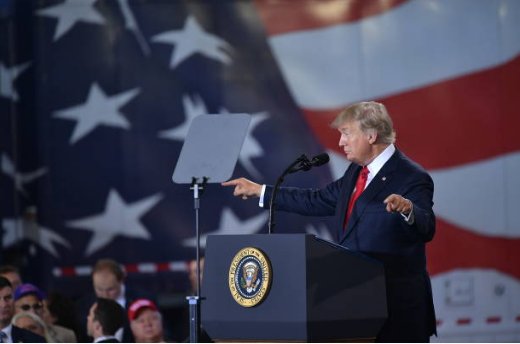
Today, President Donald Trump heads back to Michigan for a speech at the Detroit Economic Club. The keynote address is scheduled to start at 2:00pm EDT, with RSBN providing coverage starting around noon. Livestream Links Below:
Posted originally on Sep 10, 2024 By Martin Armstrong |
COMMENT: Mr. Armstrong, I find it incorrigible that everyone now claims recession when they have never predicted a recession before. That was clear from the video you had of Larry Summers, who admitted nobody could do that. It is very strange how you are the only person who has ever forecast recessions and new highs in markets when everyone was called the opposite. Even in August, you had these people clamoring for an emergency rate cut while you said it was a three-day plunge and a new high would follow.
I looked back, and even in your April 25, 2024 post, you said a recession would follow the ECM turn on May 7th. Nobody gives you credit. They all copy you. But without you, they have no forecast. They are stupid, for what you have done is essential for society. These people want to pretend they are something they are not.
They do not even understand what makes a recession unfold.
Thank you so much. I wish people would be honest and give you credit, for that is the only way to hope for what comes after 2032. All they do is plagiarize you.
Peter
REPLY: Sadly, what you are describing is human nature. We are a flawed species – tragic in so many ways, like a Greek play. We seem to cling to our expectations of a just and moral world when history records anything but morality. And Thraymachus basically said JUSTICE is always the same – the self-interest of those in power – JUST US is the real spelling.
We have Europe and South America censuring free speech because the LEFT does not believe in civilization; they only see their own self-interest. Their failure in life is caused by the success of others—never themselves. As a species, we seem to believe there is ethical meaning behind everything when we live in an unethical and meaningless world that bathes only in self-interest.
I understand what you mean. Only this model has projected booms, busts, and recessions decades in advance. We have to learn to live with the cycle. Pretending you called a recession from a gut feeling or just looking at US statistics is a joke. We are all in this together. The US cannot withstand a global recession. That is why I say we are all connected. When you have the Neocons threatening war on four fronts, China, Korea, Russia, and Iran, the future is colored with uncertainty. That results in the contraction of spending.
Then, inflation is set in motion by shortages and tax increases. Throw in Kamala’s taxation of unrealized gains and make it only the billionaires. They are then forced to see stock to pay the tax, and you create the biggest crash in history that wipes out people’s pensions. NOTHING takes place in isolation. NEVER do the Democrats ever once question their spending. They are Marxists and must constantly promise more, never less, and that necessitates endless tax increases that always reduce GDP.
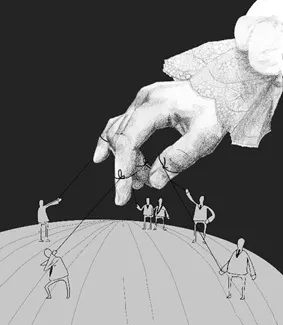
It’s always the invisible hand – we all act in our own self-interest.
Posted originally on Aug 29, 2024 By Martin Armstrong
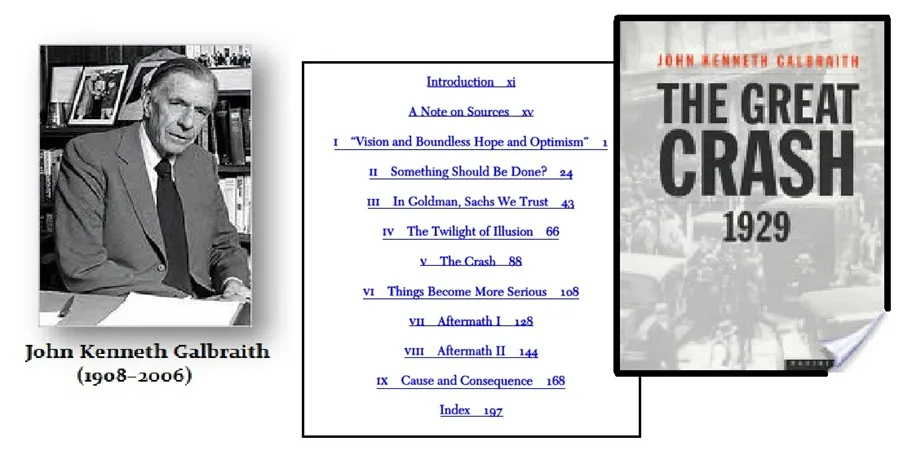
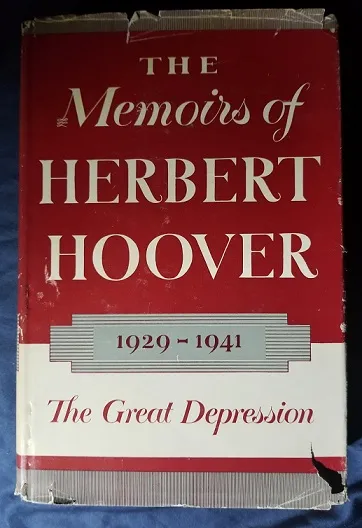
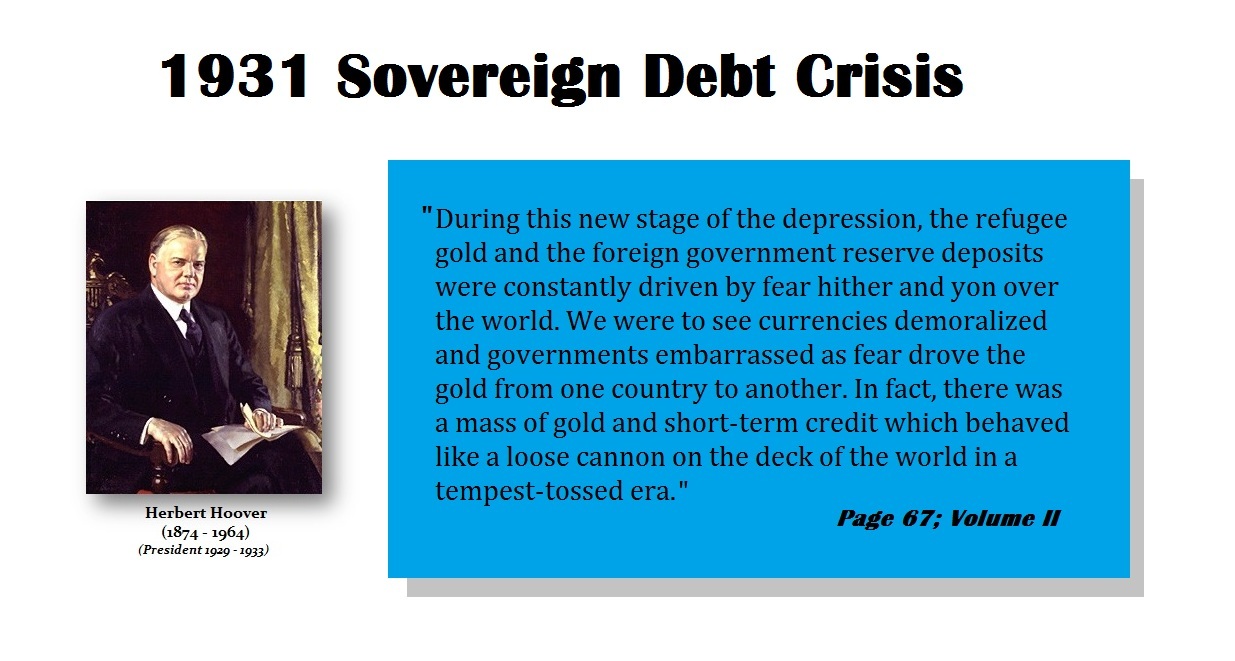
When I was in high school history class, I had to read Galbraith’s The Great Crash. It was not until I came across a two-volume set of Herbert Hoover’s Memoirs that my eyes were pulled open. Nowhere in Galbraith’s book was there ever any mention of a 1931 Sovereign Debt Default because he was a Socialist, and the object of his book was to pin all the blame on corporations and the rich. He omitted everything that ever remotely pointed to the government as a cause. We should all own nothing, shut up, and be happy. Speak up, and today, you go to prison for Free Speech.
The conflict surfaced in my mind in high school. As I have said, in physics class they said nothing is random. Then in economics class, they said everything is random so government has the power to manipulate society and prevent recessions. That was a conflict to me that began my questioning of what I was being taught.
It is becoming painfully obvious schools are programming children for political agendas. This is very Stalinistic, for he, too, instructed children that the state was their parent and if their biological parents ever said anything against the state, they were to report them.
It has gotten far worse than when I was a kid. They were trying to brainwash us that the government is good and the corporate world is all evil. Today, that has gone into being gay, changing your gender, and not telling the parents like Stalin for the State is your parent. This is a movement to reduce the population to make Schwab, Gates, and Soros happy.
What does this all say? Today, if I had to start over, I would choose homeschooling.
Posted originally on the CTH on June 23, 2024 | Sundance
Mike Morell was the Deputy CIA Director when the Benghazi attack happened under Secretary of State Hillary Clinton. {GO DEEP} Clinton and CIA Director Leon Panetta used Qatar to organize the sale of shoulder fired missiles to al-Qaeda in Libya. At the time of the Benghazi attack Ambassador Chris Stephens was working with the CIA in Eastern Libya trying to buy-back the missiles.
General David Petraeus became CIA Director shortly before the 9-11-12 Benghazi attack (Panetta moved to Defense Secretary) and had no risk from the previous missile sales as they took place before his tenure. This made Petraeus a risk.
After Benghazi, the Intelligence Community, supported by Mike Morell, quickly organized a removal operation to get rid of Petraeus using the blackmail they held over him from CBS correspondent Paula Broadwell.
Petraeus was threatened and eventually removed, Mike Morell took his place as Acting CIA Director to protect the CIA, Hillary Clinton, Leon Panetta and the larger Obama administration, from the aftermath of the Benghazi mess.
After the cleanup operation was successful, Morell then went to work for Hillary Clinton and CBS. Morell is a deeply professional liar. He knows I watch him.
When working for Hillary Clinton in August of 2016, Mike Morell published the first outline of the Trump-Russia collusion conspiracy in the New York Times. It was all a lie; we all know it – no one ever held him to account.
Four years later, in the 2020 presidential election cycle Mike Morell did it again; this time organizing the 51 intelligence officers to claim the Hunter Biden laptop was Russian disinformation. Morell led this effort with the State Dept and CIA. Again, it was all a lie; we all know it – no one ever held him to account, and Mike Morell remains working for CBS to this day.
2024 is another presidential election year. The problem for the Intelligence Community (IC), is their prior lies have caught up with them. They cannot lie Biden back into office. The IC needs something else, something more severe. Something more dramatic. Mike Morell is now saying a terrorist attack is about to happen on USA soil. WATCH:
[TRANSCRIPT] – MARGARET BRENNAN: We’re joined now by former CIA Deputy Director, Mike Morell. He’s also our CBS News senior national security contributor. Good to have you here.
MIKE MORELL: Good to be here, Margaret.
MARGARET BRENNAN: You just had that Foreign Affairs article that got all this attention, “The Terrorism Warning Lights are Blinking Red Again.” You compare the moment we are in now to what happened in the lead up to 9/11. And I want to play something FBI director Chris Wray said earlier this month.
[START SOUND ON TAPE]
FBI DIRECTOR CHRISTOPHER WRAY: Our most immediate concern has been that individuals or small groups will draw a twisted inspiration from the events in the Middle East to carry out attacks here at home. But now, on top of that, increasingly concerning is the potential for a coordinated attack here in the homeland, not unlike the ISIS-K attack we saw at the Russia concert hall back in March.
[START END ON TAPE]
MARGARET BRENNAN: That’s chilling. The White House says the president is briefed regularly on threats. If that is true, do you think he’s doing enough?
MIKE MORELL: Hard for me to say whether he’s doing enough because a lot of what needs to be done we wouldn’t see publicly. What I would say is, I ran into a lot of current- former intelligence- current intelligence officers and current policymakers. After we published the article, the response was almost universal. And we’re glad you wrote this. It’s really important. I read that as maybe there’s a lack of sense of- of a sense of urgency here. And that’s really important.
MARGARET BRENNAN : A lack of sense of urgency among members of the public? Or the government?
MIKE MORELL: The administration. Yeah. And Congress, quite frankly. There needs to be a sense of urgency about this. And I think the American public needs to understand what the threat is. That’s why we called for a public congressional hearing just on the terrorist threats to the homeland. Right, not a hearing on threats broadly, but threats to the homeland. And then we need to hear what the administration is doing about this in a broad sense, right. Not the details, but in a broad sense.
MARGARET BRENNAN: Well, I asked the chair of the House Intelligence Committee, Republican Mike Turner, about exactly your proposal, and he- he really kind of dismissed it. He said, Oh, we’ve covered that.
(CROSSTALK)
MIKE MORELL: He said- we already covered that. They haven’t.
MARGARET BRENNAN: Right, he did call for the administration to declassify information. Our colleague, Sam Vinograd who ran vetting at the border for DHS, said basically that the information that feeds those vetting lists, the watch lists, is dependent on how much good intelligence is collected, and that has been under-resourced. Do you agree with that?
MIKE MORELL: I- I agree with that 100%. We’ve shifted resources from the counterterrorism community to the China community. Now, that’s understandable to some degree, it’s been significant. So I think there’s a cost to the intelligence we’re collecting. The vetting system beyond not having the information- the vetting system does not provide all of the information that the government has. There was just a DHS inspector general report that outlined all the problems with the vetting system. So it’s lack of information and it is the system itself.
MARGARET BRENNAN: That- and we have it on a graphic, the report said Customs and Border Protection could not access all federal data necessary to enable complete screening and vetting of non-citizens seeking admission into the United States. This is the government saying we can’t vet everyone properly.
MIKE MORELL: Right. And Customs and Border doesn’t have the technology, right? To even connect. There are all sorts of issues here that need to be resolved.
MARGARET BRENNAN: Mike Morell, stay with us. I have to take a break but there’s much more I want to talk to you about.
[COMMERCIAL BREAK]
MARGARET BRENNAN: Welcome back to Face The Nation. We return now to our conversation with CBS News senior national security contributor, Mike Morell. Mike, I want to ask you about some video that CBS broadcasted earlier this week, 60 Minutes obtained it. It’s Saudi national Omar al-Bayoumi walking around the US Capitol back in 1999. We’re seeing that video now. It was shot within 90 days of the time when senior al Qaeda planners were deciding on 9/11 targets according to the FBI. At the time you were at the CIA. We know now the FBI identified this man, al-Bayoumi, as an intelligence operative with close ties to two of the 9/11 hijackers. But in that 9/11 commission report it said there was no credible evidence that he was a violent extremist or aided extremists. Now that you have seen this video, what do you think it reveals?
MIKE MORELL: No doubt in my mind, that it is a casing video, that it is a casing video for some sort of terrorist attack. Number one. Number two, pretty clear to me that al-Bayoumi was- was either working for al Qaeda, or was Al Qaeda. Did he know about the 9/11 attacks? Probably not. Did he know that the two individuals he was interacting with were 9/11 hijackers? Probably not. But- but no doubt in my mind that al Qaeda tasked him to do this casing video. The video is chilling. It’s chilling in terms of what he was- what he was videotaping, his narration over the top of it which- which is part what tells you it was a casing video. And his- his- his extremist comments. Let me just give you two examples, Margaret. On- on the casing part. At one point he says I will get over, he’s looking at the Washington Monument, I will get over there and I will report. I will report to you in detail what is there. He’s talking to somebody, right? He’s- and- and he’s talking about a plan–
MARGARET BRENNAN: — Not like a tourist would?
MIKE MORELL: Not like a tourist video. And then in terms of the extremism, he’s- he’s- he’s looking at the Capitol. And he says they say that our kids are demons. However, these are the demons, what he’s looking at.
MARGARET BRENNAN: So the FBI concluded he was not a threat. The 9/11 commission report concluded he was not a threat. You’re saying it’s clear he was Al Qaeda and living under the noses and examination of law enforcement undetected. He’s now living in Saudi Arabia as we speak. That’s pretty- that’s a pretty big oversight by US law enforcement and intelligence. Did the CIA know about this video?
MIKE MORELL: We did not. You know, I’m 99.9% confident that we did not have this video. I was the President’s briefer at the time. If somebody had shown me this video, I would have shown it to the President.
MARGARET BRENNAN: It was, as I understand it, UK officials- UK intelligence that scooped up this video?
MIKE MORELL: Yes, just so- so- so when he left the United States, he went to the UK. And after- after 9/11, the FBI discovered that he had signed- helped- helped- helped the two 9/11 hijackers get their first apartment. He- and the FBI learned that they learned that he was in the UK. So they go to the UK Government and they say- they share all this information. The British government arrests him, detains him, interrogates him, gets all this material. They say they provided it back to the FBI.
MARGARET BRENNAN: And it just stayed at the FBI.
MIKE MORELL: It looks- it looks that way.
MARGARET BRENNAN: A lot more to come on this including on 60 Minutes in the fall. Thank you so much for your analysis Mike Morell. We’ll be right back.
I have created this site to help people have fun in the kitchen. I write about enjoying life both in and out of my kitchen. Life is short! Make the most of it and enjoy!
This is a library of News Events not reported by the Main Stream Media documenting & connecting the dots on How the Obama Marxist Liberal agenda is destroying America







 Centinel2012