Secretary Tillerson Makes The Case for Denuclearization to the U.N. Security Council…


The United States leading diplomat, Secretary of State Rex Tillerson, makes the historic case for peaceful denuclearization to the U.N. Security Council.

.

[Transcript] SECRETARY TILLERSON: Well, good afternoon. And I appreciate the opportunity to address the Security Council again, and I thank this month’s – this month’s chair, Ethiopia.

Members of the Security Council talk often of threats to global security.

The focus of today’s Security Council meeting is an issue of worldwide implications: nuclear proliferation.

At a time when stabbings, crudely constructed bombs, and trucks driven into crowds of innocent men, women, and children are often our enemies’ weapons of choice to attack us, it is easy to become complacent and see the threat of nuclear attacks as a relic of the Cold War.

The threat of a nuclear attack remains a grim reality. Those who would trigger such a horrific scenario pose a unique threat to the security of peace-loving nations.

The challenge for each of us is, “How can we decrease the threat posed by nuclear weapons, not just to our own people, but people the world over?”

Today I want to put four points forward:

The first is to highlight the positive trajectories of nations that have voluntarily relinquished nuclear weapons.

The second is to emphasize the moral burden of possessing nuclear weapons, and the enormous responsibility that accompanies stewardship of such devastating weapons, as well as the technologies and nuclear materials that go into them.

The third is to make clear acquiring nuclear weapons capability does not provide security, prestige, or other benefits – but instead represents a path to isolation and intense security scrutiny from the global community, as those responsible nuclear powers will check such uncertain, unpredictable threats.

And lastly, all nations, but most particularly the current nuclear powers, must recommit to sound nuclear security practices and robust and effective non-proliferation efforts in order to keep nuclear weapons and associated materials and technology out of the hands of irresponsible nations, terrorists, and non-state actors.

There are historical precedents of nations abandoning their nuclear weapons programs and arsenals out of self-interest. Belarus, Kazakhstan, South Africa, and Ukraine all weighed the risk and responsibility of nuclear weapons and made the decision to eliminate their nuclear programs or give up their nuclear weapons.

As the apartheid regime in South Africa ended, the country’s leaders eliminated its nuclear weapons and joined the Non-Proliferation Treaty as a non-weapon state. After the dissolution of the Soviet Union, Belarus, Kazakhstan, and Ukraine willingly gave up the nuclear weaponry that the Soviet collapse bequeathed to their territories. And, over the years, several other countries were willing to abandon clandestine nuclear weapons development efforts when reassured by the United States and others that their relationships with us and the global community enabled them to meet their national security needs without such tools.

The Republic of Kazakhstan is a particularly illustrative example of the wisdom of relinquishing nuclear weapons.

In partnership with the United States, and aided by the Cooperative Threat Reduction Act spearheaded by U.S. Senators Sam Nunn and Richard Lugar, Kazakhstan opted to remove from its territory former Soviet weapons and related nuclear technologies, and joined the Non-Proliferation Treaty as a non-weapons state.

This courageous decision by the leaders of Kazakhstan greatly reduced the prospect of nuclear weapons, components of nuclear weapons, or nuclear materials and dual-use technologies from falling into the wrong hands. Nuclear weapons introduced complexity into relations with other countries, and they introduced the risk of miscalculation, accident, or escalation.

Kazakhstan’s actions represented a key step in that country becoming part of the community of nations. As a result of letting go of nuclear weapons, the world does not look on Kazakhstan as a potential nuclear aggressor or a rogue state. It did not make enemies of its nuclear neighbors, Russia or China.

Today Kazakhstan has overwhelmingly been at peace with its neighbors, and its trade relations are robust. This year, it hosted World Expo 2017, an event in Astana, which showcased the sources of future energy and investment opportunities in Kazakhstan to attendees from around the world. This is a modern nation making a substantial contribution to regional and international peace and prosperity. Kazakhstan has only benefitted from its early decision.

In my previous career, I met President Nazarbayev on many occasions and had the opportunity to ask him about this decision. He is more at peace with his choice than ever. He once remarked to me, “It was the best thing I ever did for our young country.”

Ukraine made a similar courageous choice. Even after Russia’s incursion – incursion into its territory in Crimea and east Ukraine, a violation of Moscow’s commitments under the Budapest Memorandum – Ukraine’s leaders reaffirmed yet again the wisdom of their decision to remove nuclear weapons. Their friends and allies quickly came to their aid in response to this violation of their sovereignty with a strong, unified set of sanctions on Russia and are steadfastly committed to ending this conflict through full implementation of the Minsk accords.

By rejecting the power of nuclear weapons, both of these two proud nations are in a better place than they would have been otherwise. They reduced the danger of nuclear conflict and helped reduce the chances of such capabilities falling into the hands of irresponsible third parties.

As the only nation on Earth to have used nuclear weapons in warfare, the United States bears a heavy responsibility to exercise proper stewardship of nuclear weapons and to lead in working with other nations to reduce global nuclear dangers.

It is a blessing, and perhaps in many ways a miracle, that nuclear weapons have never been used again. All the peoples of the world pray that they will never be. Experience is a hard but wise teacher and has taught everyone the grim moral responsibility that accompanies nuclear weapons.

The United States is reliant upon nuclear deterrence today not only for the purposes of safeguarding our own security interest but also those of our allies who otherwise might feel the need to acquire such weapons themselves. Such deterrence and such relationships have contributed to the absence of war between the great powers since 1945 and indeed to the fact that nuclear weapons themselves have never been used again.

We’re all fortunate that John F. Kennedy and Nikita Khrushchev, when they stood on the brink of a nuclear holocaust during the Cold War, came to a common understanding of the fearful and awesome power of nuclear weapons. As potential human extinction loomed over the Cuban Missile Crisis, the dominant emotion was fear. Nuclear weapons brought the most powerful men in the world no comfort, but it did make clear the need to minimize the risk of ever repeating this near-miss of a catastrophe by permitting nuclear capabilities to spread further.

Just this week, the world learned of the passing of a little-known but important figure in the history of the Cold War. His name was Stanislav Petrov, and he is sometimes referred to as “the man who saved the world.” In 1983, Petrov was a Soviet military officer on duty at a nuclear early warning center when his computers detected a barrage of incoming American nuclear missiles. He said, “I had all the data to suggest” it was true. He said, “If I had sent my report up the chain of command, nobody would have said a word against it.” He said, “All I had to do was to reach for the phone to raise the direct line to our top commanders, but I couldn’t move. I felt like I was sitting on a frying pan.”

Petrov had a hunch that the computer had made an error, and fortunately he was right about a false alarm. Instead of notifying his commanders to prepare an immediate nuclear counterattack, he instead called army headquarters and reported a system malfunction. This episode illustrates just how high the risk factor is with nuclear weapons, especially when decisions to use them are entrusted or could be entrusted to sometimes unreliable technologies or fallible human judgment. Countries who want nuclear weapons must ask themselves: Am I prepared to deal with this type of scenario in my own country?

The history of the Cuban Missile Crisis and the Soviet early warning malfunction illustrate how challenging it can be even for the most experienced and most sophisticated nuclear possessors to control nuclear dangers.

Rogue regimes fail to appreciate the responsibilities inherent to nuclear weapons. They wish to develop or expand their holdings of nuclear weapons in what they claim to be a search for security, but in fact they desire to use such tools to intimidate and coerce their neighbors and destabilize their regions. Such acquisitions risk creating an escalating spiral of regional or global instability and conflict, not just as a direct result of their own proliferation, but by prompting other nations to undertake their own nuclear weapons programs in response. In such circumstances, nuclear weapons are not instruments of mutual deterrence and strategic stability, but instead are tools of destabilization.

Rogue regimes may have persuaded themselves that they pursue nuclear weapons to establish and enhance their security and prestige, but, in fact, nuclear weapons are more likely to undermine both. There’s a very good reason why almost every country in the world has joined the Non-Proliferation Treaty: All parties can know that they will not in the future face the threat of nuclear catastrophe from any new direction.

If would-be proliferators seek security or to improve their standing in the world or to enhance the prosperity of their citizens and their people’s hope for a brighter future, proliferation will not provide these things. There are much better, proven ways for nations to establish and enhance their standing, such as deepening their trade integration with the rest of the world, adhering to international standards and agreements, and participating in humanitarian activities.

The Korean Peninsula serves as a stark example of these differing paths. While North Korea has shunned the international community and let its people starve while it relentlessly pursues nuclear weapons, South Korea has opted not to pursue nuclear weapons and is fully engaged with the international community. As a result, South Korea has grown into one of the world’s great economic powers, with a GDP over 100 times that of its neighbor to the north.

By contrast, though North Korea may assume that nuclear weapons will ensure the survival of its regime, in truth, nuclear weapons are clearly only leading to greater isolation, ignominy, and deprivation. Continued threats against us – against us, the U.S., and now, the entire global community, will not create safety for the regime, but will rather stiffen our collective resolve and our commitment to deterring North Korean aggression.

North Korea is a case study in why nations must work to preserve and strengthen global nonproliferation norms. As we look to the future, the international community’s record of enforcing compliance with nonproliferation obligations and commitments is not what we need it to be.

It is partly for lack of such accountability that we find ourselves in the situation we are in with North Korea at the moment. Though it joined the Non-Proliferation Treaty in the mid-1980s, North Korea never came into full compliance with the treaty, and cheated on every subsequent arrangement designed to remedy that noncompliance and rein in the nuclear threat it now presents.

There are also lessons here for Iran, which was on its own pathway to develop nuclear weapons – in violation of its Non-Proliferation Treaty and nuclear safeguards obligations and multiple, legally binding UN Security Council resolutions. Iran seems keen to preserve for itself the option to resume such work in the future, even while sponsoring international terrorism, developing missile systems capabilities of delivering nuclear weapons, and destabilizing its neighbors in a dangerous quest of regional hegemony.

The collective responsibilities of meeting such proliferation challenges will require more from all of us. As President Trump said in his speech on Tuesday, “If we are to embrace the opportunities of the future and overcome the present dangers together, there can be no substitute for strong, sovereign, and independent nations.” As strong, sovereign, and independent nations, we must work together, bilaterally, regionally, and globally, to stem the tide of proliferation. Sovereign states acting in unison will produce a global good.

We especially urge Russia to examine how it can better support global nonproliferation efforts. As the world’s two most powerful nuclear states, Russia and the United States share the greatest responsibility for upholding nonproliferation norms and stopping the further spread of nuclear weapons.

We have cooperated well before: the United States and the Soviet Union worked together closely in drafting most of the text that became the Non-Proliferation Treaty, which helped keep proliferation under control through the Cold War. Washington and Moscow did this, moreover, notwithstanding their own Cold War rivalry and the many problems in their bilateral relationship. In the post-Cold War era, Russia worked hard to improve accountability for its nuclear stockpile dispersed across the former Soviet Union, and we engaged closely in cooperative efforts – through the Nunn-Lugar program – to reduce the risk of weapons or material falling into the hands of proliferators or terrorists.

Unfortunately, in recent years, Russia has often acted in ways that weaken global norms and undercut efforts to hold nations accountable. Examples include violating its own obligations under the Intermediate-Range Nuclear Forces Treaty, flouting the security assurances it made at the end of the Cold War, impeding efforts to build on the legacy of past international efforts on nuclear security, and seeking to weaken the International Atomic Energy Agency’s independence in investigating clandestine nuclear programs.

If Russia wants to restore its role as a credible actor in resolving the situation with North Korea, it can prove its good intentions by upholding its commitments to established international efforts on nuclear security and arms control.

Cooperation from China is also essential if the international community is to bring North Korean nuclear and missile threats under control and prevent a catastrophe spiraling of instability and conflict on the Korean Peninsula.

If China truly desires to denuclearize the Korean Peninsula, to promote stability, and to avoid conflict in that sensitive region, right on its own border, now is the time to work with the rest of us, the rest of the international community, to put the kind of pressure on North Korea that can change its strategic calculation before it’s too late.

And lastly, we must be fully aware that there are non-state actors who will never conform to international norms governing nuclear weapons.

Their grand-scale terror attacks, beheadings, crucifixions, burnings, rapes, torture, acts of enslavement expose ISIS, al-Qaida, and other groups as those who seek to find glory through death and destruction.

Their eagerness to commit atrocity makes clear that, if given the chance, they would commit death and destruction on an even larger scale.  And there is no scale larger than a nuclear attack on one of the world’s cities.

Many jihadist groups aspire to detonate a nuclear device in the heart of a booming metropolis. Their mission is to kill our people and send the world into a downward spiral. We must never allow this.

We must continue to work to secure nuclear technologies, blueprints, and materials at their sources and disrupt proliferation networks.

We must deepen information sharing between intelligence agencies in order to identify actors and identify when nuclear materials have been or may be diverted from legitimate uses.

And we must revive the practice of creating alternative career and job opportunities for nuclear experts, so they do not sell their skills on the black market.

But ultimately, the best means to halt jihadists in their quest for nuclear weapons is to destroy them long before they can reach their goal.

Whether on the battlefield, in the streets, or online, terrorism must be given no quarter.

We must remain ever vigilant against the spread of ISIS and other Islamist groups in new locations, whether in Africa, Asia, Europe, or elsewhere.

One of the great successes of the campaign of the Coalition to Defeat ISIS in Iraq and Syria has been uprooting ISIS from formerly safe havens in which they could freely mastermind attacks against targets the world over. These efforts must continue.

As a body committed to security, we must treat nuclear proliferation with the seriousness it deserves.

For those of us on the Security Council, counteracting nuclear threats begins with full enforcement of the UN Security Council resolutions all member-states are bound to implement. To make sure all nations are able to play their part, we must continue to work for full and effective implementation of UN Security Council Resolution 1540.

But signing treaties and passing resolutions is not enough. Stopping nuclear proliferation also entails exercising other levers of power, whether diplomatic, economic, digital, moral, or, if necessary, military.

Ultimately, we each have a sovereign responsibility to ensure that we keep the world safe from nuclear warfare, the aftermath of which will transgress all borders.

The United States will continue to halt – to work to halt the proliferation of nuclear weapons. We ask all peace-loving nations to join us in this mission.

Thank you.

[Transcript Link]

Spanish Stock Market Reflects The Bearish Outlook for Spain


The one thing I have always said, markets never lie. The fact that Spain is showing that its government is still fascist is reflected in the performance of the share market. Spain has never exceeded its 2007 high and it is warning that a lower closing for 2017 may just see this market collapse into 2020. We will be looking at Spain closely at the WEC. This chart has been screaming – all is not well in the European project.

Dow High or Low


QUESTION: Hi Martin,

I am confused with the Dow Jones Index, could the index explode up through 23,000 to 40,000 from here or does there need a downward move then explode up through 23,00 (a sling shot).  Could you tell us what you see for the next 6 to 9 months.  Probably the most important investment for us all!
Thank you for all your help!
KC
ANSWER: The cycle is in the basing mode. Therefore, it need not drop sharply. Remaining within the channel is perfectly fine. A Slingshot would be more powerful to retest the bottom of the channel.  The explosion to the upside is still not yet unfolding and we need to be concerned about 2018 and the year-end closing. We will issue a special report to deal with that issue.
Part of the basing is concluding this year from political hell. The German elections are the 24th. Keep in mind that AfD will gain seats for the first time. Merkel has NEVER won a majority and she relies upon the FDP to hold power. The more the FDP declines and seats are taken by the AfD, the more chaos will unfold.

Central Banks Investing in Equities


QUESTION: There is a new trend that central banks are investing in the stock markets Is this true? What is the impact of this move?

ANSWER: Yes. The reason has been rather straight forward. The only game in town has been US government bonds. Many have seen this as a problem the defeats diversification. Consequently, there has been a major effort to attempt to diversify into the private sector when there has been such uncertainty in the public sector. Behind the Curtain many are simply asking of Europe: What the hell is going on? This has been a “euro crisis” that simply never seems to end. What has happened to Greece, Portugal, Italy, Spain, Holland and now even France. Many outside of Europe are simply asking has Europe just lost its mind? Hence, there has been a move to diversify out of government debt by central banks themselves.

Afghan President Says Trump’s Strategy (Trump Doctrine) Much More Effective Than Obama’s Failures…


Afghanistan President Ashraf Ghani delivered remarks today at the U.N. discussing the difference between U.S. President Donald Trump’s current strategy and the failed policy of former President Obama.

Two key differences underline the optimism of Ghani: #1) President Trump listened to what the region needed for stability; and #2) The Trump Doctrine of appropriately placing responsibility on Pakistan due to their enabling conduct with the extremist Taliban.

(Reuters) – Afghan President Ashraf Ghani said on Wednesday that U.S. President Donald Trump’s strategy to win the war in Afghanistan will work where his predecessor’s failed because the Afghan army is stronger and Trump wants a regional approach and a harder line with Pakistan.

Ghani also said that former President Barack Obama “did not have a partner in Afghanistan,” implicitly criticizing former Afghan President Hamid Karzai, who frequently disdained U.S. policy and the U.S.-led international military force.

“President Trump is not just an individual (but) a team of partners in Afghanistan,” Ghani told the Asia Society in New York, where he is attending the U.N. General Assembly. “The Trump administration’s strategy has the uniqueness of immense consultations with us.”

At the same time, Ghani said, Obama’s decision to maintain some U.S. forces in Afghanistan “ensured our survival” despite advances by Taliban insurgents.

U.S. Defense Secretary Jim Mattis said on Monday that more than 3,000 additional U.S. troops are being deployed to Afghanistan under the new strategy announced last month. The number of U.S. forces would rise to more than 14,000, compared to a high of more than 100,000 under Obama.

While providing few details, Trump pledged stepped-up operations against the Taliban and an open-ended commitment of U.S. military advisers, trainers and counter-terrorism units.

He also vowed to take a tougher line to end what U.S. officials say is Pakistan providing refuge and other support to the Taliban and other extremist groups. Pakistan denies the charge.

Asked how Trump’s strategy differs from Obama‘s, Ghani said Trump’s plan takes “a regional approach” to security and a harder line with Pakistan while providing a new opening for peace talks.

“The message to Pakistan to engage and become a responsible stakeholder in the region and in the fight against terrorism has never been clearer,” Ghani said. “What I am offering the Pakistan government, the Pakistan security apparatus, is the invitation to a comprehensive dialogue.”

“If Pakistan does not take this opportunity, I think they will pay a high price,” he said, without elaborating.  (read more)

Louvre Accord v Plaza Accord


QUESTION: I notice you often cite the *Plaza Accord* when on the topic of central bank currency manipulation. That accord was signed in 1985 with an aim to devalue the USD. Could you write a little on the *Louvre Accord” signed just two years later, in 1987, with an aim to reverse the unwanted effects of the *Plaza Accord*. Thanks – cheers,

TGM

ANSWER: The Louvre Accord was an agreement, signed on February 22, 1987 in Paris, that aimed to stabilize the international currency markets and halt the continued decline of the US Dollar caused by the Plaza Accord. The agreement was signed by France, West Germany, Japan, Canada, the United States and the United Kingdom. Italy declined to sign the agreement.

The G7 meeting of central bankers and finance ministers in Paris announced that the dollar was now “consistent with economic fundamentals.” The announced that they would only intervene when required to ensure foreign exchange stability. The objective was then to manage the floating currency system. Democrats gained control of Congress in 1986 and immediately called for protectionist measures. The dollar depreciation agreed to in 1985 at the Plaza Accord, failed to really improve the trade perspective. In 1986, the trade deficit actually rose to approximately $166 billion with exports at about $370 billion and imports at about $520 billion. The object of manipulating currency to try to create jobs and alter trade flows proved to be completely false.

My concerns warning that volatility would increase made back in 1985 were materializing. What they did not understand was the lowering the dollar in value also led to a shift in capital flows and the selling of US assets. Foreigners were suffering loses by financing U.S. trade through purchasing United States Treasury bonds in an attempt to ease the trade deficit criticism. We were advising Japanese to buy gold on the New York COMEX, export it, and then resell which would also make it appear that the US exports were increasing. However, the lower dollar was then resulting in the importation of inflation into their own nations.

We can see that first of all the dollar had already begun a decline prior to the Plaza Accord in August 1985. By the time we arrived at the  Louvre Accord, you can also see that the dollar continued to decline. The attempt to manipulate the foreign exchange markets proved to beyond the capacity of the G5 which had been expanded to G7 and today is now G20. We can see the capital flow data between the USA and Japan began to move in early 1984 establishing the trend that nobody seemed to pay attention to at that moment.

The price action of the dollar clearly proves that the central banks lacked the power to truly influence the markets. The trend had begun prior to the Plaza Accord and it continued to decline following the Louvre Accord.

Understanding Cycles


Cycle targets that we provide are TURNING POINTS. This means an event normally takes place at that time be it a high or low. If ideally something should produce a low but does not and produces a high, it is typically extending the cycle to the next TURNING POINT. It looks at this time that the next important turning point is the week at the start of Sept. There is of course the Fed meeting. But then there is trouble among debt ridden nations and then there is Iran.

Keep in mind that for some strange reason, geopolitical events tend to also happen in the Aug/Sept time frame. Besides war, there was even 911. On 28 June 1914, Archduke Franz Ferdinand of Austria was assassinated. World War I began officially 28 July 1914 and lasted until 11 November 1918. It was August when things really got underway. World War II began when Germany attacked Poland on September 1, 1939. Most stock market crash events take place after highs in early Sept such as 9/3/1929. Even the 1987 Crash 10/19/1987.What it is about this time of the year who knows. Where December is the time to be jolly, Sept is the time for chaos. Never look for a particular event high/low. It is a TURNING POINT that sometimes can invert and produce the opposite largely because everything is connected. It is always an action/reaction.

Cycle of Knowledge


QUESTION: Hello,

I am a French Astrophysicist and I end up watching with great interest a TV story about Martin Armstrong. As a scientist I am really curious and keen to build new connection between our way of describing the Universe and the bias introduced by our own vision and history. Hence I was wondering if the algorithm that Martin has developed was ever tested on human knowledge discovery or if this is something that could be interesting to do.

Kind Regards,

IA

ANSWER: Absolutely. There is cycle to knowledge that I have also encountered and found fascinating. We reach period of knowledge and then we seem to lose it all and reboot. Society before the Dark Age knew the Earth was round and not flat.  For example, if we look at the ancient Greeks, the knew the Earth was round and not flat. They burned people like Giordano Bruno (1548–1600) alive at the stake for claiming the world was round and it revolved around the sun instead of the other way around. The Greek philosopher Aristotle (384-322 BC) argued in his writings that the Earth was spherical, because of the circular shadow it cast on the Moon, during a lunar eclipse. Another reason was that some stars visible from Egypt are not seen further north. Aristotle wrote:

The evidence of the senses further corroborates this. How else would eclipses of the moon show segments shaped as we see them? As it is, the shapes which the moon itself each month shows are of every kind — straight, gibbous, and concave — but in eclipses the outline is always curved: and, since it is the interposition of the earth that makes the eclipse, the form of this line will be caused by the form of the earth’s surface, which is therefore spherical.

Again, our observations of the stars make it evident, not only that the earth is circular, but that it is a circle of no great size. For quite a small change of position to south or north causes a manifest alteration of the horizon. There is much change, I mean, in the stars which are overhead, and the stars seen are different, as one moves northward or southward. Indeed there are some stars seen in Egypt and in the neighborhood of Cyprus which are not seen in the northerly regions; and stars, which in the north are never beyond range of observation, in those regions rise and set.

All of which goes to show not only that the earth is circular in shape, but also that it is a sphere of no great size: for otherwise the effect of so slight a change of place would not be so quickly apparent. Hence one should not be too sure of the incredibility of the view of those who conceive that there is continuity between the parts about the pillars of Hercules and the parts about India, and that in this way the ocean is one.

(Aristotle, “On the Heavens,” Book II, Chapter 14, The Works of Aristotle, Oxford University Press; pp. 297-298.)

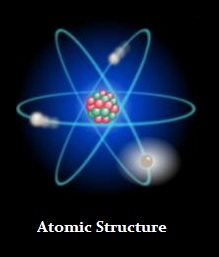
Aristotle, on the other hand, disagreed with the Atomic theory developed by Democritus (460—370 BC) in 465BC. He believed that instead of being matter being made of tiny particles (atoms) that they were all fundamentally air, fire, water, and earth. The Atomic theory was actually first proposed by Leucippus (c 5th cent. BC), and was then adopted by Democritus. The Atomic theory stated that “The universe is composed of two elements: the atoms and the void in which they exist and move.” According to Democritus atoms were miniscule quantities of matter, which he believed could not be destroyed, differ in size, shape and temperature. They were also in constant movement yet could not be seen with the naked eye. He believed that there are an infinite number of atoms.

Then there was the Alexandrian philosopher Eratosthenes (c. 276BC–195/194BC) who actually estimated how large the Earth was. Eratosthenes learned that on midsummer day (June 21) in the town of Syene in southern Egypt, the noontime Sun was reflected in a deep well for it was directly overhead on that one day. Eratosthenes in Alexandria which was about 5000 stadia north of Syene. In Alexandria the Sun on the corresponding date did not quite reach zenith (perfectly overhead), and vertical objects would cast a short shadow. Hence, Eratosthenes calculated that the direction of the noon Sun differed from the zenith by an angle that was 1/50 of the circle, that is, 7. 2 degrees. With this realization, ,Eratosthenes estimated the circumference of the Earth to be 250,000 stadia.

 I have stated before that after Rome fell, the financial capitol of the world moved to Constantinople in Turkey. After the Byzantine Empire fell, that financial capitol moved to India. It was because of the importance of India that Columbus set sail on a mission to India based upon a wrong calculation of the size of the earth. Columbus relied upon the calculations of the earth from Ptolemy. Ptolemy influenced Strabo who in turn reduced the 250,000 Stadia of Eratosthenes to 180,000, and then stated that half of that distance came to just 70,000 stadia, making India reachable by sailing West. So India has played a very important role for Europe bumped into the Americas by trying to sail to India.

This is only one example of how there has been a cycle to knowledge. It is by no means linear. Knowledge is built from experience. Thus, we have to go through the business cycle to advance. This was in part included in Schumpter’s explanation of the business cycle that there are waves of innovation. He did not see what I see studying history that there is also a peak and then a decline to the level of knowledge as well and it is not linear as Schumpter imagined from a small data set.

Dark Age v Renaissance


QUESTION: Hi Martin,

Thank you for everything that you do.  Concerning the post, The Long-Term Cycle of Monetary Crisis, you describe the corruption of power that leads to monetary crisis and the subsequent reform: the thread that repeats throughout history.

I was wondering if you could contrast this with the periods of history where there is a renaissance/age of enlightenment, and the common tread there (is it the people revolting, which is the only way that corruption of power is defeated?).

Many Thanks Again,

Danny

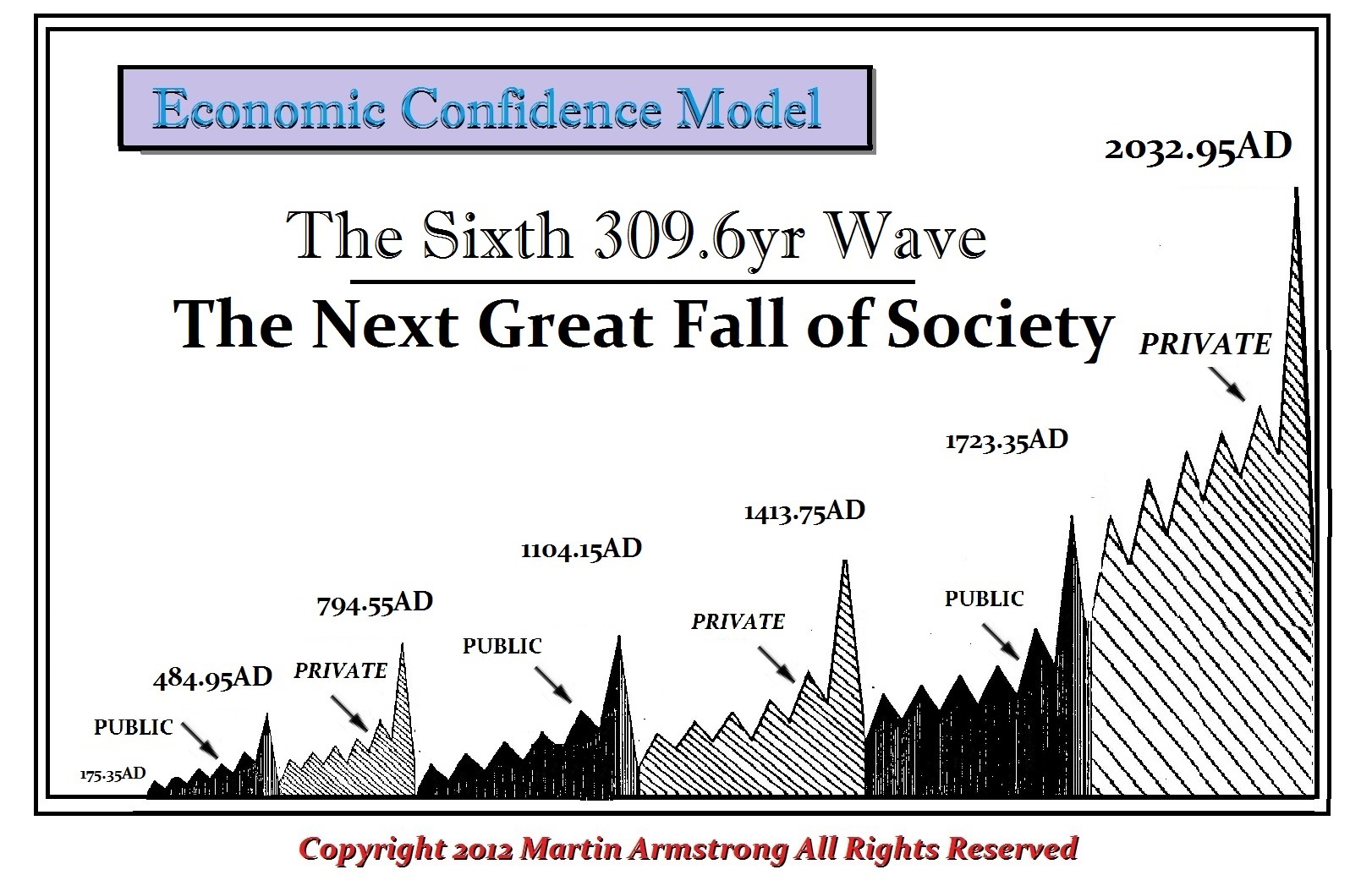
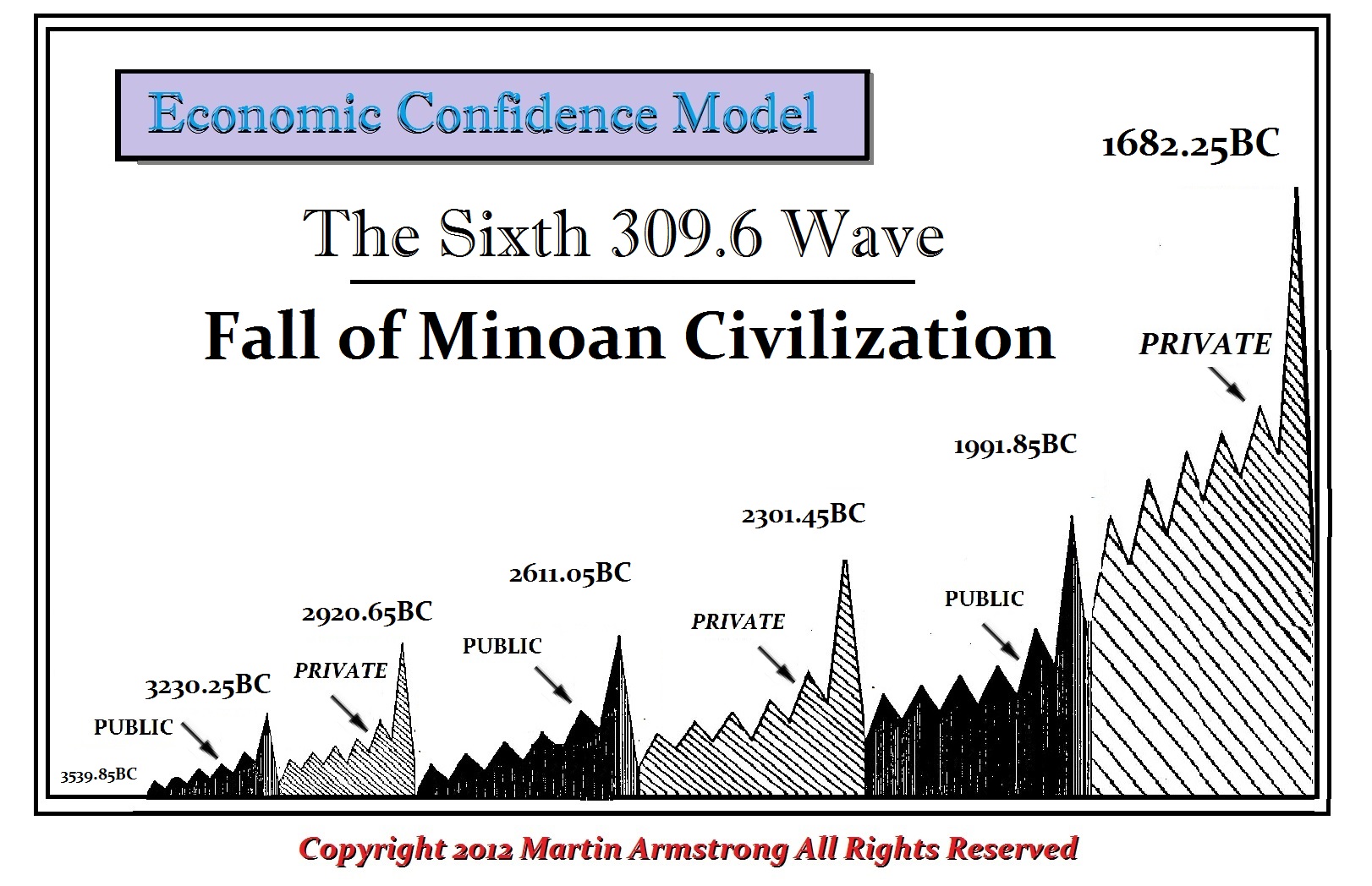
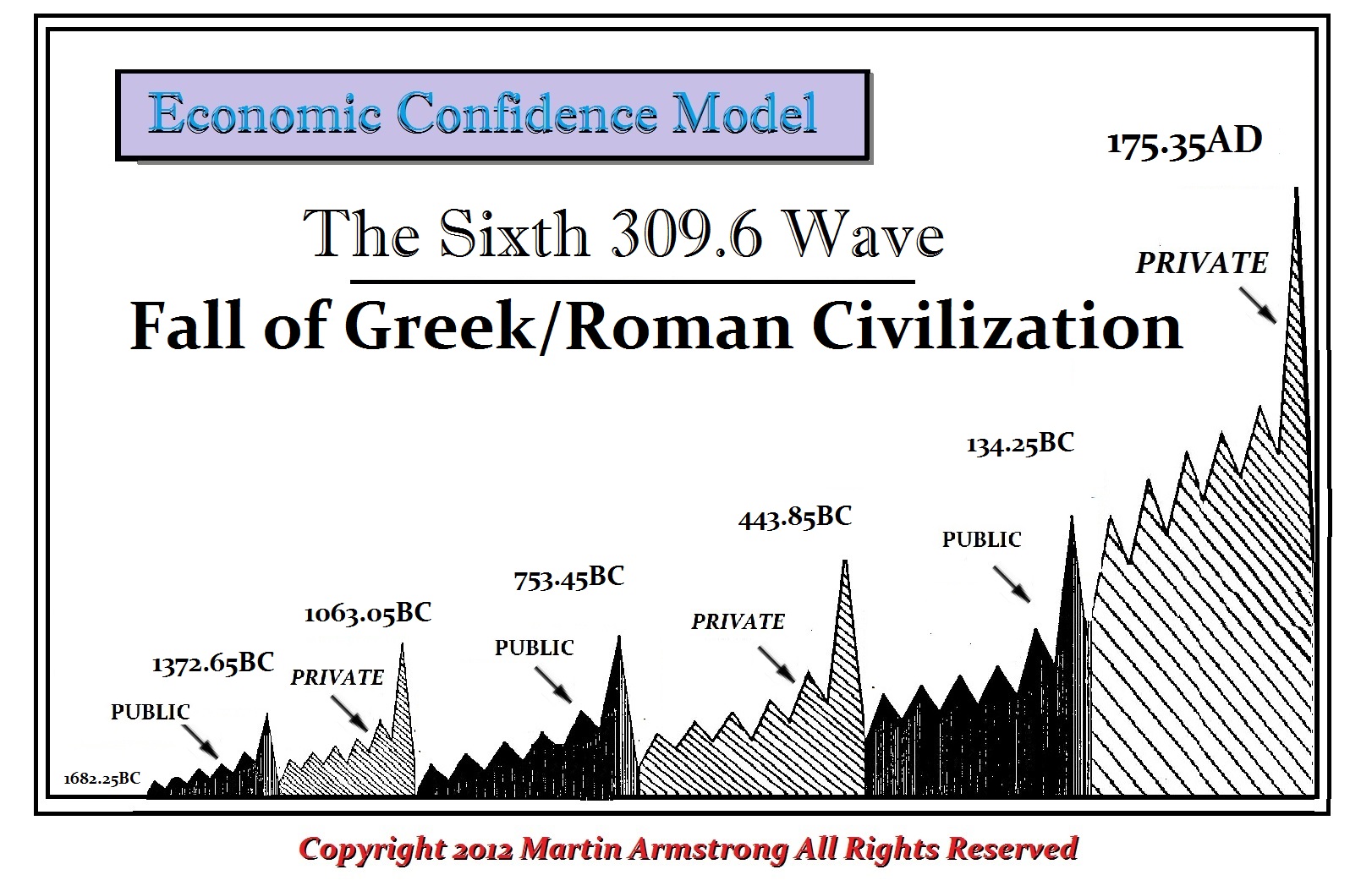
ANSWER: Oh yes. This is part of the Cycle of Civilization but now you are at the 309+ year level where major change begins to appear. The big one comes on the Sixth Wave of the 309.6 Year level. This is the only reason I do what I do. I have written many times that when this wave peaks in 2032, when we come to a crossroads. We either regress contracting into authoritarianism, then break-up into a fragmented feudal type system of local tribes basically, or we can perhaps crash and burn, but then see the light and we make a major technological leap forward.

Even at each 51.6 year wave culmination there is a major structural reset. It is my HOPE that if we reach a level of understanding how and why things work, then we have a shot and perhaps pushing back and we can make do what Neil Armstrong said upon landing on the moon: “That’s one small step for man, one giant leap for mankind.

This is the third set of the Sixth Wave. This is why I say if it was just me, I am ready- Beam Me Up Scotty. I have my posterity to think about. So I am trying to do what I can. I bumped into cycles in the middle of the night. They found me. I never approached this as a theory to go out and prove. Most major discoveries in science have been by accident.

The Renaissance really began when Constantinople fell to the Turks. Then the scholars fled to the West bringing the known with them in 1453. Note the year. They began schools and started to teach people all the knowledge they had forgotten. There were some who were starting to reintroduce mathematics like Fibonacci (c. 1175 – c. 1250) during the 13th century. But it was the schools that opened following the fall of Constantinople that brought educate back to Europe. Hence, Columbus was exposed to that knowledge and he realized the Earth was round. He set sail in 1492.

The full Age of Enlightenment truly began with the confrontation that cycles existed. It all began with the discovery in 1772 of a frozen intact woolly rhinoceros . Then intact woolly-mammoth followed in Siberia. Suddenly people were stunned. This meant that you could be frozen with food still in you mouth. This inspired tremendous investigation into gravity to the cyclical nature of comets.

The Dark Age is the fragmentation of society reverting back to where we see nations breaking up unto regions and then all the way back to city states. The  Renaissance is typically inspired by the rediscovery of lost knowledge. This is really an extensive subject. I have written a book on this entire topic documenting everything from math and science to political rise and fall. I am hiring more editors to try to get out several books that have been backlogged for way too long.

A New Park has been set up in Macedonia, Ohio Honoring Veterans


For the past 2 years my American Legion Nordonia Hills Post 801 with the help of Veterans of Foreign Wars Post 6768 and the city of Macedonia has worked on establishing a Veterans Memorial Park dedicated to honor all veterans.  It has now completed the first phase of the Park.  The AL Post Commander and Chairperson of the committee established to create this park first created a team of motivated veterans.  The team raised about 40% of the estimated $364,000 required to construct the entire park.  These funds allowed us to design and build the park’s main entrance starting in May 2017.  Construction was completed on September 15, 2017, POW/MIA Recognition Day.   The next day, September 16,  the first part of this projected was dedicated.

There were three monuments displaced, this is the Main One to all veterans.

The other two are one for the War on Terror and one for Vietnam

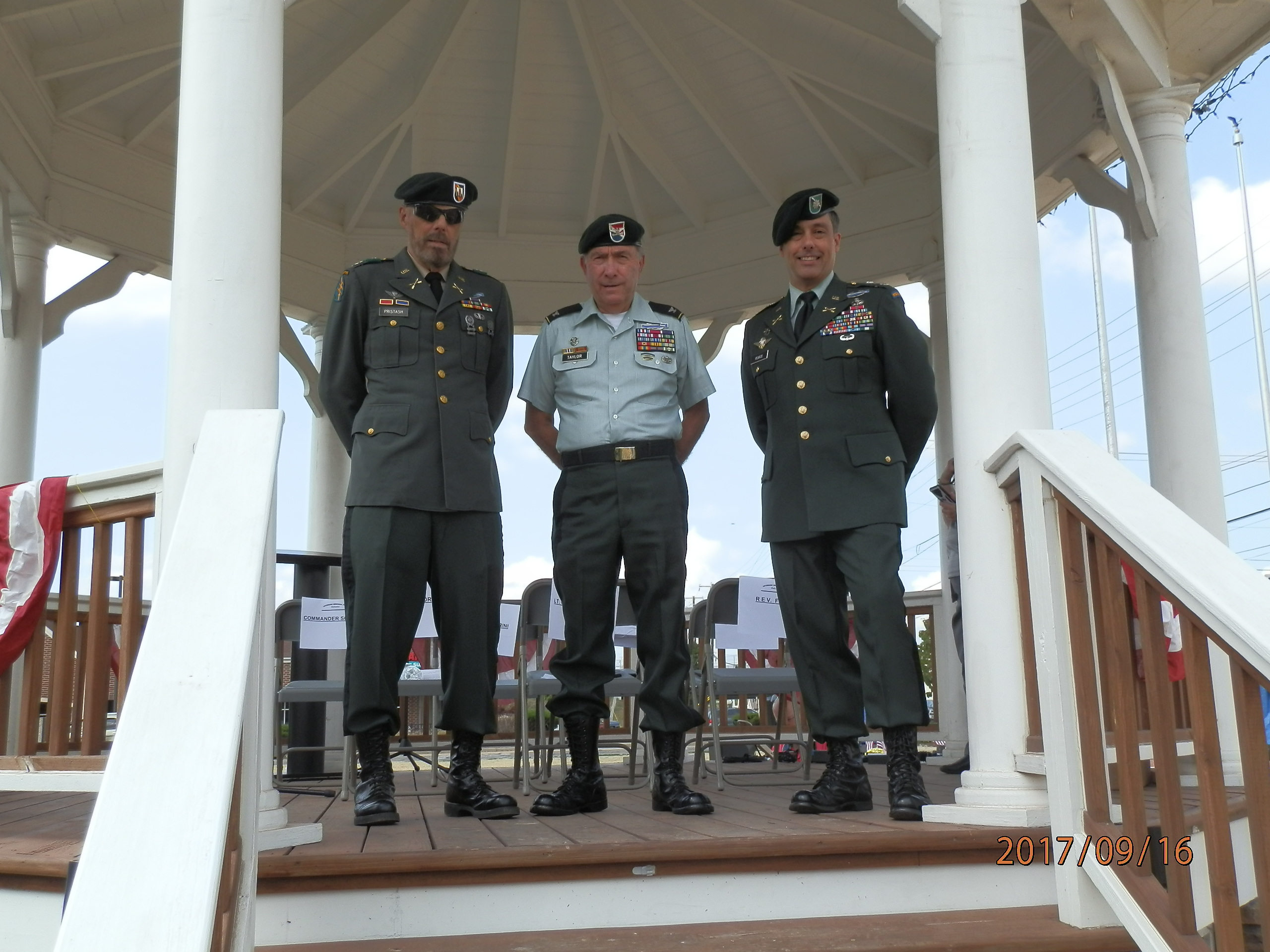
We had a band and many local politicians as well as three Former Green Berets as speakers. Colonel David Taylor (center), Lt Colonel Howard Pearce (Right) and myself (Left).

The Crowd

Nordonia Hills Veterans Memorial Park