LIBOR v SOFR Interest Rates


QUESTION:Dear Martin:

Do you have any concerns for the equity markets from the upcoming conversion from Libor to SOFR (the secured overnight financing rate). A recent article from Business Insider highlighted the following:

“Libor, linked to about $350 trillion worth of financial products, will be replaced by an alternate pricing benchmark for everything from mortgages to credit cards.”
“Replacing Libor will be lengthy and problematic, and is one of the key themes to look out for in 2019 as financial services and asset managers start transferring to new systems.”
“Thousands of existing contracts will need to be renegotiated causing a huge operational and financial burden that will consume legal teams for months.”
“Market structure experts cite the need to amend existing contracts to include “fallback” clauses which which specify what happens when Libor disappears. This is comparatively easy for loans, but for derivatives, swaps, and options, amending existing contracts could potentially lead to legal battles.”
This conversion seems like it could get awful messy.

Regards,

ML

ANSWER: Ever since the London Interbank Offered Rate (LIBOR) scandal, there has been one faction that has sought to eliminate the powers of banks to manipulate the LIBOR rate. This is similar to ending floor tradings in financial markets. Yes, LIBOR has been used to price trillions of dollars’ worth of loans, derivatives, and a lot more. The Federal Reserve moved to actually intervene and prevent a handful of banks to fix the interest rates. The Fed created a group in response, known as the Alternative Rate Reference Committee (ARRC), which has created a new benchmark dollar interest rate. This new rate is known as the Secured Overnight Financing Rate (SOFR). Actually, since April 2018, SOFR has been used for a growing number of bond offerings by large institutions including the World Bank, MetLife, and Fannie Mae. Europe is also moving to create a new benchmark rate that includes the Bank of England, Central banks in Europe with the ECB, Japan, and even Switzerland. This new group is also constructing new benchmark rates. However, there is another reason the Eurozone is taking this giant step. This is a major effort to take the dominance of trading away from Britain in light of BREXIT.

Now as for a crisis, no, that is about as likely as Y2K Millennium bug. Borrowing will take place under SOFR without a problem. The issue will be more with past contracts. That will tend to be a court issue if rates rise under SOFR or old contracts are converted involuntarily. The real issue will be concerning the manipulation of SOFR by governments as they have done with Quantitative Easing. The banks were never able to manipulate LIBOR to the extent of changing the trend. Front-running to elect stops etc. were the “manipulation” tactics. With governments involved, then we can see false trends and real manipulation. The banks could never manipulate LIBOR, suppress the rate, or increase it out of competition.


The nature of consciousness


Published on Oct 19, 2016

SUBSCRIBE 6.2K
This lecture was organized by support of Moscow Center for Consciousness Studies, Russian House and Polytech Museum of Moscow. The nature of consciousness, the mechanism by which it occurs in the brain and its place in the universe are unknown. In the mid 1990’s Sir Roger Penrose and I suggested that consciousness depends on biologically ‘orchestrated’ coherent quantum processes in collections of microtubules within brain neurons, that these quantum processes correlate with, and regulate, neuronal activity, and that the continuous Schrodinger evolution of each such process terminates in accordance with the specific Diosi-Penrose (‘DP’) scheme of objective reduction (‘OR’) of the quantum state. ‘Orchestrated’ OR activity (‘Orch OR’) is taken to result in moments of full conscious awareness and/or choice. The DP form of OR is related to the fundamentals of quantum mechanics and space-time geometry, so Orch OR suggests a connection between brain biomolecular processes and the basic structure of the universe. I will review Orch OR in light of criticisms, presenting experimental evidence for 1) hierarchical microtubule quantum resonances (terahertz, gigahertz, megahertz, kilohertz), and 2) anesthetics preventing consciousness through quantum actions on microtubules. Further novel Orch OR suggestions include 1) topological quantum bits (‘qubits’) intrinsic to microtubule geometry, 2) interference ‘beat frequencies’ of fast (e.g. megahertz) microtubule vibrations producing slower electro-encephalographic (EEG) correlates of consciousness, 3) mental state alterations caused by brain stimulation with megahertz mechanical vibrations (ultrasound), and 4) OR-based primitive feelings prompting life’s origin and evolution. Orch OR is rigorous, consistent with neuronal-level approaches and better supported experimentally than other theories of consciousness. Reference: Hameroff & Penrose (2014) Phys. Life Rev., 11(1):39-78 Визит Стюарта Хамероффа в Москву был организован нашим Центром. Лекция стала возможной благодаря поддержке политехнического музея в лице Ольги Вад и Russian House в лице Татьяны Гинзбург.


What Can Physics Tell Us About Consciousness? — ChrisFields


Published on Aug 11, 2015

SUBSCRIBE 85K
http://www.scienceandnonduality.com/ Physics and particularly quantum physics are often invoked in discussions of consciousness. But what can physics actually tell us? I will first discuss what physics does not tell us: physics does not provide any criteria with which to distinguish conscious systems from non-conscious systems. As far as physics is concerned, consciousness is like free will – it characterizes either nothing or everything. Since we are conscious, it is reasonable to regard everything else as conscious, too. If we make this assumption, the question of interest becomes: what systems are conscious of what? Physics is fundamentally a theory of interaction, so it can tell us a lot about this. The first thing it tells us is that being conscious of something requires expending energy. How much energy a system can expend determines how much it can be conscious of. This energy requirement has surprising consequences, some of which I will describe.

Scientific Clues That We Are Living In the Matrix: A Talk by Klee Irwin


Published on Nov 16, 2015

SUBSCRIBE 88K
Klee Irwin, founder of physics research group Quantum Gravity Research discusses fundamental reality. This is a Powerpoint presentation and talk given October 9th, 2015 in San Francisco before the San Francisco Theosophical Society (stfslodge.org) For the new short movie ‘What Is Reality’ about a theory in development: https://youtu.be/w0ztlIAYTCU


New Experiments Show Consciousness Affects Matter ~ Dean Radin Ph.D


Published on Jun 7, 2016

SUBSCRIBE 25K
Join the IONS newsletter http://www.noetic.org/share/newsletter Dean Radin speaks at the Science of Consciousness Conference in Tucson 2016. Dean Radin Ph.D is chief scientist at the Institute of Noetic Sciences (IONS).

What Is Time? | Professor Sean Carroll explains the theories of Presentism and Eternalism


Published on Aug 7, 2018

SUBSCRIBE 140K
What is Time? Tackle one of the greatest problems in all of science—the nature of time itself—in “Mysteries of Modern Physics: Time,” a groundbreaking course by Dr. Sean Carroll, one of the foremost researchers in this field. In this second video from the 24-video series, Professor Carroll approaches time from a philosophical perspective. “Presentism” holds that the past and future are not real; only the present moment is real. However, the laws of physics appear to support “eternalism”—the view that all of the moments in the history of the universe are equally real. To find out more about this course, and watch the rest of it for FREE when you start a trial of The Great Courses Plus, go to https://www.TheGreatCoursesPlus.com/m…


The Emergent Universe


Published on Jul 6, 2018

SUBSCRIBE 77K
Join us at: http://www.inspiringphilosophy.org To help support this ministry click here: https://www.patreon.com/inspiringphil…

Quantum Theory Made Easy [2]


Published on Dec 1, 2015

SUBSCRIBE 74K
PART 1: https://www.youtube.com/watch?v=e5_V7… Today we’ll be exploring the evolution of the atom, starting from J.J. Thomson’s Plum Pudding model, on to Rutherford’s Planetary model, and then on to the Bohr model, which is one of the central focuses of this lecture. After going over the strengths and weaknesses of each, we’ll see how de Broglie’s crazy ideas about the duality of matter manifest themselves in the Bohr model, which we’ll use to (partially) derive the Rydberg equation. Finally, after calculating the Balmer series in order to show off how successful Bohr was, I’ll ruin the moment by explaining why Bohr’s model wasn’t complete after all. Some very important questions will be raised, and the answers… well, the answers will blow your mind in the next episode. This video is less dense than the last one, and certainly less heavy on the maths than the next one. For those of you who paid attention in high school chemistry, at least half of the content here will be review. If this video seemed a little bit too basic, don’t worry- the next video will be the most difficult one in the series. The goal here was to provide a setup for what’s to come- you’ll probably need to revisit this video a few times, since there are things that I mention here that will be explored in much greater depth later on. Now that all the pieces are in place, though, we can finally get to the bread and butter of quantum mechanics in the next video. Stay tuned. Don’t forget to like, share, comment, favorite, and subscribe! Soundtrack: selected works from Stellardrone and Nights Amore Special thanks to NOVA, Best0fScience, and others (to be specifically credited shortly) for several animations used in this and other videos.

Quantum Theory Made Easy [1]


Published on Jul 17, 2015

SUBSCRIBE 74K
“Quantum Theory Made Easy,” a series in which the concepts of quantum physics are broken down for layaudiences in a more digestable manner. More in-depth than most presentations for laypersons, but without the mathematical rigour needed by a specialist in the field. So, you’ve heard that light is a wave/particle. Now you get to find out how we know this! In this episode, we’ll be discussing the dual nature of light, starting with a brief overview of how light was determined to be an electromagnetic wave and what properties light was classically associated with. From there, we’ll present the results of Planck’s blackbody experiments and introduce the concept of quantization, which was how this whole quantum mess was started in the first place. After explaining how the quantum of action (h) works, we’ll move on to how it showed up in experiments that challenged the wave picture of light, and how Einstein, bremsstrahlung, and Compton, made it clear that light can behave like a particle. If you enjoyed this video, please give it a like. If you want to help support the propagation of this material, please press the “favorite” button, and if you’re feeling particularly proactive, please share it on your social media of choice. And of course, if you’re new to this channel, or have just been lurking about but aren’t sure if you’re ready to commit, just take a risk and press that subscribe button (there’s actually no risk involved. Like, at all. Just subscribe already.) Special thanks goes to the following resources for their (Fair-Use protected) material:

Italy Falls into Recession


QUESTION: It is official. Italy is now in recession. Obviously, the Fed is looking outside its own economy. Your Economic Confidence Model is remarkable. I have been following you now for more than 10 years. It has always been correct. Why does the economic community and governments pretend you cannot forecast the economy? You have proven the economy can be accurately forecast.

PV, Rome

ANSWER: Yes, Italy has turned down. The Fed knew what is coming. All these pundits who claim the stock market forced the Fed to change policy have only shown their total ignorance of the true factors upon which central banks will act.

I have probably met with more central banks than anyone.  They all know the Economic Confidence Model. That is one of the primary questions I am asked by them – where does it stand now. They cannot publicly come out an say the economy will turn down now for fear that they will be blamed. Just look at the Russia-Trump nonsense. They want to pretend that Hillary would have been elected BUT FOR the release of the emails which showed he true colors. Our computer was forecasting she would lose BEFORE any emails were released. The trend was already set in motion – anti-career politicians. Just look around the world and you see the same trend. But it is easy to always blame someone else for your failure. Thus, central banks cannot forecast a decline because if it happens, they would be blamed just like the Russians right now for Hillary’s loss. The central banks can only forecast economic growth, not recessions.

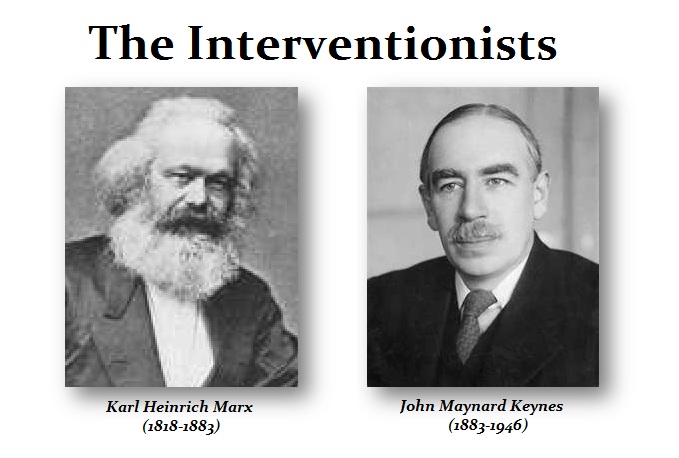
As for the academic community maintaining that the business cycle cannot be forecast, this “opinion” is self-serving. To announce that the business cycle is regular means you cannot control the economy and the entire theory of Marx and Keynes is completely wrong. They kill Kondratieff because he warned the business cycle would kill communism. The economic community would not be able to put out theories to manage the economy and they would have no importance if they admitted they cannot control the business cycle. It is just self-interest.

I have been talking with central bankers for months and it has been about the decline into 2020. That is the backdrop to the Fed’s actions – not the stock market. And as for gold, it rallies because interest rates will decline when the Fed said there is less of a risk of inflation? It just seems the reasoning is never consistent.