Silver Bars vs Coins


Posted originally on May 31, 2025 by Martin Armstrong 

SilverCoins

QUESTION: Marty,
There seems to be a growing trend with States approving gold and silver coins as acceptable payment methods. You have always said that it would be coins and not bars. However Florida now states that the silver must be 99% pure. How will this affect the pre 65 constitutional coins like dimes, quarters and half dollars generally referred to a junk silver? Junk silver coins will of course be worth more if the price of silver increases however it appears that one may not be able to use them for any daily transactions. Would one be better off selling their junk silver and converting it to silver rounds immediately? What does Socrates or Socrates Jr think on this topic as it is certainly a new wrinkle.
Thanks !
JimJ

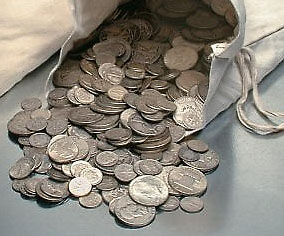
ANSWER: I understand the act, and it only illustrates my point that when it comes to a silver bar, 99% of the people out there would NEVER know the difference between that and a bar of Nickel. That’s what I said; I prefer the pre-1965 silver coins because the average person can easily identify the date. They are ALREADY legal tender. So they are not demonetizing the silver coins.

Roll of Silver Eagles

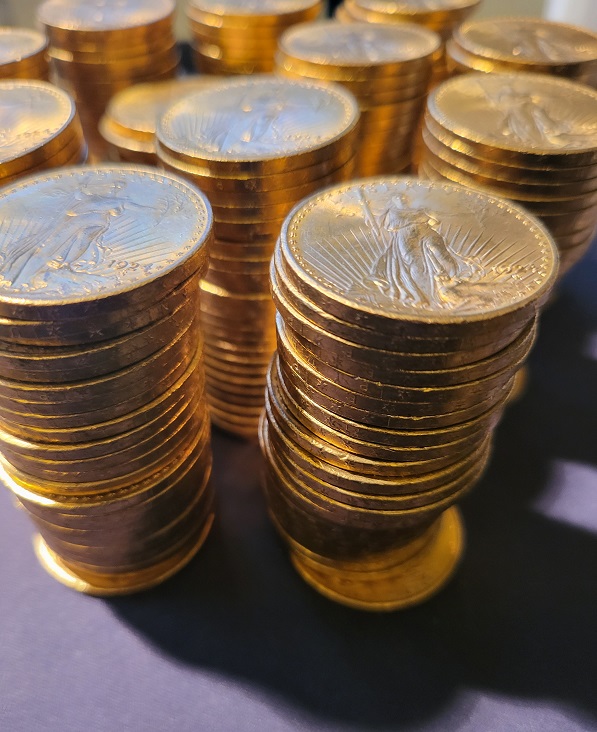
The Roll of 20 – 2025 $1 American Silver Eagles are 99.9% silver. However, they are denominated as $1. This may be more confusing to the average smuck on the street. Personally, I have bags of silver coins, and I have a hoard of $20 gold coins that came from a central bank, which found them tucked away in the basement vault. They are all uncirculated 1924 Saints. This was a private offering.

1924 Gold Hoard 3

Gold and Silver Now Legal Tender in Florida


Posted originally on May 30, 2025 by Martin Armstrong 

Florida Governor Ron DeSantis has declared gold and silver legal tender. HB 999 maintains that these precious metals may be used in payments if they meet specific purity standards. The bill goes into effect on July 1, 2026, but many are confused as to what this will entail.

As stated in the legislation: “Legal Tender; Revising the sales and use tax exemption for certain coin or currency; specifying that a person who claims the sales tax exemption bears the burden for determining whether the gold coin or silver coin meets a specified definition; providing a presumption regarding the purity requirements of gold coin and silver coin, etc.”

“We are the first large state to step up and to get this done,” DeSantis said. “And this is right out of the Constitution of the United States. So this legislation will authorize money services business like check cashers or PayPal to transmit and accept payment in gold and silver.” State Rep. Bill Bankson sponsored the bill with the goal to “eliminate the tax burden and make it a functional means of transaction between willing parties.”

To begin, Florida is not the first state to declare gold and/or silver legal tender. Utah passed the Utah Legal Tender Act of 2011, which declared coins of either metal legal tender. Oklahoma passed Senate Bill 862 in 2014, recognizing U.S.-minted gold and silver coins as legal tender and exempting them from taxation. Kansas and West Virginia have similar policies. Texas has recognized these coins as legal tender and enacted legislation to protect them from state seizure. Wyoming treats gold and silver as currency and has exempted it from sales tax. South Carolina and Louisiana have similar policies.

GoldCoins

Florida’s approach is a bit more structured. Gold coins must be at least 99.5% pure and silver coins at least 99.9% pure to qualify as legal tender. The weight and purity must be imprinted on the metal with the name or symbol of the mint refiner. Both will be exempt from sales tax. The state government may choose to accept silver and gold coins for payments on taxes, dues, charges, and debts. Yet, these transactions must be done electronically, and the coins will be held by a public depository while processing. A regulatory regime will be established to handle coinage, process insurance, record-keeping, licensing, and consumer disclosure agreements, which the Office of Financial Regulation will oversee.

Will Floridians see people using silver coins to check out at the grocery store? No. The law entails that payments in gold and silver coinage are entirely optional, and no person or business is required to accept them in payments. Merchants will not be required to attain knowledge on metal purity or have scales behind the cash register. The difference now is that businesses are allowed to accept them if they choose to do so. There are numerous tax benefits to choosing metal over cash.

If John Doe wants to purchase a boat from a dealership with gold, for example, the dealership must voluntarily accept the coinage but is in no way obligated to do so. Then the dealership has the burden of verifying the spot price of gold or silver rather than the state. However, if you go to a bank to cash a check, the bank will have the ability to offer clients payments in gold or silver coinage rather than cash. Another aspect to consider is that Florida will no longer add a sales tax on transactions in gold and silver, lowering the cost for businesses and consumers by around 6%.

This signals the ongoing loss of confidence in the federal government. States are rebelling against federal mismanagement and offering residents alternatives to move off the grid. People tend to hoard gold and spend paper. Gold and silver are not practical as daily commerce but are a symbolic store of wealth. We are entering a phase where sovereign debt will become toxic, and states will begin to prepare for the inevitable chaos coming from Washington.

Second US Commerce Dept Report – GDP Stagnant


originally on Posted May 30, 2025 by Martin Armstrong 

STAGFLATION

The US economy contracted by 0.2% from January through March of 2025. This is the second Q1 estimate provided by the US Commerce Department, with a third on the way on June 26.

Imports surged into the US during Q1 as corporations aimed to avoid incoming tariffs. The 42.6% uptick in imports marked the fastest pace of goods arriving in the US since Q3 2020. Business investment rose 24.4% in Q1, with business inventories adding 2.6 percentage points to overall GDP. Federal government spending fell by 4.6%, the largest drop in three years, but a deduction from overall GDP calculations.

Real consumer spending rose by 1.2%, albeit far less than the 4% posted during Q4 2024 and revised down from the first reading of 1.8%. Other reports indicate that Americans are spending far more on the essentials like utilities, health care, and housing. The Fed’s preferred inflation measure (PCE price index) rose 3.6%. Persistent inflation has led to cautious consumer behavior and a decline in demand for goods, contributing to the overall weakened reading for Q1.

Discretionary retail fell by 3% this quarter to 23% as consumers are less likely to purchase items like clothing, furniture, and electronics. Durable goods experienced a significant decline of 19%. The University of Michigan’s survey noted that decreased confidence has caused the demand for big-ticket items to decline. A lot of the demand we did see in Q1 was spending to offset anticipated tariffs. Autos, for example, rose by 11% YoY in March alone, and Q1 saw an overall 4.8% in auto purchases. That trend is not expected to continue as consumer sentiment is low.

April’s 2.3% CPI reading was the smallest annual increase since 2021, yet still above the 2% target set by the Fed years ago. The Fed isn’t fighting inflation. That phase is over. What they’re really fighting now is a collapse in confidence in the bond market, the dollar, and in the entire public sector. There will be no soft landing as once anticipated, as we are currently in a stage of stagflation.

Meanwhile, Fed Chair Jerome Powell met Trump at the White House on Thursday to declare that rate decisions would be based on “careful, objective, and non-political analysis.” “I’ve never asked for a meeting with any president, and I never will,” Powell said. “I wouldn’t do that. There’s never a reason for me to ask for a meeting. It’s always been the other way.” Trump invited Powell to the White House to encourage him to cut rates at the June meeting. The markets were pricing in a rate cut in June but now that does not seem as likely.

Trump fails to realize that the Fed is attempting to preserve confidence in the US, primarily in the debt market. We are witnessing cash deficits of over $1 trillion per quarter. Moody’s recently downgraded the US and no longer believes that Treasuries are a certain bet. The government is broke and the Fed must maintain the illusion of solvency.

LIVE: VP Vance Delivers Remarks at Bitcoin Conference…


Posted originally on Rumble on Bright Bart News Network on: May 28, at 1:50 pm EST

The Theory of UNCERTAINTY


Posted originally on May 26, 2025 by Martin Armstrong 

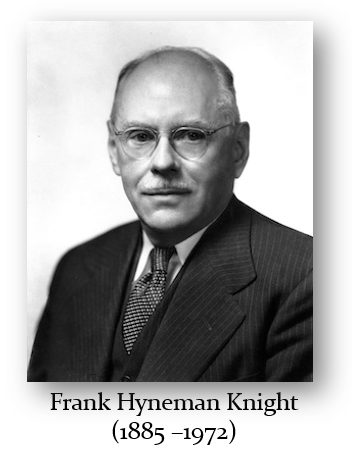
Knight Frank

QUESTION: What is your view of Frank Knight’s view of risk versus uncertainty?

HL

ANSWER: Frank Knight, an influential economist and founder of the Chicago School from which Milton Friedman emerged. He is known for his work on risk and uncertainty, and he articulated a key distinction between the two concepts in his 1921 book “Risk, Uncertainty, and Profit”. The widely cited quote is:

“Uncertainty must be taken in a sense radically distinct from the familiar notion of Risk, from which it has never been properly separated. The term ‘risk,’ as loosely used in everyday speech and in economic discussion, really covers two things which, functionally at least, in their causal relations to the phenomena of economic organization, are categorically different.”

Knight argued that risk refers to situations where outcomes are unknown but probabilities can be calculated (e.g., gambling or insurance), making it measurable and manageable. On the other hand, uncertainty describes scenarios where probabilities cannot be determined due to a lack of historical data or predictable patterns (e.g., unprecedented market shifts). This distinction underpins his theory of profit, where entrepreneurs bear uncertainty (not mere risk) as a source of potential economic reward.

Uncertainty

This framework remains foundational in economics and decision-making theory, emphasizing the role of unquantifiable unknowns in shaping entrepreneurial behavior and market dynamics. I, being a trader rather than an academic, however, disagree insofar as nothing is truly UNCERTAIN. The problem with classical economists is that they have not explored ancient history, assuming the data is inconsistent or nonexistent. Then this view is compounded by the idea that the economy is random, and we can manage it, which was first presented by Karl Marx.

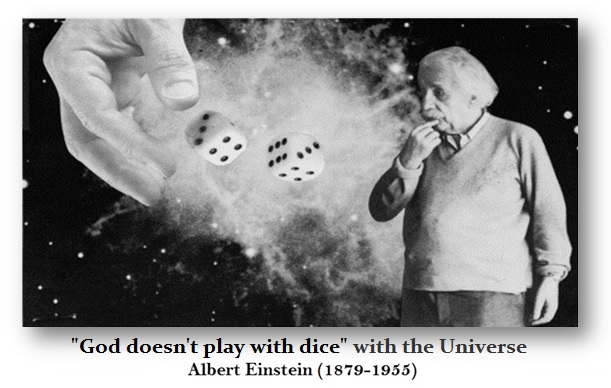
Einsteing dice

I have said many times that when I was in school, in economics class, they said it was random, and this government can smooth out the booms and busts under Keynesian Economics to prevent another Great Depression. Then I went to Physics class and was told that NOTHING is random. I concluded that someone was lying, and it was the economists. They refused to investigate the business cycle and presumed they could manage it.

Burns Arthur

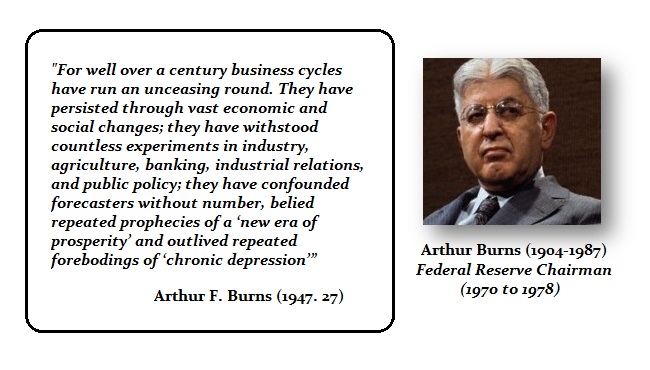
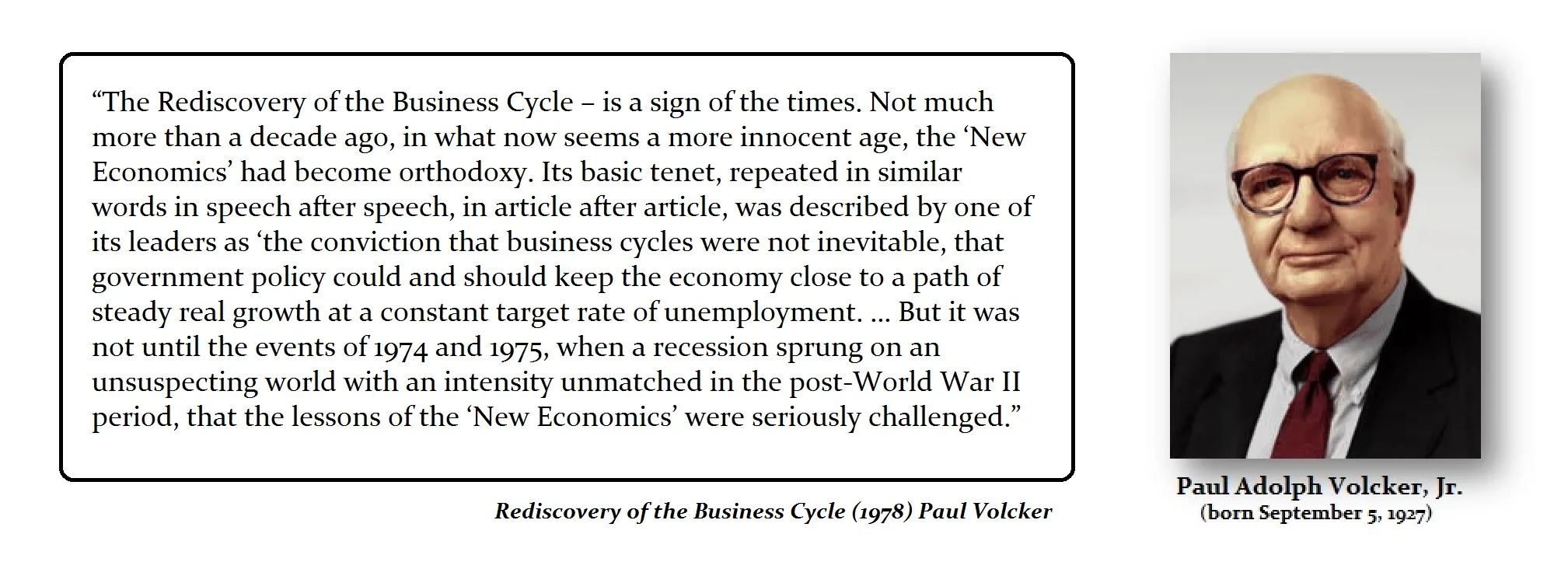
Anyone who had actual experience disagreed with the classic economists. Arthur Burns was the Fed Chairman when Bretton Woods broke. He concluded that the business cycle existed and always won. Then there was Paul Volcker, the next Fed Chairman. Paul also came to the same conclusion that the business cycle existed despite the classic economic theories.

Volcker Rediscovery

I had a conversation with Paul Vocker, who told me my Economic Confidence Model was correct and agreed that the business cycle was about 8 years. This flies in the face of classical economists.

Roman decline silver content monetary system Armstrong Waterfall effect
1964 1965 Quarters

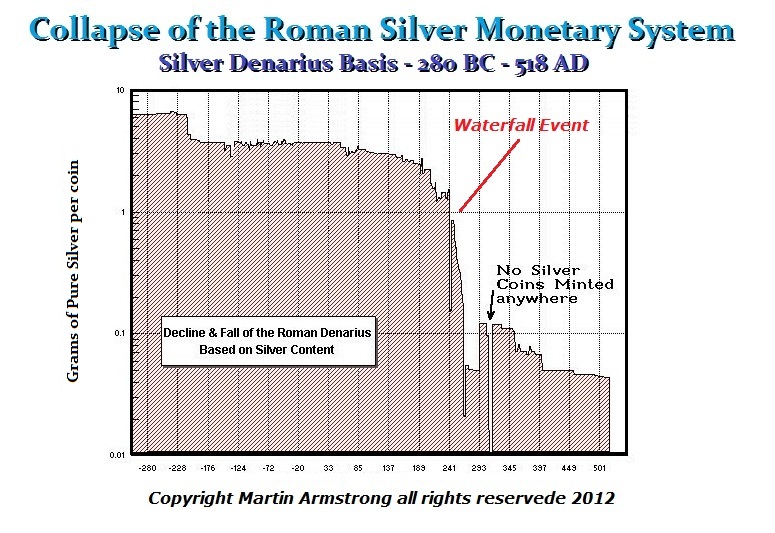
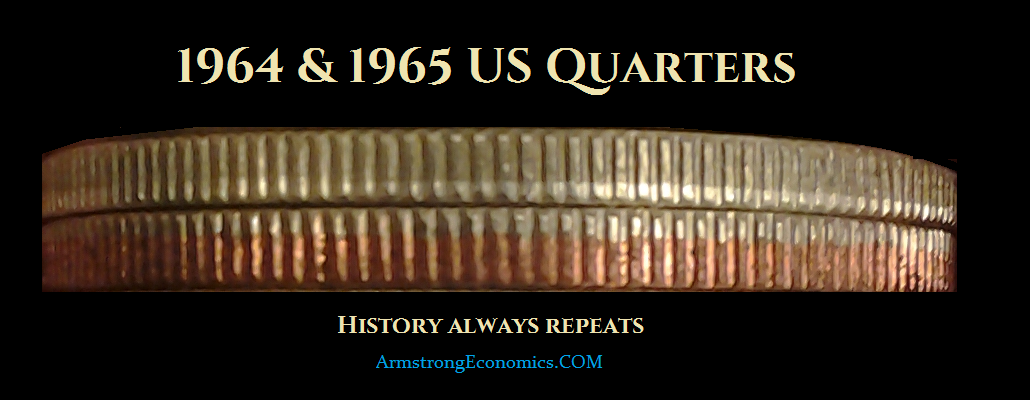
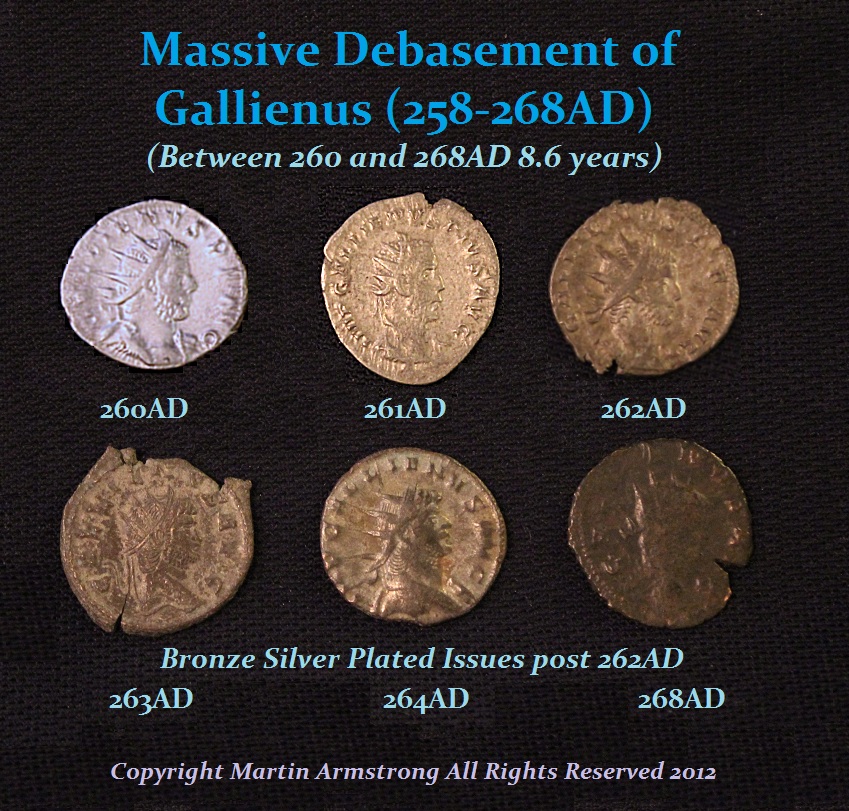
I knew that Roman coins were attainable. I bought my first one for $10 in the 1960s. When they removed the silver from the coinage in 1865, I saw the connection to the very same event that marked the start of the Third Century Crisis.

Debasement Gallienus

When I assembled the coinage to answer a gnawing question: How did Rome fall? Was it like a 747 coming in for a landing gradually, or was it abrupt? I discovered it fell from 50 %+ silver to 0.2% in just 8 years.

ECM GIF Turning Points

I discovered no such thing as random walks down the street. That is put out by people who cannot see the cycles before their eyes. Turn the economy down, and politics will always flip, no matter who is in power. The EU is fighting to stay alive, so they are interfering in elections to defeat anyone who is anti-EU. This will only blow up in their faces. The economy will always force a response, and human nature has never changed in 6,000 years. Whoever is in power will always respond similarly to the same old economic pressure.

Hammurabi Stella2

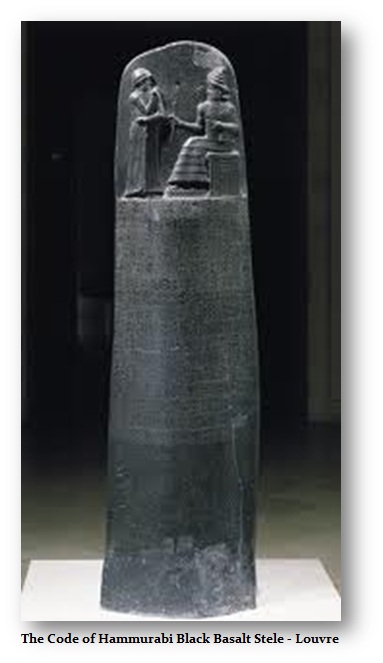
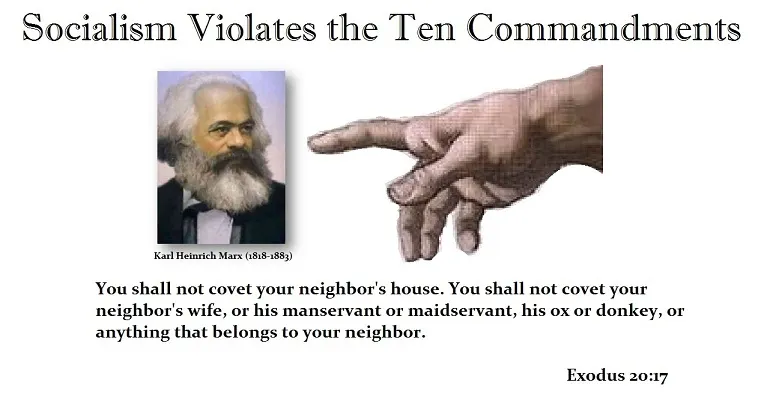
Read Hammurabi’s Legal Code. It is wage and price controls in response to an economic crisis. Even the Bible outlawed socialism. Attacking the rich and class warfare has been a problem since ancient times and it has always resulted in the collapse of such economies. Nothing has changed – ever. So, where is the UNCERTAINTY?

Marx ten commandments socialism

Ep. 3644a – Now We Know Why The Fed Was In A Holding Pattern, Economic Boomerang


Posted originally on Rumble By X 22 Report on: May 18, 2025 at 4:45 pm EST

Interview: Have the World Economic Forum Elites Been Defeated?


Posted originally on May 17, 2025 by Martin Armstrong 

How to Save a Life – 2032


Posted originally on May 17, 2025 by Martin Armstrong 

I always liked this song. Some people see the world for what it is, and others are consumed by propaganda. Many of us have lost a friend to politics, war, or it was just their time. They may be unable to see, so they will never understand this song.

Book: Conversations with the Master Forecaster


Posted originally on May 16, 2025 by Martin Armstrong 

KerryLutzBook

Conversations with the Master Forecaster

This book is unlike anything you’ve read before. It’s not another theory — it’s a documented track record of how Martin saw what no one else did:

✅ Sovereign debt implosions
✅ War cycles and geopolitical shifts
✅ The coming collapse of trust in governments
✅ The timeline to 2032 — and what it means for you

Written by longtime interviewer Kerry Lutz, this book is based on over a decade of never-before-published insights, straight from Martin’s most powerful moments on air.

Whether you’re an investor, thinker, or someone simply seeking truth in an age of lies, this is your handbook for what’s next.

Now available on Amazon:
Click here to get the book
(Paperback, Hardcover, Kindle & Audiobook editions available)

Thank you for supporting the real truth in a world of curated nonsense.

More information:

A visionary economist. A controversial thinker. A man whose ideas challenge the status quo.

In The World According to Martin Armstrong, discover the extraordinary insights of a financial forecaster who predicted some of the most significant economic events of our time. Armstrong’s unique understanding of historical cycles, global finance, and political power offers a fresh perspective on the forces shaping our world.

From the intricate dance of sovereign debt to the rise and fall of empires, this book explores Armstrong’s groundbreaking Economic Confidence Model and its implications for the past, present, and future. Whether you’re a seasoned investor, a history buff, or someone seeking to make sense of today’s complex world, this book will challenge and inspire you.

Prepare to see the world through a new lens that connects the dots between history, economics, and human behavior in ways you’ve never imagined.

5.11.25: USA in Fourth Turning, Federal Reserve criminals, Precious Metal investments, Pray!


Posted originally on Rumble By And We Know on: May 11, 2025 at 3:00 am EST