NEC Chairman Larry Kudlow Discusses U.S./E.U. Trade Framework…


National Economic Council Chairman Larry Kudlow discusses the framework for the U.S./E.U. trade agreement. [Remember, the highly controversial auto-sector is removed from the entire negotiation.] Chairman Kudlow discusses the benefit of the U.S. and E.U. working together to confront China at the World Trade Organization; this is key.

Additionally, Kudlow discusses the forward-leaning meetings being conducted by both the U.S. trade team and the Mexican trade delegation. The multidimensional U.S. trade strategy is operating, and advancing, on several simultaneous fronts.

Magnitsky Act & the Cover-Up of Unprecedented Corruption


QUESTION: Mr. Armstrong, I seem to recall that in your case HSBC had to plead guilty and pay back only $600 million because the difference in the notes in yen was your profit. Putin specifically mentioned that the $400 was stolen. That was you he was talking about. Then the $10 billion they wanted you to invest in Hermitage Capital was what started your case thanks to a mistake by the Japanese government. Then after watching the Magnitsky movie, it seems like they killed everyone who had knowledge of what was going on as in your case everyone around you was killed. Maybe you survived because you were in contempt of court? You do realize that there were less than 50 views of that movie until you posted it. It has now passed 7,000 views.

PKL

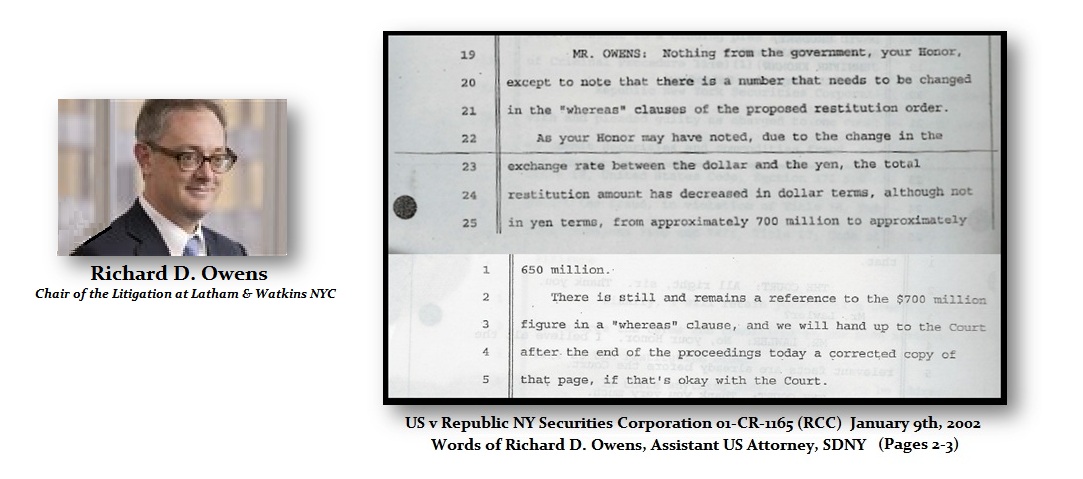
ANSWER: Yes, the $400 million was the difference. I am not certain it is the same $400 million. Nevertheless, it is amazing how the press does not even look at the fact that how did HSBC plead guilty and only had to pay $600 million on an alleged $1 billion case? It is just amazing how the press will NEVER question the banks or the government. It certainly opened my eyes as to how corrupt the entire system has become. You just have to wonder how they split up that $400 million.  Here is the court transcript of the prosecutor Richard D. Owens explaining it to the court not explaining that the $400 million was our profit he was handing to HSBC and others one must guess.

I was flat outright told that Yeltsin would step down and they would have control of the metals, energy, and diamonds of Russia. Keep in mind that Safra was a hard-money guy. He would call the metals desk every day. The idea of getting hold of the resources of Russia was the grand scheme of manipulating the commodity markets that various New York players had been engaged in for decades.

As far as the $10 billion was concerned, many of our Japanese clients believed the case was intentionally created by the Japanese Deep State as a favor. We were filing a lawsuit against Republic and Edmond Safra for taking the money. The put in a receiver at O’Melveny & Myers to seize the company and prevent any lawsuit. In 2004, the SEC even moved to end the contempt, but it was O’Melveny & Myers who argued to keep the contempt against the SEC. The lawyer was Martin Glenn who was then given a judgeship.

Video Player

00:00
01:42

This entire series of events appears to be a huge cover-up of an attempt to take over Russia. That is what Putin is saying that they will let Mueller in to interrogate Russians if they can do the same with respect to this entire mess. This is why both movies were banned and nobody in the press will dare to report anything. All they do is call for war effectively with Russia. Here is Putin’s case against Browder. Trump seems willing to open that door. Don’t forget, they have been beating Trump relentlessly about Russia interference in the 2016 elections. Trump’s son was represented by a lawyer I had in my case. So don’t think for a minute that nobody knows.

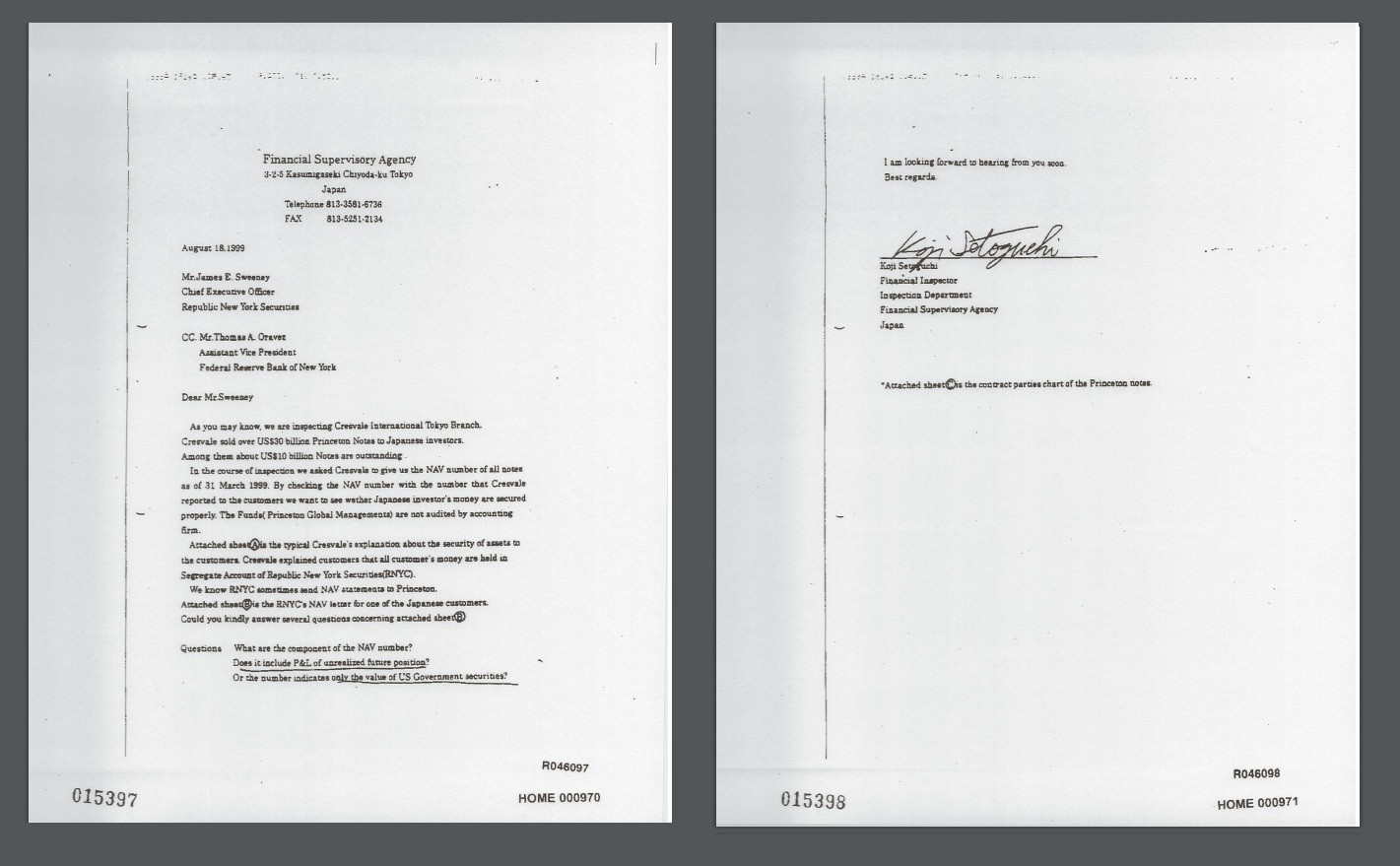
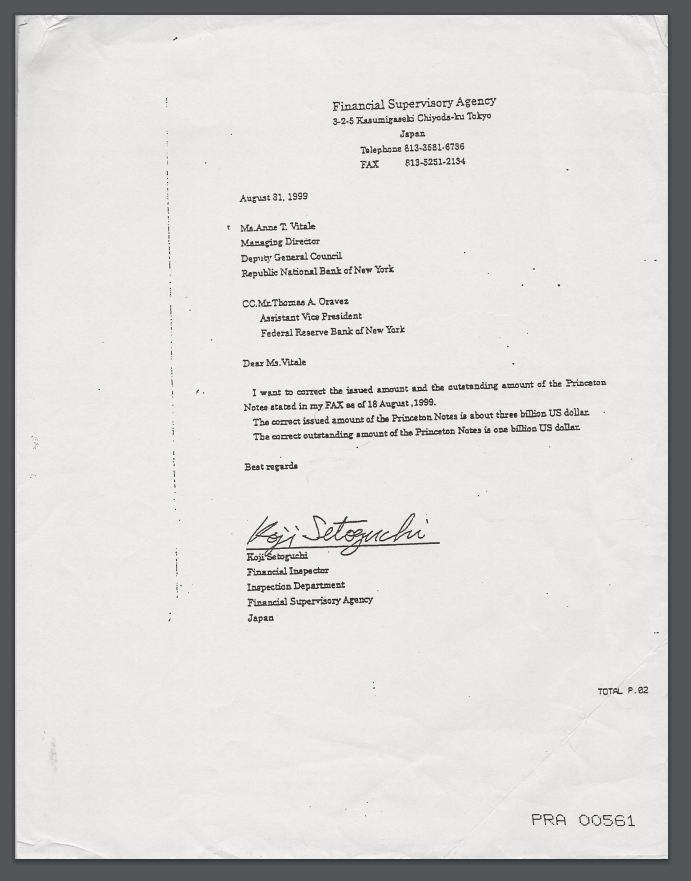
As far as the $10 billion they wanted me to invest into Browder’s Hermitage Capital, here are the two letters from the Japanese government. Notice how they suddenly correct their letter of August 18th on August 31st from $10 billion to $1 billion. They would not allow the companies to ever have lawyers, myself, or any of the partners. They simply wanted to make sure nothing would EVER go to trial to keep this issue hidden from the public and this is why they have banned both films in the USA.


Why is Former Ambassador Refusing to be Questioned by Russians?


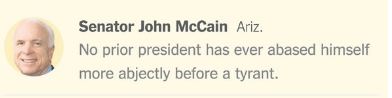
John McCain is one politician I have no respect for whatsoever. My opinion of him was formed before his war against Trump. I find it terrible coincidental that McCain sponsored the Magnitsky Act. I cannot say it any plainer – Magnitsky was Browder’s accountant. He was NOT a lawyer. That spin by Browder raises a lot of red flags.

Putin gave a list of 11 Americans the Russians want to interrogate. On the list was Michael McFaul who was U.S. ambassador to Russia during the Obama administration.McFaul told NPR that there were “dangerous consequences of allowing us to be called criminals in Russian courts.” The Senate voted 98-0 in a nonbinding resolution, opposing allowing people such as yourself to be interviewed by Russia. It seems that ONLY law in the USA counts and nobody else. The US can indict Russians but America will prevent its officials from being even questioned. McFaul says this is crazy and absurd. Then face the questions if there is nothing to it at all. Let the interrogation take place and made public.

As Shakespear once wrote in Hamlet: “The lady doth protest too much, methinks

It is beginning to look like just maybe Trump did not prevent the indictment of Russians and invited it to open the door to the Russian scandal. This may get interesting yet. Trump has postponed any meeting with Putin in the USA until he says the “Russia witch hunt” is over.

U.S.T.R Robert Lighthizer: U.S. Closing in on NAFTA Agreement With Mexico – Meanwhile, Canada is Useless…


For those following the nuance within ongoing U.S. trade discussions you have likely noted Commerce Secretary Wilbur Ross and U.S. Trade Representative Robert Lighthizer speaking optimistically about a potential for a U.S. Mexico trade agreement. However, simultaneously the U.S. trade team is not optimistic about any deal with Canada.

Mexico’s President-Elect Lopez Obrador (AMLO) has changed the trade dynamic internally within NAFTA for two reasons: #1) because the agriculture sector is much more critical to Mexico than it is to Canada; and #2) AMLO acknowledges and accepts the NAFTA fatal flaw; his manufacturing economy is based on the assembly of imported parts – like Canada, Mexico doesn’t actually manufacture much (ex. no aluminum smelters).

[Pompeo congratulating AMLO – Not an accidental delegation]

In the big picture AMLO wants to advance the Mexican manufacturing base; expand the aggregate economic base; and also stop the corporate exploitation of the Mexican farm worker. In these objectives U.S. President Trump is more than willing to be a partner with President Lopez Obrador. Heck, President Trump would actually love to assist AMLO on that agenda; it is mutually beneficial.

Diametrically, in Canada Prime Minister Justin Trudeau has doubled-down on the retention of the fatal flaw and does not want an expanded domestic manufacturing base. The enviro-nuts of his base just will not support it. Therefore, Canada is loggerheads with the United States because Canada is demanding to retain their NAFTA access to the U.S. market, and simultaneously retain their ability to broker imported Chinese goods.

[Again, not an accidental congratulatory delegation.  Think about the Trump Doctrine]

This means a trade deal with Mexico is possible; and a trade deal with Canada is almost impossible. So the U.S. has focused on negotiations with Mexico for terms of an ‘agreement in principle’, at an “unprecedented speed.” In this regard, according to U.S.T.R. Lighthizer, the U.S. and Mexico are very close to coming to that agreement. The U.S. team and Mexican team are meeting again today in Washington DC.

If they come to an agreement, two key issues are resolved which puts even more leverage and pressure on Canada: First, the biggest downside concern for the U.S. agriculture sector would be belayed.  Second, it isolates Canada providing Prime Minister Trudeau an excuse (political cover) to take a knee – presuming he’s not an idiot.

It is still tenuous, however the U.S. and Mexico look close to an agreement. Together we then present a take-it-or-leave-it opportunity for Canada to join. If Canada doesn’t join based on the U.S./Mexico terms, then NAFTA is dead…

…Politically President Trump explains why NAFTA is dead; the U.S. and Mexico immediately unveil the framework of the joint bilateral trade agreement; AMLO and Trump have political cover, a partnership is immediate; and U.S./Mexican business interests move along without an immediate hitch.

Brilliant.

Smart play.

WASHINGTON DC – [Ambassador Lighthizer] “U.S. is closing in on a deal to renegotiate the North American Free Trade Agreement (NAFTA), but said China is going to be a “longer-term problem. That isn’t to say we’re going to be in a trade war with China, in my judgment. But I think we have to change the dynamic.” On NAFTA, Mr. Lighthizer said the administration has been renegotiating the free-trade deal at “an unprecedented speed.”

“Hopefully, we are in the finishing stages of achieving an agreement in principle that will benefit American workers, farmers, ranchers, and businesses,” he said. (read more)

The momentum for this bilateral U.S./Mexico approach comes from an agreement in principle with the European Union.   The EU is heavily invested in Mexico.  It makes sense that President Trump would leverage the EU money (sunk cost) into Mexico as part of the U.S./EU trade negotiations….. which is why Wilbur Ross was the tip-of-the-spear.

Leverage.

See how that works?

Nudge, nudge…

Wink, wink….

Say-no-more….. Say-no-more !!

Killers.  We have them.

Bigly.

President Trump Delivers Trade and Jobs Speech in Granite City, Illinois – 4:00pm Livestream…


This afternoon President Trump will deliver remarks on tariffs, trade and jobs in Granite City, Illinois following his tour of the Granite City Works steel plant.  The anticipated start time was 3:40pm; however, POTUS is running approximately 30 mins behind schedule.

UPDATE: Video Added

WH Livestream LinkFox News Livestream LinkAlternate Livestream Link

MAGAnomic Trade Policy Interacting With Financial Systems – Multinational Wall Street vs Main Street U.S.A…


Originally outlined a year ago. Reposted by request, because we are watching it play out in real time: Believe me, at the heart of the professional/political opposition the issue is the money; there are trillions at stake.

President Trump’s MAGAnomic trade and foreign policy agenda is jaw-dropping in scale, scope and consequence. There are multiple simultaneous aspects to each policy objective; they have been outlined for a long time even before the election victory in November ’16.

If you get too far into the weeds the larger picture can be lost. CTH objective is to continue pointing focus toward the larger horizon, and then at specific inflection points to dive into the topic and explain how each moment is connected to the larger strategy.

Today we repost an earlier dive into how MAGAnomic policy interacts with multinational Wall Street, the stock market, the U.S. financial system and perhaps your personal financial value. Again, reference and source material is included at the end of the outline.

If you understand the basic elements behind the new dimension in American economics, you already understand how three decades of DC legislative and regulatory policy was structured to benefit Wall Street and not Main Street. The intentional shift in fiscal policy is what created the distance between two entirely divergent economic engines.

REMEMBER […] there had to be a point where the value of the second economy (Wall Street) surpassed the value of the first economy (Main Street).

Investments, and the bets therein, needed to expand outside of the USA. hence, globalist investing.

However, a second more consequential aspect happened simultaneously. The politicians became more valuable to the Wall Street team than the Main Street team; and Wall Street had deeper pockets because their economy was now larger.

As a consequence Wall Street started funding political candidates and asking for legislation that benefited their interests.

When Main Street was purchasing the legislative influence the outcomes were -generally speaking- beneficial to Main Street, and by direct attachment those outcomes also benefited the average American inside the real economy.

When Wall Street began purchasing the legislative influence, the outcomes therein became beneficial to Wall Street. Those benefits are detached from improving the livelihoods of main street Americans because the benefits are “global”. Global financial interests, multinational investment interests -and corporations therein- became the primary filter through which the DC legislative outcomes were considered.

There is a natural disconnect. (more)

As an outcome of national financial policy blending commercial banking with institutional investment banking something happened on Wall Street that few understand. If we take the time to understand what happened we can understand why the Stock Market grew and what risks exist today as the financial policy is reversed to benefit Main Street.

President Trump and Treasury Secretary Mnuchin have already begun assembling and delivering a new banking system.

Instead of attempting to put Glass-Stegal regulations back into massive banking systems, the Trump administration is creating a parallel financial system of less-regulated small commercial banks, credit unions and traditional lenders who can operate to the benefit of Main Street without the burdensome regulation of the mega-banks and multinationals. This really is one of the more brilliant solutions to work around a uniquely American economic problem.

♦ When U.S. banks were allowed to merge their investment divisions with their commercial banking operations (the removal of Glass Stegal) something changed on Wall Street.

Companies who are evaluated based on their financial results, profits and losses, remained in their traditional role as traded stocks on the U.S. Stock Market and were evaluated accordingly. However, over time investment instruments -which are secondary to actual company results- created a sub-set within Wall Street that detached from actual bottom line company results.

The resulting secondary financial market system was essentially ‘investment markets’. Both ordinary company stocks and the investment market stocks operate on the same stock exchanges. But the underlying valuation is tied to entirely different metrics.

Financial products were developed (as investment instruments) that are essentially wagers or bets on the outcomes of actual companies traded on Wall Street. Those bets/wagers form the hedge markets and are [essentially] people trading on expectations of performance. The “derivatives market” is the ‘betting system’.

♦Ford Motor Company (only chosen as a commonly known entity) has a stock valuation based on their actual company performance in the market of manufacturing and consumer purchasing of their product. However, there can be thousands of financial instruments wagering on the actual outcome of their performance.

There are two initial bets on these outcomes that form the basis for Hedge-fund activity. Bet ‘A’ that Ford hits a profit number, or bet ‘B’ that they don’t. There are financial instruments created to place each wager. [The wagers form the derivatives.] But it doesn’t stop there.

Additionally, more financial products are created that bet on the outcomes of the A/B bets. A secondary financial product might find two sides betting on both A outcome and B outcome.

Party C bets the “A” bet is accurate, and party D bets against the A bet. Party E bets the “B” bet is accurate, and party F bets against the B. If it stopped there we would only have six total participants. But it doesn’t stop there, it goes on and on and on…

The outcome of the bets forms the basis for the tenuous investment markets. The important part to understand is that the investment funds are not necessarily attached to the original company stock, they are now attached to the outcome of bet(s). Hence an inherent disconnect is created.

Subsequently, if the actual stock doesn’t meet it’s expected P-n-L outcome (if the company actually doesn’t do well), and if the financial investment was betting against the outcome, the value of the investment actually goes up. The company performance and the investment bets on the outcome of that performance are two entirely different aspects of the stock market. [Hence two metrics.]

♦Understanding the disconnect between an actual company on the stock market, and the bets for and against that company stock, helps to understand what can happen when fiscal policy is geared toward the underlying company (Main Street MAGAnomics), and not toward the bets therein (Investment Class).

The U.S. stock markets’ overall value can increase with Main Street policy, and yet the investment class can simultaneously decrease in value even though the company(ies) in the stock market is/are doing better. This detachment is critical to understand because the ‘real economy’ is based on the company, the ‘paper economy’ is based on the financial investment instruments betting on the company.

Trillions can be lost in investment instruments, and yet the overall stock market -as valued by company operations/profits- can increase.

Conversely, there are now classes of companies on the U.S. stock exchange that never make a dime in profit, yet the value of the company increases. This dynamic is possible because the financial investment bets are not connected to the bottom line profit. (Examples include Tesla Motors and Amazon and a host of internet stocks.) It is this investment group of companies that stands to lose the most if/when the underlying system of betting on them stops or slows.

Specifically due to most recent U.S. fiscal policy, modern multinational banks, including all of the investment products therein, are more closely attached to this investment system on Wall Street. It stands to reason they are at greater risk of financial losses overall with a shift in fiscal policy.

That financial and economic risk is the basic reason behind Trump and Mnuchin putting a protective, secondary and parallel, banking system in place for Main Street.

Big multinational banks can suffer big losses from their investments, and yet the Main Street economy can continue growing, and have access to capital, uninterrupted.

Bottom Line: U.S. companies who have actual connection to a growing U.S. economy can succeed; based on the advantages of the new economic environment and MAGA policy, specifically in the areas of manufacturing, trade and the ancillary benefactors.

Meanwhile U.S. investment assets (multinational investment portfolios) that are disconnected from the actual results of those benefiting U.S. companies, and as a consequence also disconnected from the U.S. economic expansion, can simultaneously drop in value even though the U.S. economy is thriving.

♦The Modern Third Dimension in American Economics – HERE

♦How Multinationals have Exported U.S. Wealth – HERE

♦The “Fed” Can’t Figure out the New Economics – HERE

The FED Begins to Question the Economic Assumptions – HERE

♦Treasury Secretary Mnuchin begins creating a Parallel Banking System – HERE

♦Proof “America-First” has disconnected Main Street from Wall Street – HERE

Commerce Secretary Wilbur Ross Discusses Objectives of New EU Trade Deal…


Commerce Secretary Wilbur Ross appears on Mornings with Maria to discuss the objectives of the new trade negotiations between the U.S. and the European Union.

Yesterday, President Trump and EU President Jean Claude Juncker announced the parameters of the agreement and the intent to reach a comprehensive agreement between the U.S. and the EU.  Secretary Wilbur Ross fills in some of the details:

.

The U.S. trade team has assigned geographic responsibilities. There is overlap, and a great deal of synergy depending on the deal being negotiated; however, each member has a specific region of SME responsibility: ♦U.S.T.R Ambassador Robert Lighthizer has NAFTA; ♦National Economic Council Chairman Larry Kudlow and White House Manufacturing Policy Director Peter Navarro have China; ♦Commerce Secretary Wilbur Ross has the EU (and all others). As a consequence it makes sense that Secretary Ross would be the point-person discussing the outlines of the U.S./E.U. trade agreement.

An agreement with the EU puts pressure on Mexico to quickly participate in a similar agreement. This domino effect puts significant pressure on the Chinese to agree to terms of free, fair, open and reciprocal trade. Last night Secretary Ross appeared on Lou Dobbs for discussion. That interview is below:

.

President Trump Participates in Iowa Workforce Development Initiative Roundtable – Livestream…


President Trump headed to Iowa today for a MAGAnomic business review and workforce development and policy discussion for U.S. workers.  President Trump and Commerce Secretary Wilbur Ross participate in a workforce development roundtable:

UPDATE: Video Added

WH Livestream LinkAlternate Livestream #1Alternate Livestream #2

House Republicans Introduce Articles of Impeachment Against Deputy AG Rod Rosenstein…


Earlier today key congressional leadership met with top DOJ officials to reconcile the lack of compliance from the DOJ in document production for oversight.  Judiciary Chairman Bob Goodlatte, Oversight Chairman Trey Gowdy, Representative Mark Meadows and Representative Jim Jordan met with Deputy Attorney General Rod Rosenstein and DOJ staff including U.S. Attorney John Lausch.

In the past several weeks Deputy Attorney General Rosenstein has been blocking production of records; refusing to answer questions about his participation in the fraudulent FISA renewal, and protecting the interests of Special Counsel Robert Mueller from inquiry.  Articles of Impeachment:

.

https://www.scribd.com/embeds/384711398/content?start_page=1&view_mode=&access_key=key-GZdZNSDkg8Ht2rZkzK1M

.