According to CNBC, Bob Woodward reported that Trump told Gary Cohn, the former Goldman Sachs/director of the National Economic Council to just print more money to reduce the national debt. Woodward reports this discussion:
Trump: “Just run the presses—print money.”
Cohn: “You don’t get to do it that way. We have huge deficits and they matter. The government doesn’t keep a balance sheet like that.”
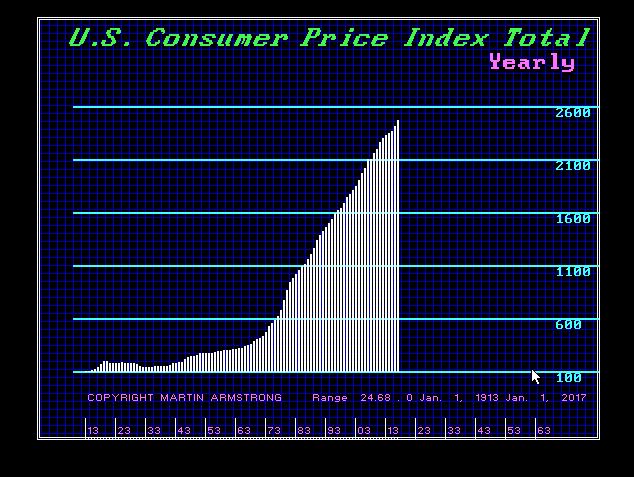
Here is a chart of the US CPI not seasonally adjusted. It has begun its sharp advance since the Floating Rate System was adopted in 1971 with the fall of Bretton Woods. In spite of borrowing, inflation over time has actually advanced more aggressively than if we had just printed instead of borrowed. Cohn has said the book “does not accurately portray” his experience of the White House. This claimed quote demonstrates that someone is seriously out of touch with economics. Actually, Trump is correct. Now we have Quartz joining the media calling Trump an idiot confirming they too are clueless about debt and printing. In fact, if you did just print the money and retired the debt, it would be DEFLATIONARY and not INFLATIONARY from the budget perspective because these people are clueless themselves about how the national debt works.
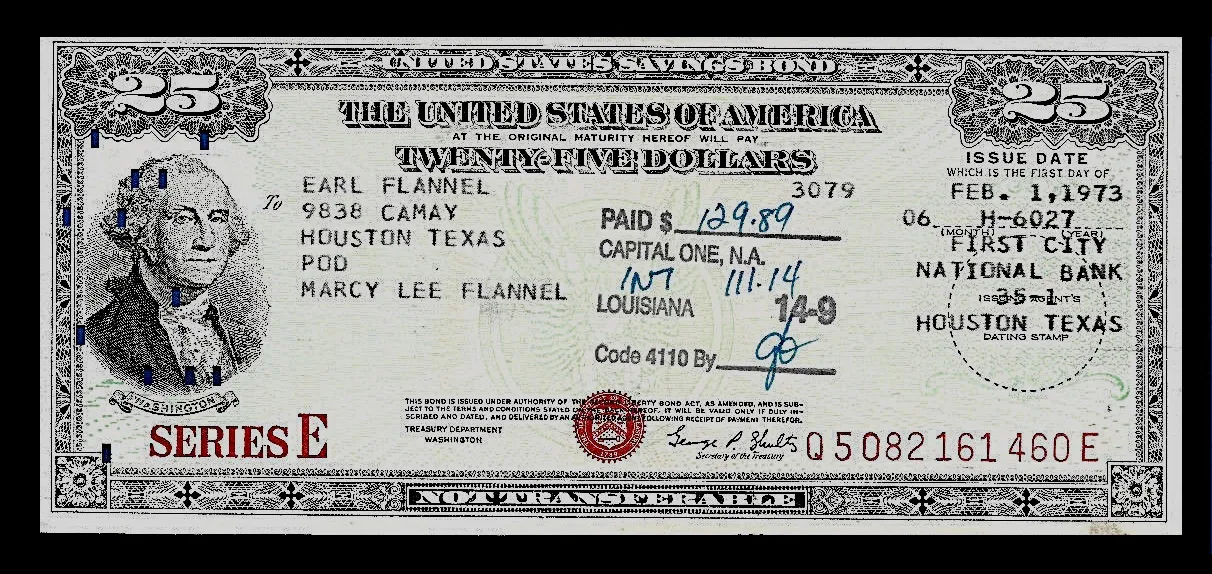
Before 1971, the debt could not be used as collateral for loans such as Savings Bonds. If you needed the money, you were forced to cash them in. Under this system, it was logically less inflationary to borrow than to print. However, post-1971, you buy T-Bills and post them as collateral to trade futures. The distinction between borrowing and printing has been turned upside down. A national debt is now worse than printing because itis money that now pays interest forever. Then there is no intention of ever paying off the national debt.
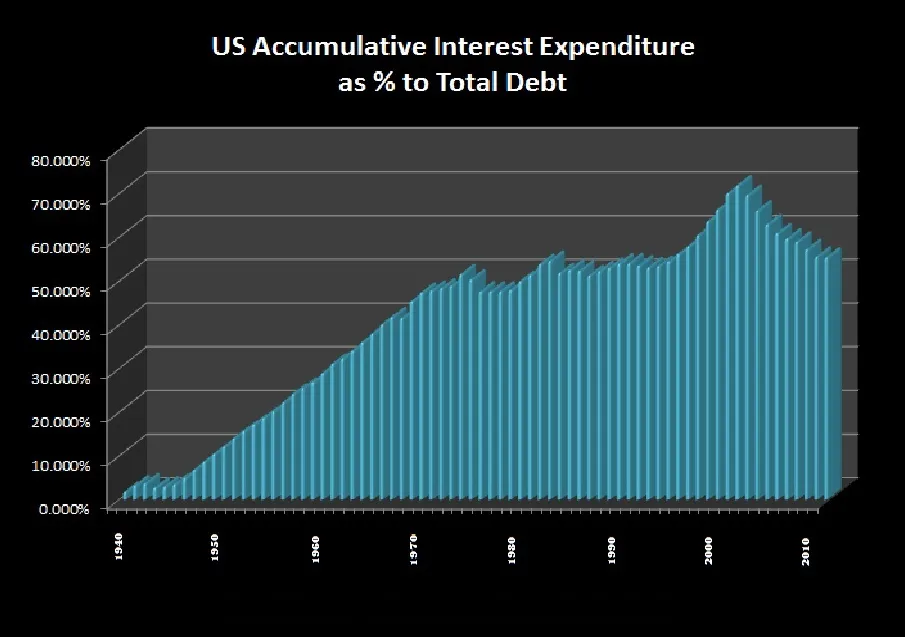
The truth is had we printed since 1971 instead of borrowing, there would be far less of an economic crisis compared to what we face today. If we simply printed to pay off the national debt, Social Security would suddenly become a Wealth Fund that actually made money instead of a Slush Fund for politicians. Now, Social Security can only invest 100% in US government debt and then the Fed lowers the interest rate to “stimulate” the economy and Social Security goes broke forcing higher taxes. Up to 70% of the national debt at times has been purely accumulated interest which never benefited anyone. It competes with the private sector in what we call the “flight to quality” and it forms the bank reserves. What is never discussed is the fact that US debt is also the reserve currency of nations – not paper dollars. That means that the interest we pay is exported and it stimulates foreign economies – not domestic.
So who is crazy here? Trump or Woodward? To keep borrowing year after year is insane. To monetize the debt will be DEFLATIONARY from the perspective of government expenditure. In 2019, interest expenditures even at this low level of interest rates will EXCEED military expenditure.
Woodward is by no means qualified to criticize Trump on such an issue he clearly does not even understand. Trump should really address the nation and explain this problem very simply. I will be glad to supply the charts.
Earlier this afternoon President Trump and Vice-President Mike Pence held a press briefing in the oval office along with FEMA Administrator Brock Long and DHS Secretary Kirstjen Nielsen to discuss concerns and preparation in advance of hurricane Florence.
Those in the forecast areas are strongly advised to pay close attention to local officials and heed all evacuation orders. Florence is projected to be a long-duration event for the eastern seaboard and mid-Atlantic region. Severe, possibly catastrophic, flooding is likely.
.
[Transcript] – Oval Office – 3:13 P.M. EDT – THE PRESIDENT: Okay, thank you very much. I’ve received a briefing from Secretary Nielsen, Administrator Long, and my senior staff regarding Hurricane Florence and other tropical systems that will soon impact the United States and its territories. The safety of American people is my absolute highest priority. We are sparing no expense. We are totally prepared. We’re ready. We’re as ready as anybody has ever been.
And it looks to me, and it looks to all of — a lot of very talented people that do this for a living, like this is going to be a storm that’s going to be a very large one — far larger than we’ve seen in perhaps decades. Things can change, but we doubt they will at this stage. It’s a pretty late stage. We doubt they’re going to be veering very far off course.
The places that are in the way and in the most jeopardy would be Virginia, North Carolina, South Carolina — that area. And again, they haven’t seen anything like what’s coming at us in 25, 30 years — maybe ever. It’s tremendously big and tremendously wet. Tremendous amounts of water.
So I’ve spoken with the governors of South Carolina, North Carolina, and Virginia. They’re prepared. We’re prepared. We’re working very well in conjunction with the governors.
I’d like to ask Brock Long, our Administrator, who’s done so well for us in Texas and Florida — we have something that could very well be very similar to Texas, in the sense that it’s tremendous amounts of water. Texas was the one that had, I would say, to this point, Brock, probably more water than we’ve ever seen in a storm or a hurricane. And it went out for seconds and thirds. We’ve never seen anything like it.
But FEMA, as you know, did a fantastic job, and a fantastic job also in Florida. And I’d like to ask Brock, if you would, to just say a few words to the media as to where it is now, what’s going to be happening, and how well prepared we are.
ADMINISTRATOR LONG: Thank you, Mr. President. Unfortunately, Hurricane Florence is setting out to be a devastating event to the Carolinas, and potentially Virginia as well.
So as you can see, they’re forecasting a major landfalling storm — Category 3 or 4 storm at landfall. The biggest hazard that we’re worried about is storm surge. That’s the primary driver of the evacuations that are underway by the states of North Carolina, South Carolina, and Virginia right now. But as this system comes in and makes landfall, during the weekend it’s forecast to stall out, lose its strength and its steering currents, and drop copious amounts of rainfall.
Unfortunately, the remnants of Gordon passed through the Mid-Atlantic over the weekend and dropped a lot of rain, saturating rivers. So, Hurricane Florence, as it comes in and puts anywhere between 20 and 30 inches more in isolated areas, could create a lot of inland flooding.
So, right now, sir, we’re supporting the governors with achieving their life safety evacuation and movements. We’re focused on mass care and sheltering. And then we’ll be focused on helping them to execute their response and recovery goals.
THE PRESIDENT: What are the chances that it veers off course and the hit won’t be so direct? What are the chances of that?
ADMINISTRATOR LONG: Unfortunately, I believe there’s quite a bit of certainty in the track forecast because the forward speed is picking up. It’s getting faster. And when systems do that, the track forecast becomes a lot more accurate. And I think the expectation needs to be set with the citizens in this area that, if you’ve been asked to leave, get out of the areas that are going to flood, and get into a facility that can withstand the winds.
Let’s set the expectations as well: This has an opportunity of being a very devastating storm. The power is going to be off for weeks. You’re going to be displaced from your home in the coastal areas. And there will be flooding in the inland areas as well.
So these are going to be statewide events. The hazards will be statewide.
THE PRESIDENT: Thanks. You wanted to show us this one then?
ADMINISTRATOR LONG: Yeah. This is a seven-day rainfall graphic. As you can see, the pink areas and the purple areas indicate 20 inches. That’s mean area rainfall; that’s an average rainfall amount. But you may see isolated amounts greater — into the 30-inch range — over Virginia, the central portions of Virginia and West Virginia. And these impacts are — they’re going to be through the Mid-Atlantic. So we’re coordinating not only with South Carolina, North Carolina, and Virginia, but other Mid-Atlantic states, all the way to Delaware.
THE PRESIDENT: Good. And it has been great coordination. I have to tell you, the states have been terrific. Everybody is working together. The governors and all of their representatives have been absolutely fantastic. And FEMA — there’s nobody like you people. I mean, what they’re doing is incredible.
Do you have any questions for Secretary Nielsen or for Brock Long, please? Anybody?
Q What lesson do we take from what happened in Puerto Rico? How do we apply the lessons we took from Puerto Rico?
THE PRESIDENT: Well, I think Puerto Rico was incredibly successful. Puerto Rico was, actually, our toughest one of all because it’s an island, so you just — you can’t truck things onto it. Everything is by boat. We moved a hospital into Puerto Rico — a tremendous military hospital in the form of a ship. You know that.
And I actually think — and the Governor has been very nice. And if you ask the Governor, he’ll tell you what a great job. I think probably the hardest one we had, by far, was Puerto Rico because of the island nature. And I actually think it was one of the best jobs that’s ever been done with respect to what this is all about.
Puerto Rico got hit not with one hurricane but with two. And the problem with Puerto Rico is their electric grid and their electric generating plant was dead before the storms ever hit. It was in very bad shape. It was in bankruptcy. It had no money. It was largely — you know, it was largely closed.
And when the storm hit, they had no electricity — essentially before the storm. And when the storm hit, that took it out entirely.
The job that FEMA and law enforcement and everybody did, working along with the Governor in Puerto Rico, I think was tremendous. I think that Puerto Rico was an incredible, unsung success.
Texas, we had been given A-plusses for. Florida, we’ve been given A-plusses for. I think, in a certain way, the best job we did was Puerto Rico, but nobody would understand that. I mean, it’s harder to understand. It was very hard — a very hard thing to do because of the fact they had no electric. Before the storms hit, it was dead, as you probably know.
So we’ve gotten a lot of receptivity, a lot of thanks for the job we’ve done in Puerto Rico. Puerto Rico was very important.
And, by the way, speaking of Puerto Rico, they’re going to be affected, pretty much, pretty soon by something else that’s on its way. Is that right?
ADMINISTRATOR LONG: Potentially, Hurricane Isaac right now is tracking south of the island, but we are — we have several thousand people inside Puerto Rico right now working on long-term recovery that have shifted to the response mode to monitor as Isaac passes to the south.
THE PRESIDENT: We do not want to see Hurricane Isaac hit Puerto Rico. That’s all we need. But we have a big hurricane out there, and it’s sort of skirting along Puerto Rico and the edge of Puerto Rico. That would not be good.
Q Mr. President, how much money do you think you’ll need for recovery efforts to this next hurricane? And do you have that already, or do you need to get it?
THE PRESIDENT: Well, we have it currently. Obviously, these are all unanticipated, so we’ll go to Congress. Congress will be very generous, because we have no choice. This is the United States. And whether it’s Texas or Florida or, frankly, if it’s Virginia — because Virginia, it’s looks like it’s very much in the path. Maryland, by the way, could be affected — very seriously affected — just to add. It’s a little bit outside of the path. And then, of course, South Carolina and North Carolina. I think that any amounts of money, whatever it takes, we’re going to do.
But we’re already set up. We have tremendous trucking systems, we have food systems. We have a lot of — a lot of contractors waiting. But for the most part, its been handled by FEMA, and also weve coordinated locally. We have food for days. We have emergency equipment and generators for many days. We should be in great shape.
Now, Ive also heard it could be 21 and 22 inches. If you can imagine what that is — 22 inches of rain. It is not something that weve had. Certainly, weve never had this on the East Coast. So — but I think were very well prepared and very well set up. Wouldnt you say?
ADMINISTRATOR LONG: Yeah. I think this storm right here is very similar to Hurricane Hugo and almost like a combination of Hurricane Hugo in 89 and Hurricane Floyd in 1999.
But look, successful disaster response and recovery is one that’s locally executed, state managed, and federally supported. So what FEMA is doing is pre-positioning the federal government’s assets to support each one of those governors that are about to be impacted with achieving their response and recovery goals. And thats the way emergency management and disaster response works best.
I also think — Id like to point out that what we learned last year is we have got to build a true culture of preparedness within our citizens here in America. This is a partnership, and it takes anything from neighbor helping neighbor all the way to the federal government when it comes to correctly responding and recovering.
Q Can we ask you about the (inaudible) and power outages? What things are right now to —
ADMINISTRATOR LONG: Thats a great question. So FEMA doesnt own the power grids in any one of these states. A lot of them are owned by the private industry. So what we have are business emergency operation center calls. Were concentrating with the private vendors to make sure that they have strong mutual aid programs in place. And we set up incident support bases to help stage power crews coming in from other states. And largely, its FEMAs job to get out of the way to make sure that the private power companies can get into these areas to set up their grid. We dont own it. We dont own it.
THE PRESIDENT: But unlike Puerto Rico, you have very strong power companies. Theyre very powerful, very well managed in the sense that they have — they have tremendous overcapacity. They are going to do a great job. They also have made contracts with other power companies that wont be affected, and theyre going to be coming in — just to answer your question, theyll be coming in to the various states that will be affected.
Theyre going to be coming in very strongly, and theyre already lining up. Theyll be here probably, for the most part, tomorrow, or shortly before the storm hits. So theyre going to be in great shape. These are, really, states that have very, very strong power authorities.
Q Whats your message, Mr. President, to people who might not have evacuated yet?
THE PRESIDENT: Well, thats very risky. I mean, again, weve never seen anything quite like this on the East Coast, at least. And if it turns out to be as bad — you know, we go out there; you have people that actually go fly through these storms. These are very brave people. But they fly through.
And from what Im hearing, the sites that they’re seeing have not been seen on the East Coast before. So I would say everybody should get out. I mean, you have to listen to your local authorities and — whether youre upland or downland. But depending on where you are, you have to listen and you have to get out. If they want you to get out — because its going to be impossible to have people get in there, whether its law enforcement or FEMA or anybody else. Once this thing hits, its going to be really, really bad along the coast. Okay?
Anything else?
Q Do you believe Rob Porter and Gary Cohns denials today?
THE PRESDIENT: Ah, well, you shouldnt be talking about that right now because it doesnt matter. But I really appreciate their statement. Their statement was excellent. And they both said that beautiful, which shows that the book is just a piece of fiction.
Thank you very much. I think were very well prepared. And thank you all very much. Appreciate it.
Q Do you mind giving us an update on the trade talks?
THE PRESIDENT: Trade talks are coming along very well. Were dealing with China, as you know. Weve taken a very tough stand on China, I would say, to put it mildly. And with Canada, they want to make a deal very much. Me? If we make it, thats good. And if we dont make it, thats okay too. Canada wants to make a deal. Well see if we can get them into the deal we already have with Mexico. I think the deal with Canada is coming along very well, and weve all been dealing in good faith. Okay?
[National Hurricane Center] At 500 PM AST (2100 UTC), the center of the eye of Hurricane Florence was located by satellite near latitude 27.5 North,
longitude 67.1 West. Florence is moving toward the west-northwest near 17 mph (28 km/h). A motion toward the west-northwest and northwest is expected through early Thursday. Florence is expected to slow down considerably by late Thursday into Friday.
On the forecast track, the center of Florence will move over the southwestern Atlantic Ocean between Bermuda and the Bahamas through Wednesday, and approach the coast of North Carolina or South Carolina in the hurricane warning area on Thursday and Friday.
Maximum sustained winds have increased to near 140 mph (220 km/h) with higher gusts. Florence is a category 4 hurricane on the Saffir-Simpson Hurricane Wind Scale. Further strengthening is forecast tonight and Wednesday. While some weakening is expected on Thursday, Florence is forecast to be an extremely dangerous major hurricane through landfall. (link)
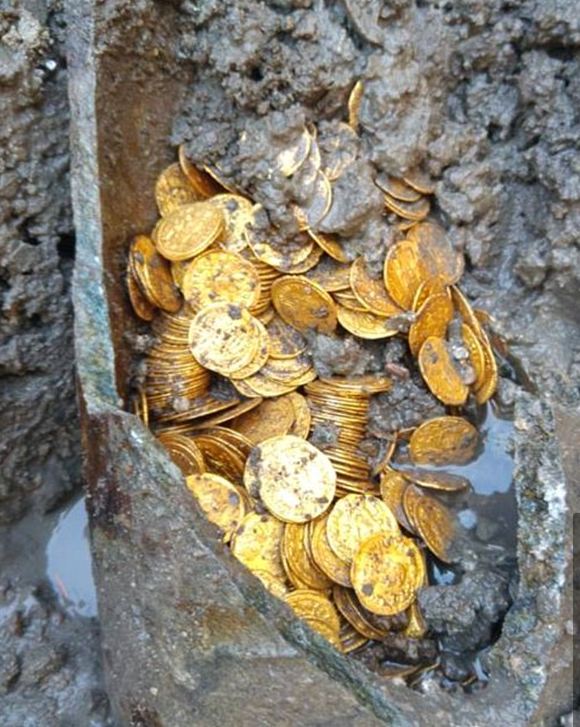
There were more than 100 gold Roman coins discovered in a buried hoard in the Cressoni theatre in Como, north of Milan. What I have examined from the photographs supplied to me, is that this is a hoard from the virtual fall of Rome. The coins I identified were from the Puppet Emperor of Ricimer, a Germanic general who ruled Rome through puppet emperors going into the end of the Western Empire. His power emerged in 461AD until his death in 472AD. The official fall of Rome took place in 466AD. After Ricimer’s death, the Germanic King of Italy, Odoacer deposed the last Western Emperor Romulus Augustusin 476AD, which is considered to mark the fall of the Western Roman Empire.
The photographs of the coins I reviewed clearly show the puppet Emperor Libius Severus III (461-465AD) was rather common in the hoard. This established that the hoard is from this period forward meaning it was a stash place for someone during the fall of Rome. Obviously, the person did not live to come back to retrieve his coins. These coins are worth probably $1 million+ depending upon the emperors in this entire batch which might be discovered. It could possibly rise to at least the $2 million valuations.
QUESTION: Mr. Armstrong; You are a history buff. Who was the richest person in ancient times? Has there ever been a trillionaire?
PD
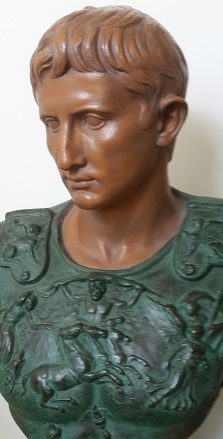
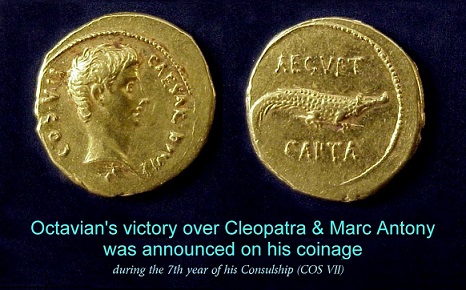
ANSWER: The Roman Emperor August. He is believed to have been worth in current dollar terms nearly $5 trillion. The only other person to have reached the trillion dollars net worth status was King Solomon of Judaea. After Octavian/Augustus defeated Marc Antony and Cleopatra, he then possessed the entire wealth of Egypt. In this respect, the wealth really did belong to him. Some have attributed the entire wealth of nations conquered and argued that Genghis Khan was worth probably 100 trillion dollars. However, the Roman system was rather different. Even taxation for a governor of a province would be owed by the governor to the state so whatever he would collect fell to him personally.
Marcus Licinius Crassus was perhaps one of the richest private men in Roman history. He amassed an enormous fortune through real estate speculation buying confiscated property seized by Marius from the supporters of Sulla. Crassus’s wealth is estimated by Pliny at approximately 200 million sestertii. Plutarch says the wealth of Crassus increased from less than 300 talents at first to 7,100 talents. An Attic (Greek, Athens) talent was the equivalent of 60 minae or 6,000 drachmae. A silver Drachm was generally 15mm in diameter with a weight of 4.20 grams. In Roman terms, this was about 26 kilograms (57 lb). If we take Plutarch’s measurement of wealth, that would be 42.6 million denarii.
A Roman soldier earned 225 denarii a year. Today, the average soldier in the US army earns $48,538 per year. That would approximately be $9.189 billion. If we take Jeff Bezos who is reported to be worth $164 billion based upon his stock in Amazon, that works out to the annual salary of 3.4 million soldiers compared to Crassus’ worth being 189,333 soldiers. However, the real difference is that Crassus’ wealth is cash whereas Bezos’ wealth is the current value of a stock. If he tried to sell it for cash, the value would be significantly less.
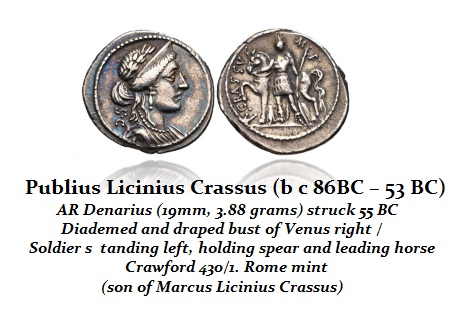
Crassus’ son, Publius Licinius Crassus (c 86BC – 53 BC), served under Julius Caesar. He did issue coins during the Republic as a “moneyer” who was a person authorized to issue the coins during the Roman Republic. The Senate actually controlled the quantity of money to be produced. There would be a “State of the Union” type of address to the Senate where they would be given the account of money on hand and what they expected the annual expenses would be. The Senate would then authorize the number of coins to be issued that fiscal year. The Quaestors handed the raw bullion and they would turn that over to the official who was the “moneyer” for that year. The moneyers would decide on the design to be issued which often celebrated his ancestors. The coinage would be struck and then handed back to the Quaestors for the expenditure of the government. The office of a moneyer continued into the Imperial period.
COMMENT: Marty; Did you know that your site is listed in the top 20 economic sites in the world? You are in the top 20 with Wall Street Journal, Bloomberg, London FT, and even Brookings Ben Bernanke’s Blog. The rest of the list includes the Economic Policy Institute, Economics & Statistics Administration, and The Berkeley Blog Business & Economics. You may be a lot more influential than you portray.
JS
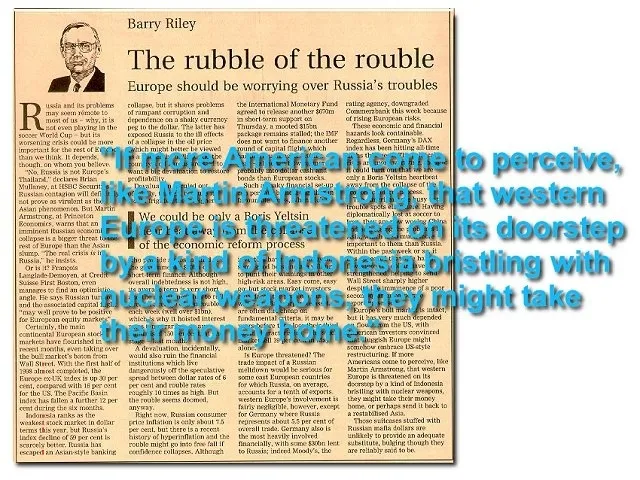
REPLY: Perhaps. But keep in mind that your enemies always read you because they need to know what you are saying now to feed their hatred. Aside from that, every intelligence service reads our work. They understand there is a cycle to everything and ever since the London FT reported I warned Russia would collapse just before the 1998 Long-Term Capital Management collapse on Russian bonds, they all pay close attention.
COMMENT: Just to let you know, already we have a record-breaking cold here in Minnesota. It did not even wait for Labor Day.
DT
REPLY: Yes I know. Things are changing and we really should stop this global warming nonsense and begin to actually investigate what is unfolding. Granted, this may not produce more taxes from the government. But the purpose of governments is not to tax the people, but to protect them. A reader sent in this video link on explaining the dynamics of the earth. It is just 20 minutes, but it is fascinating to watch. You may begin to comprehend that the planet just may be more powerful than we think we are
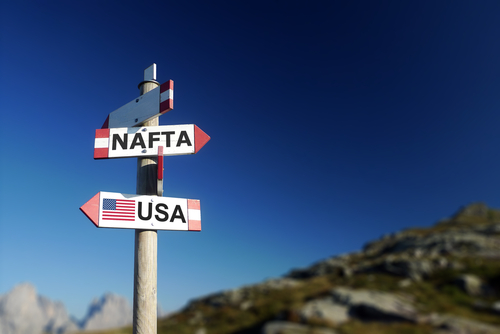
QUESTION: Mr. Armstrong; Do you agree with Trump that if he canceled NAFTA, the United States would be better off?
SN
ANSWER: Ironically – YES from a jobs perspective, not the consumer. What you have to understand is that these trade deals are all nonsense. They are NOT Free Trade in the least. They are compromises so politicians can pretend they have accomplished something.
Take the deal with Europe. France’s position was that nothing can be called “Champagne” unless it comes from that region in France. Every trade negotiation is a compromise that maintains protectionism. In that regard, if Trump actually canceled NAFTA, his boast that the US would be better off is meant that all products would then be subjected to tariffs and all of the American industry would be protected.
Now, that said, this view is that of the worker – not the consumer. All of these trade negotiations are one-sided. They are always focused only on jobs and not producing the best price for the consumer which in turn raises our standard of living. I have never encountered even one politician who has EVER defended the consumer in trade deals. This violates the principle of Comparative Advantage put forth by David Ricardo. It’s true that Saudi Arabia could grow lettuce but the cost of irrigation in the desert would make the cost 10 times more than simply buying it from Europe or North America. It would cost the consumer far more to simply grow that product in the desert than importing so it is best to buy it elsewhere and focus on your productive capacity in which you have some comparative advantage over others.
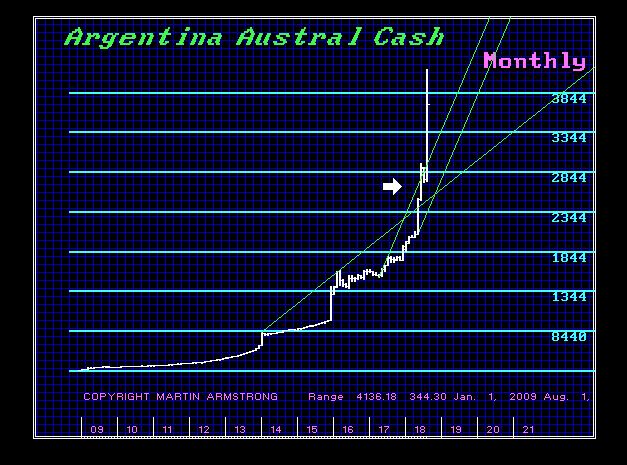
QUESTION: Mr. Armstrong; Our government here in Argentina has told us we should expect more poverty and there is no hope for the future. Socrates has been amazing on its forecasts on our currency. There are enough of us down here who would sincerely ask would you consider advising Argentina to straighten out our economy and nation? You have forecast this emerging market crisis long before anyone else and your solution video on YouTube is very thought-provoking. If we can demand the government meets with you, would you do it?
KRD
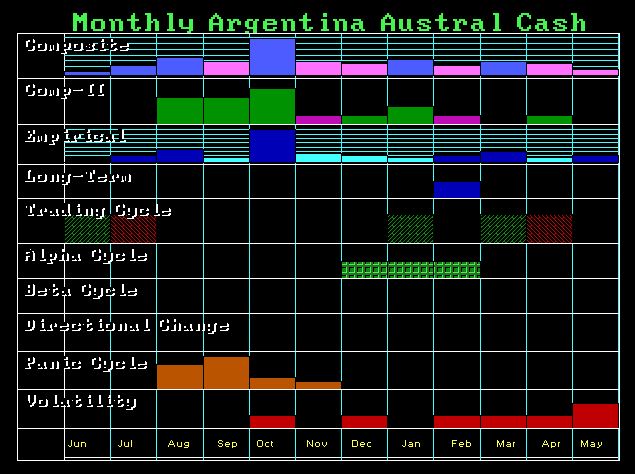
ANSWER: The song maybe Don’t Cry for Me Argentina, but it applies to the entire world for what happens in Argentina is merely the beginning of the global debt crisis. We can see from the chart that the dollar has been soaring. However, the Array picked August as the Panic Cycle and that has been spot on. Unfortunately, it does not look like this is going to calm down. We may be headed into a real Emerging Market crisis by October.
The reason why we are able to forecast such events well in advance is rather common sense. As I have said before, every solution to a crisis sets the stage for the next crisis. The Emerging Market debt crisis is unfolding because central banks in the USA and Europe lowered interest rates to “stimulate” the economy and they have no idea about how an economy truly functions. This is all based upon Keynesianism which is in turn based upon an isolated theory of the economy. They never consider that you lower interest rates and there are pensions who simply need higher rates to break-even. Then emerging markets issued debt in dollars with higher yields for the pension funds bought it assuming there was no currency risk. Now we have Portuguese and Spanish banks who would not lend to their domestic economies for there were way too many nonperforming loans so they ran and bought Turkish debt.
What began in Argentina and Turkey has snowballed into broader collapse complete confidence in Emerging Market debt and the pension funds stopped buying and simply are now trying to get out as fast as they can. This now has officials in Indonesia, India, South Africa, and Brazil scrambling to protect their economies. The debt party is over! The ECB has created a global nightmare for so many European institutions ran into emerging markets because the ECB maintained NEGATIVE rates. Draghi has created a global debt crisis and now he himself is trapped. This is why Italy now wants to change the structure of the ECB so they can buy member debt directly rather than in the secondary market which they have destroyed. Draghi cannot stop Quantitative Easing for the 28 member states will be unable to sell their new-issue debt at rates that are similar to the current levels. Rates will soar in Europe if Draghi actually stopped buying and then we will see a global debt crisis you cannot imagine.
Left unchecked, more nations are going to be swept up in this debt crisis as their bond values collapse. This is threatening the entire world’s economic growth and confidence. As institutions begin to wise up for once, we will see the confidence in public debt collapse. This will become a game of musical chairs and the one left standing with government debt will lose everything!
The Turkish lira, which has been relentlessly setting new all-time lows and this is creating the contagion. Rumors are that Erdogan is such a tyrant, he will sooner turn to Russia and default on all Turkish debt just to retain personal power. Institutional Traders are the first to worry about countries with large current account deficits and a large stock of dollar-denominated debt in a world with rising interest rates and a stronger dollar. But their management often lags and do not listen to their trading desks because they tend to be more politically correct. The phones were actually ringing at the top and it was the ECB telling the banks to stop buying dollars because they were making the dollar rally. You can play those games only for so long before the whole house of cards comes crashing down.
I would be glad to fly to Argentina to help if the pain reaches their eyeballs so they will do as directed to save the country. Half-ass maybe’s are a waste of time. It is only worth it when they realize they have no choice
Gordon is anticipated to strike the Mississippi coast as a category one hurricane. Current wind-speeds are 65mph, with strengthening anticipated.
[National Hurricane Center] At 100 PM CDT (1800 UTC), the center of Tropical Storm Gordon was located near latitude 28.9 North, longitude 87.3 West. Gordon is moving toward the northwest near 15 mph (24 km/h), and this general motion is expected to continue until landfall occurs tonight along the north-central Gulf coast. A northwestward motion with some decrease in forward speed is expected after landfall, with a gradual turn toward the north-northwest and north forecast to occur on Friday.
On the forecast track, the center of Gordon will move across the northern Gulf of Mexico today, and will approach the north-central Gulf Coast within the hurricane warning area late this afternoon or evening, and move inland over the lower Mississippi Valley tonight and early Wednesday.
Reports from an Air Force Reserve Unit reconnaissance aircraft indicate that maximum sustained winds remain near 65 mph (100 km/h) with higher gusts. Some strengthening is expected later today, and Gordon is forecast to be a hurricane when it makes landfall along the north-central Gulf Coast. Rapid weakening is forecast after Gordon moves inland. (link)
I have created this site to help people have fun in the kitchen. I write about enjoying life both in and out of my kitchen. Life is short! Make the most of it and enjoy!
This is a library of News Events not reported by the Main Stream Media documenting & connecting the dots on How the Obama Marxist Liberal agenda is destroying America



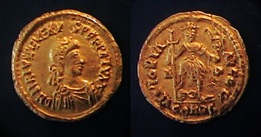 There were more than 100 gold Roman coins discovered in a buried hoard in the