McDonalds Leaves EU for Britain


mcdonalds

The EU is just insane. They cannot comprehend how to run an economy. The abuse on taxation assessments in the EU has led to McDonalds relocating its international headquarters from Luxembourg to the UK. The U.S. fast food chain announced last week that a new holding company was being established in the UK, where most of the licensing fees would come from stores outside the U.S. McDonalds is restructuring to save costs and the EU taxation is just anti-business.

China Flies Nuclear Bomber Above South China Sea In Response To “Ignorant Child” Trump


Tyler Durden's picture

As reported earlier, China lobbed its diplomatic reaction to Trump’s Sunday interview, in which the President-elect hinted he would use the “One China” policy as a bargaining chip in negotiations with China to extract futures trade concessions.

China responded and expressed “serious concern”, warning Donald Trump that the two countries will have “nothing to discuss” if the US president-elect’s incoming administration decides to discard the four-decade old “One China” policy.

“Adherence to the One China policy is the political bedrock for development of [bilateral] relations,” Geng Shuang, a foreign ministry spokesman, said on Monday. If it is compromised or disrupted, the sound and steady growth of the China-U.S. relationship as well as bilateral cooperation in major fields would be out of the question.”

“We urge the new [US] leadership to recognise the sensitivity of the Taiwan question and to deal with it in a prudent manner,” Geng added. “Upholding the One China policy was America’s promise and we want them to fulfil this promise.”

As China’s CCTV tweeted, a sampling of the Chinese popular reaction to Trump’s comments was less than enthusiastic.

However, realizing that for Trump it may need to escalate beyond mere words, shortly prior to today’s latest escalation, China flew a long-range nuclear-capable bomber outside China for the first time since President-elect Donald Trump spoke with the president of Taiwan, two US officials told Fox News. The dramatic show of force was meant to send a message to the new administration, according to the officials. It marks the second time Beijing flew bombers in the region since Trump was elected.

The Chinese H-6 bomber flew along the disputed “Nine-Dash line” Thursday, which surrounds the South China Sea and dozens of disputed Chinese islands, many claimed by other countries in the region.

The Pentagon was alerted to the Chinese flight Friday. It was the first long-range flight of a Chinese bomber along the U-shaped line of demarcation since March 2015, according to the officials.  Over the summer, Chinese bombers flew over the South China Sea and the contested islands, but they did not fly nearly as far as this one, the officials said.

At various points in recent long-range flights, Chinese fighter jets provided escorts to the single Chinese bomber.

In recent days, U.S. intelligence satellites have spotted components for the Chinese version of the SA-21 surface-to-air missile system at the port of Jieyang, in southeast China, where officials say China has made similar military shipments in the past to its islands in the South China Sea.

Just as concerning for the Pentagon, China has been seen by American intelligence satellites preparing to ship more advanced surface-to-air missiles to its contested islands in the South China Sea.

 In February, Fox News first reported that China had deployed an advanced surface-to-air missile system, the HQ-9, to Woody Island, a contested island in the Paracel Island chain in the South China Sea, also claimed by Taiwan and Vietnam.

The HQ-9 is based on the Russian S-300 missile system and has a range of roughly 125 miles.

The Chinese SA-21 system, based on the more advanced Russian S-400, is a more capable missile system than the HQ-9.

It wasn’t just military posturing however: having largely ignored Trump’s verbal outbursts so far, today Chinese state media went on the offensive after Trump’s latest remarks, slamming the US president-elect for being “as ignorant as a child in terms of foreign policy” the SCMP reported.

Beijing added it would have no reason to “put peace above using force to take back Taiwan” if Trump abandoned the policy, which recognises Taiwan as part of China, stated the editorial in the Global Times, which is published by the People’s Daily.

And with these two responses, China has almost certainly assured further escalation from Trump, who is not known for leaving a heated back-and-forth such as this one, especially with such a prominent opponent, without getting some benefit from the exchange and without being able to claim the upper hand, especially coming from the position as leader of the world’s most powerful nation.

Eurozone Day Of Reckoning Coming Soon: Showdown Between Italy And Germany Looms


Tyler Durden's picture

Submitted by Michale Shedlock via MishTalk.com,

The eurozone cannot survive without Italy. The serious problem at the moment is the Eurozone also cannot survive with Italy.

Two of Italy’s three largest parties are anti-Euro. The only party in Italy that does support the euro is ex-prime minister Matteo Renzi’s Democratic Party. And with Renzi gone, there’s a huge risk the party splinters.

Regardless, there are no likely scenarios that can keep things from flying apart according Wolfgang Münchau. I believe his analysis is solid.

one-day

Münchau makes a detailed case why the eurozone is doomed in Italy Poses a Huge Threat to the Euro and Union.

He lists five ways the Eurozone can stay intact. However, none of them stands up to close scrutiny.

  1. Italy and Germany could converge. To do this, Italy would need to undertake economic reforms to clean up the justice system and the public administration, cut taxes and invest in productivity-increasing technologies. Germany would need to run a higher fiscal deficit.
  2. The northern European states accept large fiscal transfers to the south.
  3. The EU creates a federal political authority with powers to raise taxes in order to transfer income from high to low-income earners.
  4. The ECB finds a way to bankroll Italian public and private debt indefinitely.
  5. Italy’s government will forever continue to support euro membership.

Only one of those five conditions may be sufficient for Italy to remain a member of the euro. The problem is that each one is extremely improbable. And I cannot think of a sixth one,” says Münchau.

However, the consensus opinion is that Italy will not leave the Eurozone because the deck is stacked against that event.

The Italy won’t leave rationale looks like this:

  • The Five Star Movement (M5S) would have to get into power, but the new technocrat government’s first mission is to rig the rules so that does not happen.
  • Even if M5S wins the lower parliament, it still may not control the senate.
  • Even if M5S takes complete control of parliament, it would have to change the constitution.
  • Changing the constitution without a super majority would require a vote.

The problem with the above thesis is there is only one party that wants to keep the Euro and coalitions will form if for no other reason than people are fed up.

Showdown with Germany

According to Münchau

 The next Italian prime minister will need to explain to the next German chancellor, presumably Angela Merkel, that her choice will not be between a political union or no political union, but between a political union or Italy’s withdrawal from the euro.

Would it even be Merkel’s choice to make? I think not, it would take a German constitutional change. And nNot only would Germany have to go along, so would every other nation in the Eurozone.

German politicians would not agree, and even if they would, it’s likely Italy would never present the demand, at least as implied above.

Italy will simply hold a referendum. That would be the demand. By then it would likely be too late.

Biggest Default in History

 The latter would imply the biggest default in history. The German banking system would be in danger of collapsing, and Europe’s biggest economy would lose all the competitiveness gains so painstakingly accumulated over the past 15 years.

It has been the historic failure of consecutive Italian prime ministers to avoid this necessary confrontation, and to think that staying off the radar screen constitutes a viable strategy.

What about point number 5?

I addressed that long ago, and I am still waiting the inevitable.

Let’s flashback to November 23, 2011, to my statement Eventually, Will Come a Time When ….

  Eventually, there will come a time when a populist office-seeker will stand before the voters, hold up a copy of the EU treaty and (correctly) declare all the “bail out” debt foisted on their country to be null and void. That person will be elected.

China Hits Back: Warns Trump “Nothing To Discuss” If “One China” Policy Ends


Tyler Durden's picture

On Sunday morning, Trump reignited the diplomatic spat with China when during an interview with Chris Wallace on Fox News Sunday the President-elect said that his support for the “One China” policy which has underpinned U.S. behavior toward Taiwan since the 1970s,  will hinge on cutting a better deal on trade, in other words it will be a “barter chip” to extract future concessions from Beijing.

“I fully understand the ‘one China’ policy, but I don’t know why we have to be bound by a ‘one China’ policy unless we make a deal with China having to do with other things, including trade.”

As the FT noted, Trump’s remarks dramatically raised the stakes with Beijing just a week after he broke diplomatic precedent by accepting a phone call from Taiwan’s leader, Tsai Ying-wen. Both incidents have tested the Chinese government’s diplomatic patience.

Predictably, overnight China responded and expressed “serious concern” on Monday after U.S. President-elect Donald Trump said the United States did not necessarily have to stick to its long-held stance that Taiwan is part of “one China”, calling it the basis for relations. Beijing warned Donald Trump that the two countries will have “nothing to discuss” if the US president-elect’s incoming administration decides to discard the four-decade old “One China” policy.

“Adherence to the One China policy is the political bedrock for development of [bilateral] relations,” Geng Shuang, a foreign ministry spokesman, said on Monday. If it is compromised or disrupted, the sound and steady growth of the China-U.S. relationship as well as bilateral cooperation in major fields would be out of the question.”

He added that “the China-U.S. relationship has global and strategic significance. This not only concerns the happiness of both countries and their people, it concerns the peace, stability, development and prosperity of the Asia Pacific (region) and internationally.”

“We urge the new [US] leadership to recognise the sensitivity of the Taiwan question and to deal with it in a prudent manner,” Geng added. “Upholding the One China policy was America’s promise and we want them to fulfil this promise.”

The statement is a marked escalation by China. Beijing policymakers initially had a more subdued response after Trump departed from diplomatic convention earlier this month and spoke by phone with Taiwan’s president. Now things are getting more serious: the official Xinhua News Agency warned that world peace hinges on close and friendly ties between the U.S. and China.

“For China, there is no balancing of trade and Taiwan,” said Wang Tao, head of China economic research at UBS AG in Hong Kong. “Taiwan is considered the utmost core interest of China, not for bargaining.”

Earlier on Monday, a stinging editorial in the Global Times, offshoot of the official People’s Daily, urged Mr Trump to “listen clearly, the One China policy cannot be traded”. “China needs to wage resolute struggle against [Mr Trump],” it added, warning the president-elect that China “cannot be bullied easily”.

Last week the Chinese government lodged an official protest over the call with Ms Tsai but was otherwise restrained, urging the incoming administration to respect principles that have guided Sino-US relations since diplomatic ties were formally re-established in 1979.

As a result of the growing diplomatic confronation, Chinese markets were hit with the Shanghai Composite Index sinking 2.5% on Monday, the yuan fell toward an eight-year low and Chinese government bonds tumbled. Analysts cited Trump’s comments on the One-China policy amonga long list of reasons for the selloff. Taiwan’s benchmark Taiex index slipped 0.5% on Monday.

“The fundamental assumption in Sino-US bilateral relations has always been that there can be tensions, there can be friction, but no one makes a sudden move,” said Yanmei Xie at Gavekal Dragonomics, a Beijing consultancy. “Right now that paradigm is in doubt.”

In his remarks on Sunday, Trump suggested the One China policy could in fact be treated as a bargaining chip, rather than as the bedrock of relations between the world’s two largest economies, however China disagrees.  The Global Times warned of severe consequences if the incoming US administration dispensed with the one China policy. In that case, the paper asked, “why should the Chinese government prioritise ‘peaceful reunification’ [with Taiwan] over ‘reunification by force’?”

Quoted by the FT, Shen Dingli, professor of international relations at Fudan University in Shanghai, said “Trump’s position is you can trade anything”, adding that the One China policy was often ambiguous. “We keep open trade ties with Taiwan even though we don’t recognise them and even though the US sells arms to them.”

According to Mr Trump, “other things” could include currency policy, Beijing’s military build-up in the South China Sea and improved co-operation in containing North Korea.

“Look, we’re being hurt very badly by China with [currency] devaluation, with taxing us heavy at the borders when we don’t tax them, and building a massive fortress in the middle of the South China Sea,” Trump said. “And frankly, they’re not helping us at all with North Korea.”

China’s currency, the renminbi, strengthened by 30% against the dollar in the decade to 2014, but has since lost about 15 per cent of its value against the greenback. Ironically, instead of actively devaluing its currency as Trump claims, in recent years the PBOC has been propping up the renminbi’s value to prevent an accelerate in capital outflows from China.

The Coming Fracture Of Saudi Arabia


Tyler Durden's picture

Submitted by Wayne Madsen via Strategic-Culture.org,

The Bible’s book of Galatians, VI teaches, «as you sow, so shall you reap». And for Saudi Arabia, which has overtly and covertly supported rebellions in Libya, Syria, Iraq, Yemen, Ethiopia, Philippines, and Lebanon that have led to civil wars and inter-religious strife, the day of reckoning may soon be at hand. The present Saudi king, Salman bin Abdul Aziz, is the last of the sons of the first Saudi king, Abdul Aziz al Saud, who will ever sit on the Saudi throne. After Salman dies, Saudi leadership will pass to a new generation of Saudi royals. But not all the descendants of the first Saudi king are happy about how the future succession may turn out.

Salman named his nephew, Mohammed bin Nayef, as crown prince after firing his half-brother, Mugrin bin Abdul Aziz, as crown prince after the death of King Abdullah in 2015. For good measure, Salman also named his son, Mohammad bin Salman, who is little-known outside the kingdom, as deputy prime minister. The 30-year old Mohammad bin Salman is seen by some as the eventual crown prince after King Salman figures out some way to ease Mohammad bin Nayef, the Interior Minister and close friend of the United States, out of the position of heir apparent to the throne.

More and more power has been concentrated into Mohammad bin Salman’s hands, including control over the Defense Ministry, the Council of Economy and Development, and the Saudi government-owned Arabian-American oil company (ARAMCO). The deputy crown prince and defense minister is the architect of Saudi Arabia’s genocidal military campaign against the Houthi rebels in Yemen and continued Saudi support for jihadist guerrillas in Syria and Iraq, as well as military support for the Wahhabist royal regime in Bahrain in its bloody suppression of the Shi’a Muslim majority population. Mohammad bin Salman is also the major force in Saudi Arabia seeking a military confrontation with Iran.

There is a schism within the Saudi royal family that has created a real-life «Game of Thrones» within the kingdom. The first Saudi king had between 37 and 44 sons from a harem of 22 wives. One of these sons, 85-year old Prince Talal bin Abdul Aziz, also known as the «Red Prince» for his support for a national constitution and Western-style rule of law separated from Muslim sharia law, is suspicious about the concentration of power in the hands of Salman’s family, which comes at the expense of the other princes with a political claim inside the monarchy. Prince Talal is not alone.

Power in Saudi Arabia has generally resided with the seven sons of King Abdulaziz and Hassa bin Ahmed, which include present King Salman. These sons are commonly known as the «Sudairi Seven». They included the late King Fahd; the late Crown Princes Sultan and Nayef; the former deputy defense ministers Abdul Rahman and Turki and Interior Minister Ahmed, all removed from succession; and King Salman. In addition to the families of the other sons of the Saudi founder, the families of the «Sudairi Six», minus Salman’s family, are intensely jealous of the power being conveyed to deputy Crown Prince Mohammad bin Salman. When Salman dies, many observers of secretive Saudi royal politics expect to see a succession battle that might even result in a royal civil war.

And a civil war among competing Saudi royals can easily become one between various Saudi regions. Thus, the fracturing of Libya, Syria, Iraq, and Yemen brought about by Saudi adventurism may come back to haunt the Saudis in a major way.

The first Saudi region that can be expected to take advantage of a Saudi royal family split is the Eastern Region, which is known formally as the Eastern Province and is ruled by Saud bin Nayef, a son of the late Crown Prince Nayef from the provincial capital of Dammam. When King Abdullah died in 2015, Saud bin Nayef was passed over for Crown Prince by his younger brother, Mohammad bin Nayef. Although both brothers are nephews of King Salman, Saud may still harbor a resentment against his uncle for stripping him of the chance to become king. A full-blown Saudi civil war may begin in the Eastern Region, which is not only the center of Saudi Arabia’s oil industry with thousands of expatriate workers, but also the home to what may be either a slim majority or very significant minority of Shi’a Muslims.

The Saudi government has never wanted to conduct a religious census of the country because it might not like the results, especially in the Eastern Province. In 2009, popular Shi’a leader Nimr Baqir al-Nimr was arrested by Saudi authorities for advancing the idea that the Eastern Region should secede from Saudi Arabia. In 2015, amid an international outcry of condemnation for its action, Saudi Arabia executed al-Nimr. Expect the Eastern Region to the first to openly revolt against the Saudi government in the event the current «Game of Thrones» turns into a «War of Thrones».

The next region to revolt against the monarchy would be Asir, the southwest area that borders northern Yemen, in addition to two neighboring Saudi regions. Asir is the home to a significant minority of Zaidi Muslims. The Saudi regime has been waging a genocidal campaign against the Asir Zaidis’ cousins on the Yemeni side of the border, the Houthi rebels, who are also Zaidis.

Houthi rebels have launched several military attacks, including missile barrages, on Saudi targets in Asir, as well as the Saudi border regions of Jizan and Najran, in the hope that they might ignite a Zaidi uprising in the southern Saudi regions. There have been reports during the Yemeni civil war that Houthi forces seized, at least temporarily, a few Saudi villages in Asir, Najran, and Jizan. Open rebellions by Zaidis in Asir, Najran, and Jizan, along with a Shi’a rebellion in the Eastern region, may be too much for the Saudi armed forces to handle, especially if it is split along competing allegiances to rival princes and throne claimants.

Intervention in a Saudi civil war by the United States and NATO would be guaranteed to result in a costly outcome for the West in terms of body bags, sabotage of oil installations, and a multi-billion-dollar financial drain. The probability that Yemen would see the restoral of an independent South Yemen and a battle for control of northern Yemen between Houthis and remnants of the Saudi-backed Yemeni government would entail Western troops also engaging in a protracted civil war in another huge chunk of the Arabian Peninsula. Even the most-warlike members of the Donald Trump administration would likely not want to become mired in a major Arabian imbroglio.

Widespread conflict in Saudi Arabia might also result in the regions of Mecca and Medina becoming an independent entity with the primary responsibility of protecting the Islamic holy places and ensuring safe access for Muslim pilgrims. The Organization of Islamic Conference and other non-Wahhabi influenced Islamic organizations may become vehicles by which the two holy cities are governed as a «neutral zone» unaffected by Saudi turmoil and Wahhabist religious radicalism.

Other regions of Saudi Arabia that would likely spin off include the Northern Borders region adjacent to Iraq and Tabuk, which lies along the southern Jordanian border and the Gulf of Aqaba. Tabuk might seek some form of security protection from both Jordan and Israel to remain aloof from armed confrontation between Saudi factions. The Northern Borders region might seek a similar accommodation with Iraq.

The real battle for control of Saudi Arabia would be mostly centered in Riyadh province, for the keys to the kingdom, or what remains of it, would be found in control of the Saudi capital city of Riyadh. In any event, a Saudi civil war would be best left to the regional actors to sort things out. Any outside intervention would certainly make matters much worse and could develop into a wider regional or world war.

Now German Politicians Worried About “Striking Increase” In Russian Propaganda And Fake News


Tyler Durden's picture

Either Russian intelligence officials have suddenly become extremely efficient at disrupting national elections in the world’s largest democracies or the establishment leaders of those democracies have intentionally launched a coordinated, baseless witch hunt as a way to distract voters from their failed policies. We have our suspicions on which is more likely closer to the truth…

Either way, per Reuters, Germany’s domestic intelligence agency is reporting a “striking increase” in Russian propaganda and disinformation campaigns aimed at destabilizing German society, and targeted cyber attacks against political parties.

 “We see aggressive and increased cyber spying and cyber operations that could potentially endanger German government officials, members of parliament and employees of democratic parties,” Hans-Georg Maassen, head of the BfV spy agency, said in statement.

Maassen, who raised similar concerns about Russian efforts to interfere in German elections last month, cited what he called increasing evidence about such efforts and said further cyber attacks were expected.

The agency said it had seen a wide variety of Russian propaganda tools and “enormous use of financial resources” to carry out “disinformation” campaigns aimed at the Russian-speaking community in Germany, political movements, parties and other decision makers.

The goal was to spread uncertainty, strengthen extremist groups and parties, complicate the work of the federal government and “weaken or destabilise the Federal Republic of Germany”.

Putin Merkel

 Like accusations made by Hillary and Obama in the U.S., German politicians, including Chancellor Angela Merkel, have asserted that Russian intelligence agents and media outlets have attempted to spread “fake news” in an effort to “fan popular angst over issues like the migrant crisis.”  Of course, it can’t simply be that voters disagree with Merkel’s “open border” policies which have resulted in a massive influx of migrants that have been linked to increasing crime, terrorist attacks and sexual assaults on German citizens…that would just be silly and racist and xenophobic.
  German officials have accused Moscow of trying to manipulate German media to fan popular angst over issues like the migrant crisis, weaken voter trust and breed dissent within the European Union so that it drops sanctions against Moscow.

But intelligence officials have stepped up their warnings in recent weeks, alarmed about the number of attacks.

Last month, German Chancellor Angela Merkel said she could not rule out Russia interfering in Germany’s 2017 election through Internet attacks and misinformation campaigns.

Estonian Foreign Minister Sven Mikser on Thursday said he expected Russia to continue a campaign of “psychological warfare” and spreading false information after the cyber attacks launched during the U.S. election.

“It’s a pretty safe bet that they will try to do it again,” he told Reuters in Hamburg at a meeting of the Organisation for Security and Cooperation in Europe. “They will try to surprise us. That’s something that we should be very careful to look at and try to protect ourselves from.”

While we have absolutely no doubt in Merkel and Obama’s assertions that Russia has been able to successfully sabotage national elections, it is curious that, in the U.S., Russian efforts were only successful in certain states where voters had been disproportionately hurt by past Clinton policies (e.g. WI, MI, PA, OH) but not in other swing states like Nevada, New Mexico and Colorado.

Fukushima Radiation Detected on U.S. West Coast


A true disaster but not as bad as Chernobyl in Russia.

Sunday Talks – General David Petraeus With George Stephanopoulos…


Former CIA Director David Petraeus, a potential candidate for Secretary of State, was interviewed by George Stephanopoulos earlier today. An interesting aspect – It appears Stephanopoulos, a …

Source: Sunday Talks – General David Petraeus With George Stephanopoulos…

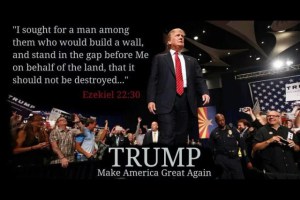
trump-standing-in-gap411221112112111

Russia: The Road to the Revolutions


History is always good it puts things into respective.

France’s Worst-Rated President in Modern History Will Not Seek Re-election


Good BY and good riddance!