
The US Supreme Court ruled UNANIMOUSLY (9-0) that the Constitution’s ban on Excessive Fineswithin the Eighth Amendment, is being reported incorrectly that this is a case against these outrageous Civil Asset Forfeitures – SORRY – Not True! This is a case that can be distinguished EASILY from a Civil Asset Forfeiture because here there was a crime to which Timbs plead guilty. In Austin v. United States, 509 U. S. 602 (1993), however, the Court held that civil in rem forfeitures fall within the Clause’s protection when they are at least partially punitive. Therefore, the confiscation of Timbs’ car was a blend of Civil Asset Forfeiture and a fine making it punitive.
There was no evidence that the car was used in a crime and he had purchased the car with money that traced to insurance – not a crime. So do not get you hopes up that this is changing any Civil Asset Forfeiture. In such cases the action is In Rem so they are not accusing you of a crime nor is it a pure fine. They are claiming that the money is guilty – not you. They have confiscated money because a dog smelled marijuana on your bag so they get to take everything from you. Because they are not charging you with some crime, it is NOT punitive. In this case, it is punitive because Timbs plead guilty to a crime.
However, the ruling effectively means states and local municipalities cannot use fines as a mechanism for raising revenue, something many local governments do. I remember when my father took a local judgeship in Cinnaminson NJ . The politicians told him they want him to fine everyone the maximum. This was back in the 1960s. My father refused and quit. Governments use fines to raise revenue for decades. It has never been about protecting the public. It is always about lining their own pockets. In this respect, the Timbs v Indiana decision is important. There have been studies that show governments seize property more from the poor communities knowing that they lack the understanding of the law and there are no lawyers willing to defend them when they cannot get paid. These studies show that 65% of civil assets forfeiture target the poor.
The hope going around is that Supreme Court’s decision will make it easier to fight such seizures under Civil Asset Forfeiture. Ginsburg noted that the Supreme Court has, at the federal level, found civil forfeiture actions are covered by the Excessive Fines Clause “when they are at least partially punitive.” With incorporation of the Excessive Fines Clause at the state level, the same standard should now apply in the state context too.
The entire proposition for civil asset forfeiture is based upon the ancient tradition of ‘deodand’ which is derived from the Latin phrase ‘deo dandum,’ and means “given to God.” In ancient times, the object that caused the death of someone was forefeited to pay for their funeral. The King of England, in desperate need of money, replaced God with himself. The Supreme Court upheld Civil Asset Forfeiture in 1974 writing:
At common law the value of an inanimate object directly or indirectly causing the accidental death of a [416 U.S. 663, 681] King’s subject was forfeited to the Crown as a deodand. 16 The origins of the deodand are traceable to Biblical 17 and pre-Judeo-Christian practices, which reflected the view that the instrument of death was accused and that religious expiation was required. See O. Holmes, The Common Law, c. 1 (1881). The value of the instrument was forfeited to the King, in the belief that the King would provide the money for Masses to be said for the good of the dead man’s soul, or insure that the deodand was put to charitable uses. 1 W. Blackstone, Commentaries *300. 18 When application of the deodand to religious or eleemosynary purposes ceased, and the deodand became a source of Crown revenue, the institution was justified as a penalty for carelessness.
The real argument has yet to be made that the King merely usurped the position of God for money and that violates the First Amendment prohibiting any law be written that violates religion and this the practice could not have survived the American Revolution.
The case is Timbs v. Indiana and it held a fairly obvious holding that the Eighth Amendment applies to the states as well through the Fourteen Amendment which was created following the Civil War, which was in part over State’s right that was centered on the Slavery issue because removing slaves was really economically undermining the Southern Economy. Thus, the Civil War was really over this issue of State Rights and were they really entitled to separate from the Union.
The Supreme Court Justice I held the most respect for was Justice Scalia because he was a strict constructionist and often ruled against the government. In a famous response to a letter, he wrote: “I cannot imagine that such a question could ever reach the Supreme Court. To begin with, the answer is clear. If there was any constitutional issue resolved by the Civil War, it is that there is no right to secede.”
Indeed, Scalia was really talking about the fact that Congress then passed the Fourteenth Amendment which held that really no State had any rights that were contrary to the Federal Constitution. The Fourteen Amendment held in the NEGATIVE that there were any separate State right to the contrary of the Constitution and then Congress passed the Fourteenth Amendmentwhich clearly held that all the rights, privileges, and immunities contained in the Federal Constitution applied to the states as well.
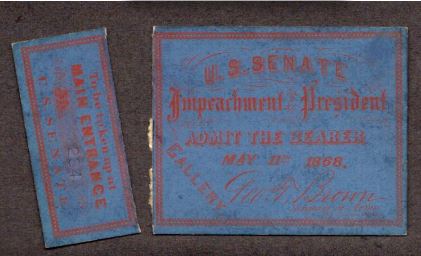
This Amendment was actually created by extortion. It was ratified in 1868 against the opposition of the succeeding President Andrew Johnson following Lincoln’s assassination. Johnson was a southerner and former slave owner who Congress even brought impeachment against because he objected to how the Northern States were treating the Southern States. The extortion took place that the Southern States were denied a right to representation in Congress UNLESS they agreed to the both the Thirteenth & Fourteenth Amendments.
Since then, there have been many cases that step by step held that each and every right, privilege, and immunity applied to the States through this Amendment. Therefore, it should be no surprise that the decision on this holding alone had to be unanimous.
Fourteenth Amendment
Section 1.
All persons born or naturalized in the United States, and subject to the jurisdiction thereof, are citizens of the United States and of the state wherein they reside. No state shall make or enforce any law which shall abridge the privileges or immunities of citizens of the United States; nor shall any state deprive any person of life, liberty, or property, without due process of law; nor deny to any person within its jurisdiction the equal protection of the laws.
…
Section 5.
The Congress shall have power to enforce, by appropriate legislation, the provisions of this article.
The case, Timbs v. Indiana, started with a lawsuit from Tyson Timbs, who pleaded guilty in Indiana to drug dealing and conspiracy to commit theft. After he pleaded guilty, the courts ordered him to forfeit a Land Rover SUV, valued at $42,000, that Timbs had bought with his dad’s life insurance policy. Timbs argued that the seizure was essentially an excessive fine, because it was more than four times the $10,000 maximum fine he could see from his drug conviction under state law. That was the legal question and it involved then the question of whether the Eigth Amendment applied to the States.
A trial court and the Court of Appeals of Indiana sided with Timbs, but the Indiana Supreme Court ruled that the Eighth Amendment doesn’t apply to the states. The US Supreme Court overturned the Indiana Supreme Court’s decision which was self-serving.
Justice Ruth Bader Ginsburg, adds another layer of legal protection for property rights since she delivered the opinion of the Court, in which ROBERTS, C. J., and BREYER, ALITO, SOTOMAYOR, KAGAN, GORSUCH, and KAVANAUGH, JJ., joined. However, GORSUCH, J., filed a concurring opinion. THOMAS, J., filed an opinion concurring in the judgment.
Justice Thomas concurred in the Judgment but stated he disagreed with how the court arrived at that judgment.
“I agree with the Court that the Fourteenth Amendment makes the Eighth Amendment’s prohibition on excessive fines fully applicable to the States. But I cannot agree with the route the Court takes to reach this conclusion. Instead of reading the Fourteenth Amendment’s Due Process Clause to encompass a substantive right that has nothing to do with “process,” I would hold that the right to be free from excessive fines is one of the “privileges or immunities of citizens of the United States” protected by the Fourteenth Amendment.”
JUSTICE GORSUCH, issued only a concurring opinion which is different from concurring in the Judgment.
The majority faithfully applies our precedent and, based on a wealth of historical evidence, concludes that the Fourteenth Amendment incorporates the Eighth Amendment’s Excessive Fines Clause against the States. I agree with that conclusion. As an original matter, I acknowledge, the appropriate vehicle for incorporation may well be the Fourteenth Amendment’s Privileges or Immunities Clause, rather than, as this Court has long assumed, the Due Process Clause.
Indiana attempted to claim that Civil Asset Forfeiture is not protected by the Eighth Amendment. Justice Ginsberg wrote for the Court:
As a fallback, Indiana argues that the Excessive Fines Clause cannot be incorporated if it applies to civil in rem forfeitures. We disagree. In considering whether the Fourteenth Amendment incorporates a protection contained in the Bill of Rights, we ask whether the right guaranteed—not each and every particular application of that right—is fundamental or deeply rooted. Indiana’s suggestion to the contrary is inconsistent with the approach we have taken in cases concerning novel applications of rights already deemed incorporated. For example, in Packingham v. North Carolina, 582 U. S. ___ (2017), we held that a North Carolina statute prohibiting registered sex offenders from accessing certain commonplace social media websites violated the First Amendment right to freedom of speech. In reaching this conclusion, we noted that the First Amendment’s Free Speech Clause was “applicable to the States under the Due Process Clause of the Fourteenth Amendment.” Id., at ___ (slip op., at 1). We did not, however, inquire whether the Free Speech Clause’s application specifically to social media websites was fundamental or deeply rooted. See also, e.g., Riley v. California, 573 U. S. 373 (2014) (holding, without separately considering incorporation, that States’ warrantless search of digital information stored on cell phones ordinarily violates the Fourth Amendment). Similarly here, regardless of whether application of the Excessive Fines Clause to civil in rem forfeitures is itself fundamental or deeply rooted, our conclusion that the Clause is incorporated remains unchanged.
With Justice Samuel A. Alito writing for the majority in McDonald v. Chicago (2010) reasoned that rights that are “fundamental to the Nation’s scheme of ordered liberty” or that are “deeply rooted in this Nation’s history and tradition” are appropriately applied to the states through the Fourteenth Amendment.
The Court held: “Exorbitant tolls undermine other constitutional liberties,” Ginsburg wrote. “Excessive fines can be used, for example, to retaliate against or chill the speech of political enemies.” She added, “Even absent a political motive, fines may be employed ‘in a measure out of accord with the penal goals of retribution and deterrence,’ for ‘fines are a source of revenue,’ while other forms of punishment ‘cost a State money.’”
Because Timbs was not a pure civil forfeiture case, we have not overturned civil forfeiture laws, where police can seize a person’s property without even proving the person was guilty of a crime. They will easily distinguish this saying this is not a fine as in the case of Timbs.












 Centinel2012