Liquidity Crisis


QUESTION: I have attended the last 2 conferences and you have said the “liquidity” in the stock market will become tighter coming into 2020 and that there will be less stocks available to buy. Does that have something to do with this inflow of capital from Europe as people become more aware? I read your article about the Emerging Market crisis with great interest and remembered what you said. Is there more information you can share with us on this topic?

CDH

ANSWER: Since Quantitative Easing has failed, capital was driven into non-traditional investments to simply try to earn income. There were institutions buying farmland just to lease it out to get 5% annual income. Others ran off into Emerging Markets. Spanish banks are heavily invested in Turkey. The problem is that this trend has caused a liquidity crisis insofar as capital has been invested in assets that are not liquid. Add to this corporate buybacks that are reducing the supply of stocks available.
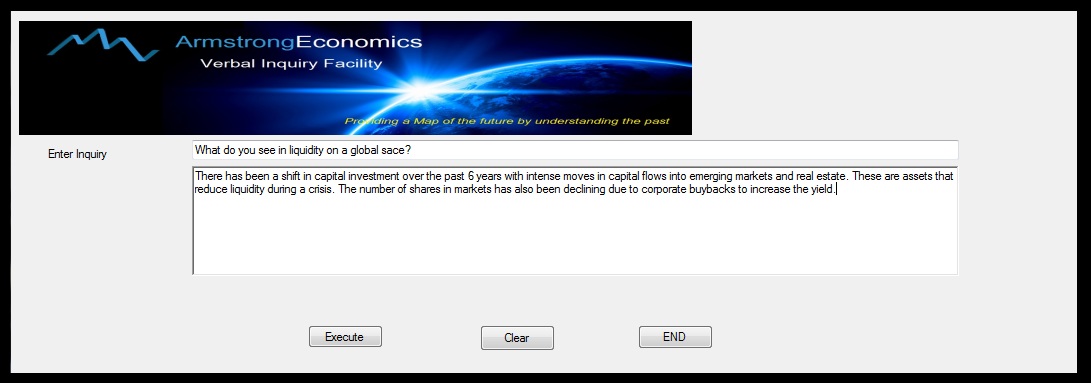
All I can say is thank God for Socrates. There are so many global trends emerging that by themselves are confusing and would be impossible for a standard domestic analysts to forecast from a personal interpretation perspective. The combination of investment shifts into real estate, Emerging Markets, and corporate buybacks have created an interesting risk factor for liquidity during a financial panic.


 

Are 95% of Bitcoin Trades Fake?


QUESTION: Mr. Armstrong; I love the fact you always stand in the middle. Do you believe that 95% of Bitcoin Trading is fake?

Thank you

KL

ANSWER: I did not conduct that study. It does sound a bit high. However, manipulation has been a historical problem in the commodity world. As I stated before, the manipulations were common practice in commodities during the 1970s. It was brought to Wall Street when Phibro took over Solomon Brothers in the early 80s. By 1991, they were charged with manipulating the US government bond market. How did they do that? The very same way these allegations of fake Bitcoin trades are taking place. You put in bids to pretend the market is deep and so you buy ever increasing the price.

Do I personally believe there is fake trading in Bitcoin taking place off-exchange? Absolutely. Would I assume that 95% is fake? I would question that high of a number. I would have to review their criteria for classifying a trade as fake. I would probably place it at the 50%+ level but not 95%. That is just my opinion based upon historical levels of manipulations in commodities.

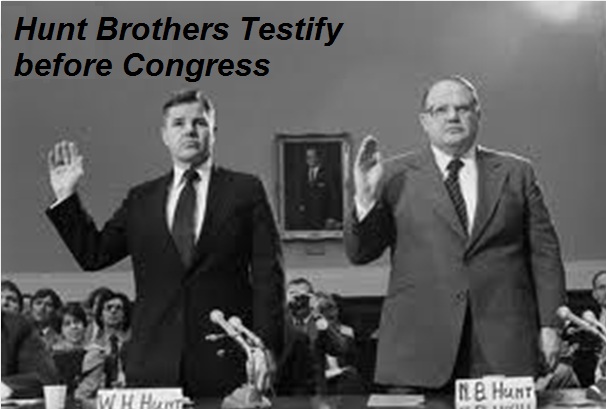
For example, I knew the Hunt brothers as clients in the early 1970s. Only a few months before the high, the world suddenly knew what they were up to. That info was spread by the dealers to get everyone in the retail market to rush in and buy silver with claims it was heading to $100. But the dealers, I believe, bribed the CFTC and the exchange into raising margins to be long on silver and making shorts required to put up a fraction of that margin requirement. The dealers shorted silver, the public lost, and they bankrupted the Hunts. They made so much money that they then began to buy Wall Street.

Inverted Yield Curve Points to Recession?


Last week, the yield on the 10-year U.S. Treasury bill fell below that of the 3-month note for the first time since 2007. This is what everyone calls an Inverted Yield Curve, and is seen as an early indicator of a recession. In that regard, it is conforming to the Economic Confidence Model (ECM) which has been warning that this last leg should be a hard landing economically for most of the world. Nonetheless, while the yield curve has inverted, it has done so in a rather unusual manner. This is NOT suggesting a major recession in the United States. Instead, it is a reflection of global uncertainty outside the USA.

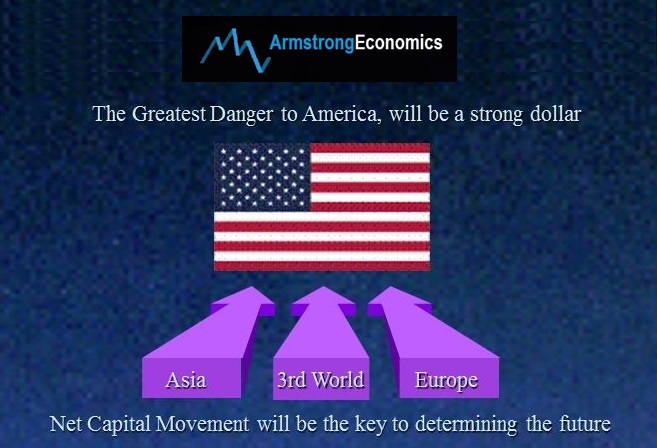
This Inverted Yield Curve is confirming that as the political chaos emerging around the world, and that more and more foreign capital is parking in the dollar. With the May elections on the horizon in Europe, and the October elections in even Canada, April elections in Israel … etc. etc., the capital flows are still pointing ever stronger into the dollar right now. The foreign capital has been buying the 10-year notes driving the spread lower.


We can see that the 10-year premium to the 2-years has been in a major decline ever since our War Cycle turned in 2014. The Yield Curve (10-2yr) has not inverted. This is clearly showing the capital flight to the dollar that has been going on post-2014. This is not reflecting a major recession in the USA, but it is inferring that the ECM will be turning soon