The Hong Kong Dollar Peg – When Will it Break?


Hong Kong’s intervened to support the Hong Kong dollar for the first time since August 2018 after the exchange rate fell to the lower end of its trading band against the greenback. The Hong Kong Monetary Authority bought HK$1.507 billion ($192 million) of their own currency during London and New York trading hours on Saturday.

The Hong Kong dollar peg to the US dollar has come under a lot of pressure. The problem they face is simply that such a peg also imports the inflation or deflation of the currency to which a peg is created. As the Greenback rises in the political-economic sea of international finance, it will become impossible to hold the peg.


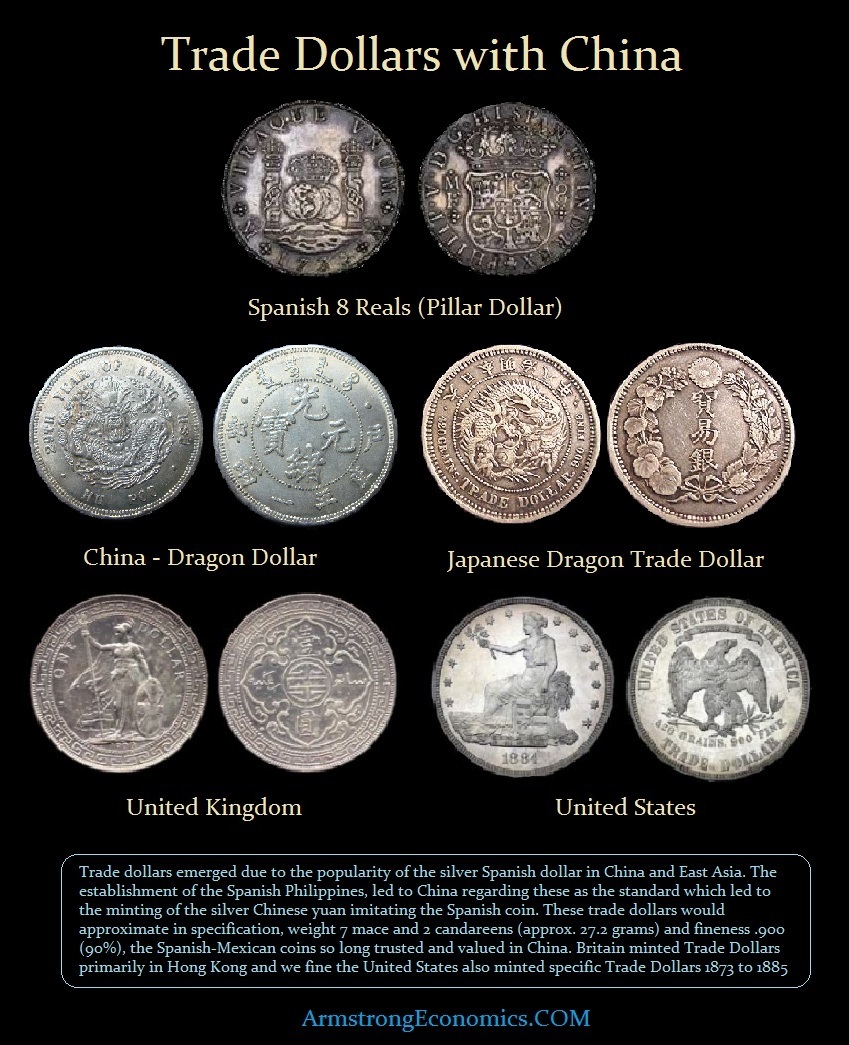
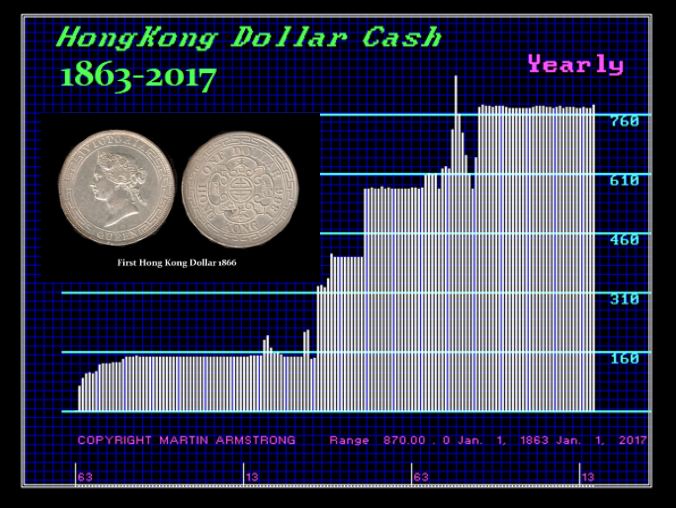
In 1863 the Hong Kong Government declared the silver dollar – then a kind of international currency issued by many nations – to be the legal tender for Hong Kong, and in 1866 began issuing a Hong Kong version of the silver dollar. The silver standard became the basis of Hong Kong’s monetary system until 1935, when, during a world silver crisis, the Government announced that the Hong Kong dollar would be taken off the silver standard and linked to the pound sterling at the rate of HK$16 to the pound.

In 1972, the Hong Kong dollar was pegged to the U.S.dollar at a rate of HK$5.65 = US$1. … Between 1974 and 1983, the Hong Kong dollar floated. On 17 October 1983, the currency was pegged at a rate of HK$7.8 = US$1, through the currency board system.

The problem Hong Kong will face is as the financial crisis in Europe erupts, this will push the Greenback higher. If Hong Kong keeps desperately trying to hold the peg, they will import DEFLATIONand turn their economy down very hard all because of international events. The models we showed at the Singapore Conference targeted 2019 for an important turning point.

Socrates Progress Report


We are progressing in uploading all the memory modules. Soon, we will have all modules plugged in. I had an interesting meeting with one institution. One CFO still questioned if there was any human involvement in the reports. He said that the writing was too good for just a machine and assumed someone had to be editing them. I laughed, and explained with covering over 1,000 instruments currently and about 9,000 more to go, I asked how many people would it take to do that? There cannot be any human involvement for the sheer size of the project would consume probably every person who has ever lived that was interested in analysis.

For example, Socrates will employ technical analysis itself and write its conclusions. Once again, there is no human behind this for it would be impossible to put out over 3,000 individual reports every day using humans. This is what it wrote for the Dow Jones Industrial Index on the daily level.

After the historical high was established during 2018, a major low was created on 12/26/2018 at 2171253 which was 51 days from that major high.

Meanwhile, the Downtrend Line from that major high of 2018 to the subsequent reaction high of 2627782 formed 26 days thereafter resides at 2404847. This had provided the original technical resistance which has been exceeded and can potentially become support going forward. The post high low was established at 2171253. We have not elected the two short-term Bullish Reversals from that important post high low on the daily level but we have elected both the long-term Bullish Reversals.

The more recent Downtrend Line constructed from the last high of 2624142 to the subsequent reaction high of 2615598 stands at 2608763 while drawing a channel provides us with support at 2557422. The market has already penetrated intraday this support provided by the bottom of the channel. However, the market has bounced back and closed above it warning that it is holding right now.

The whole object here is to provide consistent analysis that is FREE from any human bias, conflict of interest, or personal opinion. Here you have Larry Williams stating that they cannot forecast the economy because it is far too complex like the weather.  I believe even our forecasts on the downturn toward cold rather than warm has been correct and it has done so years in advance. ONLY by connecting everything globally can we see the real trend.

It is my hope that Socrates will provide the best management tool for society moving into the future. Kind of like the Biblical story of Joeseph and the Pharoh when he forecast 7 years of plenty followed by 7 years of drought. We cannot alter the cycles in motion and we should not try as Marx and Keynes did. We should understand the trends and prepare thereby living with them in harmony. The weather is turning toward global cooling. This is when disease increases (plagues) set in motion by malnutrition. If we understand the trend, we simply prepare for it instead of blaming everyone else but reality.

The BP Oil Spill was a disaster. However, any company that could show it had a loss in 2008 got in line with their hand out and were paid. They did not have to show any connection to the oil spill that caused their loss. The 2007-2009 economic decline produced losses by itself. There is always someone who has to be blamed.

The Red Tide of 2018 actually disrupted more businesses than the BP Oil Spill. But the Red Tide could not be blamed on a single company with deep pockets. You could not sue God or nature. A simple model on Red Tide demonstrated it was not farmers and chemicals but a 13-year cycle. On top of that, such events extended back to 1648 and predate chemicals or the Industrial Revolution.

While there are people in New York who hate our models because when they have lost big time in their attempts to manipulate markets like 2007-2009, they turn to blame our model claiming we are always too influential. They shift the blame rather than admit that their own corruption has led so many times to blow up the world economy. If we really understood the world and how everything is connected, we could manage the economy far better and even eliminate war which seems to rise as a means to shift blame to someone else when it is often our own governments that skew everything up.

This is what I hope to leave behind.


Socrates’ Forecasts Are Already Identifying the Approach of a New Business Cycle


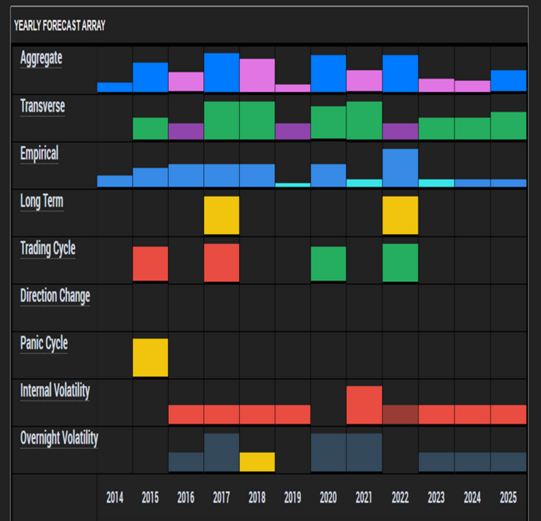
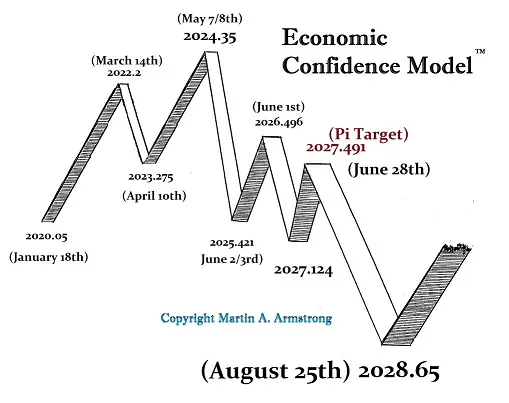
The Socrates’ Array on Vancouver real estate published back in 2015 picked the high in 2017 and the crash into 2019. The high in the top line was forecasting 2017 rather nicely. Note that things begin to change in 2020-2021. Not that prices in real terms rise, but this is lining up with the ECM turn in January 2020 and the start of a new business cycle. This next one will be more dominated by the decline in confidence in government and the rise of political tension that will be worldwide from separatist movements to the fracture of political parties.

No matter where we look, markets are beginning to reflect a new business cycle is approaching. While this will be one of the focuses at the upcoming Rome WEC May 3rd/4th, the shift in global trends is really amazing. We will also be providing a training session on Channel Moves, which in themselves, is rather rare.

World Economy – Which End is Up?


QUESTION: Hey Martin
First of all, great work with the new Socrates. Thank you very much for getting it to us.

You have said that rates are exploding with fed raising rates for the pension funds and because of the lost confidence in government, at least here in Europe.
Am I correct when I take what you have said, as European, to invest in short term US government paper, short term US corporate paper?
That way I won’t get much yield but I get to benefit from the currency also?
Isn’t floating rate paper also good in times like this?

I also get that there is no other place, so the Dow will go up so I want some exposure to that also?
The commodities are bottoming in 2020 so I want to get some exposure to them also?
But how about real estate?

We as small investors don’t have any other choice but REITs, especially apartment REITs and you have talked against them, saying that they are volatile. So is it best to AVOID REITs and that way real estate all together?
Even if it is a hard asset and a inflation hedge? Also as a European it would not hurt to have some USD income?

With the taxes going up and socialists getting in to power all over I guess it is better to invest in accumulating funds instead of distributing ones?
If you could please find the time to comment on this. I know that there are lots of people asking the same questions as I am.

JP

ANSWER: We are all connected. There is no possible way for any country to move counter-trend to the whole. The European Central Bank and the Bank of Japan have destroyed their bond markets. Their stupid idea of Quantitative Easing and lowering rates to zero and negative was under their theory that people would borrow if it was cheap enough. Over the years, I have received calls from banks asking me if I wanted to borrow money. They call because we run high cash balances and have no debt. They always want to lend money to people who do not need it, but that then begs the question, what would I do with it anyway? If you have nothing in mind you want to buy then you are not interested in borrowing. Yes, there are margin loans for investors in shares. But I am talking about borrowing to expand or buy some business. That is what the Central Banks failed to grasp. If there is no CONFIDENCE in the future, you will not borrow at any rate.

The Bank of Japan could simply agree to tear up its federal bonds. That would impact its balance sheet whereas Japanese bonds are not really held outside the country. The ECB, on the other hand, has no such option for the debt it holds is of individual member states since there was never any consolidation of the debt federally. As far as the US Federal Reserve, its holding of federal debt is under 20% of the $22 trillion and 30% of the debt is held by foreign governments with 28% held by interagency. The US could not be saved if the Fed tore up its bonds. It is not enough.

The pension funds are also linked to government debt. Defaulting on government debt would wipe out all pension funds. The interconnectivity is not considered by so many who summarily assume we can just tear it all up.

Rates will rise to start 2020/2021 as the general public begins to see there is trouble in the wind. The Bank of Japan and the ECB have already destroyed their bond markets and there will be no going back. There will be no buyers when they need them. This is why you need to stay short-term as a buyer of debt and if you are a borrower, then lock it in for as long as you can at a fixed rate.
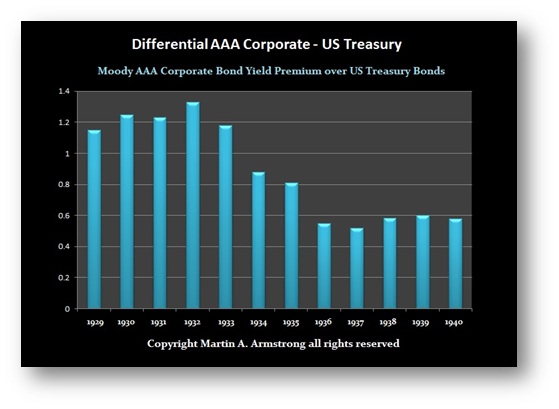
This is a cycle where governments are collapsing. Clearly, stay in the private sector.  Blue-Chip corporate debt SHORT-TERM is better than a government. Even during the Great Depression, AAA corporate debt appreciated. The spread above US Treasury dropped from about 1.3% to 0.5% and the US was the safe haven back then as well. It was Europe which defaulted along with South America and Asia.

Real Estate is not a movable asset so it can be taxed and you cannot leave. They will raise taxes dramatically trying to survive. But governments cannot avoid their collapse for nobody is willing to step up and take decisions for the long-term.

Equities are liquid. This is going to be a game between value and liquidity. Remember! The City of Detroit suspended all debt in 1937. They resumed and paid it off with cheaper dollars in 1963. So they claim they never defaulted. Liquidity is also a top priorit

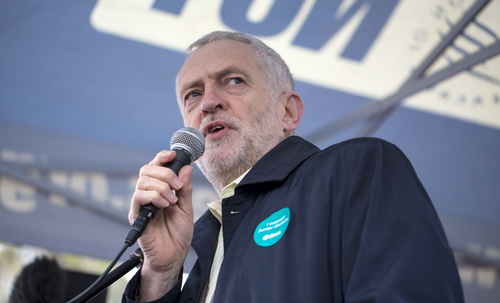
Britain & Labour’s Proposal for a Permanent Customs Union


The leader of the British Labour Party, Jeremy Corbyn, is desperately trying to prevent the Labour Party from fracturing and splitting into two parties. Most Labour Party members want a second referendum in the hope that the people would vote to Remain this time around. Many Labour members remain under the impression that the policy agreed at a conference last year was that the party would support a second referendum if it could not force a general election. However, that policy maintained that as “a public vote” was one of the options that had to remain on the table.

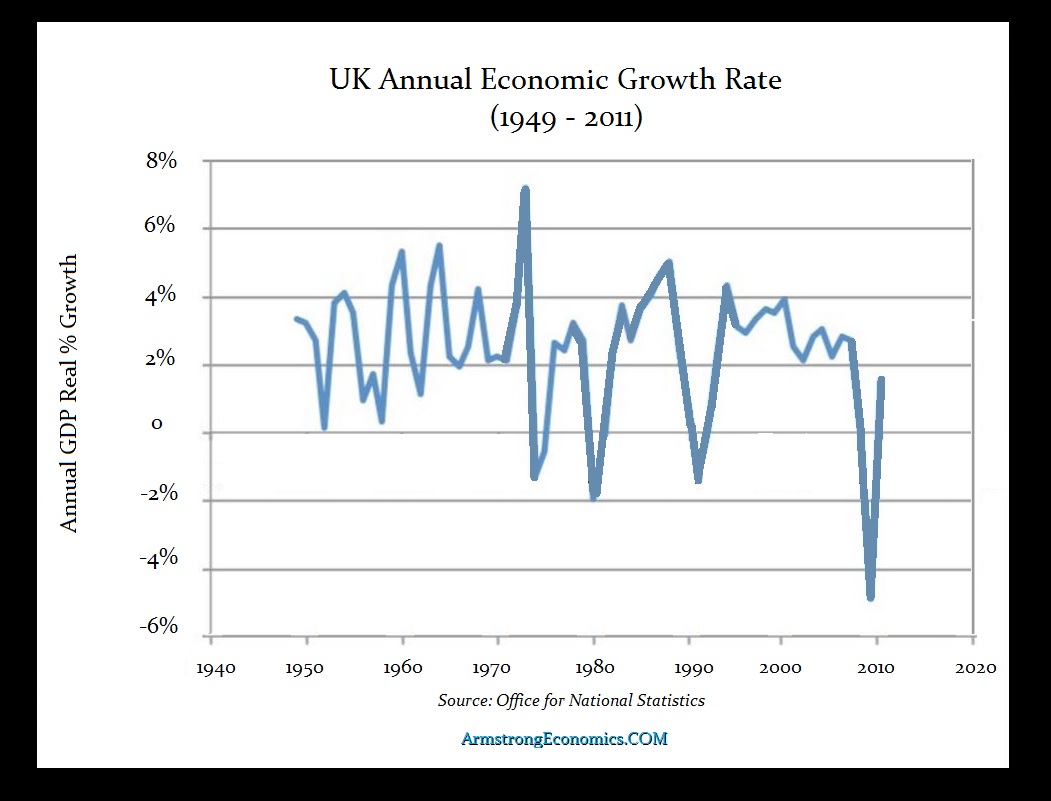
Instead of moving that option to the forefront, Corbyn has abandoned that posture and asked for a permanent customs union – one “that includes a UK say on future EU trade deals.” This means that Labour is proposing a new permanent customs union with the European Union (EU) after Brexit which would allow the UK “a say” in future trade deals. Britain never wins any trade deal anyway and it has witnessed nothing but a declining economic trend ever since it joined the EU.

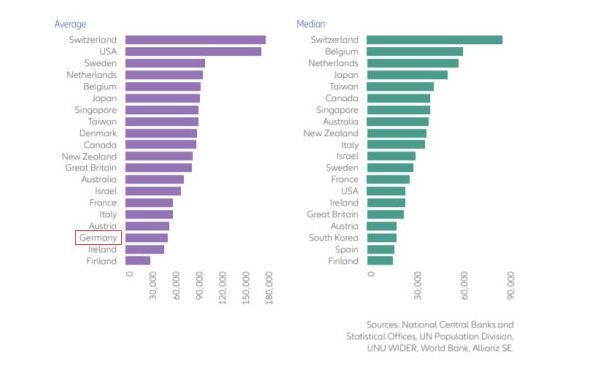
Anyone who would bother to look at trade would immediately see that the EU needs the UK. The biggest market for Germany to sell cars is the UK since it maintains the old-world mercantilist economic model. That means that the UK has a better consumer market that supports Europe – not the other way around. Belgium and the Netherlands have a higher per capita income compared to Britain which is significantly higher than that of Germany. Remaining in the customs union would be a disaster. The UK could not negotiate its own deal with the USA for France would be able to veto it from the start.