Monte Paschi “Scrambles” With Last Minute Capital Increase To Avoid Nationalization


Tyler Durden's picture

Having picked a new prime minister to replace Matteo Renzi, when as reported this morning Italian president Sergio Mattarella asked Foreign Minister Paolo Gentiloni, a loyalist from Renzi’s Democratic Party, to form a new government, the chaos surrounding Italy’s political future appears to be subsiding, which as we said this morning, is welcome news for the future of Monte Paschi, as Italy’s third largest bank may once again avoid a state bailout should enough private investors turn up and inject funds into the failing financial institution, the world’s oldest.

So it comes as no surprise that, facing a third nationalization in just a few years, Bloomberg reports that Banca Monte dei Paschi di Siena plans to step up efforts to win investors for a debt-for-equity swap in the coming days, and will once again press ahead with a €5 billion capital raise to avoid a state rescue that would impose losses on bondholders and shareholders, an outcome the ECB suggested on Friday would be unavoidable absent a private sector rescue.

Bloomberg adds that the bank’s board is meeting Sunday to review a fresh offer for note holders that would allow more retail investors to participate after money managers already swapped €1.02b, although it remains unclear why more investors would take on the bank’s offer.

Following the swap, a stock sale to an anchor investor and a public share placement would follow, to complete the full capital raise.

Meanwhile, Reuters writes that Monte Paschi was “scrambling on Sunday to thrash out a last-ditch plan to raise €5 billion on the market by year-end after the European Central Bank refused to give it more time to recapitalize.” Rome is ready to intervene with an emergency decree to rescue the bank if needed, a government source said on Friday. Such an intervention would impose losses on bondholders as per European bail-in regulations.

As Bloomberg has now confirmed, the eleventh-hour private solution being drawn up by the bank, advised by JPMorgan and Mediobanca, involves reopening a debt-to-equity swap offer to 40,000 retail investors holding 2.1 billion euros of the bank’s subordinated bonds, but this needs the approval of market watchdog Consob. The initial offer, which raised 1 billion euros from institutional investors, had been deemed too risky for the vast majority of ordinary investors.

A major wildcard is whether Qatar, long seen as an anchor investor would provide as much as €1 billion in fresh capital. Under the plan, Qatar’s sovereign wealth fund could put in another 1 billion euros, while a consortium of banks would try sell shares for the remainder in the market but without underwriting the issue, a senior banking source said.

As Monte dei Paschi’s board met on Sunday, a source close to the board said the fact that Gentiloni had been asked to form a government gave the bank confidence it could still pull off the privately funded capital raise. “There’s still time. Qatar is in the game and available to put in the amount that is being talked about,” the source said.

The Reuters source added the bank had been in contact with Consob since Friday to discuss the reopening of the debt swap, a politically sensitive move that could expose the lender and the market watchdog to accusations of bending the rules.

Some more details:

  Another source said no decision would be taken before the ECB formally communicates its rejection of the bank’s request for an extension, which should happen early this week. According to the senior banker, the lender would argue that under European rules, retail investors risked losing all their money if the state had to intervene, so they would be better off converting their bonds.

The bank’s fate is a political hot potato in Italy.

The Monte Paschi rescue has become a political hot potato topic: Luigi Di Maio, a leader of the anti-establishment 5-Star Movement that is ahead in opinion polls, said on Sunday the bank should be nationalized while accusing Renzi’s Democratic Party (PD) of using the crisis to rebuff calls for snap polls and justify the need for a quick, unelected government.

PD Chairman Matteo Orfini said: “The market solution is the best. Should it not succeed, the bank must be stabilized while respecting EU rules.”

That said, if indeed the flux surrounding the fate of the Italian government has been resolved, Monte Paschi may just have avoided yet another nationalization if only for the time being. As for Qatar making any return on its €1 billion investment, funds which will promptly be soaked up by even more bad debt losses, we wouldn’t hold our breath.

Trump Reignites China Diplomatic Spat, Says Not Bound By “One China” Policy


Tyler Durden's picture

While the domestic US audience was focused on what Trump would say about the latest scandal of alleged Russian intervention in the US presidential elections, which as a reminder, he called “ridiculous” and suggested that democrats are behind the report, China was more curious by Trump’s foreign policy thoughts, which may have sparked yet another diplomatic spat, because one week after Trump snubbed America’s long-running “One China” policy, today the President-elect questioned whether the United States had to be bound by its long-standing position that Taiwan is part of “one China” and brushed aside Beijing’s concerns about his decision to accept a phone call from Taiwan’s president.

“I fully understand the ‘one China’ policy, but I don’t know why we have to be bound by a ‘one China’ policy unless we make a deal with China having to do with other things, including trade,” Trump said. Trump’s decision to accept a congratulatory telephone call from Taiwan President Tsai Ing-wen on Dec. 2 prompted a diplomatic protest from Beijing, which considers Taiwan a renegade province.

Following Trump’s decision to nominate Iowa Governor Terry Branstad as the next U.S. ambassador to China, choosing a long-standing friend of Beijing after rattling the world’s second largest economy with tough talk on trade and the call with the leader of Taiwan, pundits thought that Trump would moderate his diplomatic outbursts vis-a-vis China. However, in the Fox interview, Trump brought up a litany of complaints about China which he had emphasized during his presidential campaign, and which may provoke an fresh bout of harsh criticism from China.

We’re being hurt very badly by China with devaluation, with taxing us heavy at the borders when we don’t tax them, with building a massive fortress in the middle of the South China Sea, which they shouldn’t be doing, and frankly with not helping us at all with North Korea,” Trump said. “You have North Korea. You have nuclear weapons and China could solve that problem and they’re not helping us at all.”

Here, contrary to Trump’s allegations, over the past two years China has been doing everything in its power to prop up its rapidly devaluing currency, which recently hit record lows against the dollar as a result of ongoing capital flight by domestic depositors who are scrambling to park their savings offshore realizing just how insolvent local financial institutions are.

The President-elect further criticized China over its currency policies, its activities in the South China Sea and its stance toward North Korea and said it was not up to Beijing to decide whether he should take a call from Taiwan’s leader.

“I don’t want China dictating to me and this was a call put in to me,” Trump said. “It was a very nice call. Short. And why should some other nation be able to say I can’t take a call?”

“I think it actually would’ve been very disrespectful, to be honest with you, not taking it,” Trump added.

Trump  questioning of long-standing U.S. policy risks antagonizing Beijing further and analysts have said it could provoke military confrontation with China if pressed too far. As of early noon Eastern time – and thus late at night in China’s capital – Beijing had no comment on Trump’s remarks.

The call with Trump was the first such contact with Taiwan by a U.S. president-elect or president since President Jimmy Carter switched diplomatic recognition from Taiwan to China in 1979, acknowledging Taiwan as part of “one China.” Taiwan is one of China’s most sensitive policy issues, and China generally lambastes any form of official contact by foreign governments with Taiwan’s leaders.

After Trump’s phone conversation, the Obama administration said senior White House aides had spoken with Chinese officials to insist that Washington’s “one China” policy remained intact. The administration also warned that progress made in the U.S. relationship with China could be undermined by a “flaring up” of the Taiwan issue. Following Trump’s latest comments, a White House aide said the Obama administration had no reaction beyond its previously stated policy positions.

* * *

Meanwhile, as Trump postures in an attempt to jockey the greatest possible diplomatic leverage in his negotiations with China, and drums on about ending free-trade agreements, China is widening its economic footprint in the U.S. backyard: Latin America.

As Bloomberg notes in its daily Macro piece, the region has long been thought of by the U.S. as under its umbrella of influence. President Teddy Roosevelt famously used the phrase “speak softly, and carry a big stick” emphasize region hegemony in the Americas.

But the world is shifting. With U.S. influence waning, China is carrying a big carrot: trade. President Xi paraded through Latin America in November, boosting trade ties, and a few days ago the state-owned oil behemoth CNOOC purchased a deep-water oil block in Mexico. As the Middle Kingdom’s economy shifts to a larger middle class and more consumption, demand for agriculture produce is expected to increase on top of an already strong desire for metals and oil, which have been the staple exports from South America over the last decade.

The benefits will spread unevenly across the region with countries such as Brazil, Chile and Peru will likely continue to profit more from China trade (Sorry Mexico, China probably won’t bail you out from Trump shocks). Brazil and Chile already run sizable trade surpluses with China. Their top exports are, unsurprisingly, raw materials and agricultural products.

In 2009, China overtook the U.S. to become Brazil’s biggest trade partner. Now, Brazil runs a $24 billion trade surplus with China, bigger than its total surplus last year.

Half of Chile’s exports are copper and related products, mostly bought by China. During Xi’s fall visit, the two countries agreed to begin talks to upgrade their free-trade agreement signed a decade ago.

While others benefit, Mexico will likely be left mostly on the sidelines, given its limited agriculture exports and falling oil output, at a time when it faces possible trade restrictions from the U.S., which buys more than three- fourths of its exports. Mexico has pumped out less and less crude oil during the last few years amid turmoil at state-owned Pemex. Scant Chinese interest in Mexican exports and a strong appetite for “Made in China” goods have contributed to a $22 billion trade deficit.

Although it opened up its energy sector to foreign investors last year, Mexico needs more funding and better technology to boost output and exports over time. Also, its industrial prowess and access to the U.S. may attract Chinese exporters looking to cut costs, but only when the fate of NAFTA becomes more certain.

* * *

There was a time when China felt hedged in by the economic might of the U.S., but with America’s influence in Asia also starting to slip, the tables could be set to turn.

Trump should be careful how far he pushes Beijing, even if it is only with rhetoric.

Trump Blames Democrats For “Ridiculous” Russia Hacking Report


Tyler Durden's picture

Speaking to Fox News’ Chris Wallace on Sunday morning, the President-elect blasted the Friday night Wapo report that a secret CIA assessment concluded Russia intervened in the U.S. presidential election to help him win the presidency.

“I think it’s ridiculous. I think it’s just another excuse. I don’t believe it,” the president-elect said in an interview that aired Sunday on Fox News Sunday. “I don’t know why and I think it’s just — you know, they talked about all sorts of things.”

“Every week it’s another excuse. We had a massive landslide victory, as you know, in the Electoral College,” referring to his 306-232 edge.

“If you look at the story and you take a look at what they said, there’s great confusion. Nobody really knows, and hacking is very interesting,” Trump said. “Once they hack if you don’t catch them in the act you’re not going to catch them. They have no idea if it’s Russia or China or somebody. It could be somebody sitting in a bed some place. I mean, they have no idea.”

He blamed Democrats for putting out the media reports and said he did not believe they came from the Central Intelligence Agency. “I think the Democrats are putting it out,” he said in the interview. When asked if he thinks the CIA is trying to overturn the election results, Trump said during the Fox News interview he doesn’t think “they’re saying anything.”

Trump went so far as to asset that Democrats are upset “because they suffered one of the greatest defeats in the history of politics in this country.” Later, he told Wallace that those leaks “could be” politically motivated because “they’re very embarrassed.”

Shortly before the interview with Trump aired on Sunday, a bipartisan group of senators described the Russia interference reports as serious.

“For years, foreign adversaries have directed cyberattacks at America’s physical, economic, and military infrastructure, while stealing our intellectual property. Now our democratic institutions have been targeted. Recent reports of Russian interference in our election should alarm every American,” Sens. John McCain, R-Ariz.; Lindsey Graham, R-S.C.; Chuck Schumer, D-N.Y.; and Jack Reed, D-R.I., said in a statement.

“… Democrats and Republicans must work together, and across the jurisdictional lines of the Congress, to examine these recent incidents thoroughly and devise comprehensive solutions to deter and defend against further cyberattacks. This cannot become a partisan issue. The stakes are too high for our country.”

The source of the anonymous information given to the Post, Trump said: Democrats upset “because they suffered one of the greatest defeats in the history of politics in this country.” Later, he told Wallace that those leaks “could be” politically motivated because “they’re very embarrassed.”

Meanwhile, just one day after the Senate passed the “Countering Disinformation and Propaganda Act“, President Barack Obama ordered a “deep dive” into the cyberattacks, which targeted Hillary Clinton’s campaign chairman John Podesta and the Democratic National Committee, among other victims. The president has asked for a final report before he leaves office next month, and Trump on Sunday endorsed Obama’s effort to get to the bottom of the hacking that plagued the 2016 election.

“I want it, too. I think it’s great. I think — well, I don’t want anyone hacking us, and I’m not only talking about countries. I’m talking about anyone, period,” Trump said of the investigation ordered by Obama. “But if you’re going to do that, I think you should not just say ‘Russia.’ You should say other countries also, and maybe other individuals.”

Trump’s full interview below:

Why Europe Must End In Tears


Tyler Durden's picture

Submitted by Alasdair Macloed via GoldMoney.com,

The latest consequence of economic mismanagement in Europe was the failed attempt at constitutional reform in Italy this week.

The Italian people have had enough of their government’s economic failure, and is refusing to give it more power.

The EU and the euro project have been an economic disaster for all participants, including Germany, which will eventually be forced to write off the hard-earned savings she has lent to other Eurozone members. We know, with absolute certainty, that the euro will self-destruct and the Eurozone will disintegrate.

We know this for one reason above all. The political class and the ECB are guided by economic beliefs – I cannot dignify them by calling them reasoned theory – which will guarantee this outcome. Furthermore, they insist on using statistics that are incorrect for the stated function, the best example being GDP, which I have criticised endlessly and won’t repeat here. Furthermore, the numbers are misrepresented by government statisticians, CPI and unemployment figures being prime examples.

This article takes a column written by William Hague for the Daily Telegraph published earlier this week to illustrate the depths of misunderstanding even a relatively enlightened politician suffers, with this mix of nonsense and statistical propagandai. This article also refers to a speech delivered this week in Liverpool by Mark Carney, Governor of the Bank of England, showing how out of touch with reality he is as well. Many of his and Lord Hague’s misconceptions are shared by almost everyone, so for the most part go unnoticed.

Lord Hague basically blames the euro for all Europe’s ills: “…… it has made some countries, like Italy and Greece, poorer while others get richer”, he opines, and it is certainly a common sentiment. But it is never the currency that’s to blame, but those that attempt to use it to achieve policy outcomes, and inevitably fail in their quest.

Before the euro came into existence, different currencies offered different interest rates, reflecting the market’s appraisal of lending risk. So, the Greek government, borrowing in drachmas, would typically have to pay over 12% interest, while Germany might pay 3% for the same maturity in marks. The fact that there were differing rates in different currencies imposed market discipline on borrowers.

After the introduction of the euro, interest rates for sovereign borrowers converged towards the lowest rate, which was Germany’s. The reason for this was banks could gear up their lending in the bond and money markets to make easy money from the spread between German rates and the others, risk-free on the assumption that the whole caboodle was guaranteed by the EU and the ECB. It was perfectly reasonable to expect this outcome, but whether the panjandrums in Brussels were smart enough to know this would happen is not clear. If they were, they displayed ignorance of the eventual consequences, and if not, they were simply ignorant, full stop.

These same operatives bent the rules they themselves had originally set to allow countries to join the euro. Under the Maastricht Treaty, budget deficits were to have been less than 3% and government debt to GDP less than 60% for a state to qualify for membership. Neither Germany nor France qualified at the outset. And when it came to Greece, the Greek government simply lied, with the full knowledge and encouragement of the other members. No, Lord Hague, it was the policy makers that were at fault, not the currency itself.

But he continues: “Membership of the euro has put the Italians on a permanent path to being poorer”. Not so. It was the Italians who used cheap euro-denominated money to borrow profligately. They, and they alone are responsible for the mismanagement of their economy and their debt problems, which incidentally now exceed the Maastricht 60% limit by a further 75%.

So, who is policing that?

Lord Hague also trots out the canard about how the euro benefits Germany: “Germans keep exporting easily and running up a surplus, while the Italians struggle and go deeper into debt”. This statement in quotes is undoubtedly true on face value, but it is wrong to blame the poor euro. Instead, the blame lies with fiscal imbalances, relative rates of bank credit expansion, and the additional horror of TARGET2. This last artifice is intended to even out the monetary imbalances that would otherwise occur from trade imbalances. But its designers seem to have been completely unaware that the only way trade imbalances can be controlled is through the money shortages and accumulations that result from trade deficits and surpluses respectively. Instead, TARGET2 makes good the money deficiency that results from excess imports, and reduces the money surplus that accumulates in the hands of the exporters. It recycles the money spent by Italians so that it can be spent again, or even hoarded outside Italy, ad infinitum. TARGET2 is living proof of the ridiculousness behind the euro project.

Lord Hague provides an exception to his argument and conclusion, by citing Germany’s greater productivity and suggesting that the only way out was for Mr Renzi to enact bold reforms to raise Italian productivity to the same level as Germany’s. He doesn’t say what these reforms might be. I can tell him: the new government should downsize from 52% of GDP to less than 40%, the lower the better. The redeployment of capital from government destruction to private sector progression will work wonders. Tax policies should favour savers. At the same time, ordinary Italians should be allowed to get on with their lives and made to understand the state is not there to support them with handouts.

Finally, Lord Hague’s conclusion, while correct legally, is incorrect from a strictly economic point of view. He states that leaving the euro is a far more difficult problem than leaving the EU, there being no Article 50 to trigger. He implies that if Italy simply returns to the lira, there can be little doubt that it will rapidly collapse taking its banks with it, because Italy’s creditors will still expect to be repaid in euros while the cost of borrowing in lira is bound to increase rapidly, undermining government finances.

However, contrary to everything Keynesians have been taught and in turn teach gullible students, the economic objective of monetary independance should be sound money, not continual depreciation. Italy has enough gold to arrange a gold exchange standard for herself, or alternatively she could run a currency board with the euro, to ensure the lira retains value for foreign creditors. Either course requires something novel from Italian politicians: they must bite the bullet on government finances and permit capital to be redeployed from moribund businesses to new dynamic entrepreneurial activities. It can be done, and Italy would rapidly emerge as a new industrial force.

But will it be done? Sadly, there’s not a snowball in hell’s chance, and here we must agree with Lord Hague. In common with their opposite numbers everywhere else, Italian politicians have surrounded themselves with economic yes-men, trained at the expense of the state to justify state interventions in the economy. It has become a feed-back loop that ultimately concludes with economic instability, crisis and eventual collapse.

Carney’s groupthink

Lord Hague, while respected as a senior British politician is at least not involved in Italy’s monetary or fiscal policies. Far more dangerous potentially is someone with his hand on the monetary tiller, Mark Carney, Governor of the Bank of England. This week he made a speech in Liverpool, which put the blame for the failure of his monetary policies on everyone but the Bankii. He said politicians need to foster a globalisation that works for all. Really? How are they going to do that? He blames economists for been at fault for not recognising “the realities of uneven gains from trade and technology”. But surely, we all know that establishment economists, including the Bank’s own, have an unrivalled track record of getting things wrong. To expect them to suddenly exhibit forecasting prescience is Carney’s personal triumph of hope over reality. Carney berates companies for not paying tax. This is the classic “someone else’s fault” line, and ignores the easily proven fact that money deployed by the private sector in pursuit of profit is productive, while giving it to government is wasteful. More tax paid may be desired by the state, but it is anti-productive.

The Governor then claims the Bank’s monetary policy has been “highly effective” and that “the data do not support the idea that the period of low rates has benefited the wealthy at the expense of the least wealthy.” He has obviously been unable to make the connection between the falling purchasing power of fixed salaries for the low paid and for pensioners relying on interest income, while stock markets roar to all-time highs on the back of suppressed interest rates and injections of money through quantitative easing. Yes, Mr Carney, my middle-class friends have done very well out of their investments and property, thanks to monetary inflation, but they still pay their gardeners and maids roughly the same depreciated wages.

This is relevant not only to the mismanagement of the UK’s economy, but also that of Europe. Carney attracted considerable criticism, rightly, for falsely threatening economic hell and damnation in the event of a vote for Brexit. This presupposes that everything in Europe is considerably better than for Britain on its own, and confirms that his opposite numbers in Europe, who were pushing the same line, have as much grasp of the economic situation as he has. Carney got this as wrong as he possibly could, but there’s no mea maxima culpa.

If Mr Carney and Lord Hague want to criticise current economic events, they should start by properly understanding the negative effects of fiscal and monetary intervention. They should realise that propping up defunct enterprises by lowering the cost of borrowing and supporting them with government contracts is Luddite and destructive. And above all, they should realise that ordinary people going about their business are infinitely adaptable, have an ability to withstand government and central bank silliness to a remarkable degree, and would deliver their taxes much more effectively if they were simply allowed to just get on with their business without having to suffer from government and central bank micro-management.

Europe’s top negotiator wants to offer Brits EU citizenship as individuals after Brexit


If you do this you will have to pay EU taxes!

Lost and found: Japan tags dementia sufferers with barcodes


When will it we everyone?

KOMMONSENTSJANE – GEERT WILDERS FOUND GUILTY OF DISCRIMINATION BUT NO FINE OR JAIL TIME


Dutch firebrand Geert Wilders found guilty of discrimination Jan Hennop December 9, 2016 Schiphol (Netherlands) (AFP) – Populist anti-Islam Dutch MP Geert Wilders was found guilty on F…

Source: KOMMONSENTSJANE – GEERT WILDERS FOUND GUILTY OF DISCRIMINATION BUT NO FINE OR JAIL TIME

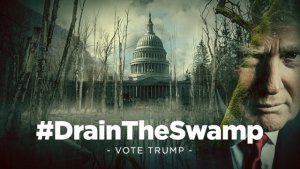
trump-drain-the-swamp12111111111111211111111111111111111111211111111111111111111111111

Polls in Netherlands Show Political Upset in the Wind


Geert Wilders

Geert Wilders’ Freedom Party soars ahead in polls and would win if the election were held today in the Netherlands. The political world is still in denial. Discussions circulating on Capital Hill are taking the route that Reagan was an outsider, so they just have to train Trump how this has to be done. Around the world, the political elite just do not get it. This is not a trend in a single country that can be analyzed from domestic rhetoric. We are in the middle of a global upheaval for this is a PRIVATE WAVE and we will see government be rejected more and more as we head into 2032.

1844 Phila Nativism Riot Againt Irish

This is not racism. This is standard anti-immigrant. The riot against the Irish in Philadelphia in 1844 was a gun battle. That was the sovereign defaults of states and an economic decline. People naturally begin to blame immigrants for working cheaper and taking jobs. The Irish were white. So there was no racist issue. It was plain economics.

The Power to Manipulate is a Delusion


ft-1998

QUESTION:

Hello Martin,

every day I read your blog. Today was about All Roads Lead to the Dollar and manipulation:

First you say that the system cannot be manipulated:
(“the system, which is crumbling before our eyes, cannot be manipulated. This is why BREXIT, Trump, and now Hollande in France are stepping out and Italy rejected the EU referendum. The cycle has changed and all of this is beyond government or banks to control the outcome. They are not intentionally doing this, for they cannot even understand human behavior no less manipulate it.

But then your say:
“Trump took it to the people the elite just assumed were sheep to be manipulated. Trump showed that the silent majority are starting to demand they be heard”.

So it seems a bit of a contradiction?

If I try to connect the dots together, it forms this:

The system can be manipulated by “the elite” (government, big coorporations etc) to a certain extent.
That is, UNTIL humans are fed up.
This is predictable human behaviour (enough is enough, fed up with corruption, many examples in history, so measurable and predictable).
THEN, when people had enoug, THE CYCLE CHANGES.

Is this correct?

Kind regards, and I am very thankful for your education.

Kind regards, C

ANSWER: Part of the cycle is that the general public allows the government to become corrupt because we do not hold them accountable. It is not that the elite successfully manipulate society; it is more that society is complacent, and when it finally gets bad, they respond as they just did with Trump, BREXIT, and in Italy. People like Hillary have been scamming the system the entire time. To them, they think, “Well no one said anything when we stole $1,000, $10,000, and then $100,000, so why are they angry when I take $1 million?”

What I mean insofar as the system cannot be manipulated, is that nobody can alter the major trend against the cycle. The people will allow corruption up to a point. But those in power cannot manipulate it to the extent that they are capable of preventing the uprising; i.e. Tiananmen Square 1989. Even China and Russia learned that lesson where the socialist/Marxist agenda is to subjugate one group for the pleasure of another.

The elite and bankers can assume they have the power to manipulate, but they are just fools; drunk with their own importance. When they were wrong, and our forecasts were correct, like the collapse of Russia in 1998 which resulted in the Long-Term Capital Management collapse, they said I manipulated the world economy because I had more people than they did and my clients won while they lost. They judged me by what they were trying to do — rig the game. So in other words, they would have won, but for me. That was really absurd, but understandable when someone is drunk with power. Blaming me relieved them of failing to manipulate the system to prevent the crash. They preferred to assume I had more people than they did so the solution was eliminate me. They even went to the extent of then claiming I stole the idea of Pi from a movie that came out in 1998 in Australia. They even lied about the timeline and assume people are stupid and won’t bother to look at dates. I suppose I also had a time machine, when forward, and then took it back to 1985. They will say whatever they need to to try to discredit people to further their own power.

When Goldman Sachs had a programmer they accused of stealing their code, they warned that this was dangerous for he could manipulate markets. Of course, they would NEVER do such a thing. They only do “God’s work.” Every commodity has been manipulated within the trend for short bursts. It never is enough to change the major trend. They take their profit and then run to the next. They DO NOT manipulate markets systemically like suppressing gold to help the Fed or whatever. Those ideas are even more off the planet. They play markets for a quick profit – in out – goodbye.

The power that be in New York City could not prevent the crash in 2007 despite the fact that own all the regulators, politicians, and the courts. Even Goldman Sachs needed to be bailed out. So the all-powerful was not so powerful after all was said and done.

credit-anstalt

This is why I say nobody can manipulate the business cycle to prevent anything from Russia, China, to the Fed and the bankers. The cycle rules and that, with time, will end the illusion that they are in charge. When it does, things will crumble. When Credit Anstalt failed in 1931 in Austria, it began the banking meltdown.  In the United States, 9,000 banks failed during the decade of the 30s. It’s estimated that 4,000 banks failed during the one year of 1933 alone. By 1933, depositors saw $140 billion disappear through bank failures. Why did the Austrian bank failure set off a global crisis? One of the shareholders was the Rothschilds. When that failed, the idea that the elite are above everything crumbled to the ground in dust. We will see the very same thing happen this time around.

fates

So beware. The downside of this conspiracy theory that these people at the top can manipulate society comes with a price – when it crumbles, the confidence vanishes and people are rudely awakened by the fact that nobody is in charge. We are at the judgment of fate. Therefore, you are correct. When the people had enough, the cycle changes.

Rolling Back the Empire: Washington’s Proxy-Army Faces Decisive Defeat in Aleppo


All these deaths are directly traceable to Obama and Hillary and their failed foreign policy i.e. the Arab Spring!