ECB Stuns Markets, Announces Tapering Of Bond Purchases To €60 Billion


Tyler Durden's picture

That Reuters trial balloon was right.

In an unexpected, to the conesnsus, announcement, Mario Draghi turned hawkish after all, and while the ECB kept all rates unchanged, it announced that it would effectively taper its bond purchases from €80 billion to €60 billion starting in April 2017 until the end of the year: “From April 2017, the net asset purchases are intended to continue at a monthly pace of €60 billion until the end of December 2017, or beyond, if necessary, and in any case until the Governing Council sees a sustained adjustment in the path of inflation consistent with its inflation aim.”

However, the ECB hedged, and also added that “if the outlook becomes less favourable or if financial conditions become inconsistent with further progress towards a sustained adjustment of the path of inflation, the Governing Council intends to increase the programme in terms of size and/or duration.

So tapering, but conditional on the market not falling apart; should risk return, the ECB will return to the familiar program of €80 billion per month, or more.

Additionally the ECB suggested that it will address bond scarcity and expand the scope of eligible bonds, saying that “to ensure the continued smooth implementation of the Eurosystem’s asset purchases, the Governing Council decided to change some of the parameters of the APP, which will be communicated at today’s press conference and in a separate press release.”

Full press release:

Monetary Policy Decisions


At today’s meeting the Governing Council of the ECB decided that the interest rate on the main refinancing operations and the interest rates on the marginal lending facility and the deposit facility will remain unchanged at 0.00%, 0.25% and -0.40% respectively. The Governing Council continues to expect the key ECB interest rates to remain at present or lower levels for an extended period of time, and well past the horizon of the net asset purchases.


Regarding non-standard monetary policy measures, the Governing Council decided to continue its purchases under the asset purchase programme (APP) at the current monthly pace of €80 billion until the end of March 2017. From April 2017, the net asset purchases are intended to continue at a monthly pace of €60 billion until the end of December 2017, or beyond, if necessary, and in any case until the Governing Council sees a sustained adjustment in the path of inflation consistent with its inflation aim. If, in the meantime, the outlook becomes less favourable or if financial conditions become inconsistent with further progress towards a sustained adjustment of the path of inflation, the Governing Council intends to increase the programme in terms of size and/or duration. The net purchases will be made alongside reinvestments of the principal payments from maturing securities purchased under the APP.


To ensure the continued smooth implementation of the Eurosystem’s asset purchases, the Governing Council decided to change some of the parameters of the APP, which will be communicated at today’s press conference and in a separate press release.


The President of the ECB will comment on the considerations underlying these decisions at a press conference starting at 14:30 CET today.

Frontrunning: December 8


Tyler Durden's picture
  • Draghi Expected to Lay Out Plans for More ECB Stimulus (WSJ)
  • Bonds Fall as Investors Turn Wary on ECB Stimulus; Euro Gains (BBG)
  • European Stock Traders Look to Draghi to Break Santa Curse  (BBG)
  • Trump to nominate Pruitt to lead U.S. environmental agency (Reuters)
  • Trump’s choice of China envoy a positive sign for ties, Xinhua says (Reuters)
  • Syrian Rebels Pin Hopes on Trump (WSJ)
  • Trump Pick of EPA Foe to Lead Agency May Spark Senate Fight  (BBG)
  • Russia Sells Stake in Oil Giant Rosneft to Glencore, Qatar (WSJ)
  • The Return of Glencore’s Dealmaking King (Bloomberg)
  • Italian bank Intesa to help fund Rosneft deal for Glencore and Qatar (Reuters)
  • Sovereign-Wealth Funds Buy Stake in U.K. Gas Business (WSJ)
  • Monte Paschi Seeks ECB Reprieve as It Tries to Escape Bailout (BBG)
  • Vietnam dredging on South China Sea reef (Reuters)
  • Deutsche Bank May Have Rigged Index in Paschi Deal, Audit Shows (BBG)
  • Eyeing upswing, more U.S. oilfield service firms restructure (Reuters)
  • Michael Jordan Scores China Legal Victory for His Chinese Name  (BBG)
  • How Trump’s Web of Businesses Obscures Potential Conflicts (WSJ)
  • Facebook’s Investors Criticize Marc Andreessen for Conflict of Interest (BBG)
  • Merkel Sticks to Middle Ground in Risky Pitch for German Votes  (BBG)
  • China’s Banks Are Hiding More Than $2 Trillion in Loans (WSJ)
  • Facebook’s Investors Criticize Marc Andreessen for Conflict of Interest  (BBG)

Overnight Media Digest

WSJ

– U.S. stocks posted their biggest rally since the election, sending major indexes to fresh records as investors increasingly conclude President-elect Donald Trump will be good for business and the economy. http://on.wsj.com/2h8mFLj

– The CEOs of AT&T Inc and Time Warner Inc on Wednesday defended their proposed $85 billion merger to lawmakers, trying to navigate a tricky political landscape in which President-elect Donald Trump has expressed hostility to the deal. http://on.wsj.com/2hjV7yR

– President-elect Donald Trump on Wednesday chose Oklahoma Attorney General Scott Pruitt to lead the Environmental Protection Agency, according to a transition official, turning to a climate-change skeptic and sharp critic of the agency to take its helm. http://on.wsj.com/2gbVAae

– Rampant use of an accounting sleight of hand means Chinese banks don’t have to set aside capital to cover potential losses, sowing fears of a crisis. http://on.wsj.com/2hkJhV0

– President-elect Donald Trump turned to a third retired military officer to help him run the country when he takes office in January, a move that represents an unusual level of military influence in the executive branch. http://on.wsj.com/2hlLn7r

– Passage of legislation aimed at speeding up Food and Drug Administration approvals, combined with an incoming president who has pledged to “cut red tape” at the agency, is expected to usher in a new, more industry-friendly era of drug and device regulation. http://on.wsj.com/2h7fbbb

– Syrian rebels on Wednesday proposed a civilian evacuation and negotiations over the future of Aleppo, a stark admission the opposition is all but defeated in a divided city seen as a bellwether in the country’s nearly six-year war. http://on.wsj.com/2gb850P


NYT

– The Russian government announced Wednesday that it will sell nearly 20 percent of its state oil company, Rosneft , to Swiss commodity trading firm Glencore and the sovereign wealth fund of Qatar. http://nyti.ms/2h8jqDt

– City Council in Portland in Oregon voted on Wednesday to impose a surtax on companies whose chief executives earn more than 100 times the median pay of their rank-and-file workers. The surcharge, which Portland officials said is the first in the nation linked to chief executives’ pay, would be added to the city’s business tax for those companies that exceed the pay threshold. http://nyti.ms/2h8kS90

– The European Central Bank is expected to say on Thursday that it will buy large quantities of government bonds and other assets for longer than initially planned, an attempt to protect the eurozone economy from an increasingly unpredictable political landscape. http://nyti.ms/2h8brWU

– China’s highest court ruled largely in favor of former basketball star Michael Jordan on Thursday in a closely watched trademark case. The decision held that Jordan owns the legal rights to the Chinese characters of the equivalent of his name, overturning a lower-court ruling. The lawsuit pitted Jordan against Qiaodan Sports Company, which he accused of using the Mandarin transliteration of his name on its goods. http://nyti.ms/2h8kN5j

– President-elect Donald Trump is considering formally turning over the operational responsibility for his real estate company to his two adult sons, but he intends to keep a stake in the business and resist calls to divest, according to several people briefed on the discussions. http://nyti.ms/2h8fgLI


Canada

THE GLOBE AND MAIL

** The civil servant in charge of the government’s spy-watchdog agency says Canada may have to reconsider how it shares intelligence with the United States if president-elect Donald Trump makes good on his promise to torture terrorists to gather intelligence. https://tgam.ca/2h6uqyd

** Chicago-based PrivateBancorp Inc. is postponing the shareholder vote for its $4.9-billion sale to Canadian Imperial Bank of Commerce, raising questions about whether CIBC will have to sweeten its bid next year. https://tgam.ca/2h6tkCy

** Canada is set to overhaul the way financial transactions are processed as changing technology and globalization reshapes the way individuals and businesses move money and access their funds. https://tgam.ca/2h6weYc

NATIONAL POST

** Ontario officials said the province’s own land-use restrictions around its largest city have constrained the supply of detached homes. http://bit.ly/2h6wO88

** A major international union has taken the first step towards unionizing pilots at WestJet Airlines Ltd, taking over the work begun internally last year. http://bit.ly/2h6nJw6

UN Human Rights Council Holds Moment of Silence For Fidel Castro – MILO


Lets hope these fools never bother to vote and they probably would so heir lack of any knowledge will not matter!

Venezuelan women flock to Colombia border town to sell hair — Fellowship of the Minds


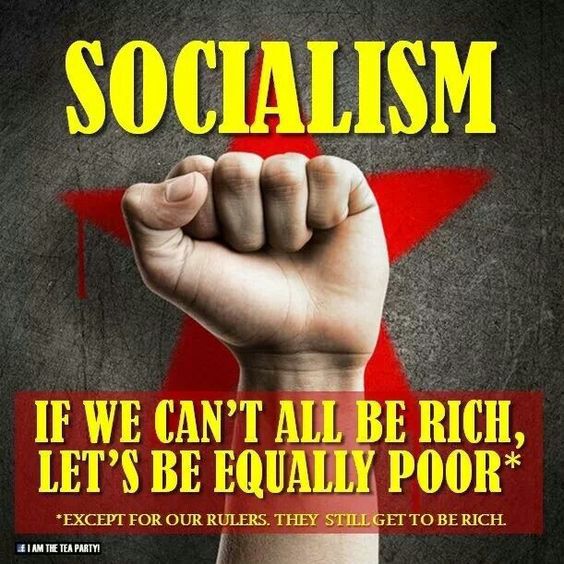
To get everything that you deserve you must live in a communist country.

kommonsentsjane's avatarkommonsentsjane

Aint’ socialism grand? From Yahoo: LA PARADA, Colombia (Reuters) – Women from crisis-hit Venezuela are crossing the border in droves and selling their hair in a Colombian border town in order to afford scarce basic necessities such as food, diapers or medicines. The trend, which has taken off in recent weeks, is another sign of […]

via Venezuelan women flock to Colombia border town to sell hair — Fellowship of the Minds

Reblogged on kommonsentsjane/blogkommonsents.

Hope the kids in college absorb some of this socialism and how grand it isn’t.  We don’t have to be rich – we just need jobs and then people can be whatever they want to be.  The problem was –  Obama wanted to make everyone poor but himself – then he could look down his nose and think how smart he was.  Just a little history so that the young-un’s won’t forget how kool and hip…

View original post 4 more words

Burka must be banned in Germany ‘wherever legally possible’ – Merkel


Merkel to be making these statements now after what you have done to Germany and the EU means you care only about your personal power you did give a dam about the people!

Frontrunning: December 6


Tyler Durden's picture
  • Trump heads back out on road for ‘thank you’ tour (AP)
  • For Europe’s Unity, 2017 Will Be a Year of Reckoning (WSJ)
  • Oil dips as OPEC, Russian output rises ahead of production cut (Reuters)
  • The Pessimist’s Guide to 2017 (BBG)
  • Donald Trump’s Message Sparks Anger in China (WSJ)
  • Brazil’s Reform Plan in Disarray After Senate Chief Removed (BBG)
  • China urges U.S. to block transit by Taiwan president (Reuters)
  • Wooed by Trump, Taiwan Trembles (WSJ)
  • SoftBank’s Son Said to Plan Meeting With Trump in New York (BBG)
  • Syrian government, ally Russia warn rebels in city of Aleppo (AP)
  • Blackstone Going Public on $10 Billion Foreclosures Bet (WSJ)
  • A Cheat Sheet on the Deglobalization of the Financial World (BBG)
  • One Historic Lens Says Trump Stock Market Lovefest Just Starting (BBG)
  • U.S. ‘Disappointed’ by Japan’s Plan to Cut Drug Costs (WSJ)
  • Family’s $29 Billion Fortune Claim Denied Amid India’s Tax Hunt (BBG)
  • Orban allies tighten media grip ahead of Hungary election (Reuters)
  • U.S. seeks to reassure Beijing after Trump call with Taiwan leader (Reuters)
  • Theranos Foresaw Huge Growth in Revenue and Profits (WSJ)
  • Rouhani says Iran will not let Trump rip up nuclear deal (Reuters)
  • Danish police arrest suspect after policeman shot in head (Reuters)


Overnight Media Digest

WSJ

– The verbal confrontation between President-elect Donald Trump and the Chinese government escalated on Monday, as China responded harshly to attacks by Trump on its economic and security positions. http://on.wsj.com/2ge4jXO

– Amazon.com Inc unveiled Monday its first small-format grocery store, Amazon Go, one of at least three brick-and-mortar formats the online retail giant is exploring as it makes a play for an area of shopping that remains stubbornly in-store. http://on.wsj.com/2haHTIQ

– The euro rallied from early losses following Italian voters’ rejection of government-backed constitutional changes, but the volatile day raises concerns about how the currency survives an era of populist politicians and diverging economies. http://on.wsj.com/2h1qv8W

– A day after the Obama administration put the brakes on a Midwest oil pipeline by denying a permit needed to finish the route, a spokesman for President-elect Donald Trump said the incoming administration supports completing the project. http://on.wsj.com/2gZxrRe

– President-elect Donald Trump said he will nominate retired neurosurgeon Ben Carson as secretary of the U.S. Department of Housing and Urban Development, a move that would place a former political adversary with little housing-policy expertise in a key administration post. http://on.wsj.com/2h9PXt5

– Investor materials show Theranos projected revenue of nearly $2 billion and net income of about $505 million this year. http://on.wsj.com/2h1bCmU

– Euroskeptic parties vary in their prescriptions but are putting pressure on mainstream politicians to address perceived flaws in the EU and common currency. Elections next year in several European nations will go far to determine the fate of continental integration. http://on.wsj.com/2h9SPSS

– New Zealand is facing a leadership contest following the surprise resignation of Prime Minister John Key that will pit his deputy, a former party leader, against at least two other prominent members. http://on.wsj.com/2gXlCe2

– The U.S. Senate Monday cleared the final hurdle to passage of broad legislation aimed at boosting federal funds for biomedical research and speeding up government approval of drug and medical-devices, a goal pursued by the pharmaceutical industry over the objections of some consumer advocates. http://on.wsj.com/2gXkjMl


FT

Britain’s government is listening closely to the financial services sector’s Brexit concerns, said finance minister Philip Hammond and the minister in charge of the process for the country’s exit from the European Union, David Davis.

British Transport Minister Chris Grayling will say in a speech on Tuesday that he wants Network Rail to share responsibility for running railway tracks with other operators.

Euro zone finance ministers agreed on Monday on some debt relief for Greece, but were divided on reforms it must undertake to reach fiscal targets, leaving it unclear if the International Monetary Fund will join the Greek bailout programme.

Britain is beginning to prepare its new World Trade Organisation membership terms ahead of its exit from the European Union and will seek to closely replicate the existing EU ones, Trade Minister Liam Fox said on Monday.

Web giants YouTube, Facebook, Twitter and Microsoft will step up efforts to remove extremist content from their websites by creating a common database.


NYT

– Amazon has created a small grocery store in Seattle that will allow customers to take drinks, prepared meals and other items off shelves and walk out without having to wait in a checkout line. It planned to open the store to the public early next year and that it would offer chef-made meal kits with ingredients for quickly preparing dinners at home. http://nyti.ms/2gx5Wxx

– Facebook, Google, Twitter and Microsoft said they have teamed up to fight the spread of terrorist content over the web by sharing technology and information to reduce the flow of terrorist propaganda across their services. The group plans to create a kind of shared digital database, “fingerprinting” all of the terrorist content that is flagged. By collectively tracking that information, the companies said they could make sure a video posted on Twitter, for instance, did not appear later on Facebook. http://nyti.ms/2gxbzvv

– The international oil industry agreed to pay billions of dollars to the Mexican government for rights to drill in the country’s portions of the Gulf of Mexico. The companies made a big bet that oil and natural gas prices would eventually rebound enough to make additional exploration and drilling profitable. The sale was a validation of Mexico’s decision to open its former government-monopoly energy business to foreign investment and expertise. http://nyti.ms/2gxajIO

– Uber acquired artificial intelligence start-up Geometric Intelligence. The new research arm will be called Uber’s A.I. Labs and all 15 people from the start-up will be absorbed by Uber. Uber said it hoped that through the acquisition, the new team could harness the wealth of data it collects from the millions of daily Uber rides. http://nyti.ms/2gxdTTf


Britain

The Times

Tata Steel Ltd says it has made significant commitments to more than 4,000 workers at the Port Talbot steelworks in south Wales, which has spent the past eight months under threat of closure. Rather than close one of the two blast furnaces at the steelworks, which many believe Tata has been considering as part of a merger of its European operations with ThyssenKrupp, of Germany, it is believed that the Indian-owned industrial group plans to keep staff employed into the next decade. http://bit.ly/2gZTM14

Shareholders at Independent News & Media Plc have voted overwhelmingly in support of restructuring measures despite protests from current and former staff whose pensions will be cut as a result. http://bit.ly/2gZSAL6

The Guardian

Amazon.com Inc has opened a corner store where customers can pick up their groceries and just walk out without having to queue up and pay at the checkout. The company said shoppers at its Amazon Go store will have the cost of their purchases automatically billed to their Amazon Prime account. Sensors will track customers as they go about the store and record items they pick up. http://bit.ly/2gvgI7u

A top U.S. investment bank resigned as a key adviser to Mike Ashley’s Sports Direct International Plc because of concerns that the retail company had manipulated its share price, according to claims made in a high court document. Bank of America Merrill Lynch had concerns about Sport Direct’s corporate governance and the “propriety” of share transactions in 2012 around its employee bonus scheme, according to allegations in legal filings by Jeff Blue, previously one of Ashley’s key allies. http://bit.ly/2gJPRaC

The Telegraph

GW Pharmaceuticals Plc plans to expand manufacturing in the United Kingdom and boost cultivation of the cannabis plants it uses to make a treatment for severe epilepsy, its chief executive has said. http://bit.ly/2hbxM6u

Blackcurrant drinks should be exempt from the government’s sugar tax, drinks makers including Ribena have suggested, as Treasury documents reveal a number have asked for special treatment by the Treasury. http://bit.ly/2gWyy46

Sky News

An executive who left BG Group months before a takeover approach from Royal Dutch Shell is being lined up to take the helm of Genel Energy Plc , the oil company founded by former BP boss Tony Hayward. Chris Finlayson is the leading candidate to replace Hayward as Genel’s chairman. http://bit.ly/2g3mkEU

A planned 24-hour strike by London Underground drivers has been suspended, the RMT union has said. Drivers on the Piccadilly and Hammersmith and City lines were due to walk out from 9.30 pm on Tuesday, amid claims of a breakdown in industrial relations, breaches of procedures and bullying and harassment of staff. http://bit.ly/2gvyuaD

Euro, BTPs Hit On Local Reports Italy May Hold Early Elections


Tyler Durden's picture

Update: it appears that early elections are indeed coming to Italy, which could be another major calendar event for Italy, and one which would have far more significant consequences for the political make up of the country should M5S win as many expect. From Reuters:

ITALY INTERIOR MINISTER, SPEAKING AFTER CONVERSATION WITH RENZI, SEES NEW ELECTIONS LIKELY IN FEBRUARY – CORRIERE DELLA SERA 

* * *

The Euro has been hit this morning, losing some 50 pips following reports in both La Repubblica and Corriere, that Matteo Renzi may stay in power for several weeks before potential early elections in January-February of 2017. According to La Repubblica, Renzi may ask that early elections are held in near future in return for staying in power until then. As previously reported, the next Italian general election must be held no later than 23rd May 2018.

The move has pressured other Italian assets, with BTP futures retreating from highs and the Italian bank index paring gains as investors focus on potential for Italian elections to be held early next year.

However, there has been some confusion about the date of the snap elections, because President Mattarella reportedly doesn’t see elections in February technically feasible because changes are needed to the country’s election law known as Italicum.

There is another consideration: should snap elections be hald soon, they would likely lead to a victory for Italy’s anti-establishment Five Star Movement, which as noted on Sunday has already called for immediate elections after the outgoing prime minister Matteo Renzi’s defeat in a constitutional referendum, saying it was prepared to put forward a new government that could immediately assume power.

While it appears unlikely that Beppe Grillo, a former comedian and co-founder of the populist party, will get his general election wish, the bold demand showed his Movimento Cinque Stelle (M5S) now has its sights on an even greater electoral victory: one that would eventually land it in the prime minster’s residence in Palazzo Chigi.

As the Guardian reported, many analysts pointed out that M5S still faces considerable obstacles, including probable reforms of electoral law that will make it difficult for the party to get a majority. “But even if such manoeuvres keep it at bay temporarily, one thing is clear: the party is now the second most powerful force in Italy behind Renzi’s diminished Democratic party.”

Vincenzo Scarpetta, a senior policy analyst at the thinktank Open Europe, said M5S would have a fair chance of winning the next general election under current electoral rules, but those rules are likely to change in coming months under the current Democratic-controlled parliament, which may be the impetus behind delaying elections as much as possible, and why today’s report of early snap elections has led to Euro weakness.

The decision to call immediate elections ultimately falls with Italy’s president, Sergio Mattarella.

Austrian Elections – Still the Anti-Socialist Vote


alexander_van_der_bellen

QUESTION: Marty, at the cocktail party you said you did not see the far-right in Austria winning for it was not the same. Then you got pulled off. Just wondering what was different in Austria?

Thank you for the conference. Don’y know where you get the energy from.

RP

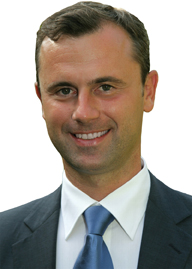
NorbertHoferANSWER: Cyclically, Austria was not ready for the extreme far-right. They, nonetheless, threw out the socialists. Norbert Hofer is extreme far-right. He often carries a Glock pistol. Austria was where the Great Depression banking crisis really began. Hofer hoped to capitalize on the anti-establishment wave credited with delivering BREXIT and Donald Trump. Alexander Van der Bellen won for the nominally independent Green Party.  Van der Bellen finished second out of six in the first round of elections before winning the second round against Hofer who was the Freedom Party candidate.

The current president if Heinz Fischer, who was of the Socialist Democratic Party. So the election was still against the Socialists. Hofer was too far-right at this point in time. So the change from socialists is still underway. We do not need to go extreme far-right in the political wave of change.

“Fake News” Site Threatens Washington Post With Defamation Suit, Demands Retraction


Tyler Durden's picture

As the “fake news” narrative grows, and The House quietly passes a bill to “counter Russian propoganda” websites, one alleged ‘fake’ news wesbite – as defined by the farcical PropOrNot organization – has struck back. Naked Capitalism’s Yves Smith has threatened The Washington Post with a defamation suit and demanded a retraction.

 As the lawyers like to say, res ipsa loquitur. Please tweet and circulate this letter widely. You will notice that our attorney Jim Moody is a seasoned litigator who has won cases before the Supreme Court. He has considerable experience in First Amendment and defamation actions. Past high profile representations include Westomoreland v. CBS and defending Linda Tripp.

I also hope, particularly for those of you who don’t regularly visit Naked Capitalism, that you’ll check out our related pieces that give more color to how the fact the Washington Post was taken for a ride by inept propagandists, particularly our introduction to our spoof PropOrNot.org site, which uses the PropOrNot project as an example of sorely deficient propaganda and shows where it went wrong, or the humor site itself. Be sure not to miss its FAQ.

We have another post today that describes how the few things that are verifiable on the PropOrNot site don’t pan out, as in the organization is not simply a group of inept propagandists but also appears to deal solely in fabrications.

If the site is flagrantly false with respect to things that can be checked, why pray tell did the Washington Post and its fellow useful idiots in the mainstream media validate and amplify its message? Strong claims demand strong proofs, yet the Post appeared content to give a megaphone to people who make stuff up with abandon. No wonder the members of PropOrNot hide as much as they can about what they are up to; more transparency would expose their work to be a tissue of lies.

https://www.scribd.com/embeds/333282597/content?start_page=1&view_mode=scroll&access_key=key-SFsTOjb47eR1AYqNP4gj&show_recommendations=true

 We fully endorse Yves Smith’s efforts.

Additionally, we note that the only reason we haven’t followed up with a similar action is because i) the allegations were beyond laughable – we have rejected all of them on the record, and ii) there are simply too much other events taking place in what should otherwise be a quiet end to the year taking place to focus on what may be a lenghty, if gratifying, legal process.

What Happens Next In Italy: Here Is Goldman’s Take


Tyler Durden's picture

While the market overcame its initial scare following yesterday’s counter-establishment Italian referendum vote, and European stocks proceeded to not only make up all losses, but soar in the overnight session by the most since Trump’s presidential victory, what happens next in Italy is largely unknown. What follows are Goldman’s snap thoughts on the Italian next steps.

First, a quick recap of what has happened in yesterday’s referendum in which many more Italians than expected turned up to reject the proposed reforms, leading PM Renzi to announce his resignation later today. The odds of a general election have risen from one-in-five to one-in four, according to Goldman. Despite yesterday’s outcome, Renzi remains the most popular politician on the centre-left. More importantly, the outcome of the vote lowers the chances of a market-driven solution for the ailing Italian banks, and in turn increases the likelihood of a State-led restructuring Goldman notes.

Here are the details:

In a national confirmative referendum held yesterday, Italian voters rejected a Constitutional reform bill sponsored by the coalition government of Mr Renzi and passed by Parliament in April. The referendum was called because the bill had failed to receive the quorum of 2/3 of MPs in its final reading.

The outcome of the referendum was in line with opinion polls in the run-up to the vote. These had been suggesting that the ‘Vote No’ side would win by some distance. Two elements are new, however (all numbers based on quasi-final vote count):

  • At 59.1%, the percentage of voters rejecting the reform bill was 5 percentage points higher than projected by opinion polls going into the referendum (55%). This outcome represents a much starker victory for the ‘Vote No’ camp than generally envisaged. Goldman assumed that the odds favoured a ‘Vote No’ win only marginally (55%), and that the gap between the two sides would be small, within 10 percentage points rather than the realised 20.
  • The voter turnout was 10 percentage points higher than projected by pollsters (65.5% vs. 55%), with close to 33 million people casting their vote (19.4 million voted ‘No’ and 13.4 million ‘Yes’). By comparison, the turnout in the UK Brexit vote was 72.2% (corresponding to 33.6 million people) while in the Italian 2006 referendum on Constitutional reforms, which also saw the amendments being rejected, the turnout was 52.3%.

A first analysis of the vote breakdown suggests that the electorate largely acted on political priors. Specifically:

  • In polling districts where opposition right-wing parties and the 5 Star Movement gathered higher consensus back in 2013 (Southern Italy, alongside some areas in the North), the ‘Vote No’ camp has achieved its best results, reaching as much as 70% of the vote share.
  • In the South, the ‘No’ vote outnumbered the ‘Yes’ by a remarkably ample margin (more than 40%) in Sicily and Sardinia, where the 5 Star Movement managed to outperform the Democratic Party in the 2013 general election.
  • The constitutional reform has been largely rejected also in the North-East of the country, a stronghold of the Euro-sceptical Northern League. The ‘Vote No’ camp, for instance, obtained 62% of the vote in Veneto, where Lega won roughly one-third of opposition votes in the 2013 general election.
  • Conversely, the regions where the Democratic Party performed better at the 2013 elections – such as Emilia Romagna and Tuscany, where it won more than 40% of votes – were those experiencing a victory of the ‘Vote Yes’ camp.
  • The relationship between the share of youth unemployment by polling region and No share of the vote is strikingly positive (see Exhibit 2). This is a result that will carry a large weight in the next general elections, as well as those in other European countries. The general impression here is that the youth and the disadvantaged are rebelling against the establishment, even when its policies bring economic benefits, albeit unequally distributed (incidentally, the protests against the ECB policies of low rates and QE go in the same direction).

Exhibit 1: The percentage of voters rejecting the reform bill was 5% higher than projected by opinion polls
Monthly average of opinion polls weighted by survey sample size, and final results

Exhibit 2: The reform has been more largely rejected in disadvantaged regions
Regional Youth (18-29) Unemployment Rate in 2015 and ‘Vote No’ Percentage By Region

What Happens Next

The rejection of the Constitutional amendments does not represent an institutional trauma. Indeed, the architecture of the Italian State will remain as it has been since 1948. What are more relevant for market participants are the political scenarios that open up from here. Indeed, the vote was seen as a test of the popular support still enjoyed by the moderate, reformist and pro-European government of Mr Renzi and the larger-than-expected defeat will not be without consequences. Goldman’s base case remains that a transition government will be in seat until a general election in early 2018.

This is how Goldman see the political situation evolving:

  • This afternoon, PM Renzi will formally tender his resignations to the President of the Republic, Mr Mattarella. The latter will likely ask Mr Renzi to stay on to preside over the approval of the 2017 Budget Law – the deadline is 31 December. Meanwhile, the President will officially start consultations with leaders of all political forces represented in Parliament to explore the formation of a new government.
  • Mr Renzi’s Democratic Party (PD) enjoys a relative majority in Parliament. Together with its centrist allies, it holds an absolute majority in both Houses (393 seats out of 630 in the Lower House and 186 out of 320 in the Senate). Since the ‘old guard’ of PD’s leadership did not support the constitutional reforms, the political fallout is likely to be mostly within the party, rather than altering broader political balances. Goldman’s base case is that the current ruling coalition will stick together and back a new government.
  • Relative to Goldman’s prior expectations, the bank would elevate its subjective probability from 45% to 60% of a caretaker government being appointed. GS expects the Cabinet to be led by a political figure drawn from the ranks of the ruling coalition (one possibility is the Minister of the Economy, Mr Padoan). An outsider technocrat is unlikely to be appointed as this would be highly unpopular choice with the electorate. The new government would likely have a narrow policy agenda consisting mainly of: (i) Overseeing the recapitalisation of the partly state-owned Monte dei Paschi di Siena and potentially other smaller banks. If the referendum outcome stalls the current recap plans, a precautionary injection of public funds into these institutions could be required. In such a case, the application of the ‘bail-in’ rule book would be contentious, and the market instability exemption could be invoked; and (ii) re-drafting the electoral laws for the two Chambers of Parliament ahead of a general election in the spring of 2018.
  • As expected, the opposition 5 Star Movement and Lega Nord are calling for the dissolution of Parliament and early general elections. Goldman has raised its subjective odds of elections in 2017 from 20% to 25%, but not higher. The Constitutional Court is expected to rule on whether the electoral law for the Lower House (nick-named Italicum in the Italian media) is fit for purpose. The central case is that the Court will ask Parliament to redraft the law to enhance social representation. The same fate already occurred to the electoral law for the Senate and voting with the current set of electoral rules would most likely result in a ‘hung’ Parliament. A redrafting of the electoral laws would also serve the purpose of reducing the risk that anti-establishment forces take control of Parliament. Arguing for an increase in the odds of an early election is the fact that Mr Renzi, whilst defeated, was able to get around 13 million voters behind him, around 30% higher than in the European parliament elections of 2013, and he remains the most popular politician on the centre-left of the political spectrum.

Exhibit 3: Updated probability scenarios after the vote


What Are the Market Implications

In relation to markets, Goldman thinks that some pressure on Italian BTP spreads to their core counterpart will be seen over coming days, especially following the tightening seen in the latter part of last week (the 10-year spread to Germany closed at around 160bp last Friday and is currently trading just under 170bp).

That said, with the Bank of Italy active in the secondary market and the ECB expected to announce an extension of QE on Thursday (Goldman’s forecast is EUR 80bn pace through most of 2017), the bank doubts that the widening can take the 10-year differential with Germany much above the highs of 190-200bp even on turbulent days.

Most of the focus will be on banks. Today, official news on the (conditional) subordinated debt-to-equity conversion of Monte dei Paschi is expected and discussions with ‘anchor investors’ will follow. Goldman views the likelihood of successful market-driven recapitalisations of the weaker Italian retail banks as relatively low. The outcome of the vote increases the chance of a State-led restructuring. In such cases, the application of ‘bail-in’ rules under the BBRD remains a key point of contention. The government could invoke an exemption from burden sharing on the grounds that financial stability could be endangered. Goldman would separate the fate of Monte dei Paschi (and that of smaller ailing lenders) from sovereign risk more broadly, and is of the view that a resolution of the banking capital shortfalls, even if it involves public funds, would ultimately be positive for the sovereign risk outlook.

Exhibit 4: Around 40-50bp of BTPs current yields are driven by Italian idiosyncratic factors
Italy 10-year yields idiosyncratic factor estimate based on G4-PCA

Exhibit 5: Italian banks have underperformed their European peers
Italian banks and European banks indexes (set to 100 in Jan 2016) and 10-Year Bunds