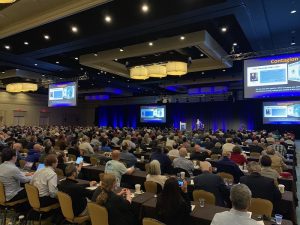
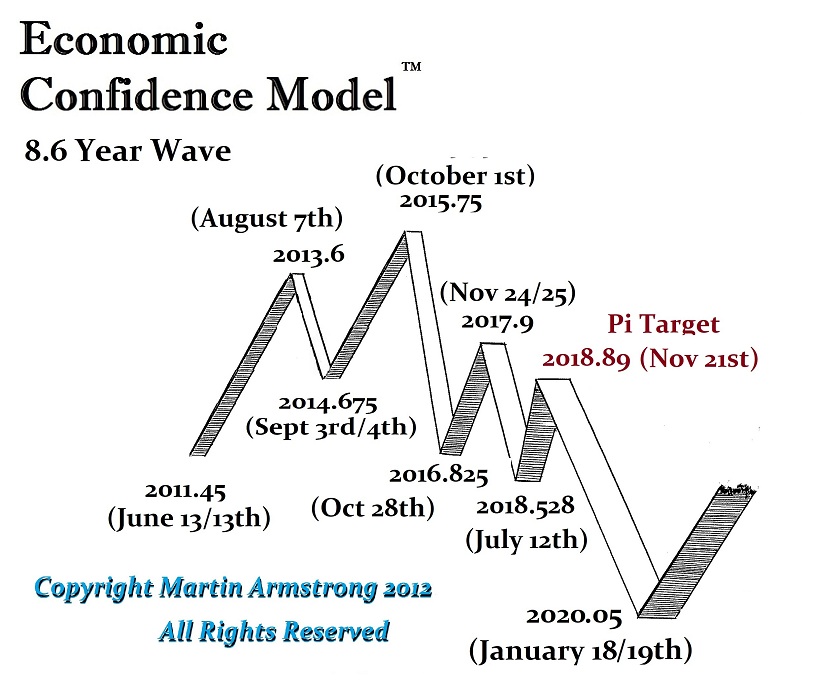
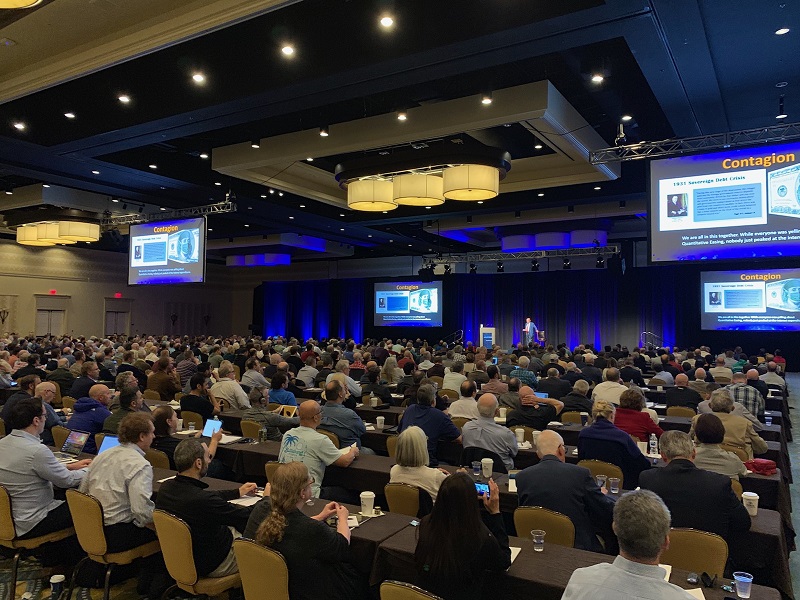
 This Year’s WEC is extremely important as we now approach the turn in the Economic Confidence Model come January 2020. There were two critical patterns which were possible – 2020 low and rally thereafter, or a 2020 high with respect to the share markets. Meanwhile, we face the biggest Bond Bubble in the history of civilization and the last time something like that took place, it did not end very nicely for civilization.
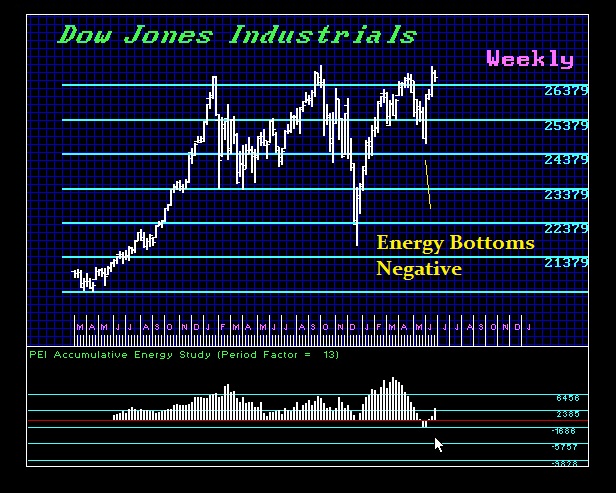
We are looking at such an important shift this time in the Business Cycle that those attending the WEC this year will also receive ongoing video updates as needed because things are not going to be just a walk in the park. The fact that the Dow has exceeded the 2018 high already, warns that the pattern we face is going to be plagued with a political crisis. Indeed, politics is becoming so polarized, not merely in the United States, but also in Britain, Switzerland, EU, and it is beginning to surface in Asia in Japan and Hong Kong.
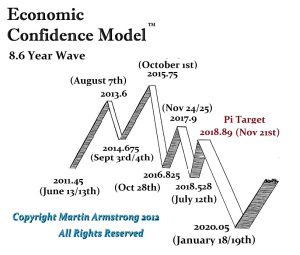
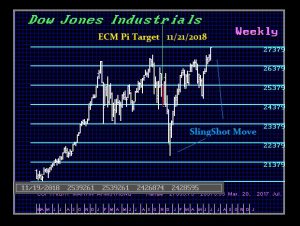 The Pi target on the ECM 11/21/2018 was the start of a slingshot where we had to drop sharply, scare the longs, and then rally to new highs. The problem with this pattern is that such moves are more often not sustainable on a broader sense and can warn of trouble ahead depending on who gets sucked into the mix.
We have so many markets at critical junctures as we head into the ECM turning point, this year’s WEC is going to be a critical forecasting event. Most importantly, we have to face not just a Monetary Crisis Cycle which is becoming obvious to everyone as the British pound takes a nosedive, but everything from Energy to Agriculture is in the staging ground for the next ECM along with precious metals.
For these reasons, we have some markets preparing for false breakouts and a critical mass approaching in 2020 on such a global scale. Central Banks (some who have been attending the WEC), are now beginning to lobby the fiscal side trying to warn them of impending doom and how they CANNOT possibly prop-up the world economy this time around. There is also a debate behind the curtain about pegging interest rates (long-term) v Quantitative Easing. We also have a battle brewing over cryptocurrencies as a major push to start eliminating cash in Europe.
Because all of these things are coming together, the attendees of this year’s Orlando WEC will receive ongoing video updates because this is just such a widespread crisis that is impacting every possible corner of the global economy and the ONLY way to survive this is going to be with Socrates because there is ABSOLUTELY no precedent to which we can refer to in history.
There are people calling now for the greatest crash in history, and others are now starting to claim the Dow will test 30,000. The opinions ARE just not going to cut it in this environment. So this year’s WEC will be different, but very critical. So are we Knockin’ On Heaven’s Door or the Big Fake Out as we face the Monetary Crisis Cycle and probably the most polarized political election ever in 2020. So those attending will get ongoing updates as necessary since this is probably the most critical period we face in modern economic-political history.

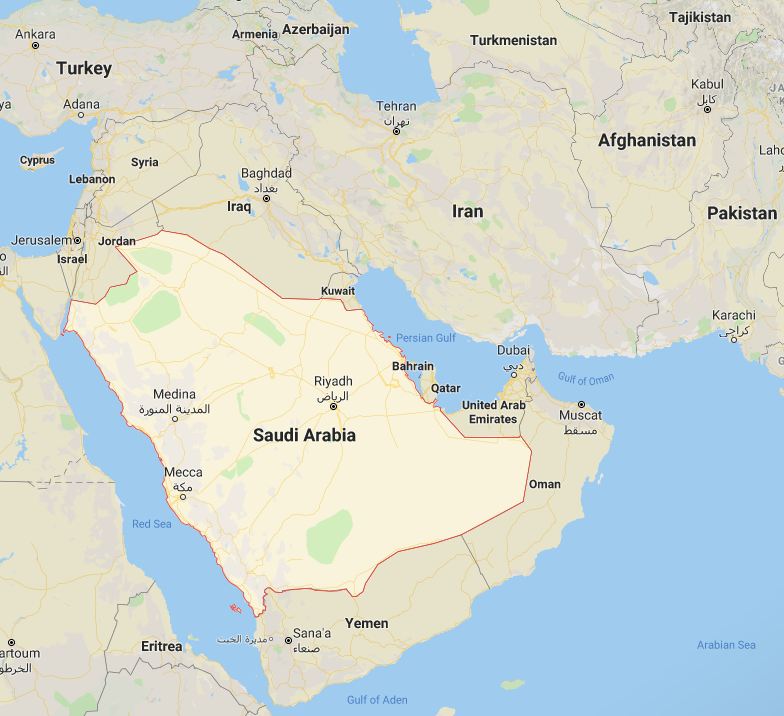
 The Middle East has been in turmoil and Trump has stood his ground against the neo-cons. The UAE is trying to avoid involving its nation in the conflict with Iran and certainly sees no upside to turning its country into a battlefield between the US and Iran. Iran promised to talk to the Yemeni officials to avoid hitting targets in Dubai and Abu Dhabi, provided the UAE pulls out its forces from Yemen. The so-called “deal of the century” proposed by President Trump’s son-in-law Jared Kushner, which sought to deal with the Palestinian-Israeli conflict, was met with minimal interest. The $50 billion in aid to the Palestinians was view as just a bribe.






 Centinel2012