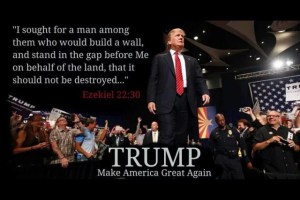
Mutually Beneficial Leverage – Nigel Farage Visits Trump Tower Today…


It is somewhat funny, perhaps quizzically so, that people cannot see the mutually beneficial play amid the strong relationship formed between Donald Trump and Nigel Farage.   Essentially and substa…

Source: Mutually Beneficial Leverage – Nigel Farage Visits Trump Tower Today…

trump-standing-in-gap411221112112111111121111111111111211

The Many Times Russian Hackers Didn’t Damage Hillary’s Campaign


WOW those Russians are real good!

Why Feminists Hate Men: What They Won’t Tell You!


Why Civilizations Rise and Fall | Michael Woodley of Menie and Stefan Molyneux


An Honest Conversation About Race and Gender Differences


The War Against Men | Tom Golden and Stefan Molyneux


“You Haven’t Succeeded Once”: State Department Slammed By AP Reporter Over Failure In Syria


Tyler Durden's picture

The battle for Aleppo is over, and Assad has won, with AP quoting the Syrian leader that “history is being made with the defeat” of the insurgents contained in the city.

Syrian President Bashar al-Assad said on Thursday the events taking place in the city of Aleppo are a historic moment, and said the world will be different after what he called the “liberation of Aleppo”.

“What is happening today is the writing of a history written by every Syrian citizen. The writing did not start today, it started six years ago when the crisis and war started against Syria,” Assad said in a video statement published on the Syrian Presidency’s Twitter account.


And while Syria and Russia enjoy the spoils from his biggest victory since the start of the Syrian conflict, the US State Department is being slammed for losing the Syrian proxy war. Meanwhile, after three years of backing and arming rebels brought no major progress in the Syrian war, Washington has accused Moscow of “failure” to achieve peace. Yesterday, the State Department was finally called out by AP on the lack of progress in Syria, forcing department spokespersons John Kirby to once again blame Russia.

As caught on the recording below, the daily briefing at the State Department started off with a verbal sparring match between AP reporter Brad Klapper and department spokesman John Kirby. Klapper asked Kirby why the US was “laying all the blame” for developments in Aleppo on Russia, while also questioning what Washington was doing different than Moscow. The US, Klapper said, “failed repeatedly, doing the same thing over and over again” but continued to accuse Russia of war crimes “when things go badly.”

“You [the US] haven’t succeeded once,” Klapper said.

Kirby did not answer the latter of Klapper’s questions, instead offering his explanation of why Russia bears responsibility. “The failure is on Russia for not putting the proper pressure on the Assad regime to stop the brutality, the gassing, the surrender, the starvation of their own people. That’s the real failure here,” Kirby said, claiming that the US, unlike Russia, has been pursuing only political solutions.

“You don’t think the US has failed?” the reporter continued to press on.

Refusing to take any blame for America’s actions, Kirby continued to dodge the question.

“You talked about the United States failure. What I would say is the international community has remained focused on trying to bring about a better outcome in Syria,” he said, stressing that the US “is a leader in that effort.”

Then several minutes into the exchange, Kirby would not admit the possibility of the US approach as it is failing to achieve a peaceful solution despite years of attempts.

“Secretary [of State John Kerry] would be the first to tell you that he’s enormously frustrated that we are still where we are with respect to what’s going on the ground in Syria. Nobody’s happy about that,” he said, praising Washington’s efforts on the diplomatic front.

After his response did not seem to satisfy Klapper, Kirby commented: “Look, you can shake your head in disgust about the answer all you want.”

Showing a sense of humor, Klapper argued that it was “too late” for any changes to be made given that the Obama administration and Secretary John Kerry’s tenures are coming to an end in just over a month.  “You’re not describing any different kind of approach or anything you’re going to do to somehow change the equation,” he said. “It’s too late for that. You have no time left and you’re saying you’re not going to telegraph something that we know is not going to happen.”

However, according to Kirby, despite what Klapper or the AP might “feel,” Secretary Kerry remains eager to try to find a political solution to the conflict.

Meanwhile, having taken over Aleppo, the Syrian proxy war is now in its final stages, with the Assad government, thanks to Russian backing, now assured a victory, especially since Trump has repeatedly stated that he is looking forward to de-escalating the middle east conflict, and no longer is looking to “change heads of state”, a development which will infuriate Qatar, whose gas pipeline to Europe appears doomed to never be constructed.

What Was Really Behind The Trial Of Geert Wilders?


Tyler Durden's picture

Submitted by George Igler via The Gatestone Institute,

  • If Europeans are ever to stand a chance of unravelling the coils of laws constricting their throats, preventing their ability to speak out against the demographic redrawing of their countries or any other potential danger they may note, it may prove helpful understanding how this slow strangulation took shape.
  • Although the gross unfairness of Geert Wilders’s prosecution is clear when compared with other Dutch politicians who have articulated far worse, there is also compelling evidence that much that is preached from the Koran in mosques daily would clearly fall under such a definition of hate speech — also remaining curiously outside the attention of public prosecutors.
  • Are not elected Member of Parliament even more responsible to for the safety of the public than are other citizens? If elected officials are criminalized for speaking out, at what point do such restrictions start posing a national security problem?
  • How are ordinary, decent, native Europeans ever likely socially and politically to articulate how they never consented to being part of a “grand experiment,” without incurring the stain of bigotry accompanying this reasonable assertion, from friends and co-workers alike?
  • Would it not be a remarkable irony if, instead of burying Wilders, as the conviction seemed intended to do, it propelled him instead to victory?

Much has been made of the 2016 populist revolt in the West, beginning with Britain’s June 23 decision to leave the European Union, and culminating with the victory of president-elect Donald Trump on November 8. The narrative of change is understandably seductive, but has recently been dealt successive blows by the domestic circumstances that so characterize European politics.

Despite traditions of liberty being placed at the heart of the successful Trump campaign, the promise of a new economic approach also enabled him to cross the line on election day.

The Brexit vote similarly took place under a referendum that allowed Britain’s voting populace to defy the stated preference of the majority of their elected parliamentarians.

The most disturbing recent development on the European continent, however, was Friday’s conviction of Geert Wilders on two charges, “inciting discrimination and insulting a minority group,” for asking supporters whether they wanted “fewer Moroccans” in the Netherlands, at a small public rally in a bar in The Hague, on March 19, 2014.

Geert Wilders during his March 2014 speech, where he asked “Do you want more or fewer Moroccans?” (Image source: nos.nl video screenshot)

This “hate speech” case against Wilders similarly pits popular alarm over the consequences of mass migration plus a principled politician who for years — in the face of threats against his life, has agitated for genuine change — against an untrustworthy, politicized legal system which appears at odds with both Wilders and popular alarm. Several Dutch Labour Party politicians, who said far more damaging things about Moroccans than Wilders did, yet were never prosecuted:

  • “We also have sh*t Moroccans over here.” — Rob Oudkerk, a Dutch Labour Party (PvDA) politician.
  • “We must humiliate Moroccans.” — Hans Spekman, PvDA politician.
  • “Moroccans have the ethnic monopoly on trouble-making.” — Diederik Samsom, PvDA politician.

Although Wilders’s trial clearly appears an orchestrated miscarriage of justice, it is arguably not helpful to view the basis for his prosecution through an absolutist defense of freedom of speech, intuitively understandable to Americans. No constitutional equivalent of the First Amendment, which prohibits Congress from passing laws abridging the freedom of speech, exists in Europe.

This right, however, even in the U.S. is somewhat qualified, as laid out in Brandenberg vs. Ohio, but none of those exceptions would apply to Wilders (imminent danger and individual personalization). Under the strictures of the European Convention of Human Rights (ECHR), freedom of expression is a “qualified” right in much broader terms — from which “left-wing” members of the Dutch Labour Party issuing the far more objectionable statements quoted above are apparently excluded: “the state may lawfully interfere with the right to freedom of expression in certain defined and limited circumstances.”[1]

The arguments qualifying the conviction of Wilders, in the courtroom of the military base at Schiphol Airport, according to the presiding jurist Hendrik Steenhuis, were that the PVV leader’s comments were “unworthy” of an elected member of parliament — as Judge Steenhuis denied any assertion that the trial was politically motivated. Yet, are not elected Members of Parliament even more responsible to for the safety of the public than are other citizens? If elected officials are criminalized for speaking out, at what point do such restrictions start posing a national security problem?

Submitting to the questionable tenets of the ECHR, however, is a condition of EU membership. Dutch prosecutors expressed themselves “very satisfied” with the verdict, a spokeswoman adding, “the standard is set.”

If Europeans are ever to stand a chance of unravelling the coils of laws constricting their throats, preventing their ability to speak out against the demographic redrawing of their countries or any other potential danger they may note, it may prove helpful understanding how this slow strangulation took shape.

The most compelling defense of hate speech laws was articulated by Prof. Jeremy Waldron, in 2012, who took issue with those believing that, “the bigoted invective that defiles our public environment, should be of no concern of the law.”[2]

In a passage dedicated to expressions of opposition to Muslim immigration, in The Harm in Hate Speech, the NYU School of Law professor questioned those who maintain that:

There is nothing to be regulated here, nothing for the law to concern itself with, nothing that a good society should use its legislative apparatus to suppress or disown. The people who are targeted should just learn to live with it.

He counters:

…there is a sort of public good of inclusiveness that our society sponsors and that it is committed to. We are diverse … And we are embarked on a grand experiment of living and working together despite these sorts of differences. … And each person, each member of each group, should be able to go about his or her business, with the assurance that there will be no need to face hostility, violence, discrimination, or exclusion by others.


This sense of security in the space we all inhabit is a public good … Hate speech undermines this public good, or it makes the task of sustaining it much more difficult than it would otherwise be.

Although the gross unfairness of Geert Wilders’s prosecution is clear when compared with other Dutch politicians who have articulated far worse, there is also compelling evidence that much that is preached from the Koran in mosques daily would clearly fall under such a definition of “hate speech” — also remaining curiously outside the attention of public prosecutors.

Given that “hate speech” damages the maintenance of dignity between groups and public safety, can a compelling case therefore not be made that “hate speech” laws mandated by the European Union are doing considerably more harm than good?

Is it not high time that lawmakers grasp how mass Muslim immigration, and the importation of the sectarianism unfortunately inherent in Islamic doctrine, undermine even more significantly these noble principles of “public good”?

How exactly are the terrorism, rape and crime waves that have accompanied such migration into Europe, likely to be addressed by the democratic process — within the confines of such originally benign legislation — when across the continent fundamental notions of security are already being so comprehensively undermined?

How are ordinary, decent, native Europeans ever likely socially and politically to articulate how they never consented to being part of a “grand experiment,” without incurring the stain of bigotry accompanying this reasonable assertion, from friends and co-workers alike?

Are loyal citizens being cowed into silence, as in the world’s most totalitarian nations, by prosecutions that can justifiably be seen as “making an example” of those who fail to toe whatever is the current political line?

More sinisterly, with three months until the polls open in the Netherlands, the verdict against Wilders may have had little to do with either incitement or “hate speech,” and everything to do with a desire to curtail precisely the sort of public rallies which were hallmarks of both victories led by Nigel Farage in Great Britain and Donald Trump in the United States.

It is precisely these kind of public gatherings that do so much to convince those with entirely legitimate grievances that they are not alone.

Would it not be a remarkable irony if, rather than burying Wilders as the trial seemed intended to do, it instead propels him to victory?

Hatred of the Left Continues to Set Stage for Revolution


bands
The hypocrisy of the left continues to brew and set the stage for the break-up of the United States. The left is always the most dangerous throughout history and the most intolerant of all groups. They simply do not allow for disagreement.

Trump said if Hillary won he would “absolutely support her” which makes it very hard for Hillary to join these protests, yet she does not speak out against them. The schools are some of the worst sectors fueling the discontent and fermenting a future destruction of the United States. There is no unity. After every previous election, people accepted the result and moved on. This time, the left will not let it go.

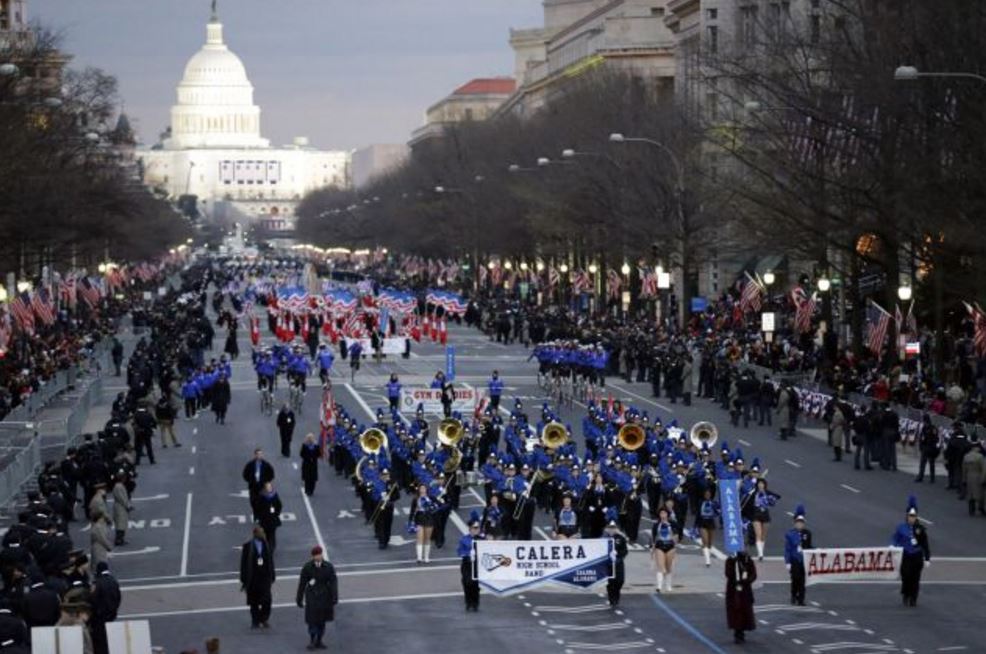
2-yr-olds-fightingSchools are continuing to ferment revolution as exemplified by the Calera High School in Washington that has refused to to allow its Marching Band to perform during the Presidential Inaugural Parade in Washington, DC. For the first time in 20 years, no Washington, D.C., public school marching band will perform at the inaugural parade. This is illustrating how even public schools continue to protest about losing the election. This is like two year-olds who do not get their way and decide to break the toy rather than share it. All the teachers supporting such protests should be immediately fired for interjecting politics into education for personal gain.

The History of Climate Change — Empires Fall When Warming Turns to Cooling


global-warming-cyclical

QUESTION:  Hi Martin I have a question I hope you can find time to answer. It appears we are heading into dark times with regards to the convergence of all of these cycles. We have government hunting every penny, we have civil war heating up between the left and right, we have revolution against government, international war and decreased solar activity. It seems everything is about to go bang all at once, has there been other periods in history when all of these cycles have converged as we are beginning to witness now on a global scale? Really fascinating stuff, and thank you.

Regards, John.

ANSWER: Oh yes. Here is a chart of the real data for global cyclical trends in the energy output of the sun and CO2 levels. Look at this chart prior to the Minoan warming. There was a very cold period a bit longer than 8,000 years ago — the Ice Age. You see what I would call a slingshot move when the temperatures swung sharply to a record high over about 300 years, according to the ice core samples. Thereafter, we move into a bear market, oscillating trend to retest the low made 4700 years ago. Then there is the steady rise into what we call the Minoan high.

Prior to the Minoan high, the temperature (climate change) was much more volatile. This is what drove the great migrations of humans around the globe if we assume they are correct and life began in Africa. This is the sharp swings that most likely resulted in frozen mammoths, lions, and woolly rhinoceros that were discovered in 1772. The warming up period into the Minoan high was really the birth of civilization/urbanization.

catal-huyuk

It was about 6700 BC when the earliest city appeared known by the name Catal Huyuk located in Turkey that covered about 30 acres. The buildings were of mud and brick construction, but inside there appeared plastered walls. No doubt, this was the latest modern invention that illustrates two important developments. First, this confirms the birth of an urban trade skill, and secondly, homes were found with paintings on the walls, suggesting the flourishing development of art — one of the last skills to develop within urban life reflecting good economic times.

The Minoan civilization was an Aegean Bronze Age civilization that arose on the island of Crete and other Aegean islands and flourished from approximately 3650 BC to 1400 BC. Clearly, sea travel must have emerged for the people to migrate from Turkey to Crete. Civilization appeared to emerge with this warming period. You then have the catastrophic eruption of Thera (Santorini), which may have been the largest known volcanic eruption within recorded history. That ended the Minoan civilization and gave rise to the plundering society of Mycenaean Greeks who conquered the Minoans and then Troy. But as weather turned colder, Greece, mostly rocky, entered its Dark Age and was unable to produce enough food. They became the Sea Peoples who invaded Northern Africa.

The climate changed again and began to warm, inspiring the rise of the Roman Empire. The warming trend allowed Julius Caesar (100-44 BC) to conquer and civilize Europe. The Roman Empire had three major climate changes known as the Early Subatlantic (900 BC–175 AD), Mid-Subatlantic (175–750 AD), and Late Subatlantic (since 750 AD). Written, archaeological evidence independently records that during the period of the Roman Empire’s maximum expansion and final crisis, the climate underwent drastic changes of cooling. During the reign of Trajan (98-117 AD), this was the peak in the territory occupied by the Roman Empire, which coincided with the Roman climatic peak in warming.

The climate change resulted in a sharp trend to a colder climate, which inspired the barbarian invasions (migration) into the Roman Empire where they moved south as the north grew severely colder. Historians imply that there were rapid fluctuations during the late empire after the reign of Trajan. We do have Seneca the Younger describing in 61 AD, a year before Nero ordered him to kill himself, the high level of air pollution in Rome associated with the extensive wood burning for fuel. This confirms there has always been pollution associated with cities.

The Roman Empire is considered to have peaked with the reign of Marcus Aureleus in 180 AD. That is where we draw the line for the beginning of the decline and fall of Rome. That is certainly the peak in the population of Rome itself. When the climate began to turn down, back into a strong cooling period, the fortunes of Rome also turned down. The evidence suggests that the Great Monetary collapse of Rome (around 180–290 AD), coincided with a sharp period of cooling. This seriously affected the northwestern provinces of the empire, especially in Germany and France, which clearly instigated the barbarian invasions of the south. We also have tree-rings dating (dendrochronology) from this period, which indicates there was a severe drought that began about 338 AD and persisted until 377 AD. This contributed to moving the capitol to Constantinople, which construction began about 324 AD when Constantine became the sole ruler.

The climate changed much colder in the north and sent the invasion of the Huns. The migration of the Huns, north of the Black Sea, drove the Goths to flee and press into the Roman Empire. The Roman Emperor Claudius II Gothicus (268-270 AD) was given that title for his defeat of the Goths. Climate change was a major driving force that led to the fall of the Western portion of the Roman Empire with the last Roman Emperor Romulus Augustus (475-476 AD). In the Eastern Roman Empire, climate change resulted in a regional prolonged drought from about 400—540 AD.

washington-delaware

The medieval warming was when the Dark Age of Europe began to light, giving birth to the Renaissance period. We begin to see the age of empire building when Spain, Portugal, Britain, and the Dutch all went off to the travel the world. We then begin to fall back into the last mini-Ice Age. We can see that the hard times led to revolution against monarchy in America and France. Paintings of the American Revolution illustrate how cold it really was with Washington crossing the iced Delaware River.

So unfortunately, when I say we have put everything into this model, I really mean what I say. When you put together the historical data, what pops out at you is just amazing. I had to gather coins from around the world to recreate the world monetary system and then place that on the timeline as well. What jumps out at you is the correlation of civilization and the rise and fall of empires with climate change.

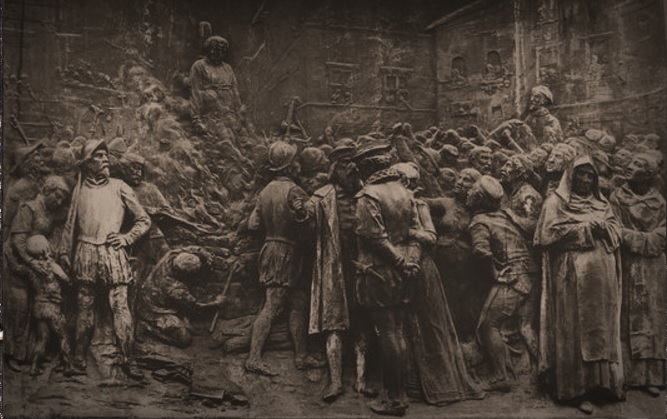
Bruno Giordano burned at the stake Armstrong Economics

To have these charlatans schlep this bogus theory that man has created this global warming trend prevents real research. It is outrageous that these people have the audacity to want to make disagreeing with them a criminal act. I will not shut up, for these people are blocking a real investigation into how the world functions. I really would prefer death to living in this fake world that these horrible, pretend scientists are trying to create as Karl Marx did. These same types of people burned Giordano Bruno alive at the stake for saying that the Earth revolved around the Sun. If these people could, they would do this to me in a second.

 I welcome Trump's pick for the EPA - THIS IS DESPERATELY NEEDED!