Several communities and towns within North Carolina have been completely cut-off by rising flood waters as a result of Hurricane Florence and the unprecedented amount of rain. The cities of Wilmington and Jacksonville, NC, are surrounded by flooding.
Pay attention to all local officials, and heed all notices to evacuate based on the advice from local and state officials. The threat is increasing in multiple regions throughout the state of North Carolina. Evacuations are ongoing with all resources deployed to assist stranded residents. FEMA, the national guard, the coast guard, and all state and federal resources are currently deployed for ongoing rescue efforts.
.
Florence has weakened to a tropical depression but forecasters warn the next few days could bring the most destructive round of flooding in North Carolina history. The National Hurricane Center says the effect is expected to be “catastrophic.”
NORTH CAROLINA – The city of Wilmington, North Carolina, has been completely cut off by floodwaters, and officials are asking for additional help from state law enforcement and the National Guard.
Woody White, chairman of the board of commissioners of New Hanover County, said Sunday that additional rainfall Saturday night made roads into the city impassable.
White said officials are planning for food and water to be flown to the county, although new distribution centers will have to be found because of all the rain in the northern part of the county.
Earlier Sunday, officials from the Cape Fear Public Utility Authority had said they were almost out of fuel for the water plant and might have to shut down. The utility later issued a release saying it had found additional fuel. (LINK)
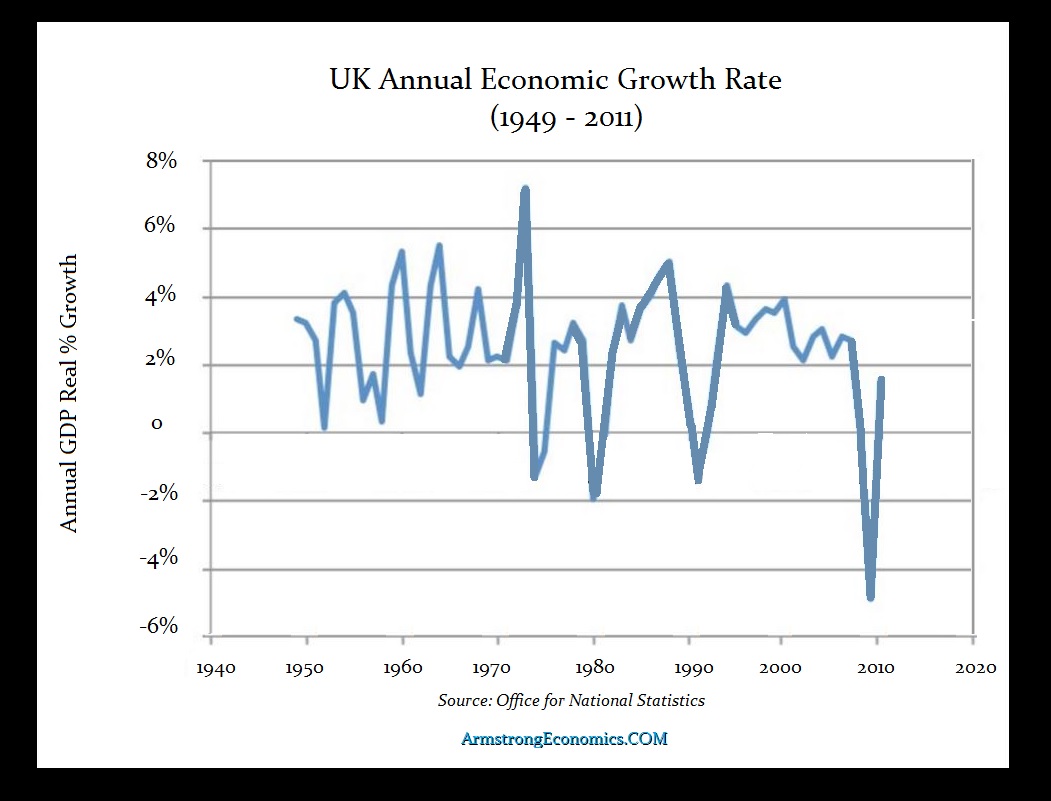
COMMENT: Marty; You are not only the only person to forecast BREXIT, you also said the British Economy would do far better after BREXIT. There was absolutely nobody that agreed with you. I read every bank report in the city and every single one said the British economy would take a nose dive in the Thames. Well, all the official numbers are out and they have all proved Socrates to be an astonishing tool. No wonder Maggie loved you.
HWM
REPLY: Yes, a good friend of mine who has a retail business there disagreed with me and said he would probably have to move to Frankfurt. He said that after the vote. I spoke to him last week and he said he reduced his staff in Zurich and hired more people in Britain. When I asked why? He responded it was half the price.
The numbers have shown that pay growth for British workers has “unexpectedly increased at the strongest rate for three years amid the lowest levels of unemployment since the mid-1970s” wrote the Guardian. It is because Britain is getting out of the EU which has been the most damaging to Britain’s economy because it gets the short stick on every negotiation. I cannot think of even one dispute that Britain has EVER won in the EU court. The typical idiom Fool me once, shame on you; fool me twice, shame on me, in the case of British politicians it should be Fool me once Ok you got me; Fool me twice alright shame of me; Fool me again, I must be just an idiot so no worries I will never figure it out anyway. I do not know how many times the numbers show joining the EU was a VERY, VERY, VERY, stupid idea. Europe has always hated the Brits. The French view if Napoleon won at Waterloo, then the world would be speaking French not English.
I have shown this chart to several UK politicians. They were surprised, but still never used it publicly. If you just put aside all the opinions and what-ifs, just look at the numbers, you may begin to see the light.
Secretary Wilbur Ross is in North Carolina today touring the NOAA facility and listening to projections of how long Hurricane Florence may disrupt rail, road and shipping transport. Mr. Ross then calculates the economic impact.
QUESTION: Mr. Armstrong, I think I am starting to understand your view of inflation. It is very complex. I think some people cannot think beyond a simple one dimension concept as you often say. So I am trying to be more dynamic in my thinking process. Here you point out that when debt is collateral it is the same as printing money but worse because it pays interest. Then you point out that hyperinflation takes place not because of printing money but because a collapse in confidence and people then hoard their wealth which reduces the economic output and that compels a government to print more to cover expenses. So there is a line that is crossed and kicks in that collapse in confidence as in Venezuela. This is very interesting but complex. Is this a fair statement?
ANSWER: You are doing very well. You are correct. Some people cannot get beyond an increase in money supply is automatically inflationary. If that was true, then 10 years of quantitative easing by the ECB failed completely in that theory. They too cannot get beyond this simple-minded one dimension concept. There is yet another dimension that these people who will say I am wrong while clinging to the old theories that they fail to understand. The BULK of the money is actually created by the banks in leveraged lending. If I lent you $100 and you signed a note that you would repay it, then the note becomes my asset on my balance sheet. I can take that to a bank and borrow on my account receivables. In this instance, just you are I are creating money. Now let a bank stand between us. I deposit $100 and they lend it to you. We now both have accounts that show we have $100. We just doubled the money supply and nobody printed anything. These people that yelled that Quantitative Easing would produce hyperinflation and gold would soar, refuse to admit that everything they have relied upon is an old theory that no longer applies to our modern society. Money is now debt issued by the government, debt created privately, and the physical money issued. But the actual paper money is a tiny fraction of the real money supply. The common thread between it all is CONFIDENCE.
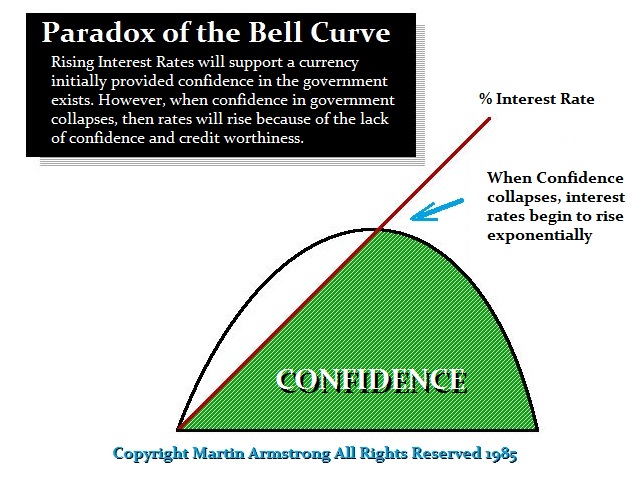
Just look at Turkey. Erdogan has now been forced to raise interest rates. Inflation and interest rates follow a Bell Curve. Everything will be normal until confidence is lost. Once that threshold is crossed, then hyperinflation begins and interest rates rise in a desperate move to try to attract capital and confidence. This simplistic perspective of an increase in the money supply produces inflation is just so childish it demonstrates these people have never just looked at the charts. This theory is what was behind the entire central bank management of the economy. I have quoted Paul Volcker, in his Rediscovery of the Business Cycle he states clearly that this view of Keynesian economics failed back in the 1970s.
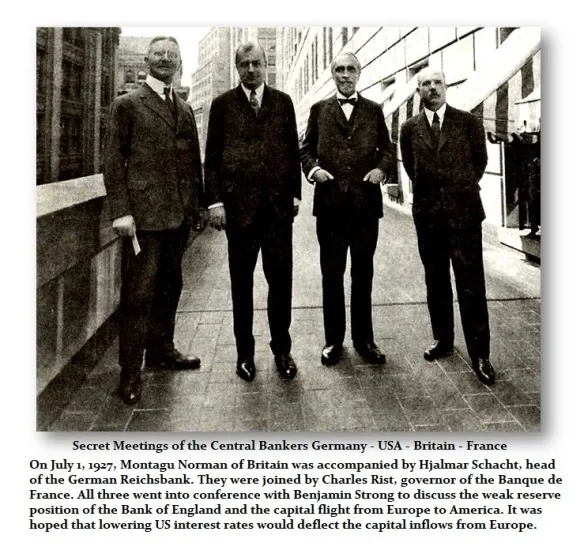
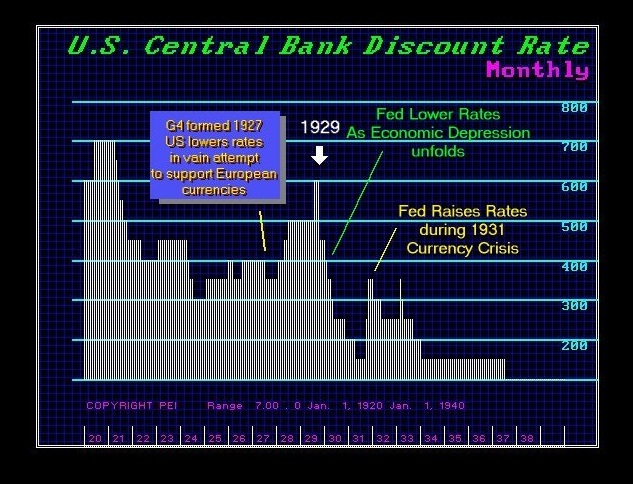
These people who cannot understand the complex relationship of money v inflation should work for the government. The central banks even back in 1927 looked at interest rate differentials and have attempted to use that to manipulate currency values. The Fed lowered interest rates hoping capital would return to the higher interest rates offered in Europe to prevent the economic collapse. The smart money realized that something was wrong and the capital flows moved into the US share market and the Dow. It was like smelling a rat in Venezuela or Turkey. Capital lost confidence in Europe and the higher interest rates failed to attract capital as we see today in Turkey or Venezuela. As the capital fled Europe, they drove the dollar higher. The invisible line of confidence was crossed.
All you have to do is look at the charts. When the Fed lowered the rates in 1927, the capital smelled a rat. It began to pour into the USA. The Fed then assumed the rally was because it lowered the interest rates. They responded and began to raise rates to then try to stop the speculative bubble. The Fed then raised rates from 3.5% to 6% and the stock market rallied. All I do is look at the evidence. So much for raising rates will make the stock market decline. That is for idiots.
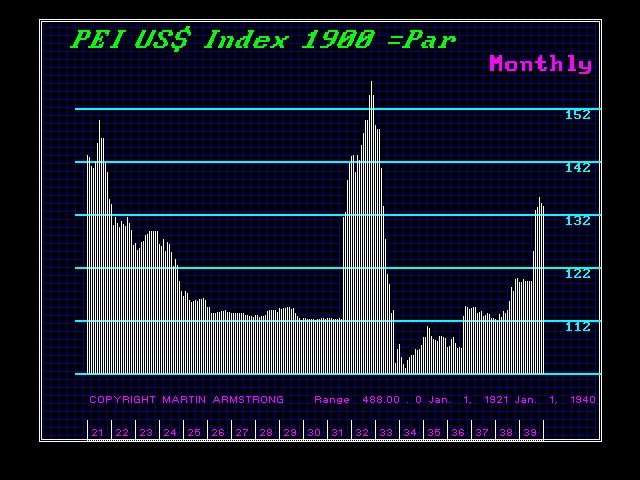
As the capital fled Europe it rushed into the dollar. The US dollar rose so high, this is what began the whole Smoot-Hawley protectionist round. That was passed in 1930 AFTER the high. Because the dollar kept rising, this produced asset deflation. Commodities collapsed which sparked Smoot-Hawley because they were concerned with agriculture Even silver, which peaked in 1919, declined and bottomed in 1932 with the stock market.
Milton Friedman criticised the Fed because all this gold came flooding into the USA and the gold reserves rose dramatically. Milton criticized the Fed for not issuing money to expand the money supply when Roosevelt’s Brain Trust worried about maintaining the confidence in the system and wanted the austerity.
The Fed had been lowering interest rates from 1929 into 1931 just as Draghi did in the ECB with the same net result – DEFLATION. The Fed then raised interest rates during the 1931 Currency Crisis deeply concerned about CONFIDENCE.
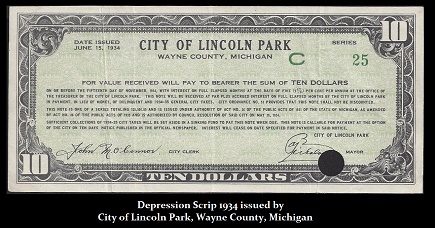
Herbert Hoover’s Memoirs recorded what took place. He said capital was rushing from one currency to the next they could not form a committee fast enough to figure out what even took place. NONE of this crazy period has ANYTHING to do with increasing the money supply. It was all about CONFIDENCE. Over two hundred cities began to issue their own money BECAUSE there was a shortage of money. This was called Depression Script. Depression scrip was used during the Great Depression era of the 1930’s as a substitute for government-issued currency because there was a SHORTAGE plain and simple. Because of some 9000 banks closed, this added to the problem of a lack of physical currency. Therefore the concept of issuing a local currency was the answer to allow commerce.
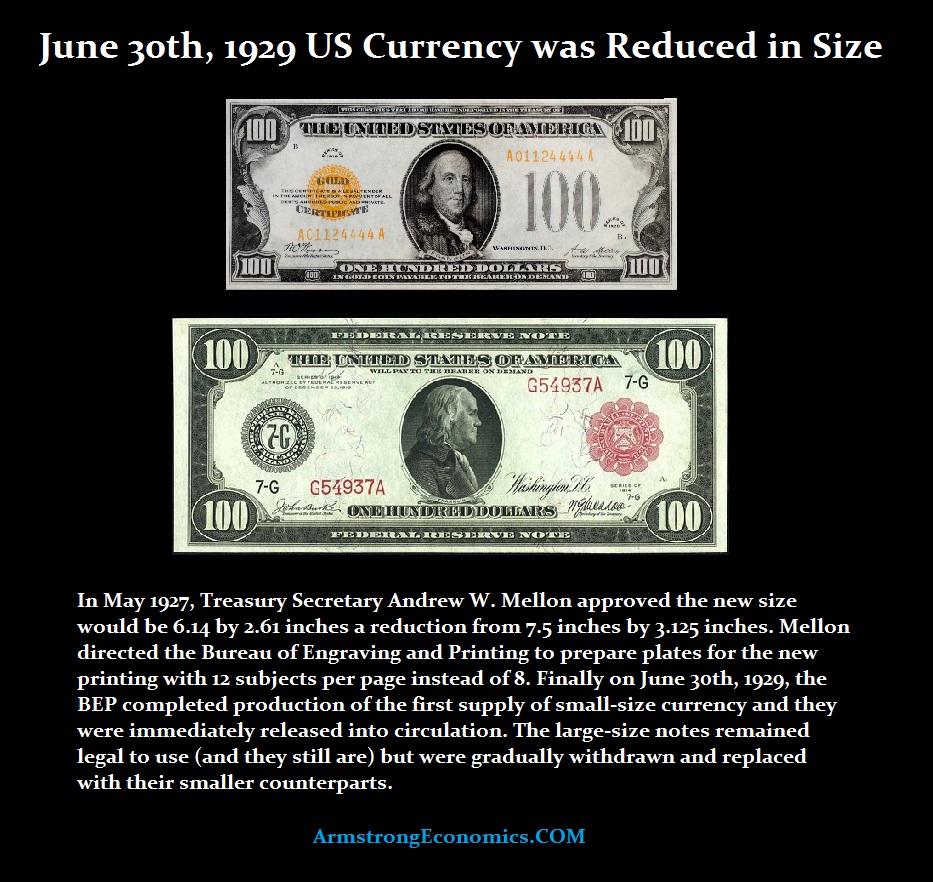
At one point, the U.S. Government considered issuing a nationwide scrip on a temporary basis because they feared that increasing the money supply itself would be inflationary. This idea was shot down by the Secretary of the Treasury William H. Woodin at the time. Meanwhile, it was also argued that the currency had been reduced in size on June 20th, 1929 and while the old notes were still valid, the argument was that the U.S. Bureau of Engraving and Printing did not issue enough currency fast enough which also contributed to the deflation.
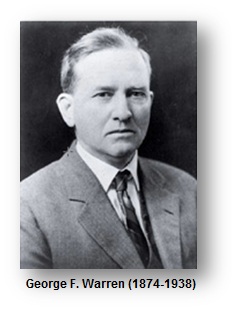
It was actually the Agricultural economist George Warren (1874-1938) who convinced Franklin Roosevelt that the way to end the deflation was to devalue the dollar. Roosevelts Brains Trustvehemently disagreed clinging to the old theory that they needed to maintain CONFIDENCE in the government by rejecting anything that would increase the money supply.
When Roosevelt devalued the dollar and confiscated gold to prevent people from profiting from the devaluation, the economy immediately boomed and rallied into 1937. Why? Suddenly assets rise in terms of the new depreciated currency and people THINK in nominal terms. So if the stock market doubles, you assume you doubled your money. But if everything else doubles in value, in terms of net purchasing power, you gained NOTHING!
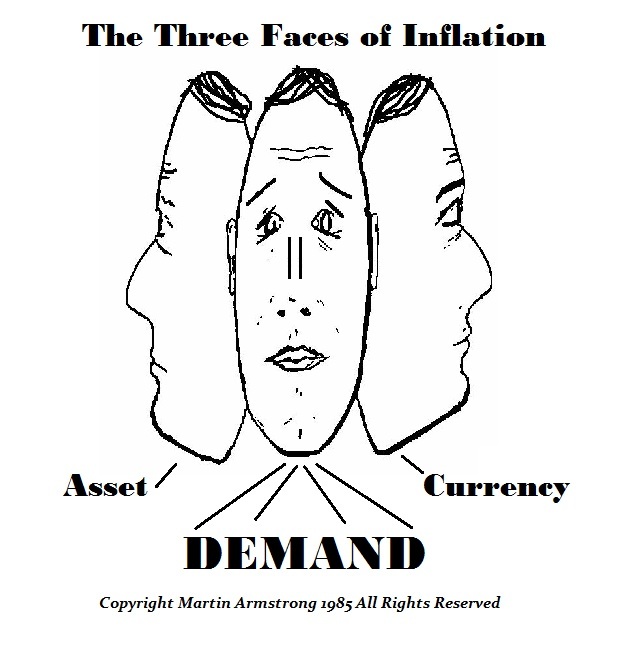
The sad part is these people who just yell and scream that I am wrong because inflation is caused by only a rise in the supply of money, to be as polite as I can, they are just incapable of understanding complex systems. Even in nominal terms, inflation can be caused by different simulations. The currency declines and we have asset inflation as I just laid in the USA from 1934 to 1937, or just look at Turkey and Venezuela in real time. We have asset inflation as in the DOT.COM bubble where capital is rushing into some new hot investment sector. Then we have demand inflation, which can be illustrated by say a serious weather condition and wheat rises because of crop failures.
So in the end, since the national debt is growing exponentially now thanks to interest expenditures that will exceed defense spending in 2019, obviously if you did pay off the debt by printing money, there would be a far less inflationary impact from the government budget perspective. It would no longer have the interest carrying costs so you would REDUCE the actual amount of new money being created which includes DEBT.
This is just not a simple equation of increasing the supply of money = inflation. I was the one yelling on the Hill that the Fed buying in 30-year bonds would NOT stimulate the economy BECAUSE they ASSUMED the system is an isolated domestic affair. It is not!. You buy-in the 30-year bonds and you have no idea if the seller is domestic or foreign. So the money left the country and stimulate somewhere else. You have to look at the whole system. Anyone who says inflation is created by an increase in money supply is off the reservation clinging to old theories that ignore debt, banking leverage, international capital flows, and that is just the beginning.
The next advisory from the National Hurricane Center is 2:00pm today. President Trump delivers a strong message of caution and concern ahead of the storm’s arrival.
.
On the forecast track, the center of Florence will approach the coast of North Carolina or South Carolina in the hurricane warning area on Thursday and Friday and move slowly near the coastline through Saturday. Florence is still forecast to be an extremely dangerous major hurricane when it nears the U.S. coast.
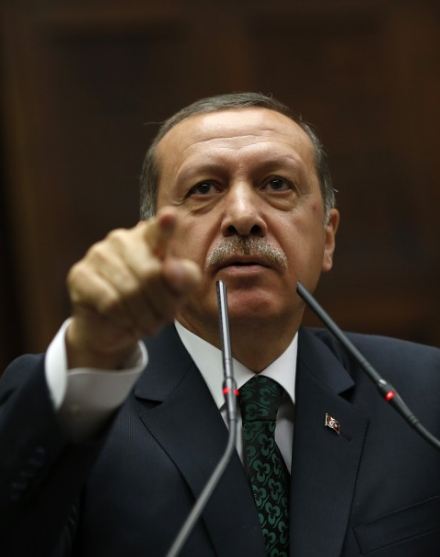
Just when you thought President Recep Tayyip Erdogan was really off the reservation, he suddenly appears off the planet. Erdogan has appointed HIMSELF as chairman of Turkey’s Sovereign Wealth Fund and got rid of the entire management staff. It looks like Erdogan now thinks he can force the free market to do as he commands if he is also the trader for the Sovereign Wealth Fund.
Of course, Treasury and Finance Minister Berat Albayrak, Erdogan’s son-in-law, will also sit on the board, according to a decree published in the Official Gazette. Anyone who actually thinks that Turkey can recover is out of their mind. The fund was formed to try and capitalize on state assets and put a lid on market turmoil in the wake of a failed coup attempt. This is a guaranteed nightmare in the making. We are witnessing a stubborn politician who has become a dictator and believes there is nothing beyond his power. It is just approaching the time to turn out the lights on Turkey as any viable place for investment. Turkey is now approaching the highest Country Risk for investment on the board
According to CNBC, Bob Woodward reported that Trump told Gary Cohn, the former Goldman Sachs/director of the National Economic Council to just print more money to reduce the national debt. Woodward reports this discussion:
Trump: “Just run the presses—print money.”
Cohn: “You don’t get to do it that way. We have huge deficits and they matter. The government doesn’t keep a balance sheet like that.”
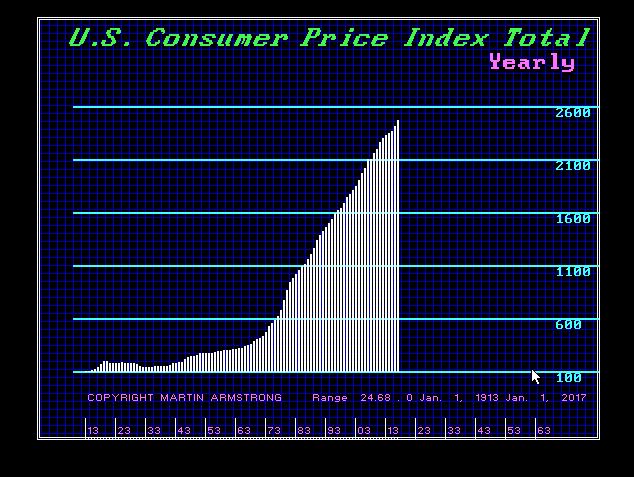
Here is a chart of the US CPI not seasonally adjusted. It has begun its sharp advance since the Floating Rate System was adopted in 1971 with the fall of Bretton Woods. In spite of borrowing, inflation over time has actually advanced more aggressively than if we had just printed instead of borrowed. Cohn has said the book “does not accurately portray” his experience of the White House. This claimed quote demonstrates that someone is seriously out of touch with economics. Actually, Trump is correct. Now we have Quartz joining the media calling Trump an idiot confirming they too are clueless about debt and printing. In fact, if you did just print the money and retired the debt, it would be DEFLATIONARY and not INFLATIONARY from the budget perspective because these people are clueless themselves about how the national debt works.
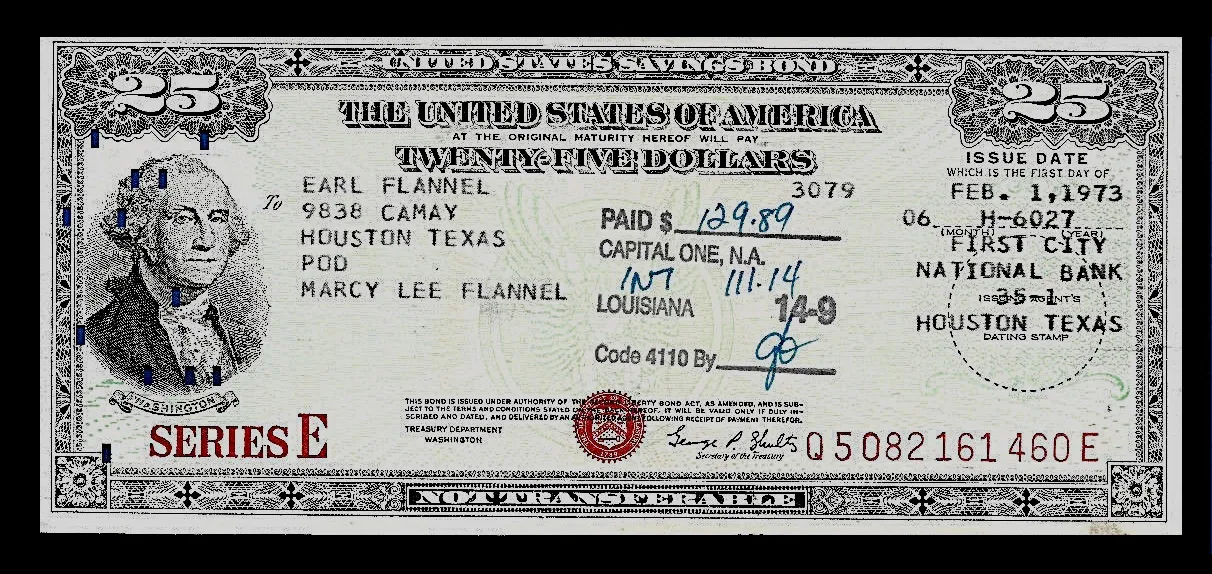
Before 1971, the debt could not be used as collateral for loans such as Savings Bonds. If you needed the money, you were forced to cash them in. Under this system, it was logically less inflationary to borrow than to print. However, post-1971, you buy T-Bills and post them as collateral to trade futures. The distinction between borrowing and printing has been turned upside down. A national debt is now worse than printing because itis money that now pays interest forever. Then there is no intention of ever paying off the national debt.
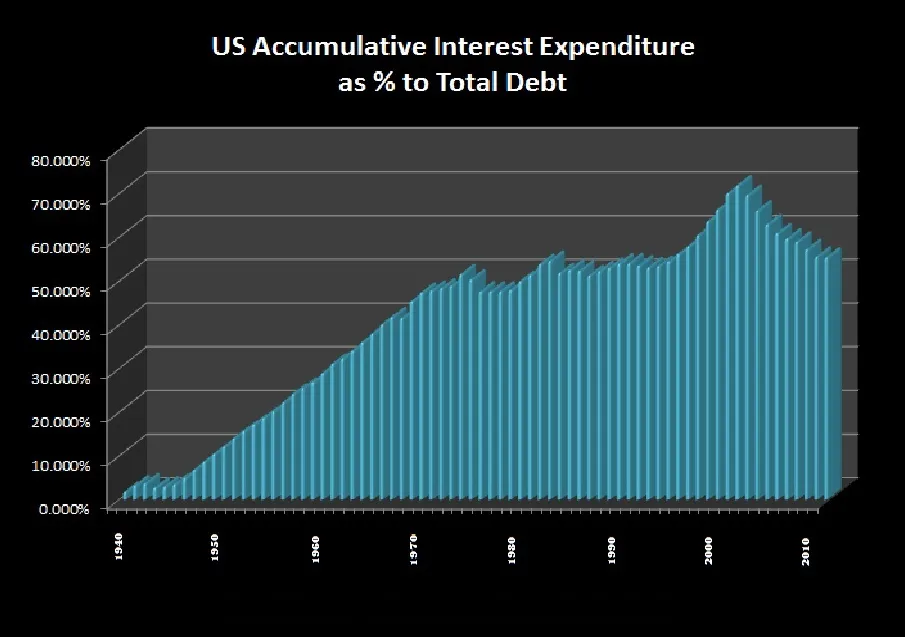
The truth is had we printed since 1971 instead of borrowing, there would be far less of an economic crisis compared to what we face today. If we simply printed to pay off the national debt, Social Security would suddenly become a Wealth Fund that actually made money instead of a Slush Fund for politicians. Now, Social Security can only invest 100% in US government debt and then the Fed lowers the interest rate to “stimulate” the economy and Social Security goes broke forcing higher taxes. Up to 70% of the national debt at times has been purely accumulated interest which never benefited anyone. It competes with the private sector in what we call the “flight to quality” and it forms the bank reserves. What is never discussed is the fact that US debt is also the reserve currency of nations – not paper dollars. That means that the interest we pay is exported and it stimulates foreign economies – not domestic.
So who is crazy here? Trump or Woodward? To keep borrowing year after year is insane. To monetize the debt will be DEFLATIONARY from the perspective of government expenditure. In 2019, interest expenditures even at this low level of interest rates will EXCEED military expenditure.
Woodward is by no means qualified to criticize Trump on such an issue he clearly does not even understand. Trump should really address the nation and explain this problem very simply. I will be glad to supply the charts.
Earlier this afternoon President Trump and Vice-President Mike Pence held a press briefing in the oval office along with FEMA Administrator Brock Long and DHS Secretary Kirstjen Nielsen to discuss concerns and preparation in advance of hurricane Florence.
Those in the forecast areas are strongly advised to pay close attention to local officials and heed all evacuation orders. Florence is projected to be a long-duration event for the eastern seaboard and mid-Atlantic region. Severe, possibly catastrophic, flooding is likely.
.
[Transcript] – Oval Office – 3:13 P.M. EDT – THE PRESIDENT: Okay, thank you very much. I’ve received a briefing from Secretary Nielsen, Administrator Long, and my senior staff regarding Hurricane Florence and other tropical systems that will soon impact the United States and its territories. The safety of American people is my absolute highest priority. We are sparing no expense. We are totally prepared. We’re ready. We’re as ready as anybody has ever been.
And it looks to me, and it looks to all of — a lot of very talented people that do this for a living, like this is going to be a storm that’s going to be a very large one — far larger than we’ve seen in perhaps decades. Things can change, but we doubt they will at this stage. It’s a pretty late stage. We doubt they’re going to be veering very far off course.
The places that are in the way and in the most jeopardy would be Virginia, North Carolina, South Carolina — that area. And again, they haven’t seen anything like what’s coming at us in 25, 30 years — maybe ever. It’s tremendously big and tremendously wet. Tremendous amounts of water.
So I’ve spoken with the governors of South Carolina, North Carolina, and Virginia. They’re prepared. We’re prepared. We’re working very well in conjunction with the governors.
I’d like to ask Brock Long, our Administrator, who’s done so well for us in Texas and Florida — we have something that could very well be very similar to Texas, in the sense that it’s tremendous amounts of water. Texas was the one that had, I would say, to this point, Brock, probably more water than we’ve ever seen in a storm or a hurricane. And it went out for seconds and thirds. We’ve never seen anything like it.
But FEMA, as you know, did a fantastic job, and a fantastic job also in Florida. And I’d like to ask Brock, if you would, to just say a few words to the media as to where it is now, what’s going to be happening, and how well prepared we are.
ADMINISTRATOR LONG: Thank you, Mr. President. Unfortunately, Hurricane Florence is setting out to be a devastating event to the Carolinas, and potentially Virginia as well.
So as you can see, they’re forecasting a major landfalling storm — Category 3 or 4 storm at landfall. The biggest hazard that we’re worried about is storm surge. That’s the primary driver of the evacuations that are underway by the states of North Carolina, South Carolina, and Virginia right now. But as this system comes in and makes landfall, during the weekend it’s forecast to stall out, lose its strength and its steering currents, and drop copious amounts of rainfall.
Unfortunately, the remnants of Gordon passed through the Mid-Atlantic over the weekend and dropped a lot of rain, saturating rivers. So, Hurricane Florence, as it comes in and puts anywhere between 20 and 30 inches more in isolated areas, could create a lot of inland flooding.
So, right now, sir, we’re supporting the governors with achieving their life safety evacuation and movements. We’re focused on mass care and sheltering. And then we’ll be focused on helping them to execute their response and recovery goals.
THE PRESIDENT: What are the chances that it veers off course and the hit won’t be so direct? What are the chances of that?
ADMINISTRATOR LONG: Unfortunately, I believe there’s quite a bit of certainty in the track forecast because the forward speed is picking up. It’s getting faster. And when systems do that, the track forecast becomes a lot more accurate. And I think the expectation needs to be set with the citizens in this area that, if you’ve been asked to leave, get out of the areas that are going to flood, and get into a facility that can withstand the winds.
Let’s set the expectations as well: This has an opportunity of being a very devastating storm. The power is going to be off for weeks. You’re going to be displaced from your home in the coastal areas. And there will be flooding in the inland areas as well.
So these are going to be statewide events. The hazards will be statewide.
THE PRESIDENT: Thanks. You wanted to show us this one then?
ADMINISTRATOR LONG: Yeah. This is a seven-day rainfall graphic. As you can see, the pink areas and the purple areas indicate 20 inches. That’s mean area rainfall; that’s an average rainfall amount. But you may see isolated amounts greater — into the 30-inch range — over Virginia, the central portions of Virginia and West Virginia. And these impacts are — they’re going to be through the Mid-Atlantic. So we’re coordinating not only with South Carolina, North Carolina, and Virginia, but other Mid-Atlantic states, all the way to Delaware.
THE PRESIDENT: Good. And it has been great coordination. I have to tell you, the states have been terrific. Everybody is working together. The governors and all of their representatives have been absolutely fantastic. And FEMA — there’s nobody like you people. I mean, what they’re doing is incredible.
Do you have any questions for Secretary Nielsen or for Brock Long, please? Anybody?
Q What lesson do we take from what happened in Puerto Rico? How do we apply the lessons we took from Puerto Rico?
THE PRESIDENT: Well, I think Puerto Rico was incredibly successful. Puerto Rico was, actually, our toughest one of all because it’s an island, so you just — you can’t truck things onto it. Everything is by boat. We moved a hospital into Puerto Rico — a tremendous military hospital in the form of a ship. You know that.
And I actually think — and the Governor has been very nice. And if you ask the Governor, he’ll tell you what a great job. I think probably the hardest one we had, by far, was Puerto Rico because of the island nature. And I actually think it was one of the best jobs that’s ever been done with respect to what this is all about.
Puerto Rico got hit not with one hurricane but with two. And the problem with Puerto Rico is their electric grid and their electric generating plant was dead before the storms ever hit. It was in very bad shape. It was in bankruptcy. It had no money. It was largely — you know, it was largely closed.
And when the storm hit, they had no electricity — essentially before the storm. And when the storm hit, that took it out entirely.
The job that FEMA and law enforcement and everybody did, working along with the Governor in Puerto Rico, I think was tremendous. I think that Puerto Rico was an incredible, unsung success.
Texas, we had been given A-plusses for. Florida, we’ve been given A-plusses for. I think, in a certain way, the best job we did was Puerto Rico, but nobody would understand that. I mean, it’s harder to understand. It was very hard — a very hard thing to do because of the fact they had no electric. Before the storms hit, it was dead, as you probably know.
So we’ve gotten a lot of receptivity, a lot of thanks for the job we’ve done in Puerto Rico. Puerto Rico was very important.
And, by the way, speaking of Puerto Rico, they’re going to be affected, pretty much, pretty soon by something else that’s on its way. Is that right?
ADMINISTRATOR LONG: Potentially, Hurricane Isaac right now is tracking south of the island, but we are — we have several thousand people inside Puerto Rico right now working on long-term recovery that have shifted to the response mode to monitor as Isaac passes to the south.
THE PRESIDENT: We do not want to see Hurricane Isaac hit Puerto Rico. That’s all we need. But we have a big hurricane out there, and it’s sort of skirting along Puerto Rico and the edge of Puerto Rico. That would not be good.
Q Mr. President, how much money do you think you’ll need for recovery efforts to this next hurricane? And do you have that already, or do you need to get it?
THE PRESIDENT: Well, we have it currently. Obviously, these are all unanticipated, so we’ll go to Congress. Congress will be very generous, because we have no choice. This is the United States. And whether it’s Texas or Florida or, frankly, if it’s Virginia — because Virginia, it’s looks like it’s very much in the path. Maryland, by the way, could be affected — very seriously affected — just to add. It’s a little bit outside of the path. And then, of course, South Carolina and North Carolina. I think that any amounts of money, whatever it takes, we’re going to do.
But we’re already set up. We have tremendous trucking systems, we have food systems. We have a lot of — a lot of contractors waiting. But for the most part, its been handled by FEMA, and also weve coordinated locally. We have food for days. We have emergency equipment and generators for many days. We should be in great shape.
Now, Ive also heard it could be 21 and 22 inches. If you can imagine what that is — 22 inches of rain. It is not something that weve had. Certainly, weve never had this on the East Coast. So — but I think were very well prepared and very well set up. Wouldnt you say?
ADMINISTRATOR LONG: Yeah. I think this storm right here is very similar to Hurricane Hugo and almost like a combination of Hurricane Hugo in 89 and Hurricane Floyd in 1999.
But look, successful disaster response and recovery is one that’s locally executed, state managed, and federally supported. So what FEMA is doing is pre-positioning the federal government’s assets to support each one of those governors that are about to be impacted with achieving their response and recovery goals. And thats the way emergency management and disaster response works best.
I also think — Id like to point out that what we learned last year is we have got to build a true culture of preparedness within our citizens here in America. This is a partnership, and it takes anything from neighbor helping neighbor all the way to the federal government when it comes to correctly responding and recovering.
Q Can we ask you about the (inaudible) and power outages? What things are right now to —
ADMINISTRATOR LONG: Thats a great question. So FEMA doesnt own the power grids in any one of these states. A lot of them are owned by the private industry. So what we have are business emergency operation center calls. Were concentrating with the private vendors to make sure that they have strong mutual aid programs in place. And we set up incident support bases to help stage power crews coming in from other states. And largely, its FEMAs job to get out of the way to make sure that the private power companies can get into these areas to set up their grid. We dont own it. We dont own it.
THE PRESIDENT: But unlike Puerto Rico, you have very strong power companies. Theyre very powerful, very well managed in the sense that they have — they have tremendous overcapacity. They are going to do a great job. They also have made contracts with other power companies that wont be affected, and theyre going to be coming in — just to answer your question, theyll be coming in to the various states that will be affected.
Theyre going to be coming in very strongly, and theyre already lining up. Theyll be here probably, for the most part, tomorrow, or shortly before the storm hits. So theyre going to be in great shape. These are, really, states that have very, very strong power authorities.
Q Whats your message, Mr. President, to people who might not have evacuated yet?
THE PRESIDENT: Well, thats very risky. I mean, again, weve never seen anything quite like this on the East Coast, at least. And if it turns out to be as bad — you know, we go out there; you have people that actually go fly through these storms. These are very brave people. But they fly through.
And from what Im hearing, the sites that they’re seeing have not been seen on the East Coast before. So I would say everybody should get out. I mean, you have to listen to your local authorities and — whether youre upland or downland. But depending on where you are, you have to listen and you have to get out. If they want you to get out — because its going to be impossible to have people get in there, whether its law enforcement or FEMA or anybody else. Once this thing hits, its going to be really, really bad along the coast. Okay?
Anything else?
Q Do you believe Rob Porter and Gary Cohns denials today?
THE PRESDIENT: Ah, well, you shouldnt be talking about that right now because it doesnt matter. But I really appreciate their statement. Their statement was excellent. And they both said that beautiful, which shows that the book is just a piece of fiction.
Thank you very much. I think were very well prepared. And thank you all very much. Appreciate it.
Q Do you mind giving us an update on the trade talks?
THE PRESIDENT: Trade talks are coming along very well. Were dealing with China, as you know. Weve taken a very tough stand on China, I would say, to put it mildly. And with Canada, they want to make a deal very much. Me? If we make it, thats good. And if we dont make it, thats okay too. Canada wants to make a deal. Well see if we can get them into the deal we already have with Mexico. I think the deal with Canada is coming along very well, and weve all been dealing in good faith. Okay?
[National Hurricane Center] At 500 PM AST (2100 UTC), the center of the eye of Hurricane Florence was located by satellite near latitude 27.5 North,
longitude 67.1 West. Florence is moving toward the west-northwest near 17 mph (28 km/h). A motion toward the west-northwest and northwest is expected through early Thursday. Florence is expected to slow down considerably by late Thursday into Friday.
On the forecast track, the center of Florence will move over the southwestern Atlantic Ocean between Bermuda and the Bahamas through Wednesday, and approach the coast of North Carolina or South Carolina in the hurricane warning area on Thursday and Friday.
Maximum sustained winds have increased to near 140 mph (220 km/h) with higher gusts. Florence is a category 4 hurricane on the Saffir-Simpson Hurricane Wind Scale. Further strengthening is forecast tonight and Wednesday. While some weakening is expected on Thursday, Florence is forecast to be an extremely dangerous major hurricane through landfall. (link)
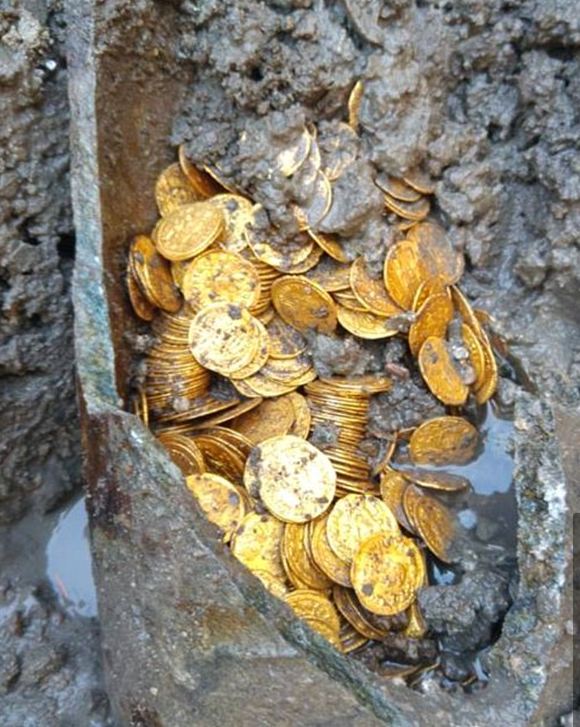
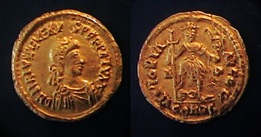
There were more than 100 gold Roman coins discovered in a buried hoard in the Cressoni theatre in Como, north of Milan. What I have examined from the photographs supplied to me, is that this is a hoard from the virtual fall of Rome. The coins I identified were from the Puppet Emperor of Ricimer, a Germanic general who ruled Rome through puppet emperors going into the end of the Western Empire. His power emerged in 461AD until his death in 472AD. The official fall of Rome took place in 466AD. After Ricimer’s death, the Germanic King of Italy, Odoacer deposed the last Western Emperor Romulus Augustusin 476AD, which is considered to mark the fall of the Western Roman Empire.
The photographs of the coins I reviewed clearly show the puppet Emperor Libius Severus III (461-465AD) was rather common in the hoard. This established that the hoard is from this period forward meaning it was a stash place for someone during the fall of Rome. Obviously, the person did not live to come back to retrieve his coins. These coins are worth probably $1 million+ depending upon the emperors in this entire batch which might be discovered. It could possibly rise to at least the $2 million valuations.
QUESTION: Mr. Armstrong; You are a history buff. Who was the richest person in ancient times? Has there ever been a trillionaire?
PD
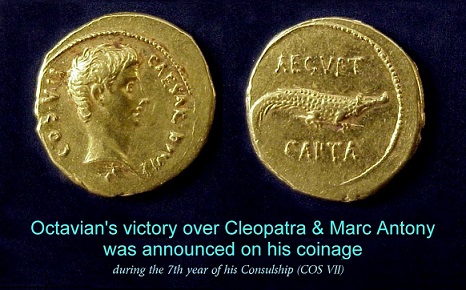
ANSWER: The Roman Emperor August. He is believed to have been worth in current dollar terms nearly $5 trillion. The only other person to have reached the trillion dollars net worth status was King Solomon of Judaea. After Octavian/Augustus defeated Marc Antony and Cleopatra, he then possessed the entire wealth of Egypt. In this respect, the wealth really did belong to him. Some have attributed the entire wealth of nations conquered and argued that Genghis Khan was worth probably 100 trillion dollars. However, the Roman system was rather different. Even taxation for a governor of a province would be owed by the governor to the state so whatever he would collect fell to him personally.
Marcus Licinius Crassus was perhaps one of the richest private men in Roman history. He amassed an enormous fortune through real estate speculation buying confiscated property seized by Marius from the supporters of Sulla. Crassus’s wealth is estimated by Pliny at approximately 200 million sestertii. Plutarch says the wealth of Crassus increased from less than 300 talents at first to 7,100 talents. An Attic (Greek, Athens) talent was the equivalent of 60 minae or 6,000 drachmae. A silver Drachm was generally 15mm in diameter with a weight of 4.20 grams. In Roman terms, this was about 26 kilograms (57 lb). If we take Plutarch’s measurement of wealth, that would be 42.6 million denarii.
A Roman soldier earned 225 denarii a year. Today, the average soldier in the US army earns $48,538 per year. That would approximately be $9.189 billion. If we take Jeff Bezos who is reported to be worth $164 billion based upon his stock in Amazon, that works out to the annual salary of 3.4 million soldiers compared to Crassus’ worth being 189,333 soldiers. However, the real difference is that Crassus’ wealth is cash whereas Bezos’ wealth is the current value of a stock. If he tried to sell it for cash, the value would be significantly less.
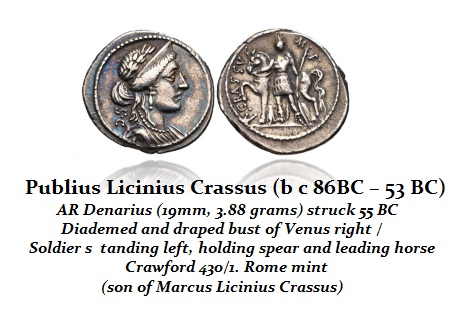
Crassus’ son, Publius Licinius Crassus (c 86BC – 53 BC), served under Julius Caesar. He did issue coins during the Republic as a “moneyer” who was a person authorized to issue the coins during the Roman Republic. The Senate actually controlled the quantity of money to be produced. There would be a “State of the Union” type of address to the Senate where they would be given the account of money on hand and what they expected the annual expenses would be. The Senate would then authorize the number of coins to be issued that fiscal year. The Quaestors handed the raw bullion and they would turn that over to the official who was the “moneyer” for that year. The moneyers would decide on the design to be issued which often celebrated his ancestors. The coinage would be struck and then handed back to the Quaestors for the expenditure of the government. The office of a moneyer continued into the Imperial period.
I have created this site to help people have fun in the kitchen. I write about enjoying life both in and out of my kitchen. Life is short! Make the most of it and enjoy!
This is a library of News Events not reported by the Main Stream Media documenting & connecting the dots on How the Obama Marxist Liberal agenda is destroying America












 There were more than 100 gold Roman coins discovered in a buried hoard in the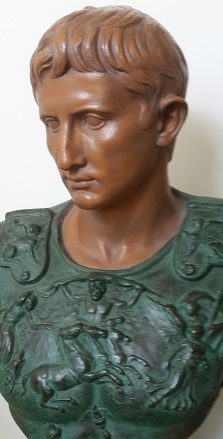

 Centinel2012