KOMMONSENTSJANE – CHAFFETZ LEADS OVERSIGHT HEARING INTO DEFENSE DEPT WASTE UNDER OBAMA


Too many Generals and Admirals and not enough grunts and sailors; plus the needed equipment.

kommonsentsjane's avatarkommonsentsjane

Chaffetz Leads Oversight Hearing Into Defense Dept. Waste Under Obama

March 25, 2017 134
(Quin Hillyer, Liberty Headlines) Almost lost in all the hoopla over health-care bills and wiretapping allegations, the House Oversight Committee this week analyzed a topic of what could be major budgetary impact – namely, a reported $125 billion in possible, but unachieved, savings from the Department of Defense.

The DoD’s fumbling first was reported more than three months ago by the Washington Post, which said the Pentagon had “buried” the evidence (or at least tried to) of its own inefficiencies. The Pentagon’s own report had been completed way back in January of 2015, but, according to the Post’s Bob Woodward and Craig Whitlock, “after the project documented far more wasteful spending than expected, senior defense officials moved swiftly to kill it by discrediting and suppressing the results.”
The Post story went on to say that the plan…

View original post 496 more words

KOMMONSENTSJANE – INVESTIGATIONS WITHOUT ANY RESULTS.


The answer is simple “1984” is almost here!

kommonsentsjane's avatarkommonsentsjane

john

GOOGLE WILL LET TERRORISTS PUT VIDEOS ON THEIR SITE BUT WILL HARASS  AMERICAN CITIZENS..

In fact Johnson and Johnson and AT&T pulled all of their ads from Google sites.

GOOGLE IS INTERFERING WITH MY BLOG AND HARASSING ME – A WOMAN

THIS IS FOR DOCUMENTATION.

AND NOW FOR MY BLOG:  THIS IS WHAT WE HAVE TO GO THRU:

We continue to read about all of the investigations that are being held  by Congress; but, it seems there are never any indictments and never any results.

There are 17 different investigating  groups –  this has to stop.It is time to have only the FBI AND CIA.

Look back at the Obama time in office and all of the scandals – Benghazi and the gun-running  operation – no one was put in jail or held accountable- why not?

kommonsentsjane

.

View original post

OPEC, Non-OPEC Oil Producers Recommend Extending Production Cuts By Six Months


Tyler Durden's picture

Having failed to “rebalance” the oil market in the first six months following the implementation of the Vienna production cut agreement, with crude inventories in the US hitting all time highs in the interim…

… OPEC and non-OPEC oil producers found themselves in the unpleasant position of scrambling for solutions at this weekend’s Kuwait meeting – in which Saudi Arabia was conspicuously missing – where just two things were discussed: deal compliance, which OPEC paradoxically claims is more than satisfactory despite the relentless climb in inventories, and whether to extend the production cuts by another six month.

And as the Kuwait meeting in which OPEC and rival N-OPEC producing countries met to review progress with their pact to cut supplies drew to a close, a joint committee of ministers from OPEC and non-OPEC oil producers recommended extending by six months the global deal to reduce oil output by 1.8 million barrels, a draft press release from their meeting on Sunday showed.

ClearBridge Dividend Strategy Portfolios target total return, risk management and dividend potential. Discover the strength of Legg Mason – A Leader In Separately Managed Accounts.

The oil ministerial committee “expressed its satisfaction with the progress made toward full conformity with the voluntary production adjustments and encouraged all participating countries to press on toward 100 percent conformity,” said the draft, seen by Reuters.

The December accord, aimed at supporting the oil market, has lifted crude LCOc1 to more than $50 a barrel. But the price gain has encouraged U.S. shale oil producers, which are not part of the pact, to boost output.

In its statement, the committee said that “certain factors, such as low seasonal demand, refinery maintenance, and rising non-OPEC supply, have led to a further increase in crude oil stocks. At the same time, the liquidation of positions by financial players in the market was also observed.”  In other words, the committee blamed everything, including “evil selling speculators” except non-compliance with the deal, of course as that would crush what little credibility OPEC had.

Oil inventories are high because of low U.S. demand and higher supply, and the market should re-balance in the second half of the year, OPEC Secretary-General Mohammad Barkindo told reporters in Kuwait. Inventories in countries in the Organisation for Economic Co-operation and Development are currently 282 million barrels higher than their five-year average, he said at the meeting on Sunday.

It also left on a positive note: “However, the end of the refinery maintenance season and noticeable slowdown in U.S. stock build as well as the reduction in floating storage will support the positive efforts undertaken to achieve stability in the market,” it said.

“Oddly”, there was no mention of US shale production, which has soared in recent months, happy to grab market share from OPEC which has allegedly cut production by nearly 2 million barrels daily, and whose output continues to ramp higher in line with the resurgence in US oil rigs.

Before the meeting, Iraqi Oil Minister Jabar Ali al-Luaibi told reporters there were some encouraging elements that suggested the oil market was improving, and that if all OPEC members agreed measures to help price stability, Iraq would support such steps. “Any decisions taken unanimously by members of OPEC … Iraq will be part of the decision and will not be deviating from this,” Luaibi said quoted by Reuters.

Iraq’s oil production is running at 4.312 million bpd this month, Luaibi said, adding that his country had cut its oil exports by 187,000 bpd so far and would reach 210,000 bpd in a few days. Compliance with the supply-cut deal was 94 percent in February among OPEC and non-OPEC oil producers combined, Russian Energy Minister Alexander Novak said.

Russia is committed to cuts of 300,000 bpd by the end of April, Novak said, adding that a deal extension could be discussed on Sunday. “For today, obviously, this is within the sphere of our questions,” Novak said and added that he expects global oil stockpiles to decrease in the second quarter of this year. “The dynamics are positive here, I believe,” Novak said, adding that inventories in the United States and other industrialized countries had risen by less than in the past.

OPEC’s compliance rate was 106% in February, and non-OPEC nations, including Russia, have reached compliance of 64 percent, Kuwait’s Almarzooq said Sunday. The combined compliance rate of both was 94 percent, he said.

Kuwaiti Oil Minister Essam al-Marzouq said the oil market may return to balance by the third quarter of this year if producers comply fully with their production targets.

“More has to be done. We need to see conformity across the board. We assured ourselves and the world that we would reach our adjustment to 100 percent conformity,” Marzouq said.

The biggest question, however, how OPEC plans to deal with the rising shale threat, which as Goldman noted last week has become the global oil price setter, was unanswered.

This is how Goldman explained the dramatic change in the global oil cost curve over the past three years:

Shale’s short time to market and ongoing productivity improvements have provided an efficient answer to the industry’s decade-long search for incremental hydrocarbon resources in technically challenging, high cost areas and has kicked off a competition amongst oil producing countries to offer attractive enough contracts and tax terms to attract incremental capital. This is instigating a structural deflationary change in the oil cost curve, as shown in Exhibit 2. This shift has driven low cost OPEC producers to respond by focusing on market share, ramping up production where possible, using their own domestic resources or incentivizing higher activity from the international oil companies through more attractive contract structures and tax regimes. In the rest of the world, projects and countries have to compete for capital, trying to drive costs down to become competitive through deflation, FX and potentially lower tax rates.

The implications of this curve shift are major, all of which are very adverse to the Saudis, who have been relegated from the post of long-term price setter to inventory manager, and thus the loss of leverage. Here are some further thoughts from Goldman:

  • OPEC role: from price setter to inventory manager In the New Oil Order, we believe OPEC’s role has structurally changed from long-term price setter to inventory manager. In the past, large-scale developments required seven years+ from FID to peak production, giving OPEC long-term control over oil prices. US shale oil currently offers large-scale development opportunities with 6-9 months to peak production. This short-cycle opportunity has structurally changed the cost dynamics, eliminating the need for high cost frontier developments and instigating a competition for capital amongst oil producing countries that is lowering and flattening the cost curve through improved contract terms and taxes.
  • OPEC’s November decision had unintended consequences: OPEC’s decision to cut production was rational and fit into the inventory management role. Inventory builds led to an extreme contango in the Brent forward curve, with 2-year fwd Brent trading at a US$5.5/bl (11%) premium to spot. As OPEC countries sell spot, but US E&Ps sell 30%+ of their production forward, this was giving the E&Ps a competitive advantage. Within one month of the OPEC announcement, the contango declined to US$1.1/bl (2%), achieving the cartel’s purpose. However, the unintended consequence was to underwrite shale activity through the credit market.
  • Stability and credit fuel overconfidence and strong activity: A period of stability (1% Brent Coefficient of Variation ytd vs. 6% 3-year average) has allowed E&Ps to hedge (35% of 2017 oil production vs. 21% in November) and access the credit market, with high yield reopen after a 10- month closure (largest issuance in 4Q16 since 3Q14). Successful cost repositioning and abundant funding are boosting a short-cycle revival, with c.85% of oil companies under our coverage increasing capex in 2017.

Finally, with Saudi Arabia absent, the Kuwait meeting was largely moot. Khalid Al-Falih, the Saudi energy minister said in a Bloomberg Television interview on March 17 that the deal will be maintained if oil stockpiles are still above their five-year average.

In summary: It’s too early to decide on an extension of the output cuts, and OPEC will take up the issue in May, Barkindo said at Sunday’s meeting, during which ministers will monitor compliance with the targeted reductions.

* * *

For those curious, here is the full blast of Bloomberg overnight headlines covering the Kuwait meeting

KUWAIT OIL MINISTER OPEC COMPLIANCE IN FEB BETTER THAN JAN
KUWAIT: WE ARE ASKING COUNTRIES TO INCREASE COMPLIANCE
KUWAIT: WE SHOULD SEE MARKET REBALANCE END OF YEAR
KUWAIT: WE SHOULD SEE OIL STOCKS DRAWDOWN IN 3Q
KUWAIT OIL MINISTER: INDUSTRY NEEDS TO ADDRESS CHALLENGES
KUWAIT: SAUDI ARABIA, ANGOLA EXCEEDED COMMITMENTS TO CUT OUTPUT
KUWAIT: OIL MARKET WILL BE IN BALANCE IN 3Q IF COMPLIANCE 100%
KUWAIT: OIL COMMITEE REPORTS HIGH LEVEL OF CONFORMITY
KUWAIT: OPEC IS STUDYING EXTENSION OF CUTS DEAL FOR SIX MONTHS
KUWAIT MINISTER: OPEC, NON-OPEC COMPLIANCE WITH CUTS IS AT 94%
KUWAIT: COMMITTEE CALLS FOR OPEC TO MAKE RECOMMENDATION ON CUTS

RUSSIA’S ENERGY MINISTER: MINISTERS DISCUSS EXTENDING CUTS DEAL
RUSSIA’S NOVAK: OPEC/NON OPEC COMPLIANCE 94% AS OF END OF FEB
RUSSIA’S NOVAK: OPEC, NON-OPEC DISCUSS EXTENDING OIL-CUTS DEAL
RUSSIA: OPEC, NON-OPEC COOPERATING AT `VERY HIGH LEVEL’

IRAQ TO SUPPORT EXTENDING OIL CUTS IF OTHERS IN OPEC AGREE
IRAQ PRODUCED 4.312M B/D OF OIL IN MARCH: MINISTER
IRAQ’S MARCH OIL EXPORTS IN AGREED RANGE: MINISTER
IRAQ CUT OIL OUTPUT BY 187M B/D UNDER OPEC DEAL: LUAIBI
IRAQ TO CUT 210K B/D OF OIL OUTPUT IN FEW DAYS: LUAIBI

OPEC CHIEF SEES MARKET REBALANCE IN SECOND HALF OF 2017
OPEC: PRODUCERS REACHED HIGH LEVEL OF COMPLIANCE WITH CUTS
OPEC HOPES FOR HIGHER LEVEL OF COMPLIANCE WITH OUTPUT CUTS
OPEC CHIEF: TOO EARLY TO DECIDE ON EXTENSION OF OIL CUTS DEAL
OPEC CHIEF: OIL MARKET OPTIMISM IMPROVED ON OUTPUT CUTS
OPEC: OIL STOCKS ARE HIGH ON LOW U.S. DEMAND, RISING SUPPLY
OPEC: OIL STOCKS TO DECREASE IN SECOND HALF OF THIS YEAR

OMAN OIL MINISTER SAYS MAKES SENSE TO EXTEND OUTPUT CUTS 6 MOS
OMAN SUPPORTS OIL OUTPUT CUTS UNTIL END OF YEAR: MINISTER

VENEZUELA OIL MIN: WE ARE READY TO BACK EXTENDING OUPTUT CUTS

OPEC, NON-OPEC COMMITTEE SAID TO RECOMMEND OIL-CUTS EXTENSION
BARKINDO: OPEC TO DECIDE ON EXTENSION OF OIL CUTS DEAL IN MAY

“They’re Like The Praetorian Guard” – Whistleblower Confirms NSA Targeted Congress, The Supreme Court, & Trump


Tyler Durden's picture

Authored by Chris Menahan via InformationLiberation.com,

NSA whistleblower William Binney told Tucker Carlson on Friday that the NSA is spying on “all the members of the Supreme Court, the Joint Chiefs of Staff, Congress, both House and Senate, as well as the White House.”

Binney, who served the NSA for 30 years before blowing the whistle on domestic spying in 2001, told Tucker he firmly believes that Trump was spied on.

“They’re taking in fundamentally the entire fiber network inside the United States and collecting all that data and storing it, in a program they call Stellar Wind,” Binney said.

“That’s the domestic collection of data on US citizens, US citizens to other US citizens,” he said. “Everything we’re doing, phone calls, emails and then financial transactions, credit cards, things like that, all of it.”

“Inside NSA there are a set of people who are — and we got this from another NSA whistleblower who witnessed some of this — they’re inside there, they are targeting and looking at all the members of the Supreme Court, the Joint Chiefs of Staff, Congress, both House and Senate, as well as the White House,” Binney said.

“And all this data is inside the NSA in a small group where they’re looking at it. The idea is to see what people in power over you are going to — what they think, what they think you should be doing or planning to do to you, your budget, or whatever so you can try to counteract before it actually happens,” he said.

“I mean, that’s just East German,” Tucker responded.

Rather than help prevent terrorist attacks, Binney said collecting so much information actually makes stopping attacks more difficult.

“This bulk acquisition is inhibiting their ability to detect terrorist threats in advance so they can’t stop them so people get killed as a result,” he said.

“Which means, you know, they pick up the pieces and blood after the attack. That’s what’s been going on. I mean they’ve consistently failed. When Alexander said they’d stop 54 attacks and he was challenged to produce the evidence to prove that he failed on every count.”

Binney concludes ominously indicating the origin of the deep state…

“They are like the praetorian guard, they determine what the emperor does and who the emperor is…”

Who’s going to stop them?

*(SEND IN THE CLOWN) -Schumer Enjoying Laugh At President Trump, Doesn’t Know He Just Got Played


Trumpis setting him and the Demorats up, and it seems that they don’t even know it. That’s what happens when you are arrogant.

MY LAST EVER VIDEO?


Those in power have only one objective and that is to maintain the power; which sets in motion the forces that will take them down. So their very nature is what always eventually destroys them.

The Media Has Always Been Biased?


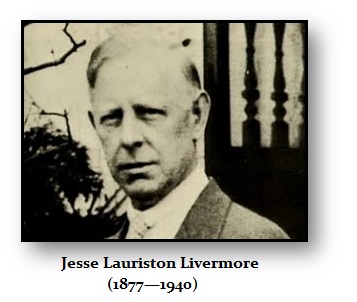
Livermore

COMMENT: Marty; I managed to get a copy of your Greatest Bull Market in History at an auction. You do know they bring $3,000+ I presume? But what stunned me in there is that you wrote how the Wall Street Journal falsely accused Jesse Livermore of trying to influence the presidential election by saying the stock market was going to rally. When it did do what he said, the press refused to quote him again because they were wrong.

They will not quote you yet you have been the only one who has called this bull market from the very bottom. It looks like mainstream media is doing to you what they did to Livermore. History does repeat.

REPLY: You may be right. But that is a good thing. It is better to keep the info in real hands rather than just plastered around for hype. Exclusive is better. The majority would never listen anyway.

The Financial Crisis 1992-1993


Major John

QUESTION: Marty, it is well known here in Britain that you advised Thatcher of course, but it was John Major you advised and even wrote what he said during the pound crisis and the Soros attack. Would you ever like to comment on that in public about what really happened during that crisis. The press will never report anything you say. There are those of us who would like to hear from the source.

Thank you for what you do.

PJ

British Pound Sept 1992 Soros

ANSWER: For those who do not know, Sir John Major was the Prime Minister of Britain 1990-1997. One of the biggest BS stories is how they blame or credit such events to one person. Each of these market “manipulations” or attacks, are typically characterized with one member of “the Club” taking the front position. In this case it was George Soros. He was given the personal face of that event that broke the pound. It was by no means just Soros. He did not get that trade correct out of thin air. Everyone in the trading community saw it coming. It was similar to the Greek crisis in 2010. Once one member is in trouble, traders look around ans see who is next.

PlazaAccord-1

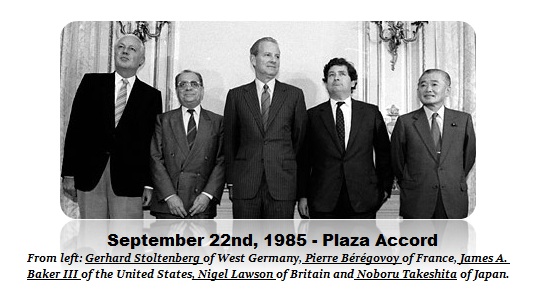
The 1992/1993 collapse of the European Exchange Rate Mechanism (ERM) was a system introduced by the European Economic Community on March 13th, 1979, to which Thatcher was against. It was part of the European Monetary System (EMS), intended to reduce exchange rate variability and achieve monetary stability in Europe in the aftermath of the collapse of Bretton Woods in 1971. Only after the Plaza Accord in 1985, did the EMS prepare for Economic and Monetary Union of Europe which gave birth to the introduction of a single currency, the euro, which took place on January 1st, 1999. The collapse of Bretton Woods, the ERM, and the coming Euro all have the same flawed understanding of economics. Governments think they can by law or regulation nullify their own failures. All three systems could never survive under the socialistic/military establishment for the politicians do whatever they want to sustain power, not to manage the economy in any meaningful manner.

china-100-yuan

Clearly, the tension within the ERM began to build up from mid-July 1992, concentrating initially on the Italian lira, then on sterling and then on a variety of other currencies. However, what was also overlooked was the fact that July 1992 was also when the Russian Ruble began trading for the first time. Meanwhile, the Bank of China required foreign visitors to China to conduct transactions with Foreign Exchange Certificates that were issued by the Bank of China between 1979 and 1994. Effectively, this was a two-tier monetary system – domestic v international. Following the ERM Crisis, this two-tier system in China was abolished, and all transactions then took place in Renminbi. The entire global foreign exchange system was changing. The biggest mistake people make looking at the British pound crisis of 1992, has been to look at it through a myopic perspective of isolation.

The pressure on the Finnish Markka was so strong at that time it was forced to abandon its peg with the ECU. Italy raised its interest rates to try to support its currency, but still the lira weakened repeatedly. The Bundesbank did not cut its interest rates enough fearing inflation and speculation would continue, which put pressures on other states. It was on September 13th, 1992 when the Italian decision to devalue Italian Lira by 7% took place (other currencies revalue of 3.5%: Lira devalues 3.5%). The pressures on lira led traders to look around and saw that the British pound was also overvalued all relative to Germany.

Hence, the pound sterling became the next target just as did Portugal after Greece in 2010.  It was Black Wednesday, September 16th, 1992, when the British Conservative government of John Major was forced to withdraw the pound sterling from the European Exchange Rate Mechanism (ERM) after it was unable to keep the pound above its agreed lower limit in the ERM. Yes, I was being called during this crisis. The first call from Britain asked me what our model was forecasting. I warned that the pound had to be devalued and that the ERM was collapsing exactly as did Bretton Woods. I was told John Major could not devalue the pound for that was his campaign promise. I thought about the crisis and called back. I wrote down the words to say that he would allow the pound to float and seek its own level. This was slightly different from a devaluation which would have still been a fixed exchange rate peg. Allowing the pound to float would let the market make the decision, rather than the politicians. Therefore, Major did not violate his promise and did not officially devalue the pound – he let it float to seek its own level.

The day after the British crisis ended with effectively withdrawing from ERM, it in turn flipped the pressure back upon Italy. Thus, the following day, the 17th of September 1992, Italy also withdrew from ERM. Once again, attempts to politically fix currencies produced a total and utter failure as was the case with Bretton Woods and of course the more recent Swiss Peg collapse. We will see the same end result with the Euro.

Deutsche Mark Sept 1992-MThe Deutsche mark was sent to significant highs even against the dollar in September 1992. The foreign exchange markets remained disturbed for the rest of that year, with a renewed outbreak of speculative pressures leading to the abandonment of Sweden’s peg to the ECU, devaluation of both the Portuguese escudo and the Spanish peseta came in November 1992 and the abandonment of Norway’s ECU-peg in December 1992. By January 1993, Ireland witnessed economic pressure due to the sterling devaluation by the UK, and this then compelled Ireland to devalue by 10%. Germany finally reduced its interest rates in February, March and April of 1993, trying to ease the economic pressure within the currencies that had not yet been realigned. The entire crisis of 1992-1994 was a prelude to the ultimate crisis that would hit the euro for similar reasons and Germany’s fear of inflation that would impose austerity on the rest of Europe. It was Germany’s high interest rates in 1992/1993 that broke the back of the ERM.

Indeed, then France presented a problem for the politicians that made clear of their commitment to the ‘franc fort’ policy, that was keeping the franc at its existing parity. France also wanted lower interest rates to relieve the recession, and it appeared willing to challenge the German economic authorities publicly, who were concerned about inflation, so they kept interest rates high out of austerity. On June 18th, the French money market intervention rate was pushed below the German rates. This was received with skepticism in the markets. Consequently, speculative pressures within the ERM continued to build. This time, those pressures turned against the French franc during July 1993. The Banque de France was forced to raise its interest rate to prevent the franc from falling through its ERM lower band. However, the Bundesbank did not lower its discount rate, and massive sales of the French franc, Belgian franc, Danish krone, Spanish peseta and Portuguese escudo took place in response. Once again, Germany’s obsession with the Hyperinflation of the 1920s dictates their response. Today, we have seen the price of German austerity upon the entire economic condition of Europe. While the ERM broke, today there is a full federalized government in Brussels attempting to maintain austerity and the same philosophies that broke the ERM during the 1992/1993 Crisis.

At this point in time, the ERM was in total crisis within Europe. One would think they learned from Bretton Woods, but politicians are blinded by their self-interest, which always comes before that of the people or country. Massive intervention was necessary to keep these currencies just above their ERM floor. On the 2nd of August 1993, the EC monetary officials and finance ministers finally agreed that the ERM bands should be widened from 2.25% to 15% (except for the Dutch-German one). With the wider bands, the system would be less vulnerable to speculation.

At the core of all of this was German’s complete misunderstanding of the Hyperinflation and their attempt to impose austerity upon all of Europe, which is deflationary and anti-economic growth.

Thailand Share-Y 3-22-2017

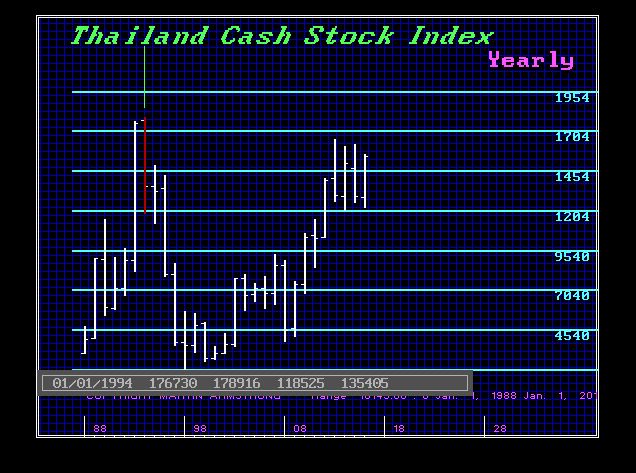
The ERM Crisis of 1992/1993, made George Soros famous, yes, but it awakened international hedge fund traders to the currencies markets. Traders then turned to the peripheral markets – Russia next and then South East Asia, which saw its share market peak in January 1994 and bottom in September 1998 (56 months).

Russia Ruble-Y 3-22-2017It was on October 11th, 1994, when the ruble tumbled in the Moscow interbank market by over 20% against the U.S. dollar. “Black Tuesday” became the first currency crisis in post-communist Russia also caused by politicians. From July 1992, when the ruble first could be legally exchanged for United States dollars, to October 1995, the rate of exchange between the ruble and the dollar declined from 144 rubles per US$1 to around 5,000 per US$1. It was the float of the Ruble in July 1992 that started the shift in global capital flows and currency markets. Politicians, for pride, artificially set the Ruble’s value too high against the dollar reflecting past glories, which was the exact same mistake of the British entering the ERM. Rapid changes in the nominal rate of the Russian economy reflected the overall macroeconomic instability. After the ERM crisis, traders then turned to emerging markets targeting Russia. This was the Black Tuesday with a 27% collapse in the ruble’s value against the dollar. Eventually, in July 1995, the Russian Central Bank announced its intention to maintain the ruble within a band of 4,300 to 4,900 per US$1 through October 1995. They later extended the period to June 1996. They attempted a “crawling band” exchange rate which they introduced to allow the ruble to depreciate gradually through the end of 1996, This led to a further collapse from 5,000 to 6,100.

ft-1998After the Russian introduction of the “crawling band”, traders turned their attention to the emerging market in Southeast Asia with more concerted force. This eventually manifested in the 1997 Asian Currency Crisis. Then traders turned back to Russia. I have stated many times how I was invited to the IMF dinner put on by Edmond Safra in Washington. I was being pitched then to join “the Club” and buy into Russia for they had the IMF in their pocket. The IMF would continue to guarantee Russian debt so you could buy debt and earn 5 times the amount of interest otherwise. The IMF would eliminate the risk. I said “No way, my computer warned Russia would collapse.”

Ruble 1998 - DOf course, this eventually led to the collapse in 1998, which in turn set in motion the Lehman and Bear Stearns collapse thanks to Long Term Capital Management collapse who lost on the Russian bond market.

It was all set in motion by politicians trying to fix currencies that they cannot fix.

Healthcare Controls and The Benefits of “The Blame Game”…


Source: Healthcare Controls and The Benefits of “The Blame Game”…

Donna Brazile Admits She Lied, But Insists SHE’S the Victim—Not Bernie


Victim she is the perpetrator … lol