MiG-31: The Near-Space Plane. Russia’s super-fast interceptor


Published on Sep 30, 2018

Watch Combat Approved series: https://rtd.rt.com/series/combat-appr… Imagine flying a plane so high that the world looks spherical and the sky is pitch-black. The Mikoyan Mig-31 fighter is the only jet plane in the world to make it possible to fly on the very edge of space. With an incredible speed of 3,000 km/h, the Soviet-designed interceptor is the world’s fastest serving aircraft, and it can fly twice as high as a commercial flight. Travelling at more than twice the speed of sound, the MiG-31 can touch the stratosphere and breach what’s known as the Armstrong limit. beyond which a pilot’s tears and saliva would boil without a pressure suit. Even at such incredible heights, the MiG-31 can still deal with its enemies. The fighter is armed with long and short-range missiles that can be launched against high-speed targets. At Khotilovo air base, RTD attempts to give viewers a first-hand experience of near-space travel aboard this unique aircraft by mounting cameras on the airframe and inside the cockpit. See what breaking the sound barrier looks like and why, despite being designed in the 1970s, the MiG-31remains at the top of its game and unrivalled to this day. SUBSCRIBE TO RTD Channel to get documentaries firsthand! http://bit.ly/1MgFbVy FOLLOW US RTD WEBSITE: https://RTD.rt.com/ RTD ON TWITTER: http://twitter.com/RT_DOC RTD ON FACEBOOK: http://www.facebook.com/RTDocumentary RTD ON DAILYMOTION http://www.dailymotion.com/rt_doc RTD ON INSTAGRAM https://www.instagram.com/rtd_documen… RTD LIVE https://rtd.rt.com/on-air/


Satellite Shootdown (2008) Military Channel


Published on Nov 15, 2013

©2008 – Discovery Communications


Is SpaceX’s Raptor engine the king of rocket engines?


Published on May 25, 2019

2:55 – Basic physics of rocket engines 6:10 – Rocket engine cycles 20:30 – Rocket fuel comparison 30:40 – Raptor vs other rocket engines 44:05 – Summary Article version – https://everydayastronaut.com/?p=9823… SpaceX’s new raptor engine is a methane fueled full flow staged combustion cycle engine and its so hard to develop, no engine like this has ever flown before! Now this topic can be really intimidating so in order to bring the Raptor engine into context, we’re going to do an overview of a few common types of rocket engine cycles then compare the Raptor to a few other common rocket engines, like SpaceX’s current work horse, the Merlin, The Space Shuttle’s RS-25, the RD-180, Blue Origin’s BE-4 and the F-1 engine. And if that’s not enough, not only is SpaceX using a crazy engine cycle, they’re also going to be using Liquid Methane as their fuel, again something that no orbital rocket has ever used! So we’ll also go over the unique characteristics of liquid methane as a rocket fuel and see if we can figure out why SpaceX went with Methane for the Raptor engine. We’ll also break down and explain all the different engine cycle types so you know what the full flow staged combustion cycle is, how it works, and how it compares to the other cycles. So by the end of this video hopefully we’ll have the context to know why the raptor engine is special, how it compares to other rocket engines, why it’s using methane and hopefully find out if the Raptor engine will be the new king of rocket engines… ———————————————– Rocket engine renders by @MartianDays https://twitter.com/MartianDays HUGE thanks to my Moon Walker Patreon supporters! Blake Jacobs, Eli Burton, Jethro, Mac Malkawi, Neurostream, Ole Mathias Heggem Want to support what I do? Consider becoming a Patreon supporter for access to exclusive livestreams, our discord channel and subreddit! – http://patreon.com/everydayastronaut The best place for all your space merch needs! https://everydayastronaut.com/shop/ All music is original! Check out my album “Maximum Aerodynamic Pressure” anywhere you listen to music (Spotify, iTunes, Google Play, Amazon, etc) or click here for easy links – http://everydayastronaut.com/music I’m the cohost of an awesome podcast where we talk all about current technologies and how they shape our future! http://ourludicrousfuture.com or here on YouTube https://www.youtube.com/ourludicrousf…

Introduction to bonds | Stocks and bonds | Finance & Capital Markets | Khan Academy


Published on Sep 28, 2013

What it means to buy a bond. Created by Sal Khan.


Economic Freedom of the World | Learn Liberty


Published on Sep 7, 2011

Do you prefer the world of Adam Smith or the world of Karl Marx? Prof. Robert Lawson tells the story of his numerous discussions about this very question with his friends in college. Even after years of theoretical discussion with his friends, a conclusion was never reached between them. Prof. Robert Lawson now works on the Economic Freedom of the World project, which is an empirical study that attempts to answer this same question. In order to do this, the study compares data related to economic freedom and quality of life. It finds that countries with institutions resembling those advocated by Adam Smith tend to provide the highest quality of life to its citizens. The latest edition of the Economic Freedom of the World report can be found here: http://www.freetheworld.com/release.html

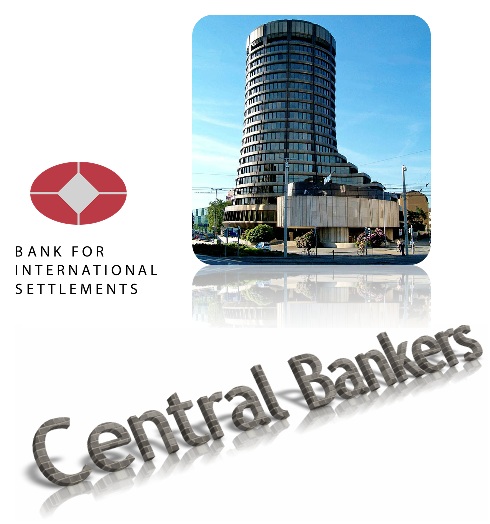
BIS – The Central Bank of Central Banks


QUESTION: Could you please tell us more about the bank of the national banks (BIS) located in Swiss?
Many thanks for your information. I love to read your blog first thing in the morning!!!

JS

ANSWER: The Bank for International Settlements (BIS) was originally established to handle the reparation payments of Germany. It was also supposed to facilitate cooperation among the central banks. However, it had no real power to compel them to do anything, which was demonstrated by France who refused to agree with the other member concerning the reparation payments of Germany. The BIS was created in 1930 at the Hague Conference. A convention respecting the establishment of the BIS was signed between Belgium, France, Germany, Italy, Japan and the United Kingdom on the one hand, and Switzerland on the other. The BIS is owned by 60 central banks, representing countries from around the world that together account for about 95% of world GDP. It is the central bank for central banks.

The BIS does have a full range of traditional short-term instruments, denominated in reserve currencies. The BIS instruments allow customers to meet cash management objectives. They also provide tradeable instruments that are widely used by reserve managers seeking credit quality, which they will issue in major currencies along the yield curve. The paper is 1 to 5 years in maturity.


William Ackman: Everything You Need to Know About Finance and Investing in Under an Hour


Published on Nov 27, 2012

William Ackman: Everything You Need to Know About Finance and Investing in Under an Hour. WILLIAM ACKMAN, Activist Investor and Hedge-Fund Manager We all want to be financially stable and enjoy a well-funded retirement, and we don’t want to throw out our hard earned money on poor investments. But most of us don’t know the first thing about finance and investing. Acclaimed value investor William Ackman teaches you what it takes to finance and grow a successful business and how to make sound investments that will get you to a cash-comfy retirement. The Floating University Originally released September 2011. Additional Lectures: Michio Kaku: The Universe in a Nutshell http://www.youtube.com/watch?v=0NbBjN…

Introduction to the income statement | Stocks and bonds | Finance & Capital Markets | Khan Academy


Published on Aug 19, 2009

The income statement, revenue, gross profit, operating profit, net income, ROA and ROE. Created by Sal Khan. Watch the next lesson: https://www.khanacademy.org/economics… Missed the previous lesson? Watch here: https://www.khanacademy.org/economics… Finance and capital markets on Khan Academy: Life is full of people who will try to convince you that something is a good or bad idea by spouting technical jargon. Most of them have no idea what they are talking about. Don’t be one of those people or their victims when it comes to stocks. From P/E rations to EV/EBITDA, we’ve got your back! About Khan Academy: Khan Academy offers practice exercises, instructional videos, and a personalized learning dashboard that empower learners to study at their own pace in and outside of the classroom. We tackle math, science, computer programming, history, art history, economics, and more. Our math missions guide learners from kindergarten to calculus using state-of-the-art, adaptive technology that identifies strengths and learning gaps. We’ve also partnered with institutions like NASA, The Museum of Modern Art, The California Academy of Sciences, and MIT to offer specialized content. For free. For everyone. Forever. #YouCanLearnAnything

More on balance sheets and equity | Housing | Finance & Capital Markets | Khan Academy


Published on Mar 15, 2008

What happens to equity when the value of the assets increase or decrease? Created bySal Khan. Watch the next lesson: https://www.khanacademy.org/economics… Missed the previous lesson? Watch here: https://www.khanacademy.org/economics… Finance and capital markets on Khan Academy: This old and badly drawn tutorial covers a topic essential to anyone planning to not live in the woods — your personal balance sheet. Since homes are usually the biggest part of these personal balance sheets, we cover that too. About Khan Academy: Khan Academy offers practice exercises, instructional videos, and a personalized learning dashboard that empower learners to study at their own pace in and outside of the classroom. We tackle math, science, computer programming, history, art history, economics, and more. Our math missions guide learners from kindergarten to calculus using state-of-the-art, adaptive technology that identifies strengths and learning gaps. We’ve also partnered with institutions like NASA, The Museum of Modern Art, The California Academy of Sciences, and MIT to offer specialized content. For free. For everyone. Forever. #YouCanLearnAnything

When Will Interest Rates Rise?


QUESTION: In the recent past you have spoken about rising interest rates in the USA being imminent. Just wondering where we stand on that front as rates have been in a downtrend since peaking last fall?

Thanks,

Pete

ANSWER: The rise in interest rates comes with the turn in the ECM in January. However, what you have to understand is there will be a divergence between private and public rates. The central banks really cannot raise rates without creating a budget crisis. The more likely outcome is that governments are losing their ability to borrow in the real market. The public rates are more likely to become simply pegs that render them useless in all practical terms. We have already witnessed this in Europe. The central bank created negative interest rates. All they have done is to kill the viable domestic bond markets.