The End of Keynesian-Monetarist Theory


QUESTION: Thank you for your great work. I have read this article where Kudlow says: White House economic adviser Larry Kudlow predicted that it is possible the Federal Reserve won’t hike interest rates again during his lifetime: My question is do you think he is right? And what will the consequence be if the interest rate remains where it is – For example, the next 10 or 20 years?
P.S. Of natural causes, we do not know how long time Kudlow lives.
Best regards
L/Sweden

ANSWER: Perhaps he got bad news from his doctor or it is a political statement that is just absurd. What he is really saying is that Quantitative Easing has so destroyed the Keynesian model that there is now no other alternative for central banks to control the economy. If they raise rates, the budget explodes. We are witnessing the end of Keynesian.Monetarist theory.

Will Social Security Exist in 2021?


QUESTION: Hi Martin,
You mentioned in a 2016 blog post that “We will probably see the end of this Social Security program by 2021.772 (October 9, 2021)”. Does this forecast still have a high probability of occurring? If so, won’t this be devastating to retirees, especially those with little or no retirement savings? My employer no longer offers a pension plan to employees, only a 401K plan.
Ref. “Negative Interest Rates Destroying the World Economy”, Apr 17, 2016.
Kind Regards,
DA

ANSWER: I do not see this unfolding as a default. They will have to revise the system one way or another. There is more likely to be a huge split in interest rates from the private sector compared to the public at the federal level. As I have stated before, I tried to would with Congress back in the ’90s in reforming Social Security transforming it into a wealth fund that was allocated out among managers. The Democrats would not vote for it so this is why Social Security today cannot survive. It invests 100% in government bonds. That means it does not even earn a fair interest rate.


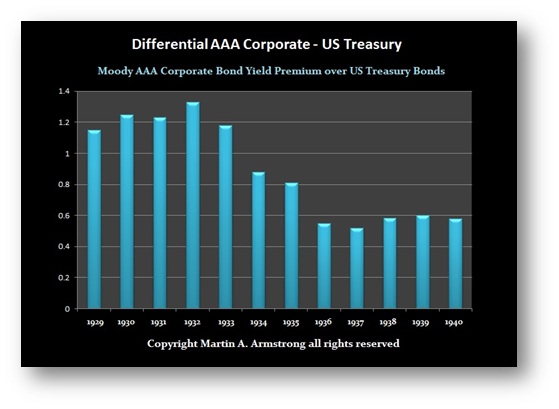
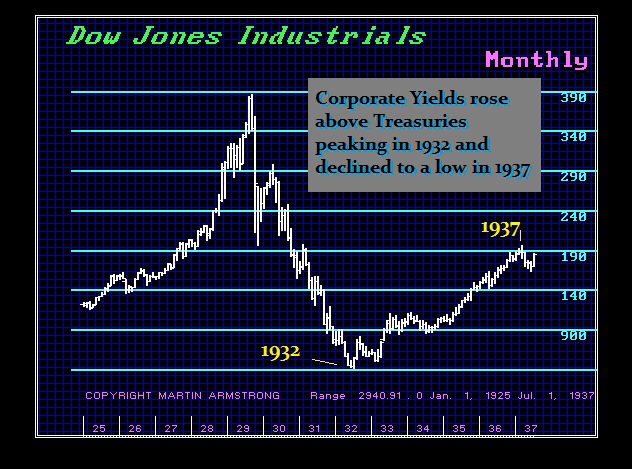
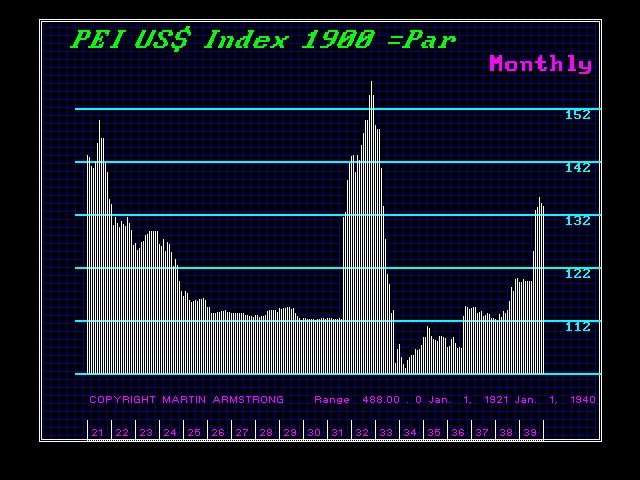
When people feared the private sector, AAA corporate rates soared peaking with the bottom of the stock market in 1932 and then declined to bottom with the rally into 1937. What we face now is the collapse of Social Security because it is restricted to buying only government debt where the interest rates are artificially maintained at absurdly low levels. Therefore, Social Security is already constantly being reduced in benefits. It cannot continue in this manner. It will have to be reformed and changed entirely. I do not believe that they will stop paying people. The way they default is reducing payments and the payments will not be enough to sustain themselves. Look at Venezuela. They honor their pensions, but what you get today will buy only a cup of coffee.

The likelihood of Social Security remaining as it is today is ZERO. Private sector rates will rise v manipulated government rates. We have entered into the Great Unknown economically. The Quantitative Easing of the Bank of Japan and the Europeans Central Bank have wiped out the free markets and ended government borrowing as a viable free market. The far more interesting aspect of interest rates will become the spread between corporate and public at the federal level.


What Will the Fed do in a Contagion?


QUESTION: I have been following your blog for a number of years, public and private. I read the blog concerning “European Politics.” In it you state the capital flight will be a contagion. I understand what the influx of European capital will have on the DOW and S&P, but much less certain of the duration of the impact and contagion. My question is two part; 1) what impact will the contagion have on the US Dollar and how do you expect the US Fed to react interest rate wise and 2) duration of equities move up – short-lived or longer-term trend is your friend.

Thanks

CF

ANSWER: The contagion will last probably 2 years at best. There was such a contagion during the Great Depression. That is what Milton Friedman used to criticize the Fed. All this gold came to the USA pushing the dollar higher, but the Fed refused to monetize it. The backing of gold behind the dollar doubled between 1929 and 1931.

This time we are on a floating exchange rates system so the Fed cannot sterilize the capital inflows as it did during the Great Depression imposing austerity as Germany demand today. Today, the capital inflows are targeting the equities because the interest rates are artificially low. If the stock market explodes, the Fed will be criticized by Congress for creating asset inflation and creating a bubble with low-interest rates.

Unlike the Bank of Japan and the European Central Bank, the US bond market is the only thing trading. The Fed is not trapped as are the other central banks. At some point, the Fed will be obligated to raise rates to fight against the asset bubble, but that will then attract even more capital and push the BoJ and ECB over the edge.

Keep in mind that ONLY a rising dollar compel monetary reform in the USA. During 1934 Roosevelt devalued the dollar and in 1985 they created the G5 to stage an organized group to manipulate the dollar lower. All those people touting gold will rally and the dollar will crumble are clueless. A lower dollar will increase corporate profits and reduce trade deficits. ONLY a higher dollar will break the monetary system.

Modern Monetary Theory & Why Central Banks are lost in the Wilderness without a Map


QUESTION: Dear Martin,
Would you like to enlighten me on your stance on the Modern Market Theory that is being touted by some in finance and politics please?

VV

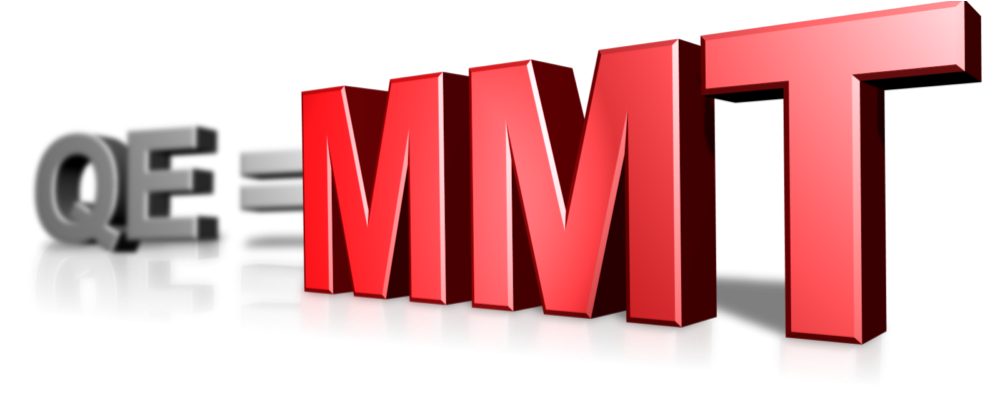
ANSWER: The basis upon which MMT has emerged is actually logical for those who lack the understanding of how to conduct research. Since QE has lasted in Europe for 10 years+ without success in creating inflation, they take this as proof that the government can just print without concern of inflation. Money has value only because it is legal tender. I have written about this subject before – MMT.

I will address this in a detailed report because all economic models have now failed. This is part of the Great Unknown we have entered in Economic Theory. Central Banks are without a map and are now lost in the wilderness.