Italian Bank Still in Trouble


Italy is again helping a troubled bank. The government approved an emergency ordinance to support the Volksbank Popolare di Bari on Sunday and provided grants of up to 900 million euros. Volksbank Popolare di Bari was founded in 1960 as a cooperative bank. However, funds from the Ministry of Finance will not go directly to the bank because of the no-bailout policy in Europe. Instead, the capital of the state development bank Banca del Mezzogiorno-Mediocredito Centrale (MCC) is to be increased and this combined with the deposit guarantee fund FITD. This new scheme is indirectly restructuring of the Volksbank Popolare di Bari.

In recent years, the Italian state has repeatedly had to bailout banks, including the Monte dei Paschi di Siena (MPS), which is the oldest bank in the world. Because of the long-standing economic downturn, the banks in Italy still have bad loans on the books because Europe refused to engage in a bailout as was the case in the United States. Instead, the ECB kept lowering rates in the hope that the banks would make up the losses. But the economy has never recovered beyond just superficial images. The bank’s losses have reached one billion euros. Prime Minister Giuseppe Conte reiterated on Sunday that everything will be done to protect savers and hold those responsible accountable, but those responsible are running the ECB.

Within the European Union, bank deposits up to 100,000 euros per customer are legally protected. In the case of Bari, however, according to press reports, there are around 70,000 small savers who have not invested their money in savings accounts but have invested in share certificates in the bank. These small shareholders could face total loss if the bank collapsed. This would also have serious social impacts in the Mezzogiorno region.

Obviously, our European readers should NOT own ANY bank stocks in Europe. Get out before you lose 100% in these bail-in actions.

Central Banks Buying More Equities than Gold? Why?


QUESTION: Marty; It seems when Goldman Sachs makes a recommendation, it tends to be the kiss of death. They came out and said the stock market was going to crash at the end of 2017 just before it broke out. Now they are pitching gold but they have been the ones who controlled the warehouses. They are claiming the central banks are the buyers so that is an indication of a bull market. Any comments on Goldman’s analysis?

HC

ANSWER: Yes, it often seems to be the old trick that was played by the Salomon Brothers. Their analysts would be quoted widely touting to buy some bond and they were inevitably the sellers. Goldman said cash was king in November 2018, not stocks. Five of the top investors in 2018 all said the stock market would crash as reported in Money Magazine. Goldman was bearish if Trump won, as reported by the New York Times on October 31, 2016. Even Goldman Sachs told everyone to sell in 2019. This is the problem when you put out forecasts based upon fundamentals. They are just sophistry, for you can spin them any way you like. How many times have we heard a stock declines on positive news and the excuse is that the street was looking for better numbers.

Goldman Sachs’ new claim saying “gold’s strategic case still strong” pointing to central bank buying is highly questionable. It is a statement that seems to be a half-truth. Because the euro is paying a negative interest rate, the only way for central banks to diversify has been to buy gold and equities. Otherwise, all they have are dollars. There are people on the board at the European Central Bank proposing that they too begin to buy equities in Europe.

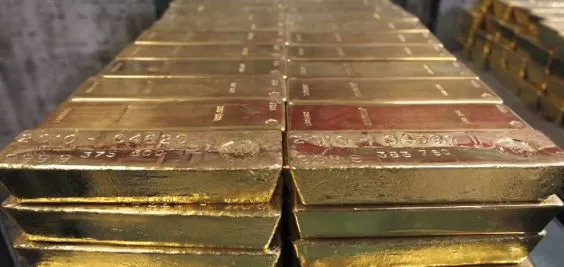
The amount of gold added to central bank portfolios was tiny in comparison to equities. They bought more than $1 trillion of equities in 2018. The central banks bought only about $57 billion of gold in the past 3 years. This story is very misleading. It makes it sound like gold is being bought because the banks know the dollar will crash. The truth is so far from the implications.

If you are going to pretend to make a forecast based upon fundamentals, then tell the FULL story and do not leave out the other parts

Guyana & the Future


QUESTION: Hi Martin, thanks for including little Guyana in your blog today. I was born in Canada, but my parents emigrated from Guyana decades ago. I haven’t been back yet. Nevertheless, I am eager to see great things become of the country, have been tracking the oil industry developments there, and am invested in it as well. I want to see this country elevate out of poverty as a result of all of this but I am concerned about lack of strong and moral leadership and corruption. If you don’t mind me asking, what makes you so confident that democracy will rule out? Growth is growth, but all we have to do is look across the pond to Africa to see the mix of growth and corruption!
Thanks as always sir – your teachings and insights have reshaped me many times over.
Regards, D

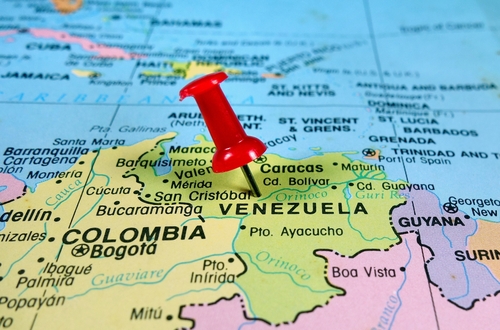
ANSWER: I am not certain that Guyana will be the perfect democracy. South America has historically had a problem with corruption in government. The US sanctions against Venezuela are really stupid. The economy was turning down dramatically and the government has done everything possible against the people. The US sanctions merely give people an excuse to point to the US as the cause of the economic decline despite the fact that the sanctions were put on in response to the events and not before them. I am opposed to sanctions anyhow because they never seem to work. They boosted the support for Putin instead of causing the people to blame Putin. This is really brain dead.

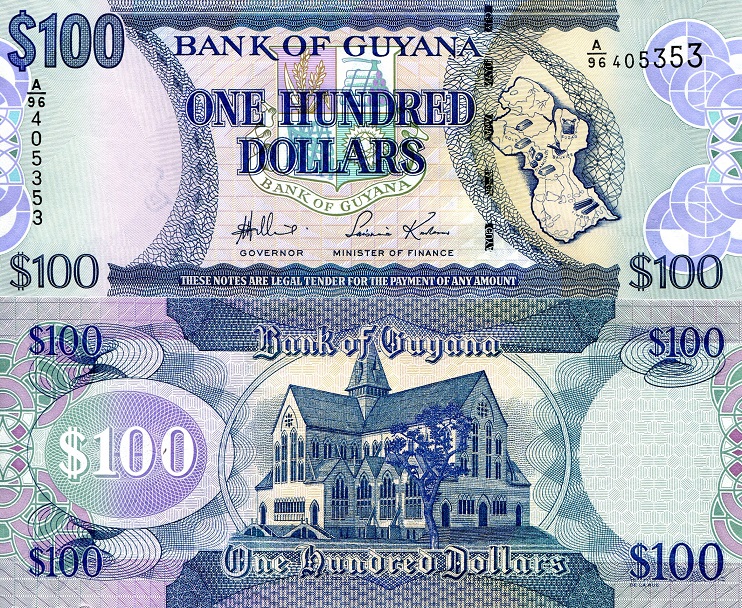
Nevertheless, simply because you can invest in Guyana is a major difference in comparison to Venezuela. There will be corruption. That seems to be systemic in South/Latin America, but it is also a rising problem globally. Hopefully, they will still keep the free market as long as they get their fair share under the table unlike Venezuela. We have added the currency to Socrates.

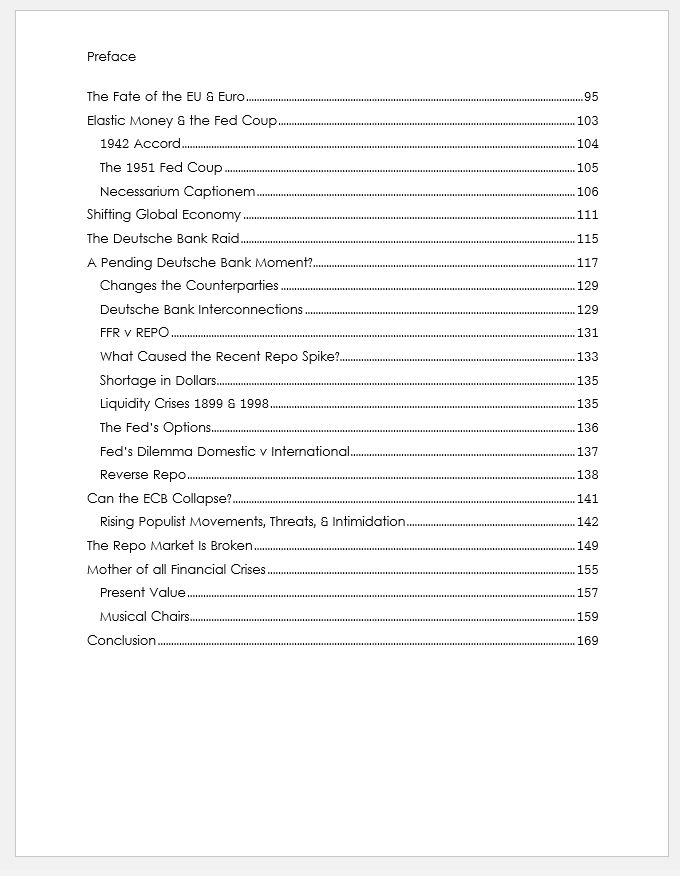
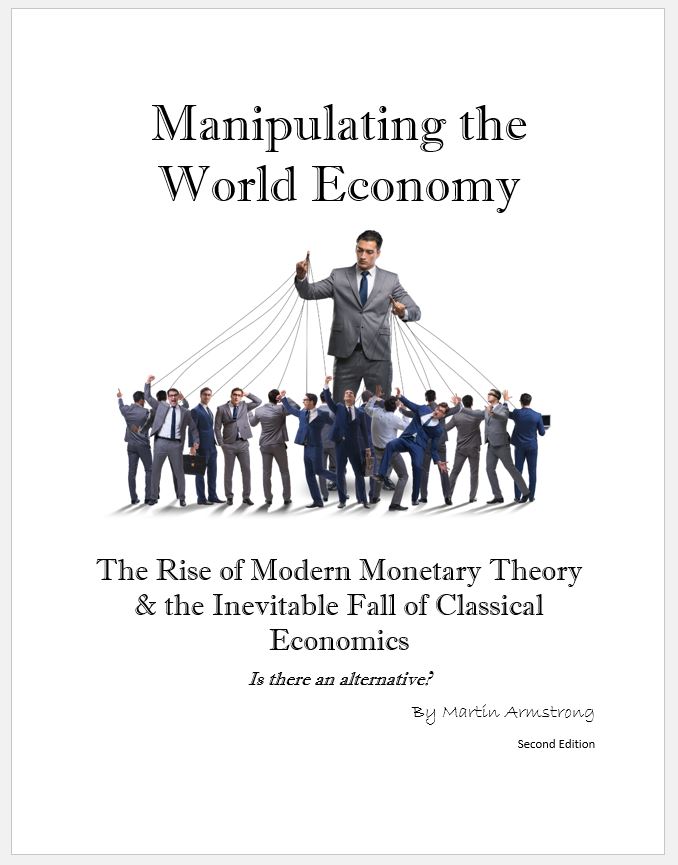
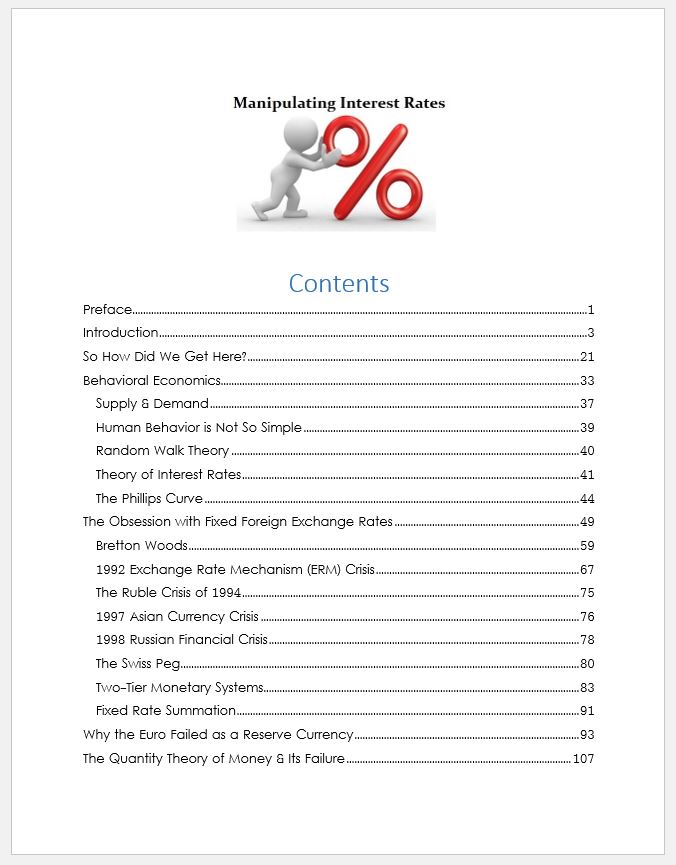
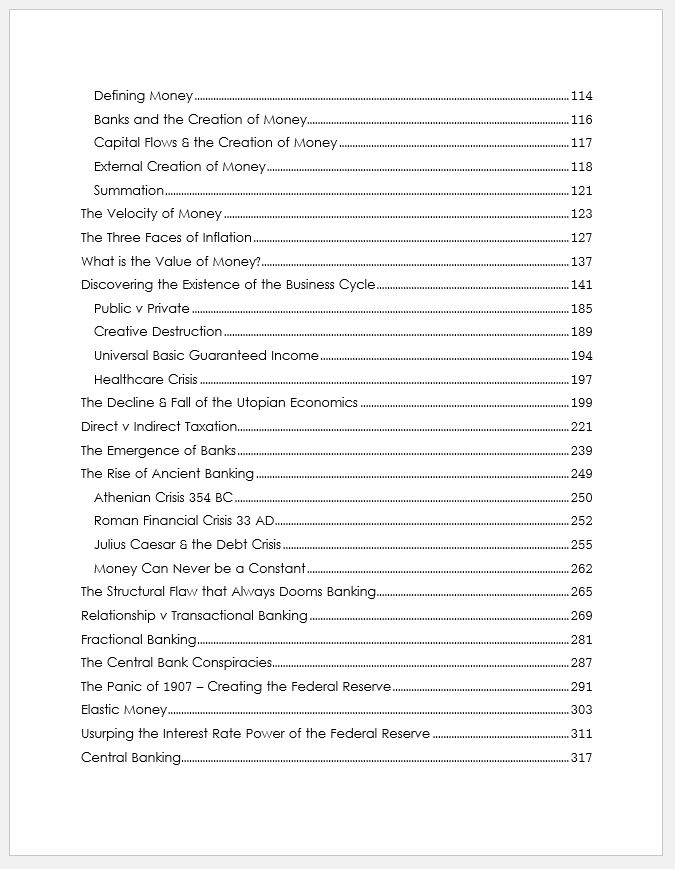
Manipulating the World Economy – COMING SOON


“Manipulating the World Economy” has been printed and shipped to Amazon. We are hoping to have the links up for Christmas. I have tried to make this an interesting textbook on the world economy and how it functions. Every page of this hardcover book is printed in full color. I have illustrated everything I could get my hands on, including old newspaper articles from contemporary events, so you can read what I read. This illustrates the problems we have with governments and how they have lost control of events going forward.


I have tried to cover all the important subjects such as economic theories, Philips’ curve, supply & demand, random walks, defining what is really money, banks and their role in the creation of money, capital flows that overpower domestic policy objectives, taxation, a history of contagions, Modern Monetary Theory, and class warfare – among many more subjects.


These hardbound, full color books will make great Christmas gifts. They will be priced under $100.

(Click on any image above to enlarge)

We will let everyone know the moment they go on sale in Amazon.