The Radical Jesus: How Would The Baby In A Manger Fare In The American Police State?


Tyler Durden's picture

Submitted by John Whitehead via The Rutherford Institute,

 baptism_of_christ_jekel

“Jesus is too much for us. The church’s later treatment of the gospels is one long effort to rescue Jesus from ‘extremism.’”—author Gary Wills, What Jesus Meant
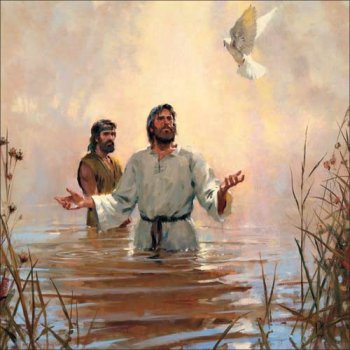
Jesus was good. He was caring. He had powerful, profound things to say – things that would change how we view people, alter government policies and change the world. He went around helping the poor. And when confronted by those in authority, he did not shy away from speaking truth to power.

Jesus was born into a police state not unlike the growing menace of the American police state.

But what if Jesus, the revered preacher, teacher, radical and prophet, had been born 2,000 years later? How would Jesus’ life have been different had he be born and raised in the American police state?

Consider the following if you will.

The Christmas narrative of a baby born in a manger is a familiar one.

The Roman Empire, a police state in its own right, had ordered that a census be conducted. Joseph and his pregnant wife Mary traveled to the little town of Bethlehem so that they could be counted. There being no room for the couple at any of the inns, they stayed in a stable, where Mary gave birth to a baby boy. That boy, Jesus, would grow up to undermine the political and religious establishment of his day and was eventually crucified as a warning to others not to challenge the powers-that-be.

However, had Jesus been born in the year 2016…

Rather than traveling to Bethlehem for a census, Jesus’ parents would have been mailed a 28-page American Community Survey, a mandatory government questionnaire documenting their habits, household inhabitants, work schedule, how many toilets are in your home, etc. The penalty for not responding to this invasive survey can go as high as $5,000.

Instead of being born in a manger, Jesus might have been born at home. Rather than wise men and shepherds bringing gifts, however, the baby’s parents might have been forced to ward off visits from state social workers intent on prosecuting them for the home birth. One couple in Washington had all three of their children removed after social services objected to the two youngest being birthed in an unassisted home delivery.

Had Jesus been born in a hospital, his blood and DNA would have been taken without his parents’ knowledge or consent and entered into a government biobank. While most states require newborn screening, a growing number are holding onto that genetic material long-term for research, analysis and purposes yet to be disclosed.

Then again, had his parents been undocumented immigrants, they and the newborn baby might have been shuffled to a profit-driven, private prison for illegals where they would have been turned into cheap, forced laborers for corporations such as Starbucks, Microsoft, Walmart, and Victoria’s Secret. There’s quite a lot of money to be made from imprisoning immigrants, especially when taxpayers are footing the bill.

From the time he was old enough to attend school, Jesus would have been drilled in lessons of compliance and obedience to government authorities, while learning little about his own rights. Had he been daring enough to speak out against injustice while still in school, he might have found himself tasered or beaten by a school resource officer, or at the very least suspended under a school zero tolerance policy that punishes minor infractions as harshly as more serious offenses.

Had Jesus disappeared for a few hours let alone days as a 12-year-old, his parents would have been handcuffed, arrested and jailed for parental negligence. Parents across the country have been arrested for far less “offenses” such as allowing their children to walk to the park unaccompanied and play in their front yard alone.

Rather than disappearing from the history books from his early teenaged years to adulthood, Jesus’ movements and personal data—including his biometrics—would have been documented, tracked, monitored and filed by governmental agencies and corporations such as Google and Microsoft. Incredibly, 95 percent of school districts share their student records with outside companies that are contracted to manage data, which they then use to market products to us.

From the moment Jesus made contact with an “extremist” such as John the Baptist, he would have been flagged for surveillance because of his association with a prominent activist, peaceful or otherwise. Since 9/11, the FBI has actively carried out surveillance and intelligence-gathering operations on a broad range of activist groups, from animal rights groups to poverty relief, anti-war groups and other such “extremist” organizations.

Jesus’ anti-government views would certainly have resulted in him being labeled a domestic extremist. Law enforcement agencies are being trained to recognize signs of anti-government extremism during interactions with potential extremists who share a “belief in the approaching collapse of government and the economy.”

While traveling from community to community, Jesus might have been reported to government officials as “suspicious” under the Department of Homeland Security’s “See Something, Say Something” programs. Many states, including New York, are providing individuals with phone apps that allow them to take photos of suspicious activity and report them to their state Intelligence Center, where they are reviewed and forwarded to law-enforcement agencies.

Rather than being permitted to live as an itinerant preacher, Jesus might have found himself threatened with arrest for daring to live off the grid or sleeping outside. In fact, the number of cities that have resorted to criminalizing homelessness by enacting bans on camping, sleeping in vehicles, loitering and begging in public has doubled.

Viewed by the government as a dissident and potential threat to its power, Jesus might have had government spies planted among his followers to monitor his activities, report on his movements, and entrap him into breaking the law. Such Judases today—called informants—often receive hefty paychecks from the government for their treachery.

Had Jesus used the internet to spread his radical message of peace and love, he might have found his blog posts infiltrated by government spies attempting to undermine his integrity, discredit him or plant incriminating information online about him. At the very least, he would have had his website hacked and his email monitored.

Had Jesus attempted to feed large crowds of people, he would have been threatened with arrest for violating various ordinances prohibiting the distribution of food without a permit. Florida officials arrested a 90-year-old man for feeding the homeless on a public beach.

Had Jesus spoken publicly about his 40 days in the desert and his conversations with the devil, he might have been labeled mentally ill and detained in a psych ward against his will for a mandatory involuntary psychiatric hold with no access to family or friends. One Virginia man was arrested, strip searched, handcuffed to a table, diagnosed as having “mental health issues,” and locked up for five days in a mental health facility against his will apparently because of his slurred speech and unsteady gait.

Without a doubt, had Jesus attempted to overturn tables in a Jewish temple and rage against the materialism of religious institutions, he would have been charged with a hate crime. Currently, 45 states and the federal government have hate crime laws on the books.

Rather than having armed guards capture Jesus in a public place, government officials would have ordered that a SWAT team carry out a raid on Jesus and his followers, complete with flash-bang grenades and military equipment. There are upwards of 80,000 such SWAT team raids carried out every year, many on unsuspecting Americans who have no defense against such government invaders, even when such raids are done in error.

Instead of being detained by Roman guards, Jesus might have been made to “disappear” into a secret government detention center where he would have been interrogated, tortured and subjected to all manner of abuses. Chicago police “disappeared” more than 7,000 people into a secret, off-the-books interrogation warehouse at Homan Square.

Charged with treason and labeled a domestic terrorist, Jesus might have been sentenced to a life-term in a private prison where he would have been forced to provide slave labor for corporations or put to death by way of the electric chair or a lethal mixture of drugs.

Either way, whether Jesus had been born in our modern age or his own, he still would have died at the hands of a police state. Indeed, as I show in my book Battlefield America: The War on the American People, what Jesus and other activists suffered in their day is happening to those who choose to speak truth to power today.

Thus, we are faced with a choice: remain silent in the face of evil or speak out against it. As Nobel Prize-winning author Albert Camus proclaimed:

Perhaps we cannot prevent this world from being a world in which children are tortured. But we can reduce the number of tortured children. And if you don’t help us, who else in the world can help us do this?

Donald Trump Signals Willingness to Engage Arab Israeli Peace Effort…


This tweet from President-elect Donald Trump directly implies his willingness to lean into the problem: And President-Elect Donald Trump is not alone carrying optimism:

Source: Donald Trump Signals Willingness to Engage Arab Israeli Peace Effort…

trump-lions

Shifting Power: Visualizing The World’s Largest Cities For The Last 6000 Years


Tyler Durden's picture

In 300 B.C., Carthage was one of the world’s largest cities with up to 700,000 people living within its walls. The Carthaginian republic was a force to be reckoned with, controlling inconceivable amounts of wealth and land all around the Mediterranean.

However, just over a century later in 146 B.C., Carthage was burnt to the ground by the Romans. The destruction of Carthage was so thorough that many things are still not known about their civilization today. Carthage went from being a major power to literally being wiped off of the map.

A few decades after the annihilation of Carthage, it was Rome’s turn to become the world’s largest city for close to 500 years. Of course, Rome itself would fall by 476 A.D. for a variety of reasons.

And so the title of the world’s largest city would transfer again, this time to Constantinople across the Mediterranean.

The World’s Largest Cities Throughout History

In the grand scheme of history, things change quite fast. As Visual Capitalist’s Jeff Desjardins explains, one cataclysmic choice or event can turn even the greatest empire into a heap of rubble. Sometimes the decline of a world-class city is more gradual – and it is over time that it loses its title to another place in a far and distant land.

The following animated map from KPMG Demographics tracks the world’s largest cities from 4,000 BC to today, and it shows how temporary a city’s rise to prominence can be.

World's Largest Cities Throughout History
(Keep in mind that there is some disagreement by historians over which cities were the biggest in certain time periods.)

The power of industrialization and technology can be seen here. Up until the 1800s, it was almost unfathomable to have a city of more than a million inhabitants.

Sanitation was a major limiting factor, but other issues like transportation and a lack of density also made it a challenge. The Industrial Revolution changed that, and starting in the 1800s you see cities like London, New York, and Tokyo taking the title in an exponential fashion. It caps off with Delhi in 2050, expected to have a whopping 40 million inhabitants by that time.

The U.S. Interfered in Foreign Presidential Elections 81 Times from 1946-2000


Source: Liberty Blitzkrieg blog, by Mike Krieger Something we should all be aware of. From the LA Times: The CIA has accused Russia of interfering in the 2016 presidential election by hacking into …

Source: The U.S. Interfered in Foreign Presidential Elections 81 Times from 1946-2000

trump-drain-the-swamp12111111111111211111111111111111111111211111111111111111111111111211112111111

Governments and Corporate Media Conspire With Facebook to Censor Anti-Establishment Speech


This is the end of Free Speech in Western Civilization.

Geopolitics, Globalization, And World Order: Part 1


Tyler Durden's picture

Submitted by Federico Pieraccini via Strategic-Culture.org,

Understanding the objectives and logic that accompany the expansion of nations or empires is always of paramount importance in helping one draw lessons for the future

In this series of four articles I intend to lay a very detailed but easily understandable foundation for describing the mechanisms that drive great powers. To succeed, one must analyze the geopolitical theories that over more than a century have contributed to shaping the relationship between Washington and other world powers. Secondly, it is important to expound on how Washington’s main geopolitical opponents (China, Russia and Iran) have over the years been arranging a way to put a stop to the intrusive and overbearing actions of Washington. Finally, it is important to take note of the possibly significant changes in American foreign policy doctrine that have been occurring over the last twenty years, especially how the new Trump administration intends to change course by redefining priorities and objectives.

The first analysis will therefore focus on the international order, globalization, geopolitical theories, their translations into modern concepts, and what controlling a country’s sovereignty means.

Before examining geopolitical theories, it is important to understand the effects of globalization and the changing international order it entails, a direct consequence of US strategy that seeks to control every aspect of the economic, political and cultural decisions made by foreign countries, usually applying military means to achieve this objective.

Globalization and the International Order

It is important to first define the international order among nations before and after the collapse of the Berlin wall, especially focusing on the consequences of existing in a globalized world.

For the first half of the twentieth century the world found itself fighting two world wars, then, during the Cold War, lasting from 1945 to 1989, the balance of power maintained by the US and USSR held the prospect of a third world war at bay. With the dissolution of the USSR, the United States, the only remaining world superpower, thought it could aspire to absolute domination over the globe, as was famously expressed through the Project for A New American Century. Putting aside for a moment perpetual wars, one of the key strategies towards fulfilling this objective was the so-called experiment of globalization, applied especially in trade, economics and finance, all of course driven by American interests.

Having achieved victory in the Cold War over its socialist rival, the world went from a capitalist system to a turbo-charged capitalist system. US corporations, thanks to this model of world globalized economy, have experienced untold riches, such as Apple and other IT corporations generating amounts of cash flow equivalent to that of small countries.

Banks and US financial institutions such as Wall Street incrementally increased their already considerable influence over foreign nations thanks to the rise of computer technology, automation and accounting deceptions such as derivatives, just to give one example. The FED implemented policies that took advantage of the role of the dollar in the globalized economy (the dollar is the premier world reserve currency). Over the years this has caused economic crises of all kinds all over the world, defrauding the entire economic system, consisting of schemes such as being able to print money at will, allowing for the financing massive wars, even going so far as lowering interest rates to 0% to keep banks and big corporations from failing – all a repudiation of the most basic rules of capitalism. All this was made possible because the US being the sole world power after 1989, allowing Washington to write the rules of the game in its favor.

Since the fall of the Berlin Wall, Wall Street, Big Oil and military corporations, health-care providers, the insurance and agricultural industries slowly replaced national governments, managing to dictate agendas and priorities. A political form of globalization has led to an expropriation of national sovereignty in Europe, with the creation of the Euro and the Lisbon Treaty signed by all EU nations in 2007.

Globalization has forced the concept of sovereign states directed by their citizens to be replaced with an international superstructure led by the United States, driving away even more citizens from the decision-making process. The European Union, and in particular the European Commission (not elected, but appointed), is unpopular not only for the decisions it has taken but also for the perception that it is an imposter making important decisions without ever having been elected.

Basically, with the end of the USSR, the international order went from a relationship between states made up of citizens to a relationship between international superstructures (NATO, UN, IMF, WTO, World Bank, EU) and citizens, with the weight of the balance of power decisively in favor of the globalists with the economic burden resting on the people.

The international order and globalization are therefore to be interpreted according to the logic of Washington, always looking for new ways to dominate the globe, preserving its role of world superpower.

It is also for this reason that it is important to understand some geopolitical theories that underlie US strategic decisions in the pursuit of world domination. These theories are some of the most important with which Washington has, over the last 70 years, tried to pursue total domination of the planet.

MacKinder + Spykman + Mahan = World Domination

Heartland

The first geopolitical theory is the so-called Heartland theory, drawn up in 1904 by English geographer Sir Halford Mackinder. The basic principle was the following:

Heartland or Heartlands (literally: the Heart of the Earth) is a name that was given to the central zone of the Eurasian continent, corresponding roughly to Russia and the neighboring provinces, by Sir Halford Mackinder, the English geographer and author of Democratic Ideals and Reality; the Heartlands of the theory was submitted to the Royal Geographical Society in 1904.

The Heartland was described by Mackinder as the area bounded to the west by the Volga, the Yangtze River to the east, from the Arctic to the north and south from the western Himalayas. At the time, this area was almost entirely controlled by the Russian Empire.

For Mackinder, who based his theory on the geopolitical opposition between land and sea, Heartland was the “heart” button of all the earth civilization, because logistically unapproachable by any thalassocracy. Hence the phrase that sums up the whole concept of Mackinder’s geopolitics: ‘Who controls East Europe commands the Heartland: Who controls the Heartland commands the World-Island: Who controls the World-Island commands the world’».

In terms of countries, the Heartland consists mainly of Russia, Kazakhstan, Afghanistan, Mongolia, the Central Asian countries, and parts of Iran, China, Belarus and Ukraine.

Rimland

The second geopolitical theory, another important lodestar for US foreign policy, was developed in the 1930s by the American Nicholas J. Spykman, also a student of geography as well as a scholar of MacKinder’s theory. Spykman, thanks to advancing naval technology, added to the definition of the Heartland theory the Rimland theory. The Rimland is divided into four main areas: Europe, North Africa, Middle East and Asia.

 For ‘world island’ it means the Eurasian region, ranging from Western Europe to the Far East. If for Mackinder the Tsarist empire represents the aforesaid area-pin, Spykman instead focuses on the area around Heartland, i.e. Rimland, recognizing it as a strategic point of great importance. The Rimland is characterized by the presence of rich countries, technologically advanced, with great availability of resources and easy access to the seas. Its size at the same time makes sea and land attacked by both sides. On the other hand this means that its dual nature as a possible mediating zone between the two world powers: the United States and Russia. The greatest threat from the geopolitical point of view lies in the union between Heartland and Rimland under one power».

The Rimland essentially consists of Europe (including eastern Europe), Turkey, the Middle East, the Gulf States, India, Pakistan, Southeast Asia (Brunei, Cambodia, Laos, Malaysia, Myanmar, the Philippines*, Thailand, Vietnam) and Japan.

As one can see from observing a map, the United States is not physically close to either the Rimland or the Heartland. They are both on the other side of two 6,000-mile oceans. The US is undeniably protected in this way, almost impervious to attack, with an abundance of resources and powerful allies in Europe. These are all characteristics that have favored the rise of the American superpower throughout the twentieth century.

But world domination is a different matter and, given the geographical location of the US compared to the Heartland and Rimland, first requires a large capacity to project power. Of course with two oceans in between, it is naval power through which power has been conveyed, especially in the early part of the last century.

Mahan and Maritime Power

The third geopolitical theory is based on the importance given to maritime (or naval) power. The author of this theory, propounded towards the end of 1800, was US Admiral Alfred Thayer Mahan.

 Mahan was a ‘precursor’ to international organizations. He assumed that through a union between the United States and Britain, being two maritime powers, they could unite to share the conquest of the seas. The key concept is that ‘the maritime powers are united in opposition to those continental.’ Mahan explains the concept of naval doctrine, which is the policy that states pursue in the maritime and military arenas. In order for a state to have a naval doctrine, it must possess a substantial navy, as well as of course access to the sea, adequate projection capability, adequate means, and have strategic objectives to be protected (such as security zones exposed to risk)».

As one can easily understand, these three doctrines are central to controlling the whole world. Dominating the Heartland is possible thanks to the control of the Rimland, and in order to conquer the Rimland it is necessary to control shipping routes and dominate the seas, relying upon the Mahan theory of maritime supremacy.

In this sense, seas and oceans of great geographic importance are those that encircle the Rimland: The East and South China Seas, the Philippine Sea, the Gulf of Thailand, the Celebes Sea, the Java Sea, the Andaman Sea, the Indian Ocean, the Arabian Sea, the Gulf of Aden, the Red Sea, and finally the Mediterranean.

In particular, straits such as Malacca, between Indonesia and Malaysia, or the Suez Canal, are of strategic importance due to their role as a transit route and connection between all the seas adjacent to the so-called Rimland.

A bit of history. Route to global domination

It was Hitler’s Germany during World War II that tried to put into practice the theory of geopolitics MacKinder was describing, managing to seize the Heartland but ultimately amounting to nothing with the final victory of the Red Army, who rebuffed and destroyed the Nazis.

After the end of World War II, the United States placed the Soviet Union in its crosshairs, with the intention of conquering the Heartland and thereby dominating the world. Alternatively, Plan B was to prevent other nations from teaming together to dominate the Heartland. This explains the historical conflicts between the US and Iran and between Russia and China, the three most important nations composing the Heartland.

Russia, since Tsarist times and throughout the Soviet period to today, has always been in the crosshairs of the United States, given its geographical location central to the Heartland.

Iran also constitutes a valuable piece of the ‘Heart of the World’, which was gifted to the Anglo-Americans courtesy the Pahlavi monarchy lending itself to the American plan to conquer the heart of the land. It was only after the 1979 revolution, which ousted the Pahlavi monarchy and installed an Islamic Republic, that Tehran became an enemy of Washington.

The reason why Afghanistan was invaded and Ukraine destabilized, and why the Belarusian leadership is hated almost as much as is the Russian one, is the same, namely, the geographical positions of these countries in composing the Heartland compels the US to conquer them as part of its grand strategy to dominate the world through the control of the Heartland.

The Republic of China, another constituent part of the Heartland theory, was during the Cold War the great Asian pivot thanks to Kissinger’s policy aimed at curbing the USSR and preventing the birth of a possible alliance between Tehran, Moscow and Beijing that would dominate the Heartland, especially in the late 1980s. The United States, instead of directly attacking China, used it against the Soviet Union. Washington’s primary goal, as well as to expand its influence everywhere, was to prevent any kind of alliance that would control the Heartland, specially preventing any alliance or understanding between Moscow and Beijing; but this will be very well explained in my third analysis on how Eurasia reunited to reject the American global empire.

Control of a nation

Historically, control of a nation takes place through military power that allows for a variety of impositions. Also, culture is part of the process of conquering a nation. Today, other than militarily, it is mainly economic power that determines the national sovereignty of a nation. In the modern world, especially in the last three decades, if you control the economy of a nation, you control the rulers of that nation. The dollar and neoliberal experiments like globalization are basically the two most powerful and invasive American tools to employ against geopolitical opponents. The application of military force is no longer the sole means of conquering and occupying a country. Obligating the use of a foreign currency for trade or limiting military supplies from a single source, and impeding strategic decisions in the energy sector, are ways the globalist elites are able to dominate a foreign country, taking control over its policies. The European Union and the NATO-member countries are good examples of what artificially independent nations look like, because they are in reality fully dispossessed of strategic choices in the areas mentioned. Washington decides and the vassals obey.

It is not always possible to employ military power as in the Middle East, or to stage a color revolution as in Ukraine. Big and significant nations like Russia, India, China and Iran are virtually impossible to control militarily, leaving only the financial option available. In this sense, the role of central banks and the de-dollarization process are a core strategic interest for these countries as a way of maintaining their full sovereignty. In going in this direction, they deliver a dramatic blow to US aspirations for a global empire.

The next article will focus on how the United States has tried to implement these strategies, and how these strategies have changed over the last seventy years, especially over the last two decades.

Here Are The Countries Where Millennials Will Have To Work Until They Die


Tyler Durden's picture

It turns out there is a downside to spending 120% of your annual income every year from the time you graduate college until that day you turn 40 and finally realize that you’re getting old and have absolutely no liquid assets and no hopes of ever retiring.  While the above strategy seemingly makes sense to our elitist, Ivy League-educated central planners at the Fed who have waged a nearly decade-long war on saving (because how can we have economic growth if people aren’t willing to lever their income 5x and spend every dollar they make?), the roughly 19% of Americans who are over the age of 65 and are still forced to work are probably wishing they could go back and do things slightly differently.

As Bloomberg points out, the percentage of 65 years olds working in the U.S. today is higher than at any point going back to at least 1965.

Millennials


Unfortunately, this looks to be a record that millennials are destined to beat.  As we recently pointed out (see “Most Millennials Have Less Than $1,000 In Savings, Live Paycheck-to-Paycheck“), the majority of millennials are living paycheck to paycheck.

A recent survey of millennials by HowMuch.net found that 51.8% of those aged 18-34 have less than $1,000 held between bank accounts and cash savings.

As Visual Capitalist’s Jeff Desjardins notes, this echoes previous data we’ve seen – not just on millennials, but Americans in general. For example, we know that 14% of Americans have “negative” wealth. We also know that 62% of Americans don’t have emergency savings that could cover a $1,000 hospital visit or a $500 car repair.

Taking that into consideration, here’s a deeper dive into the more recent millennial data…

Courtesy of: Visual Capitalist


Meanwhile, as a testament to their strong work ethic, a study by ManpowerGroup recently found that roughly 30% of millennials envisioned taking an “extended break” from work at some point in their careers to “relax/travel/vacation” while another ~20% said they’d take a break to “pursue a life dream or hobby.”  Sure, why not?  If everything goes horribly wrong then taxpayers will be waiting to payoff your student loans for you…so no worries.

Millennials


And, unless you thought this was just a phenomenon limited to America’s snowflakes, turns out millennials all over the world have very little confidence in their ability to save.

Millennials


Well, at least we’re

Dear Liberals, Democrats and Cultural Marxists


Who Screwed Western Civilization? | Lauren Southern and Stefan Molyneux Who Screwed Western Civilization? | Lauren Southern and Stefan Molyneux


Benjamin Netanyahu – Christmas Message to Christians Around The World…


Israeli Prime Minister Benjamin Netanyahu has a Christmas message for his “Christian brothers and sisters” around the world:

Source: Benjamin Netanyahu – Christmas Message to Christians Around The World…

Trump should tell the UN to lay off or get DE-funded from the US

trump-standing-in-gap411221112112111111121111111111111211111121111112111111111