
Posted originally on the conservative tree house on March 19, 2022 | Sundance
Why would we believe anything from them about Ukraine?

(New York Post) […] “There have been no consequences. Twitter and Facebook still censor information based on political bias, and Congress takes no action. Many of the letter signers continue to be used as “experts” by the media.” (read more)
When we wrote about the media effort in 2018 {Go Deep}, specifically the collusion between the intelligence and national security agencies of the United States government, I asked the question, “Do we really think such a catastrophic level of corrupted journalism could reconstitute into genuine reporting of fact-based information?” The answer then, as now, is the same, NO. Indeed, it has only gotten worse in the past four years.
For the past several days, I have been highlighting a simple question on social media about something missing in the Ukraine story.
Where are the social media posts, from Ukraine citizens, that would support the narrative, as it is being told by Western media, about events happening in Ukraine?
Seemingly, Ukraine is the only conflict in modern human history where a pop culture society of more than 40 million technologically connected people decided not to document every moment of it on social media.
Considering the scale and scope of the conflict, and considering the Ukraine population of more than 40 million is far larger than Canada, and considering that population is located in a country the size of Texas, and considering they are a western technologically connected society with tens of millions of cell phones, we should be seeing a great deal of footage, pictures and images from ordinary Ukrainian citizens. However, we don’t. Why?
I’m not talking about the professional war social media accounts, and/or military-centric accounts, which, to be fair do have lots of images and footage of Russian and Ukrainian conflicts. I’m talking about the ordinary man/woman in the major population centers, who under normal circumstances would be generating tens-of-thousands of social media posts to Facebook, Twitter, Instagram, Telegram, YouTube, etc.
Western media are telling us that Russia is randomly shelling, bombing and targeting all of these civilian targets in urban areas. Yet, there’s nothing visible. Almost everything you see is from Eastern Ukraine where a civil war has been ongoing for over a decade.
Whatever is happening in the rest of Ukraine is the least documented conflict in modern social media. It just seems odd. It’s as if there is a massive disconnect between the portrayal of western media, in comparison to the actual reality inside Ukraine.
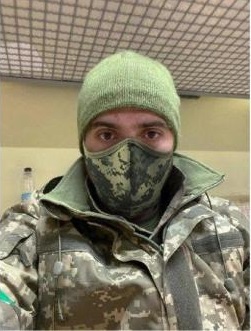
(CNN Portugal) – [TRANSLATED] – Ukraine has opened the barracks to foreign fighters, who join an army that has to adapt those who have not been trained there. Some are Portuguese, “fighters in quotation marks”, as the government of the government Portuguese. Among these Portuguese there are former commandos, ex-paratroopers – and a 29-year-old mechanic, who spent 15 days at the Yavoriv military base, was bombed and left for not giving him weapons. I’ve never taken one before. It is the first account of a Portuguese about how the fighting lived at the military base and why he gave up fighting.
We call it n.s. The 29-year-old Portuguese mechanic had never taken a weapon of war in his life, but it was in the first waves of foreigners joining the Ukrainian military in the so-called international legion. He entered the Yavoriv military base on March 1. He left two weeks later – after the heavy Russian bombardments on this city of Ukraine, which caught him with the Ukrainians but unarmed.
N.S.’s account serves to realize an ongoing history in the war in Ukraine, which opened the borders, doors, barracks and arms to foreign fighters. Many continue to arrive, “knock on the door” at the border and say they want to fight. The first ones entered soon, now there are those who have signed up and are in hotels waiting to be called.
The international legion is seen with reservations by many experts and even governments – such as Portuguese – because there is everything: professionals and amateurs, mercenaries and volunteers, ex-military and people with no experience, who receive quick formations and weapons to hand.
They are “fighters in quotes”, so called them two days ago the Minister of Foreign Affairs, Augusto Santos Silva, without hiding their reservations. Portugal “does not agree with these procedures” of people, he stressed. “We understand that this is not the most effective way to support Ukrainians in their right to self-defense and is not part of the tradition or way of being of the Portuguese, nor is it the way Portugal contributes to international security,” explained the head of Portuguese diplomacy. Santos Silva commented on the news that at least seven Portuguese were in Ukraine with military objectives. Some of them were at the Yavoriv military base when it was attacked on Sunday by Russian troops
One of them was N.S.
From the couch to the war – What made N.S. take the car and go from southern France, where he has lived since 2014, to poland’s border with Ukraine to say he wanted to fight? One impulse: “I didn’t think it made sense to sit around and watch a country, civilians, including children, being killed. In addition, there is a risk that one day the Russians will attack the rest of Europe.” He made the decision and left overnight, leaving his wife and four-year-old son at home. “I left a letter explaining. It was a shock to her. It’s all right now.”
“When I got to the Ukrainian border I told him what I was going to. They then called some men who took me to the advanced command post. I was the subject of an interrogation. In the end, they took me to the military base, which was already active.” When he arrived, he signed an uncertain term contract “until the war was over” – that’s how he said it – and they gave him the uniform.
At first, he says, platoons with foreigners were not yet well organized and constituted. The volunteers walked around the base – a large structure, with several buildings and dressing rooms. He soon met Portuguese, a former paratrooper who, meanwhile, was placed on special forces teams that are on missions through Ukraine, to “clean up the cities attacked by the Russians”.
He spent 15 days at the base in training. He’d wake up at 6:30 a.m. and join the military parade in the courtyard to listen to the commander. At 7:00 a.m. they exercised and an hour later they had breakfast. The morning was then devoted to training. “They gave us lectures of various kinds. Some to know the Russian weapons and the weak points of the opponent, others about first-hand.” They had lunch and were still in training. In the second week he lived at the base began to have intensive training of combat tactics, offensive, lines of defense, among many other topics. “I learned the art of war,” says N.S., who at a young age tried to join the Marines but broke an arm, which prevented him from following his career.
N.S. was one of the Portuguese volunteers who were at the Yavoriv military base on Sunday when Russia bombed the land in that area, just 25 kilometres from the NATO border. A few hours later, at least 35 people were killed and 134 wounded in the attack on the base near Lviv.
Because he had no military experience, he did not have weapons assigned that day. Unlike other colleagues, I had never left the base on a mission. “It was planned that that day – when the bombing took place – my platoon would finally receive the weapons.”
It was a night of terror, he reports. “I was in bed when I was 4 in the morning I noticed from the noise that we were going to be attacked.” At the first explosion he jumped out of bed. Since he always slept dressed in his uniform, he just had to stick his boots on his feet – he didn’t even tie them – pick up his phone and get out of the dressing room.
Unarmed, he even made a first attempt to go to the area where the special forces were installed, to see if there were weapons, “but at that time everything was still locked.” He was in the middle of the explosions.
“I watched live two explosions and two buildings falling. About 100 meters away, a missile went straight into a barracks where people were, was destroyed, burned. The same thing happened in front of me in a building by the canteen.” I could feel the missiles going over him. “I’m not quite sure of the time, I think there were many for 30 minutes.”
Without weapons, he recalls, he went into hiding in the nearby forest, as the security protocol that was transmitted to them. He stood there, in the middle of the trees, where other colleagues were, until everything calmed down. “When the missiles were over, we returned to the base and were regrouped to see if there were dead, missing or injured. It took four hours to regroup and put together the defense plan.”
At the base there would be about 2000 in several companies, he estimates. These, based on the strategic plan defined, were spread over several points of defense of the base, that of N.S. was on the runway of helicopters. They were ordered to stay in line with the defense, “to defend the basis of the Russian attack that everyone believed was going to happen.” In the area where it was placed there would be about 200 volunteers, mostly unarmed. That’s when his distress and that of some other military personnel began. “We made ‘pools’ trying to get supplies and weapons.”
It was after he decided to abandon the Ukrainian army, leave the base and return home. “After the bombing, everyone in the army thought there was going to be a russian ground attack. And that’s why they told us to stay in lines of defense. I stood there, no gun, no vest, no helmet. I realized that I could not continue like this”, tells CNN Portugal the volunteer who prefers to keep discretion in his identification for fear of being confused with a mercenary, which he guarantees not to be. “My goal was to fight, and if I died, it would be a gun in my hand. So we were just cannon meat.” (read more)


 Centinel2012