
QUESTION: You seem to always be against conspiracy theories except that it always comes down to government against the people. Why are most of the bankers Jewish? Do you have an explanation for that?
JE
ANSWER: If you simply knew your history you would realize that both the Catholics and the Arabs maintained it was against their religion to take advantage of someone else in their time of need to lend them money and demand interest – hence usury. Christian bankers did not emerge until the Protestant Reformation when they broke with the Catholic Church and no longer worried about being excommunicated. Previous, the Christians would factor in interest like the Europeans for with sales taxes by calling them VAT. The consumer in Europe has no idea how much of the price is taxes whereas in America we always say – plus tax. So the clever incorporation of interest applied by merchants was really just installment type of loans – not outright cash for interest. That is the segment where the Jews had the monopoly of actually lending money for interest – hence Merchant Banking v Jewish Bankers.
Christians would sell you something and it was $10 say for cash. If you needed time, they priced it at say $12. As long as they included it in the price like a VAT, then they could charge interest by calling it something else. The Arabs would do the same. However, the Jews did not have that religious restriction so they became the first bankers after the Dark Age. They were also typically the captains of ships because it was not a sin to use mathematics. Math was seen as a devil art so they always needed the Jew to figure out how to sail.
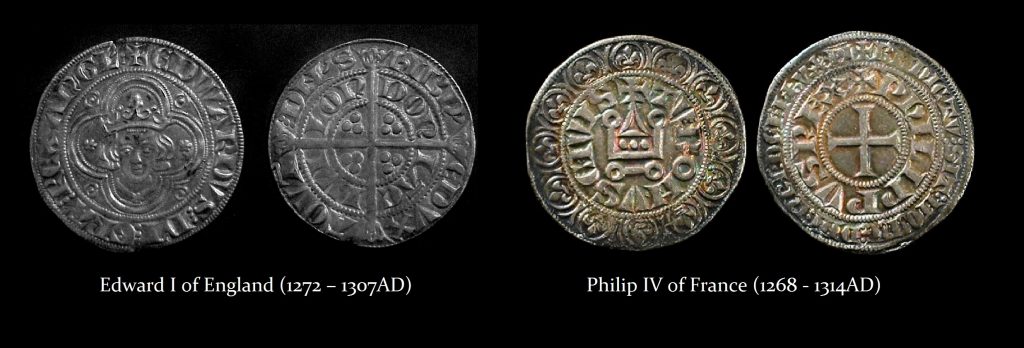
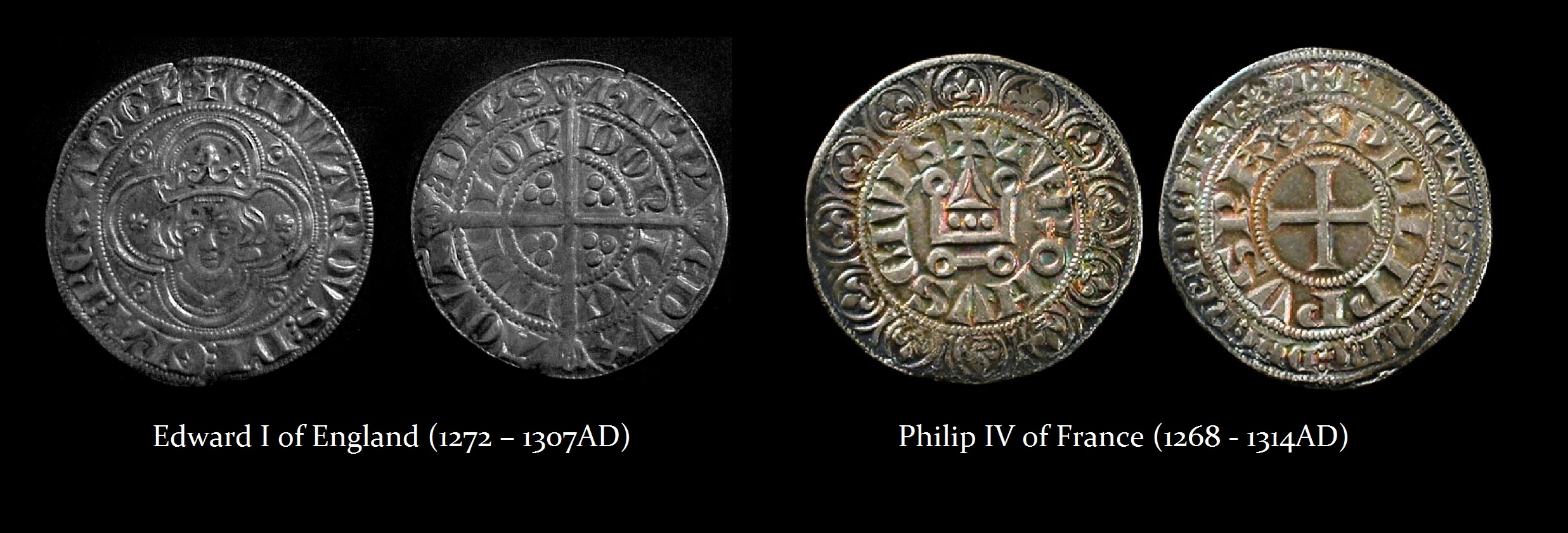
 The entire anti-Semitism would rise in conjunction with the business cycle post-Dark Age. Why? Because the Jews were the bankers and the economy turned down, suddenly the debtor discovered the banker was Jewish and they used that excuse not to pay. Just look at the economics and you will discover how anti-Semitism rises. The Jews were banished from England because they lent money to King Edward I (1272-1307) in his war against Philip IV (1268-1314). When Edward could not repay the Jewish bankers, he suddenly discovered they were Jewish. He banishes them from Edland and confiscated all real property. Philip IV seized the Catholic Church, installed a French Pope and moved it to Avignon. He then confiscated all the wealth of the Knights Templars which were the first international bankers. When Napoleon needed money, he confiscated the property of the Catholic Church as was the case with Henry VIII of England.
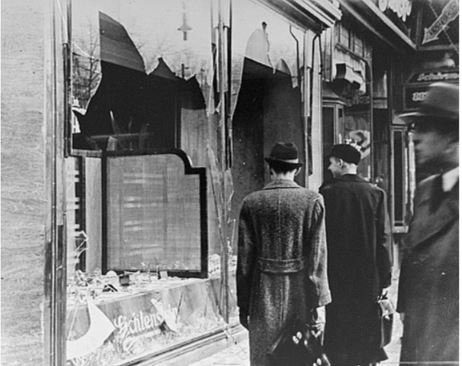
Some will have difficulty with my statement that historically the Jews were not persecuted for their religion as were the Christians until Hitler. It was always involving money even in the Spanish Inquisitions which drove the Jews and Arabs out of Spain confiscating their property. The Jews then fled and settled in Amsterdam where they began both insurance and the first stock exchanges. It is debatable to what extent Hitler was really against Jews for being Jews. He confiscated all their property which included stores and banks. Kristallnacht was Nove 9-10, 1938 when they attacked and looted the Jewish storekeepers.
When Hitler killed the Jews, he took even the gold out of their teeth. So there was clearly still an element of confiscating assets to fund his new empire. He did the same to the Gypsies (considered pejorative), who were an ethnic group of traditionally itinerant people who originated in northern India but lived in modern times principally in Europe. The question some have debated was if the Jews had not been the bankers and shopkeepers, who there have been the rise of anti-Semitism? Today, there are people who are anti-Semitists simply reliving the old propaganda that was used to justify the confiscation of their assets for profit.
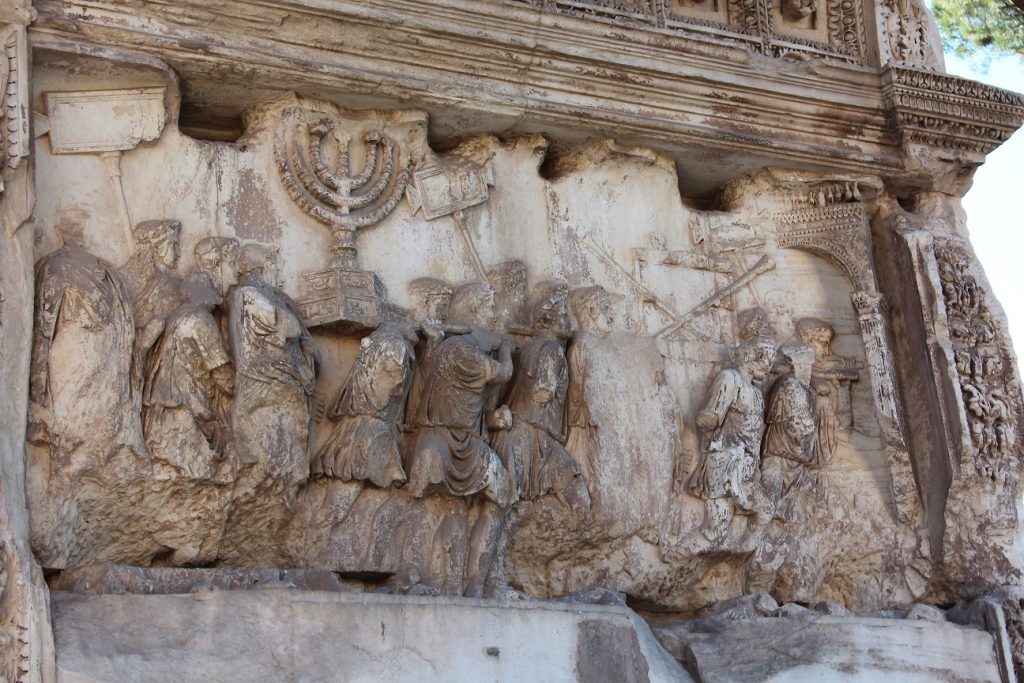
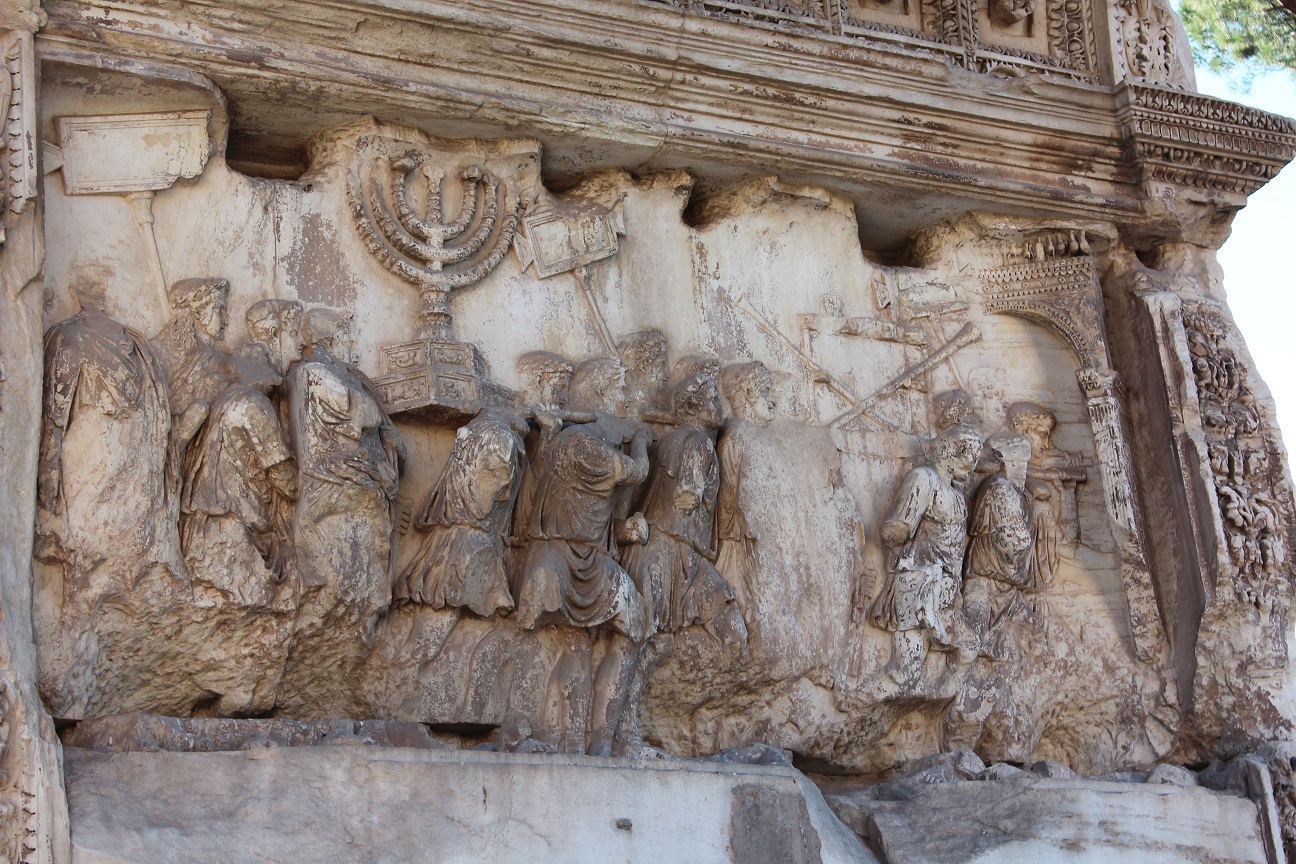
Pre-Dark Ages, the Romans really allowed the freedom of religion. The destruction of the Jewish Temple by Vespasian had nothing to do with religion. Upon the death of Nero, the Jews revolted and assumed that the lack of an heir meant that was their shot to seek independence from Rome. The general Vespasian had to make an example of the Jews, not for religion, but if he did not crush their rebellion, then all the other provinces would do the same and the Empire would have been lost. The relief showing the Romans carrying the spoils of Judaea on the Arch of Titus was a warning to the rest of the provinces not to seek separatism.
The Christians were persecuted when the economy turned down and barbarians were invading under the theory that the gods were angry about the Christians who refused to worship them. Eventually, Constantine set the empire on to the road of Christianity I would argue because it was profitable. He was then justified to confiscate the assets of the pagans. Constantine forbade the Jewish practice of stoning converts to Christianity and ordered Jews to stop circumcising their Christian slaves. He also made it unlawful for Christians to convert to Judaism. His son, Constans (337-350AD), outlawed intermarriage between Jews and Christians. Otherwise, the emperors left the Jews alone. They retained full rights as citizens, including the right to worship freely.
By the end of the 4th century, the relations between the Christians and Jews were tolerable and stable for the most part and the Roman Empire was overwhelmingly Christian. In 392AD Emperor Theodosius I (379-395AD) closed the last of the pagan temples, making Christianity the official religion of the empire. Nevertheless, Theodosius continued the policy of toleration toward the Jews. In 393AD he declared attacks on synagogues to be a major offense. In the Theodosian Legal Code, Christians were also instructed not to have intimate or personal intercourse with Jews, which might lead to intermarriage. This law mirrored similar Jewish restrictions against fraternization with non-Jews. Nevertheless, the code did uphold the rights and citizenship of all Jews and protected existing synagogues.
As the world was entering the Dark Ages, Pope Gregory I (590-604) spelled out Catholic Church policy toward the Jews in his decree Sicut Iudaeis Non, which was a synthesis of Roman law and the philosophies of St. Paul and St. Augustine. Pope Gregory wrote, “Just as the Jews should not in their synagogues be free to do anything not permitted by law, so also in those things granted them they should have no infringement of their rights.”
By the ninth century, St. Agobard, the archbishop of Lyons, wrote, “Since they dwell among us, we ought not to be malignant to them, nor should we threaten their lives, safety, or property. Let us observe the convention ordained by the Church, which is explicit in defining how we must be at once cautious but humane in our dealings with them.” Nevertheless, St. Agobard strongly objected to the Jewish policies of Emperor Louis the Pious. He was particularly upset that the emperor had forbidden slaves owned by Jews to be baptized. Since baptism required the manumission of the slave, this had the effect of depriving the Jews of their property.
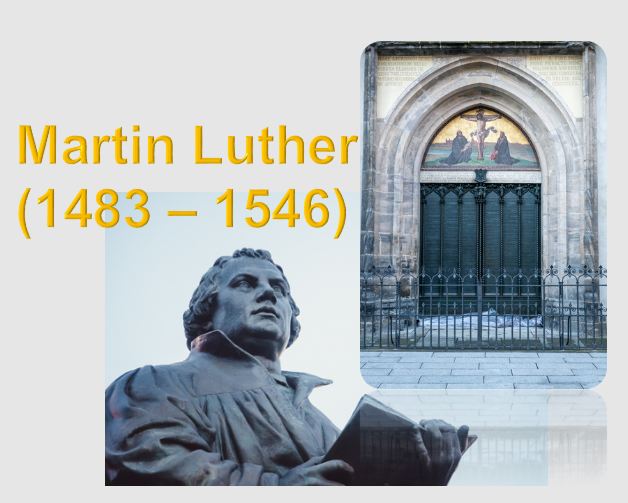
Martin Luther (1483–1546) on October 31, 1517, wrote to Bishop Albrecht von Brandenburg, protesting against the sale of indulgences that were being created to raise money to build St Peters in Rome. This became known as the Ninety-five Theses. Luther really had no intention of confronting the church but saw his disputation as a scholarly objection. In Thesis 86, Luther asked: “Why does the pope, whose wealth today is greater than the wealth of the richest Crassus, build the basilica of St. Peter with the money of poor believers rather than with his own money?”

Although Luther had hoped to spur renewal from within the church, in 1521 he was summoned before the Diet of Worms and excommunicated. He was given shelter and support by Friedrich III, elector of Saxony. It was Friedrich who funded the Protestant Reformation for power purposes, not religion. He used Luther and had him translate the Bible into German and continued his output of vernacular pamphlets.
Frederick III sought constitutional reform of the Holy Roman Empire and protected Martin Luther after Luther was placed under the imperial ban in 1521. Frederick allied himself with Berthold, Archbishop of Henneberg, to promote imperial reforms that would increase the power of the nobles at the expense of the Holy Roman emperor. In 1500 he became president of the Reichsregiment (Imperial Governing Council), which, however, because of lack of funds was soon disbanded. He was instrumental in securing the election of the emperor Charles V in 1519 after refusing the crown himself. Hence, his protection of Luther had nothing to do with reforming the Church, but his thirst for political power.
Frederick appointed Luther and his colleague Philipp Melanchthon to the University of Wittenberg and refused to carry out a papal bull against Luther in 1520. After the ban was imposed on Luther the next year, Frederick welcomed him to the Wartburg, where Luther translated the Bible into German. Frederick championed the German peasant’s revolt in 1524, who was inspired in part by Luther’s empowering “priesthood of all believers.” However, it was Thomas Müntzer (c. 1489 – 1525) a German preacher who became a radical theologian of the early Reformation that inspired the revolt. He opposed both Martin Luther and the Roman Catholic Church. He took this religious position and transformed it into open defiance of late-feudal authority in central Germany, which became the German Peasants’ War. He was eventually captured, tortured, and executed.
By the Reformation’s end, Lutheranism had become the state religion throughout much of Germany, Scandinavia, and the Baltics. This was all about economic power. The Holy Roman Empire was a feudal monarchy that encompassed present-day Germany, the Netherlands, Belgium, Luxembourg, Switzerland, Austria, the Czech and Slovak Republics, as well as parts of eastern France, northern Italy, Slovenia, and western Poland at the start of the early modern centuries. Therefore, Frederick III was supporting Luther in what we would call today a rise of state rights against federalism.
While many simply prefer to look at this purely from a religious perspective, the manipulation of the Papacy by stacking the cardinals and inserting the political appointees by kings was the standard operating procedure. This level of political corruption affected all of Europe. Even Henry VIII (1509-1547) of England had been a devout Catholic and even earned the title from the Pope of being a Defender of the Faith. Nevertheless, Henry knew that the Papacy was political. The attempt to divorce Catherine of Aragon for her failure to produce a male heir was denied by the Pope. However, one must look just a bit deeper. Catherine was a family member of Charles V, Holy Roman Emperor (1519-1556) and King of Spain (1516-1556). It was Charles V who invaded Italy and Rome in 1527 just after the German Peasant Revolt taking the last Medici Pope Clement VII (1523-1534) prisoner. There was no possible way the Pope would grant Henry’s divorce against Charles V’s desires. Hence, Henry VIII was denied his divorce based on politics – not religion.
The Papacy had become a political toy ever since the French seizure in 1305. Even after the Papacy returned to Italy, then the Borgia family obviously saw the advantage of seizing the Papacy as demonstrated by the French. Thus, the first Boria Pope became Calixtus III (1455-1458). The Medici saw the same seat of political power in the Papacy and installed Leo X-(1513-1521) and Clement VII (1523-1534). Therefore, we are not looking at truly holy men. We are looking at a period of extreme political machinations by banking families.
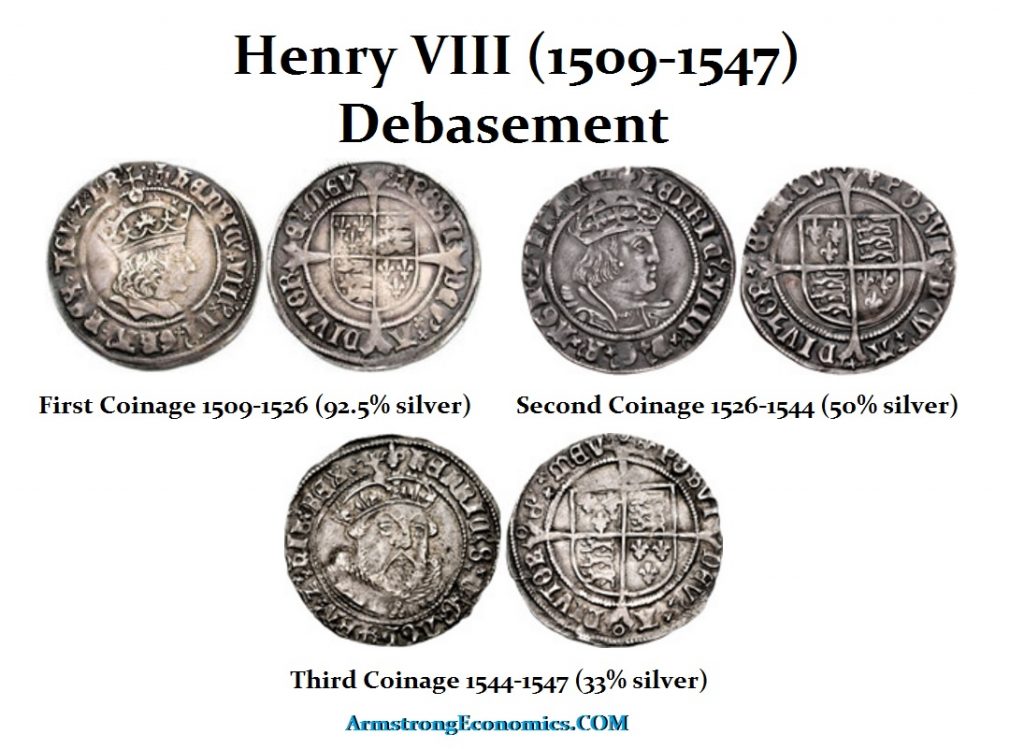
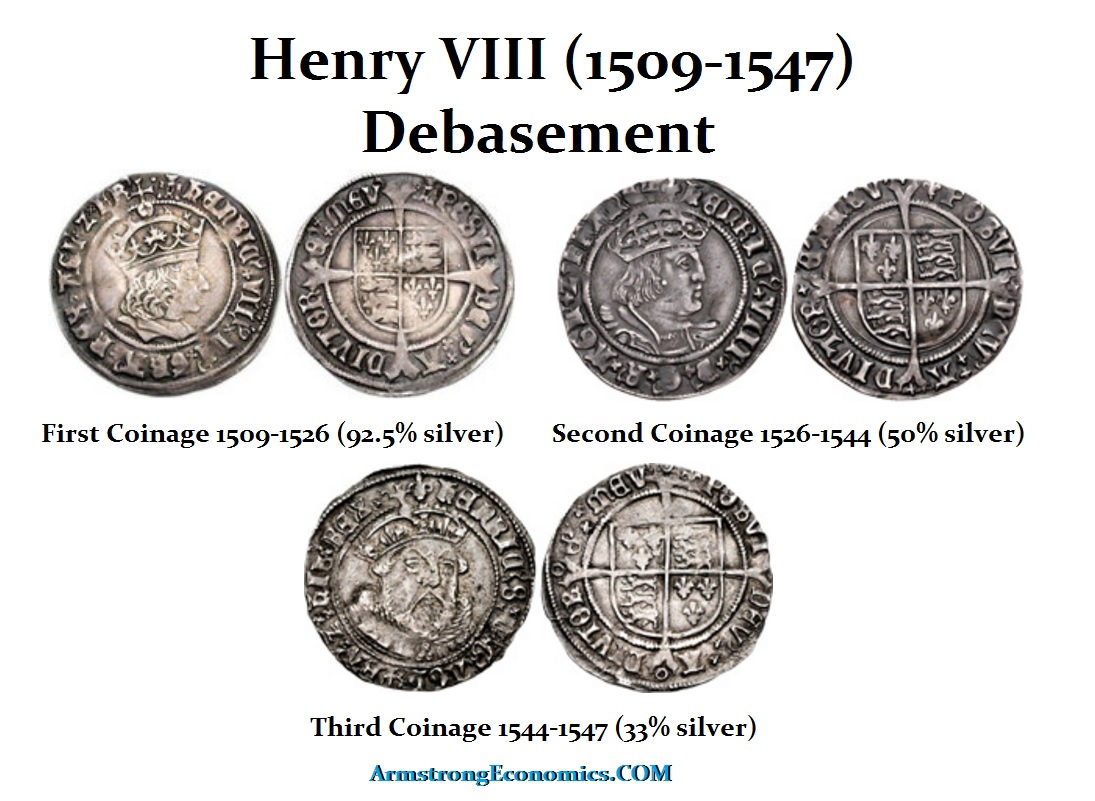
Despite the fact that Henry the VIII has captured the headlines of history for appearing to be the first monarch to seize the Catholic Church to fund his chronic spending reflected in the debasement of his coinage, the trend actually began in Scandinavia where it was profitable to adopt the Protestant Reformation. Denmark was in a fiscal crisis where their mismanagement of the economy and the “Count’s War” saw the throne of Denmark went to Christian III. In 1536 a meeting of the Diet then gave their approval to confiscate the church property in order to reduce the deficit created by the cost of the war. The official decree was that the “bishop’s properties should come under the crown and for their protection so that the people will not be so frequently taxed.” The confiscation of property in Denmark led to revenues of the crown jumping by 300% for the period of 1533 to 1574.
Sweden had also confiscated all the monasteries between 1522-1523 to fund the cost of the war by Gustavus Vasa in his war against Christian II. Where the earliest Swedes, the Svear, had conquered the southern people then known as the Gotar during the 6th Century. The region was divided into small kingdoms where the Swedes had joined with other Norseman in Viking raids during the 7th into the 11th Centuries.
During the 10th Century, the Swedes began to become traders rather than just plundering and pillage. A trading empire stretched well into Russia and down into the Black Sea. Sweden was introduced to Christianity by St. Ansgar in 829AD, but it took until the 12th Century before the whole region became Christian during the reign of Eric IX who also conquered Finland. The Swedes were often at war with Denmark and Norway. The monarchies of Sweden and Norway were merged in 1319 by Magnus VII and in 1397, Queen Margaret created the Kalmar Union that united Sweden, Denmark, and Norway under a single monarchy. It was then about 112 years when the throne had gone to the Danish Christian II. To prevent the throne from ever returning to Sweden, he had the Swedish nobility murdered in Stockholm. This led to an uprising led by Gustavus where the confiscation of church property paid for the war in the same manner as Constantine The Great’s plunder of the pagan temples. Gustavus then founded the new Swedish monarchy and Catholicism was banned in 1604.
The monasteries were not actually church land per se. They were not funded by the church but were often small groups forming a monastery with their own money or upon the donated lands upon the death of some Christian seeking to make amends with God. Thus, when Gustavus was crowned in 1528, the oath he took at his coronation omitted any mention of defending the church and its rights. Sweden had adopted formally Luther’s philosophy. The monasteries throughout Sweden had occupied nearly 21% of all land. It was a sizable chunk of property and its value provided great incentive for those in power to support the Protestant Reformation.
The confiscation of church property in Germany was more gradual. In 1533, Philip of Hesse used the money from Church land to fund projects for the people, rather than pay for war debts. He built the University at Marburg and hospitals. It appears, at least Germany was a real reform rather than monarchs lining their pockets. Nevertheless, what people usually misunderstand is that monasteries were really private property which was not owned by the Church.
The Banking Conspiracy that Changed Christianity
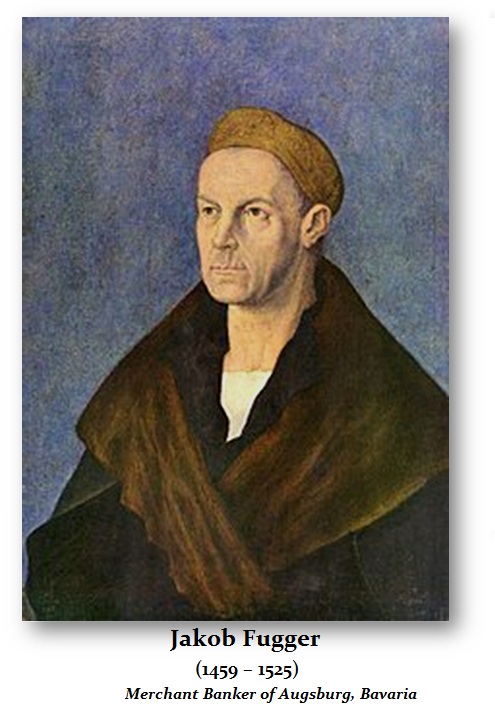
During the Protestant Reformation, there was one German banker named Jakob Fugger (1459-1525) of Augsburg who wielded significant influence during the 1500s that led to the fundamental transformation of Christianity by the reform movement. Fugger amassed a great fortune as a merchant who began to engage in credit and banking. Augsburg, located in Bavaria, was a “free city” that answered to no feudal overload. This status, combined with its strategic location being the trade route between Italy and the Low Countries in addition to being close to the great silver and copper mines of central Europe, lent to the rise of the Fugger dynasty.
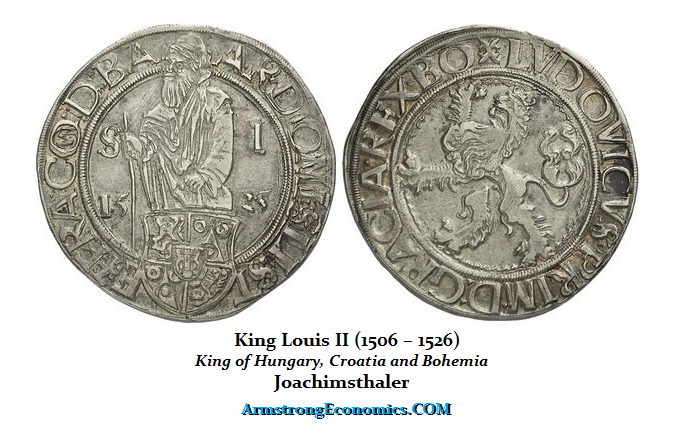
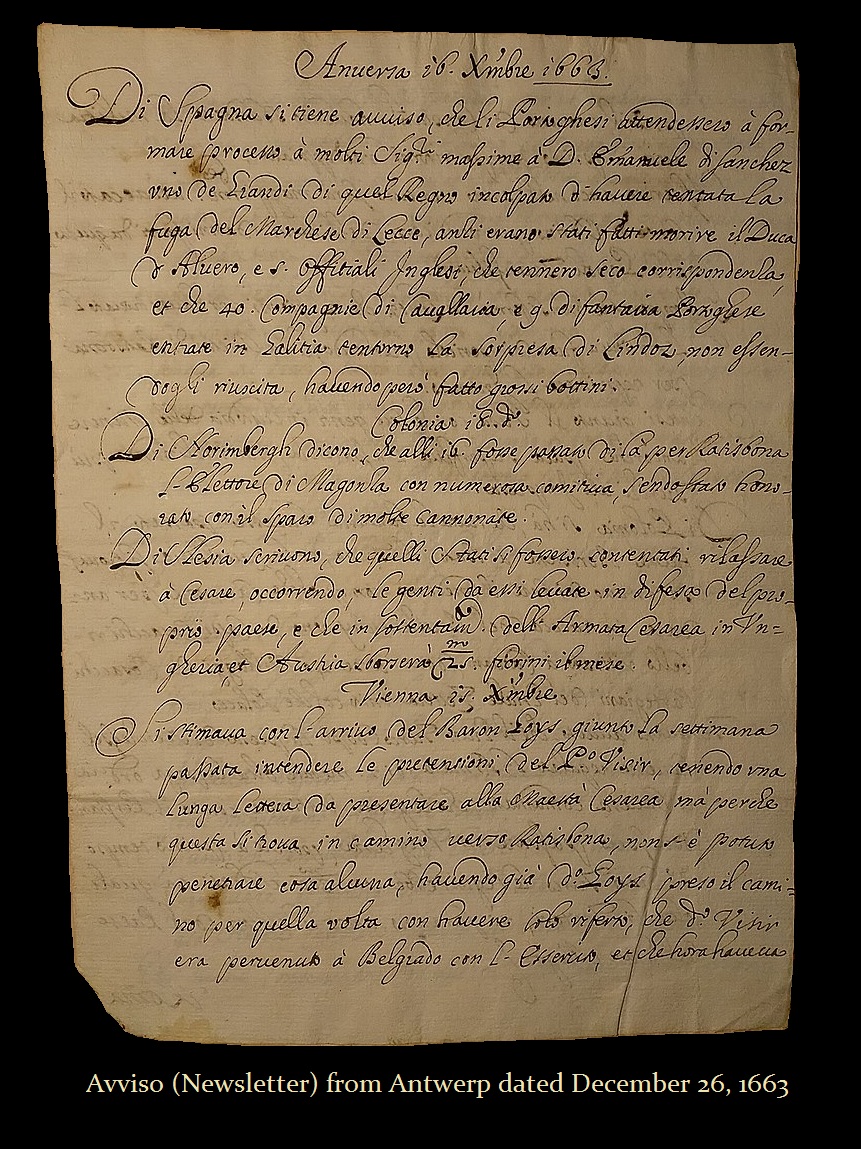
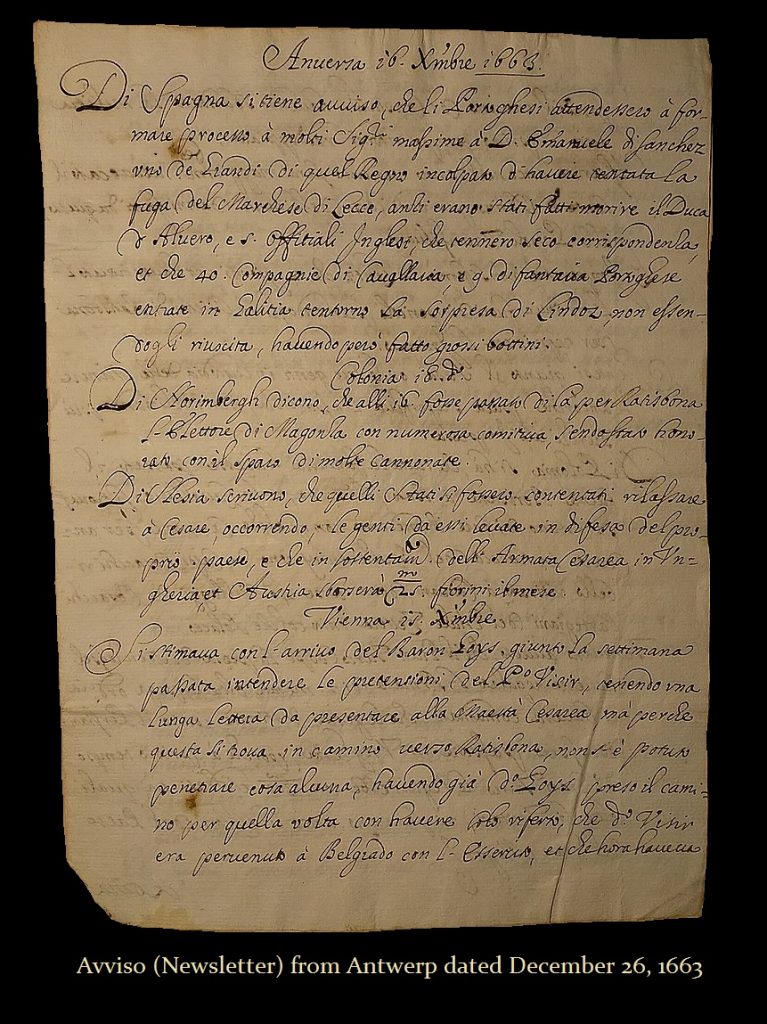 The Fuggers emerged as the leading Augsburg merchant-banker, who then provided loans to local rulers secured with the produce of their mines. Eventually, by 1525, the Joachimsthaler of the Kingdom of Bohemia was the first thaler. The obverse side pictured St Joachim. It was this silver which became the leading currency in Europe and the name origin of the dollar. Fugger had no regard for religion so he pursued business based entirely on profit. They say at the time of his death in 1525, Jacob was worth in cash almost 2% of the value of the entire European economic output. He may have been the second richest man in history behind the Roman Emperor Augustus (27BC-14AD). He was the first truly documented millionaire, in thalers. Yet Jacob had devised perhaps the first modern news service which others would imitate. This was a means by which Jacob devised a way to ensure he had important information before his rivals which predated newspapers by about five decades.
Most people have heard of the Rothschilds and the legend that they made money from the news of Waterloo before anyone else. This all came from Fugger who not only received business news from his correspondents but also sensationalist and gossip news as well. It is evident in the correspondence of Fugger with his network that fiction and fact were both significant parts of early news publications. It was during this period of the 16th century Germany where people began to imitate Fugger with subscription-based, handwritten news. Those who subscribed to these publications were generally low-level government officials and also merchants seeking business advantages. They could afford to pay for a subscription, which was still expensive for the time.
Avvisi, reporti, gazzette, ragguagli, nouvelles, advis, corantos, courantes, zeitungen, were the fastest and most efficient means by which military and political news could be circulated. From the middle of the 16th-century newsletter writers in Italy especially, called menanti, reportisti, or gazzettieri, set up news services. By this time postal services in various forms had developed over all of Europe which allowed for newsletters to flourish and began in Venice. They were issued on single sheets, folded to form four pages, and issued on a weekly schedule. These publications reached a larger audience than handwritten news had in early Rome. Their format and appearance at regular intervals were two major influences on the newspaper as we know it today. The idea of a weekly, handwritten newssheet went from Italy to Germany and then to Holland. Eventually, the first newspaper also appeared in Germany in 1605 and was published by Johann Carolus (1575−1634) called Relation following the information gathering set in motion by Fugger.
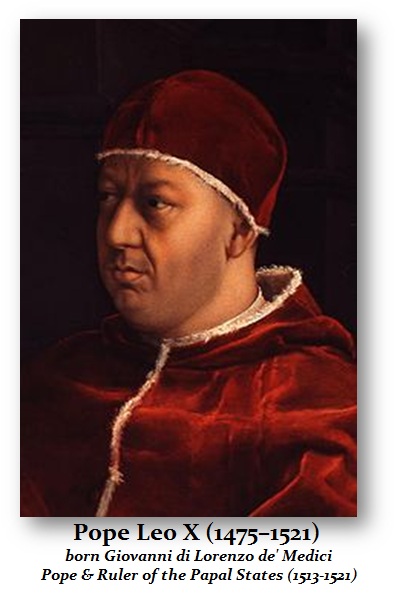 It was Fugger who set in motion the Protestant Reformation because of his scheme to demand collateral for a loan to craft indulgences. Albrecht of Hohenzollern turned to him for a loan to fill the opening for the Archbishop of Mainz. It was Albrecht who came up with an idea that an “indulgence” from the pope would absolve people of their sins and this scheme he pledged as collateral for a loan from Fugger. It has been argued that Pope Leo X (1475–1521) wanted 34,000 gold florins to help pay for expensive upgrades to St. Peter’s Basilica. It was Pope Leo X who thereby authorized Fugger’s scheme to sell indulgences that would provide the collateral for Fugger. But the plot thickens. Pope Leo X was no holy man of God. He just so happened to be the second son of Lorenzo de’ Medici, banker, and ruler of the Florentine Republic and was elevated to the cardinalate in 1489 to control the Church and then, like Goldman Sachs installs its people in the US Treasury or central banks around the world, following the death of Pope Julius II, the Medici seized the Papacy installing Leo X to rule the Church for lucrative business deals. The sale of indulgences was thus a scheme that inspired the monetary lust of two banking houses. The money raised by the sale of indulgences was split 50/50, between the Fuggar and the Medici Pope.
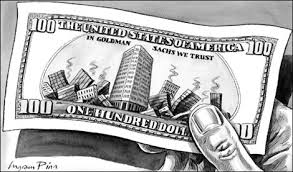
 This brings us to the reformer named Martin Luther who became disgusted by the profitability and con job of the sale of indulgences from the Fuggers & Medici bankers under the auspices of the Catholic Church. This was not so different from the outrage against the bankers, especially Goldman Sachs, of modern times. Instead of using the Catholic Church as the cover for the scheme, they have used government. Nevertheless, to this day, people only blame the Catholic Church for corruption and indulgences and have never looked just beyond the headline. When the Church was free of the Medici as Goldman Sachs has seized undue influence in government, the Council of Trent condemned “all base gain for securing indulgences” in 1563, and Pope Pius V (1504-1572) abolished the sale of indulgences in 1567. He was later declared to be a saint for his reforms following the purge of the Medici control. Ethics has always been a problem between the bankers who fly close to the flame of power for the sake of profits.

The conspiracy of bankers to control governments, and at the time the Catholic Church ruled much of Italy as the Papal States, has been something that is by no means confined to Jewish Bankers. Much of that conspiracy has been spread from Germany when it was used to seize the banks under Hitler. That spread to Jewish businesses and then all the Jews. It has certainly been maintained because people point to Goldman Sachs and the heads of many New York banks who are Jewish.
Nevertheless, my investigation of governments and bankers reveals that there is no confining the plots to just Jewish bankers. As I have shown, the entire conspiracy to create indulgences that fueled the Protestant Reformation was the brainchild of Christians – not Jews. Moreover, the same unfounded conspiracies against the Catholic Church omit the fact that the Papacy fell into the hands of the bankers and upon the death of the Medici Pope Leo X, came Saint Pope Pius V who outlawed the sale of indulgences which had been the scheme of the two leading banking houses in Europe.

To this day, people hate Catholics and bring up this plot to justify their hatred as they do against the Jews and bankers. Sometimes we have to look a little deeper before we reach the truth. The Protestant Reformation used Luther as the scapegoat to free the practice of lending money for interest. While some argue that the first stage of capitalism came about during the 17th century when merchants gradually became more involved in the production of goods by supplying materials and paying wages. The merchant made the transition to capitalism by making profits from the ownership and control of the means of production. This misses the point of money-lending which came first. A Catholic could not lend money for interest without fear of being excommunicated. The Protestant Reformation is where we draw the line with capitalism for there and then the Christians seized control of banking.











 Centinel2012