China – A Different Central Bank Altogether


QUESTION: Mr. Armstrong; I believe you once said at your conference that you were surprised when you were asked to fly to Beijing to meet with the central bank because you were not an academic, but a trader. I think you said when you got there they were traders working in the bank, not academics. Did I recall that story correctly?

ANSWER: Yes. The central bank had sent staff to work on trading desks around the world in Tokyo, New York, and London. They then returned to run the bank. When the 1997 Asian Currency Crisis hit, I was very surprised that they asked me to come and not some academic. When I got there, I discovered that they were traders and we spoke the same language.

When I returned to the States, people I knew in the Fed and in Treasury called to ask me my opinion after these meetings with the Chinese government. I responded: It was great. They only hired people with experience!

I understand so many people think China does whatever I say. I think the real story is they may take what I say, but they see it through the eyes of a trader rather than an academic. Hence, they adopt it quickly but never blindly. They have a good nose for trends themselves.

Does CNN Really Have the Right to Freedom of Speech?


QUESTION: Mr. Armstrong; I read your article on CNN imposing a fiduciary duty upon the directors as a public corporation. I tried to search if corporations truly have constitutional rights. It seems that there is a conflict on that subject and they may not have such rights at the end of the day. Would you care to explain this matter?

Thank you for your financial and legal expertise.

KE

ANSWER: You are correct. There is a tremendous conflict of laws when it comes to constitutional rights and corporations. My own case of contempt illustrated that conflict. I was never actually held in contempt P E R S O N A L L Y. I the individual was never held for 7 years. It was only the corporate officer since the Supreme Court deemed in 1988 that the 5th Amendment Privilege does not apply to corporate officers. Braswell v United States 487 US 99 (1988)  held “The custodian of corporate records may not resist a subpoena for such records on the ground that the act of production will incriminate him in violation of the Fifth Amendment.”

Then you have the decision in Citizens United, where the Supreme Court’s 2010 ruling allowed unlimited corporate and union spending on political issues under the First Amendment. Corporations have the right to enter into contracts with other parties and to sue or be sued in court in the same manner as individuals. Yet there is a great deal of conflict of laws regarding various rights. Chief Justice Roberts wrote in Riley v. California (1914)  that Corporations cannot be arrested and do not have “bodies” to be searched under the Fourth Amendment.

Arthur Andersen used to be one of the big five accounting firms. The government criminally charged it and put the firm out of business back in 2002 when companies were not too big to prosecute.  In 2002, the firm voluntarily surrendered its licenses to practice as Certified Public Accountants in the United States after being found guilty of criminal charges relating to the firm’s handling of the auditing of Enron, the Texas energy corporation, which had filed for bankruptcy in 2001. Arthur Anderson agreed to admit it committed a crime by shredding Enron-related documents. Yet a corporation cannot be jailed. So how can it be criminally prosecuted?

The criminal charge faced by Andersen was obstruction of justice under 18 U.S.C., Section 1512(b), which easily could have applied to Hillary’s lawyers, but Comey gave them immunity while the Justice Department put 85,000 out of work by criminally prosecuting the firm. In order to violate that section, the defendant must “corruptly persuade” someone to destroy documents. The defendant also has to intend that the documents won’t be available for legal proceedings. Former Arthur Andersen partner David Duncan pleaded guilty to obstruction as an individual.

A corporations is a legal construct that dates back to ancient Rome. It cannot commit a physical act such as obstruction of justice. So, how did Congress get past this problem when it wants to punish a company as a whole and destroy it? The government simply attributes the acts and intentions of the company’s employees to the company itself. This approach was sanctioned by the the Supreme Court which first endorsed the idea back in the 1909 case of New York Central and Hudson River Railroad Co. v. United States. When government wants to get around something, they just play with the words and reasoning. There the Supreme Court ruled that since corporations were already liable in civil cases for their employees’ bad conduct, then why no extend that rule to the criminal law despite the fact that the corporation cannot be imprisoned?

In 1886 the Supreme Court accepted the argument that corporations were people and that “their money was protected by the due process clause of the 14th Amendment.” Another example is that in Nike v. Kasky, Nike asserted a free speech ‘right to lie’, while in Sebelius v. Hobby Lobby Stores, Hobby Lobby asserted a freedom of religion ‘right’ to exempt itself from aspects of the Patient Protection and Affordable Care Act.

There are just too many inconsistencies. Either a corporation has constitutional rights fully, or it should have none. You can’t be just little be pregnant as they say.

The End of Diversity? Prepare Yourself Accordingly.


A good discussion on the current situation we are in politics.

Sunday Talks: Anthony Scaramucci -vs- John Dickerson…


White House Communications Director Anthony Scaramucci interviewed by Paul Ryan’s best friend in media, CBS John Dickerson.

Is Trump Draining or Filling the Swamp?


QUESTION: Mr. Armstrong; Trump appoint another ex-Goldman Sachs guy as the head of the SEC. Some say he is not draining the swamp but filling it. Care to comment?

ANSWER: Walter J. “Jay” Clayton III firm where he worked represented Goldman but he did not work for Goldman. He comes from Sullivan & Cromwell, which represents just about every bank in New York. They are extremely influential in New York City to a very very very large extent. I believe this is a bit misleading piece.

Clayton disclosed to the United States Office of Government Ethics that his clients have included Deutsche Bank, UBS, Volkswagen, SoftBank Group, The Weinstein Company, Reid Hoffman, Paul Tudor Jones, Ocwen’s leader, as well as both Pershing Square Capital Management and Valeant Pharmaceuticals.

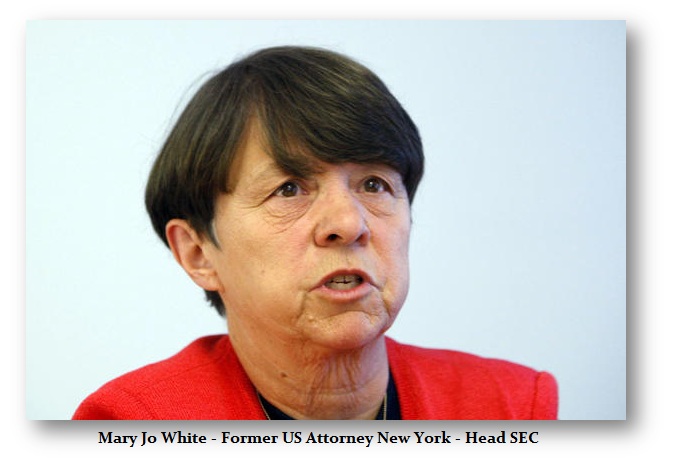
He is a huge improvement over Mary-Jo White who has been a government groupie most of her life with no real experience in the field. She was a prosecutor who let Republic/HSBC plead criminally guilty, return $650 million, kept $400 million in profits, and no jail time.

This is Clayton’s first venture into government and he has made enough over the years to afford to take such a job.

Google’s Antitrust Case in Europe


QUESTION: Mr. Armstrong; Is Google really violating European antitrust laws to warrant such a huge fine or is this really a trade war?

KQ

ANSWER: It’s a trade war. Granted, the EU hit Google with a record-breaking fine of €2.4 billion ($2.7 billion, £2.1 billion) by European regulators who accused the California-based technology giant of abusing its dominant position and promoting its own shopping service in its search results over those of its competitors.

The European Union Commission claims this is the culmination of a multiyear investigation into Google’s business practices dating back nearly a decade. This in itself proves this is nonsense for the past decade has witnessed a dramatic change in how products are being sold. Amazon has been growing tremendously in sales putting many stores out of business like Sears.

Things are changing. The beginning of this whole antitrust violation took place with the Sherman Antitrust Act passed in the USA back in 1890. The theory was you had all these small railroad companies and they were merging into large regional railroads. The politicians called this a monopoly that put people out of jobs as companies merged and eliminate duplication.

Once again we have dramatic changes to the retail industry. The politicians behind this nonsense of fining Google are just (1) greedy and (2) ignorant. Amazon is already starting to create showrooms where you can go at look at products and then it will be delivered to you in days. This is the way retail is changing. Here is a search I entered for a Sony Laptop. Yes at the top it come up with Google shopping and it says sponsored. However, it shows competitive brands. At the bottom of the page is Amazon. Yes they are competing against Amazon. Does that warrant a huge fine or are politicians just trying to come up with creative means to get more money because they are dead broke?

Confirmed: President Trump Will Attend National Boyscout Jamboree Monday, July 24th…


We received a tip a few weeks ago that President Trump might be attending the national Boyscout Jamboree in West Virginia this year.  Well, it appears to be confirmed for Monday night July 24th:  VERY EXCITING

(Boy Scouts of America) On Monday evening, July 24, the President of the United States, Donald J. Trump, will become the eighth president to visit a national jamboree. President Trump’s visit will precede that evening’s stadium show. Experiencing a presidential visit is a once-in-a-lifetime experience — all Scouts, Venturers, leaders, and staff should begin preparing for one of the Jamboree’s signature moments.  (read more)

The Monday night event takes place at the Boy Scouts of America venue AT&T Summit Stadium, which is located on 10,600 acres of property adjacent to West Virginia’s New River Gorge National River, the Summit Bechtel Family National Scout Reserve.

The Jamboree has a scheduled gathering at 7:30pm titled “Fellowship and Service”.  President Trump’s visit and remarks appear scheduled just before this event.  President Obama never attended, however President George W Bush and President Clinton did attend.  History of Presidential Attendance HERE

Advertisements

Multinational Corporations and The Export of American Wealth…


To understand the larger objectives of the global and financial elite it is important to understand the three-decade global financial construct they seek to protect. Global financial exploitation of national markets:

♦Multinational corporations purchase controlling interests in various national elements of developed industrial western nations.
♦The Multinational Corporations making the purchases are underwritten by massive global financial institutions, multinational banks.
♦The Multinational Banks and the Multinational Corporations then utilize lobbying interests to manipulate the internal political policy of the targeted nation state(s).
♦With control over the targeted national industry or interest, the multinationals then leverage export of the national asset (exfiltration) through trade agreements structured to the benefit of lesser developed nation states – where they have previously established a proactive financial footprint.

Since initially explaining this modern import/export dynamic some have asked for specific examples in order to gain a better understanding.  There are a myriad of interests within each sector that make specific explanation very challenging.  However, here’s an attempt.

For three decades economic “globalism” has advanced, quickly.  Everyone accepts this statement, yet few actually stop to ask who and what are behind this – and why?

People with vested financial interests in the process have sold a narrative that global manufacturing, global sourcing, and global production was the inherent way of the future.  But what’s brutally missed in the discussions is the fundamental truth that advocates selling this “global” message have a vested financial and ideological interest in convincing the information consumer it’s just a natural outcome of progress.

It’s not.

It’s not natural at all.  It is a process that is entirely controlled, promoted and utilized by large conglomerates and massive financial corporations.

Again, I’ll try to retain the larger altitude without falling prey to the esoteric weeds.  I freely admit this is tough to explain and I may not be successful.

Bulletpoint #1: ♦ Multinational corporations purchase controlling interests in various national elements of developed industrial western nations.

This is perhaps the most challenging to understand.  In essence, national companies expanded their influence into multiple nations, across a myriad of industries and economic sectors (energy, agriculture, raw earth minerals, etc.).

Think of these multinational corporations as global entities now powerful enough to reach into multiple nations -simultaneously- and purchase controlling interests in a single economic commodity.

A historic reference point might be the original multinational enterprise, energy via oil production.  (Exxon, Mobil, BP, etc.)

However, in the modern global world, it’s not just oil; the procurement extends to virtually every possible commodity and industry.  From the very visible (wheat/corn) to the obscure (small minerals, and even flowers).

Bulletpoint #2 ♦ The Multinational Corporations making the purchases are underwritten by massive global financial institutions, multinational banks.

During the past several decades national companies merged.  The largest lemon producer company in Brazil, merges with the largest lemon company in Mexico, merges with the largest lemon company in Argentina, merges with the largest lemon company in the U.S., etc. etc.  National companies, formerly of one nation, become “continental” companies with control over an entire continent of nations.

…. or it could be over several continents or even the entire world market of Lemon/Widget production.  These are now multinational corporations.   They hold interests in specific segments (this example lemons) across a broad variety of individual nations.

National laws on Monopoly building are not the same in all nations.  But most are not as structured as the U.S.A or other more developed nations (with more laws).  During the acquisition phase, when encountering a highly developed nation with monopoly laws, the process of an umbrella corporation might be needed to purchase the interests within a specific nation.  The example of Monsanto applies here.

Bulletpoint #3  ♦The Multinational Banks and the Multinational Corporations then utilize lobbying interests to manipulate the internal political policy of the targeted nation state(s).

With control of the majority of actual lemons the multinational corporation now holds a different set of financial values than a local farmer or national market.  This is why commodities exchanges are essentially dead.  In the aggregate the mercantile exchange is no longer a free or supply-based market; it’s now a controlled market exploited by mega-sized multinational corporations.

Instead of the traditional ‘supply/demand’ equation determining prices, the corporations look to see what nations can afford what prices.  The supply of the controlled product is then distributed to the country according to their ability to afford the price.  This is how the corporation maximizes it’s profits.

Back to the lemons.  A corporation might hold the rights to the majority of the lemon production in Brazil, Argentina and California/Florida.   The price the U.S. consumer pays for the lemons is directed by the amount of inventory (distribution) the controlling corporation allows in the U.S.

If the U.S. harvest is abundant, they will export the product to keep the U.S. consumer spending at peak or optimal price.  A U.S. customer might pay $2 for a lemon, a Mexican customer might pay .50¢, and a Canadian $1.25.

The bottom line issue is the national supply (in this example ‘harvest/yield’) is not driving the national price because the supply is now controlled by massive multinational corporations.

The mistake people often make is calling this a “global commodity” process.  In the modern era this “global commodity” phrase is particularly BS.

A true global commodity is a process of individual nations harvesting/creating a similar product and bringing that product to a global market.   Individual nations each independently engaged in creating a similar product.

Under modern globalism this process no longer takes place. It’s a complete fraud.  Currently, massive multinational corporations control the majority of product inside each nation and therefore control the entire global product market and price.

In highly developed nations this multinational corporate process requires the corporation to purchase the domestic political process, the approval, within individual nations allowing the exploitation.  As such, their lobbyists pay hundreds of millions to politicians for changes in policies and regulations one sector or industry at a time.

EXAMPLE:  The Committee on Foreign Investment in the United States (CFIUS)

CFIUS is an inter-agency committee authorized to review transactions that could result in control of a U.S. business by a foreign person (“covered transactions”), in order to determine the effect of such transactions on the national security of the United States.

CFIUS operates pursuant to section 721 of the Defense Production Act of 1950, as amended by the Foreign Investment and National Security Act of 2007 (FINSA) (section 721) and as implemented by Executive Order 11858, as amended, and regulations at 31 C.F.R. Part 800.

The CFIUS process has been the subject of significant reforms over the past several years.  These include numerous improvements in internal CFIUS procedures, enactment of FINSA in July 2007, amendment of Executive Order 11858 in January 2008, revision of the CFIUS regulations in November 2008, and publication of guidance on CFIUS’s national security considerations in December 2008 (more)

Bulletpoint #4 ♦ With control over the targeted national industry or interest, the multinationals then leverage export of the national asset (exfiltration) through trade agreements structured to the benefit of lesser developed nation states – where they have previously established a proactive financial footprint.

The process of charging the U.S. consumer more for a product, that under normal national market conditions would cost less, is a process called exfiltration of wealth.

It is never discussed.

To control the market price some contracted product may even be secured and shipped with the intent to allow it to sit idle (or rot).   It’s all about controlling the price and maximizing the profit equation.   To gain the same $1 profit a widget multinational might have to sell 20 widgets in El-Salvador (.25¢ each), or two widgets in the U.S. ($2.50/each).

Think of the process like the historic reference of OPEC (Oil Producing Economic Countries).  Only in the modern era massive corporations are playing the role of OPEC and it’s not oil being controlled, it’s almost everything.

Individual flower growers in Florida out of business because they didn’t join the global market of flower growers (controlled market) by multinational corporate flower growers in Columbia and South America, who have an umbrella company registered in Mexico allowing virtually unrestricted access to the U.S. market under NAFTA.

Agriculturally, multinational corporate Monsanto says: ‘all your harvests are belong to us‘.  Contract with us, or you lose because we can control the market price of your end product.  Downside is that once you sign that contract, you agree to terms that are entirely created by the financial interests of the larger corporation; not your farm.

The multinational agriculture lobby is massive.  We willingly feed the world as part of the system; but you as a grocery customer pay more per unit at the grocery store because domestic supply no longer determines domestic price.

Within the agriculture community the (feed-the-world) production export factor also drives the need for labor.  Labor is a cost. The multinational corps have a vested interest in low labor costs. Ergo, open border policies.  (ie. willingly purchased republicans not supporting border wall etc.).

This corrupt economic manipulation/exploitation applies over multiple sectors, and even in the sub-sector of an industry like steel.   China/India purchases the raw material, ore, then sells the finished good back to the global market at a discount.  Or it could be rubber, or concrete, or plastic, or frozen chicken parts etc.

The ‘America First’ Trump-Trade Doctrine upsets the entire construct of this multinational export/control dynamic.  Team Trump focus exclusively on bilateral trade deals, with specific trade agreements targeted toward individual nations (not national corporations).  ‘America-First’ is also specific policy at a granular product level looking out for the national interests of the United States, U.S. workers, U.S. companies and U.S. consumers.

Under President Trump’s Trade positions, balanced and fair trade with strong regulatory control over national assets, exfiltration of U.S. national wealth is essentially stopped.

This puts many current multinational corporations, globalists who previously took a stake-hold in the U.S. economy with intention to export the wealth, in a position of holding contracted interest of an asset they can no longer exploit.

RELATED:

♦The Modern Third Dimension in American Economics – HERE

♦The “Fed” Can’t Figure out the New Economics – HERE

♦Proof “America-First” has disconnected Main Street from Wall Street – HERE

Next up: How the Stock Market is disconnected and why that matters.

U.S. Commerce Dept. Issues Affirmative anti-Dumping Duty Determination on Taiwanese Rebar…


The U.S. building industry is a manufacturing sector made up of individual smaller material sectors.  Steel rebar is one such sub-sector.

WILBUR ROSS – U.S. Secretary of Commerce Wilbur Ross today announced the affirmative final determination in this antidumping duty (AD) investigation, finding that steel concrete reinforcing bar from Taiwan is being sold in the U.S. market at unfair prices.

The Commerce Department determined that exporters from Taiwan have sold steel concrete reinforcing bar in the United States at 3.50 percent to 32.01 percent at less than fair value based on factual evidence provided by the interested parties.

The Commerce Department will instruct U.S. Customs and Border Protection (CBP) to collect cash deposits from importers of steel concrete reinforcing bar from Taiwan based on these final rates.

“The United States can no longer sit back and watch as its essential industries like steel are destroyed by foreign companies unfairly selling their products in the U.S. markets,” said Secretary Ross. “We will continue to take action on behalf of U.S. industry to defend American businesses, their workers, and our communities adversely impacted by unfair imports.”

In 2016, imports of steel concrete reinforcing bar from Taiwan were valued at an estimated $53 million.

The Rebar Trade Action Coalition filed the case with the Commerce Department on behalf of its individual members:

  • Byer Steel Group, Inc., Cincinnati, Ohio
  • Commercial Metals Co., Irving, Texas
  • Gerdau Armisteel U.S., Inc., Tampa, Fla.
  • Nucor Corp., Charlotte, N.C.
  • Steel Dynamics, Inc., Pittsboro, Ind.

Enforcement of U.S. trade law is a prime focus of the Trump administration. From January 20, 2017, through July 21, 2017, Commerce has initiated 54 antidumping and countervailing duty investigations – a 40 percent increase from the previous year. For the same time period in 2016, Commerce had initiated 40 antidumping and countervailing duty investigations.

Antidumping laws provide U.S. businesses and workers with an internationally accepted mechanism to seek relief from the harmful effects of dumping unfairly priced products into the United States. Commerce currently maintains 404 antidumping and countervailing duty orders which provide relief to American companies and industries impacted by unfair trade.

The U.S. International Trade Commission (ITC) is conducting an investigation to determine whether or not the domestic industry is harmed by imports of steel concrete reinforcing bar from Taiwan. The ITC is currently scheduled to make its final injury determination on or before September 5.

If the ITC makes an affirmative final injury determination, Commerce will issue an antidumping order. If the ITC makes a negative final injury determination, the investigation will be terminated and no order will be issued.  Click HERE for a fact sheet on today’s decision.  (link)

Hillary’s Polls are Worse than Trump’s


In the latest Bloomberg Poll, Hillary’s favorable rating came in at 39%, below that of Trump. The interesting thing is the mainstream media is still bashing Trump with the Russia conspiracy that he somehow colluded with Putin to beat Hillary. Of course, all they press in that Russia hacked the emails. They never say that (1) the emails were false, or (2) Russia actually altered the vote. All they keep pressing is Russia “influenced” Americans not to vote for Hillary. It seems her polls just keep declining well after the election and I don’t think Russians are intercepting the polls as well.