President Trump Tweets Optimistic Outlook Toward U.S. Mexico Future….


A year ago it seemed almost impossible to see a trade agreement with Mexico that would facilitate the interests of both countries. However, with the successful election of Mexican President Andrés Manuel López Obrador (AMLO), a remarkable populist shift dramatically changed the landscape within the Mexican economic outlook and policy.

President Trump’s tweet today hints toward a much bigger picture we have recently been discussing.  Against the likelihood Canada will not join the U.S-Mexico trade agreement. The Mexican government is affirming their intent to go forward with a bilateral trade deal if needed because the U.S-Mexico joint agreement is in their best interests.  According to Mexico’s Chief Negotiator, Kenneth Smith-Ramos:

“We hope the U.S. and Canada will conclude their bilateral negotiation shortly. If that is not possible we are ready to advance bilaterally with the U.S … the agreement in principle that we closed with the U.S. is positive for Mexico because it preserves free trade and modernizes our trade agreement …”

Outgoing Mexican President Peña Nieto, structured his economic policy around accepting multinational corporate investment, facilitating the requests of Wall Street investment banks, and the predictable parasitic outcomes that follow. Exfiltration of wealth and exploitation of resources/labor are an outcropping of predatory multinational trade exploitation, ie. “globalism”.

Retention of the multinational schemes generally leads to massive corruption. In the U.S. this corruption is known as “lobbying”, in Mexico the process is called ‘bribery’; however, the activity is the same.

The incoming Mexican President, Lopez-Obrador (AMLO), is more of an economic nationalist; and quite remarkably his economic outlook, at least as his team has described the objectives so far, is quite Trumpian.

You might even say: “Make Mexico Great Again”.

Both U.S. President Trump and Mexican President-elect AMLO have similar outlooks toward predatory multinational corporations and economic exploitation. If you think about how Mexico was used by the multinationals in the past twenty years; and then think about a very real possibility of a U.S President and Mexican President having an economic friendship; well,… holy cats, those multinationals could be remarkably nervous right now.

AMLO supports labor and has an actual agenda to create a strong working-class or middle-class.  The wealth disparity within Mexico has always been a foundational issue that has led to a tremendous amount of corruption.

Similarly, President Trump supports labor.  Likely because of his positive relationships with labor unions as a private sector builder, Trump was the only republican candidate who advanced pragmatic opinion toward organized labor in 2015, 2016 and, as president, in White House meetings where he invited labor officials.  President Trump’s economic agenda is laser focused on a strong middle-class.

AMLO views Wall Street multinationals as predatory by disposition; Mexico has suffered from industrial exploitation, especially in the agriculture sector.  President Trump also views those same multinationals as tending toward predatory behavior, and he has targeted many specific corporations for attention due to their participation in the erosion of the American middle-class and the U.S. manufacturing base.

AMLO is a strong Mexican Nationalist. President Trump is a strong American Nationalist. Within almost all of President Trump’s foreign policy speeches on economics, he openly accepts that all nations should make decisions based on their individual and nationalistic needs.  Trump does not see economic nationalism as adversarial; he points out that trade agreements based on both interests are entirely possible, and actually easy to construct.

As long as AMLO stays away from the authoritarian tendencies of power, ie. government ownership of private industry – and the slippery slope of soft-Marxism, surprisingly he and President Trump are likely to have a great deal more in common than most would think. Both populists; both nationalists; both rebuke the elitist trappings of globalism and intend on executing economic policies for the majority of their citizens.

Because they have more in common on the economics of policy, this explains why the framework of the U.S-Mexico trade agreement between Robert Lighthizer (representing Trump) and Jesus Seade (representing AMLO) was possible to construct.

Lighthizer and Seade held long meetings after formal U.S-Mexico daily negotiations, and together this relationship appears to have been very important in how the deal framework was structured. Right now both teams are filling in the details based on common objectives.

With AMLO and President Trump, Mexico and the U.S. have joint-interests in an economic trade bloc. It is actually quite stunning when you think about the economic power that both nations can hold if their mutual and individual interests remain at the forefront.

President Trump and President Lopez-Obrador have common objectives; and with the economic approach outlined by AMLO toward using Mexico’s energy resources as leverage for expanded investment, the U.S. is well positioned to help.  Mexico needs independent collateral to break the cycle of dependency on overseas money (investment).  Mexico needs policies and partners that can make Mexico, and the Mexican people, independently wealthy.   Guess who the bestest partner would be?  Yup, President Trump.

President Trump is well positioned to assist Mexico via a united trade bloc with expanded cross-border investment for economic development.

AMLO wants a higher standard of living for Mexican workers; President Trump wants greater parity between Mexican workers and their U.S. counterparts. Heck, it was U.S. Commerce Secretary Wilbur Ross and USTR Robert Lighthizer who first proposed raising the Mexican minimum wage. Now both countries have agreed to an incremental Mexican minimum wage aspect of $16/hr within the auto sector.

Combining the wage aspect with the content and origination agreement, this has become a win/win for both AMLO and President Trump. The multinationals within the auto-sector might not like it, but they’ve already put a massive amount of money into plant and manufacturing investment in their existing Mexican footprint. They have no choice.

In an generally overlooked outcome the nationalist interests of Mexico, specific to AMLO, are very close to alignment with the nationalist MAGA agenda of President Trump.

Unfortunately, Canada is the ‘globalist’ oddball in this tri-fecta; which makes a trilateral deal almost impossible, and explains why Mexico is so willing to sign a bilateral agreement.   The U.S. economy is expanding at an unprecedented rate, and Mexico prepares to surf the MAGAnomic tsunami known as Donald Trump.

President Trump can see that independent economic future for Mexico based on a partnership that protects the interests of both nations.  It certainly appears that AMLO can see the same vision.

Remarkable times.

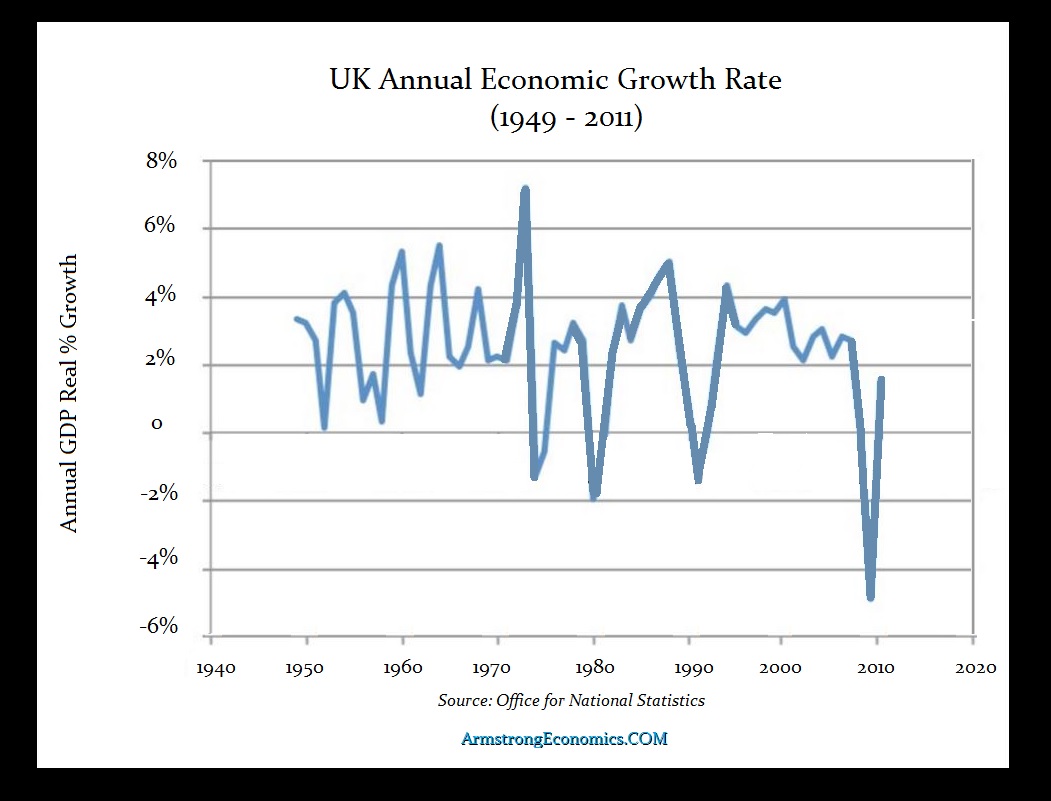
British Economy Booming After BREXIT


COMMENT: Marty; You are not only the only person to forecast BREXIT, you also said the British Economy would do far better after BREXIT. There was absolutely nobody that agreed with you. I read every bank report in the city and every single one said the British economy would take a nose dive in the Thames. Well, all the official numbers are out and they have all proved Socrates to be an astonishing tool.  No wonder Maggie loved you.

HWM

REPLY: Yes, a good friend of mine who has a retail business there disagreed with me and said he would probably have to move to Frankfurt. He said that after the vote. I spoke to him last week and he said he reduced his staff in Zurich and hired more people in Britain. When I asked why? He responded it was half the price.

The numbers have shown that pay growth for British workers has “unexpectedly increased at the strongest rate for three years amid the lowest levels of unemployment since the mid-1970s” wrote the Guardian. It is because Britain is getting out of the EU which has been the most damaging to Britain’s economy because it gets the short stick on every negotiation. I cannot think of even one dispute that Britain has EVER won in the EU court. The typical idiom Fool me once, shame on you; fool me twice, shame on me, in the case of British politicians it should be Fool me once Ok you got me; Fool me twice alright shame of me; Fool me again, I must be just an idiot so no worries I will never figure it out anyway. I do not know how many times the numbers show joining the EU was a VERY, VERY, VERY, stupid idea. Europe has always hated the Brits. The French view if Napoleon won at Waterloo, then the world would be speaking French not English.


I have shown this chart to several UK politicians. They were surprised, but still never used it publicly.  If you just put aside all the opinions and what-ifs, just look at the numbers, you may begin to see the light.

Report: President Trump Likely to Initiate Round #2 of Chinese Tariffs…


Bloomberg reported earlier today that President Trump was likely to pull the trigger on round #2 of tariffs against $200 billion in Chinese imported goods. Duh. Surprise fail. President Trump has not bluffed on a single tariff initiative since he started executing new U.S. trade policies to reset all trade relationships.

According to Jennifer Jacobs reporting (one of the few reliable) Secretary Ross, Secretary Mnuchin and Ambassador Lighthizer met Thursday to review the current status of ongoing trade deals. This is a good nugget, because it’s likely that same meeting contained the forward instructions toward Lighthizer for the Canada discussions.

According to the report, President Trump, Ross and Lighthizer are adjusting the specifics of the $200 billion Chinese products targeted based on the two-weeks of domestic feedback they received. I would actually anticipate a combination of increased tariffs on the Round #1 sector (25% on $50 billion), and the application of new sectors within the $200 billion Round #2 target.

Despite Dire Forecasts Consumer Prices Reflect Low Inflation Even With Tariffs…


The MAGAnomic Tri-fecta: Jobs growing; wages growing; inflation stable.

When President Trump and Commerce Secretary Wilbur Ross announced tariffs on Steel and Aluminum, in combination with Round #1 tariffs on imported Chinese products, the Wall Street financial media went bananas with dire predictions of inflation.

Today the Bureau of Labor and Statistics (BLS) released the August measure of inflation in consumer goods.  Despite the doom-and-gloom predictions from the self-interested multinationals, the inflation rate is a low 0.2% the same result as July. Core inflation, which excludes volatile energy and food components, increased 0.1%.

As John Carney notes:

[…]  “Compared with a year ago, prices were up 2.7 percent, lower than the 2.9 percent gain in July and June. Core inflation was up 2.2 percent from a year earlier, down from 2.4 percent in July. This means the pace of inflation has slowed.”

The lower than expected rise in consumer prices was foreshadowed by the Labor Department’s report on producer prices and the Federal Reserve’s Beige Book Wednesday. Taken together, the reports indicate that fears that trade disputes and rising tariffs overstated.  (more)

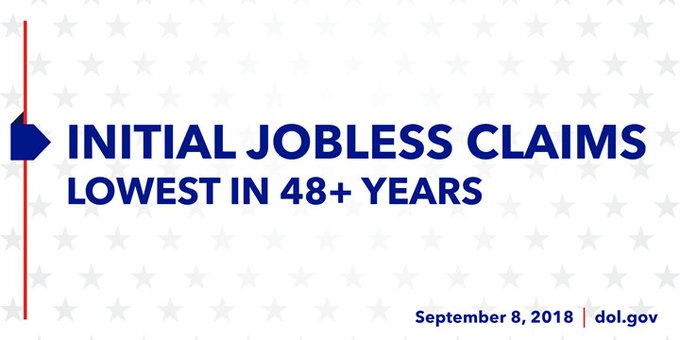
Supplemental to this low inflation index, the US weekly jobless claims dropped to near 49-year low.  As CNBC was forced to admit: “The number of Americans filing for unemployment benefits unexpectedly fell last week.”

(CNBC) […] Initial claims for state unemployment benefits slipped 1,000 to a seasonally adjusted 204,000 for the week ended Sept. 8, the lowest level since December 1969, the Labor Department said on Thursday. Data for the prior week was revised to show 2,000 more applications received than previously reported.

Economists polled by Reuters had forecast claims rising to 210,000 in the latest week. The claims data covered last Monday’s Labor Day holiday. Claims tend to be volatile around public holidays.

The four-week moving average of initial claims, considered a better measure of labor market trends as it irons out week-to-week volatility, fell 2,000 last week to 208,000, also the lowest level since December 1969. (read more)

Secretary Acosta

@SecretaryAcosta

Initial jobless claims continue to be the lowest since December 1969, showing the continued strength of the @POTUS economy.

Additionally, nonfarm payrolls increased by 201,000 jobs in August and annual wage growth notching its biggest gain in more than nine years.  Job openings hit an all-time high of 6.9 million in July.

Low inflation; expanding employment opportunity; low unemployment; and rising wages.

These measures all have a cumulative impact on paycheck-to-paycheck Americans.  Prices for durable goods are stable and wage growth is exceeding inflation.  That means more disposable income in the middle-class…. which, when combined with the increased pay from lower middle-class tax rates, is exactly the intended outcome of MAGAnomics.

This creates a situation where the U.S. consumer can fuel the the U.S. economy while President Trump, Secretary Ross, Secretary Mnuchin and Ambassador Robert Lighthizer utilize the leverage of tariffs, to negotiate better America-First trade deals.

President Trump’s economic policy cabinet is the most effective group of individuals every assembled in modern U.S. history; arguably in all of U.S. history.   The economic policy plans are working exactly as projected; and, in combination with the domestic economic strength, this empowers President Trump’s international engagements with a stunning amount of influence and leverage.

Economic Security is National Security.  We are seeing this multidimensional truth being carried out for the first time in our lifetimes, thanks to a blue-collar billionaire.

Part of the push-back against President Trump is due to the success within this doctrine for domestic and international success.  Politicians and the political apparatus of the administrative state are apoplectic that a long-held economic curtain has been dropped by President Trump and his policy team.

It is this easy.

It is common sense.

We have not had the benefit of this economic success in the past 40 years because corrupt multinational interests were paying and bribing -via lobbyists- politicians and public officials within the administrative state to block independent U.S. wealth.

Wilburine, keeping it simple!

Secretary Wilbur Ross Discusses Florence and the Economy….


Secretary Wilbur Ross is in North Carolina today touring the NOAA facility and listening to projections of how long Hurricane Florence may disrupt rail, road and shipping transport.  Mr. Ross then calculates the economic impact.

Clinging to Old Theories of Inflation


QUESTION: Mr. Armstrong, I think I am starting to understand your view of inflation. It is very complex. I think some people cannot think beyond a simple one dimension concept as you often say. So I am trying to be more dynamic in my thinking process. Here you point out that when debt is collateral it is the same as printing money but worse because it pays interest. Then you point out that hyperinflation takes place not because of printing money but because a collapse in confidence and people then hoard their wealth which reduces the economic output and that compels a government to print more to cover expenses. So there is a line that is crossed and kicks in that collapse in confidence as in Venezuela. This is very interesting but complex. Is this a fair statement?

ANSWER: You are doing very well. You are correct. Some people cannot get beyond an increase in money supply is automatically inflationary. If that was true, then 10 years of quantitative easing by the ECB failed completely in that theory. They too cannot get beyond this simple-minded one dimension concept. There is yet another dimension that these people who will say I am wrong while clinging to the old theories that they fail to understand. The BULK of the money is actually created by the banks in leveraged lending. If I lent you $100 and you signed a note that you would repay it, then the note becomes my asset on my balance sheet. I can take that to a bank and borrow on my account receivables. In this instance, just you are I are creating money. Now let a bank stand between us. I deposit $100 and they lend it to you. We now both have accounts that show we have $100. We just doubled the money supply and nobody printed anything. These people that yelled that Quantitative Easing would produce hyperinflation and gold would soar, refuse to admit that everything they have relied upon is an old theory that no longer applies to our modern society. Money is now debt issued by the government, debt created privately, and the physical money issued. But the actual paper money is a tiny fraction of the real money supply. The common thread between it all is CONFIDENCE.

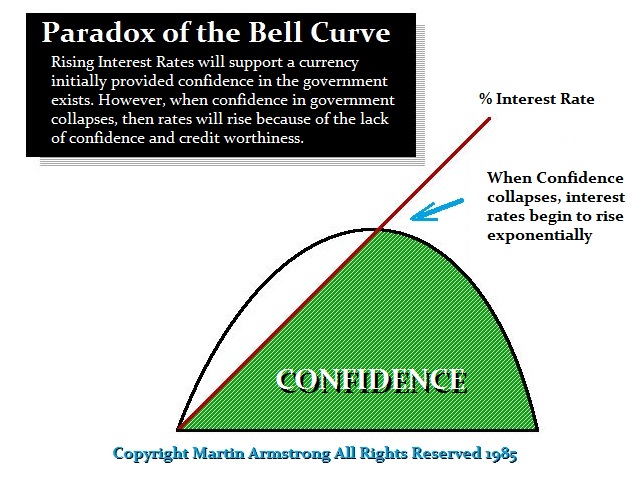
Just look at Turkey. Erdogan has now been forced to raise interest rates. Inflation and interest rates follow a Bell Curve. Everything will be normal until confidence is lost. Once that threshold is crossed, then hyperinflation begins and interest rates rise in a desperate move to try to attract capital and confidence. This simplistic perspective of an increase in the money supply produces inflation is just so childish it demonstrates these people have never just looked at the charts. This theory is what was behind the entire central bank management of the economy. I have quoted Paul Volcker, in his Rediscovery of the Business Cycle he states clearly that this view of Keynesian economics failed back in the 1970s.

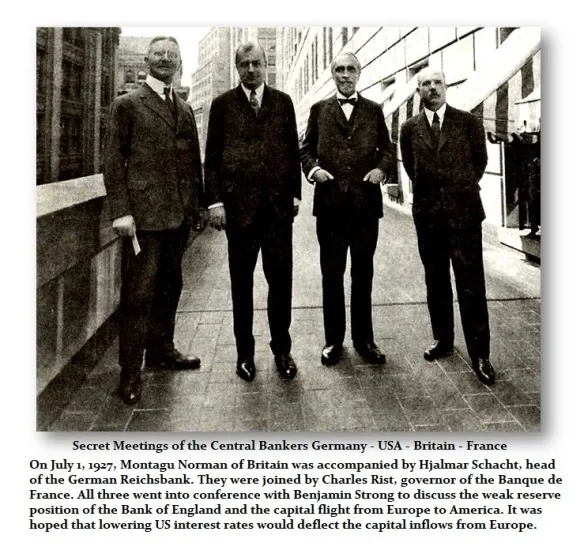
These people who cannot understand the complex relationship of money v inflation should work for the government. The central banks even back in 1927 looked at interest rate differentials and have attempted to use that to manipulate currency values. The Fed lowered interest rates hoping capital would return to the higher interest rates offered in Europe to prevent the economic collapse. The smart money realized that something was wrong and the capital flows moved into the US share market and the Dow. It was like smelling a rat in Venezuela or Turkey. Capital lost confidence in Europe and the higher interest rates failed to attract capital as we see today in Turkey or Venezuela. As the capital fled Europe, they drove the dollar higher. The invisible line of confidence was crossed.


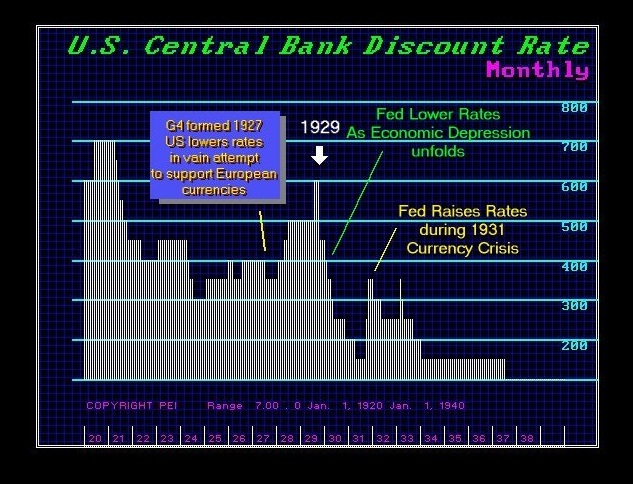
All you have to do is look at the charts. When the Fed lowered the rates in 1927, the capital smelled a rat. It began to pour into the USA. The Fed then assumed the rally was because it lowered the interest rates. They responded and began to raise rates to then try to stop the speculative bubble. The Fed then raised rates from 3.5% to 6% and the stock market rallied. All I do is look at the evidence. So much for raising rates will make the stock market decline. That is for idiots.

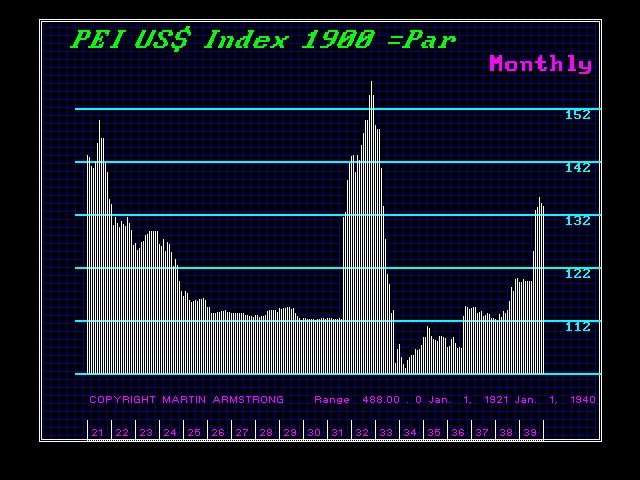
As the capital fled Europe it rushed into the dollar. The US dollar rose so high, this is what began the whole Smoot-Hawley protectionist round. That was passed in 1930 AFTER the high. Because the dollar kept rising, this produced asset deflation. Commodities collapsed which sparked Smoot-Hawley because they were concerned with agriculture Even silver, which peaked in 1919, declined and bottomed in 1932 with the stock market.

Milton Friedman criticised the Fed because all this gold came flooding into the USA and the gold reserves rose dramatically. Milton criticized the Fed for not issuing money to expand the money supply when Roosevelt’s Brain Trust worried about maintaining the confidence in the system and wanted the austerity.

The Fed had been lowering interest rates from 1929 into 1931 just as Draghi did in the ECB with the same net result – DEFLATION. The Fed then raised interest rates during the 1931 Currency Crisis deeply concerned about CONFIDENCE.

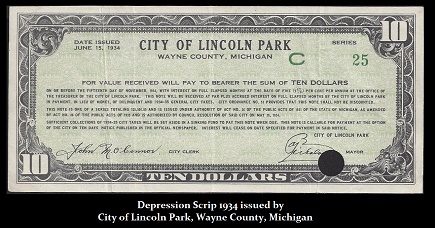
Herbert Hoover’s Memoirs recorded what took place. He said capital was rushing from one currency to the next they could not form a committee fast enough to figure out what even took place. NONE of this crazy period has ANYTHING to do with increasing the money supply. It was all about CONFIDENCE. Over two hundred cities began to issue their own money BECAUSE there was a shortage of money. This was called Depression Script.  Depression scrip was used during the Great Depression era of the 1930’s as a substitute for government-issued currency because there was a SHORTAGE plain and simple. Because of some 9000 banks closed, this added to the problem of a lack of physical currency. Therefore the concept of issuing a local currency was the answer to allow commerce.

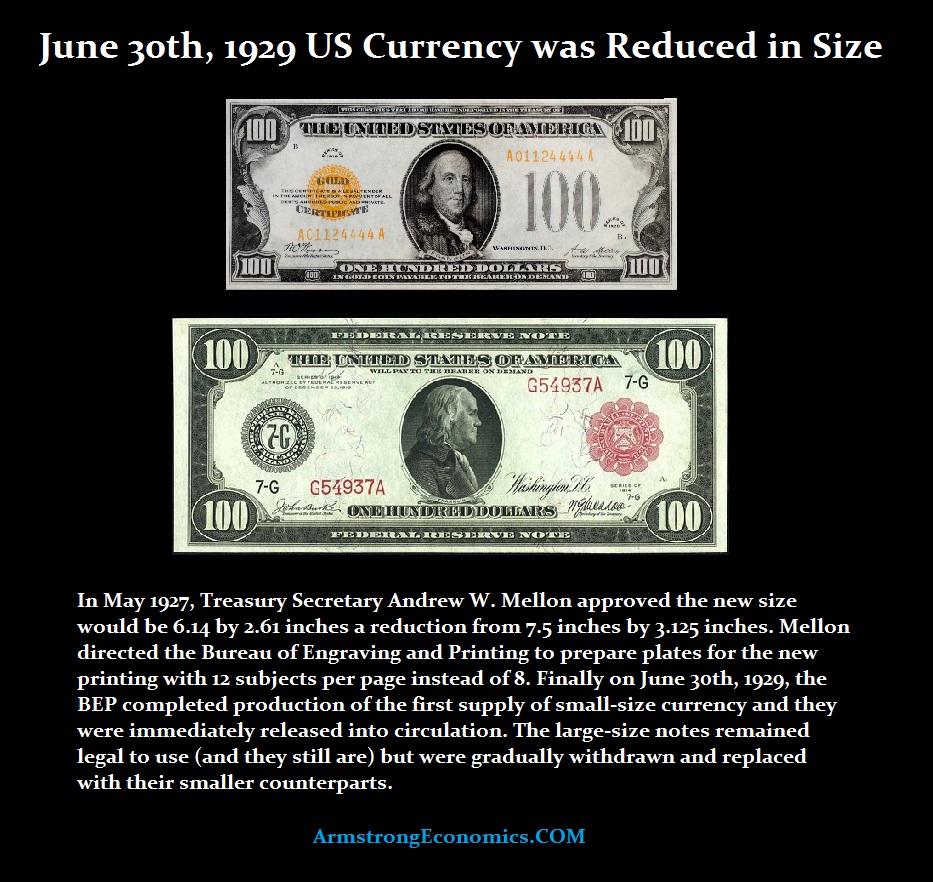
At one point, the U.S. Government considered issuing a nationwide scrip on a temporary basis because they feared that increasing the money supply itself would be inflationary. This idea was shot down by the Secretary of the Treasury William H. Woodin at the time. Meanwhile, it was also argued that the currency had been reduced in size on June 20th, 1929 and while the old notes were still valid, the argument was that the U.S. Bureau of Engraving and Printing did not issue enough currency fast enough which also contributed to the deflation.

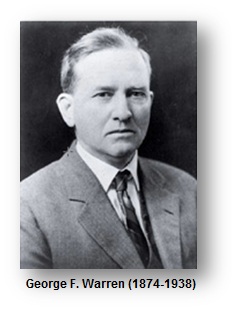
It was actually the Agricultural economist George Warren (1874-1938) who convinced Franklin Roosevelt that the way to end the deflation was to devalue the dollar. Roosevelts Brains Trust vehemently disagreed clinging to the old theory that they needed to maintain CONFIDENCE in the government by rejecting anything that would increase the money supply.

When Roosevelt devalued the dollar and confiscated gold to prevent people from profiting from the devaluation, the economy immediately boomed and rallied into 1937. Why? Suddenly assets rise in terms of the new depreciated currency and people THINK in nominal terms. So if the stock market doubles, you assume you doubled your money. But if everything else doubles in value, in terms of net purchasing power, you gained NOTHING!


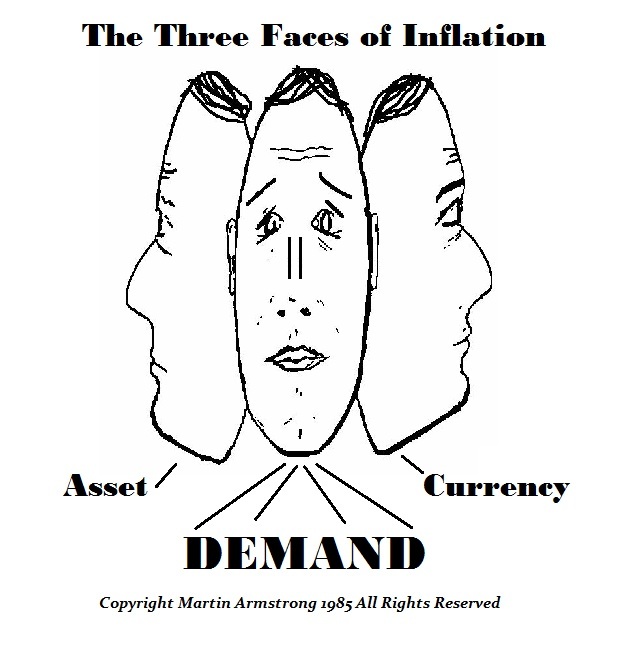
The sad part is these people who just yell and scream that I am wrong because inflation is caused by only a rise in the supply of money, to be as polite as I can, they are just incapable of understanding complex systems. Even in nominal terms, inflation can be caused by different simulations. The currency declines and we have asset inflation as I just laid in the USA from 1934 to 1937, or just look at Turkey and Venezuela in real time. We have asset inflation as in the DOT.COM bubble where capital is rushing into some new hot investment sector. Then we have demand inflation, which can be illustrated by say a serious weather condition and wheat rises because of crop failures.

So in the end, since the national debt is growing exponentially now thanks to interest expenditures that will exceed defense spending in 2019, obviously if you did pay off the debt by printing money, there would be a far less inflationary impact from the government budget perspective. It would no longer have the interest carrying costs so you would REDUCE the actual amount of new money being created which includes DEBT.

This is just not a simple equation of increasing the supply of money = inflation. I was the one yelling on the Hill that the Fed buying in 30-year bonds would NOT stimulate the economy BECAUSE they ASSUMED the system is an isolated domestic affair. It is not!. You buy-in the 30-year bonds and you have no idea if the seller is domestic or foreign. So the money left the country and stimulate somewhere else. You have to look at the whole system. Anyone who says inflation is created by an increase in money supply is off the reservation clinging to old theories that ignore debt, banking leverage, international capital flows, and that is just the beginning.


President Trump Hosts Reception for Congressional Medal of Honor Recipients…


President Trump delivers remarks at a celebration to honor a reception for Congressional Medal of Honor recipients. In addition to remarks for the audience, President Trump also mentions the preparation and concern for those in the path of Hurricane Florence.

.

[Transcript] East Room – 5:59 P.M. EDT – THE PRESIDENT: Thank you very much, everybody. Please, please. A lot of very brave people in this room. I have to start off by saying that. And I’m truly thrilled to welcome back all of you folks to the White House. Thirty-three recipients — our nations highest military award: the Congressional Medal of Honor.

You know, now they say the Medal of Honor — am I wrong in saying? — that it just sounds better when you say the “Congressional Medal of Honor.” Somehow it’s just a very special — a very special thing, a very special group of people.

Nearly half of the nations 72 living recipients are here with us tonight. So you have 72 total recipients living, and we have half tonight. And I feel I know you. Most of you I’ve met — right? — more than once.

Each of you went above and beyond the call of duty. Each of you risked life and limb, without a thought for your own safety. Each of you has made a lasting mark upon the history of our great nation.

The Congressional Medal of Honor is the supreme symbol of American courage. It is the ultimate tribute to American valor. You are the strongest, the bravest, and the finest among us. See? My ego is not that big. (Laughter.) I admit. I admit it. Okay? Right, General? (Applause.) I admit it. True. And we thank God that you were there in Americas hour of need.

We will all honor Medal of Honor winners and recipients, and we’ll always do that. And to be here tonight with you is very, very special. I want to thank you all for coming to the White House. We have some tremendous people that are paying great respect to you in this room, other than our Medal of Honor winners. We have some tremendous people, highly respected. And they all wanted to be here.

So I’d like to ask, if I might, for the winners of the Congressional Medal of Honor to please stand. Thank you. (Applause.)

Thank you very much. It’s really something.

Before continuing, I’d like to provide an update on our preparations for the incoming hurricanes. We have some really big situation confronting us. It’s coming in fairly fast. And it’s going to be one of the biggest to ever hit the East Coast, one of the biggest ever to hit our country. Maybe something will happen, but it’s looking that like that probably won’t be taking place, unfortunately — meaning veering away from land.

My administration is in close coordination with state and local authorities. And FEMA — these are tremendous people, also, as you know — has already placed extensive resources on the ground, including search and rescue experts, power restoration, and medical support. Tremendous people working on the hurricane — first responders, law enforcement, and FEMA. And they’re all ready, and we’re getting tremendous accolades from politicians and the people. We are ready. But this is going to be one of the biggest ones to ever hit our country.

Residents in the path of these devastating storms should comply with all evacuation orders and other emergency instructions. Protection of life is the absolute highest priority. And that’s what we’re doing. It’s called protection of life. So God bless everybody, and be careful. Thank you. (Applause.) Thank you.

For tonights Medal of Honor Reception, we’re also joined by members of my Cabinet: Secretary Steve Mnuchin. Steve, where are you, Steve? I don’t know if you’d ever win this award, Steve. (Laughter.) That’s a tough award. In a different way, right? In a different way. Doing a great job. Thank you. Ryan Zinke. Ryan? Thank you very much. Sonny Perdue. Sonny? Thank you. Thank you. Thank you, Sonny. Alex Acosta. Alex? Thank you. Thank you, Alex. Ben Carson. Thank you, Ben. Thank you. Elaine Chao. How’s Transportation doing? Good? I think so. Robert Wilkie. Doing a great job — for the VA. We’re doing a great job. We have Choice and we have Accountability — things that nobody ever thought you’d see. They worked 46, 47 years on trying to get Veterans Choice. And we now have Veterans Choice and we have Accountability. If they dont do the job, boom, you’re fired. (Laughter and applause.) We want that for our veterans, right? Right?

And a man who’s really doing a fantastic job, Acting Administrator Andrew Wheeler. Thank you. Thank you, Andrew. Thank you, Andrew. (Applause.) Appreciate it.

We’re grateful to the distinguished military leaders in attendance, including Secretary of the Navy Richard Spencer. Thank you. Thank you. Thank you. (Applause.) Thank you, Richard. Secretary of the Air Force Heather Wilson. (Applause.) Thank you. Thank you, Heather. And Vice Chairman of the Joint Chiefs of Staff, General Paul Selva. Thank you, Paul. Thank you very much. (Applause.)

And one of my favorite members of the Joint Chief. Stand up you two. What a job. Two of you. Come one. (Applause.) Stand up. Right? Great. Thank you both. Thank you. Thank you. Thank you, Paul.

I also want to thank Representative Mo Brooks for joining us tonight. Great gentleman — wherever you are, Mo. Thank you, Mo. And a very special thank-you to the members of the Congressional Medal of Honor Society.

Tonight we’re privileged to be in the company of Americas greatest heroes. Joining us this evening are three extraordinary Americans who I had the privilege of presenting the Medal of Honor to: Jim McCloughan, Mike Rose, and Brit Slabinski.

Please stand up. Please. (Applause.) Please. Thank you. Thank you, fellas. Proud of you.

We also are very proud to have among us a Marine who served in World War II and who fought heroically at Iwo Jima. In just a few weeks, he will celebrate his 95th birthday. He’s a friend of mine. I’ve gotten to know him. Woody Williams. Woody. (Applause.) Ninety-five. You look good, Woody. You look good.

Another friend of mine, General John Kelly and his incredible wife Karen. They’re here someplace. (Applause.) John? Stand up, John. Stand up, Karen. (Applause.) Two great people. Two great people.

I also want to say a word of warmth and love to the spouses and the loved ones here tonight. We know that the courage of our warriors is sustained by that great love and support and sacrifice of our military families. Without those great families, it would never be the same. And we all understand that. All of the recipients understand that, I know. So thank you all for being here, and thank you for your tremendous support. Thank you. (Applause.)

The Congressional Medal of Honor recipients here with us tonight come with and from cities and towns all across our nation, and they fought for America in fields of battle all across the world.

In Vietnam, Bruce Crandall flew a helicopter, full speed ahead, straight into enemy fire — and it was a lot of fire, from what I understand, Bruce — not once, not twice, but 22 times. Bruce, you can have that job, okay? (Laughter.) Where’s Bruce? Bruce. Thank you, Bruce. (Applause.) Twenty-two times. Ben Carson — better him than us, right? Huh? (Laughter.)

In Korea, Hiroshi Miyamura singlehandedly battled an overwhelming number of enemy fighters without reinforcements. They didn’t come. They weren’t there. He treated the wounded and kept on fighting while enduring severe wounds of his own. Where is he? Where is he? Please. (Applause.)

In Afghanistan, Ed Byers rescued a hostage from terrorists, tackled a guard in hand-to-hand combat, and shielded the hostage from enemy rounds.

Every single recipient here this evening has acted with heroism beyond description, and courage beyond measure. Tremendous courage.

You inspire dread in our enemies, awe in our friends, and universal admiration among freedom-loving people all around the world. They respect you so much — more than you would even know.

I know that tonight you are also thinking of your fellow warriors who didnt come home. Many, many warriors did not come home. We forever remember and eternally honor Americas fallen heroes.

The warriors with us today continue to give of themselves long after leaving active service.

One of them is Sammy Davis. I know Sammy Davis, but it’s a different Sammy Davis. (Laughter.) Good name. Where’s Sammy? Sammy. Sammy. (Applause.) Sammy. Now I know two of you. Thank you, Sammy.

MR. DAVIS: (Inaudible.)

THE PRESIDENT: That’s — (laughter) — that’s true, actually, isn’t it? (Laughter.)

Who earned the Congressional Medal of Honor for his heroic actions in Vietnam. Sammy teaches young people about the importance of patriotism. And just a few months ago, he received the State of Indianas most prestigious award for his life of service. Sammy, that’s fantastic. Thank you very much. Thank you. (Applause.)

Also with us is Ronald Rosser, who fought in Korea, and then became a police chief, a construction foreman, and a history teacher.

A veteran of Operation Enduring Freedom, Leroy Petry has since devoted his life to supporting our wonderful veterans. Thank you very much. We have many people that are doing that.

We’re loving our veterans, I think, honestly, more than ever before. We respect them so much. There’s a whole different spirit over our country. We respect our veterans more than we’ve ever respected our veterans. So important. We’re working so hard on that, and we’re doing the job.

These are just a few of the incredible stories represented in this room today.

Before I conclude, I would like to ask the President of the Congressional Medal of Honor Society to come up and say a few words — a friend of mine, and we’ve met a number of times. And he’s a good man, and a little bit of a character, and that’s okay. I suspect you’re all characters. (Laughter.) Please come up, Recipient Drew Dix. (Applause.)

RET. MAJOR DIX: Thank you, President Trump for two things. One is honoring us with this invitation to the White House. You know, January next year, it’s been 50 years since I was in the East Room. And I don’t remember much about that. It was much of a fog in my mind because of the circumstances. But I want to tell you that, on behalf of the 32 other recipients here, we are very honored to be here.

But that honor pales in comparison to the honor that we have, and the responsibility that we share, for representing all of our veterans and service members that performed deeds far greater than ours. But witnesses just aren’t available.

And for that, I want to say that we carry that around the country. We do what we can to spread the character and the examples of recipients to our youth. And we’re just starting a new program on our outreach, and we help to coordinate efforts between — all the efforts — to coordinate the efforts against — preventing the suicides. It’s a tremendous problem in our country. So the Society has taken this on.

And I can’t think of a better way to start a convention as right here from the White House and going over to Annapolis. So if we’re all about — (applause) — and if we’re all about tradition, tradition starts here. And for the Navy folks, we’re really proud to spend a week with the midshipmen over there.

And thank you, sir, for all you do.

THE PRESIDENT: Great honor. Thank you, Drew, very much. Thank you. (Applause.) Thank you, Drew.

The heroes in this room embody the highest ideals of our nation. Your actions demonstrate the unmatched nobility and dignity of the American warrior. And that’s what you are. You’re warriors. Great warriors.

You inspire in each of us the greatest sense of patriotism, and purpose, and pride. We pledge to honor your service by supporting. And when I say “support,” I mean always supporting the incredible men and women of the United States military.

We will always remain faithful to the heroes of the American Armed Forces. We will forever remain loyal to our beloved veterans. And we will always defend our country, our Constitution, our values, our families, our freedom, our people. And we will always defend our great American flag.

Thank you. God bless you. And God bless America. Thank you. Thank you. (Applause.)

END 6:17 P.M. EDT

Small Business Optimism Reaches Highest Mark in 45 Year History….


MAGA Winnamin Alert – The National Federation of Independent Business (NFIB) just released another survey.  The Small Business Optimism Index has soared to 108.8 in August; that’s an all-time record in the survey’s 45-year history, topping the July 1983 highwater mark of 108.  This incredible surge in economic outlook began with the era of President Donald J Trump.

According to the release:

“At the beginning of this historic run, Index gains were dominated by expectations: good time to expand, expected real sales, inventory satisfaction, expected credit conditions, and expected business conditions,” said NFIB Chief Economist Bill Dunkelberg.

“Now the Index is dominated by real business activity that makes GDP grow: job creation plans, job openings, strong capital spending plans, record inventory investment plans, and earnings. Small business is clearly helping to drive that four percent growth in the domestic economy.”

  • 26% of companies plans to increase employment.
  • 38% of companies have current job openings.
  • 34% of companies consider this a good time to expand.
  • 34% of companies expect the economy to improve.

Read More Here

Sec. Wilbur Ross

@SecretaryRoss

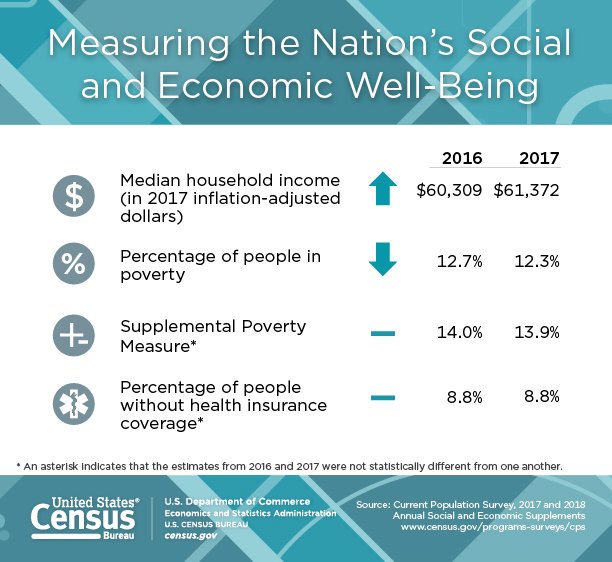
More great economic news! Poverty rate declines and incomes rise in 2017.U.S. Census Bureau

@uscensusbureauJust announced: 2017 Income, Poverty, and Health Insurance Coverage in the United States: https://go.usa.gov/xPrP2 

View image on Twitter

Chrystia Freeland Virtue-Signaling as Leverage for Preferential U.S-Canada Trade Outcome…


After participating in a “Trump The Tyrantleft-wing symposium on September 10th, the primary Canadian trade negotiator appears in Washington DC on September 11th to demand preferential treatment based on friendship, virtue and neighborliness.

The combined audacity and virtue-smugness is off-the-charts with this one.