Posted originally on Dec 6, 2023 By Martin Armstrong
QUESTION: What about Argentina willing to peg pesos to USD? THANKS for all you are doing for us! ALL THE BEST TO YOU AND FAMILY
TD
ANSWER: First and foremost, what collapsed Bretton Woods and the gold standard was persistent deficit spending. They fixed the price of gold to $35 but then spent recklessly every year. you CANNOT have a fixed exchange rate, a pegged exchange rate, or any sort of a gold standard as long as you retain a Marxist/Socialist agenda where you spend more than you have.
In addition, any Pegging of a currency is significantly different than a Fixed Exchange Rate. Under a Fixed Exchange Rate, the main purpose is to facilitate trade. However, you are not expressly subordinating your economy to the economic trend of everyone else in the system. Each nation is still independent, and if their balance of payments falls out of line, then they alone have a monetary crisis.
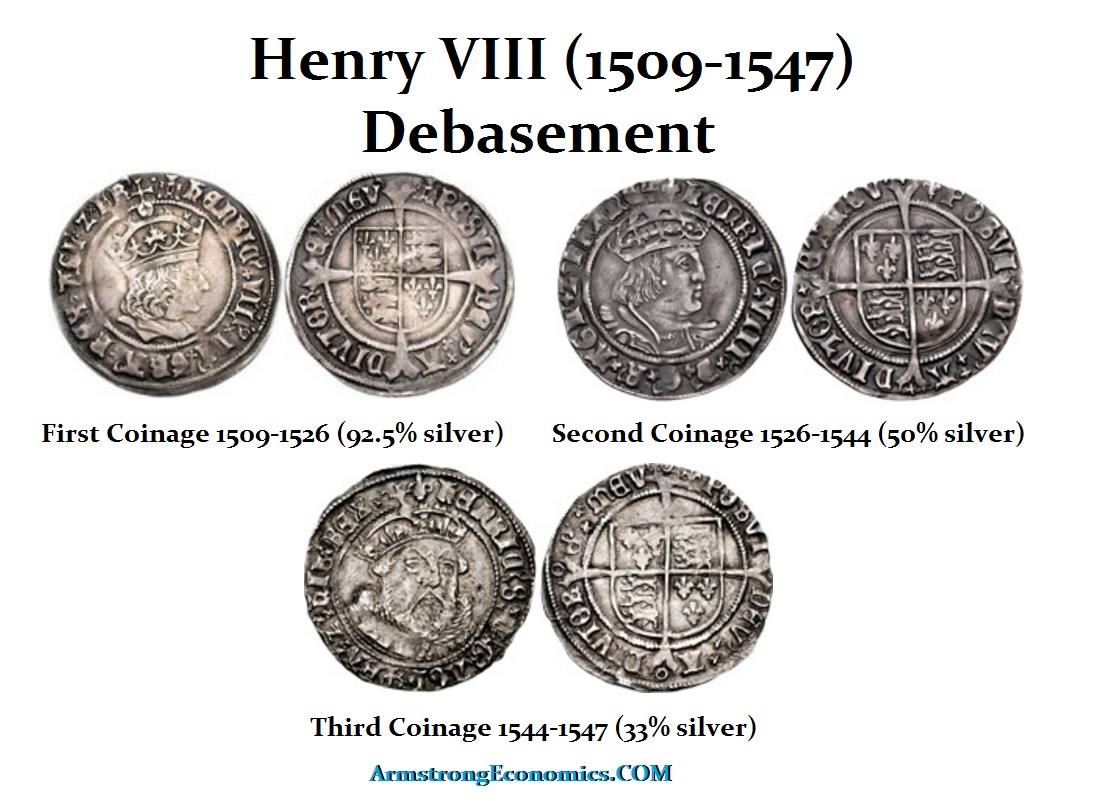
Sir Thomas Gresham was the agent for the English Crown in Amsterdam, the Wall Street of Europe at that time. Henry VIII was debasing the currency, and nobody wanted to lend money to him, fearing that what they would be repaid with was debased. Hence, Gresham’s law.
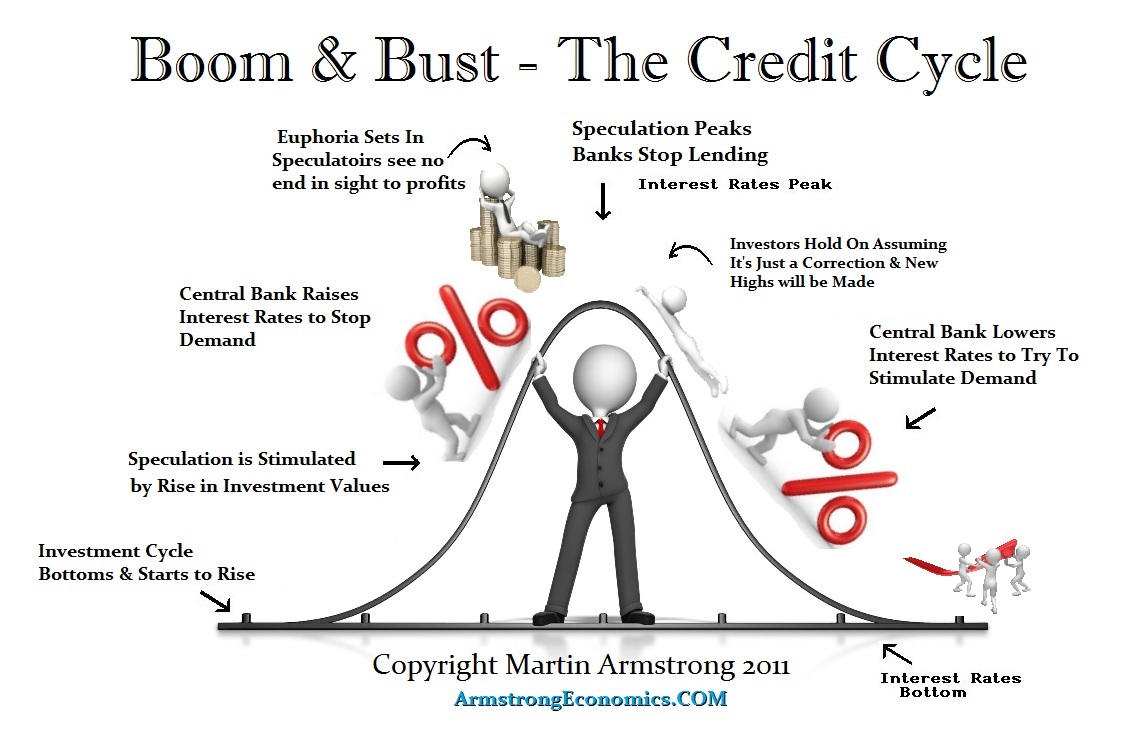
A Pegged currency is far worse for the host currency’s economic conditions are imported. If Argentina pegs to the USD, then raising or lowering interest rates by the Fed and the boom-bust business cycle are automatically exported to Argentina. It would be better to peg to a basket of currencies that would be a hybrid system closer to a fixed currency regime for trade.
Napoleon had actually summoned the best minds and talents from all over Europe into his service. His court was deliberately filled with able men from all over Europe: Dutch, German, Italian, and even Polish. These foreigners worked in the highest offices of his imperial civil service – not exclusively French.
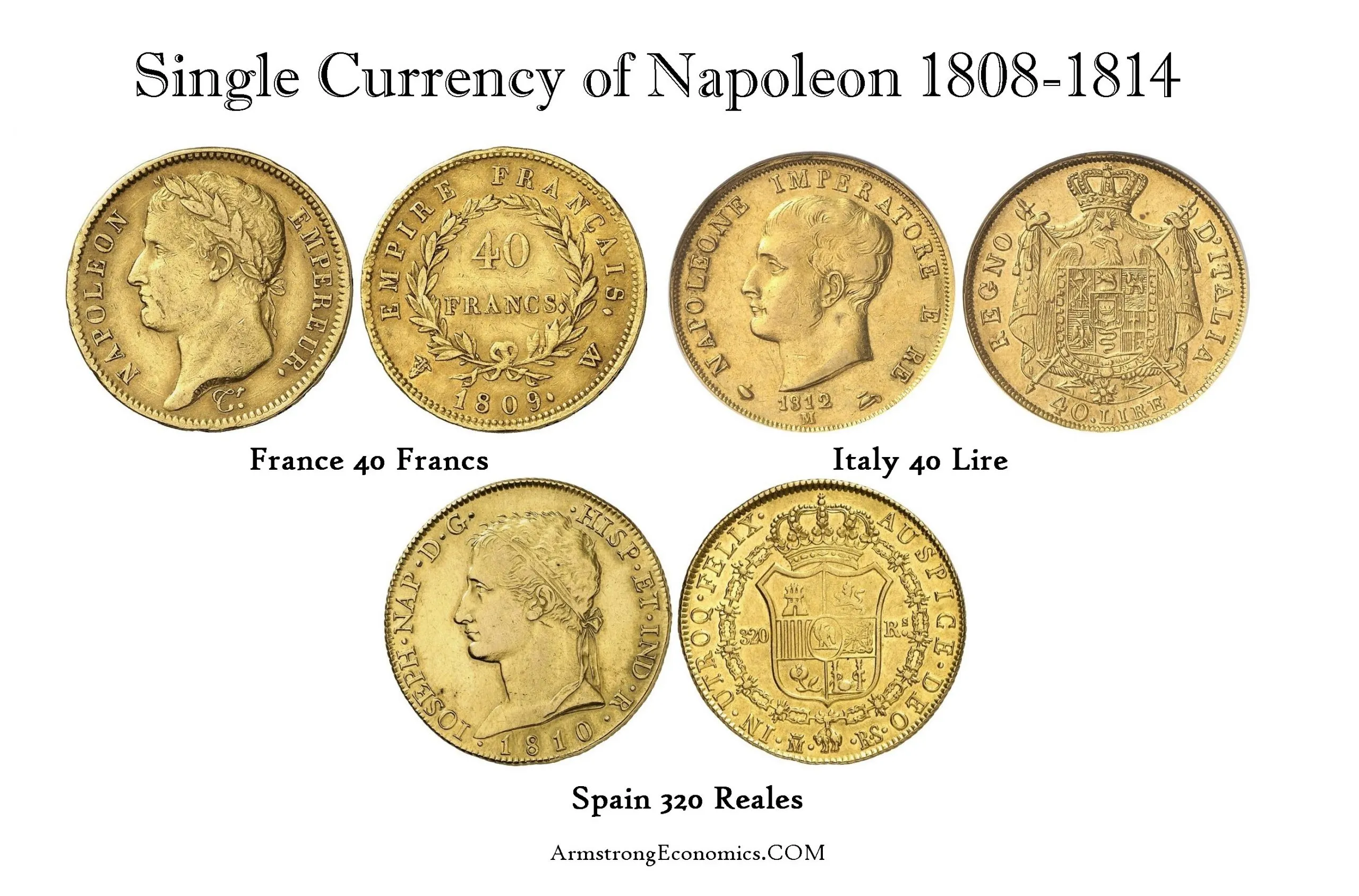
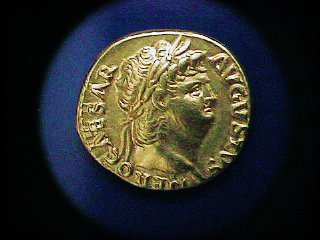
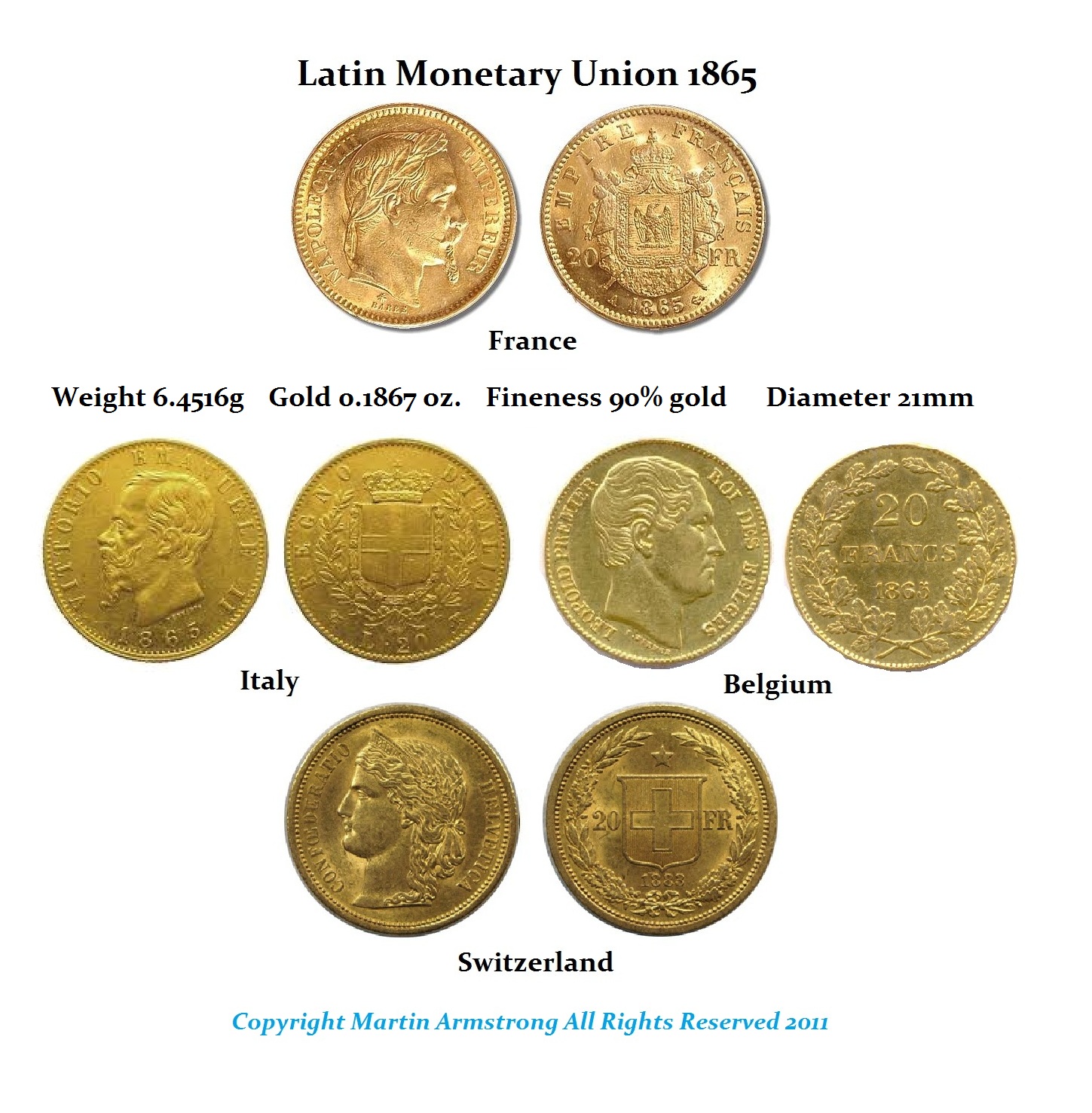
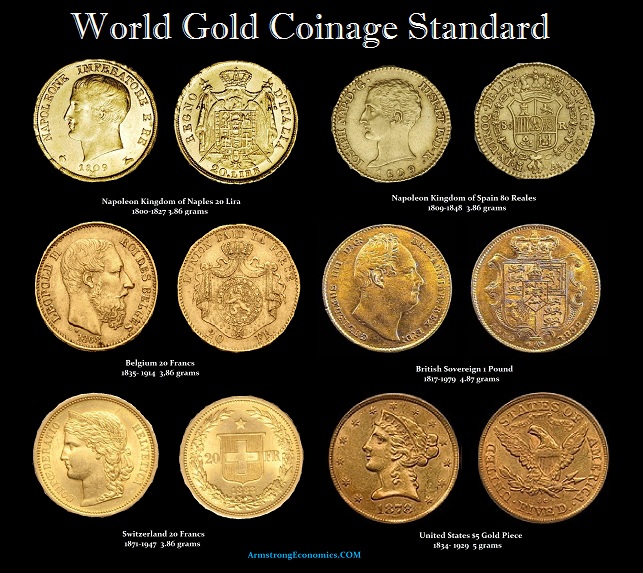
It was Napoleon who created the first single currency in Europe following the Roman Empire. He standardized the weight of the coins so that 40 francs equaled 40 Lire in Italy and 320 Reales in Spain. This was really Napoleon’s idea of resurrecting the Roman empire. Please take note of his coinage. He is pictured wearing a laurel wreath as a Roman emperor. He was far more than just a general. The new movie was interesting, but they overlooked his economic decisions, which were decades ahead of anyone else in Europe.
The unification of Europe was the accomplishment of Julius Caesar. However, it was Napoleon who standardized the monetary system post-Rome after the Dark Age, which became the inspiration for the Latin Monetary Union by 1865 and later the Gold Standard post World War II.
Even the United States’ $5 gold coinage was equivalent to the standardization of world coinage during the 19th century.
Posted Originally on Dec 1, 2023 By Martin Armstrong
A recent report by KBW Regional Banking Index (KBW) suggests that Comerica, Zions, and First Horizon are at risk of being acquired by greater competitors. Larger banks with strong returns, such as Huntington, Fifth Third, M&T, and Regions Financial, are positioned to grow by acquiring smaller lenders. Additionally, KBW analysts noted that Western Alliance and Webster Financial could also consider selling themselves. The report highlights that regional banks with assets between $80 billion and $120 billion are facing increasing pressure on returns and profitability, making them potential targets for acquisition by larger rivals.
This analysis underscores the challenges faced by banks in this asset range, as they have the lowest structural returns among banks with at least $10 billion in assets, necessitating growth to help pay for upcoming regulations. The report also mentions that banks with higher returns, such as East West Bank, Popular Bank, and New York Community Bank, could end up as acquirers rather than targets. This analysis reflects the evolving landscape of the banking industry and the potential for consolidation among regional banks.
Three banks have already collapsed in the US this year. New proposed regulations would require banks with over $100 billion in assets to hold onto long-term debt equal to 3.5% of total assets or 6% of risk-weighted assets. Now banks just below the $100 billion mark will potentially face the burden of adhering to these new regulations. Regional bank shares have fallen by over 20% this year. Smaller banks are already struggling to remain profitable, while midsized banks will be forced to join a larger banking organization to stay afloat.
Posted originally on Nov 27, 2023 By Martin Armstrong
The US national debt has exceeded $33 trillion and counting. For decades, people have predicted that the dollar will crumble to dust and gold will rise to the moon. They have applied to the Austrian School of Economics to no avail. Then you have the opposite side pushed by economists like Nobel Prize-winning economist Paul Krugman, who wrote a piece for the New York Times that argues effectively the debt can never be too big. Krugman goes to extreme lengths to justify perpetual deficit spending pointing out that government deficits don’t work the same as personal household debt. He contends in his May 13 opinion piece that the big debt number isn’t as scary as it seems.
“Governments aren’t like people,” he wrote. “[They] must service their debts — pay interest and repay principal when bonds come due — but they don’t necessarily have to pay them off; they can issue new bonds to pay principal on old bonds, and even borrow to pay interest as long as overall debt doesn’t rise too much faster than revenue.”
“So for all those whose instinct is to assume that a responsible government would, like a responsible individual, pay off its debts as soon as it can, again: Governments aren’t like people. If death and taxes are the only sure things in life, well, death isn’t an issue for governments, and taxes are an asset — a growing asset — rather than a liability.”
Krugman admits that governments are NOT immortal. “Nothing is, and no doubt someday America will, as Rudyard Kipling put it, be “one with Nineveh and Tyre.” But individuals face a more or less predictable life cycle in which their earnings will eventually dwindle.”
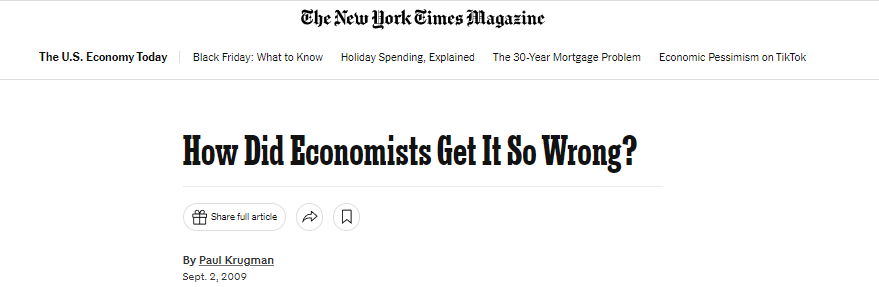
Paul Krugman also wrote for the New York Times back on September 2nd, 2009 that the economists all got it wrong. He admitted that reality and wrong:
“When it comes to the all-too-human problem of recessions and depressions, economists need to abandon the neat but wrong solution of assuming that everyone is rational and markets work perfectly. The vision that emerges as the profession rethinks its foundations may not be all that clear; it certainly won’t be neat; but we can hope that it will have the virtue of being at least partly right.”
The Notorious Larry Summers even admitted that economists have NEVER been able to forecast any recession since World War II. They refuse to accept that there is a business cycle and sell their profession to governments as all-seeing. If they listen to them, they will instruct governments how to manipulate the great unwashed below and eliminate the business cycle forever.
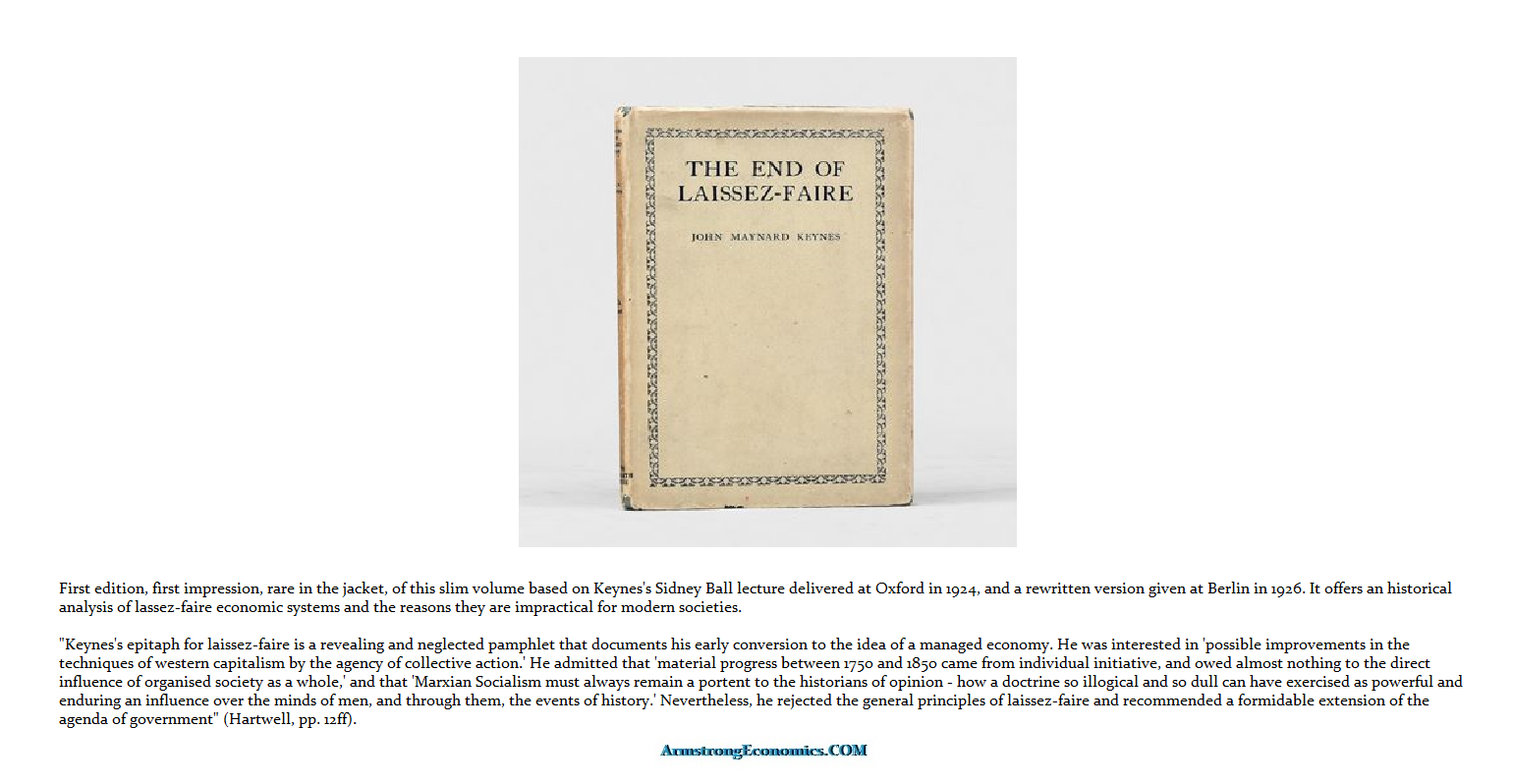
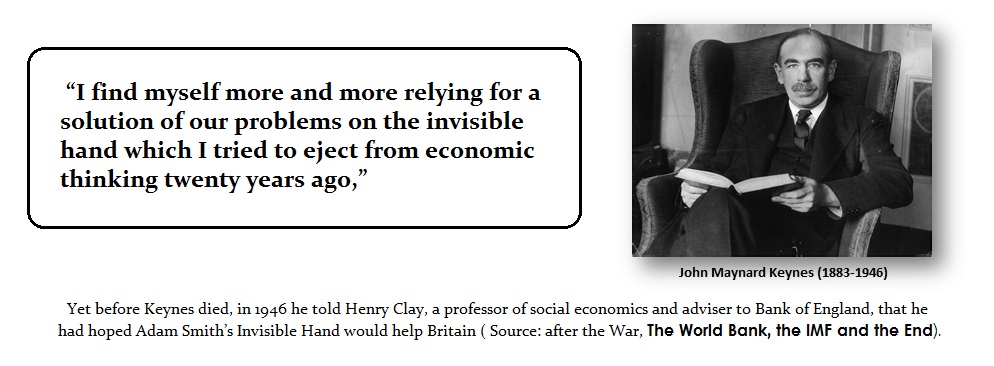
It was John Maynard Keynes (1883-1946) who in 1926 pronounced “The end of Laissez-Faire” and that economists could eliminate the business cycle and governments should enlist their profession. Yet, before he died, he admitted that everything he fought against, the business cycle, was simply wrong.
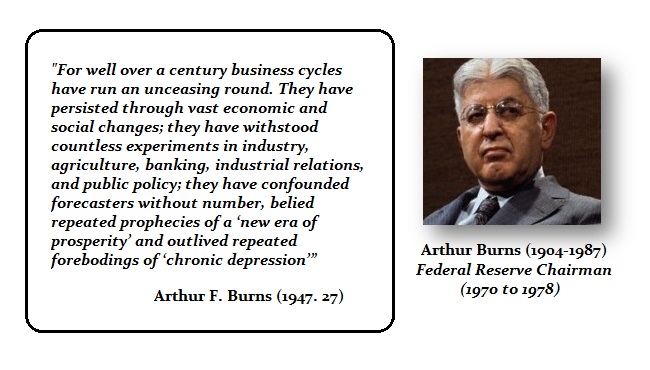
Even Arthur Burns, who was the head of the Federal Reserve when Bretton Woods collapsed, concluded that Keynesian economics had failed. The business cycle always defeated every theory economists devised to try to eliminate it.
I had an interesting conversation with Paul Volcker back in 1999, where he admitted that the business cycle not only existed but was, in fact, about eight years in length. In 1978, the former Chairman of the Federal Reserve made it clear in a publication of the Charles C. Moskowitz Memorial Lectures stating:
“The Rediscovery of the Business Cycle – is a sign of the times. Not much more than a decade ago, in what now seems a more innocent age, the ‘New Economics’ had become orthodoxy. Its basic tenet, repeated in similar words in speech after speech, in article after article, was described by one of its leaders as ‘the conviction that business cycles were not inevitable, that government policy could and should keep the economy close to a path of steady real growth at a constant target rate of unemployment.’
“Of course, some minor fluctuations in economic activity were not ruled out. But the impression was conveyed that they were more the consequence of misguided political judgments, of practical men beguiled by the mythology of the old orthodoxy of balanced budgets, and of occasional errors in forecasting than of deficiency in our basic knowledge of how the economy worked, or in the adequacy of the tools of policy. The avant-garde of the profession began to look elsewhere – to problems of welfare economics and income distribution – for new challenges.
“Of course, the handling of the economic consequences of the Vietnam War was an obvious blot on the record – but that, after all, reflected more political than economic judgments. By the early 1970s, the persistence of inflationary pressures, even in the face of mild recession, began to flash some danger signals; the responses of the economy to the twisting of the dials of monetary and fiscal policy no longer seemed quite so predictable. But it was not until the events of 1974 and 1975, when a recession sprung on an unsuspecting world with an intensity unmatched in the post-World War II period, that the lessons of the ‘New Economics’ were seriously challenged.”
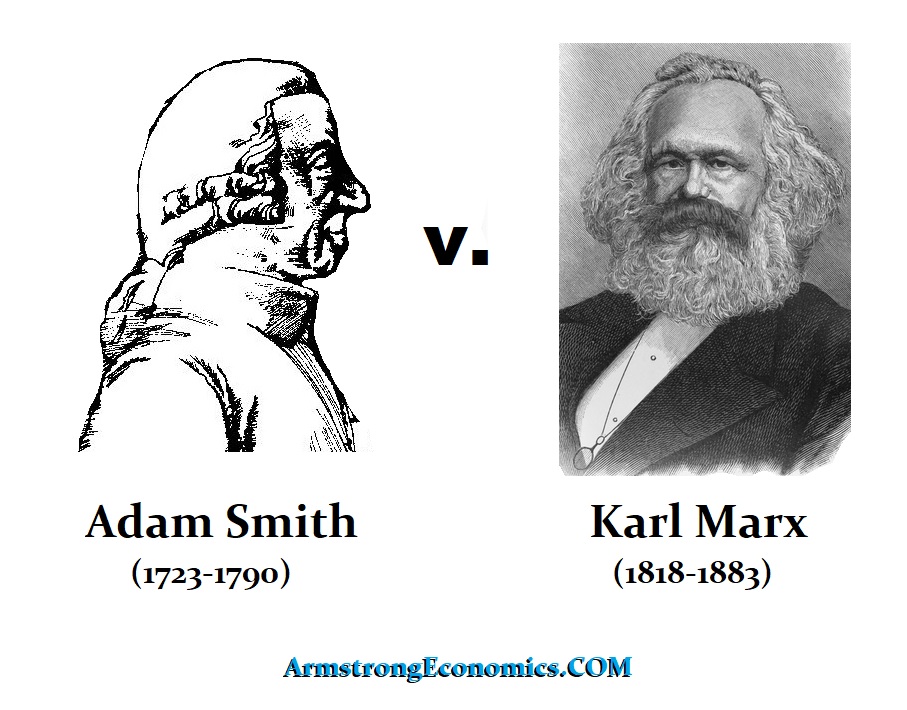
That was even Karl Marx’s goal of Communism. Seize all private assets, and that would terminate the business cycle. Well, even Communism failed, collapsing by its own weight. Only Adam Smith ever investigated the economy to discover how it functioned. Every major economist thereafter spent their lives trying to disprove Smith and nobody has ever succeeded.
Now we have our modern-day Marx, Klaus Schwab, who is trying to force the entire world to adopt his version of economics which is a rehash of communism all over again. “You will own nothing and be happy” he proudly declares following the footsteps of Marx and Lenin. Schwab has failed to understand that ALL social-economic advancement comes EXCLUSIVELY from human nature and curiosity. If people have no incentive to dream, they will never advance. That is why communism fell, and Schwab does not get it because academics, more often than not, are still pursuing this dream of ultimate power to defeat the business cycle.
Instead of investigating HOW the Business Cycle functions and WHY, they seek to eliminate it, and you cannot win a fight blindfolded. Krugman admits that governments are NOT immortal. However, if you have NEVER investigated how governments collapse, then you will certainly never see the collapse until it has unfolded.
It was the city of Mainz that provided a colorful example of the political decline caused by excessive debt and inadequate management of public finances that we face today. Financial difficulties had led to the trade guilds being involved in the government of the city from 1332 onwards, and taxation became the self-interest of those in power. A major political conflict was thus avoided until 1411, when the payment of debt annuities accounted for 48% of total expenditure.
In 1411, there was a popular uprising that forbade the sale of any more debt without the consent of the trade guilds. Yet, the financial conditions continued to worsen. By 1436-1437, about 75% of the total city expenditure was now consumed by interest. Interest rates began to rise as there were subtle fears that Mainz might be unable to pay its debts. The interest rates climbed as the city searched for buyers for its debt. The interest rates jumped from 3% to 5% during the 1430s.
In 1420, the citizens of Mainz drove the patricians out of the city in a tax revolt. A new city government emerged which forbade the sale of any more annuities without the consent of the trade guilds. Nevertheless, the city’s financial situation continued to decline as it effectively sent the “rich” fleeing and in the process, the tax revenues plunged. Clearly, with the “rich” gone, the city could not revive its economy, having effectively destroyed the foundation for investment. This led to the expelled “rich” families being recalled to Mainz in a desperate realization that without the “rich,” there is no economic growth – Atlas Shrugged.
The return of the patricians may have been predicated upon their buying debt of the city since, on January 16, 1430, Gutenberg’s mother arranged with the city of Mainz to purchase an annuity belonging to her son. This appears to be the reason for the recall of the expelled rich when the city cannot revive its economy without them.
Finally, in 1436-1437, 75% of the total expenditure of Mainz went to creditors, whose interest payments continued to increase crowding out all economic growth. The interest expenditures were draining the economic fortunes of Mainz and now there was an ever-increasing difficulty to find new subscribers to its loans. This escalated causing interest rates to rise further. During the 1430s, Mainz offered 5% for the perpetual annuities instead of the previous 3% or 4%. The total national debt of Mainz reached 373,184 gulden. It was in 1448, when the city of Mainz could find no buyer of its debt and was unable to raise 21,000 gulden that it declared itself bankrupt. Since 60% of the debt was purchased by foreign investors outside Mainz, the city was placed under an Imperial ban, and excommunicated by the Pope.
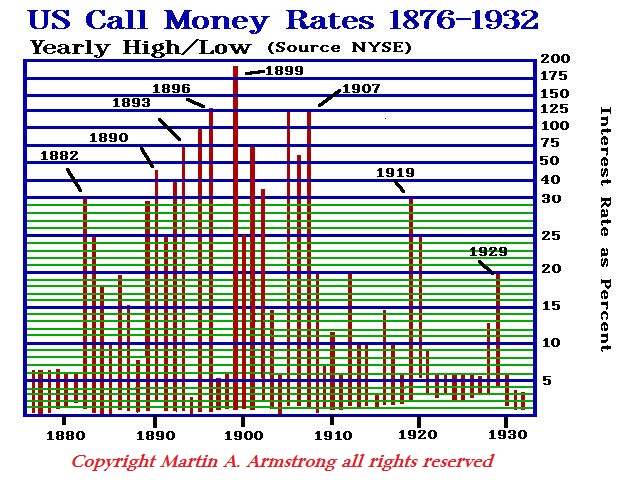
The default of the City of Mainz is a classic script for the decline and fall of any government. Taxing the rich is the nail in the coffin of every society that thinks they can just tax the rich without any economic impact. The unsound economics of the Silver Democrats, who inflated the economy by overvaluing silver at 16:1 and taking bribes from the silver miners, led to the Panic of 1893, and eventually, even the Call Money Rate touched 200% by 1899.
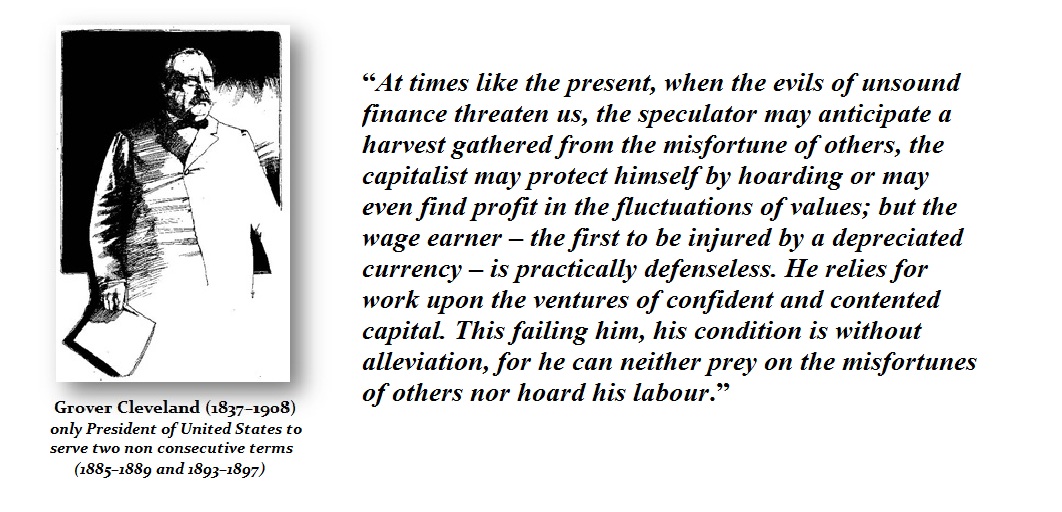
It was the Democratic President Grover Cleveland who broke with his own party over their reckless spending, as we see today under the Biden Administration. It was Cleveland who also recognized the flight of the “rich” during that period. He noted that during such periods of unsound finance, capital can be hoarded as people refuse to invest, and traders can profit from the volatility in the markets. However, he pointed out:
“but the wage earner – the first to be injured by a depreciated currency – is practically defenseless … for he can neither prey of the misfortunes of others nor hoard his labour.”
Just look at Argentina. It was once the richest nation, and when Marxism was introduced to get those evil “rich” people, the nation declined for 100 years, and the living standards collapsed. Like the City of Mainz, they defaulted on their national debt as well. When the people say enough is enough, the press calls them the evil and dangerous far right.
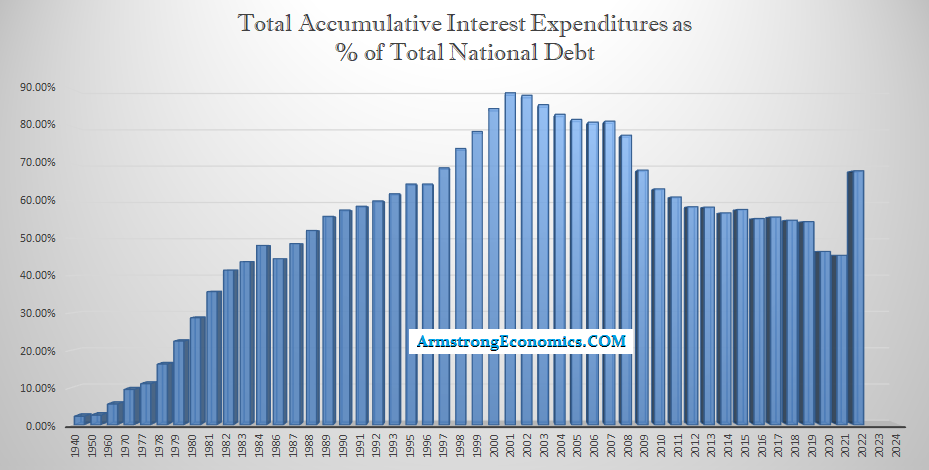
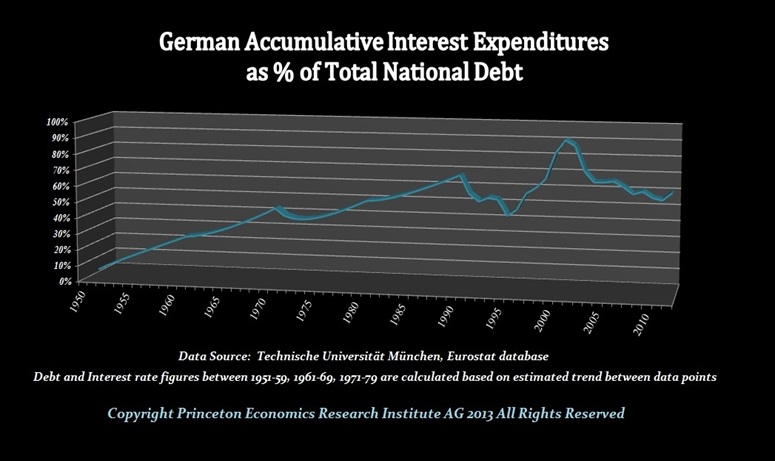
This is what Krugman and most economists never understand because they do NOT investigate HOW empires, nations, and city-states collapse. If we look at the US National Debt, the total accumulative interest expenditures in 2001 reached 90% of the total debt. In other words, just like in the City of Mainz, the interest was going to foreign investors, so it never stimulated the domestic economy. Only lowering interest rates brought that level down to about 50%. But this recent rise in interest rates has brought it back to 70%.
The US has the largest economy, so its serving of the debt is at the top of the food chain in economics. So it will be the last to fall. As we can see, this debt problem is NOT unique to the United States. Every country has been borrowing with no intention of paying back anything. They are all following the course of the City of Mainz, and we are looking at a major Sovereign Debt Default. The economists simply think this will never end, for their livelihood depends on that advice.
We will be releasing the timing for the Sovereign Debt Crisis next week
Posted originally on Nov 27, 2023 By Martin Armstrong
QUESTION: Marty, Thank you for a fantastic conference. If it were not for your forecast that the dollar would rise and rates would rise, putting European banks in distress before the USA, you would have saved our company a fortune. I know it’s Socrates, but we still need you here.
Now that they have postponed the visa for Americans for a year, will you ever come to Europe to do a WEC?
P
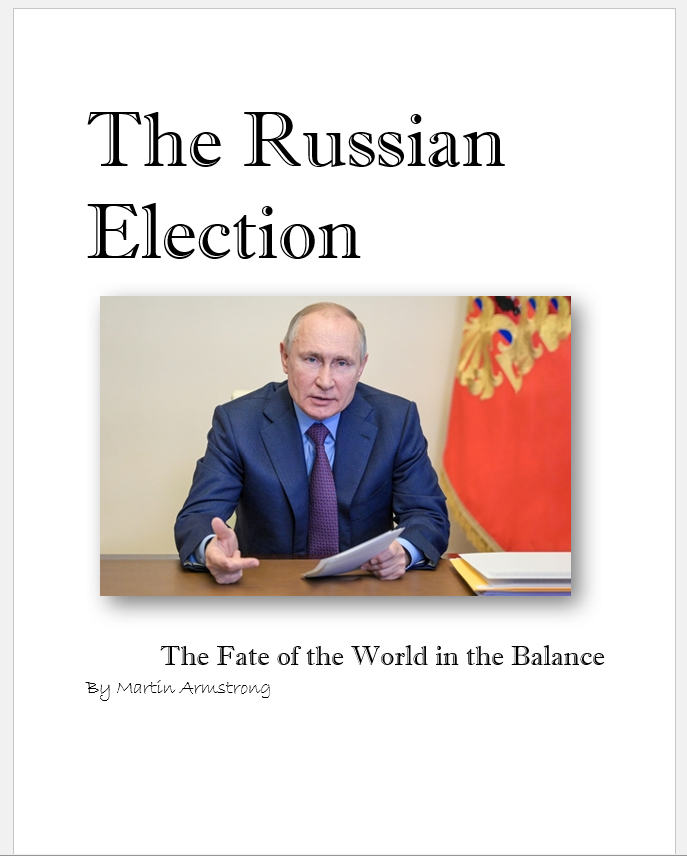
ANSWER: Since the very day of the high in this ECM wave that peaks, May 7th, 2024, just so happens to be the very inauguration day for the next Russian President, I am considering having a short conference rather than a 3-day event. They are like putting on a wedding, for we have to provide all the meals and the cocktail party alone, and they charge $75 a head. Because of the importance of this turning point, economically and geopolitically, I am considering a condensed version in Europe, Dubai, or Mexico. I am working on those materials already since it raises some serious implications.
Remember that the Sovereign Debt Crisis, which has been brewing for years, is coming to a head post-2024. China has already been selling off US debt. When there are no buyers, that is when it comes crashing down.
I neglected to tell everyone who attended and those who bought the materials that, as usual, there will be a year-end report. This will be put into the portal for download.
Posted originally on Nov 24, 2023 By Martin Armstrong
Retailers have been preparing for Black Friday and Cyber Monday all year. The tradition of post-Thanksgiving shopping has spread internationally with companies throughout the world promoting special sales. The National Federation of Retailers in America predicts that 2023 will be one of the busiest shopping holidays in the nation’s history.
Around 182 million shoppers are expected to make purchases from Thanksgiving Day through Cyber Monday, marking a 15.7 million uptick from 2022. This also marks the highest estimate since the organization began compiling data in 2017. Despite inflation, 61% of 8,424 respondents to a poll said the deals presented are too good to pass on.
The bulk of spending is expected to occur on Black Friday with 130.7 million participants, followed by Cyber Monday which is expected to attract 71.1 million shoppers. Half of shoppers will be searching for presents for the upcoming holidays. In total, retail spending in November and December will reach up to $966.6 billion.
“The Thanksgiving holiday weekend marks some of the busiest shopping days of the year, as consumers enjoy the tradition of shopping for the perfect gifts for friends and loved ones,” NRF President and CEO Matthew Shay said. “Retailers have been preparing for months for this occasion. They are stocked and ready to help customers find the gifts and other items they want at great prices during the entire holiday season.”
Although consumer spending accounts for 2/3 of GDP, the majority of Americans areliving off of credit due to record inflation. So while people are spending during this 5-day holiday in anticipation of tomorrow’s price being higher, consumer spending at this point in time merely adds to the private debt crisis sweeping the nation.
Posted originally on Nov 19, 2023 By Martin Armstrong
As the curtains close on yet another successful World Economic Conference, we find ourselves reflecting on the incredible energy, insights, and global collaboration that defined this year’s event. We extend our deepest gratitude to all the attendees, both in-person and online, who made the 2023 World Economic Conference a truly remarkable experience.
The hallmark of the World Economic Conference has always been its ability to bring together a diverse array of perspectives and expertise from every corner of the globe. This year was no exception. From boardrooms in bustling metropolises to home offices in remote locations, the global community came together to share insights, challenge assumptions, and explore innovative solutions to the world’s most pressing challenges.
To our esteemed guests who joined us in person, your presence added a special dimension to the conference. The vibrant discussions, networking opportunities, and the unique atmosphere you created enriched the event. Your commitment to being a part of this global conversation demonstrates the power of face-to-face interactions in fostering meaningful connections and collaborations.
The online participants played an equally crucial role in shaping the success of this year’s conference. Connecting from various time zones, you showcased the limitless possibilities of virtual collaboration. Your active engagement through virtual platforms allowed the conference to transcend geographical boundaries, making it accessible to a wider audience and fostering a sense of inclusivity.
The World Economic Conference is not just an event; it is a community of changemakers. Your presence, whether physical or virtual, strengthens this global network. Together, we are creating a platform where ideas are born, partnerships are forged, and a shared vision for a sustainable and prosperous future is cultivated.
In closing, we extend our sincere gratitude to each and every participant of the 2023 World Economic Conference. As we bid farewell to this year’s conference, we carry forward the inspiration and momentum created by the collective efforts of individuals dedicated to shaping a better world. Thank you for making the 2023 World Economic Conference truly great. We look forward to welcoming you again next year for another chapter of collaboration and innovation.
The concept of cycles is becoming accepted in Western culture. Recently, people have been honing in on what they deem the 80-year cyclical theory that marks a major shift in humanity. While this may be true as it takes a few generations to change society, they are not incorporating the additional nuisances associated with the true Economic Confidence Model.
The 80-year theory, also called the Strauss–Howe generational theory, believes that there are four 20-year cycles or turnings that build up to a cataclysmic event. For example, some are using 2024 as the starting point, which brings us back to 1944 when America was at the cusp of World War II. Going back an additional 80 years would bring us to 1864 – the US Civil War. Taking it back even further we arrive at 1784 when the Revolutionary War ended.
Now, absolutely everything is connected, and to garner the most accurate forecasts requires peering out at society and the global economy. The problem with the 80-year theory is that it was developed from a solely American viewpoint as it was designed to explain the history and future of the United States.
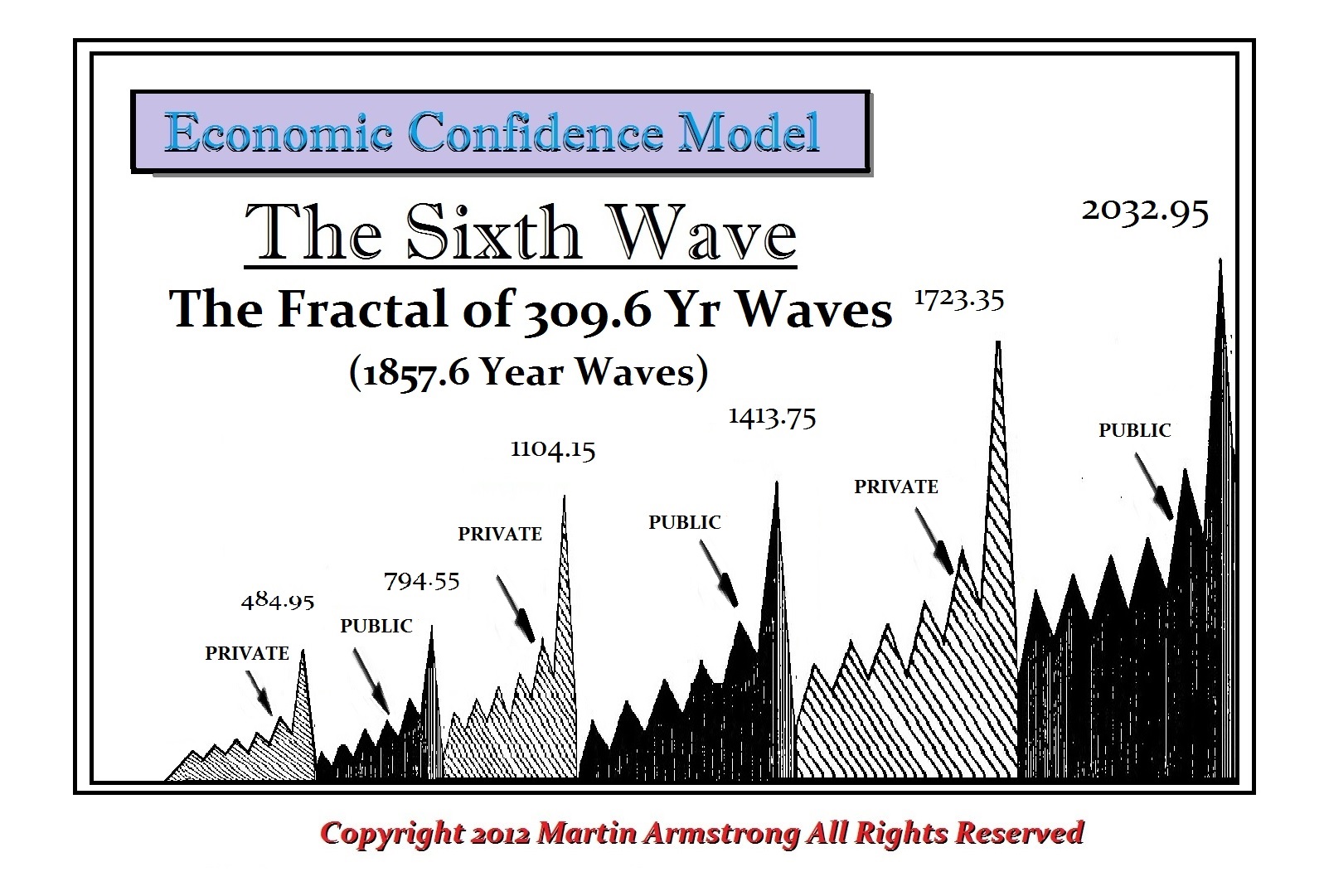
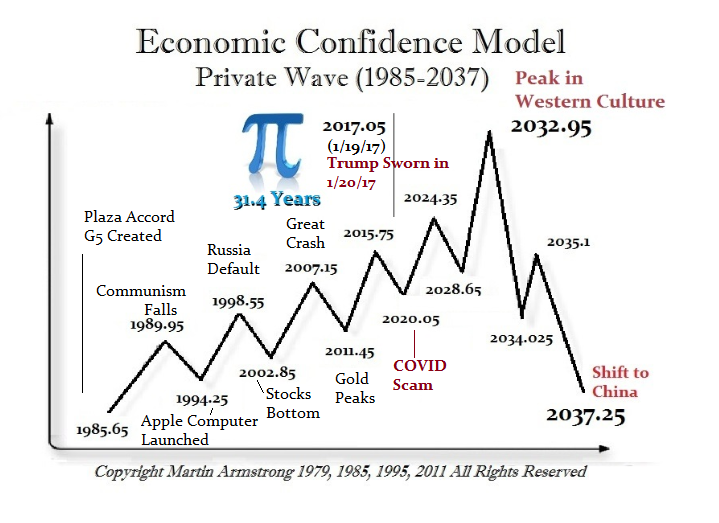
The Economic Confidence Model, at a basic level, sees waves of 8.6 years building in intensity amounting to six waves to construct a major long wave of 51.6 years. What you get at the end of these 51.6-year waves is very profound. After the 1774.95 peak, we end up with a revolution against the monarchy. The next wave peak in 1826.55 produced the Russo-Persian War, 1826-1828, Greek War of Independence, Battle of Monte Santiago between Brazil and Argentina, Mexican Constitution is formed, the Maryland Democratic Party begins creating the confrontation between the Democrats and Republicans (South v North) which sets the stage for the American Civil War in 1861, and even Thomas Jefferson and John Adams both died on the 4th of July 1826 (1826.50) marking the end of the generation of Enlightenment whereas the peak of the wave was July 19th. The next wave 1878 saw the Long Depression which was called the “Great Depression” until 1929-1932. The next wave peak of 1929,75 produced the takeover of the West by socialists. Then the next wave was 1981.35 which marked the peak in interest rates even to the day.
Each of these events shifted society as a whole. Capital concentration shifted in a profound way and changed nations. Nothing exists in isolation. The major wave will be 2032 and this will be followed by the shift from the West to the East in economic power.
I have created this site to help people have fun in the kitchen. I write about enjoying life both in and out of my kitchen. Life is short! Make the most of it and enjoy!
This is a library of News Events not reported by the Main Stream Media documenting & connecting the dots on How the Obama Marxist Liberal agenda is destroying America






 Centinel2012