Armstrong Economics Blog/Armstrong in the Media Re-Posted Mar 19, 2023 by Martin Armstrong

Click here to listen to my interview on 3/16/23 with World Affairs Monthly (also published on Monitoring Risk).


Click here to listen to my interview on 3/16/23 with World Affairs Monthly (also published on Monitoring Risk).
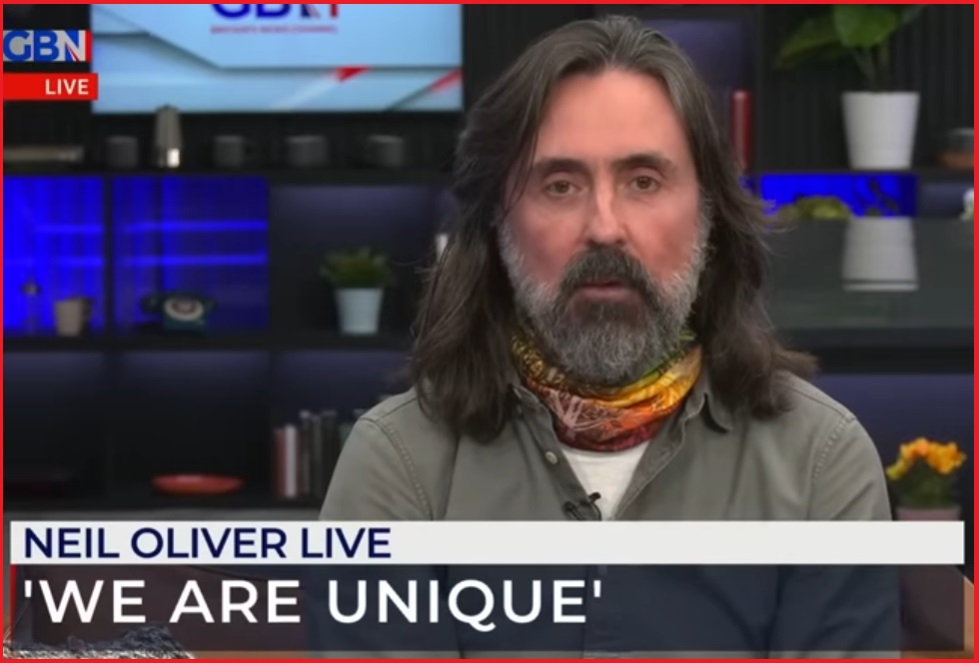
For his weekly monologue U.K pundit Neil Oliver weaves the outline of how government officials, and the system creators who support them, have dismissed the inherent ability of humankind to advance itself without external inputs.
Indeed, in the biggest of big pictures the inherent skills and ability of the individual to overcome great challenge is factually a unique attribute to people, human beings. We were born by the grace of a loving God, with a very unique set of abilities in the universe of life. We can learn, discover, formulate and achieve great things when we focus as individuals on the issues of greatest priority. Everything Mr. Oliver states in this monologue is inherently true, naturally true and empirically true.
Ultimately, as governments -consisting of people- and technocrats, again more people, attempt to subvert and replace unique human abilities with technological advancements, you always end at a place where a physical person with skill is needed to accomplish the mechanics of what the designed system cannot provide.
In very real terms, Bill Gates, Elon Musk, Klaus Schwab and every person who operates within the system of creating or promoting artificial intelligence, likely does not possess the skill to manage their own household plumbing or repair a broken weld. WATCH:
.
Neil skirts around an issue that I have contemplated for years. Just as surgeons possess specific sets of skills that can repair a human body, ultimately so too do blue-collar workers hold similar skillsets.
I can easily envision a time (it’s coming soon) when the average population is so critically incapable of fixing things, an outcome of diminished emphasis on doing, that the value of those who can fix things will afford them incredible income.
As technology continues to drive forward, the financial value assigned to irreplaceable physical human labor will ultimately invert. Surgeons may indeed be replaced by machines, but robots will never be able to fix a leaky roof. There are just too many variables and the technocrats do not think of such things.
QUESTION: I see how you were surprised by your dog in discovering how she studies your patterns and predicts where you are going. My dog does the same. I didn’t pay attention to those traits until you wrote about them. The very trait of how to think is fascinating. Have you incorporated that into Socrates?
LC
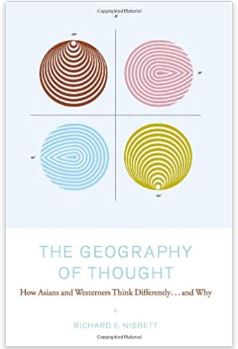
ANSWER: Yes. I had a friend who was a psychologist and he explained to me many years ago that there were two fundamental types of thinking in humans – linear v dynamic. There is a good book written by Richard E. Nisbett entitled “The Geography of Thought, How Asians and Westerners Think Differently … and Why.” He attributed his work to a Chinese student who said: “You know, the difference between you and me is that I think the world is a circle, and you think it’s a line.” He goes on to quote him:
The Chinese believe in constant change, but with things always moving back to some prior state. They pay attention to a wide range of events; they search for relationships between things; and they think you can’t understand the part without understanding the whole. Westerners live in a simpler, more deterministic world; they focus on salient objects or people instead of the larger picture; and they think they can control events because they know the rules that govern the behavior of objects.
I can say I never had to explain cycle theory in Asia to anyone. In the West, we were taught to think linearly. What stunned me about my dog was noticing that she thought dynamically. I had no idea any animal possess such a thinking process. There are dogs who even has done simple math. Understanding how the thinking process works was absolutely essential to be able to create any AI program that was functional. Of yes, there were those trying to create a neural net, dump all the data in, shake it up, and somehow it would unexplainable to come forth with the answer. IBM tried that and it failed.
There was just a lot more to how we thought that necessitated investigation. Anyone who thinks they cannot learn by observing even how a dog thinks is so biased that they will never discover anything.

COMMENT: Mr. Armstrong, your dog is a cutie! I hate to tell you, but your dog will eventually learn to spell. My wife and I had two poodle-bichons, now deceased after 15 1/2 wonderful years. At first we used your method of spelling out rather than using certain words. In about 2 weeks, they got wise and equated the sound and sequence of the letters with things that they liked to do or eat. There was no fooling them. I have found that smaller dogs are much more clever than the large ones; also, mixed breeds seem to be smarter – and tougher – than the purebreds. There are, of course, exceptions.
In all honesty, dogs are smarter than a lot of people that I know. They are aware of their environment and, if permitted to do so, adapt as necessary.
Thanks for all that you do. Your write-up on price controls and pegs was particularly useful for me. Have a great day and an even better weekend!!!
MG
REPLY: I for one probably never considered the intelligence of a dog. Being engrossed in AI programming, I had to really understand how we think. For example, perhaps the night you fell in love your mind was recording everything unknowingly. You might recall that memory from any individual sense. The food, the smell, the song that was playing, the place, and so on. That memory exists but it can be accessed by any single sense. That was very important in trying to understand even how to begin to program AI. It obviously could not be a simple linear progression – IF x THEN y ELSE z – (the fundamental programming equation.
What I was stunned by was she indeed was building a knowledge base keeping track of what I would do and what I like and then could develop patterns to forecast what I would do next. But she was also displaying strategy. I would throw a ball and expect the standard go fetch. Then she would take the ball and drop it down the stairs and more or less say, OK, now your turn – go fetch. I was simply not prepared to actually interact with a dog that was intelligent aside from the emotional reactions of happy to see you etc. She was displaying the same patterns of thinking that I studied to create AI. Even more fascinating, she was displaying traits of curiosity. I throw the clothes from the washer to the dryer and she has to come and watch. I had heard the saying that curiosity killed the cat. But I never really thought much of it.
She sparked my curiosity. Was she exceptional? Was this normal? A study took place at the Max Planck Institute for Evolutionary Anthropology in Germany. The study worked with 32 dogs and 20 chimpanzees who were each to carry out the same task. The dogs all responded positively and immediately. However, the chimpanzees didn’t seem to understand what was being asked of them. She would bark at another dog but hold her up to the mirror and she knew it was her. In fact, only a small percentage of animal species have passed this mirror test.
Actions not only speak louder than words, they are the key to understanding how we think as well as even our pets. Spatial thinking is the foundation of thought and evolved long before even language and as such, you can see it in even your dog’s behavior. Spatial thinking is the knowledge, skills, and habits of the mind using the concepts of space such as distance, orientation, distribution, and association. Even throwing a ball for a dog or faking a throw and they quickly use these same tools to conclude where the ball went or if you never threw it in the first place.
We use such Spatial thinking tools of representation such as maps, graphs, and diagrams, for trading, and how we process these images forms the cornerstone of our reasoning. In other words, this is the ability for cognitive strategies to facilitate even problem-solving and decision-making. It is the foundation of the very structure of problem-solving, finding answers, and expressing that as the solutions to these problems.
I confess, I never expected a dog to have such qualities of intelligence. I suppose I was biased and just never expected anything so I did not look. This is what I taught Socrates to do. Explore everything and retain curiosity at all costs. Check if Azuki Beans in Japan might become a replacement for fossil fuels – which it is not. However, if we do not look we cannot answer that question definitively.
So pay attention to your dog. You might be surprised that they do not love you because you simply feed them. There is a lot more going on that I never would have expected myself.
I have created this site to help people have fun in the kitchen. I write about enjoying life both in and out of my kitchen. Life is short! Make the most of it and enjoy!
De Oppresso Liber
A group of Americans united by our commitment to Freedom, Constitutional Governance, and Civic Duty.
Share the truth at whatever cost.
De Oppresso Liber
Uncensored updates on world events, economics, the environment and medicine
De Oppresso Liber
This is a library of News Events not reported by the Main Stream Media documenting & connecting the dots on How the Obama Marxist Liberal agenda is destroying America
Australia's Front Line | Since 2011
See what War is like and how it affects our Warriors
Nwo News, End Time, Deep State, World News, No Fake News
De Oppresso Liber
Politics | Talk | Opinion - Contact Info: stellasplace@wowway.com
Exposition and Encouragement
The Physician Wellness Movement and Illegitimate Authority: The Need for Revolt and Reconstruction
Real Estate Lending
 Centinel2012